

Filipino poet and creative writer Raul G. Moldez spent his 2-month residency at Rimbun Dahan in 2026 writing ecopoetry that seeks to give elements of the natural world their own agency, through language. During Open Day on 25 October, he will read some poems from his residency and deliver a craft talk on ecopoetry and his personal poetics.
About the Writer
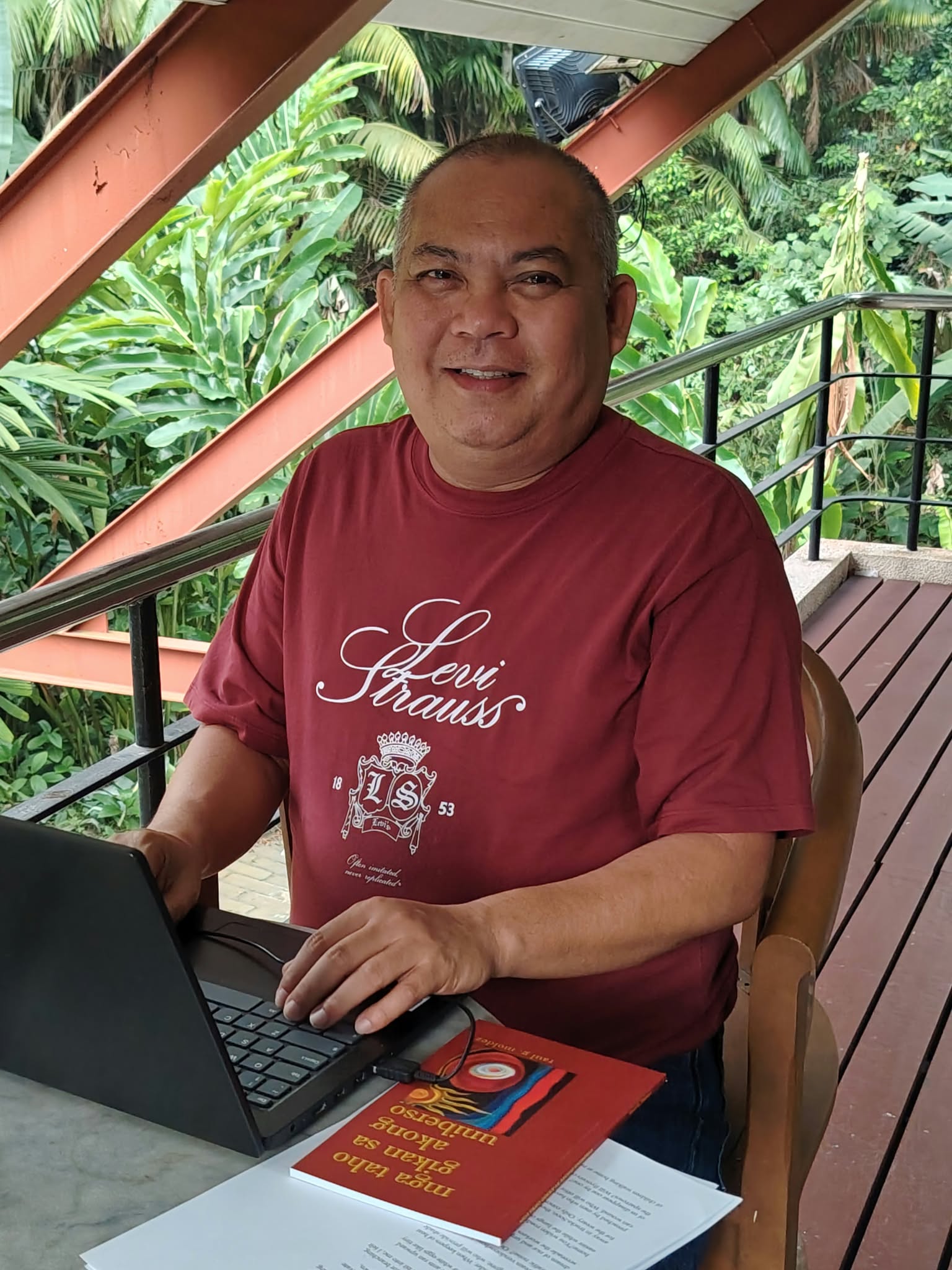
I am Raul G. Moldez, a Filipino poet and creative writer based in Cagayan de Oro City, Mindanao, Philippines. My literary career spans nearly three decades, during which my poetry and fiction have appeared in various national and international literary journals, magazines, anthologies, newspapers, and online publications.
Among my most recent literary distinctions is Second Prize in the 2025 Padya Leoncio P. Deriada Para sa Panitikan (Open Category) for my poetry collection, The Memory of Forests and Other Poems. I was also a winner of the 2025 Tagik Poetry Writing Competition, sponsored by Kaliwat ni Karyapa, for my poem An Ode to a Broken Tea Cup. My recent poems appeared in Santelmo 14 (Missing Body Parts, And the Soil Speaks, Brownout Psalm), Kinaadman Volume 26 (Butterflies at Pueblo de Oro, A Love Letter from a Waterfall, The Old Narra Tree) and in the May 2026 issue of Philippines Graphic Reader (On My Father’s Tomb).
I have two poetry collections, Mga Taho Gikan sa Akong Uniberso and A Day in a Poet’s Life and Other Poems, which was published in 2005 under the Ubod: New Authors Series, a literary publishing initiative of the National Commission for Culture and the Arts (NCCA) intended to support emerging Filipino writers.
My poems, short stories, and other literary works have appeared in Philippines Free Press, Philippines Graphic Reader, Philippine Panorama, Home Life, Bisaya, Ani Literary Journal, Sunday Times Magazine, Sun.Star Weekend, Sun.Star Superbalita, Bituon Literary Journal, Crowns and Oranges, Santelmo 14, Kinaadman, Gutter, As It Ought To Be, Cannon Poets, Red River Review, Dalityapi, Mindanews, Peace Mindanao, Kabiskak, and Dagmay, among other print and online publications.
I have been a fellow of the Fourth Iligan National Writers Workshop (1997), the 37th University of the Philippines National Writers Workshop (2000), the Panagsugat: Second UP VisMin Creative Writing Workshop (2004), the 53rd University of the Philippines National Writers Workshop (2014), and the 24th IYAS La Salle National Writers Workshop (2025).
Over the years, I have received recognition in various literary competitions, including those sponsored and organized by the Davao Writers Guild, the Home Life Poetry Competition, Bathalan-ong Halad sa Dagang–Cebu (Bathalad-Cebu), Bathalan-ong Halad sa Dagang–Mindanao (Bathalad-Mindanao), the Governor Gwen Garcia Literary Contest, and the Office of the Ombudsman–Mindanao.
About the Residency
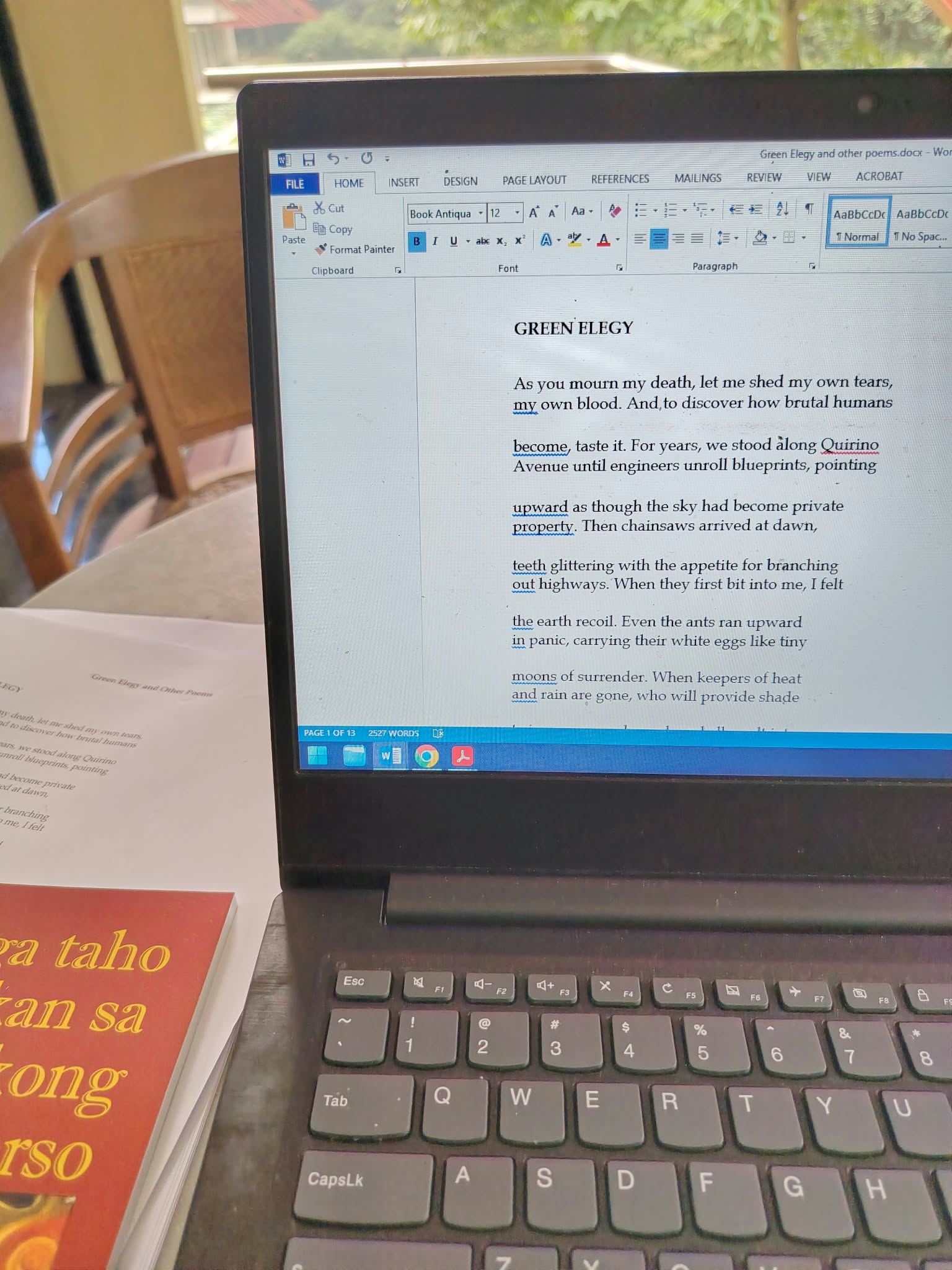
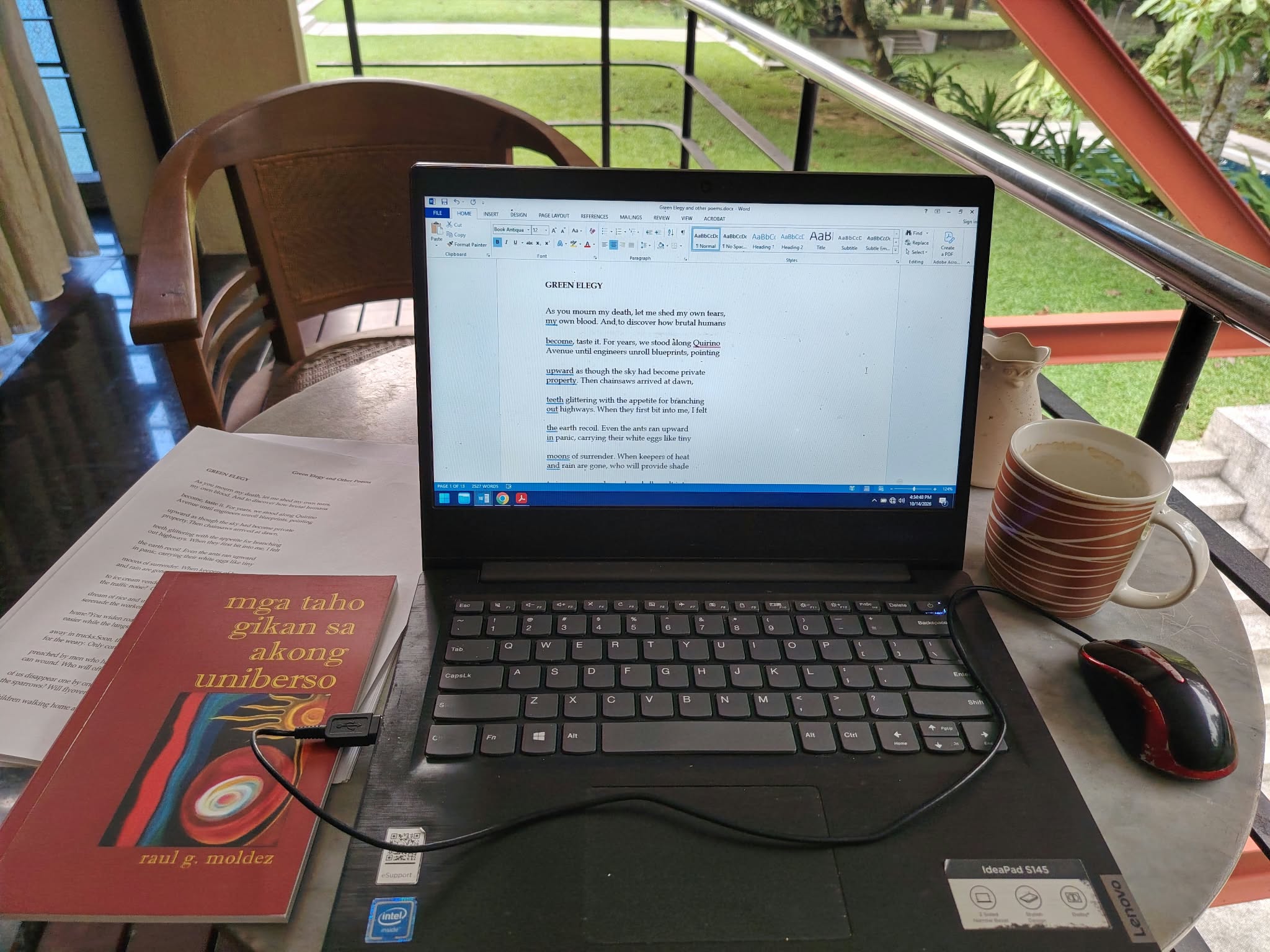
My residency at Rimbun Dahan provided me with the rare opportunity to be away from the demands of everyday life and devote myself to the work of poetry. Here, I found both the physical space and the creative solitude necessary to revisit and revise my earlier poems and write new works. More importantly, the residency allowed me to explore the subject that has increasingly occupied my imagination: the interconnectedness of human beings and the natural world, a relationship that forms the foundation of what is commonly called ecopoetry.
My interest in ecopoetry arises from the growing tension between human development and environmental preservation. In the Philippines, we have laws intended to protect our forests, trees, waterways, and other natural resources. Yet the existence of these laws does not always guarantee the protection of what they are meant to preserve. The recent cutting of trees along Quirino Avenue in Metro Manila to make way for a skyway is a painful example of how development can come at the expense of our natural resources. Trees that have stood for generations, offering shade, shelter, and a sense of continuity to the communities around them, can disappear in a matter of hours in the name of progress. Such events compel me to ask what kind of development we are pursuing, and what we are willing to sacrifice to achieve it.
In writing my poems, I wanted to move beyond the conventional portrayal of nature as merely a backdrop to human experience. I sought instead to give trees, animals, rivers, and other elements of the natural world their own agency through language. In my poems, they are no longer silent witnesses to human activity. They speak, remember, grieve, question, and protest. A tree laments its loss; a river speaks of the wounds inflicted upon its waters; a bird mourns the disappearance of the forest it once called home. Through personification and imaginative expression, I attempt to make audible the voices that humanity has too often ignored. I regard these poems as a form of protest—not necessarily my protest alone, but the imagined protest of nature itself against the indifference, exploitation, and destruction it has endured at human hands.
The result of my residency is a collection of ecopoems, which reflect both mourning and hope: mourning for the landscapes, trees, and living creatures lost to human activity, and hope that through poetry, readers may begin to recognize the value of the natural world beyond its usefulness to humanity.
I have always believed that poetry is a manifestation of social dynamics and human relationships, reflecting the attitudes, contradictions, and behavior of society. While literature may offer commentary on social realities, I do not believe that a poem, by itself, can transform society. Its power lies instead in its capacity to influence how people see and understand the world. A poem may not stop a tree from being cut down, but it may persuade someone to look at that tree differently—to recognize it not merely as an obstacle to construction, but as a living presence with a history, an ecological purpose, and a place in the shared existence of human beings and nature.
This is the aspiration behind my works: to encourage a change in human attitudes toward the environment. I do not regard development as inherently destructive or undesirable. Roads, bridges, buildings, and other infrastructure are necessary to improve human life. But development must be pursued with wisdom, restraint, and an awareness of its ecological consequences. Progress should not be measured solely by what we build, but also by what we are able to preserve. A society cannot truly claim to have advanced if, in the process, it destroys the very environment upon which its future depends.
Rimbun Dahan gave me more than the time and space to write. It offered me an opportunity to reconsider my relationship with nature and to translate that reflection into poetry. At Rimbun Dahan, I became more conscious of the many forms of life with which we share this world. If the poems in my collection accomplish anything, I hope they will remind readers that nature is not separate from humanity, nor is it merely a resource waiting to be used. We are part of it, bound to it by relationships that are both ecological and moral.
Ultimately, these poems are my modest attempt to lend language to the voiceless, to transform ecological grief into an act of remembrance, and to suggest that genuine progress begins when humanity learns not only how to build, but also how to listen, to care, and to preserve.
About the Open Day
During my Open Day at Rimbun Dahan, I intend to read the poems in my collection which I developed during my residency, and deliver a craft talk on ecopoetry and my personal poetics. I will discuss how poetry can explore the interconnectedness of humanity and nature, particularly by giving trees, animals, rivers, and other elements of the natural world a voice through personification and imaginative language. In my poems, nature becomes an active presence, expressing its grief and protest against environmental destruction.
I will also share my creative process, including how the natural surroundings of Rimbun Dahan have inspired my writing and revisions. Central to my poetics is the belief that while literature may not directly change society, it can influence people’s attitudes and deepen their awareness of social and environmental issues. Through this reading and discussion, I hope to encourage greater ecological consciousness and reflection on the need to balance human development with environmental preservation.