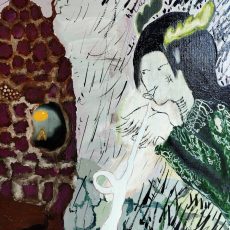
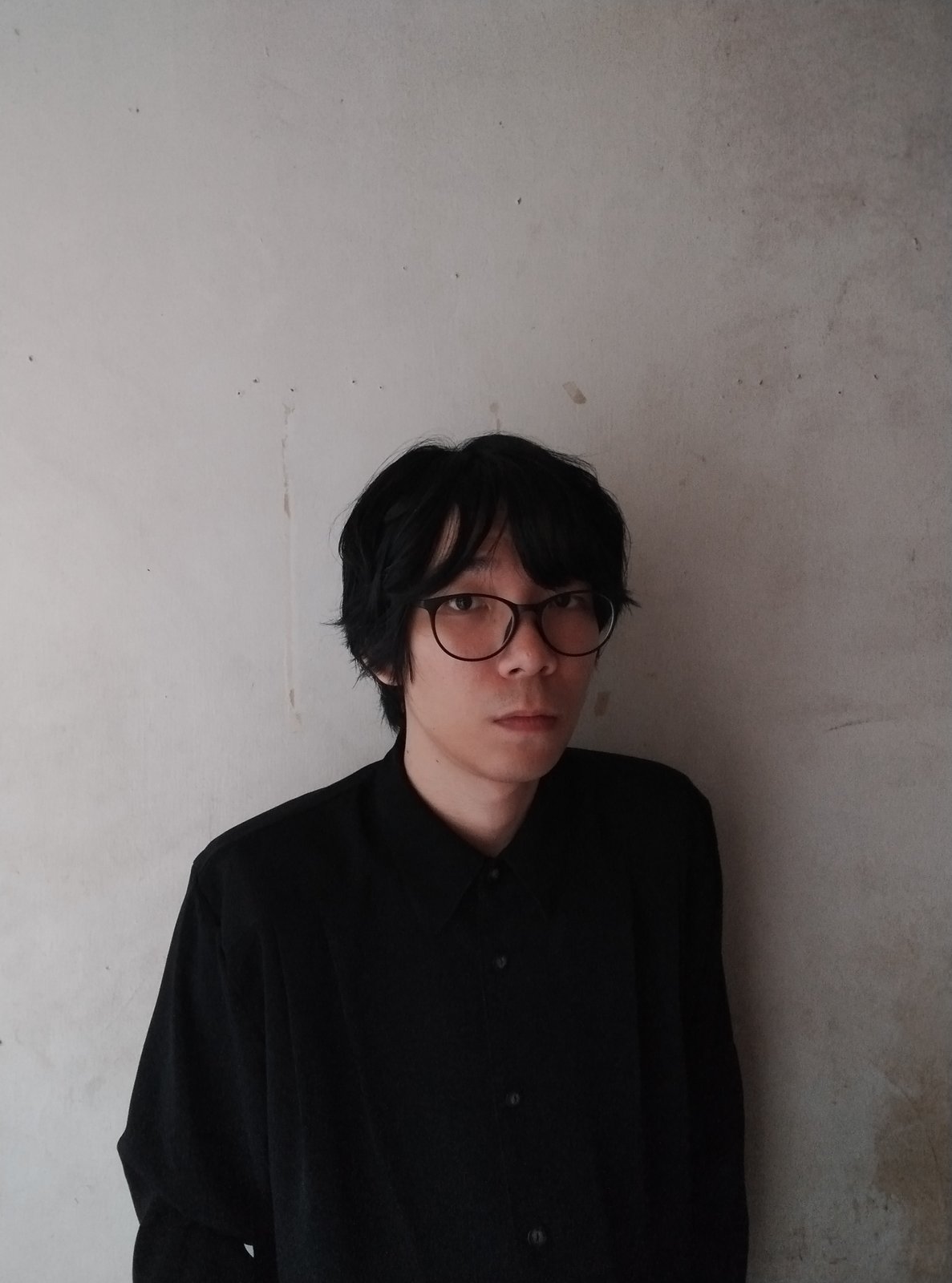
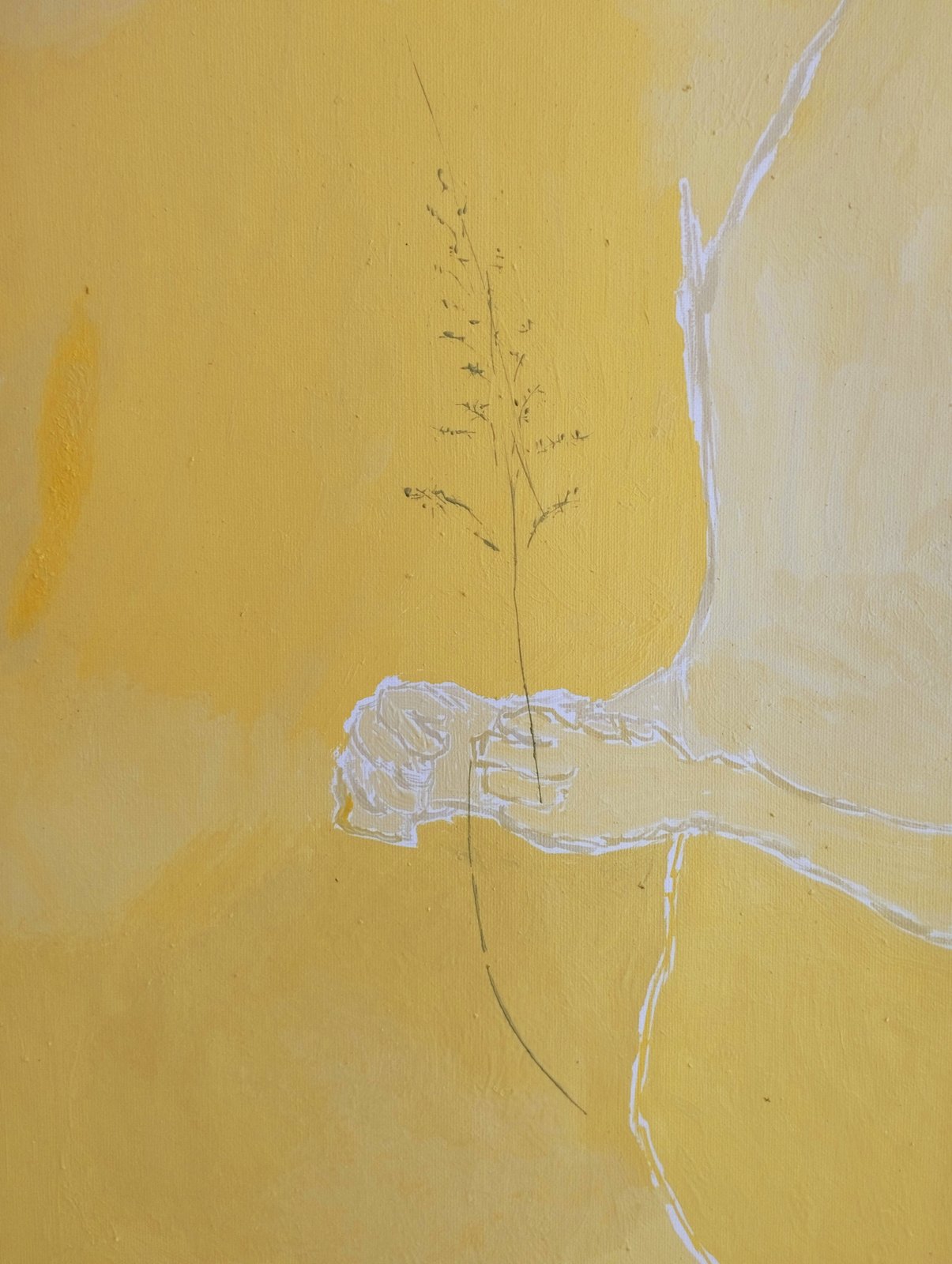
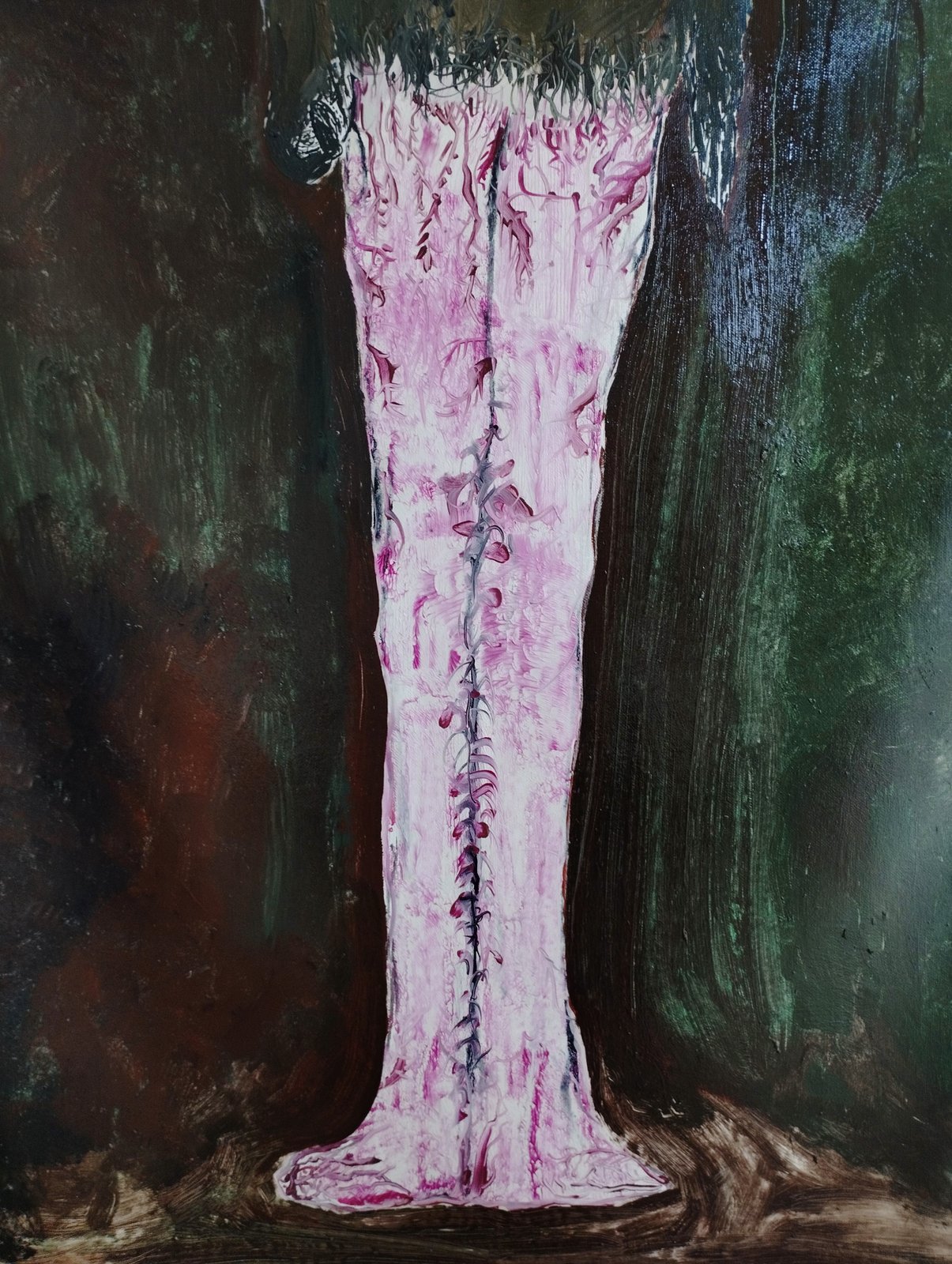
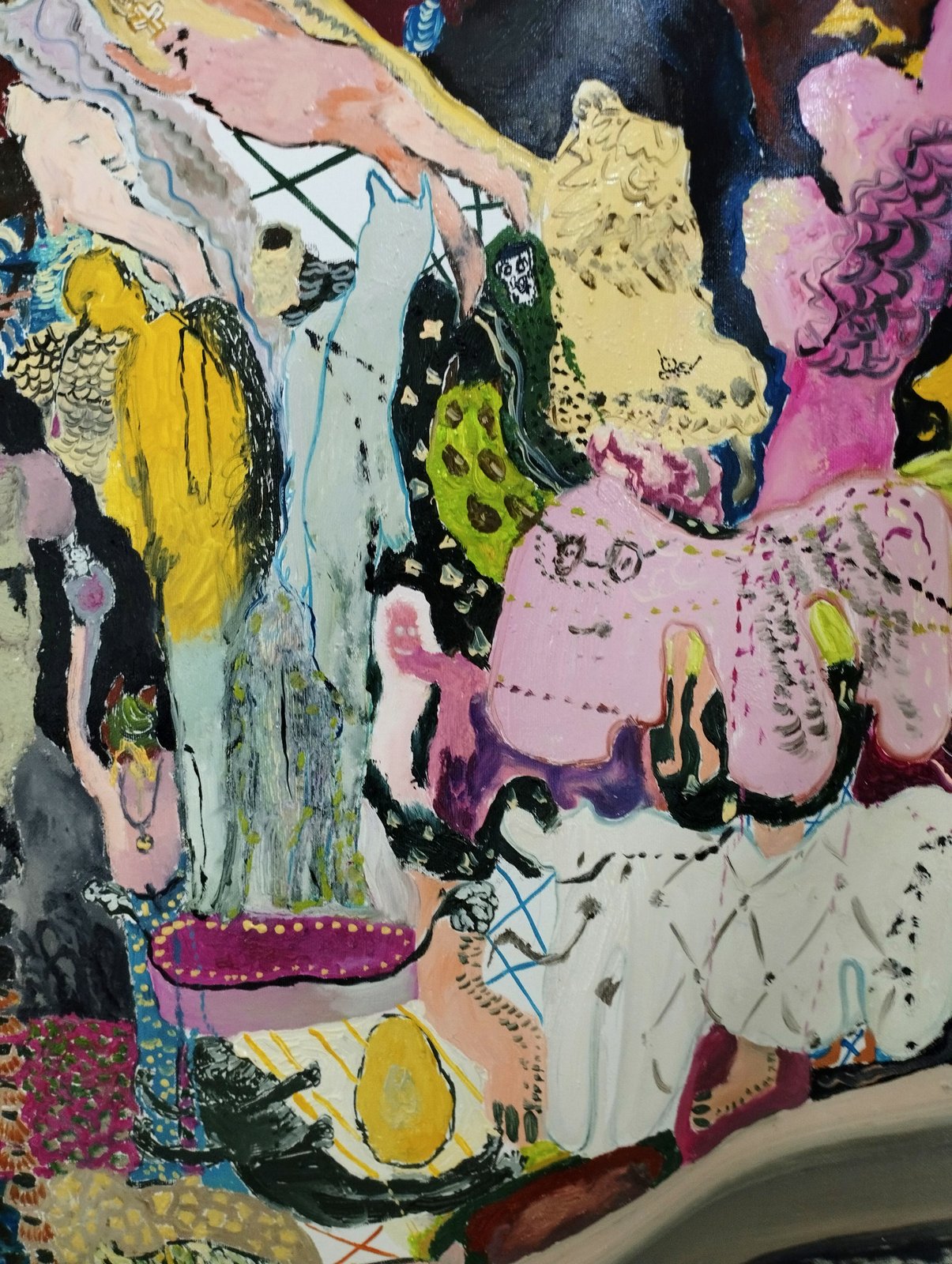
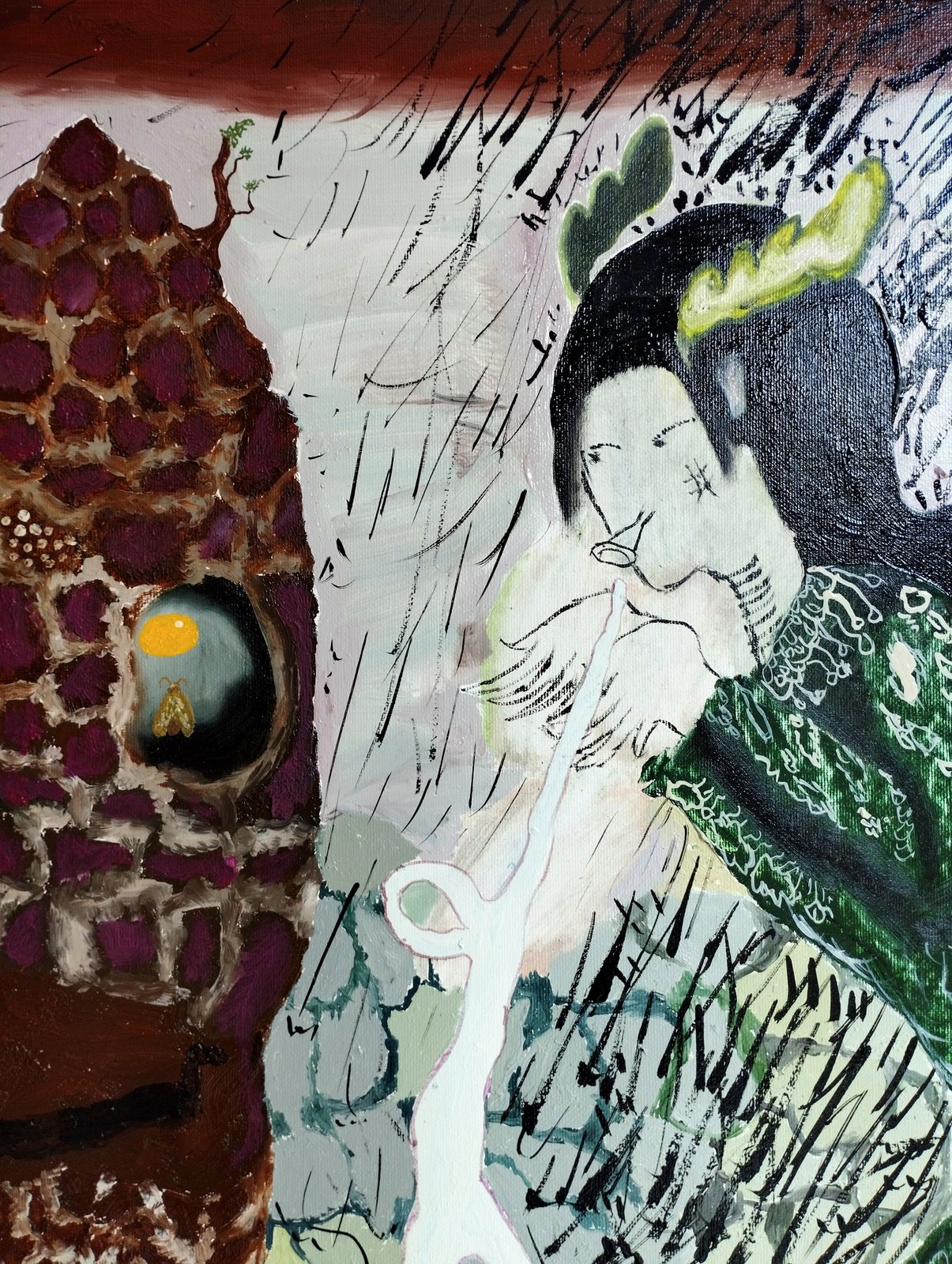
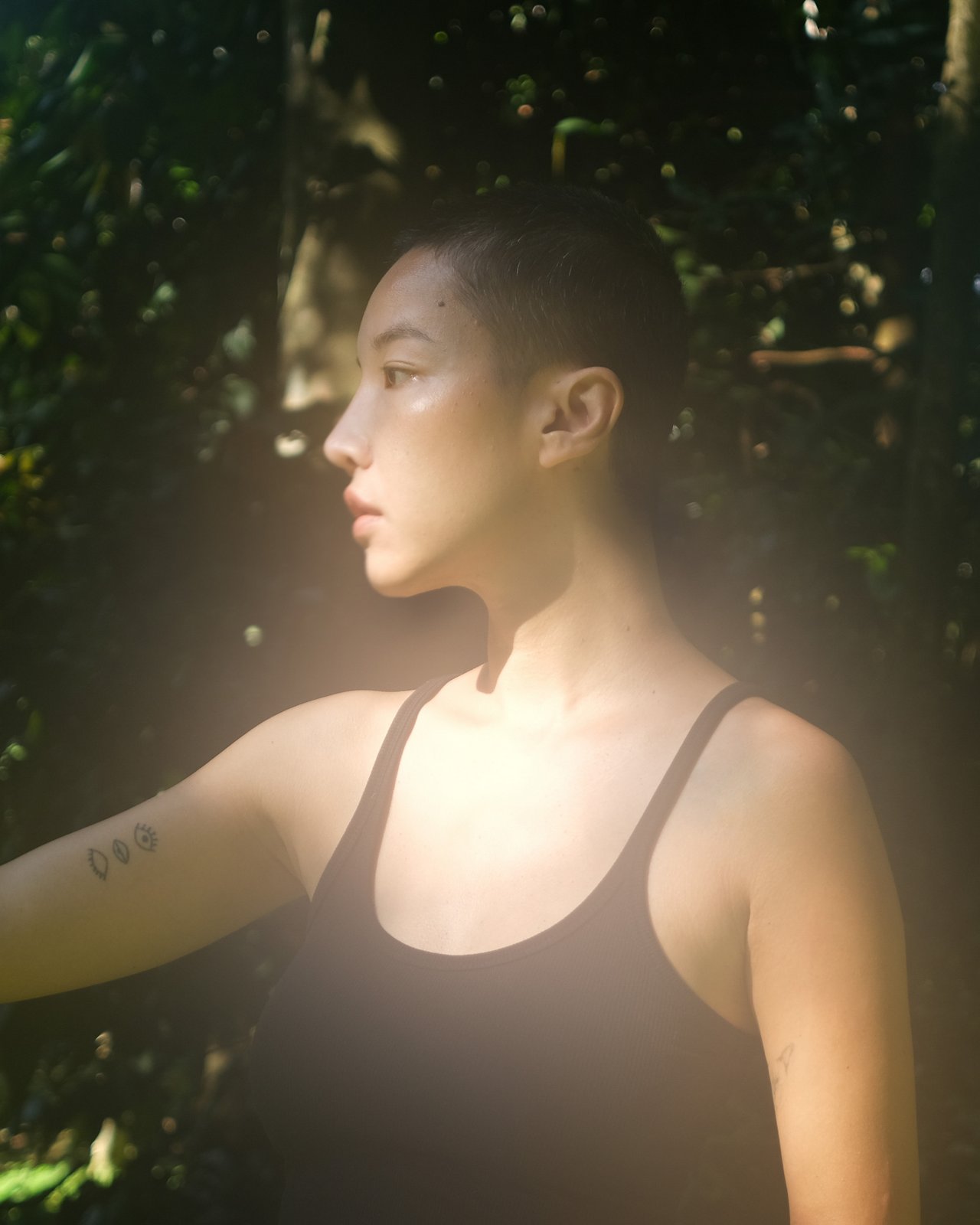
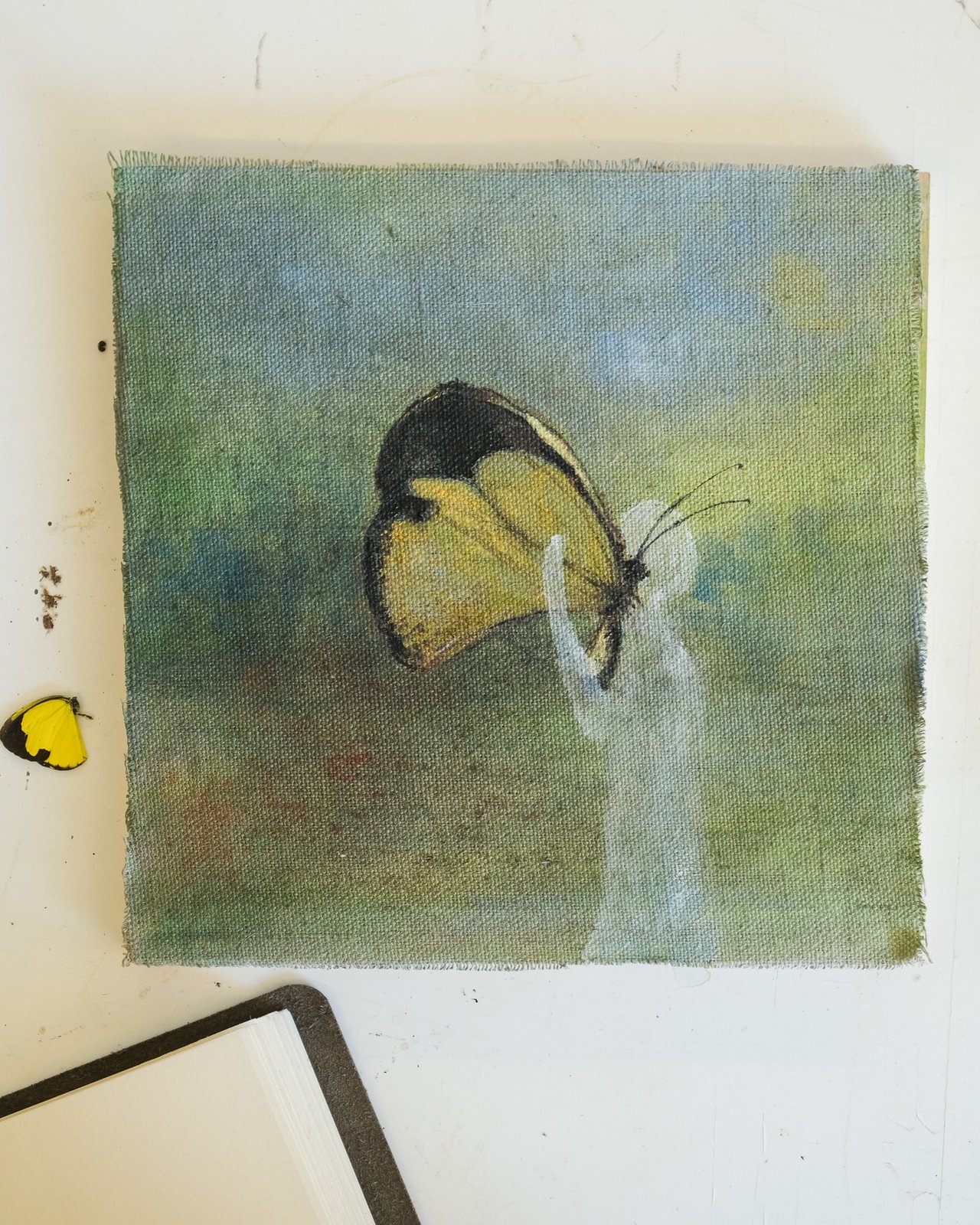
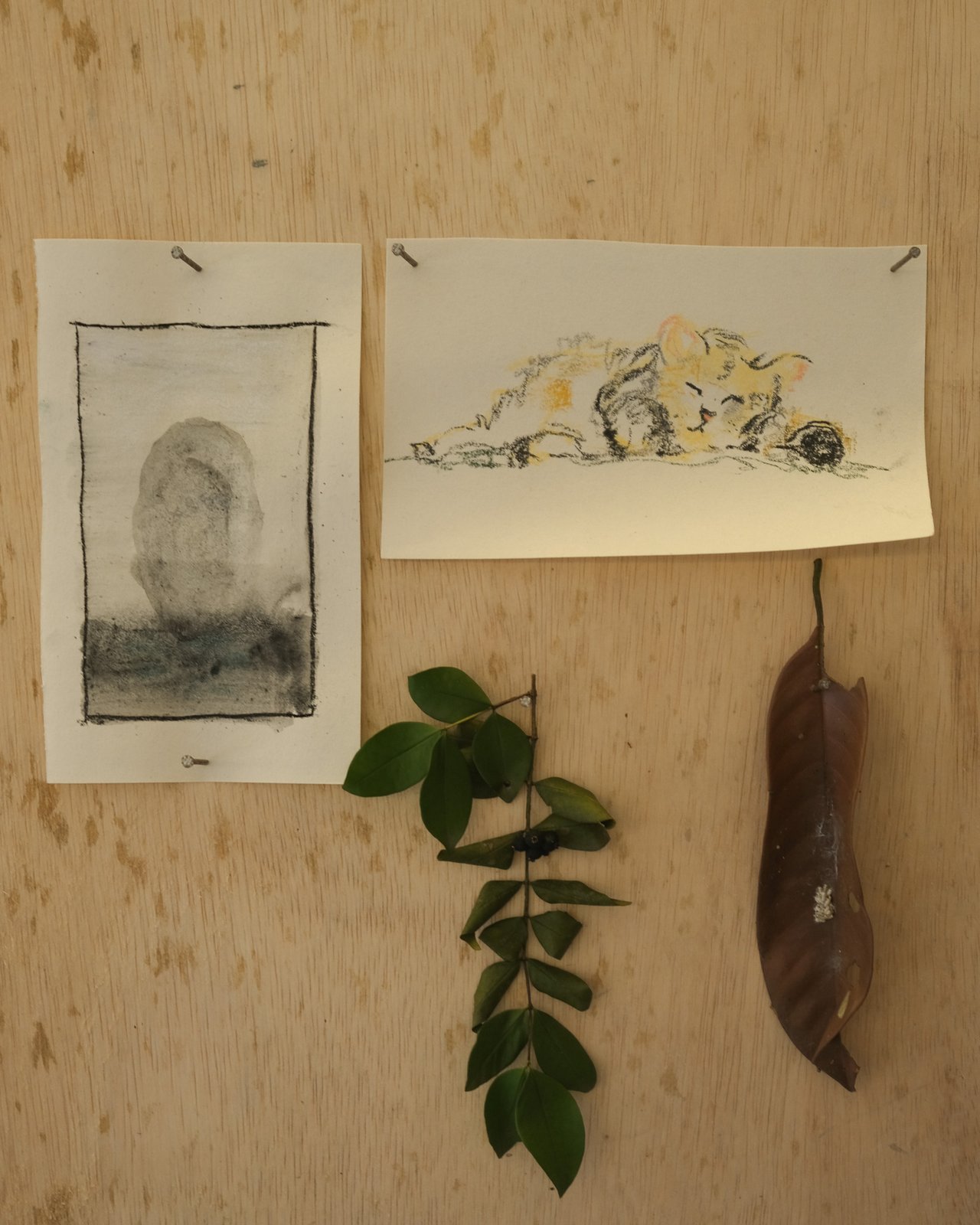
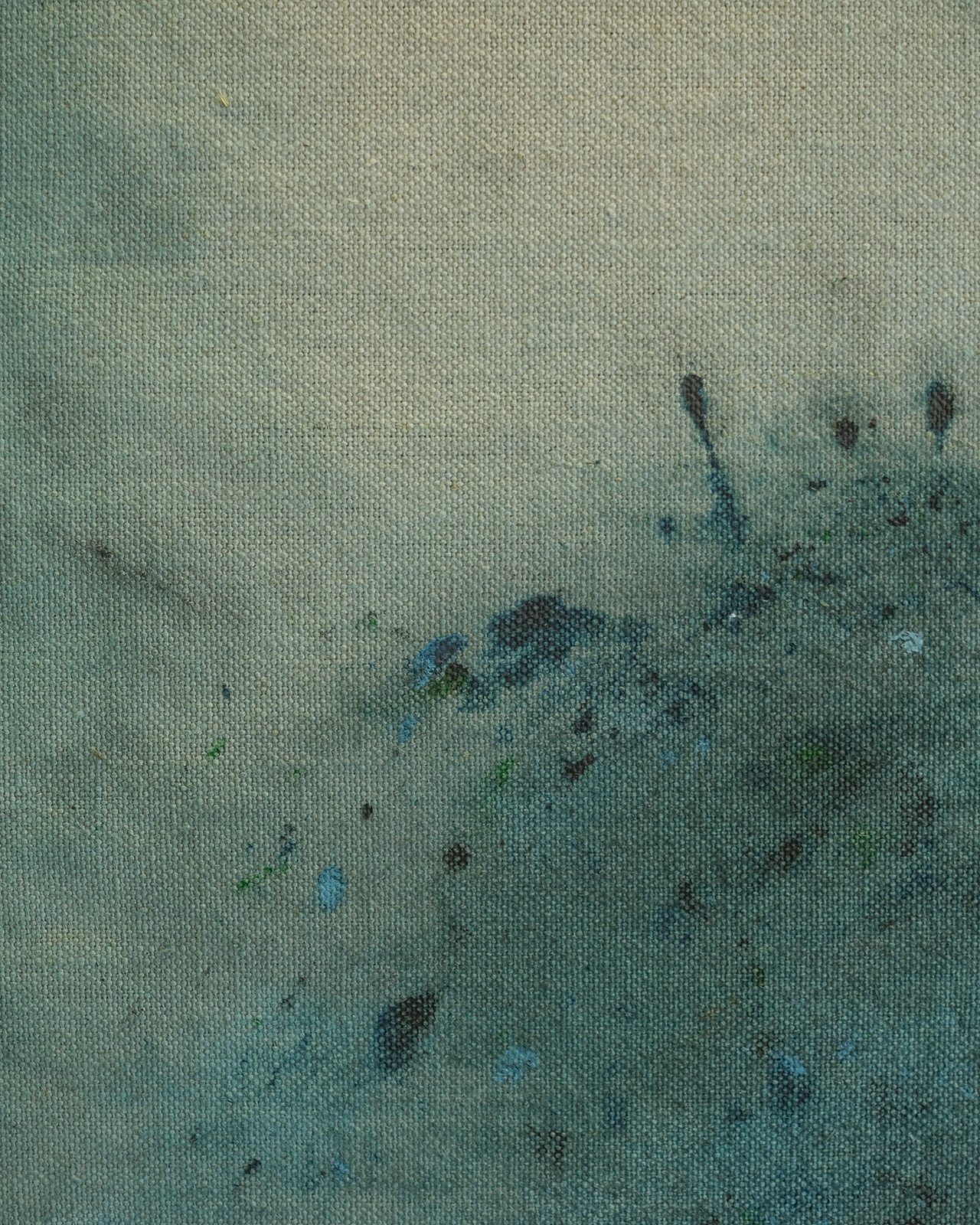
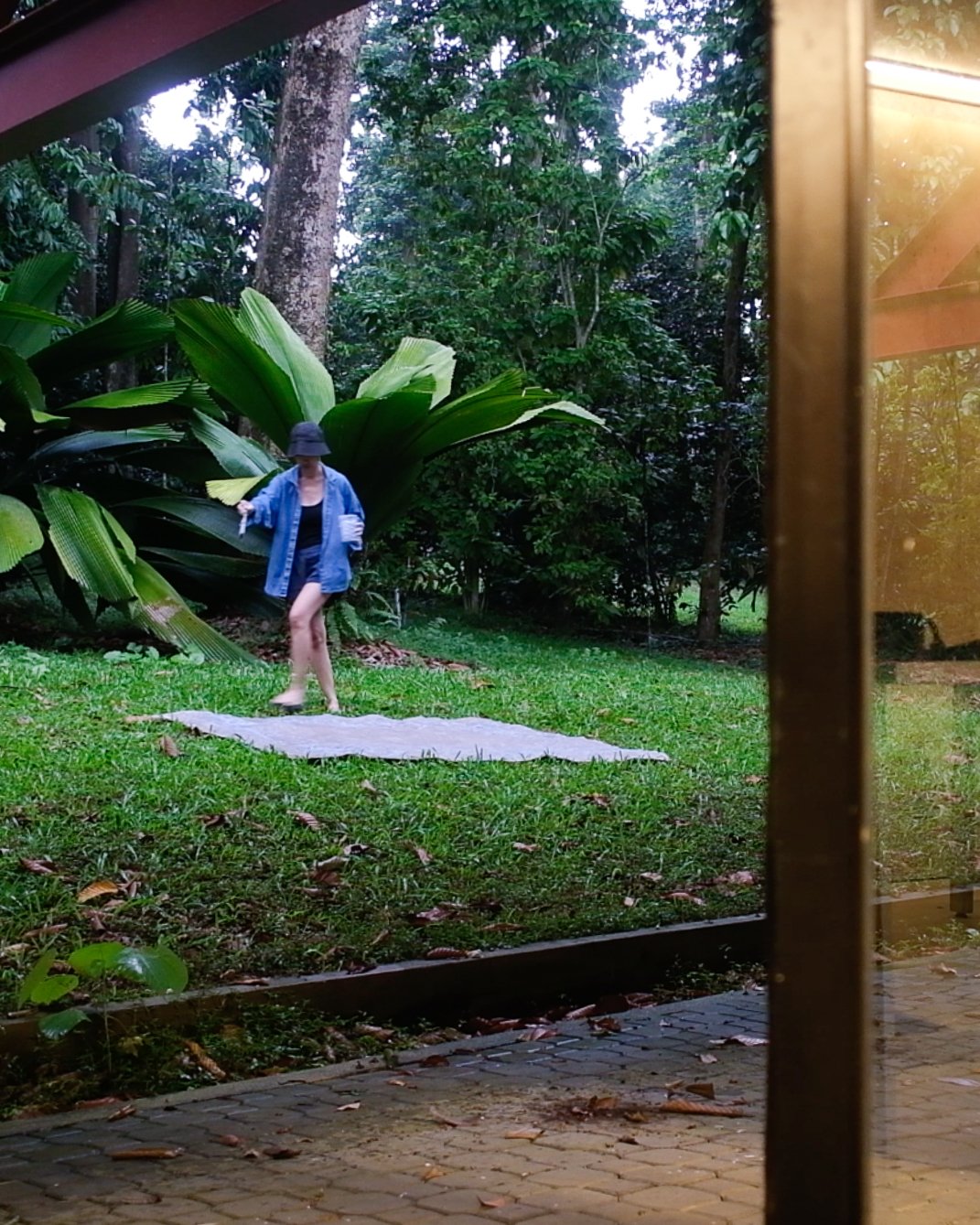
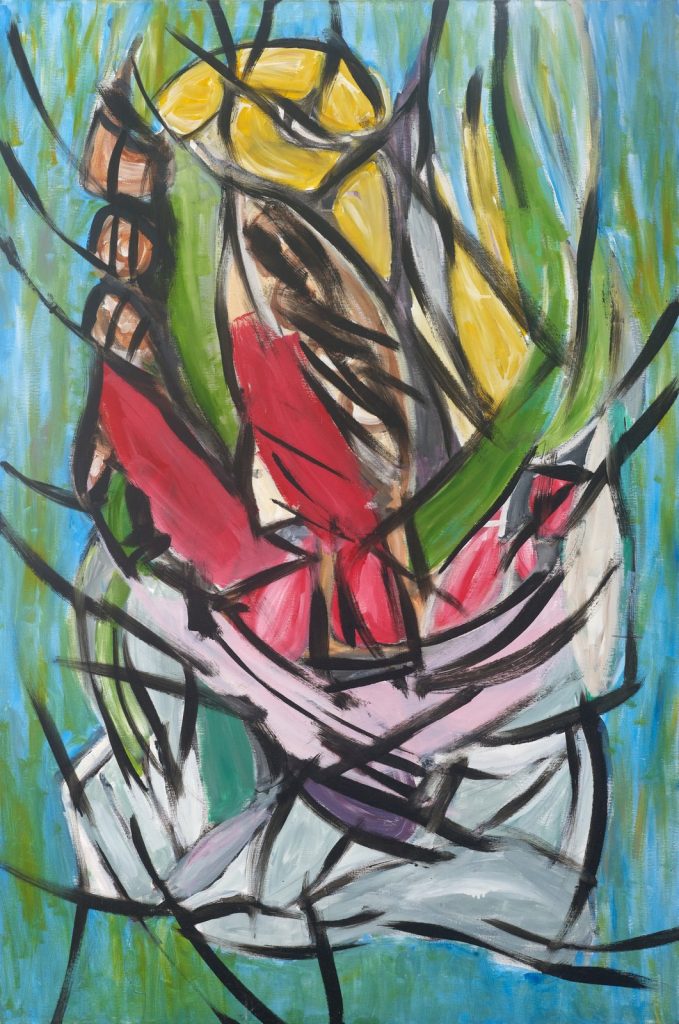
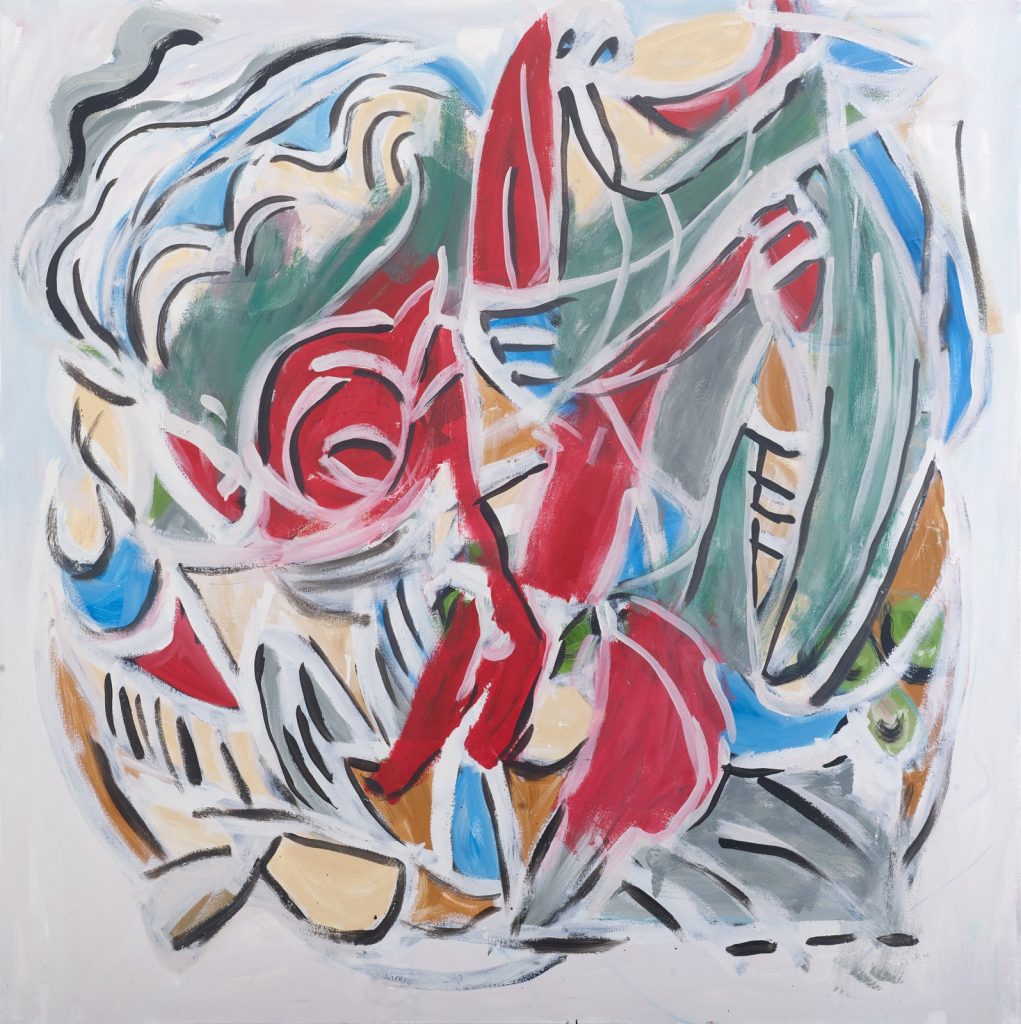
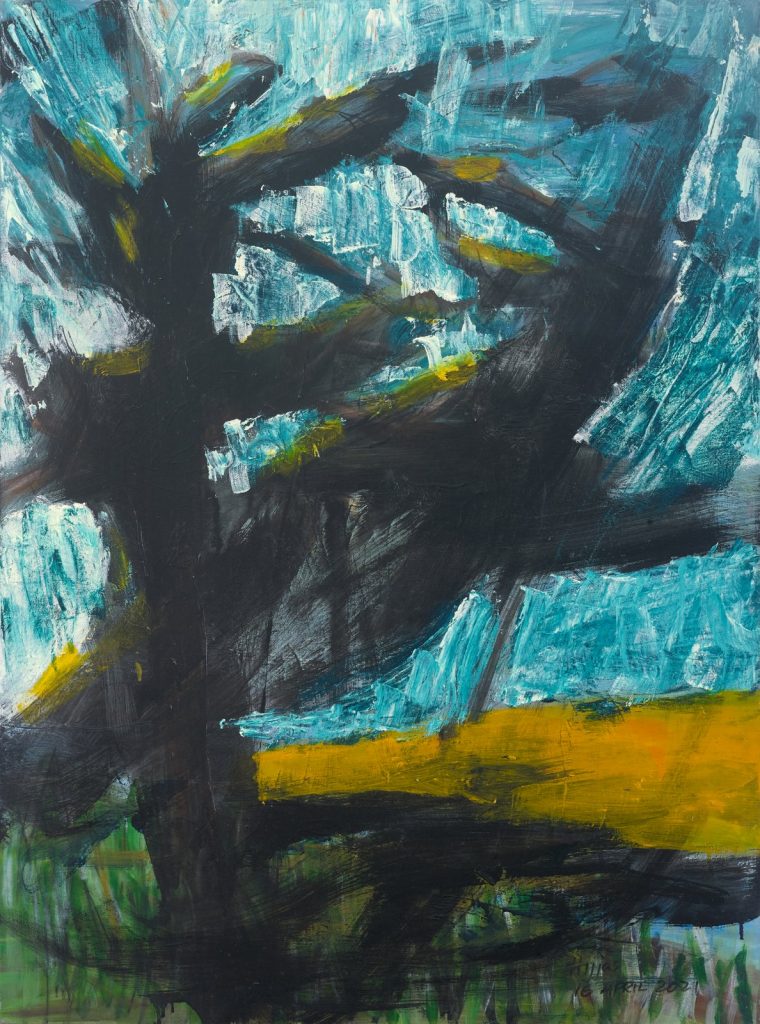
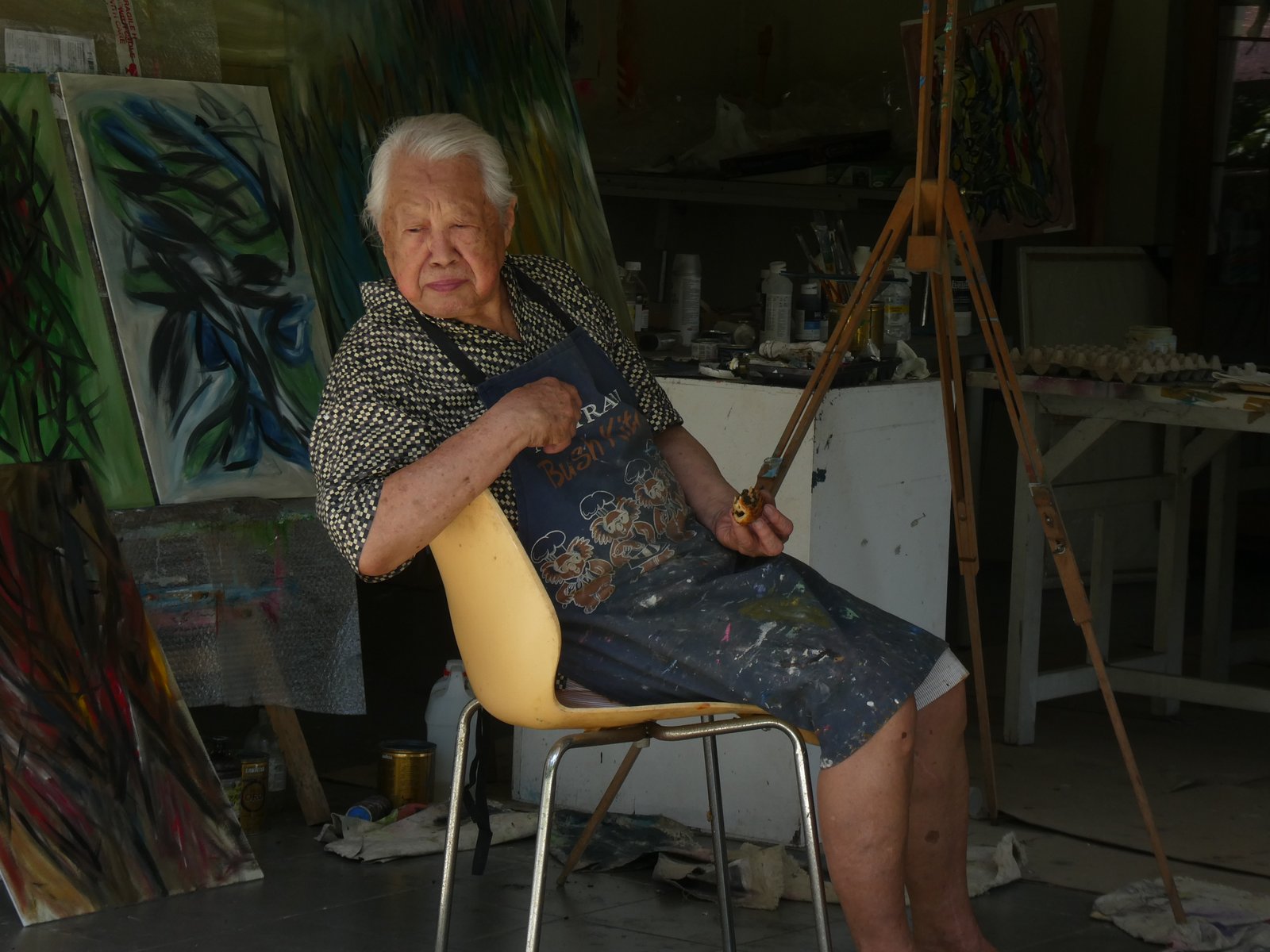
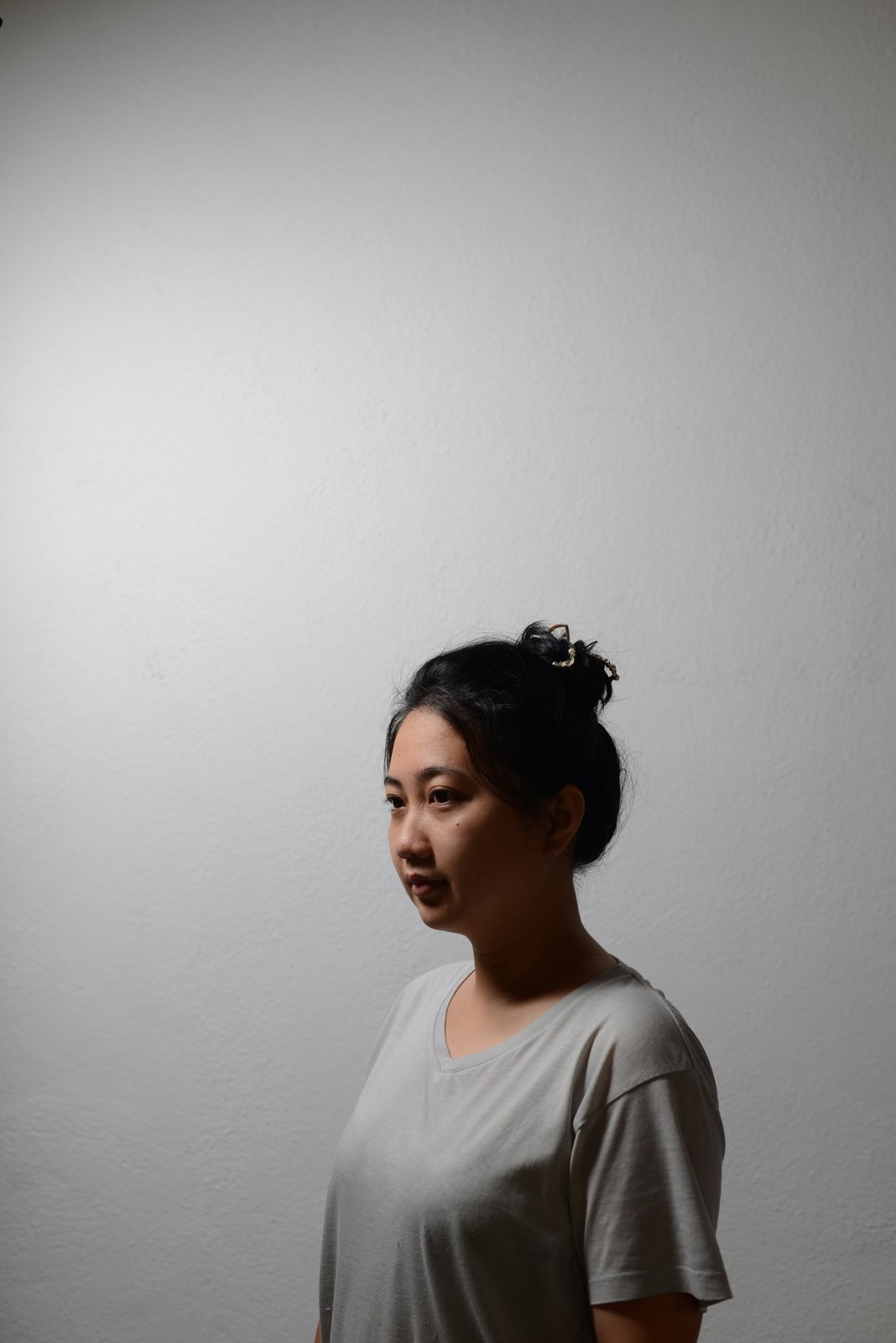
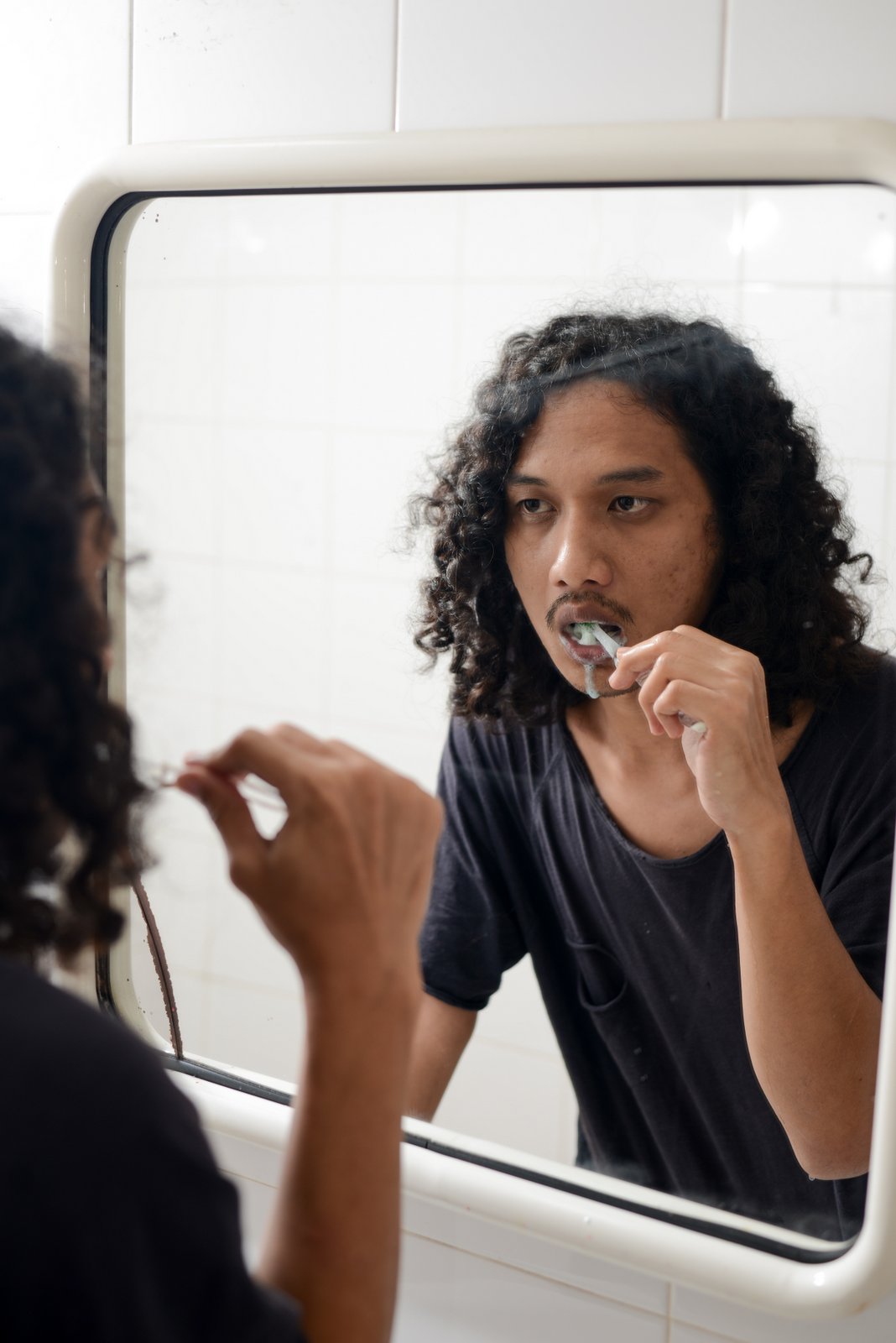
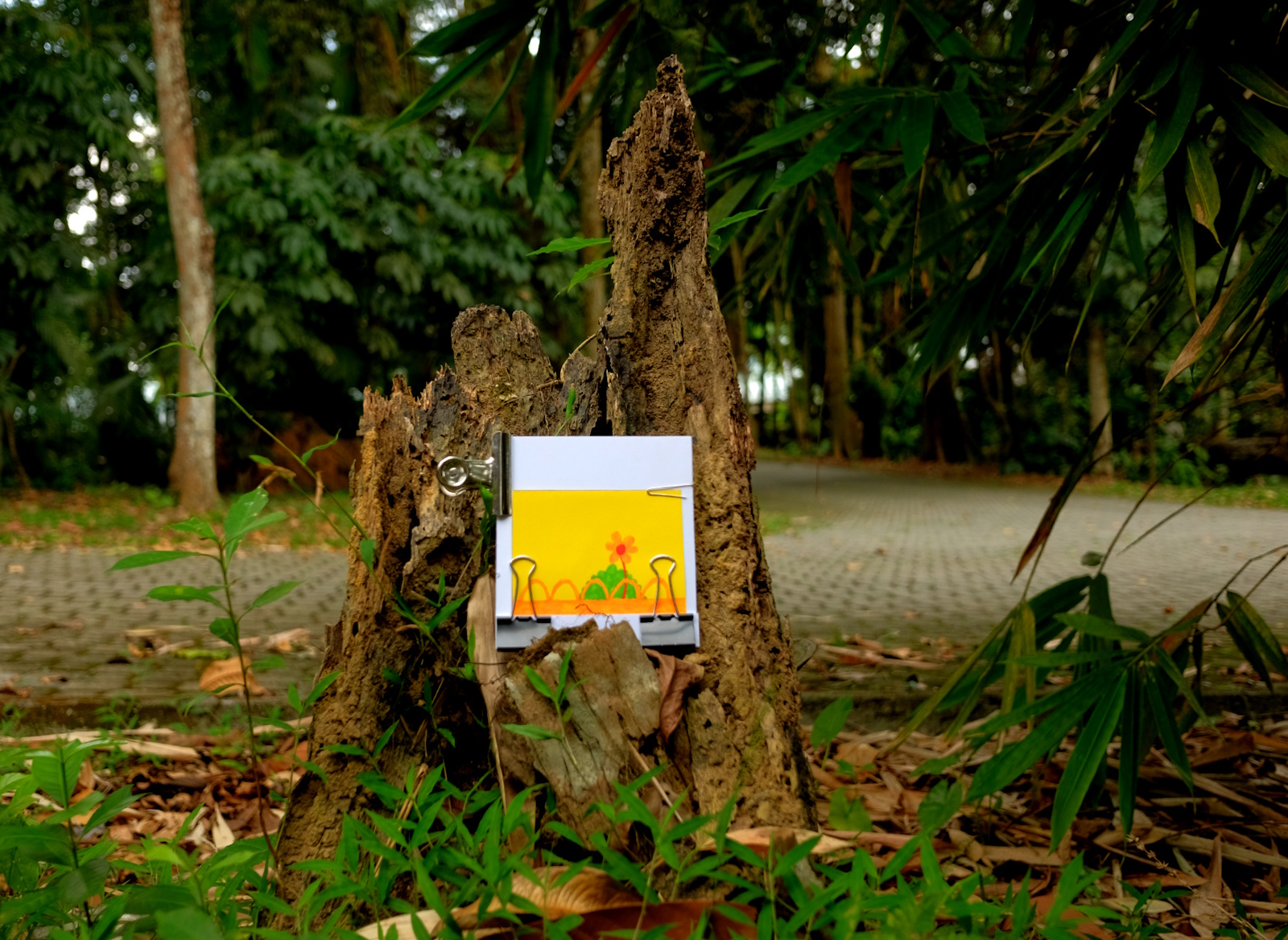
Malaysian painter Tan Choon Ting undertook a 3-month residency at Rimbun Dahan from March to May 2025.
About the Artist
Tan Choon Ting was born in Johor Bahru, Malaysia in 1992. Graduated from the Fine Arts Department of National Changhua Normal University in Taiwan in 2019. In recent years, he has been focusing on painting as his main creation. In his creation, he is interested in accident, expressiveness of painting and microcosm.
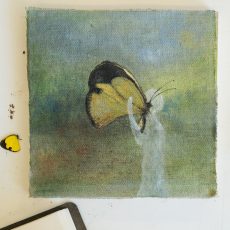
At Rimbun Dahan, I created works about nightscapes, portraits, plants, and passive imagination.
What impacted me the most when I first arrived here was the nightscape. I enjoy gazing into the night—it feels mysterious, and at the same time, there’s a strange pleasure in being conquered by it. I tried to find a subjective color that could represent this feeling within the night.
Portraits and plants always seem to “appear” together. My understanding of the plants didn’t come from actively studying them, but rather through the words of speakers during the guided tours here—those moments of “Ah, so that’s what it is.” This way of encountering things is a kind of escape I long for, a way to receive what we often call inspiration.
As for passive imagination—one day, on my way out to buy groceries, I saw some common roadside plants, and suddenly felt a sense of rediscovery. Perhaps this feeling came from the contrast with having stayed in the jungle of Rimbun Dahan for some time. It refreshed and reversed my perception, creating an alternating relationship between subject and object. At one moment, the inside becomes the outside; at another, the outside turns into the inside—pointing freely in either direction.
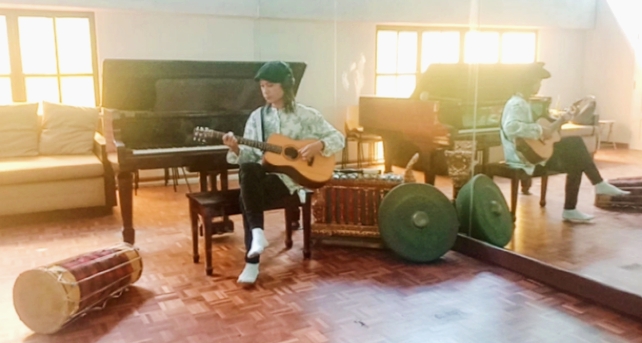
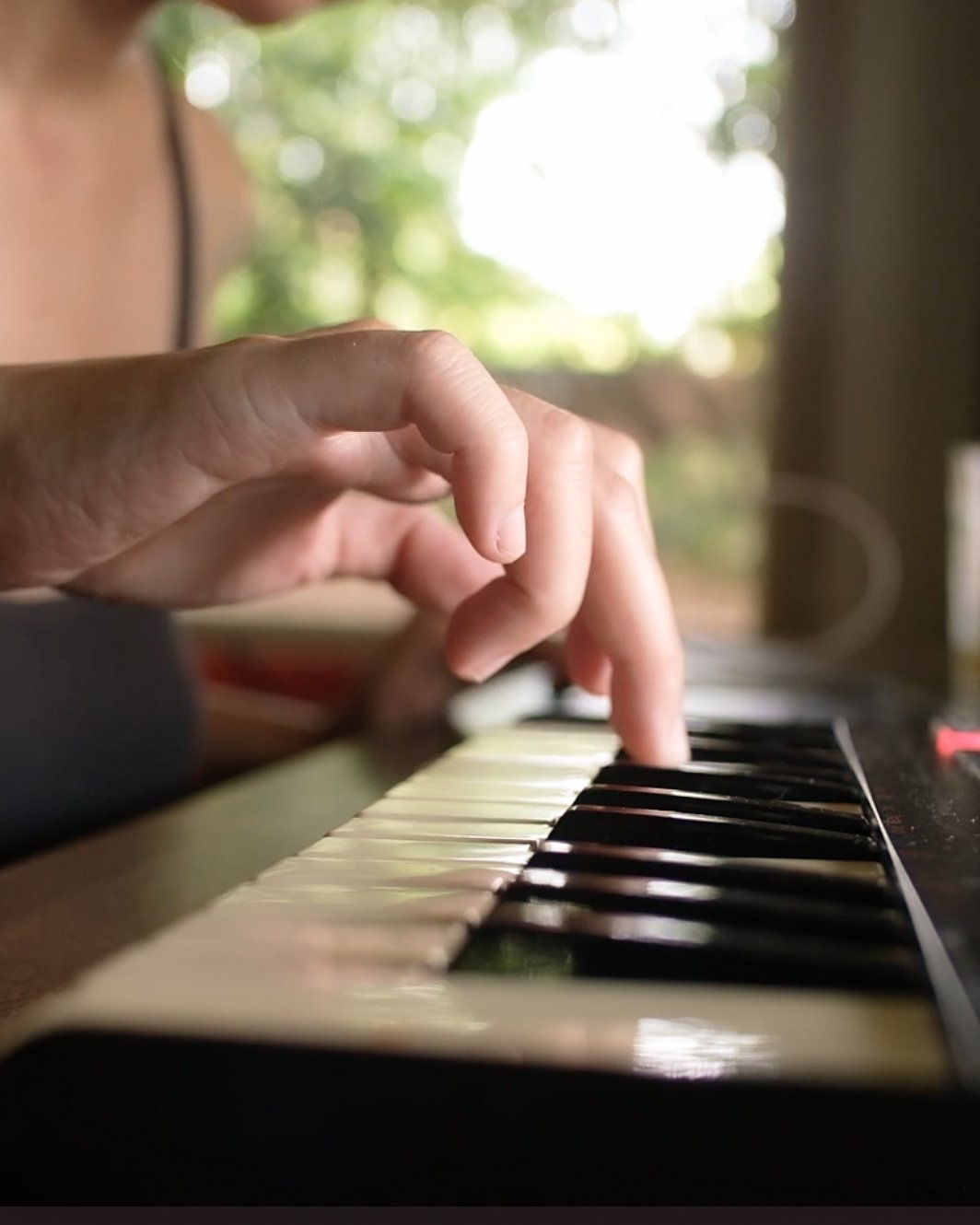
Malaysian musical artist Bumi Liar (real name Izuan Shah) undertook a six-week residency at Rimbun Dahan in April-May 2025.
About the Artist
Izuan Shah is a songwriter/composer and multi-instrumental musician based in Kuala Lumpur. He has a music repertoire stretching back 20 years with his art band Auburn, his pop duo Emmett I, and various other featured appearances. He trained at the Australia Institute of Music in Sydney, majoring in composition. Returning on break in 2013, he was awarded for his music video treatment to Auburn’s song, “Youth”, in the Best Digital Music Video category at the Malaysian Digital Film Awards that year. In 2019, his rock song for Emmett I, “Mogok”, was featured in the Southeast Asian blockbuster film, Polis Evo 2.
In January 2024, his song “Jiwa Kuala Lumpur”, written for his hometown on a routine LRT commute to the studio, was performed by the Kuala Lumpur’s DBKL Orchestra. At the end of last year, he was made honorary member of London-based collective Bill Dury And The Healers in Camden’s vibrant pub scene.
His songs have arced from the third culture idealism of his youth towards a more seasoned, rustic worldview which expresses his Southeast Asian consciousness while preserving his sense of romanticism for a just world.
A writer at heart, his lifelong journaling and lyrical practice has crystallised over time as one with his musical output, evolving him into an artist striding further into the realm of poeticism. Izuan’s current residency brings him back home full circle to the essence of his creative purpose: storytelling.
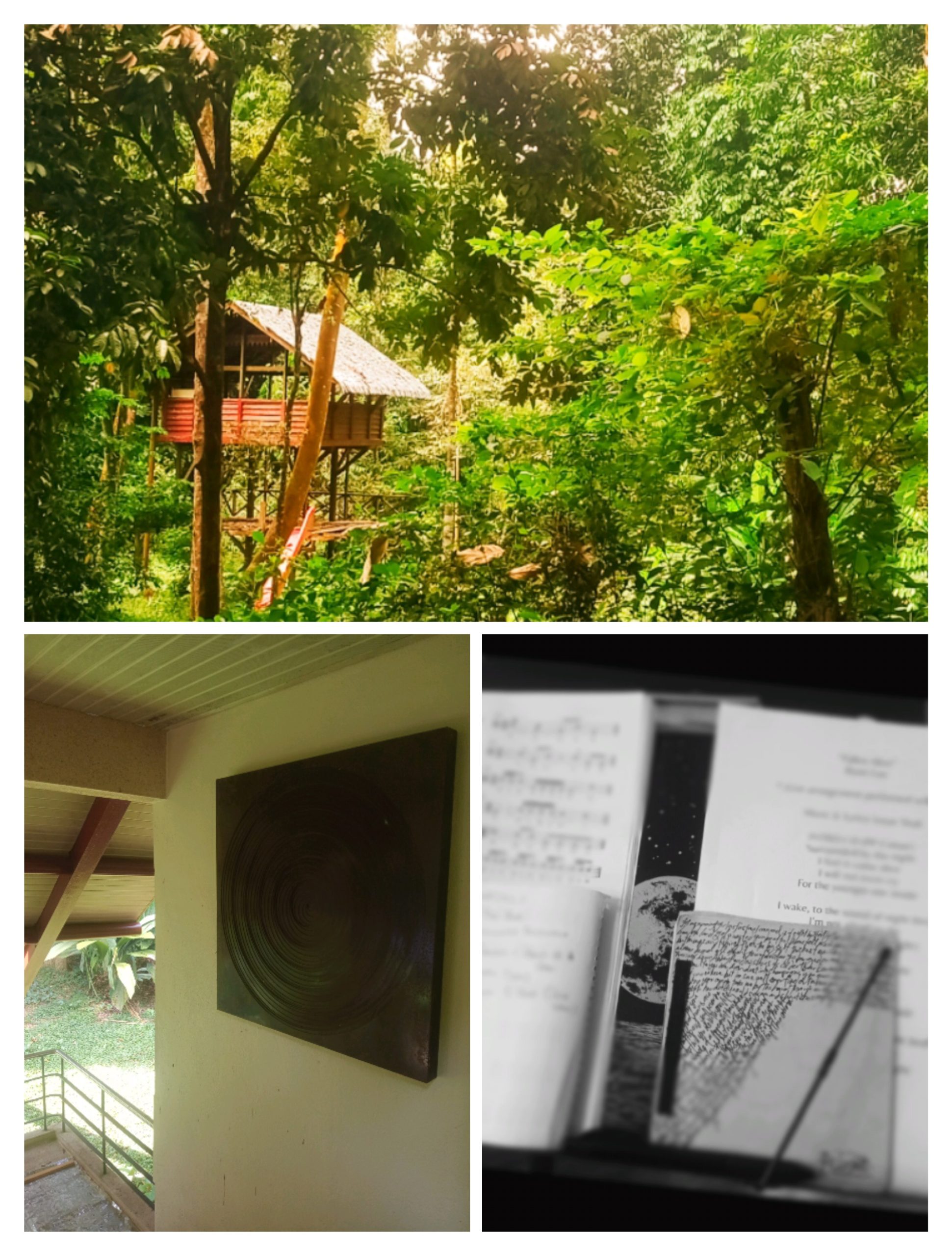
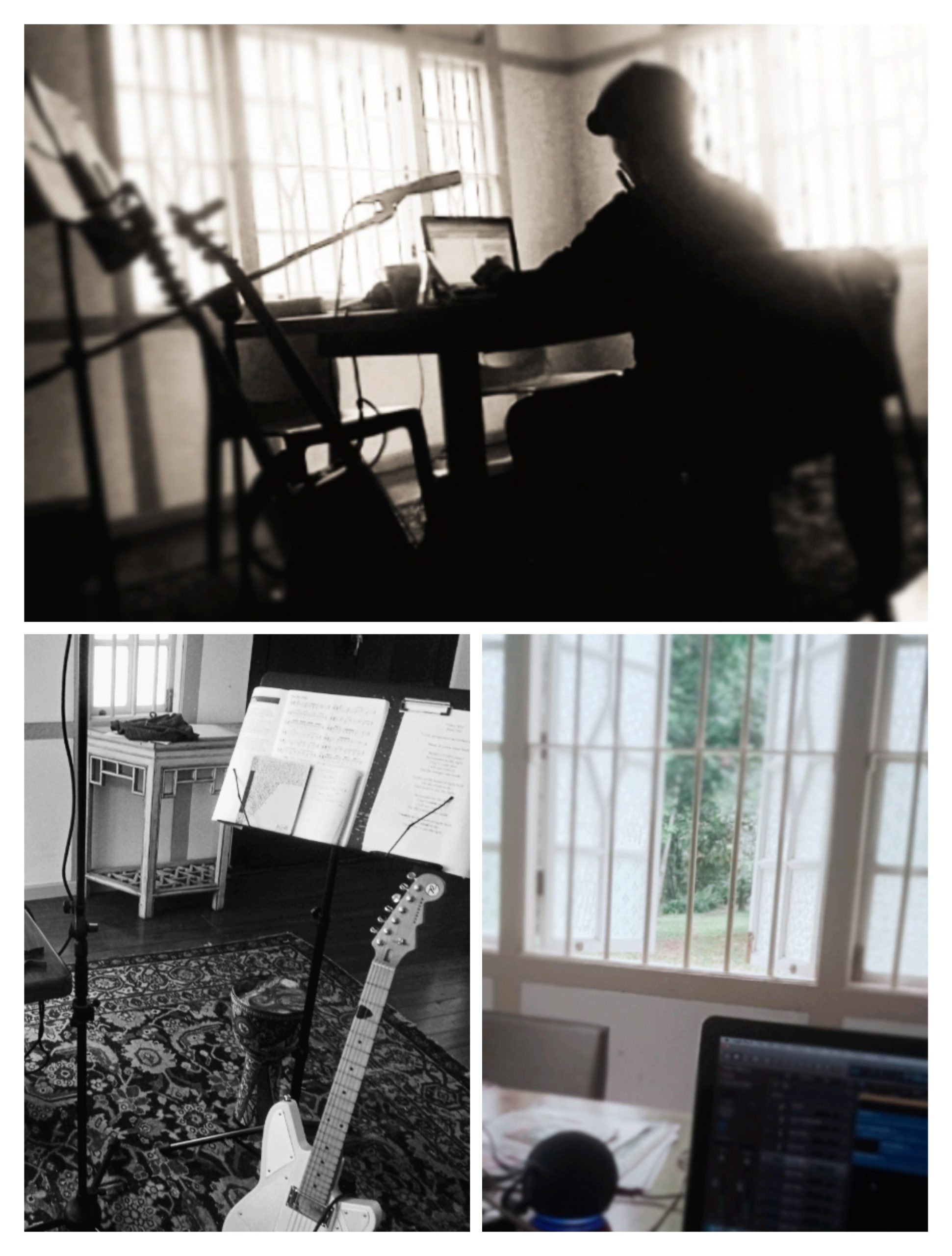
My tenure at Rimbun Dahan has removed me from the racing machinery of city existence, and opened me up to redirect my musical journey. Here I am given license to pursue a solo album that accepts realist commercial standards, while crucially returning to the beauty and parity of nature and the communal. My main focus here has entailed the sharpening of an artistic style where an East/West fusion serves the universal receiver, ideally sparking a conjunct spectrum of response and activation from both the proud listener and the inspired arts practitioner. The lyrical work meanwhile should speak for a silent majority, beyond the introspection and catharsis of the songwriter. For my current process, I have deliberately eschewed the luxury of modern studio approaches, making do with only voice, guitar, the humble dabruka hand drum, and maracas to shape the harmonic and rhythmic foundations. With a white canvas to express melody lines and inflections to my taste, I am also prompted to record previously suppressed traditional rhythms myself without relying on the touch of specialist players.
Unique synthesis options are also available to me here, such as live gamelan ensemble, prepared piano, and field recordings. Digital treatment has been only necessary for the rendering of these found sounds into the raw song material to complete these album demos, which will be reproduced in Jakarta as a full-length to be mixed and mastered in London. In a concerted move away from the rock band format, the original spirit of my previous ouvre–truth, resistance, rebellion, protest, amplified dissonance–has not been abandoned, but merely augmented with a matured emotional quotient in resilience towards the external chaos of the times. These dramatic elements have not been necessarily softened, but refined with subtler textures and refrained tones in the performance of my present Bumi Liar vessel (a stage name which translates simply to ‘wild world’) and my personal constitution of what could be defined as contemporary Malaysiana. This Bumi Liar aesthetic was conceived with a view towards preserving the musical, literary, visual, and cultural tenets of my birth heritage, descendant of my multi-strained ‘Nusantaran’ lineage, with all its inherent spiritual, mystical, and folklore aspects. The bi-lingual Melodis Pasca Silam (Post-Ancient Melodist) album may be preceded by an EP, entitled Kehalusan (Refinery), and will be made available into physical formats as a touring card along with its requisite digital presence.
Thai visual artist Pare Patcharapa Inchang was in residence at Rimbun Dahan for one month in April 2025.
About the Artist
Pare Patcharapa Inchang (b. 1984) is an artist based in Thailand. She began painting in her mid-thirties. Her painting work primarily focuses on themes of emotions through poetics, memories within individuals or communities, and the interaction of social issues and political conditions, reflecting personal experiences.
Pare holds a BA from King Mongkut’s Institute of Technology Ladkrabang. Her works have been exhibited across Thailand. Her photo book Touch Me is published by 89books, Italy (2022). She was a fellow at apexart in New York in 2024.
Whisper from the Ground : Soundscape Between Soil and Sun
Time is the creator of what we are and what we desire to become. We live in the moment, whether because it has not yet happened or because it has already passed.
Music is an art that conveys sensations in another form, is the aesthetic of time without consuming space.
The process of this project started with exploring the area around Rimbun Dahan, examining the traces of living beings. It presents stories of the passage of time that moves through the story of life, labor for whom the completeness of plant species is never ending, in the form of paintings to represent the feeling of being enveloped by movement of colors in raw linen, as well as sound recordings of insects and wind to create a music about space between the creator and the sun, reflecting the state of something that resembles reality.
All painting and music experiments emerge at the atmospheric crux between present and past, conjuring the liveness of place where I was.
A day of art and artists, in the 14-acre tropical greenery of Rimbun Dahan, 45 minutes from Kuala Lumpur.
On Sunday 27 April 2025, Rimbun Dahan will be open to the public, sharing new art works by our current resident artists: visual artists M. Sahzy (Kuching, M’sia), Tan Choon Ting (Johor Bahru, M’sia), and Pare Patcharapa (Thailand), with author Nuril Basri (Indonesia) and composer Izuan Shah (KL, M’sia).
Guest artist Cheryl Hoffmann (Canada) will also be joining us.
Free entry. Registration required for garden tour only (see below).
Schedule
9:00am-11:00am: Guided garden tour of our 14-acre native Southeast Asian arboretum and garden at Rimbun Dahan by Angela Hijjas. [UPDATE: GARDEN TOUR IS FULL, AND REGISTRATIONS ARE CLOSED. Please feel free to drop in, no registration required, for other Open Day events from 11am to 6pm.]
11:00am-1:30pm: Artists’ studios open to the public. Please visit and have a chat with the artist!
1:30-2:30pm: Lunch break; studios closed. You are welcome to bring your own picnic to enjoy in the garden; please take your rubbish with you.
2:30-6:00pm: Artists’ studios open to the public. Please visit and have a chat with the artist!
2:30-4:30pm: Workshop “Singing Niskala: Songwriting The Unseen” by Izuan Shah (Bumi Liar). Slots are very limited, and registrations are required. See more info and register here: https://forms.gle/9SweNke6BZZcxQRF8
4:45-6:00pm: Reading and discussion by author Nuril Basri.
Landmarks: Our front gate is opposite Warung Selera Ria and also next to the start of Lorong Belimbing. Do not enter Lorong Belimbing, please enter the front gate from the main road.
Tips for Visitors
We have parking inside the compound, along the driveway. Just drive in the front gate and park as indicated along the drive.
Bring your own mosquito repellent!
We are sorry, Rimbun Dahan is not a fully wheelchair accessible venue. Wheelchair access is possible to the artists studios and some of the outdoor areas, but not to the underground gallery or the heritage houses.
Wear practical shoes if you are planning to walk around the garden.
Bring an umbrella in case of rain.
No refreshments or water provided. Feel free to bring your own picnic, and enjoy it in the gardens; please clean up all your trash.
No pets, no swimming — thank you for your cooperation.
If you have any questions, please email arts@rimbundahan.org or WhatsApp Bilqis at +6017-3103769.
About the Resident Artists
M. Sahzy, a Malaysian sculpture artist based in Kuching, Sarawak, was in residence at Rimbun Dahan for one month in March 2025. Born in 1996, Sahzy draws inspiration from the jungle, crafting surreal sculptures from organic materials. Sahzy infuses his sculptures with personal narratives and experiences, incorporating discarded man-made objects to enrich the storytelling aspect of his creations. Through his artworks, Sahzy invites people to think about change, strength, and the cycles of life.
Pare Patcharapa Inchang from Thailand has been in residence at Rimbun Dahan for one month in April 2025. Born in 1984, Pare began painting in her mid-thirties. Her painting work primarily focuses on themes of emotions through poetics, memories within individuals or communities, and the interaction of social issues and political conditions, reflecting personal experiences. Pare holds a BA from King Mongkut’s Institute of Technology Ladkrabang, and her works have been exhibited across Thailand. This Sunday at Open Day, Pare will present her painting works and experimental music recordings as ‘Whisper from the Ground : Soundscape Between Soil and Sun’. The works explore the passage of time, through stories of life and labour, in the space between the creator and the sun.
Izuan Shah (Bumi Liar) is a Malaysian songwriter/composer and multi-instrumental musician. His music repertoire stretches back 20 years with his art band Auburn, his pop duo Emmett I, and various other featured appearances. He trained at the Australia Institute of Music in Sydney, majoring in composition. In 2013, he won Best Digital Music Video category at the Malaysian Digital Film Awards for his music video for Auburn’s song “Youth”. In 2019, his rock song for Emmett I, “Mogok”, featured in blockbuster film Polis Evo 2. A writer at heart, his lifelong journaling and lyrical practice has crystallized as one with his musical output, striding further into poeticism. During his residency, Izuan is pursuing a solo album highlighting previously suppressed traditional rhythms while remaining true to the spirit of his work: truth, resistance, rebellion and amplified dissonance.
Tan Choon Ting, a Malaysian painter from Johor Bahru, will present new works on nightscapes, portraits, plants, and passive imagination, from his 3-month residency at Rimbun Dahan. Tan Choon Ting was born in Johor Bahru, Malaysia in 1992. He graduated from the Fine Arts Department of National Changhua Normal University in Taiwan in 2019. In recent years, he has been focusing on painting as his main creation. In his creation, he is interested in accident, expressiveness of painting and microcosm.
Nuril Basri is an Indonesian writer whose work blends tragicomedy, autofiction, bildungsroman, and offbeat storytelling. His novels have been translated into English, Malay, and French. In 2023, his novel Le Rat d’égout won the Grand Prix du Roman Gay Traduit in France. He has been supported by institutions such as the Cité Internationale des Arts in Paris, the National Centre for Writing in Norwich, the Literarisches Colloquium Berlin, and others. He is currently working on his 10th novel, an exploration of identity, power dynamics, pain, queerness, and the working class.
Cheryl Hoffmann is originally from Canada. She landed in Kuala Lumpur in 2005 and stayed for 15 years. Cheryl has photographed traditional performing arts, religious festivals and rituals with a focus on exploring the interwoven belief systems of Southeast Asia. Cheryl’s ongoing project The Liquid Land, with photographer Mark Morris, explores the immensity of tin mining in Malaysia. During her week at Rimbun Dahan, Cheryl as been exploring different ways of printing images of tin talismans, using cyanotypes, anthotypes and transfers.
More info about the participating artists coming soon…
About Rimbun Dahan
Rimbun Dahan is the home of Malaysian architect Hijjas Kasturi and his wife Angela. Set on fourteen acres outside Kuala Lumpur, Malaysia, the compound of Rimbun Dahan is a centre for developing traditional and contemporary art forms. It features buildings designed by Hijjas Kasturi, as well as two early 20th century traditional Malay houses from Perak and Penang, in an indigenous Southeast Asian garden environment which has recently been awarded arboretum status. Rimbun Dahan is private property, and is only open to the public on Open Days.
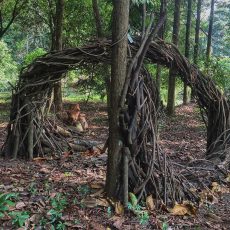
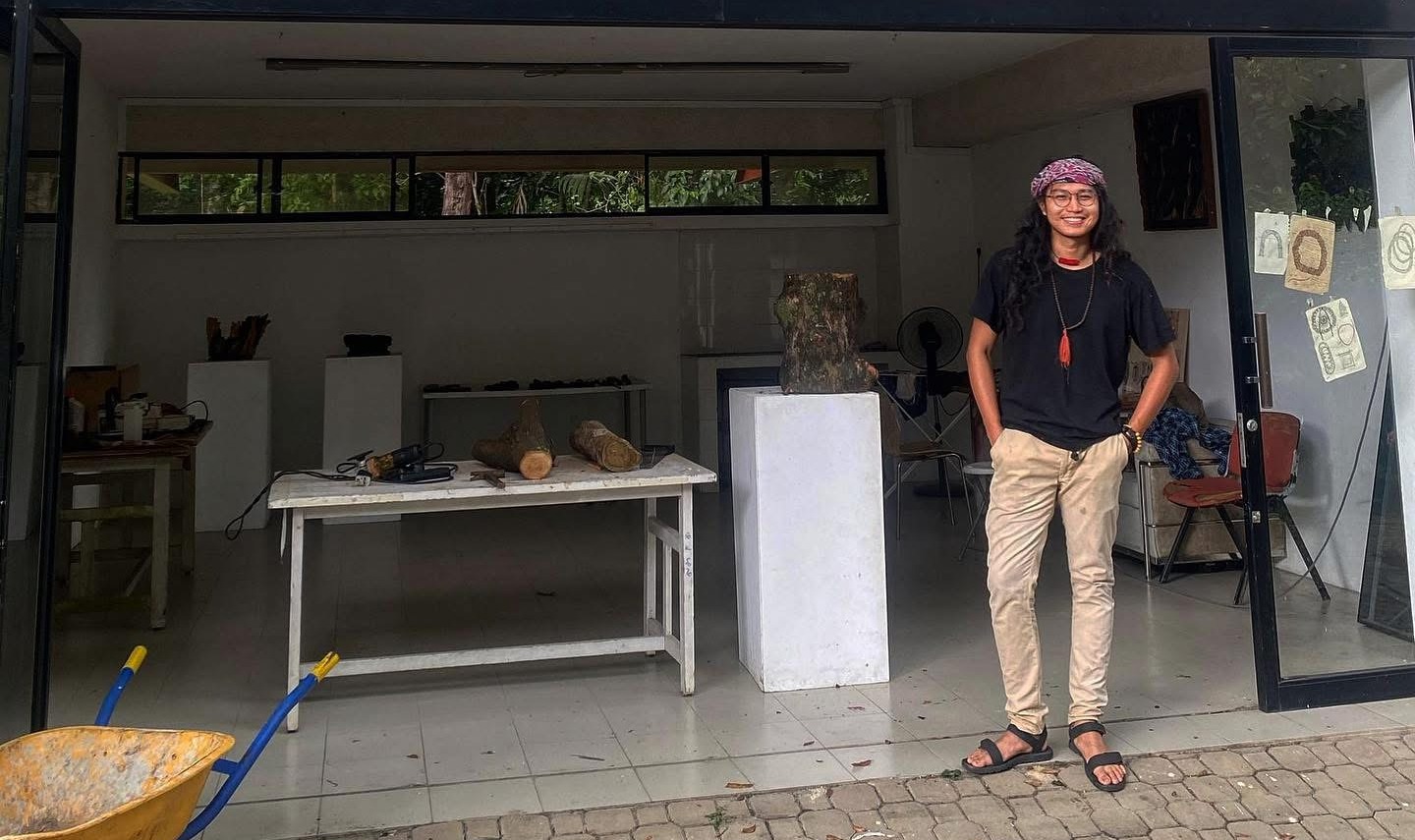
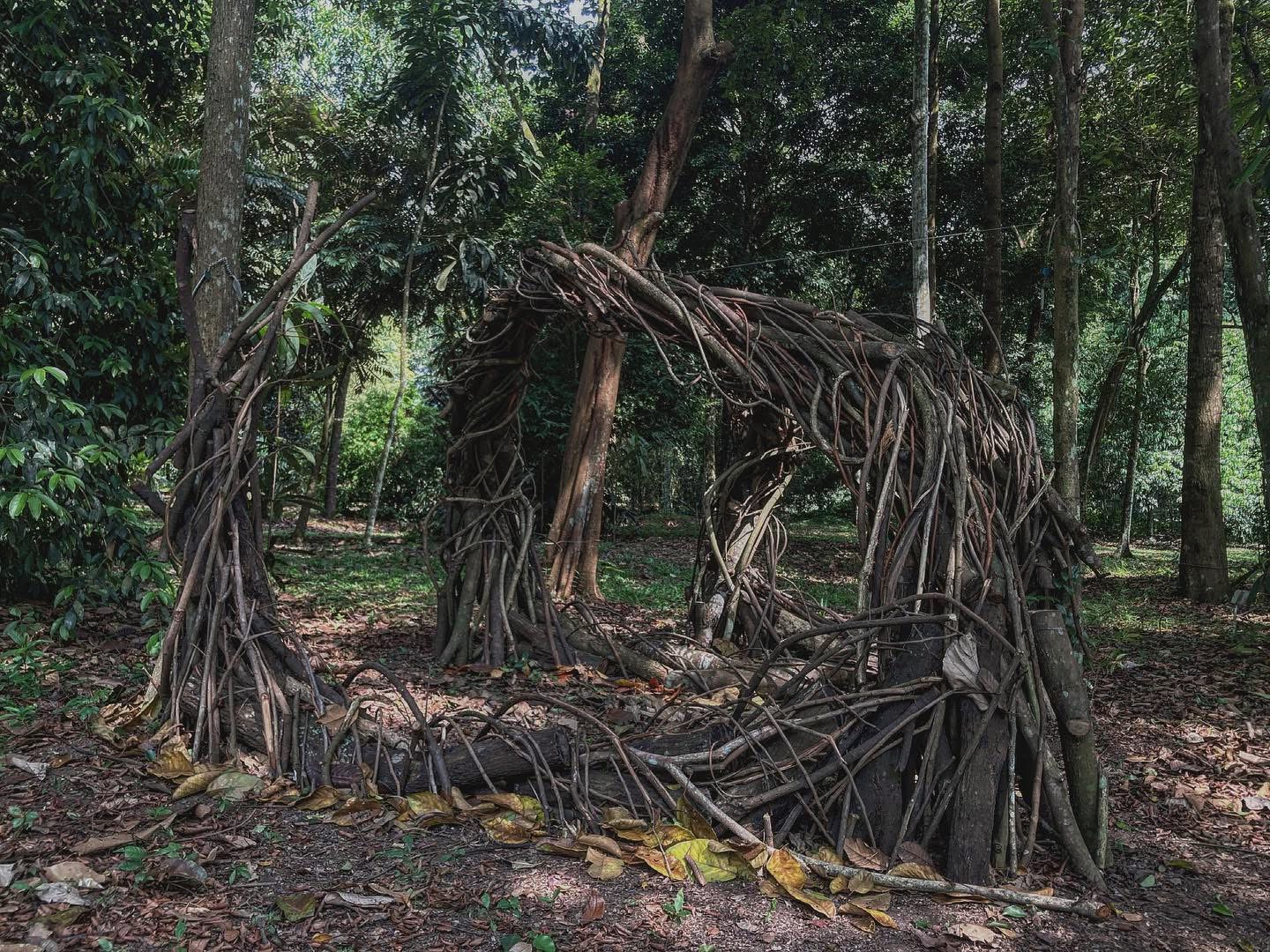
Malaysia sculpture artist M. Sahzy was in residence at Rimbun Dahan for one month in March 2025.
About the Artist
Born in 1996, M. Sahzy, an artist and sculptor residing in Kuching, Sarawak, draws inspiration from the lush jungle surroundings, crafting surreal sculptures from organic materials found within.
Each artwork is a testament to his deep connection with nature, reflecting the intricate interplay between materials, environment, and his boundless imagination. Spending weeks or even months on each piece, Sahzy infuses his sculptures with personal narratives and experiences, creating a captivating visual journey for the viewer. In addition to natural elements, Sahzy seamlessly incorporates discarded man-made objects, further enriching the storytelling aspect of his creations.
Through his artworks, Sahzy invites people to think about change, strength, and the cycles of life. He also highlights his deep interest in forgotten objects and the spaces they inhabit.
About the Residency
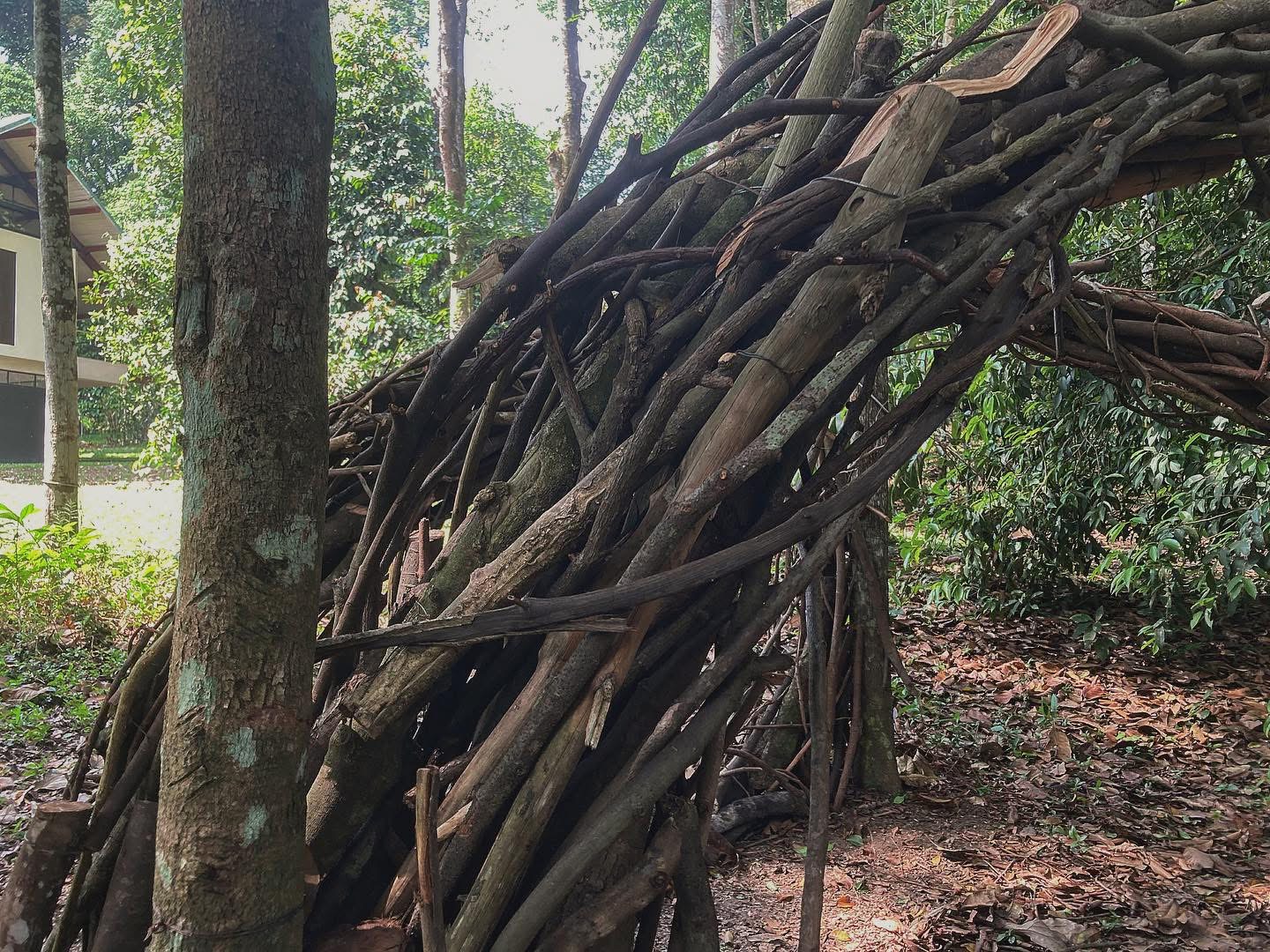
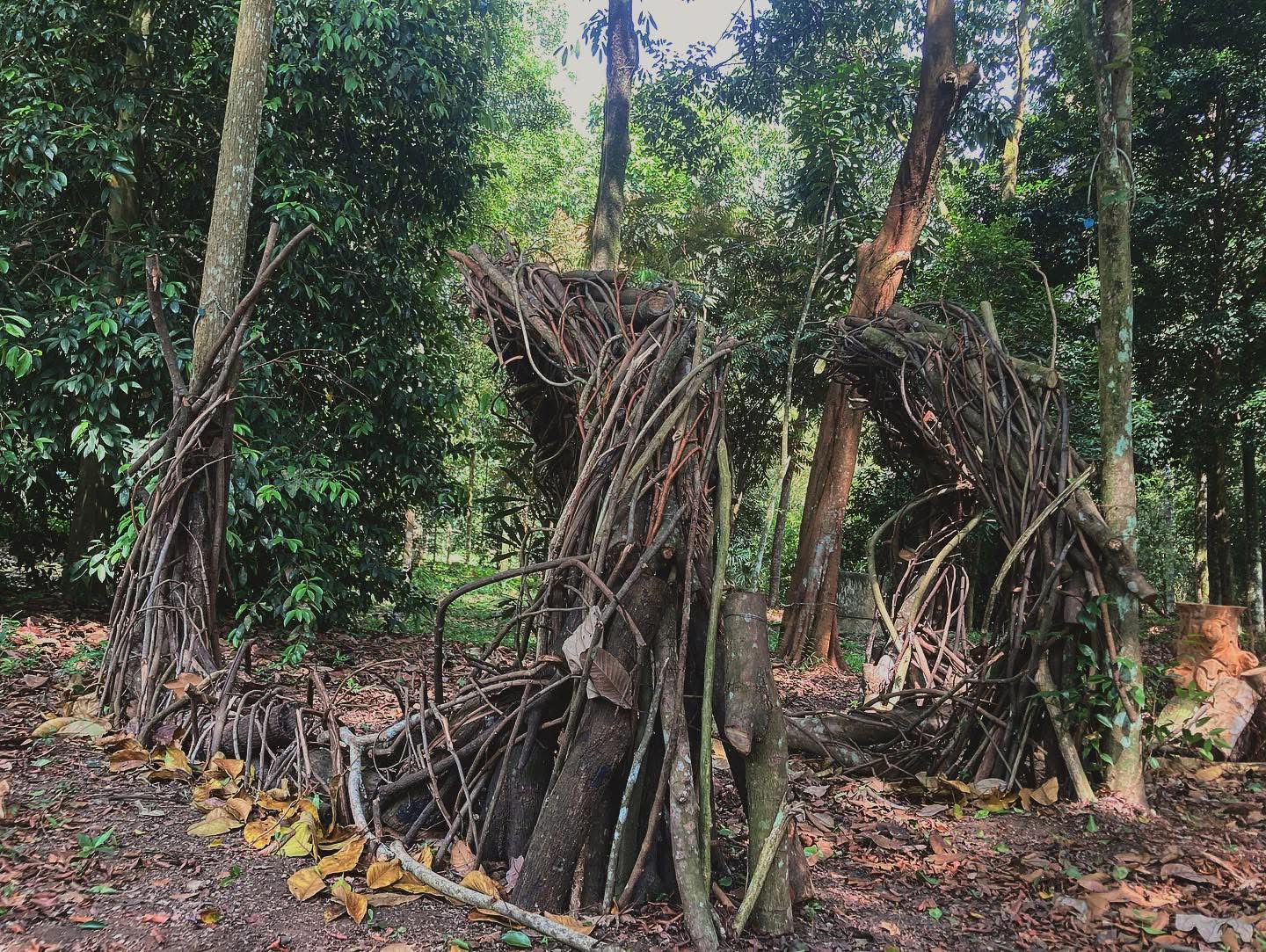
During my one-month art residency at Rimbun Dahan, I embraced the challenge of creating an installation and sculptures that carried a familiar narrative—but using entirely new materials and spaces, far from my usual resources in Sarawak.
The lush forest of Rimbun Dahan became both my muse and my source of materials. I collected discarded objects scattered throughout the woodland, transforming forgotten fragments into something meaningful. With my studio nestled so close to the forest, I was able to fully immerse myself in the creative process.
Each day, the symphony of rustling leaves, the earthy scent of damp soil, the presence of monkeys, birds, and frogs, and the textures of bark and trees guided my hands.
What began as an experiment in adaptation became a month-long dialogue between nature and creation.
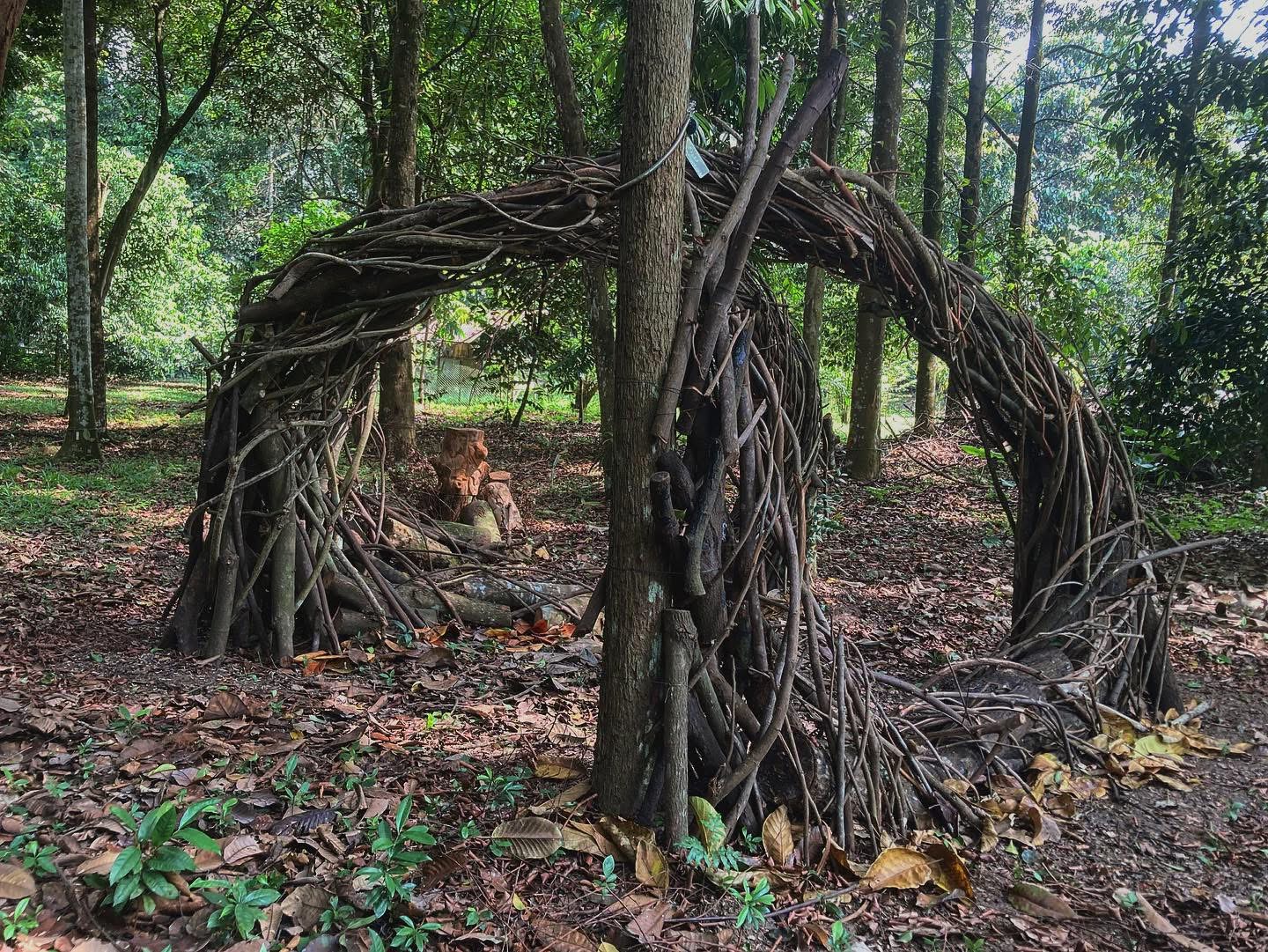
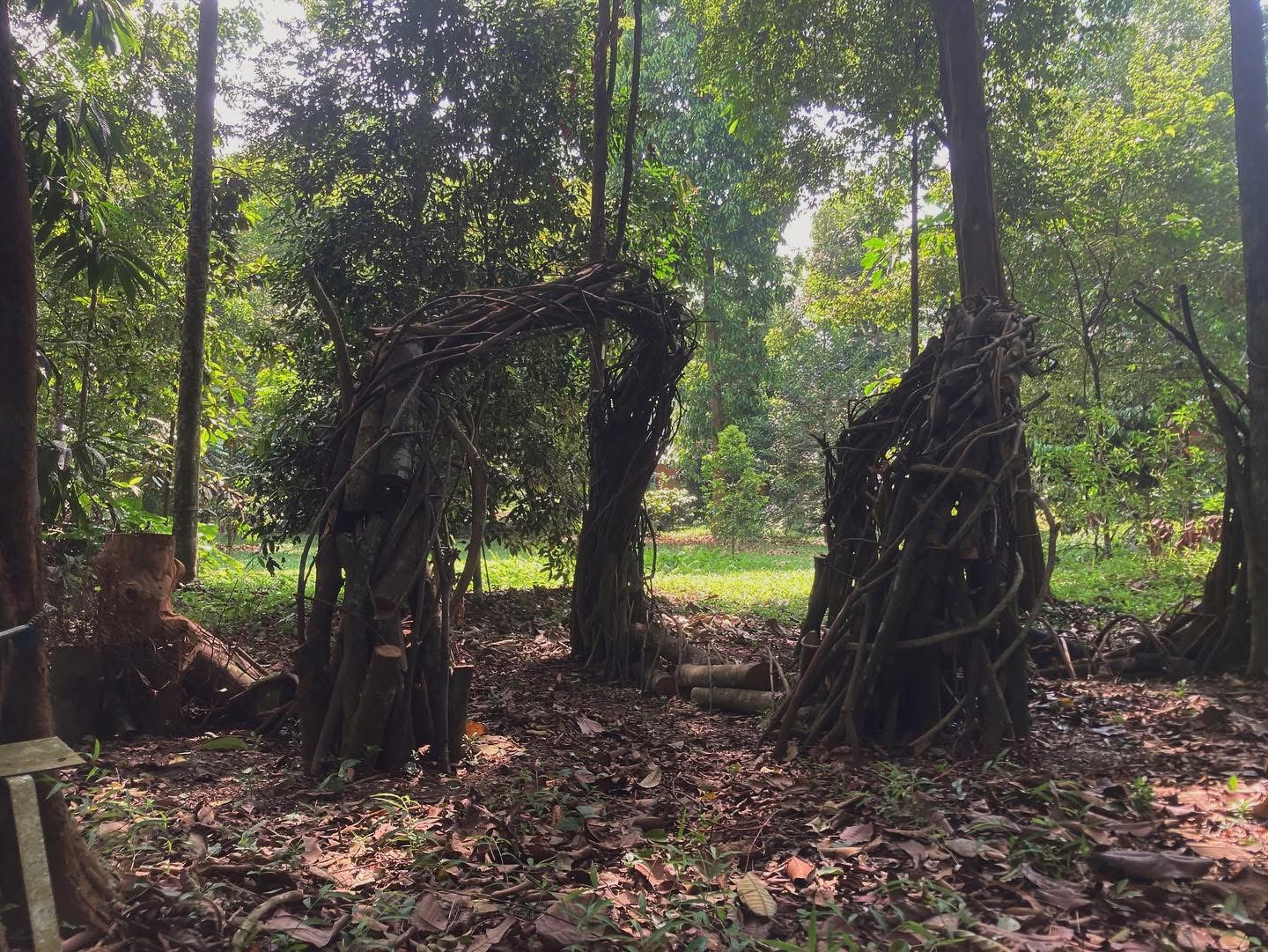
Now, Gerbang Alam / Portals stands complete—a testament to the beauty of reinvention and the quiet whispers of the forest that shaped it.
The Otters sculpture, crafted from driftwood and ironwood, will find its place by the lake at Rimbun Dahan—a fitting home for its spirit.
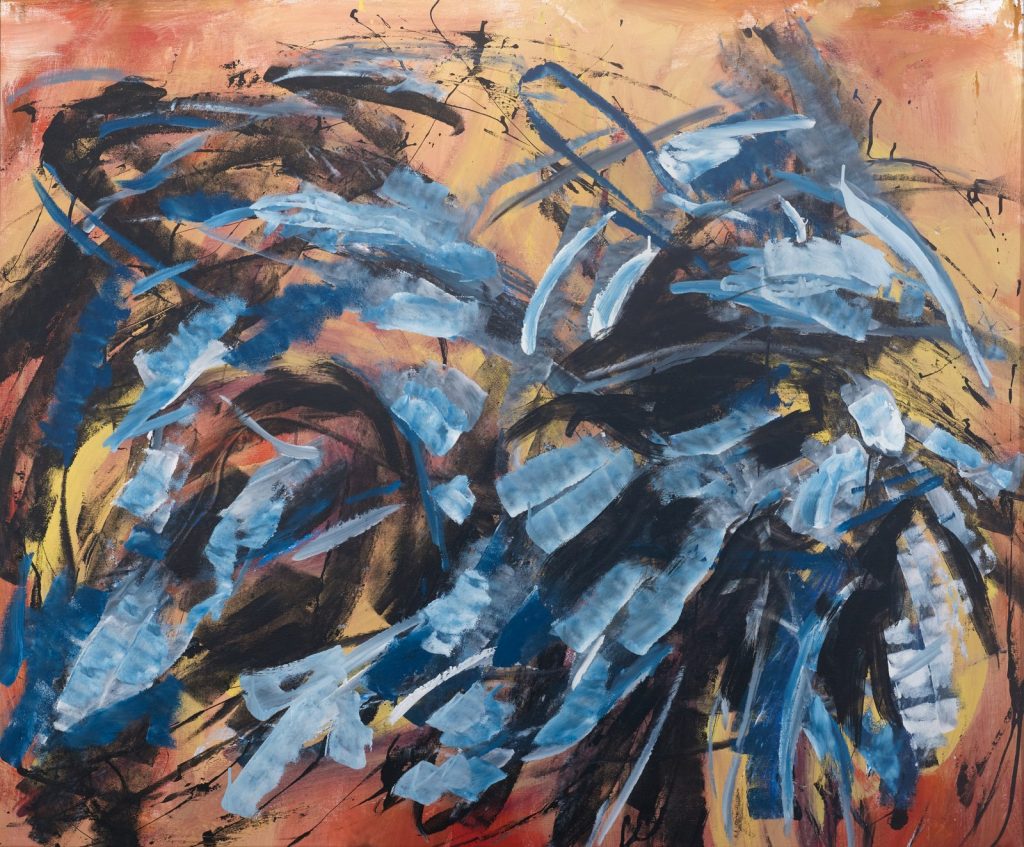
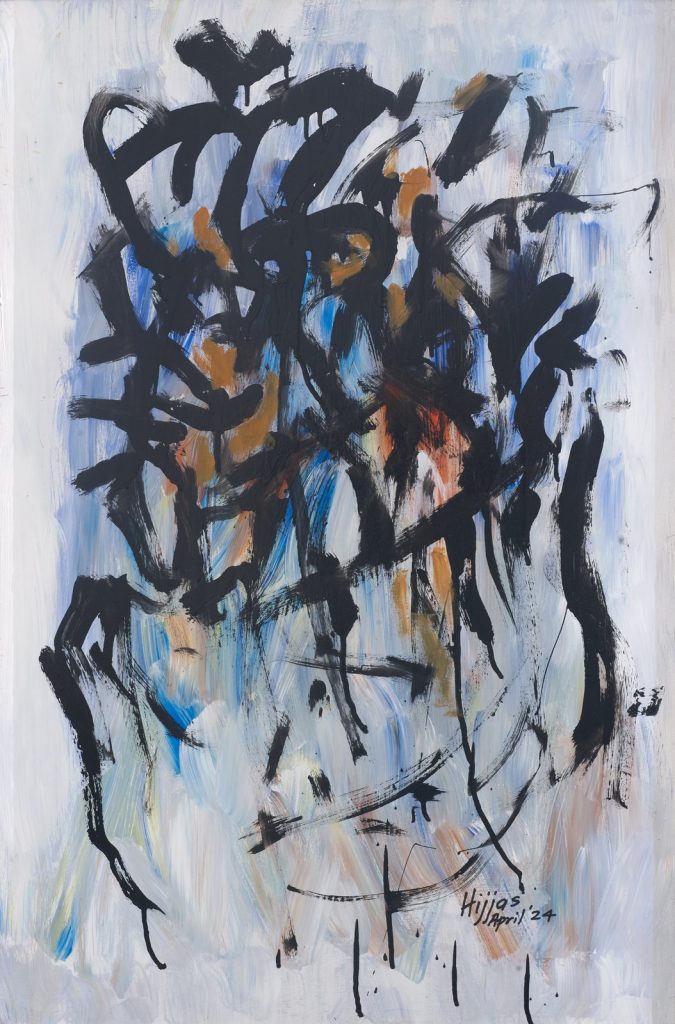
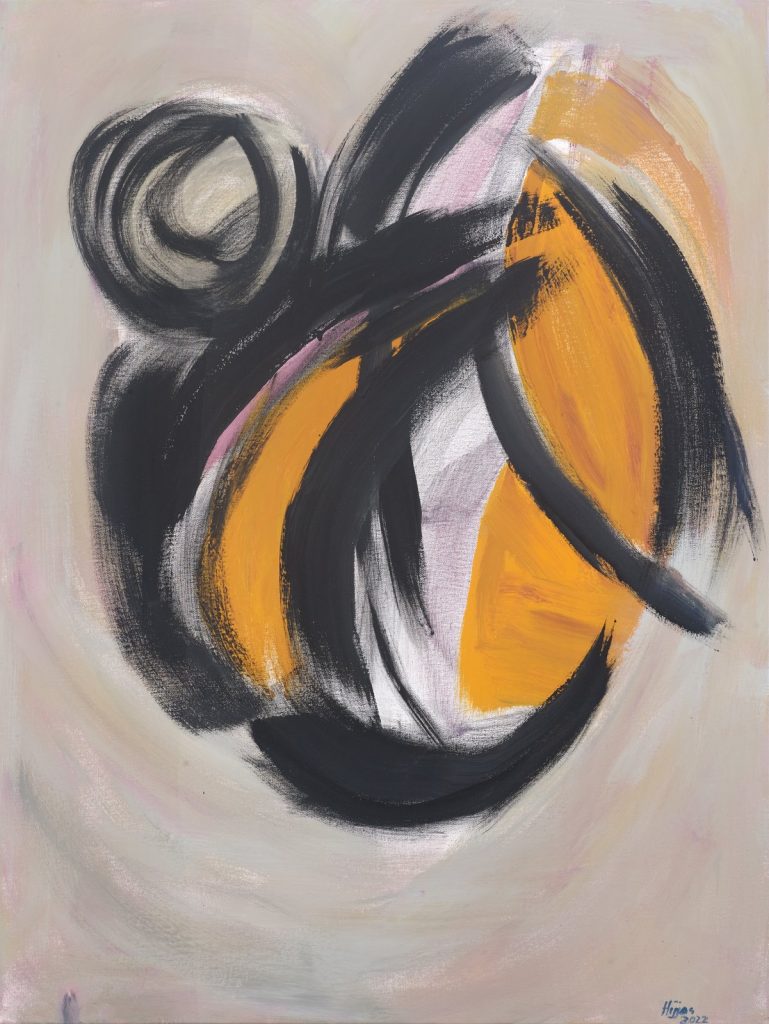
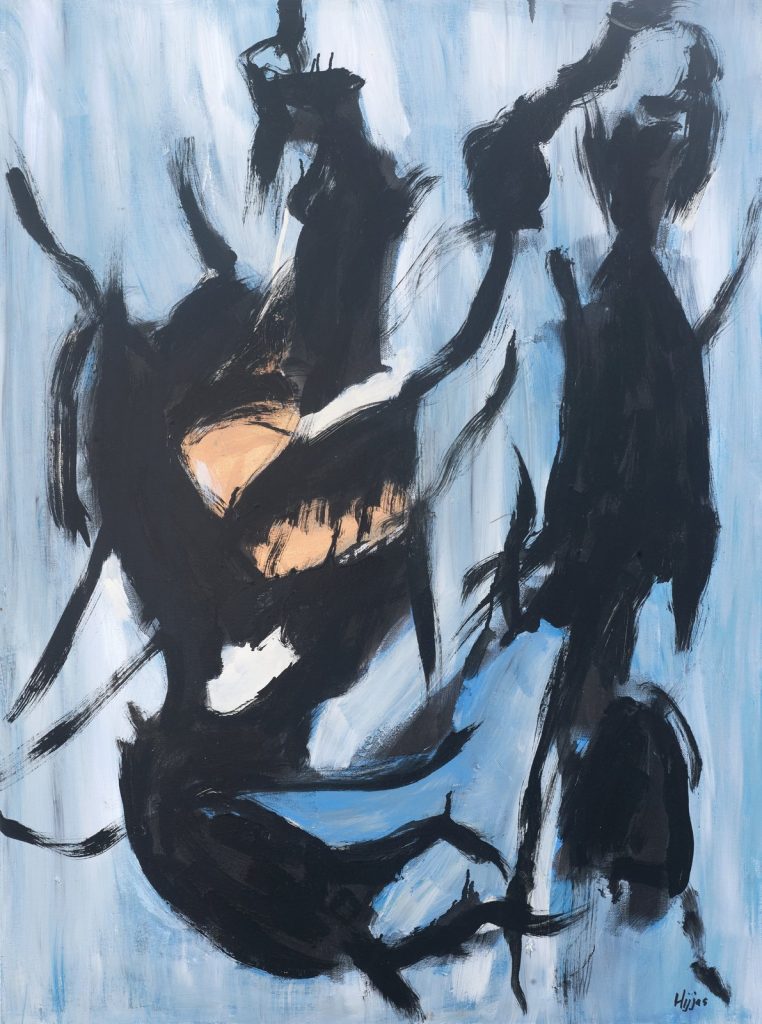
An exhibition of new abstract artworks by Hijjas Kasturi, created since his first solo exhibition ‘Renewal’ in 2022, and launched in conjunction with his 88th birthday.
Time and date: 10am to 5pm, Saturdays & Sundays 28 September to 20 October 2024 Weekday visits by appointment only.
Venue: Underground Gallery Rimbun Dahan Km. 27 Jalan Kuang Mukim Kuang, Selangor, 48050.
All the works are for sale. 50% of profits from the exhibition will go to UNRWA to support the Palestinian people.
During your visit, you are welcome to walk about the garden at Rimbun Dahan, and to visit the Rumah Uda Manap heritage house. No refreshments provided; please bring your own picnic if you want!
To make an appointment for a visit on weekdays, please email arts@rimbundahan.org or WhatsApp +6017 310 3769.
Download the full exhibition price list, with images: PDF 1.07MB [This price list has been compressed. To request a larger copy of the price list by link or email, please use contact below:]
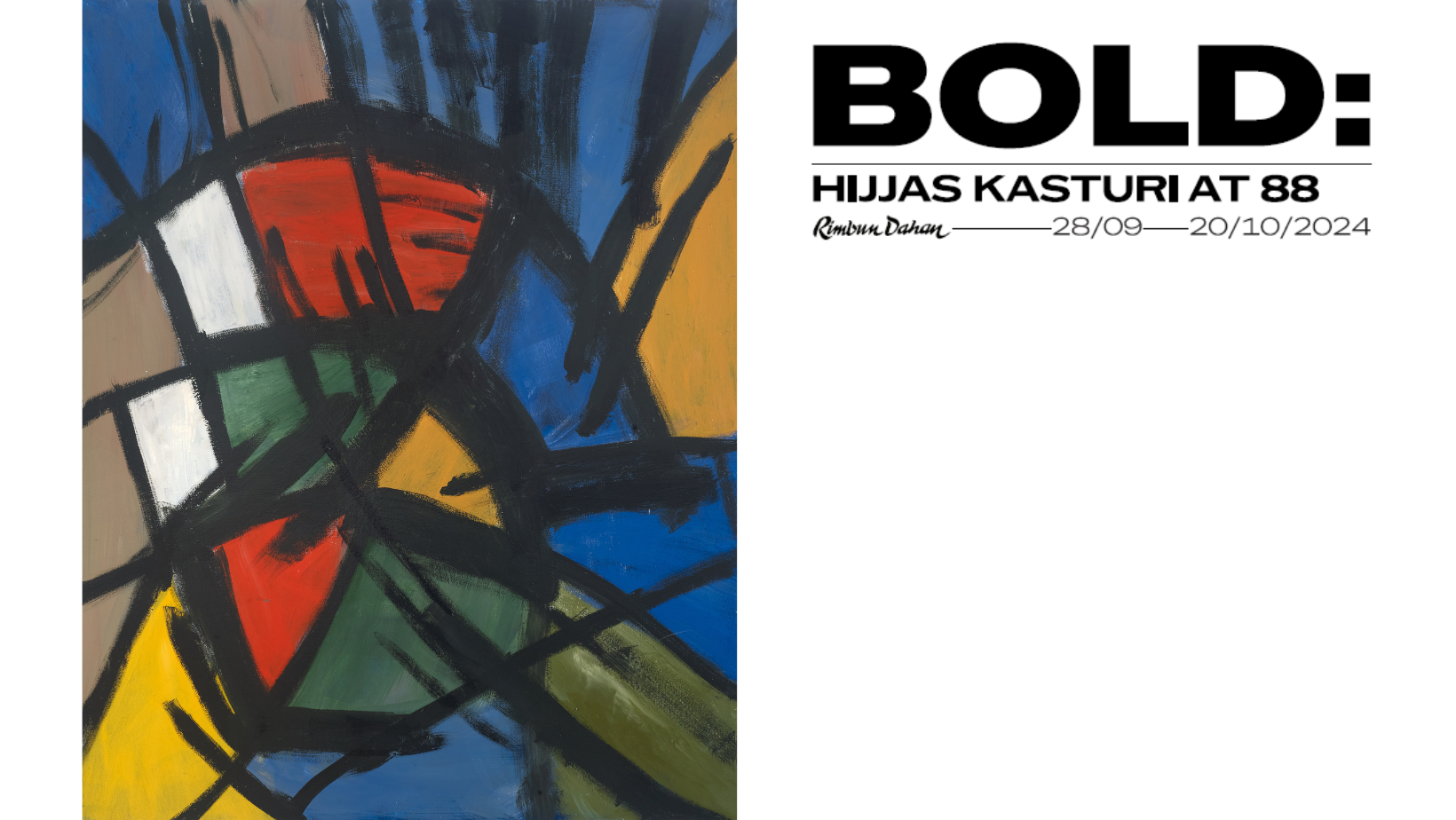
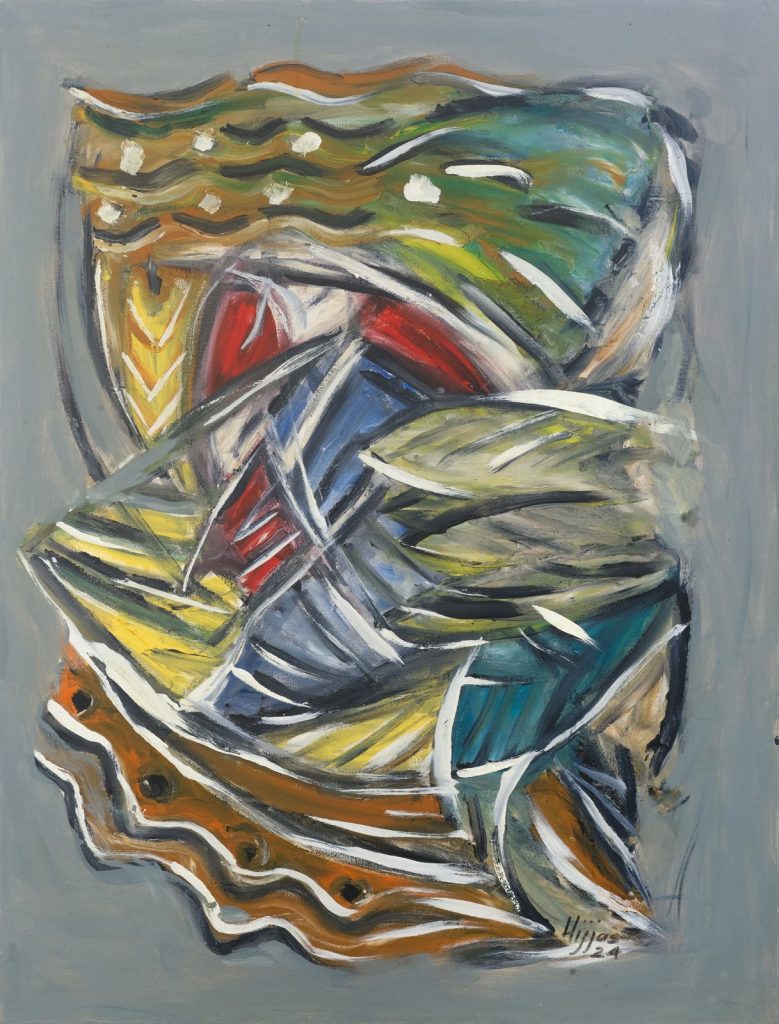
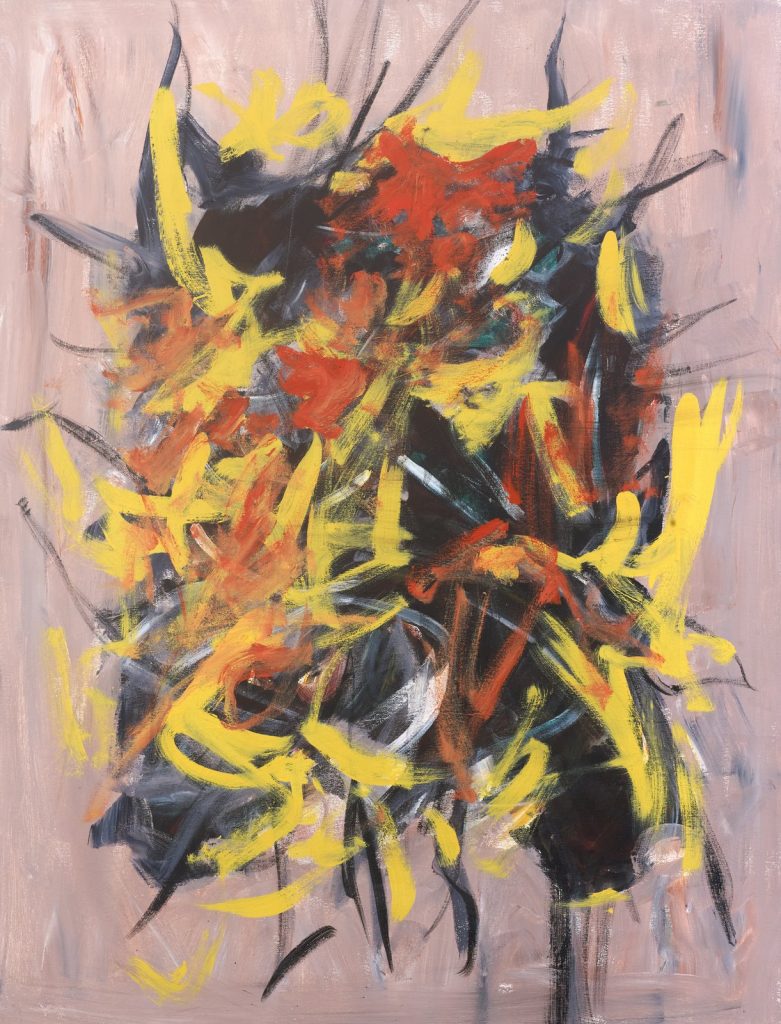
Pictured top: 𝘐𝘮𝘣𝘢𝘯𝘨𝘢𝘯 𝘋𝘪𝘯𝘢𝘮𝘪𝘬 𝘐, 2024, enamel paint & acrylic on canvas, 152 x 122 cm. [SOLD] Click on the images below to view more details, price and larger image.
About the Artist
Born to a poor family in Singapore in 1936, Hijjas bin Kasturi witnessed the Japanese occupation and the powerful movement for independence in Sumatra where his family found refuge. Returning to Singapore after the war, he attended Kota Raja primary school and won a place at Raffles Institution where he was a mediocre student (while working nights binding bales of newspapers) but an enthusiastic explorer. He didn’t qualify for university so he worked as a draughtsman at the Singapore Housing Trust, while studying art at weekends and architecture by correspondence.
After writing to every university he could find seeking bursaries, the Australian government offered Hijjas a Colombo Plan scholarship to study architecture, which was a life changing opportunity. He studied in Adelaide and Melbourne and graduated with a degree in architecture and a diploma in town and regional planning, and then returned to Singapore with his young family.
Finding few opportunities there for his great ambitions to practice, teach and build, he moved to Malaysia at the invitation of Tun Razak and MARA, the Majlis Amanah Rakyat, who were looking for someone to start a school for Form 4 drop-outs that would give them technical skills to support national development; the MARA Institute of Technology was born, later to become UiTM. Hijjas’ ambition was to provide young people with the opportunity for an education that could alter their lives. He was strongly influenced by Bauhaus ideas and included a wide variety of experiences for the kampong youth that made up his student body.
Starting his own architectural practice was a struggle; in the late 60s there was little work and less money, but educational buildings became Hijjas’ forte, designing junior science colleges, libraries and facilities for the many new universities started at that time, as well as planning new townships in Pahang for the FELDA Triangle. In the ‘70s and ‘80s he designed and supervised the construction of many high rise buildings such as Bangunan Dato Zainal, Tabung Haji HQ, Menara MPPJ, Apera building and won the international competition for Malayan Banking’s HQ. He also completed regional offices for Bank Negara and community centres for the state of Sarawak; and in the ‘90s there were many institutional projects like the Convention Centre in Putrajaya. He did some international work, most notably the Al-Faisal University in Riyadh where he designed for the inclusion of women in the student body, but decided he was best suited to working in Malaysia.
Hijjas continues to teach at various universities, and contributes to seminars and academic programmes. He is a member of the Malaysian Academy of Sciences.
Hijjas has been awarded the PAM Gold Medal, five honorary doctorates from Australian and Malaysian Universities, the ASEAN Award in 1990 in recognition of his work in the arts and architecture, and the Tokyo Creation Award, also in 1990. His family and practice published a book on his life and practice, Concrete, Metal, Glass in 2006, that records his professional work.
One factor that has constantly guided Hijjas’ life is his wish to “pay back” to society for all the support that he has enjoyed that made his success possible. This was his objective in starting the artists’ residencies at his family home, Rimbun Dahan, thirty years ago in 1994. The programme has hosted and supported hundreds of Malaysian, Australian and ASEAN artists and writers, and continues to do so.
Catalogue Essay
My father has a favourite anecdote about Picasso. One day, as Picasso is sitting in a cafe, a woman approaches and asks for a work of art. Picasso sketches something on a napkin. When he names his price, the woman is horrified. “That sketch took you 5 minutes!” she says. Picasso responds, “Lady, this sketch may have taken me five minutes, but it took me 50 years to learn how to draw like that!”
The story is probably apocryphal, but Dad makes his point. The works that you see in this exhibition were created over the last two and a half years, since ‘Renewal’, my father’s first solo exhibition in early 2022. And although Dad has only been painting regularly since the pandemic, he has been sketching as a daily practice for almost his entire life, and it has taken him 88 years to learn to make art like this.
The works are a product of all the experiences he has ever had: from his deprived childhood in war-time Singapore, to his lucky escape with a Colombo Plan Scholarship, his decades of practice as an architect in Malaysia — at first in obscurity and later celebrated — as well as his years as a sailor, art collector, businessman, traveller, husband, father. He still listens to the crooners, thinks every proper gentleman should have a personal valet, and, although he avidly consumes hours of videos on YouTube about the contemporary art world, the Abstract Expressionists of the 1950s still hold an abiding fascination for him. I think if you look for them, you can see all these things in his work.
Another facet of his background is his fondness for quoting Shakespeare. Macbeth is one of his favourites. Looking at these works, the witch’s exhortation to “Be bloody, bold and resolute” comes to mind. My father has never been timid or hesitant. The exuberant energy of his artworks comes from a deep well of personal resilience. He cannot tell you what he is thinking about when he makes art, and by and large he doesn’t plan his works. They come to him spontaneously, when he has a brush in hand, paint pots at the ready.
And yet we see that his works have evolved significantly since his previous exhibition, although there are traces of the same preoccupations. The motifs of scallops and cross-hatching from his batik-inspired Canting series of 2022 return in the Isen-Isen works, but now more layered and deconstructed. The upward sweep of the Sanjung series recurs, with its familiar energetic rising action from bottom left to top right. The dominant black hieroglyphs of the Aksara series can also be detected, although now he often uses paler colours in his outlines, creating a more translucent lightness. And while the trenchant dark lines and primary colours of Imbangan Dinamik 1 are definitely characteristic, his own favourite artwork in this exhibition is Menganyam Nilam, a more delicate suggestion of gauzy strokes creating a sense of layered depth — but of course on a grand scale.
Although Dad is occasionally deeply immersed in his painting studio, his primary practice will always be architecture. If the opportunity presents itself, he would rather be working on a building than a painting. But we think that the practice of painting has given him a new lease of life and a new direction for his relentless desire to be at work. Through it, he finds a way to relate to the groups of architecture students who often visit Rimbun Dahan on school excursions. He urges them to study art as an avenue into architecture, and perhaps they can more easily understand the creative urge expressed as a sweep of paint on canvas, rather than in the laborious repetition and correction involved in designing a building.
Throughout my life, I have seldom seen my father without a notebook and a black Artline pen. Most of the time, every line on the page has been meant to symbolise a structure: a wall here, a window there, a roofline or a street. It must be liberating, I think, to make marks just for the sake of it, marks that refer to nothing but themselves. In his most recent works, Dad has been moving beyond the black outlines that gave structure to many of his earlier paintings. Black is now obscured by other colours, outlines are in white or blue, sometimes the lines disintegrate entirely. It’s a bold new world he’s moving towards, and he is not tired yet.
To be eligible for this residency, applicants must be BOTH citizens of AND residents of a Southeast Asian country. For the purposes of this application, the Southeast Asian countries are: Brunei, Cambodia, Indonesia, Laos, Malaysia, Myanmar, Philippines, Singapore, Thailand, Vietnam, and including Timor Leste.
In case of doubt, please review the following examples.
Person A is a citizen of Thailand (a Southeast Asian country) and lives in Thailand. => Person A is eligible to apply.
Person B is a citizen of Thailand (a Southeast Asian country), but has been living for 15 years in the Philippines (another Southeast Asian country). => Person B is eligible to apply.
Person C is a citizen of Thailand, but has been living for 4 years in Australia (not a Southeast Asian country). => Person C is NOT eligible to apply.
Person D is a citizen of the USA (not a Southeast Asian country) and has been living for 7 years in Singapore (a Southeast Asian country). => Person D is NOT eligible to apply.
Person E is a citizen and resident of Taiwan/Bangladesh/Sri Lanka/Bhutan/Papua New Guinea (not Southeast Asian countries). => Person E is NOT eligible to apply.
Person F is a citizen of Malaysia and splits her time living between London and Malaysia. => A borderline case. Please contact us to discuss.
If you have questions or concerns about your eligibility, please contact arts@rimbundahan.org before you apply.
The reason that our residency eligibility is only for Southeast Asian citizens who also live in Southeast Asia is because we would like to reserve these opportunities for artists who are committed to being members of arts communities in our region, and artists in our region generally have far fewer opportunities than other artists who live in more developed countries.
We realize that this restriction may unfairly discriminate against some worthy applicants, and it is not intended to be a judgment on the quality of your art or your contribution to Southeast Asian arts communities. However, given that we are a family-run and family-funded organization with limited capacity, we have put in place this eligibility restriction to allow for the practical management of our application process.
In July 2024, Kieu-Anh Nguyen undertook one month of residency at Rimbun Dahan. Due to other visa challenges, her second month of residency has been postponed to 2025, but her studio will be open for Open Day on Sunday 25 August 2024, although she will not be present.
About the Artist
Kieu-Anh Nguyen (b. 1997) is an interdisciplinary artist based in Hanoi, Vietnam. She enjoys creating spaces to foster inclusive conversations around underrepresented bodies and narratives, notably about women.
Her art practice has foregrounded olfaction as the core line of inquiry to explore memory tracing and care practice, as it has taken the forms of participation and soft sculpture, and often suggests travels between time, spaces, and sensory experiences.
Her work has been exhibited in various spaces, including VIVA ExCon, Vietnamese Women’s Museum, Asia Art Archive and documenta fifteen.
About the Residency
Kieu-Anh has been immersed in inter-liminal spaces, either those given to her or those she created herself through her continuation of work and current exploration in the natural and cultural landscape of the residency.
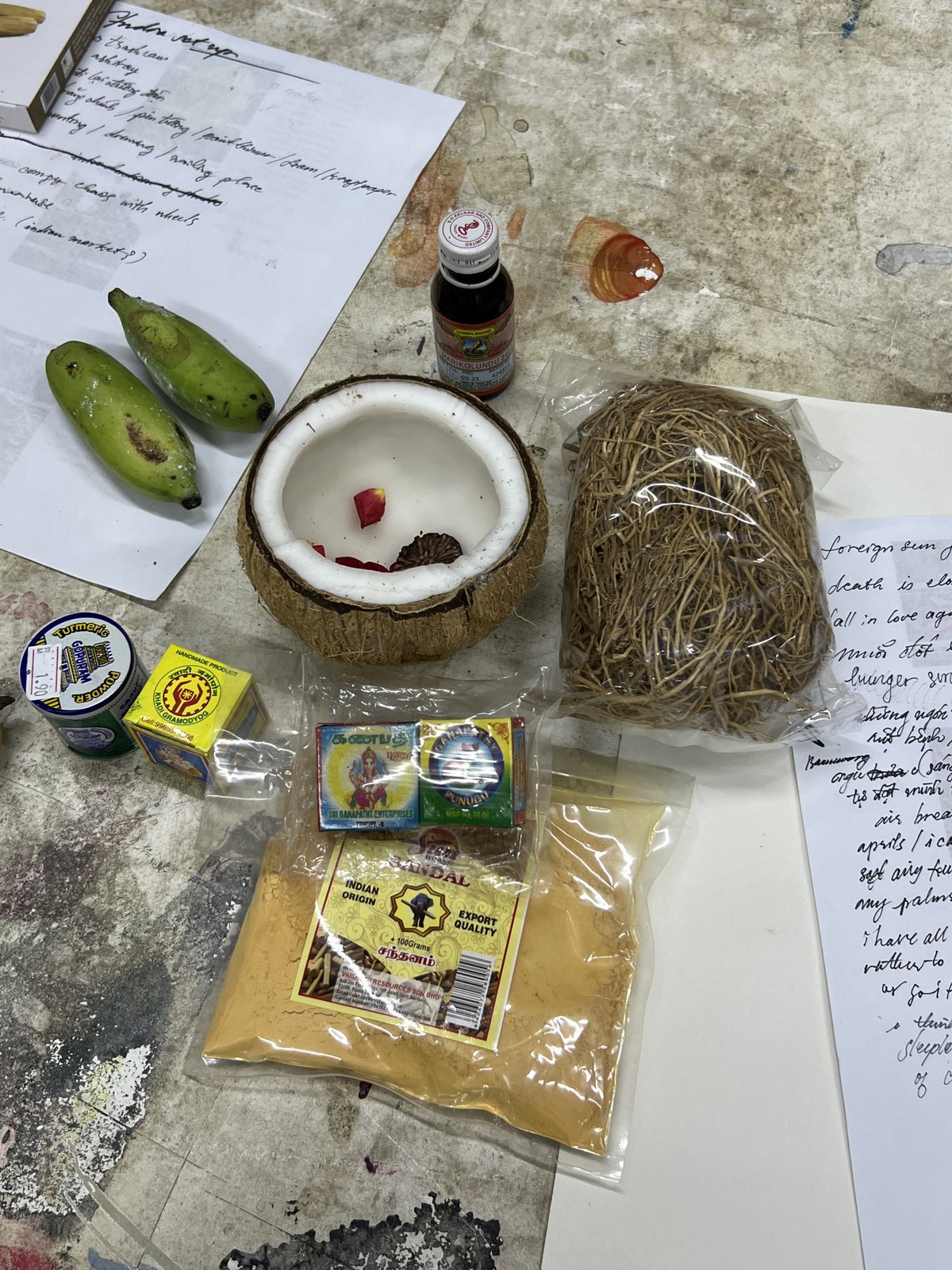
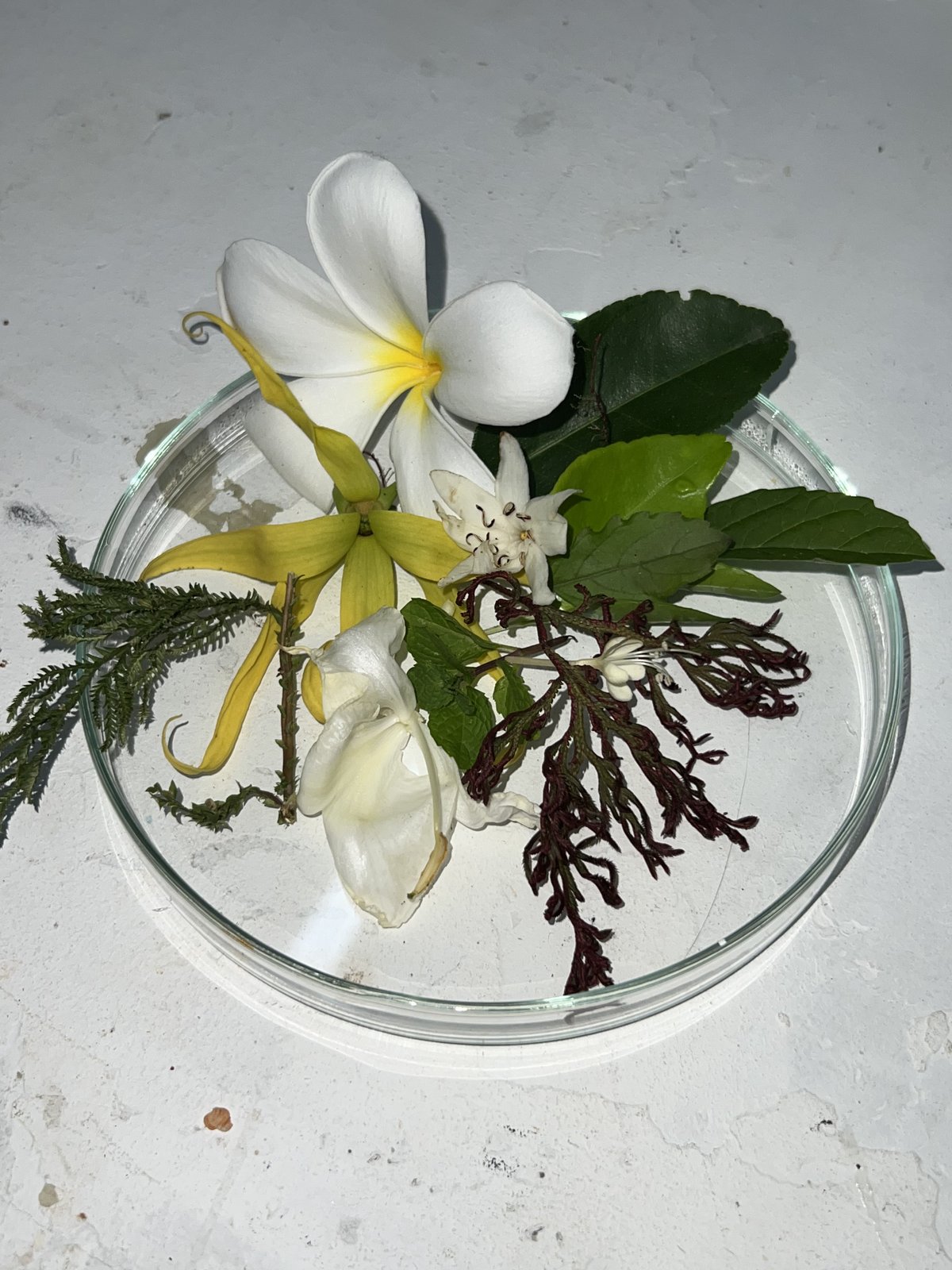
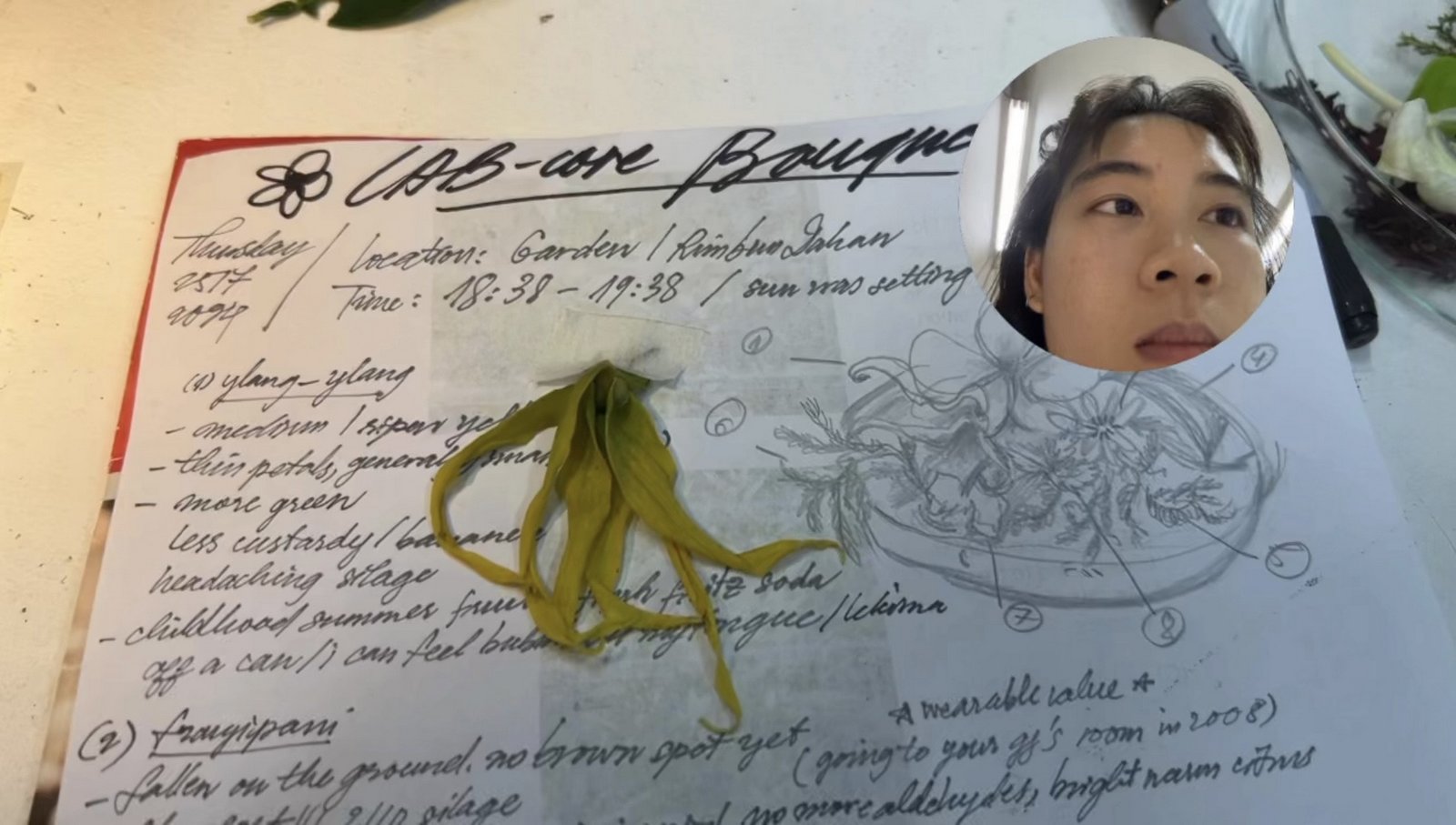
During the first month of her residency, Kieu-Anh found belonging and familiarity in creating themed bouquets from collecting plants and found objects from the garden at Rimbun Dahan and from Hindu temples on Jalan Ipoh. She then narratively recorded the experiences to reexamine and study means of nativity in nature through the smell of flora and fungi in the garden — those that share similarities and differences with species in neighboring countries. The scented rituals in the Hindu temples, coming from a religion foreign to Kieu-Anh, brought her interest to a fictional discovery of a flawless faunt of protection that came to her in a dream.
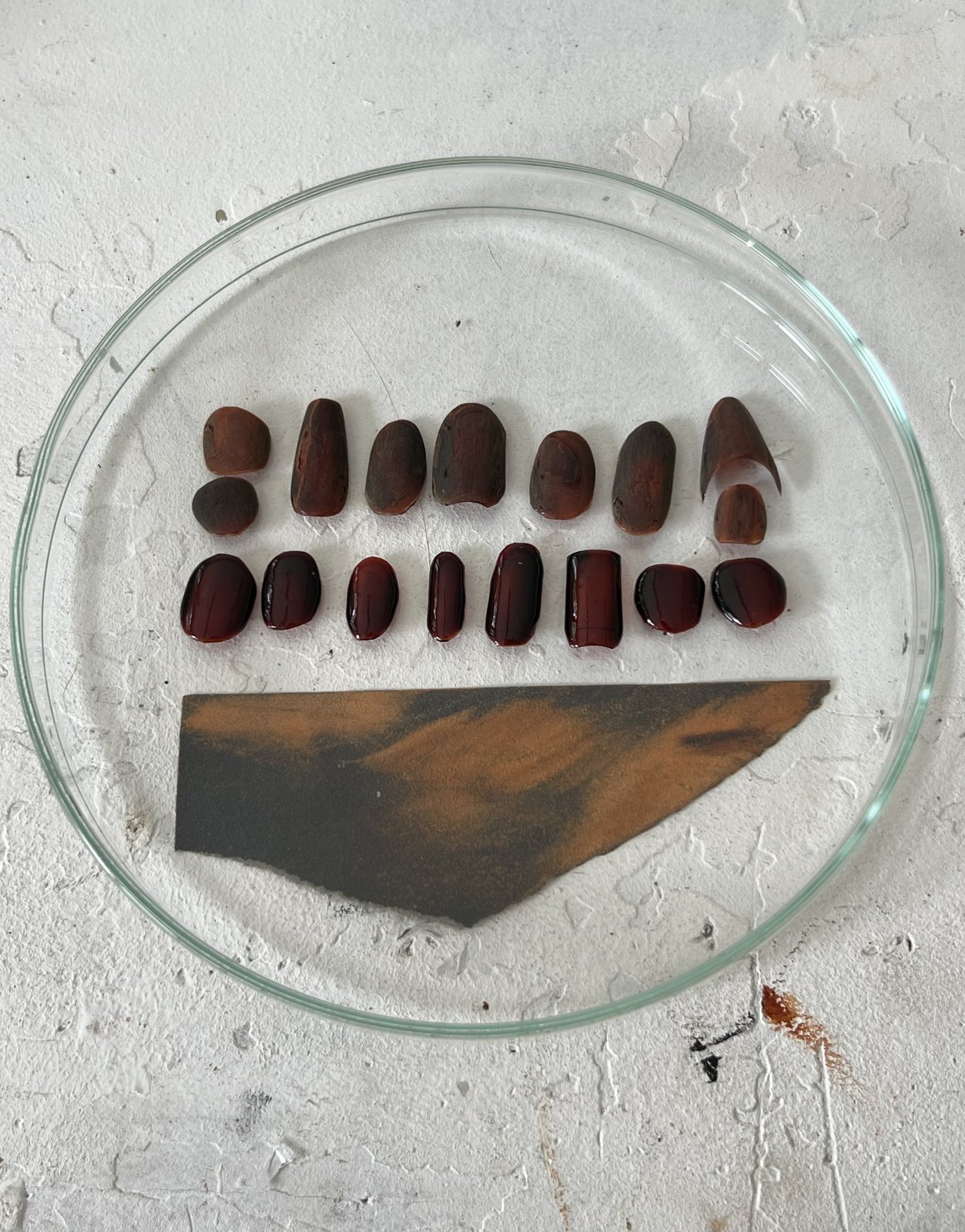
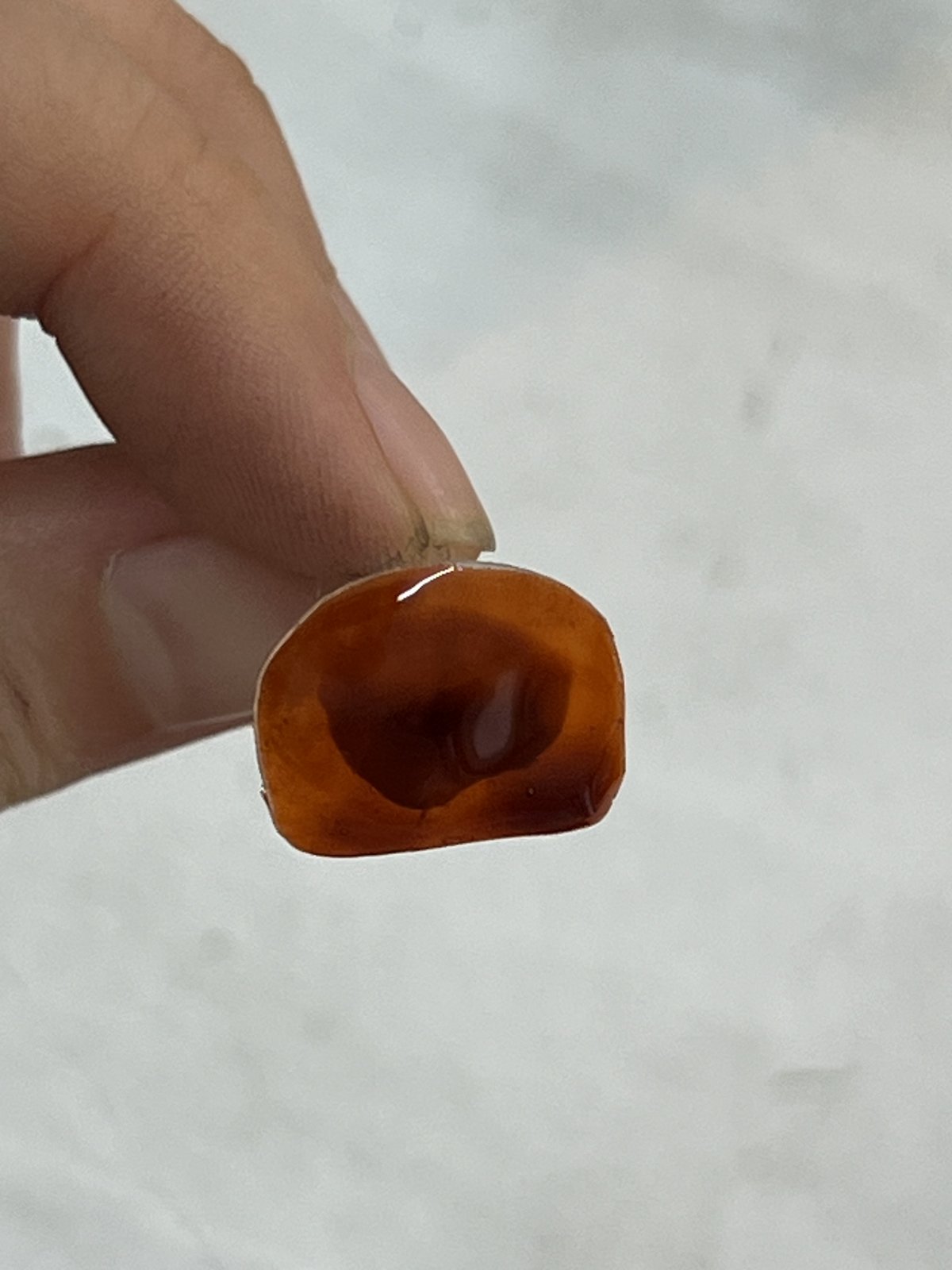
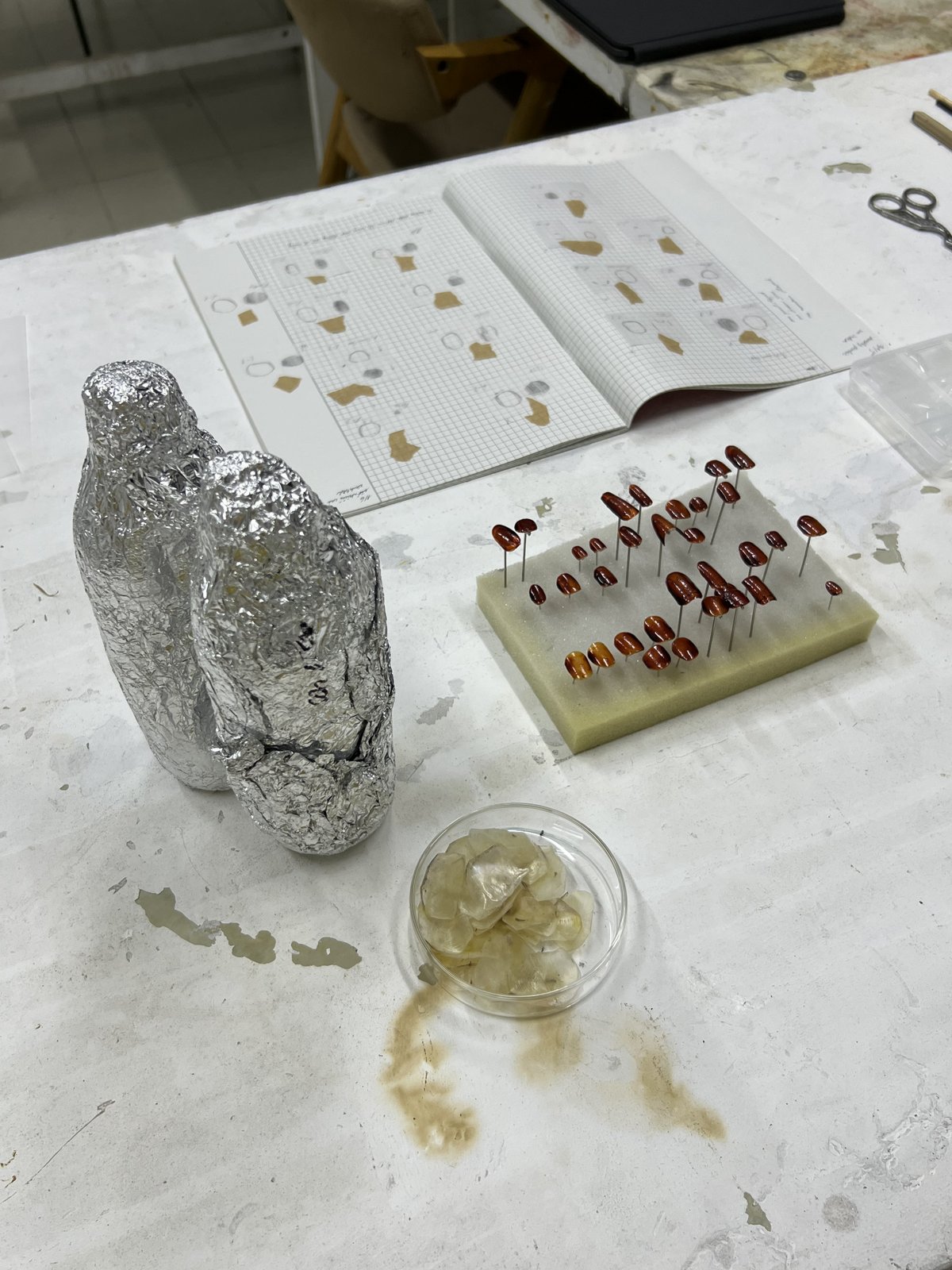
When she is not walking around and smelling plants, she is probably in the studio, doing nails eternally — stretching the reality of time and other beings that she encounters on the tiny surfaces of nail replicas. The work experiments with traditional lacquer techniques, and explores “standards of beauty” in both lacquer craft and nail aesthetics. It captures organic encounters with people through a made-up service — “one Eternailty later” — continuing its first chapter from Berlin in May and June this year. At Rimbun Dahan, she has documented every encounter into little nail copies, scanning them onto fish scales found near the pool (thanks to the otter season!), and repeats it in her eternailty.
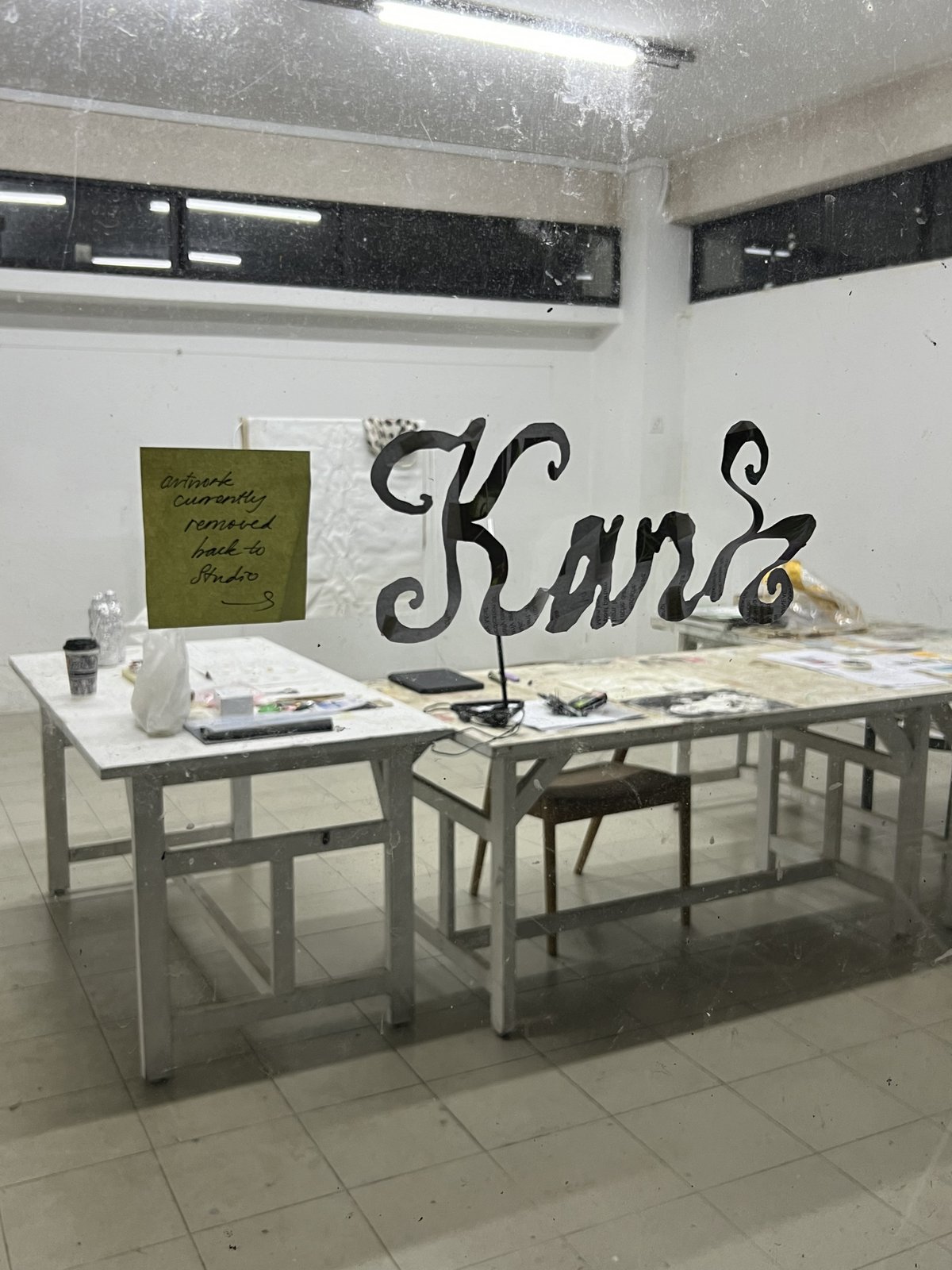
Ironically, while spending most of her headspace living and creating in a borderless world of scent and other means of counting time, Kieu-Anh is unfortunately absent for this Open Studio, not because it was her birthday, but due to an actual border problem. She has been forced to suspend her second month of residency. The flowers she has prepared have wilted, the milk-scented prayers need her presence to recharge their magic, so for now the open studio relies purely on the nail shop’s instruction to continue her residency project.
Please leave Kieu-Anh a copy of your nails, and pretend that we have actually met! Until Kieu-Anh returns to RD, let her take care of your nails in the meantime until you meet (again).
In August 2024, Filipina visual artist Noelle Varela spent one month in residency at Rimbun Dahan.
About the Artist
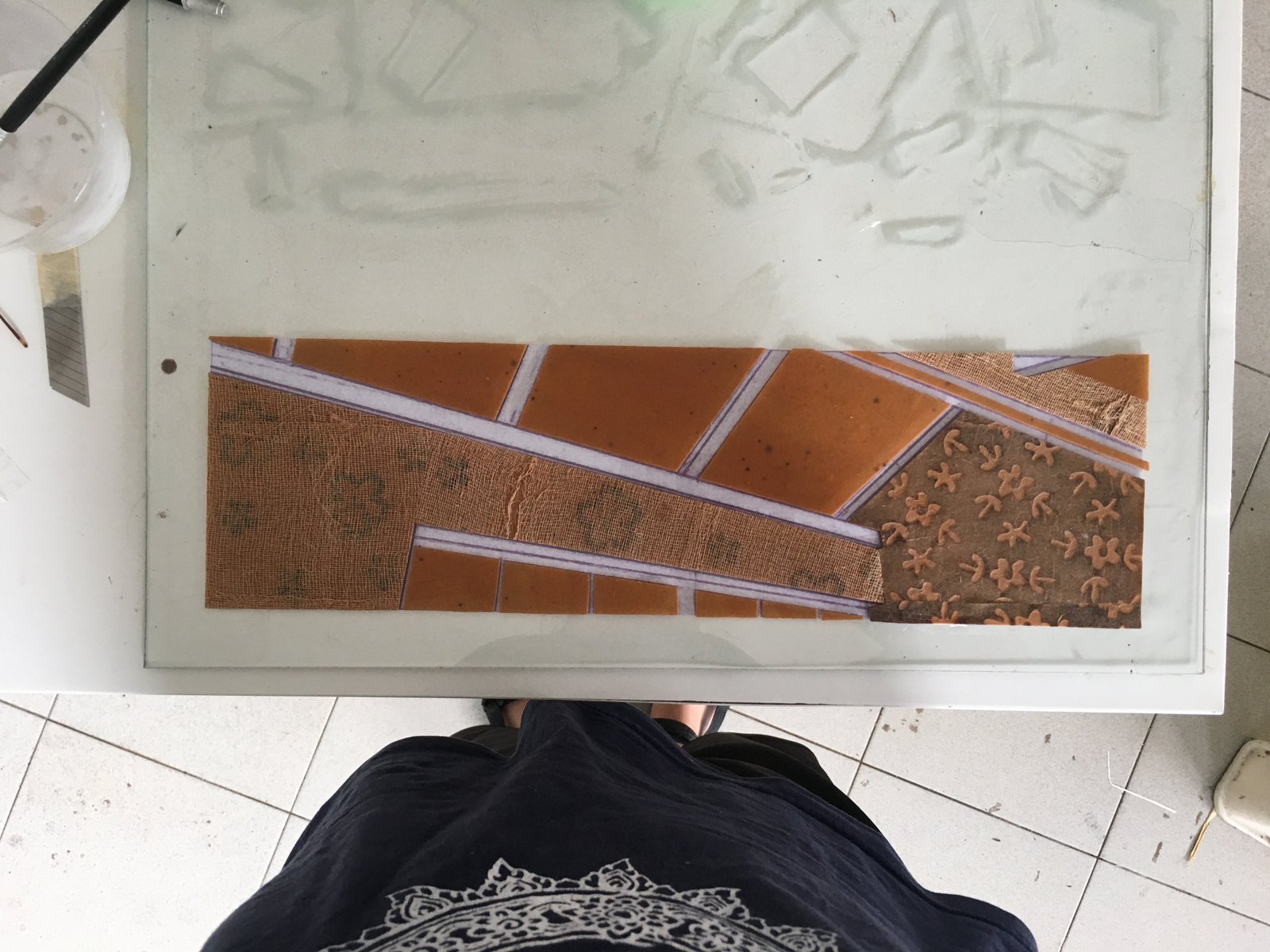
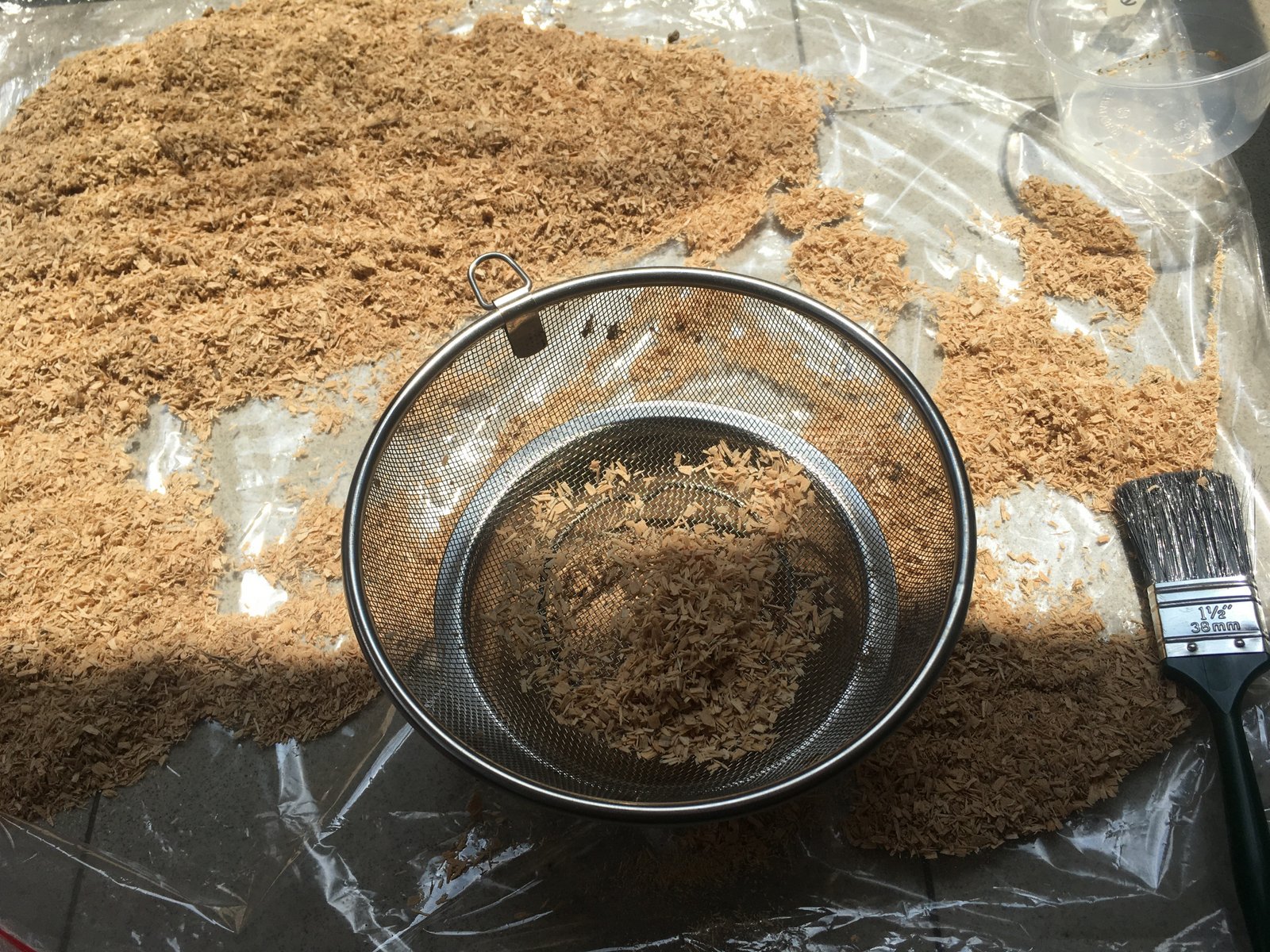
Noelle Varela (b. 1993) is a Filipina visual artist who studied and earned her degree in Fine Arts at the University of the Philippines- Diliman. She mainly works with three-dimensional pieces and continuously constructs contemporary images using sawdust through flora and female imagery to depict female and women experiences, sensuality and societal standings.
Continuing my exploration around sawdust as textile during my residency, I delved into a more narrative imagery about finding familiarity — similar and the same, within a new environment to cope with the sense of place. There is a challenge for me to expand and allow myself to experience new places, to have myself familiarize and notice similarities between my home back in the Philippines and here in Malaysia has encouraged me to attain a sense of ease.
To establish one as ‘usual’, we ought to progressively obtain familiarity with the environment through routines, finding similarities and by building practical inhabitation around our surroundings. We tend to gravitate towards things and experiences that seem familiar to us, something we had experienced and played into beforehand to which our repetitive encounter with the unknown becomes familiar. There is a hand-in-hand relationship between our personal experiences and daily routines to the place itself. Our cognitive aligns with our intimate perception of reality — to be able to distinguish similar against ‘the same’ happenings. Activities revolving the practical use of the place and landscape afforded a sense of ease and belongingness.
For the Open Day, I will be showing a series of sawdust work and drawings in which both portray places and objects I interact with daily here in Rimbun Dahan. These images range from the path to and from my studio space and home, depictions of the daily routines I continued and imposed during my stay, familiar plants, interactions with the pets and areas in the house I inhabit with my usual doings. Places are experienced, new landscapes develop to “normal experiences” processed by the body and its senses.
From June to August 2024, Sabiq spent three months in residence at Rimbun Dahan.
About the Artist
Sabiq is a visual artist based in Bandung, Indonesia, born in Tasimalaya in 1994. His artistic practice explores the potential of sequential images across diverse mediums, including comic illustration, animation, code-generated art, and installation.
Typically, his main themes arise from the mundane, transforming everyday observations and experiences into visual narratives. His recent work focuses on the interplay between logic and aesthetics, seeking to find tension between these two seemingly disparate concepts.
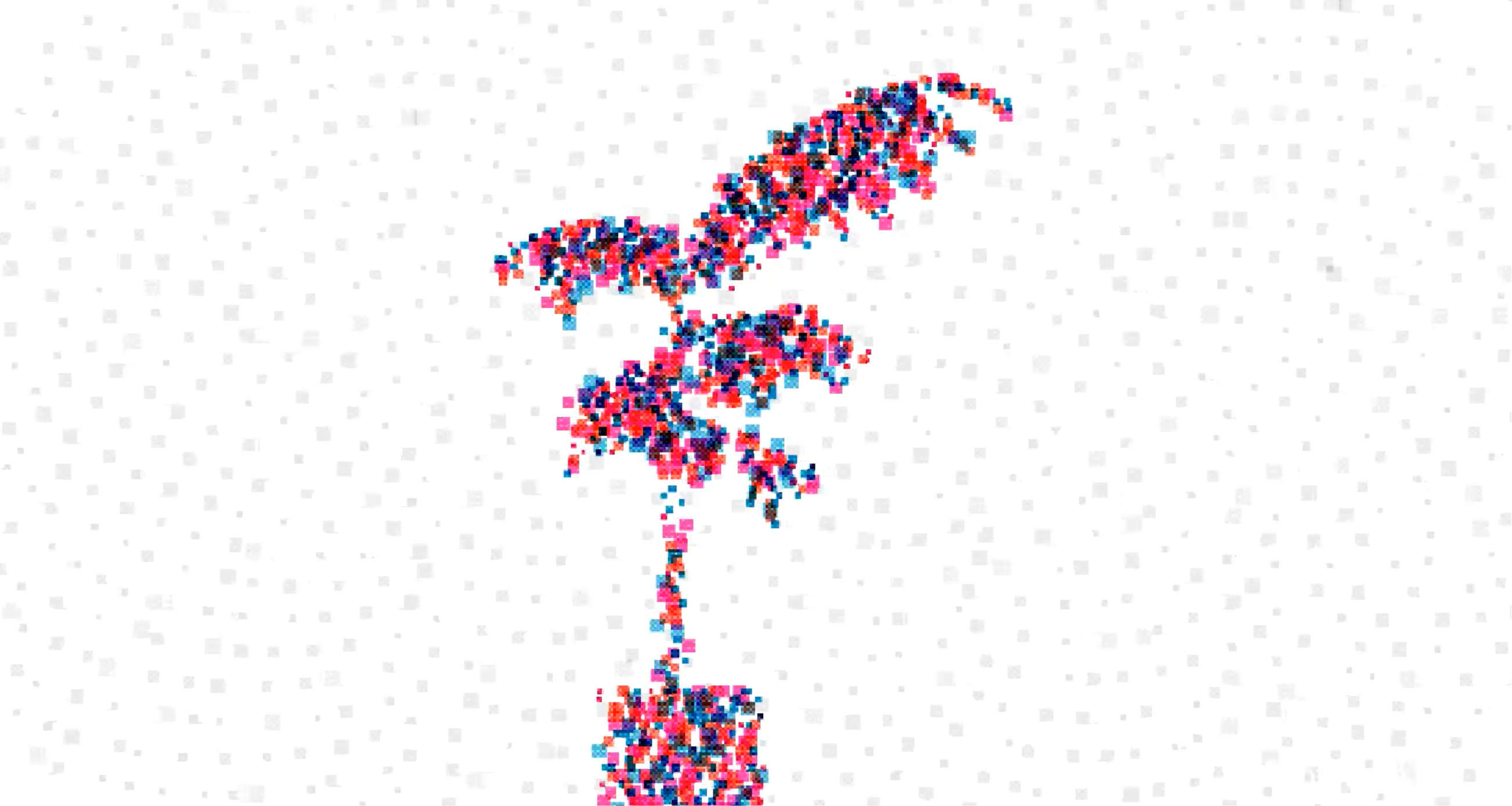
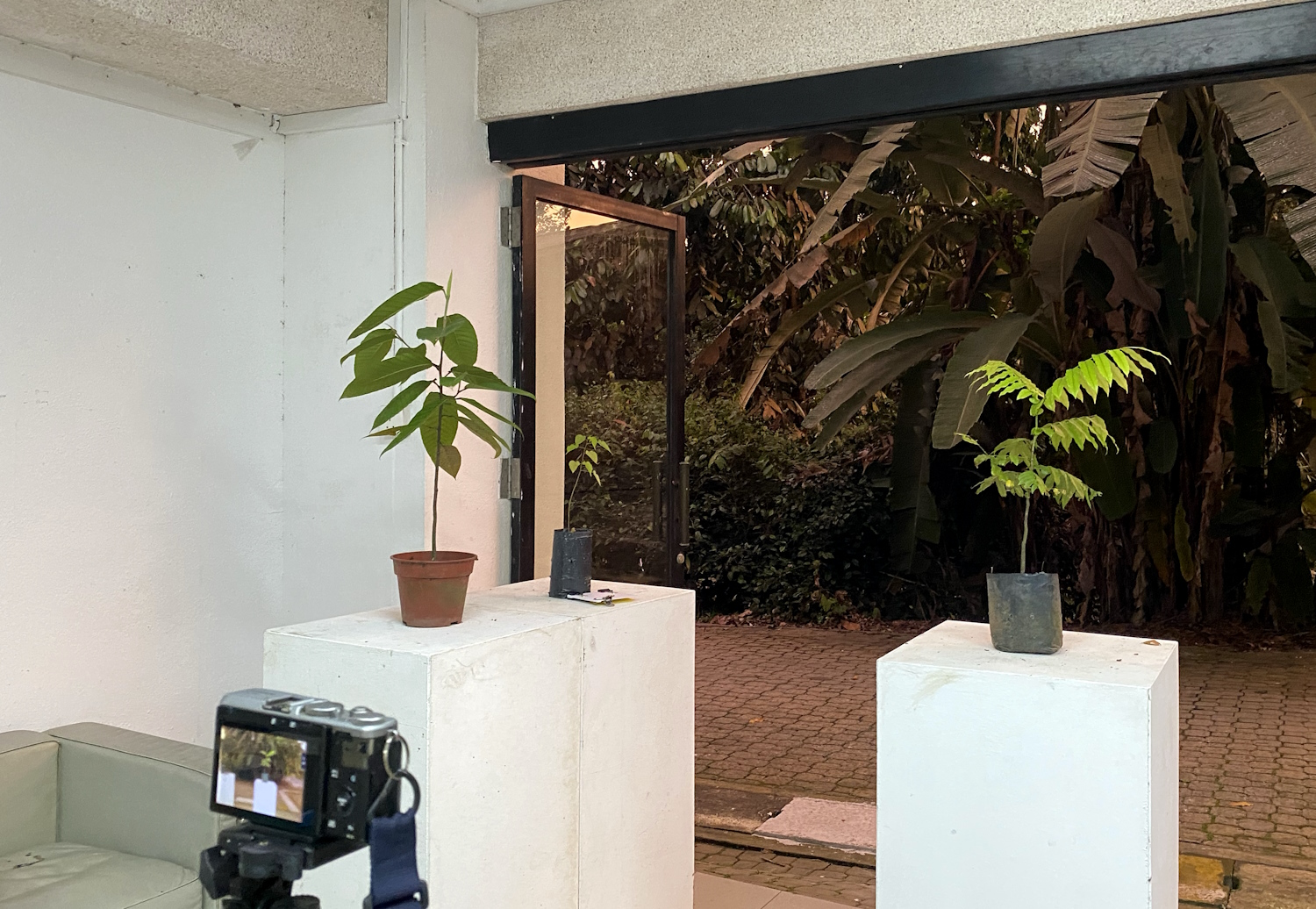
At Rimbun Dahan, Sabiq tried to grow plants from the collection at Rimbun Dahan and observed them as they grew day by day. He took pictures of the plants almost every day.
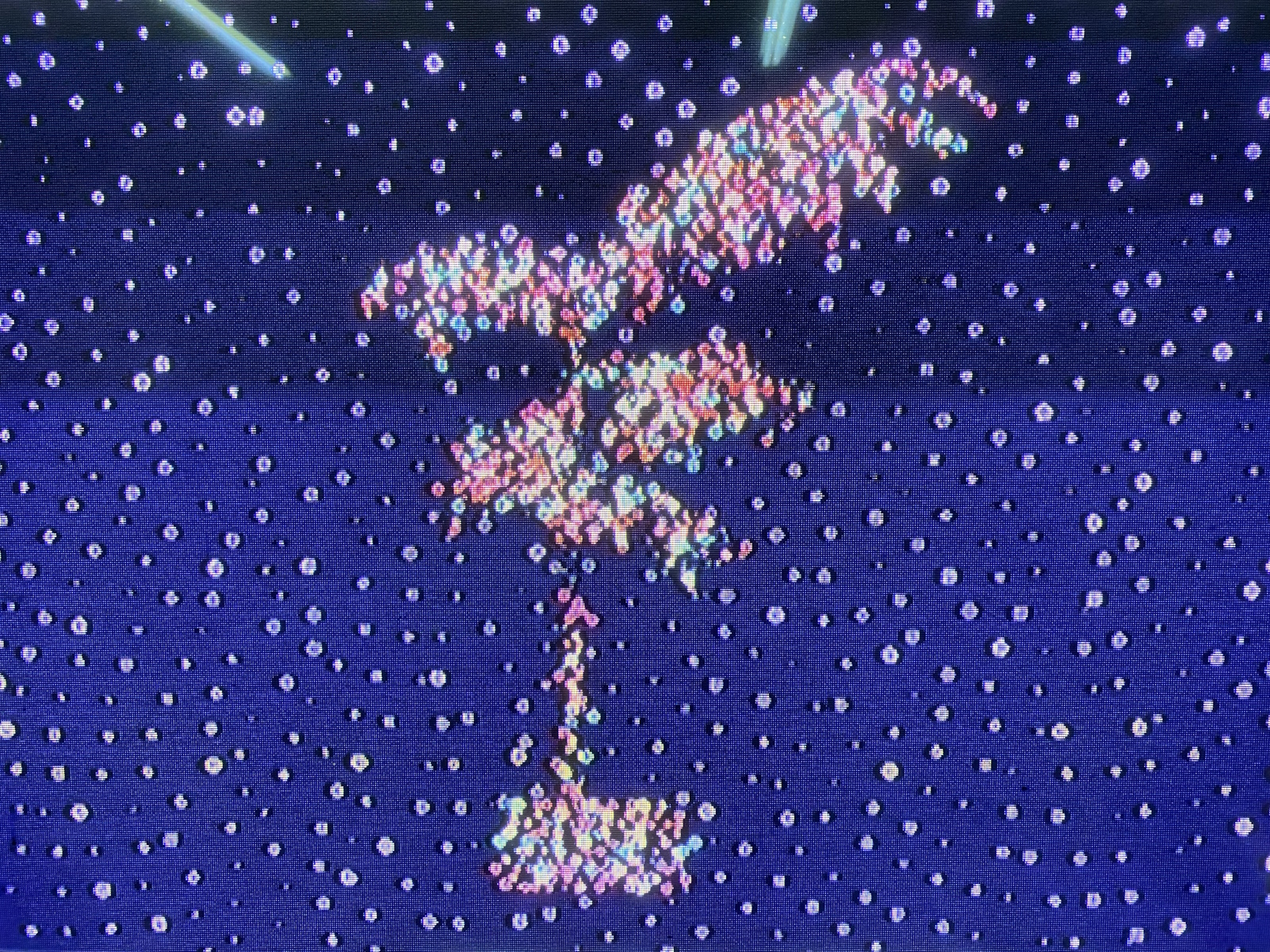
During the residency, Sabiq continued his exploration of drawing with systems and nature as his main references. He sought to understand how nature grows and to imitate its processes using logical lines. He found it interesting because, while logic is often seen as stiff and rigid, nature is fluid and organic.
The main work he focused on during this residency was procedural animation. The animation had no traditional keyframes; instead, its movements were driven by instructions from a function, such as timeframe, randomness, noise, or oscillation. The values and parameters of the animation were based on the photos of the plants he took almost every day.