Southeast Asian Choreolab 2025

Southeast Asian Choreolab 2025

About the SEA Choreolab 2025

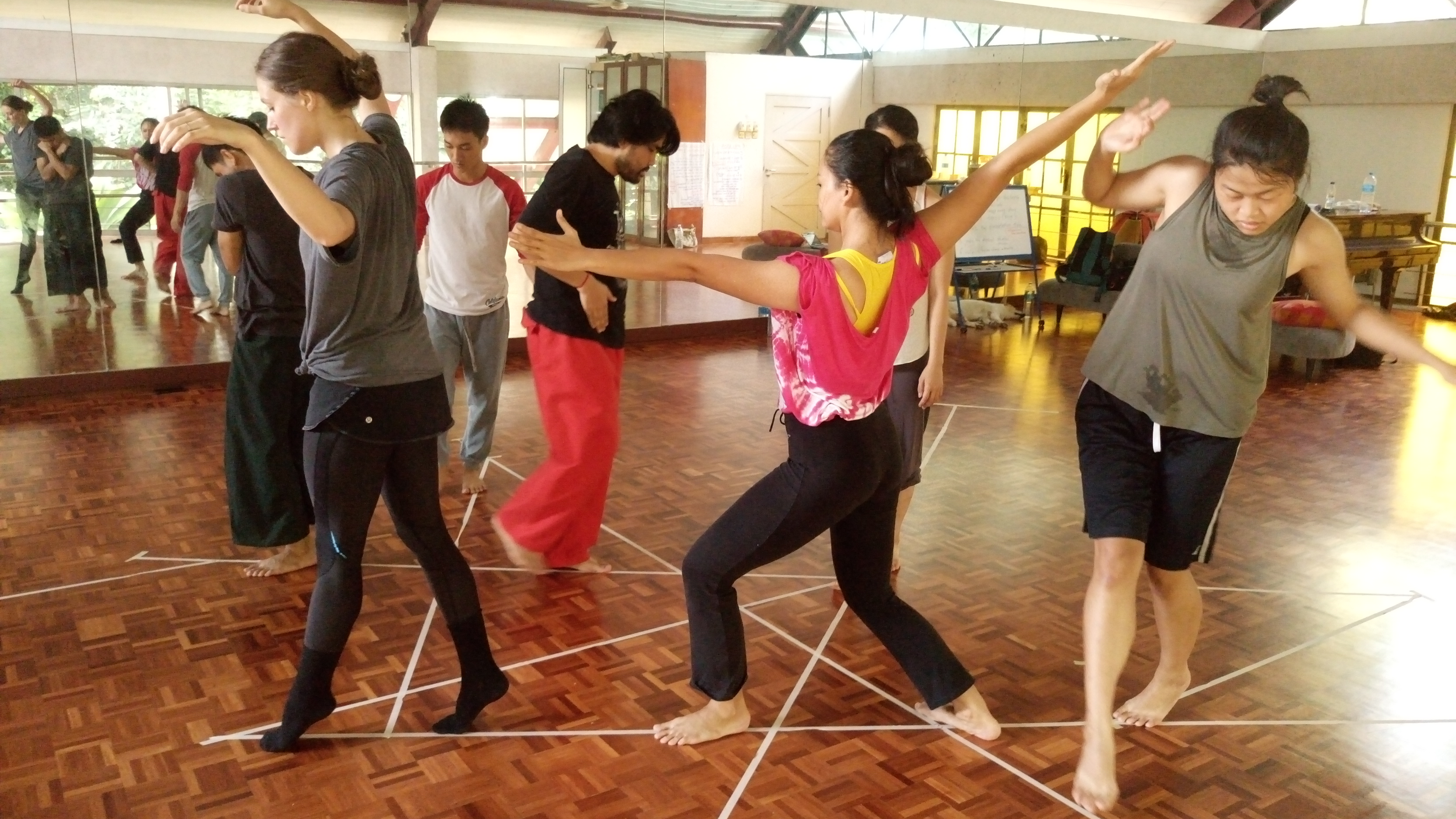
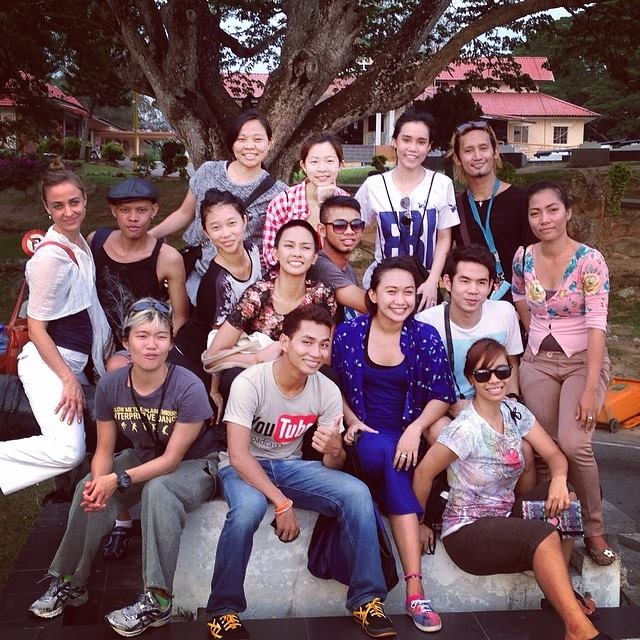
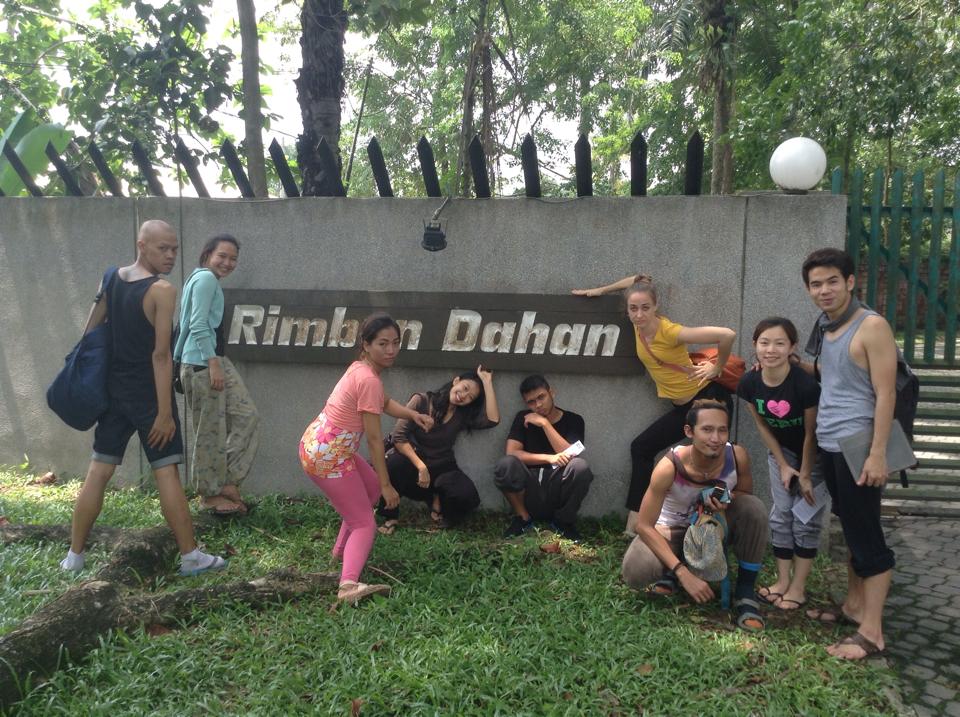
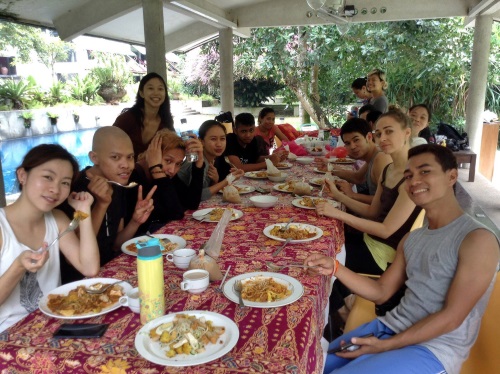
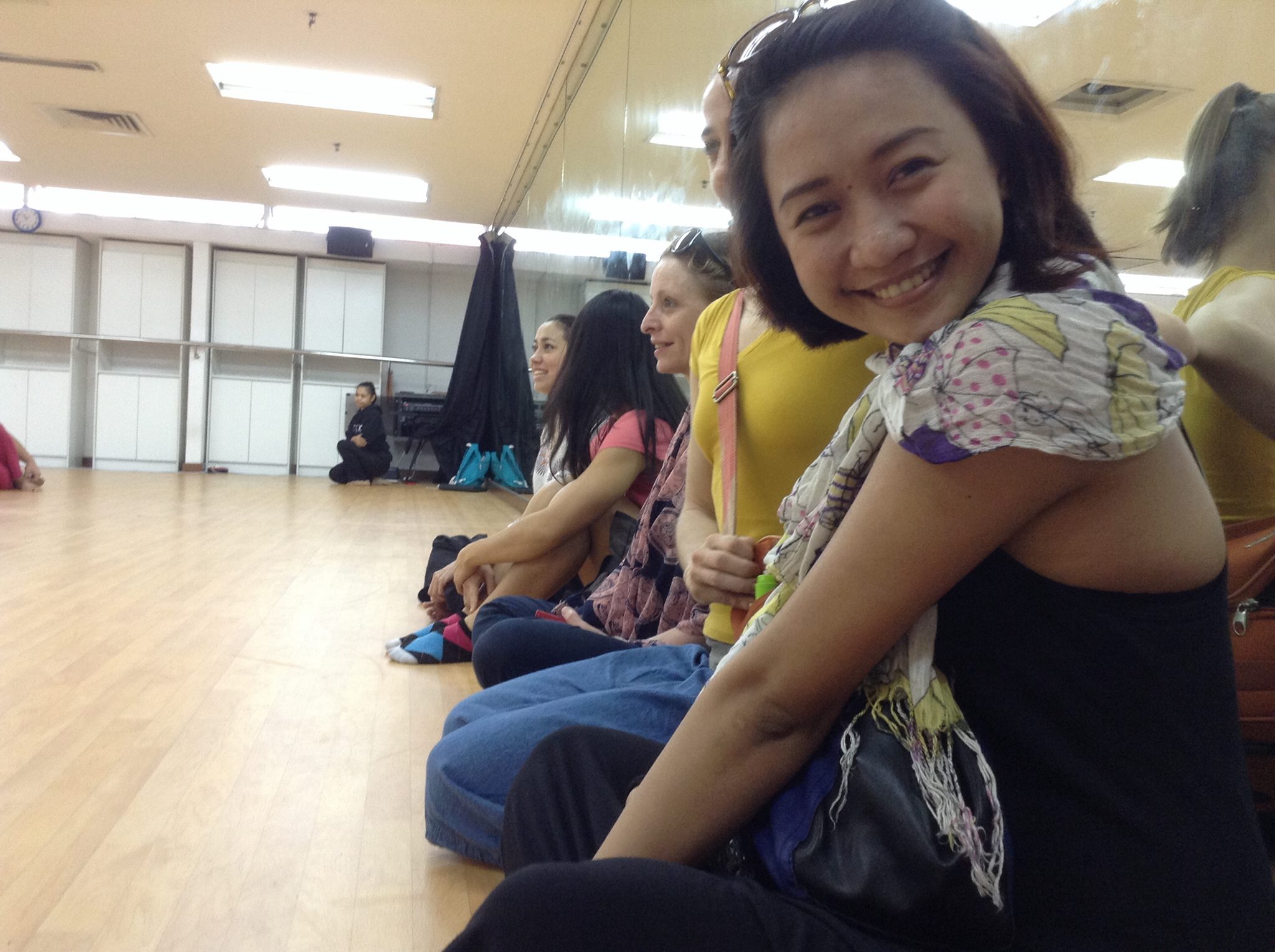
Emerging contemporary dance choreographers from Southeast Asia were selected to attend a facilitated international choreographic laboratory at the private arts centre of Rimbun Dahan from 4 to 13 July 2025.

The 14 chosen choreographers lived, worked and explored together, with guidance from our facilitator, Malaysian choreographer and artistic director Prof. Joseph Gonzales.

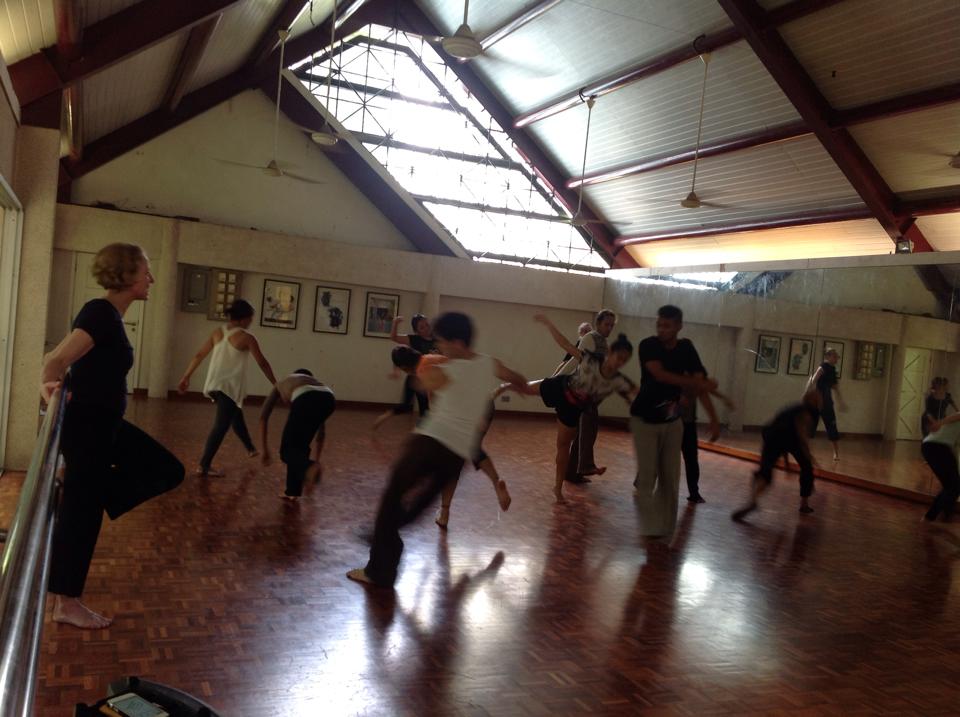
The program consisted of 7 work days with 2 days of excursions to arts spaces or recreational spaces in Kuala Lumpur. Work days in the Dance Studio at Rimbun Dahan consisted of sessions exploring choreographic methods, analysis and movement techniques led by Prof. Gonzales and by the participants themselves.

Other activities included live performance viewing, informal socializing and discussions, and networking events. The program concluded on Sunday 13 July, with a studio showing to share the creative process and artistic development from the Choreolab with the Malaysian dance community and the wider public.

The participants are selected through an open call application process. Selected participants must support their own travel costs/airfare to Kuala Lumpur. The project provides local transport, meals, accommodation and access to all activities during the Choreolab.

SEA Choreolab 2025 Participants

++ Wong Shan Tie (Malaysia)
++ Tai Chun Wai (Malaysia)
++ Nadhirah Rahmat (Malaysia)
++ Ronieth Dayao (Philippines)
++ Jared Jonathan Luna (Philippines)
++ Robert ‘Giveway’ Diosanta (Philippines)
++ Sekar Tri Kusuma (Indonesia)
++ Laila Putri Wartawati (Indonesia)
++ Mekratingrum Hapsari (Indonesia)
++ Krisna Satya (Indonesia)
++ ‘Golf’ Thanupon Yindee (Thailand)
++ ‘Neo’ Nguyen Huyn Nhu (Vietnam)
++ Chew Shaw En (Singapore)
++ Neo Ke Xin (Singapore

Project Aims

To support and enable emerging Southeast Asian contemporary dance choreographers to

  • Adopt new choreographic tools and physical, thematic and conceptual approaches to enrich their artistic practice;
  • Develop regional networks among their peers and with regional dance institutions, for knowledge sharing, future artistic collaboration and touring;
  • Experience works of art, cultures, places and histories beyond their home, to increase international understanding and to help contextualize their artistic practice.
  • Work closely with an established choreographer and educator (Prof. Joseph Gonzales), to delve deeper into the choreographic process, and to benefit from his insights, advice and experience.

We hope the participants will have a positive and enjoyable experience at the SEA Choreolab, which will reenergize them and help reaffirm their commitment to their artistic practice. We would like the SEA Choreolab and the networks established here to be an ongoing resource to which the participants may return for inspiration, refreshment, respite and a sense of continual community.

About Prof. Joseph Gonzales, facilitator

Joseph is Director of ASK Dance Company, based in Kuala Lumpur, Malaysia. His career began in 1982, as a performer with Kuala Lumpur Dance Theatre, St. Moritz Gold Band and The King & I, UK National
Tour.

He holds a PhD in Dance and a Bachelor of Science (University Malaya), Master of Arts Choreography (Middlesex University), Master of Buddhist Studies (HKU), Master of Arts Cultural Management (CUHK), and diplomas in Ballet, Modern Dance and Performing Arts from London, England.

Joseph served as the Head of Academic Studies/MFA at the Hong Kong Academy for Performing Arts (HKAPA) from 2016 to 2024, and as Dean of Dance, National Academy for Arts, Culture and Heritage (ASWARA) in Malaysia from 1998 to 2015.

He has created 50 works, 4 musicals, and 3 full-length contemporary dances for the stage, notably
including Crossing Borders, Tabula Rasa, 3 Faces, Seru and Becoming King. He was awarded the Kakiseni BOH Cameronian Arts Awards for Best Production 2010, Best Choreographer 2015, Crosscultural Champion 2007, and Gamechanger 2019.

His passions are education and creating works that explore identity, traditions and reflect contemporary
society.

“Being postgraduate leader [at HKAPA] was a huge learning experience for me … And regarding practice
research, I realized that that’s the kind of person I am, really, because I do a lot of research that then
evolves into some kind of a stage work and presentation. I learned that I am good at guiding the students to understand what they are trying to discover for themselves and not impose my kind of perspective or my own aesthetics at all. I enjoy the process and really encouraging them to discover what they want to make work about. I really want to spend time … imparting this knowledge and this skill.” — Joseph Gonzales in conversation with Bilqis Hijjas.


SEA Choreolab 2025 is a project by


In partnership with

With support from the Insentif Seni grant of Jabatan Kebudayaan & Kesenian Negara Wilayah Persekutuan Kuala Lumpur.

Southeast Asian Choreolab 2019

Southeast Asian Choreolab 2019

From 6 to 14 July 2019, a group of 10 emerging contemporary dance choreographers from 7 Southeast Asian countries attended the Southeast Asian Choreolab 2019 at Rimbun Dahan, facilitated by Australia choreographer Liesel Zink.

The participants were:

  • Ayu Permata Sari, Indonesia
  • Hasyimah Harith, Singapore
  • Irfan Setiawan, Indonesia
  • Michael Barry Que, Philippines
  • Mimee Somvanhpheng Keolouanglath, Laos
  • Pat Toh, Singapore
  • Pham Thi Hong Sam, Vietnam
  • Pich Sopheavy, Cambodia
  • Raul “Buboy” L. Raquitico Jr., Philippines
  • Silver Yee, Malaysia

For nine days, the participants lived, worked and expored contemporary dance practice and creation together at Rimbun Dahan. consist of 7 work days with 2 days of study-tour. Work days took place in the dance studio at Rimbun Dahan. Each of the participants presented a 1-hour morning session sharing their own choreographic approaches or movement backgrounds. In the afternoon, Liesel Zink led the participants through sessions exploring choreographic methods and analysis.

The first day of the Choreolab concluded with a welcome dinner at Rimbun Dahan, including prominent members of the local contemporary dance community. The participants also visited Kuala Lumpur Performing Arts Centre to watch a Dancebox performance, and took a short excursion to Forest Research Institute Malaysia and Batu Caves. Their full-day excursion included a long walk around the Dataran Merdeka/Chinatown area of Kuala Lumpur, while Liesel led the group through exercises involving visibility/invisibility in a public space.

On the final day of the Choreolab, the participants presented several short site-specific works they had made to a small public audience.

Project Aims

To support and enable emerging Southeast Asian contemporary dance choreographers to

  1. Adopt new choreographic tools and physical, thematic and conceptual approaches to enrich their artistic practice;
  2. Develop regional networks among their peers and with regional dance institutions, for knowledge sharing, future artistic collaboration and touring;
  3. Experience works of art, cultures, places and histories beyond their home, to increase international understanding and to help contextualize their artistic practice.
  4. Work closely with an established choreographer (Liesel Zink), to participate in her particular artistic approach, and to benefit from her insights, advice and experience.

We are glad that the participants had a positive and reenergizing experience with each other at Rimbun Dahan. Here is the word cloud from their feedback forms:

 About Liesel Zink, facilitator

Liesel Zink is an Australian choreographer interested in the body as a tool for socio-political and environmental expression. With a focus on site-specific work, Liesel seeks to engage new and diverse audiences in meaningful contemporary dance experiences. Liesel was awarded the 2017 Australian Dance Award for Outstanding Achievement in Independent Dance for her work ‘The Stance’, which has been performed at Sziget Festival Hungary 2017, Ansan Street Arts Festival South Korea 2017 and several cities around Australia. Prior to that her site-specific work ‘fifteen’ (Next Wave Festival VIC 2012 & Brisbane Festival QLD 2012) won two ‘best of’ awards both for Melbourne’s Small to Medium dance work and Brisbane Time Out’s dance award.

She is currently developing ‘Balloons & Granite’ (a large scale dance installation exploring the body in shifting landscapes) and recently premiered ‘INTER’ (a science, dance and spoken word collaboration).

Liesel has been commissioned to choreograph works for Australian dance companies including Expressions Dance Company, Tasdance and LINK Dance Company. Her choreographic style has evolved from her postgraduate research on body language and her ongoing interest in social psychology.

She was a lead artist in the creation of Force Majeure’s new site-specific work FLOCK (Commonwealth Games 2018) and has performed for Polytoxic Dance Company and independent artists including Liz Lea, PVI Collective and Dave Sleswick. As well as producing her own work she produces for dance artist Michael Smith, and co-produces The IndepenDANCE Project (Phluxus2 Dance Collective) and Angry Mime evening of experimental art.

More information: www.lieselzink.com


This is a joint project of Rimbun Dahan, MyDance Alliance, and World Dance Alliance Asia-Pacific.
Producer: Bilqis Hijjas.
Intern: Natashya Nazlia (student, Dance Department, University of Malaya).

SEA Choreolab 2019 Call for Applications [PDF 1MB]

Southeast Asian Choreolab 2018

Southeast Asian Choreolab 2018

From 23 June to 1 July 2018, 13 selected choreographers from Southeast Asia lived together at Rimbun Dahan, exploring choreographic practice with guidance from our international facilitator, German choreographer Isabelle Schad, with assistance from Claudia Tomasi.

The program consisted of 7 work days with 2 days of study tour. During the Choreolab, each participant presented their own participant session, sharing their own choreographic methods, repertoire or movement techniques with the rest of the group.

Half of every work day was spent with Isabelle Schad, as she shared her artistic approaches and ways of looking at dance with the participants.

The program concluded with an open showing of movement tasks from the Choreolab. The open showing was attended by the general public and members of the local arts community, outside in the gardens at Rimbun Dahan.

Participants

  • Lau Beh Chin, Malaysia
  • Nurulakmal Abdul Wahid, Malaysia
  • Jereh Leung, Singapore
  • Josh Marcy, Indonesia
  • Fitri Anggraini, Indonesia
  • Sherli Novalinda, Indonesia
  • Mee Soydala, Laos
  • Noutnapha Soundala, Laos
  • Vidura Amranand, Thailand
  • Nguyen Thanh Chung, Vietnam
  • Gebbvelle Ray ‘Dingdong’ Selga, Philippines
  • Nicole Primero, Philippines
  • Eva Wegener, Sri Lanka/Germany

Project Aims

To support and enable emerging Southeast Asian contemporary dance choreographers to

  1. Adopt new choreographic tools and physical, thematic and conceptual approaches to enrich their artistic practice;
  2. Develop regional networks among their peers and with regional dance institutions, for knowledge sharing, future artistic collaboration and touring;
  3. Experience works of art, cultures, places and histories beyond their home, to increase international understanding and to help contextualize their artistic practice.
  4. Work closely with an established choreographer (Isabelle Schad), to participate in her particular artistic approach, and to benefit from her insights, advice and experience.

About Isabelle Schad, facilitator

Isabelle Schad studied classical dance from 1981-90 in Stuttgart, and from 1990 to 1996 she danced in various classical companies. She began creating her own choreography and extending her dance education through diverse workshops and scholarships, was a member of Ultima Vez / Wim Vandekeybus in Brussels, and worked with / danced for Olga Mesa, Angela Guerreiro, Felix Ruckert, and Eszter Salamon.

Since 1999, she has developed numerous projects and dance performances of her own, in close collaboration with choreographers, performers, musicians and visual artists, which have been presented internationally in theatres, alternative places, galleries or festivals such as Tanzplattform, Tanz im August Berlin, Internationale Tanzwochen Wien or Dashanzi International Arts Festival Beijing.

The pieces California Roll and Still Lives – a community project that has been realised in more than 12 European cities – have been presented at Tanzplattform Germany 2006 and 2008. The community project TÜDDELDÜDDEL-LÜD has been presented at Tanzkongress 2009 in Hamburg.

Isabelle Schad regularly shows her work at Hebbel-Am-Ufer in Berlin. Since 2008, she has developed an ongoing project in collaboration with visual artist Laurent Goldring, followed by the solo Der Bau (2012) and the group work Collective Jumps (2014), which were both invited to Tanzplattform.

She is teaching in Berlin at the Inter-University Centre of Dance Berlin, and internationally in the frame of workshops or short period projects mostly supported by local Goethe-Institutes. She is actively engaged in the free dance scenes of many Balkan cities / countries, including Zagreb, Sofia, Skopje, Bucharest, and Belgrade.

In her work, Isabelle Schad explores relationships between the body, its languages and representations. She focuses on working methods that privilege exchange, the sharing of ideas, practices and knowledge as a tool for circulation, for continuity in learning and cooperation with other artists.

Isabelle is co-organizer of the working space Wiesenburg-Halle in Berlin, and a Zen-Shiatsu practitioner who practices Aikido on a daily basis.

More information: http://www.isabelle-schad.net/

About Claudia Tomasi, assistant facilitator

Claudia Tomasi first studied dance and choreography at PEPCC in Forum Dança, Lisbon. In 2013 she concluded her Bachelor of Dance, Context, Choreography at HZT / Berlin. She has been studying visionary craniosacral work at the Milne Institute in Berlin since 2017.

Great influence and inspiration on her work as a dancer and/or choreographer have been Deborah Hay, Shannon Cooney, Francesca Pedulla, Frey Faust (Axis Syllabus), Elisa Ricci, Philipp Gehmacher and Isabelle Schad. Since 2007 she has been working on her own pieces as well as in various collaborations as an interpreter and artistic assistant for other choreographers and artists, including Shannon Cooney, Isabelle Schad, Ingrid Hora, Claire Waffel and Julian Weber.

She is currently working with her brother, the audiovisual artist Benjamin Tomasi, in cooperation at the interface between contemporary dance, sound art and fine art.


The Southeast Asian Choreolab 2018 is a joint project by

In partnership with

Southeast Asian Choreolab 2016

Southeast Asian Choreolab 2016

An international choreographic laboratory for emerging Southeast Asian contemporary dance choreographers, facilitated by Japanese choreographer Akiko Kitamura, at Rimbun Dahan, from 28 May to 5 June 2016.

Participants

  • Noun Sovitou (Cambodia)
  • Citra Pratiwi (Indonesia)
  • Sabri Gusmail (Indonesia)
  • Muhammad bin Samsudin (Malaysia)
  • Al Jabar bin Laura (Malaysia)
  • Chantal Primero (Philippines)
  • Bernice Lee (Singapore)
  • Norhaizad bin Adam (Singapore)
  • “Haste” Sompong Leartvimolkasame (Thailand)
  • “Much” Pakhamon Hemachandra (Thailand)
  • “Ben” Mai Minh Anh Khoa (Vietnam)
  • Lucy-Margaux Marinkovich (New Zealand, special participant-observer)

Project Overview

The 14 participants were chosen through an open call process, with applications submitted to a panel including committee members of MyDance Alliance and World Dance Alliance Asia-Pacific.

The participants lived, worked and explored together in the arts community of Rimbun Dahan for 9 days, with guidance from our international facilitator, Japanese choreographer Akiko Kitamura.

The program consisted of 7 work days in the studio, with choreographic tasks assigned by Akiko Kitamura involving working in duets. The morning sessions consisted of workshops led by the participants themselves, to introduce their own cultural backgrounds and creative practices to their peers.

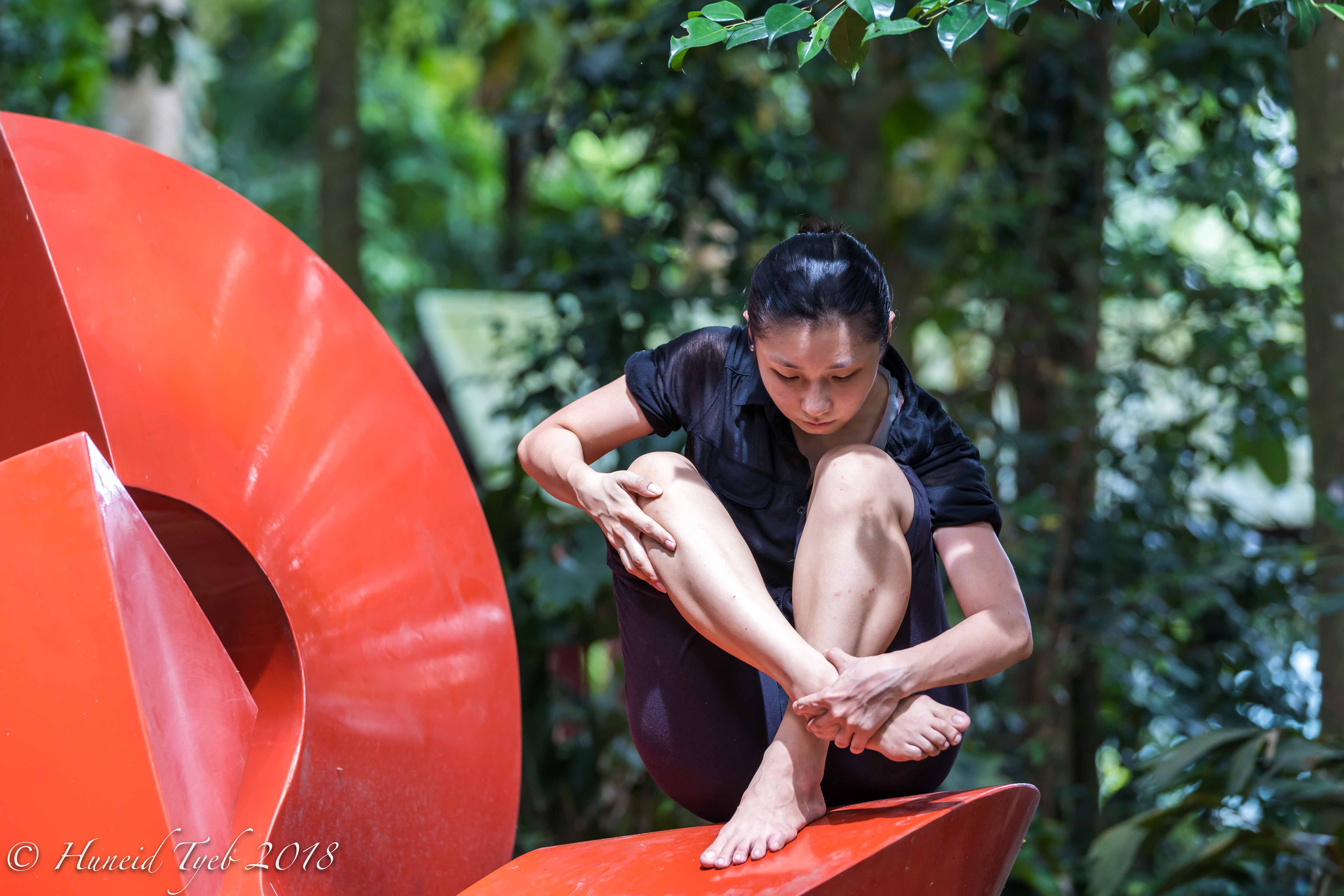
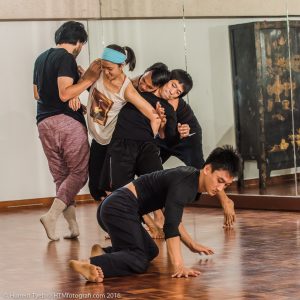
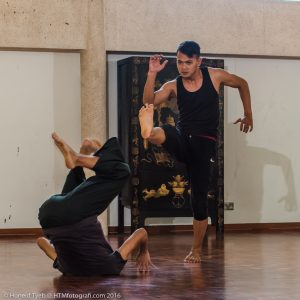
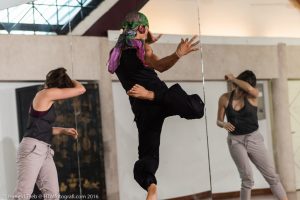
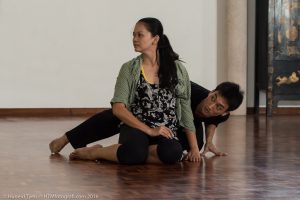
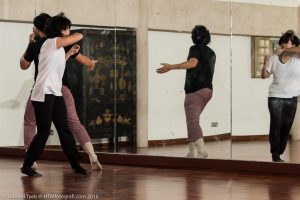
The Choreolab concluded with an informal showing of the duet works that the participants had made, to a small audience in the studio at Rimbun Dahan. [Photos from the showing below by Huneid Tyeb.]

Project Aims

Like the previous Southeast Asian Choreolabs in 2014 and 2015, the project aims to support and enable emerging Southeast Asian contemporary dance choreographers to

  1. Adopt new choreographic tools and physical, thematic and conceptual approaches to enrich their artistic practice;
  2. Develop regional networks among their peers and with regional dance institutions, for knowledge sharing, future artistic collaboration and touring;
  3. Experience works of art, cultures, places and histories beyond their home, to increase international understanding and to help contextualize their artistic practice.

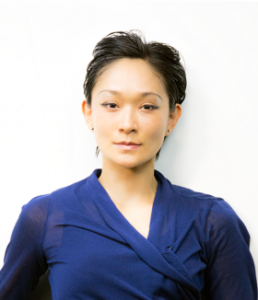
Akiko Kitamura profile imageAbout Akiko Kitamura, facilitator

Akiko Kitamura was born in 1970 in Tokyo. She learned ballet dance and street dance in her youth, studied dance theory at Waseda University and began to build a professional career as a choreographer in show business while still in her teens. She choreographed many pieces for commercial films, fashion shows and plays. In 1994, she founded her own company Leni-Basso. In 1995-1996, she stayed in Germany for a year as a resident artist.

In 2001 she was invited to the Bates Dance Festival and created Finks, one of her best known works, performed more than 60 times worldwide. Ghostly Round (2005), choreographed for In Transit organised by Haus der Kulturen der Welt (Berlin), is another of her signature works which has toured internationally. Akiko Kitamura has made many works for international companies, commissions and collaborations such as for American Dance Festival, Group Motion Dance Company in Philadelphia, ACE Dance and Music of Birmingham, and avant-garde rock group Art Zoyd in France.

Akiko started to learn pencak silat in 2004 according to a strong interest in the body techniques of South East Asia, and in 2010 she came to Indonesia to research dance, music and martial arts more deeply. In 2011, she started to collaborate with Indonesian artists including choreographer/dancer Martinus Miroto, Yudi Ahmad Tajudin (Teater Garasi), dancer Rianto, musicians Kill the DJ (Jogja Hip Hop Foundation), Slamet Gundono, and Endah Laras, and a team of Japanese artists to create the To Belong Series, such as To Belong-cyclonicdream- (2013) and To Belong/Suwung (2014). The work explores how two cultures meet, and connects the old world to the contemporary using video, music and dance. It also aims to discover the new generation of the Asian Body: the repository of the traditional and the contemporary worlds.

In 2015, Akiko was an Asian Cultural Council Fellow and a Saison Foundation Fellow. Since 2001 Akiko Kitamura has taught at Shinshu University, Nagano, as associate professor of the Faculty of Arts.

http://www.akikokitamura.com/
http://www.akikokitamura.com/tobelong/english/


The Southeast Asian Choreolab 2016 was a joint project by

rd_text_green wda logo

Supported by

JFKL-Logo_KL_smallerMyDance Alliance Logo Smallaswara_logo

Southeast Asian Choreolab 2015

Southeast Asian Choreolab 2015
14690552-STANDARD

From 30 May to 7 June 2015, Rimbun Dahan hosted the Southeast Asian Choreolab 2015, a meeting of 15 emerging contemporary dance choreographers from Southeast Asia.

This was the second edition of the Southeast Asian Choreolab, which brings together emerging contemporary dance choreographers from Southeast asia. The participants in 2015 are from Laos, Cambodia, Thailand, Vietnam, Malaysia, Singapore, Indonesia and the Philippines. They worked under facilitator Arco Renz, a German choreographer based in Brussels.

Each of the participants had the opportunity to run their own group session during the Choreolab, sharing their particular movement style or choreographic method. Arco led the group in integrating this material into choreographic and analytical exercises. ‘Zeitguest’ speakers about topics not related to dance also addressed the group, providing impetus information about ‘real world’ topics: regional security, economics and marine biogeography.

The group went on a field trip to Kuala Selangor, a tour of Klang Valley arts institutions Temple of Fine Arts, ASWARA, DPAC and klpac, and watched performances by Dua Space, Pierre Rigal Compagnie and Wild Rice.

On the final day of the Choreolab, the participants of the Southeast Asian Choreolab 2015 shared snippets of their studio exercises during the event with a small audience.

The Southeast Asian Choreolab 2015 is supported by Goethe-Institut Malaysia, and hosted by Rimbun Dahan. It is a joint project between MyDance Alliance and World Dance Alliance Asia-Pacific.

See more images from the 2015 SEA Choreolab here.

About the Participants

The participants of the 2015 SEA Choreolab were:

  • “Ong” Nitipat Pholchai (Thailand)
  • Sonoko Prow (Thailand)
  • Faillul Adam (Malaysia)
  • Tan Bee Hung (Malaysia)
  • Japhet Mari M. Cabling (Philippines)
  • Lygie Carillo (Philippines)
  • Al Bernard Garcia (Philippines)
  • Siko Setyananto (Indonesia)
  • Darlane Litaay (Indonesia)
  • Fadilla Oziana (Indonesia)
  • Chy Ratana (Cambodia)
  • “Kaka” Ounla Phaoudom (Laos)
  • “Buddha” Thanh Nguyen Duy (Vietnam)
  • Eng Kai Er (Singapore)
  • Foo Yun Ying (Singapore)

About the Facilitator

aRco_Chalon_DSC_4991_Crop_0-bg-300x317Arco Renz productions with Kobalt Works reveal an intense physicality and explore the emotional force of abstraction.

In his creations, he consistently broadens the principles of Abstract Dramaturgy to light, sound and multimedia interfaces; and his choreographies go beyond pure, formal dance, displaying “a graceful expressionism that can be situated somewhere between the German expressionist films of the 1920s and traditional Eastern dance and theatre forms.”

During 2014 and 2015, Kobalt Works|Arco Renz is engaged in collaborative performance projects of very different nature in Indonesia (KRIS IS), Vietnam (Hanoi Stardust), the Philippines (COKE), and Singapore (ALPHA).

Among over 20 evening length choreographies, other major Kobalt Works’ productions include .states. (2001), Mirth (2002), heroïne (2004), Bullitt (2006), i!2 (2008), PA (2009), 1001 (2010), CRACK (2011), solid.states (2012), or Discografie (2013).

In addition, Arco Renz has regularly created commissioned works for the Brussels Opera House, the Festival d’Art Lyrique d’Aix en Provence, the Brussels Philharmonic Orchestra, the Norvegian National Company of Contemporary Dance, among others. In the field of opera he has extensively worked with Robert Wilson, Luc Bondy and on several occasions with Anne Teresa de Keersmaeker.

A central focus within Arco’s specific choreographic idiom is the comparative study of various Asian and European performance traditions. He has developed Monsoon, a series of transcultural and multidisciplinary research and
exchange programs with editions in Asia, Europe and coming up in 2015 in Australia. Arco Renz studied dance, theatre, and literature in Berlin and Paris and was one of the first generation of graduates of P.A.R.T.S., the dance school founded by Anne Teresa De Keermaekers in Brussels.

Southeast Asian Choreolab 2014

Southeast Asian Choreolab 2014

The first Southeast Asian Choreolab at Rimbun Dahan took place from 1 to 9 May 2014, as a 9-day residential camp for 15 emerging contemporary choreographers from the Southeast Asian nations. It was facilitated by Janis Claxton, an Australian choreographer based in Scotland, and supported by British Council.

Participants:

  • Nget Rady (Cambodia)
  • Yon Davy (Cambodia)
  • Otniel Tasman (Indonesia)
  • Rizki Suharlin Putri (Indonesia)
  • Chai Vivan (Malaysia)
  • Fauzi Amirudin (Malaysia)
  • Hii Ing Fung (Malaysia)
  • Lee Ren Xin (Malaysia)
  • Ea Torrado (Philippines)
  • Sarah Marie Samaniego (Philippines)
  • Shahrin Johry (Singapore)
  • Chan Sze Wei (Singapore)
  • Aditep Buanoi (Thailand)
  • Đỗ Hải Anh/Yumi (Vietnam)
  • Colleen Coy (East Timor)

Aims

To encourage emerging Southeast Asian choreographers to

  1. Develop regional networks among their peers and with regional dance institutions, for knowledge sharing, artistic collaboration and touring;
  2. Experience works of art, cultures, places and histories beyond their home, to increase international understanding and help contextualize their artistic practice;
  3. Adopt new choreographic tools, physical disciplines, thematic and conceptual approaches to enrich their artistic practice.

Format

The 15 participating choreographers (4 from Malaysia, 11 from elsewhere in Southeast Asia) and the international facilitator were provided with accommodation, food, local transport and airport transfers at Rimbun Dahan. All study sessions took place in the dance studio or in surrounding spaces at Rimbun Dahan. The program will consist of 7 work days with 2 days of study-tour to arts institutions in the Klang Valley, including the National Academy of Arts and Heritage (ASWARA), Temple of Fine Arts, Damansara Performing Arts Centre, Five Arts Centre and Kuala Lumpur Performing Arts Centre. Classes and other sessions were conducted by Jack Kek, Joelle Jacinto, Lim Sae Min, David Lim, Rathimalar Govindarajoo, Alla Azura Abal Abas, and Lim How Ngean.

About Janis Claxton, Facilitator

Choreographer, producer, dancer and teacher Janis Claxton was born in Australia and is now based in Edinburgh, Scotland, where she is artistic director and co-producer of the award winning contemporary dance company Janis Claxton Dance. With more than 25 years of international experience she has worked both independently and with companies and organisations in several countries. She has performed with The One Extra Company (Australia 1984-86), Michael Parmenters’ Commotion Company (NZ, 1990) and her work is strongly influenced by Erick Hawkins who invited her to join his company in New York (1992). Janis has choreographed solo and company works, community projects and children’s theatre including for Janis Claxton Dance, BeijingDance/LDTX, National Dance Company of Wales, Beijing Dance Academy, Lung Has, Grid Iron and Travelling Light.

With a passion and commitment for movement research Janis’ reputation as a teacher traverses the globe. She has taught extensively in professional, community and educational dance settings including Northern School of Contemporary Dance, Beijing Dance Academy, Dance Academy Arnhem, London Contemporary Dance School and Scottish School of Contemporary Dance. As an arts educator she has taught dance extensively in schools developing programs integrating dance with mathematics and literacy in primary schools. She has run 3 month full time professional dance training programs with a staff or 8 teachers and musicians.

Since 2009 Janis has had an on-going artistic relationship with China and has worked with major organizations and independent Chinese artists. She has choreographed for BeijingDance LDTX, Beijing Song and Dance Company and Beijing Dance Academy and her works have been presented at the DaDao Live Art Festival, Guangdong Modern Dance Festival, Beijing Dance Academy and Shanghai Expo. In 2012 Janis Claxton Dance collaborated with BeijingDance/ LDTX to open Beijing Dance Festival which was presented as part of the UK NOW Festival. Janis has a passion for continuing explorations, collaborations and networking with Chinese and Asian dance communities.

During the Southeast Asian Choreolab 2014, Janis largely worked on introducing the group to TACTICS, a framework for developing partner-based material, originated by New Zealand choreographer Michael Parmenter.