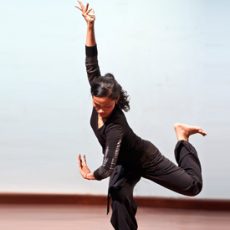
Mao Sovanchandy, a multidisciplinary artist from Cambodia, and her collaborator Yuryphal Tum, spent two months at Rimbun Dahan in 2025, drawing inspiration from the regenerative nature of mulch, with experiments with water hyacinth pulp, plaster, photography, food and performance.
About the Artists

Mao Sovanchandy (b. 1998) is an independent multidisciplinary artist exploring mixed-media works that reflect environmental and social issues, as well as societal norms, drawing from self-reflection and personal experience. A self-taught artist with a B.A. in Architecture, Sovanchandy’s practice is deeply informed by the rapid transformation of Phnom Penh — a city where historical, cultural, and ecological values are constantly shifting. Her practice evolves installation, performance, moving image, and social engagement, often centered on the tension between what is visible and what is forgotten. https://www.instagram.com/sovanchandymao, https://shorturl.at/TUjNk
For her residency at Rimbun Dahan, Sovanchandy has invited Yuryphal Tum to be her collaborator.
Yuryphal Tum (b. 1992) is an independent artist and architect from Cambodia. She earned her Bachelor’s degree in Architecture and Urban Planning. As the daughter of a sculptor, Yuryphal was surrounded by art from an early age, which deeply influenced her creative journey. Her practice encompasses sculpture, installation, architecture, and archival work, often assembling meaning from small fragments and found materials. She values the hand-crafted process and the sculptural quality of her work, always striving to capture the beauty and integrity of handmade art. https://www.instagram.com/yury.tum, https://shorturl.at/l4o7r
About the Residency

Chandy was accepted into a two-month residency at Rimbun Dahan in 2024, which coincidentally overlapped with her participation in the Maybank Fellowship Program 2025. She later invited her collaborator, Yury, to join her at the residency. Their time at Rimbun Dahan became a period of reflection on their recent developments and future direction toward establishing an artist-run space. It envisions a space that would eventually become an artist collaboration, residency, library, and kitchen in Phnom Penh, Cambodia, where they now live and work.
Within Malaysia’s cross-cultural environment, Chandy and Yury explore community work and personal experience on how trace, memory, and transformation shape connection through dialogue and experimentation. Their practice interlaces folklore, belief, and fragments of the past to reveal how time, place, and identity intertwine—drawing inspiration from the mulch process and its regenerative nature.


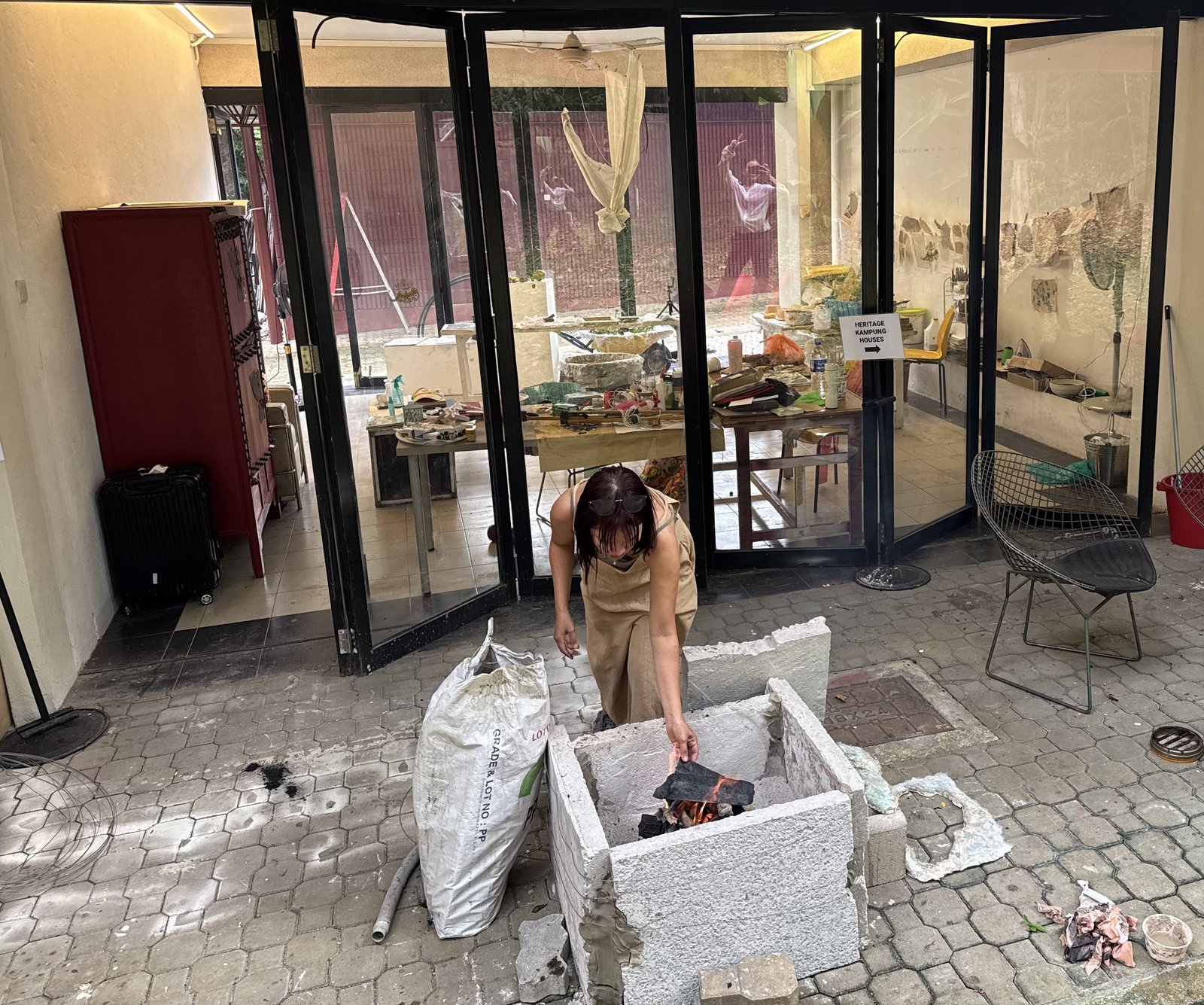


About a five-minute walk from Rimbun Dahan, they discovered a low-lying pond filled with water hyacinth and its purple blossoms—a plant that grows wild in Cambodia and throughout Southeast Asia’s freshwater ecosystems. Locals called it keladi bunting, meaning “pregnant yam.” We brought the plant back to the studio and experimented with transforming every part of it—from root and stem to flower—into handmade paper. Working in the kitchen, we cut, cooked, blended, pressed the fibres under weight, dried them in the sun like laundry, and even ironed them to counter the humidity of the rainy season. The process taught us patience, impatience, time, and a feeling of the timeless. This led us to further experiment with photography, collage, and layering prints on tracing paper, fabric, and our handmade water-hyacinth paper.

Education and exchange formed the core of their residency. They hosted the Re:Present workshop with 13 students at Buku Jalanan Chow Kit — an alternative school in Kuala Lumpur — where students aged 9 to 17
imprinted found objects brought from home and school onto clay, then cast these impressions in plaster. Through this process, everyday materials became moments of formation, unfolding like a mechanical dialogue. The resulting works will be presented at the open studio at Rimbun Dahan.
Meeting people here and travelling to nearby islands — such as Langkawi and Pulau Ketam (Crab Island) — has inspired Chandy and Yury to write stories and poems in their tracking journal, in which they collage photography, drawing, and handwriting created from handmade water-hyacinth paper and found fabric from the Cambodian community. This journal is currently on display at Balai Seni Maybank until 12 December 2025, as part of the Maybank Foundation Artist Fellowship Programme. Inspired by their poems and daily experimental photography during the residency at Rimbun Dahan, Chandy and Yury also compiled their work-in-progress into a video art piece shot inside and outside Rimbun Dahan, involving body performance and a poem-reading voice-over, collaborating with local residents and friends, which will also be shown at the Open Studio.
Just five kilometres from their studio, Chandy and Yury found a small Cambodian market—a pocket of home in an otherwise unfamiliar place. Speaking their own language with the people there helped them understand the community’s daily struggles, their resilience, and the paths that brought them to Malaysia. With familiar ingredients close by, they began cooking and sharing meals with residents and guests on-site. It became a simple way to ease homesickness and to stay connected to their food roots.
Here at Rimbun Dahan, nature, forest, and art blend in a beautiful dance, surrounded by a flourishing garden, giving us a sense of peace and home. Chandy and Yury swam in the pool and the lotus ponds, where the otters live, and one day we discovered a sunken boat beneath the deck. It somehow evoked a sense of longing, as if they had finally found a hidden treasure beneath the water—a dream come true. The boat later became part of their installation and inspired a section of their poem.
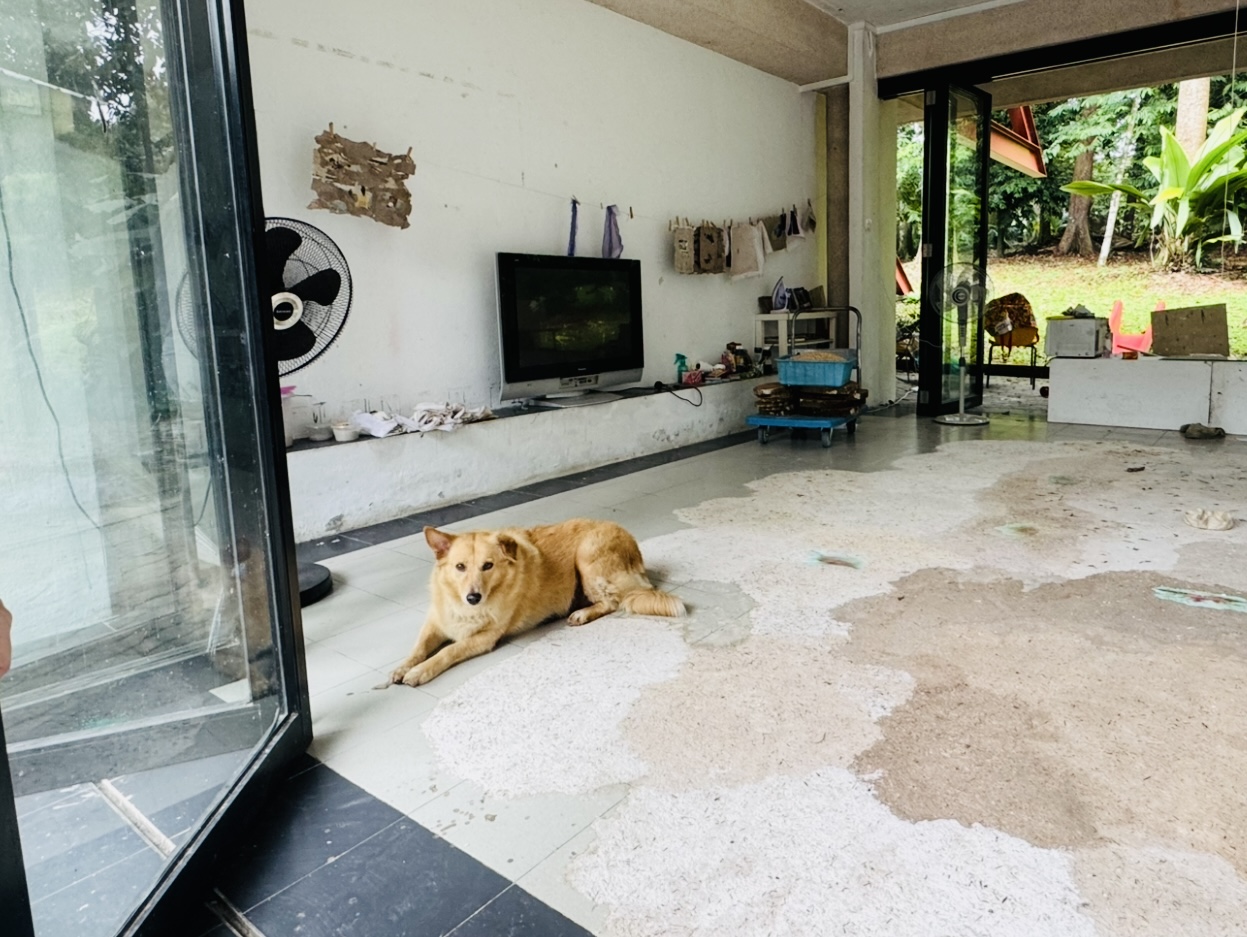

Lastly, Kantael Komplork (Keladi Bunting’s mat) is the title of an interactive installation inspired by traditional Khmer living practices. In Cambodia, almost every family owns a mat—an object used for many purposes: sleeping in place of a mattress, welcoming guests, or kneeling in prayer at the temple. The cooked, ground, and pressed water hyacinth in this work becomes a delicate illustration of migration, displacement and geopolitical history—echoing land movements that stretch and disperse along the waterways. By inviting people to sit on the floor and engage with the handmade water-hyacinth paper, the installation encourages visitors to touch, draw, relax, and interact with the artwork through their bare feet, hands and body. This collective act of gathering on the ground evokes the intimacy of family, warmth, and a profound sense of home—an environment where people come together, share space, and feel deeply connected.