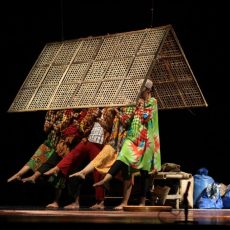
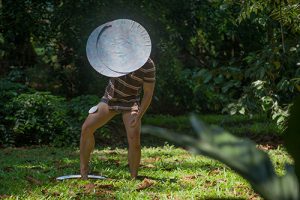
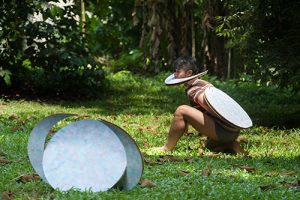
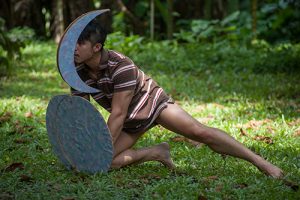
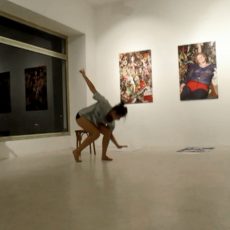
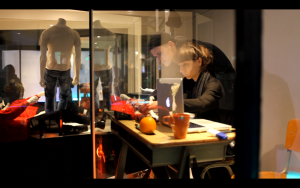
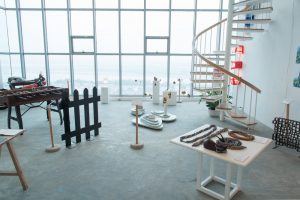
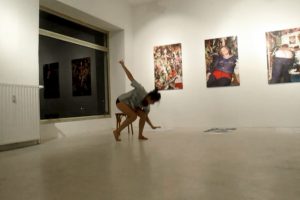
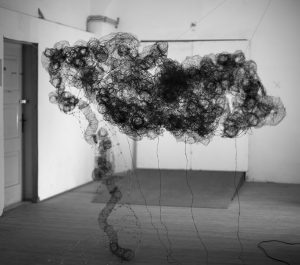
Richard Orjis is a multimedia artist based in New Zealand, as well as a PhD student from the Auckland University of Technology. He will be at Rimbun Dahan for a three month residency from February to April thanks to a grant from Asia New Zealand Foundation. To find out more about him and his work, you can visit his website.
My artistic research is driven by an interest in the garden and how I might understand place through these green spaces. I see gardens as exciting and complex intersections of art, nature and culture. They can offer insight into how a culture views the natural world, aesthetics, politics, religion, gender and class.
The proposed project for my time at Rimbun Dahan will be the production of publication containing photographs, text and drawings which be created in response to the green spaces of area. The project will encompass the breadth of the local environment, from the manicured to the accidental, from the civic to the domestic. It takes the premise that a city like Kuala Lumpur could be perceived as a vast garden with a functioning ecology of people, animals, plants and elements.
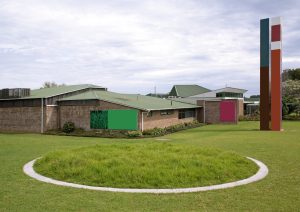
Grass Circle, 2010, Te Tuhi Centre for The Arts, Auckland
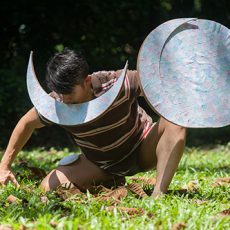
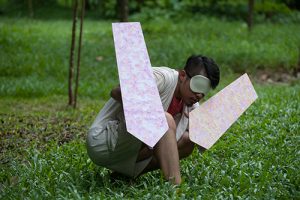
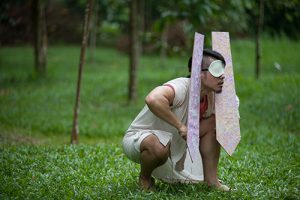
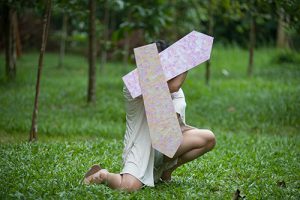
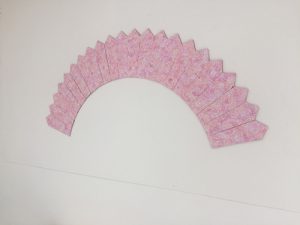
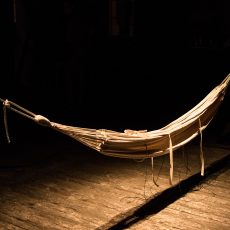
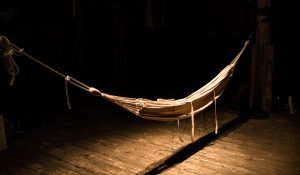
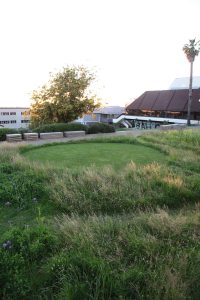
The Apron, 2016, Tauranga Art Gallery
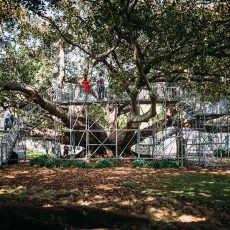
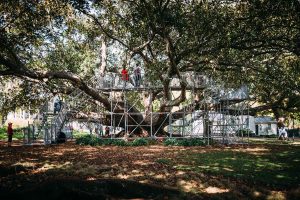
Walking In Trees, 2014, Auckland
Grass Circle, a concrete edged circle of grass permitted to grow for one year at Te Tuhi Centre for the Arts addressed the perception of suburb and notions of control.
Walking In Trees, a two-storey scaffolding bridge and staircase erected between a pair of historic Moreton Bay Figs in Albert Park examined notions of perception.
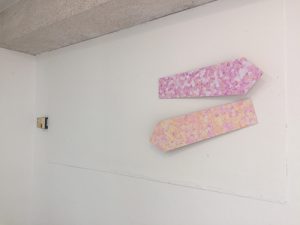
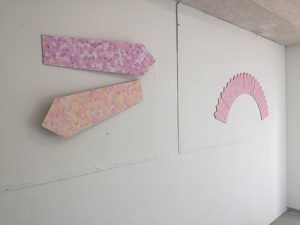
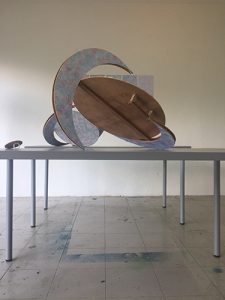
Veronika Neukirch is a German artist born in 1986 in Duesseldorf. She completed her Art & Design Foundation in 2010 and graduated with a BA (Honours) Fine Art from Central Saint Martins in 2013. She has been based in Kuala Lumpur since 2014 and has been exhibiting across Malaysia as well as abroad.
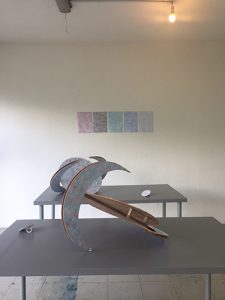
As an object-based artist concerned with developing new roles for pre-designed objects, Veronika creates compositions that strive to represent and utilise the pluralistic nature of contemporary art and contemporary life. The combining and finding of a new balance between various selected and handmade components run through her entire practice, consisting predominantly of sculpture, assemblage, collage, installation. The tension between artificial, functional, and ready-made elements and the organic shapes of intuitive material experimentation offers wide haptic diversity.
The rich local flora and fauna will be the starting point of her collaborative residency with local artist Haffendi Anuar. Veronika will be in residency at Rimbun Dahan for four months starting in February.
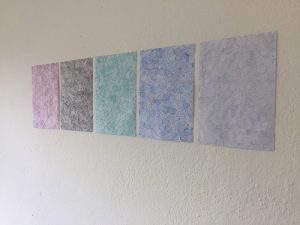
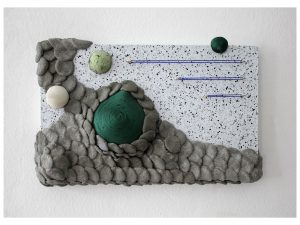
Hapto Tablets 1.0; 5/Series of 5, 2016;
34 x 21.5 x 9cm;
Wood, cement, self-adhesive shelf liner, dyed grout, latex glue, crochet thread, hooks
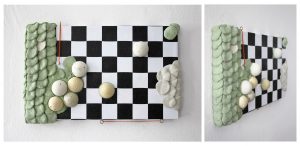
Hapto Tablets 1.0; 4/Series of 5, 2016;
34 x 21 x 5.5cm;
Wood, shelf liner, dyed grout, hooks, glue, thread
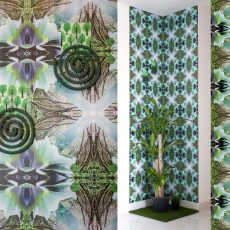
Sterile Jungle; 2014;
61 x 254 x 61cm; Digital collage on synthetic paper, astro turf, plant, artificial plant, 2 sticker hooks, 2 insect repellent coils
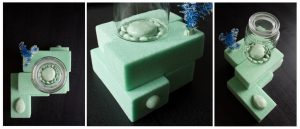
Moosi Kampung; 2016′;
50 x 85 x 60cm; Glass container, clay, spraypaint, aquarium plant, gardener’s foam
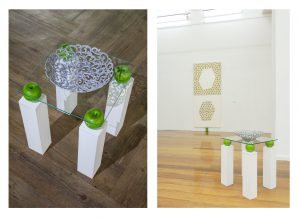
Granny Smith’s Table; 2015; 90 x 130 x 90cm; Wood, glass plate, fruit basket, spray paints, 4 artificial apples, Granny Smith’s stickers
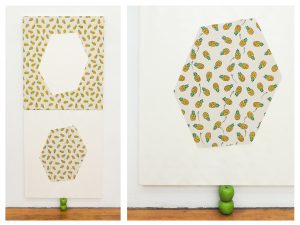
Apples & Pineapples; 2015; 90 x 223 x 8.5; Printed fabric, acrylic paint, artificial apples, permanent marker
Sterile Jungle (2014) – published in Make8elieve #8, Horror Plants, USA/Switzerland
Granny Smith’s Table (2015) and Apples & Pineapples (2015) – exhibited at:
2015: ‘RIPEN AT HOME’ (solo), Minut Init, Petaling Jaya, Malaysia
2016: ‘Extending Ideas’ (group show kindly supported by Goethe Institute Malaysia), Feeka, Kuala Lumpur & Museum Negeri Pulau Pinang, USM, Penang, Malaysia
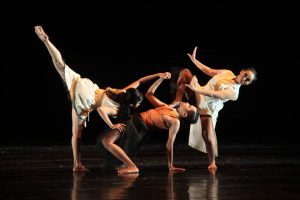
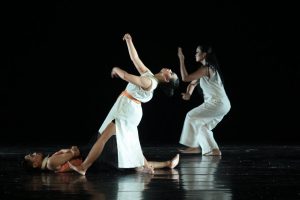
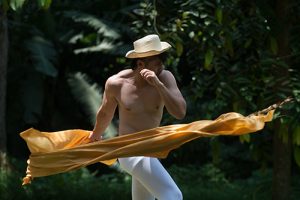
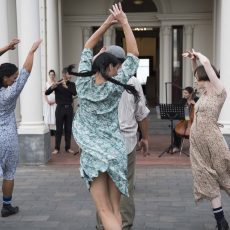
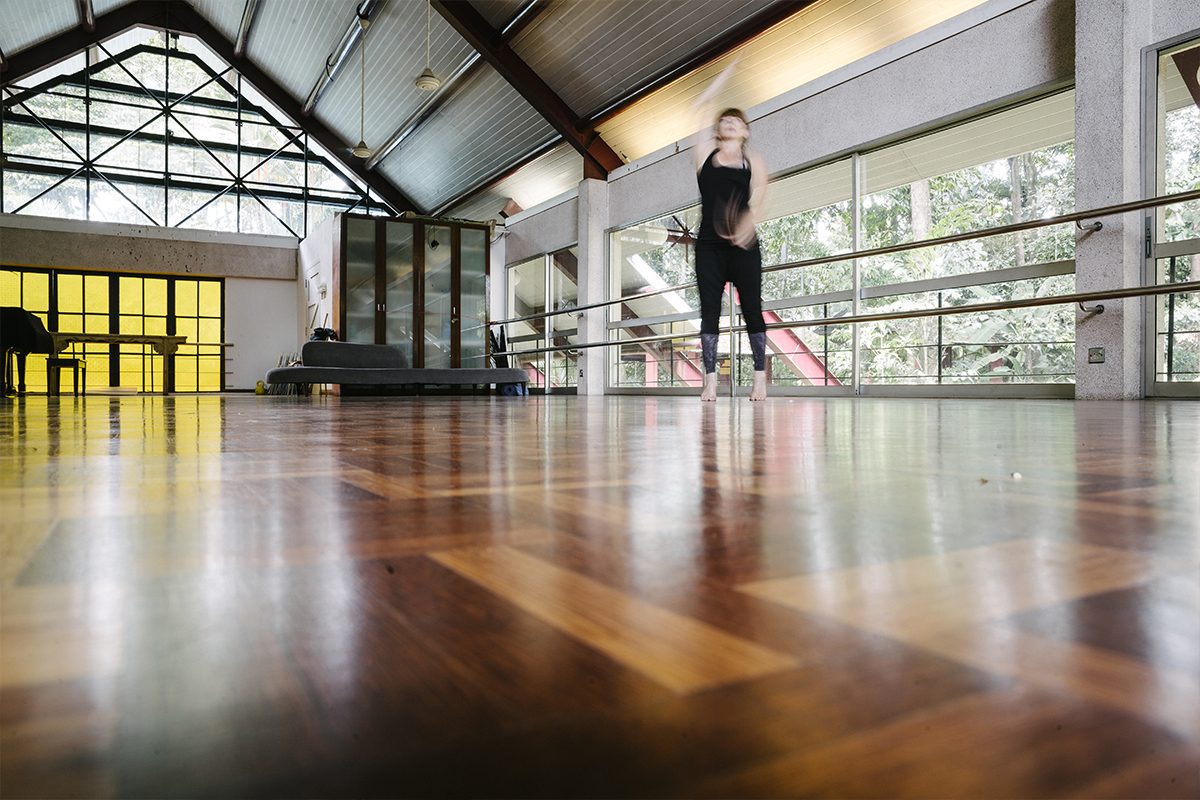
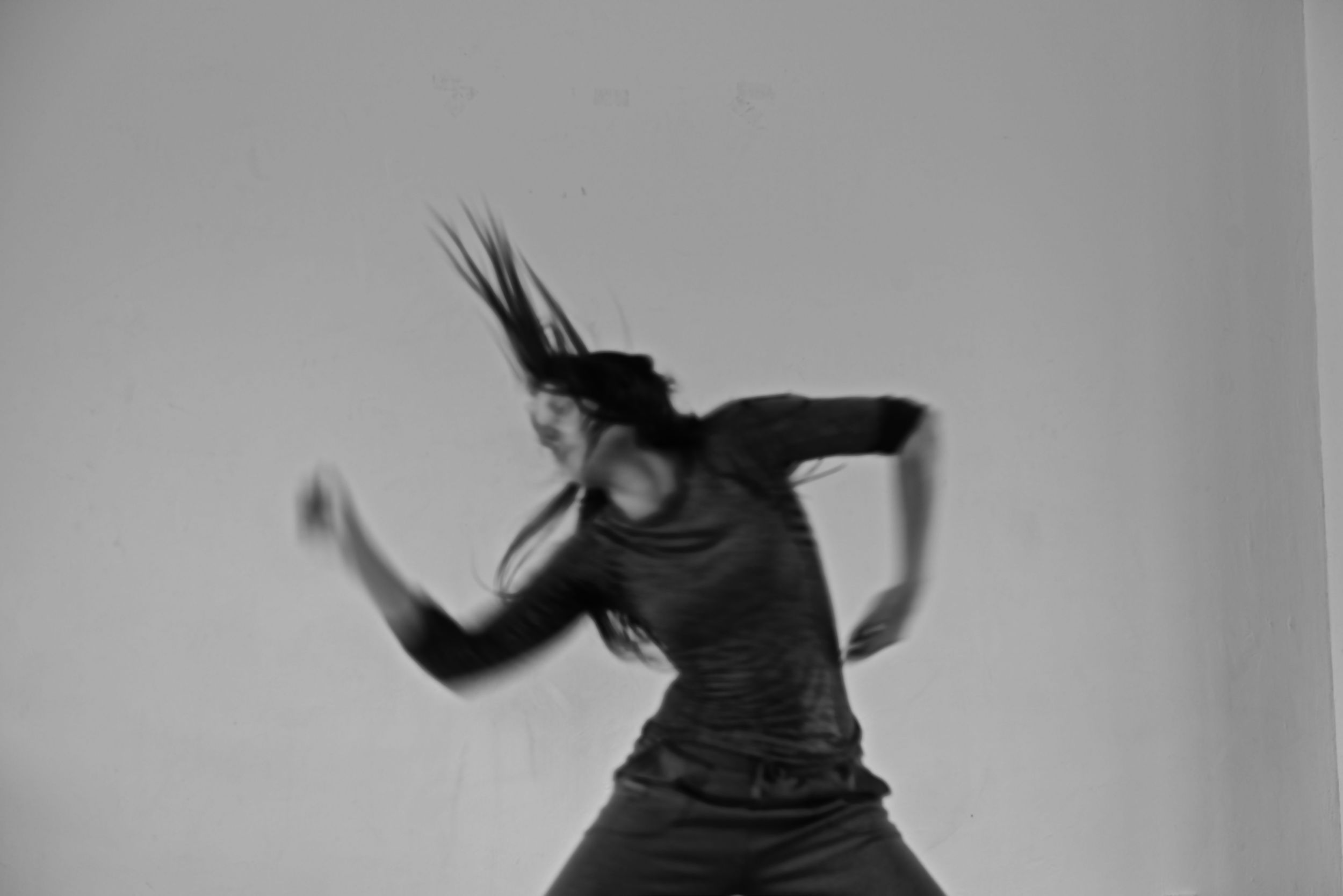
I am an inter-disciplinary choreographer working in sustained collaborations with artists and experts from other fields. My research-led practice attends to the creative potentials in working between the cracks; between histories, temporalities and disciplines. Nourished by creative collaborations that explore diverse spaces, places and body memories, my choreographies take multiple forms, as dance installations, inter-media events, site specific performance and theatre dance, and have been presented internationally.
My current research, which I will pursue at Rimbun Dahan involves choreographic writing that negotiates the page, the stage and the ‘outside’. This will lead to a book I am developing on how performance remains rather than disappears through the transmission of body archives and the staging of performance cycles connected to the rhythms and ecologies of place.
I visited Rimbun Dahan in 2015 as part of an Asia New Zealand Performing Arts Tour and am very pleased to be returning with my partner Russell Scoones (musician / sound designer) and children, Rafe and Cass. This visit is part of a period of research leave from the University of Auckland, Creative Arts Industries Faculty where I am an Associate Professor in Dance Studies.
Laura Wills is an Adelaide based visual artist. She has a multidisciplinary practice and a strong interest in using found materials, collaboration and basing projects on social/ environmental themes. She is represented by Hill Smith Gallery Adelaide. She will be in residency at Rimbun Dahan for 5 weeks until mid-February.
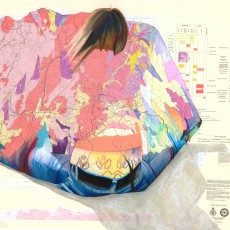
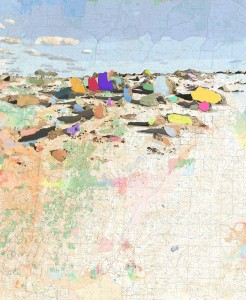
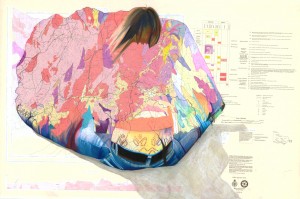
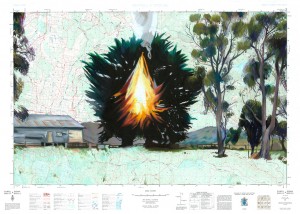
At Rimbun Dahan I will be developing a new series of works on maps. My research will be drawing and painting based and also involve exploring the local environment to inform the development of new works, particularly the Taman Sari, vegetable and spice garden. I am interested in the social relationship and connection people have to it. I would like to continue in this line of thinking about intimate relationships, memories and habits we have towards culinary plants and nature.
Local Rocks, 2016, Pastel and digital print on archival paper, Unique print special edition of 5, 57×87 cm
Zulkifli Lee’s creative practice explores the relationship of personalised and impersonalised forms as well as the language of materials. His motifs usually involve very systematic and rhythmic geometric patterns, but rather than striving for total control, he embraces change and chances. Playing with the phenomenological aspect of his materials’ natural properties and using various substances, chemical treatments and exposure to natural forces, he submits part of the image making to the law of nature, to the disposition of art elements outside his personal control. The marks created by chance, deforms or transforms the images created by the artist and vice versa. Zulkifli is invested in creating works that juxtapose the beauty of the relationship and paradox between humans and nature.
Improvisation of Chances Repeating Scars, 2016, iron oxide on canvas, 240 x 137cm
Regular, Irregular, 2016, 96 x 153 cm (diptych)
Shapeshifter, 2015, corrosion patina on canvas, 153 x 153 cm
With the residency at Rimbun Dahan, he wishes to focus on experimenting with new processes and materials apart from his trademark iron oxide or corrosion medium. He is keen to introduce more natural media and experiment with new chemical processes for his new series of work and find new ways to play with chances. He is interested to explore natural mediums such as mineral pigments, fungus, heat marks, etc. To work and experiment with these new methods is to further his interest in working directly with the forces of nature. With this experiment he hopes to innovate new potential methods to his creative process and discover new artistic value.
Tales of Lines, 2015, corrosion patina on canvas and steel, 153 x 153cm
Tentang, 2015, corrosion patina on canvas and steel, 153 x 76.2cm (diptych)
The artist Zulkifli Lee
Zulkifli Lee was born in Raub, Pahang & currently works and is based in Kuala Lumpur, Malaysia. He completed his M.A. in Fine Art & Technology at Universiti Teknologi MARA in 2013 and received the Master Excellent Award. Prior to that he graduated from the same university with a B.A in fine art, majoring in sculpture. A versatile visual artist, he also endeavours as a graphic designer, concept artist and illustrator. Zul Lee’s work can be found online at his website. He is Rimbun Dahan’s Yearlong Resident Artist for 2017, and will be exhibiting his works in our gallery in November 2017.
John Mateer is a poet, writer and curator. He has published books in Australia, the UK, Austria and Portugal, and the prose Semar’s Cave: an Indonesian Journal and The Quiet Slave. His most recent book of poems is Unbelievers, or ‘The Moor’. With the Cocos Malay community, he wrote an account of the settlement of the Cocos-Keeling Islands for a sound installation. During his residency at Hotel Penaga he will research the historical encounters between the Malay peoples and the Asian and European traders; focusing on the peripheral, Asian characters in the 17th century epic The Conquest of Malacca.
Following my previous projects related to European colonial encounters in Asia, foremost Southern Barbarians and Unbelievers, or ‘The Moor’, I have become interested in investigating the canonical texts of those encounters to see what understanding the explorers had of the local cultures. Often they disguised their knowledge and their
surprising sympathies. I have mostly looked to Portuguese accounts, the most famous of which are Fernão Mendes Pinto’s prose Peregrinaçam and the earlier epic poem, Os Lusiadas, by Luis vas de Camões. The latter is not only the subject of poems in Southern Barbarians, but also of The Bones of the Epic, my project with the Lisbon puppet-master Delfim Miranda and
art-noise ensemble A Favola da Madusa.
Now, after researching the slave-trade in South-east Asia as it influenced the forebears of the Cocos Malays who lived first in Malacca in the early 19th Century, I would like to write a long poem based on the Asian figures who appear in the periphery of a now largely forgotten Portuguese epic, Francisco de Sá de Meneses’ The Conquest of Malacca. These include the ‘kings’ of Sumatra, Malacca and Korea, and other characters from Cathay and Siam.
Due to my recent engagement with translation and sound production, even though the long poems will be written as in English, I aim to have it translated into both Malay and Portuguese, and produced, ultimately, either as a performance or multi-media work. I have started discussions about this with translators and others in Portugal, Singapore and Malaysia.
John was a resident artist in Hotel Penaga from December 2016 to end January 2017, supported by Asialink.
Awards:
Shortlisted for the Inaugural Prime Minister’s Award for Poetry, and for the Victorian and New South Wales Premier’s prizes for poetry. 2012
Centenary Medal for my “contribution to Australian culture and society”. 2003
Now that I have begun my one-month residency at Rimbun Dahan, the quietness, seclusion and
darkness at night is a complete contrast to living in the hustle and bustle of Singapore. Being a
distance away from the city and its conveniences in getting my photographic work made is a new
challenge for me, in making work and would involve working out of my comfort zone. On a
positive note, Rimbun Dahan’s living environment surrounded by nature is the ideal residency
space for me to work therapeutically without the noise and daily stresses whilst engaging with
the emotional themes of death and loss.
Ever since I adopted my second senior dog, Milo, in August 2013 from an animal shelter, I had
been his caretaker till his sudden and painful passing from Cancer in December 2015. Going
abroad or even for a day out was no longer an option due to his separation anxiety and other
existing medical issues. Looking after Milo was the priority. Making work took second place.
This residency is my first proper trip out of Singapore since I returned from London in 2012. I
am now able to dedicate the time and focus in making this new work – a personal book as a form
of catharsis, documentation and in memory of “man’s best friend” – my best friend – which will
involve confronting my fears and coming to terms with the traumatic experience of Milo’s
passing. Travelling across to Malaysia is symbolic for Milo and myself; it’s like going on a road
trip together.
________
Audrey Tan is an international award-winning Singaporean photographic artist who received
her MFA from the Slade School of Fine Art, University College London in 2008. Her work has
been exhibited in the United Kingdom, Ukraine, Switzerland, Israel, Japan and Singapore.
She has a self-published book titled, ‘You see me, I see you’, which is a chronological visual record
of work made in London over a seven-year period showcasing the artist and various muses in
making the ‘Artist and Model’ series using conceptually experimental and technically playful
processes involving sight/intuition in the photographic process, analogue/digital mediums, and
progressing to 2D/3D modes of representation.
A. Cut Out (2009) / C-Type Print mounted on glass / 51 x 61cm / Edition of 3
C. Curve (2012) / Fibre Based Print / 22 x 22cm / Edition of 1
I See You, You See Me #2 (2008) / Platinum Palladium Print from a 4×5 Polaroid negative / Edition of 1
Twelve A. (2011) / Inkjet Print on Hahnemuhle Fine Art Pearl Paper / 20x20cm / Edition of 3
The Unconscious (2007) / Inkjet Print on Somerset Velvet Paper / 61x51cm / Edition of 3
Rimbun Dahan presents Everlasting Love, a showcase of recent works made by Malaysian artist Azliza Ayob who, in her 16 year career, has worked in many mediums such as collage, painting, sculpture, and installation. She has spent her year in residency exploring the possibilities of creating art from discarded and unwanted daily items to sustain and survive in the field that she loves most, which is making art. The exhibition also ties together the themes of labour, community, tradition, and sustainability.
DATES: 27 November – 4 December 2016
OPENING HOURS: Weekends 10am – 6pm, Monday to Friday by appointment
Admission is FREE. For the event page on Facebook please click here.
There will also be a free guided tour of Rimbun Dahan’s grounds and traditional village houses at 9am on 27 November, conducted by Angela Hijjas. Our other current resident artist, Si Jie Loo, will also be having an open studio 10am to 6pm on Sunday, 27 November.
Nature plays a strong part in her work and like many previous Rimbun Dahan resident artists, Azliza took inspiration from the surrounding grounds and the various types of flora and fauna growing in the gardens, using her time cleaning the lawns in front of her cottage to understand different types of leaves. In that process, she also got acquainted with the inorganic things accumulating (and “growing”) within the grounds as well as in the surrounding village. Azliza started out with one studio and a small collection of plastic bottles made of polyethylene terephthalate (PET). One year on, the scale of her work has required her to utilize two studios to house pieces made from an estimated 2000 PET bottles and other materials. The bottles were either handpicked from the roadside and the trash or donated by fellow artists, friends, family, and eateries and shops from Kuang all the way to Kuantan.
“I am fascinated with the transparency of PET bottles,” says Azliza. “I’m fascinated by its longevity and how it’s so easily accumulated to the point where it is ‘haunting’. [Through working with the material], I became more sculptural. The process is so tedious, but the result is satisfying.”
HIGH, 2016, 122cm x 122cm, Acrylic, collage, and glitters on wood
PLEASURES, 2016, 122 x 122cm, Acrylic, oil, collage, and glitters on wood
ETERNITY, 2016, 214cm (diameter) x 40cm
PET bottles, spray paint, beads, and glitters on wire mesh
SERENITY, 2016, 78cm x 183cm, PET bottles, spray paint, glitters, and beads on wire mesh
Azliza learned various traditional crafting techniques from a young age and put this knowledge to use to both figuratively and literally weave together her unconventional and modern materials into softer forms, organic shapes, and detailed sculptures and collages. She has used plastic bottles in an interactive site-specific installation titled For Our Daughters (2011), glitter to fill thousands of mushroom forms and pink rain drops for her residency exhibition at Fukuoka Art Museum in 2012, and paper collages in her 2014 solo at Wei-ling Gallery, All That Glitters. New materials joined her repertoire in making work for Everlasting Love.
“I made weavings by substituting plastic strips, wires and wire mesh for traditional mengkuang, I incorporated glass and plastic beads, rhinestones, oil paints mixed with spray paints, recycled printed items, glitters, stuff from local hardware stores and all-in-one convenience shops. The materials [I use] must be considered trash, unwanted, or too ordinary and unimaginable to create art, it must show the laborious process of art.” She supplements these with the inclusion of a more sentimental material – batik cloths from her own personal collection, mostly wedding presents from her mother-in-law’s Kelantanese family. Ordinary perhaps, but certainly not trash or unwanted. “These batik cloths have gone through and withstood the vigorous activity of a mother, wife, artist, and best preserved in art.”
DELIGHT, 2016, 78cm x 183cm,
Acrylic, collage, glitters, rhinestones & batik stretched on wood
WHERE WE BELONG, 2016, 244cm x 122cm,
Acrylics, collage, glitters, rhinestones & printed fabric stretched on wood
FIRST CLASS, 2016, 77cm x 57cm, Acrylic, collage & glitters on paper
HARVESTING, 2016, 52cm x 37.5cm, Acrylic, collage & glitters on paper
The use of everyday materials was both a matter of principle and necessity. Azliza says, “I find being creative is somehow connected with being frugal. Working with limited finances is possible with good interpersonal skills and when you work together in a supportive community. In this way, I think of creating art as a way to empower our economy, to live cleaner and greener, to help us think of sustenance and sustainability as a way to maintain our freedom (to love, to be, to do).”
Rimbun Dahan is also a proud participant of Gallery Weekend Kuala Lumpur, a festival tour of the rich and innovative arts and culture scene of the city happening 25 – 27 November 2016.
The Res Artis Meeting of Southeast Asian Arts Residencies 2016 was a 4-day regional meeting of arts residency representatives held on July 20 – 23 2016 at Rimbun Dahan outside Kuala Lumpur, Malaysia. The participants consisted of 20 representatives from 19 residencies and organizations from 7 Southeast Asian countries, as well as outside SEA, from Australia and China. The meeting was facilitated by Jean-Baptiste Joly, founding and artistic director of Akademie Schloss Solitude in Germany, and Res Artis board member.
The meeting was a joint project by Rimbun Dahan, a private arts residency centre in Malaysia, and Res Artis, the largest global membership based residency network headquartered in the Netherlands, and was supported by Goethe-Institut Malaysia as the main sponsor.
The idea for the meeting arose from a feeling of disconnectedness as an operating arts residency within the Southeast Asian region, and was envisioned to foster stronger ties with arts residencies in neighbouring countries and in the general region, which would in turn strengthen ‘residency culture’ and its sustainability in Southeast Asia. Participants presented different models of running residencies, shared their different cultural contexts and traded ideas to troubleshoot issues and concerns. We hope the connections and networks developed during the meeting feed back into the development of programs that cultivate artistic talent and practice in the region, stronger and more productive external and internal exchange programs , and into building ongoing resources for the development of more residencies in the region.
The meeting was produced and project managed by Syar S. Alia, Arts Residency Manager at Rimbun Dahan, with an organizing team consisting of Bilqis Hijjas, Dance Program Director at Rimbun Dahan, Eliza Emily Roberts, Vice President of Res Artis and Arts Residencies Manager for Asialink, Mark Venegoor, Director of Res Artis, and Birte Gehm, Communication Manager/Web Editor for Res Artis. Documentation during the meeting was carried out by ARTERI and Malaysian Art Archive.
A short write-up on the meeting was also published on the Res Artis website, and can be read here.
Program
Three of the meeting days were dedicated to roundtable discussions and panels, with the third day set aside for an excursion to three different residency spaces in and around Kuala Lumpur: Lostgens Contemporary Art Space, Shalini Ganendra Fine Art, and Toccata Studio.
Day 1Sessions
Community engagement and the social responsibility of artist residencies
Residencies rooted in ‘place’
Thinking outside the field: Alternative approaches & residency spaces
Institutional programming: The role of artist residencies in the broader arts eco-system
Day 2 Sessions
Artist-Residency Relationships & Alumni
Residency Resources
Glocal Networks
Day 3 Excursions
Day 4 Sessions
Interdisciplinary Residencies; Keynote by Jean-Baptiste Joly (followed by a meet and greet for guests from the public to speak to meeting participants and ask about their residency programs)
Participant-Led Open Sessions
Facilities vs Programming
Feedback and Evaluation for Residencies
Virtual Residencies
Residencies as Soft Power
Participating residencies/organizations
Participants were invited from a compiled list of Southeast Asian residencies, with Res Artis members being given priority. The organizing team also prioritized getting representation from as many countries in the region as possible before opening up the meeting to Res Artis members from other countries that had an investment or interest in the Southeast Asian region. As Rimbun Dahan could only provide accommodation for a certain number of people, spots were limited. We hope that more residencies and countries can be represented in any future iterations of the meeting.
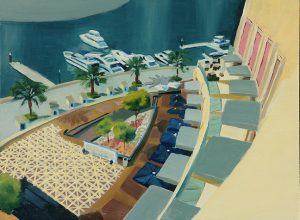
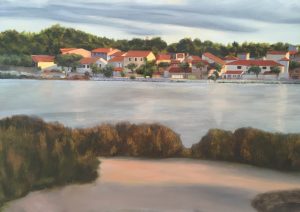
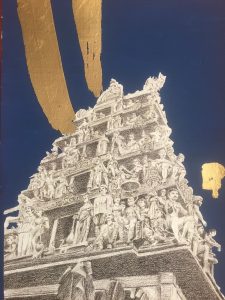
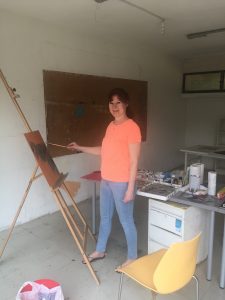
Si Jie Loo is a multi-disciplinary artist who is interested in capturing the spirit of humanity, primarily with Chinese Ink. She graduated from Dartmouth College in New Hampshire, USA with an honors in Studio Art and has since lived and worked in both US and Malaysia. As an artist in the diaspora, she is constantly on the move between places, cultures, music genres and languages. She inks down captivating people, musicians, dancers and nature during her travels, most recently the Tibetan plateau and the Silk Road in Northeast China. She calls this body of work INKounters and further develops larger abstract paintings that convey that essence in another series INKnovations.
Her spontaneous and dynamic strokes are generated from her ever-wandering eyes and ready-to-go ink brush and paper in her pocket. Behind the scenes, she eagerly search for inspirations, whether it is from traveling, reading, calligraphy, visits at the museums and art galleries, music, drum or dance sessions, concerts, and/or art residencies.
Si Jie hopes to use this residency to ask questions such as: What’s the future of Chinese Ink Painting? If it were an important Nanyang (Southeast Asian) heritage and legacy, how can it blossom and grow beyond the Malaysian Chinese art circle? How can she innovate within a tradition that has once inspired the likes of Van Gogh and Paul Gauguin? How can she expand the medium’s limitations by collaborating with other artists of dance, music and theater background?
Southeast Asia is an exciting hub of trades and inter-cultural exchange. Its tropical colors and wide array of craft and folk arts were subjects of studies for many foreign scholars and local artists. Si Jie wishes to immerse herself at her residency at Rimbun Dahan, to share her understanding of the new and the old based on her own cultural roots that she re-discovered upon returning from abroad, thereby expanding her repertoire to a contemporary Malaysia that she and many other artists aspire to shape.
Si Jie’s work can be found online at her website. Footage of her painting processes and interviews can be found on her YouTube channel. She has also posted her residency statement of purpose in full here. Si Jie will be a resident artist at Rimbun Dahan from October to December.
Si Jie Loo with her mentor Malaysia’s Chinese Ink Painting Master Dr. Cheah Thien Soong