Anas Afandi

Anas Afandi

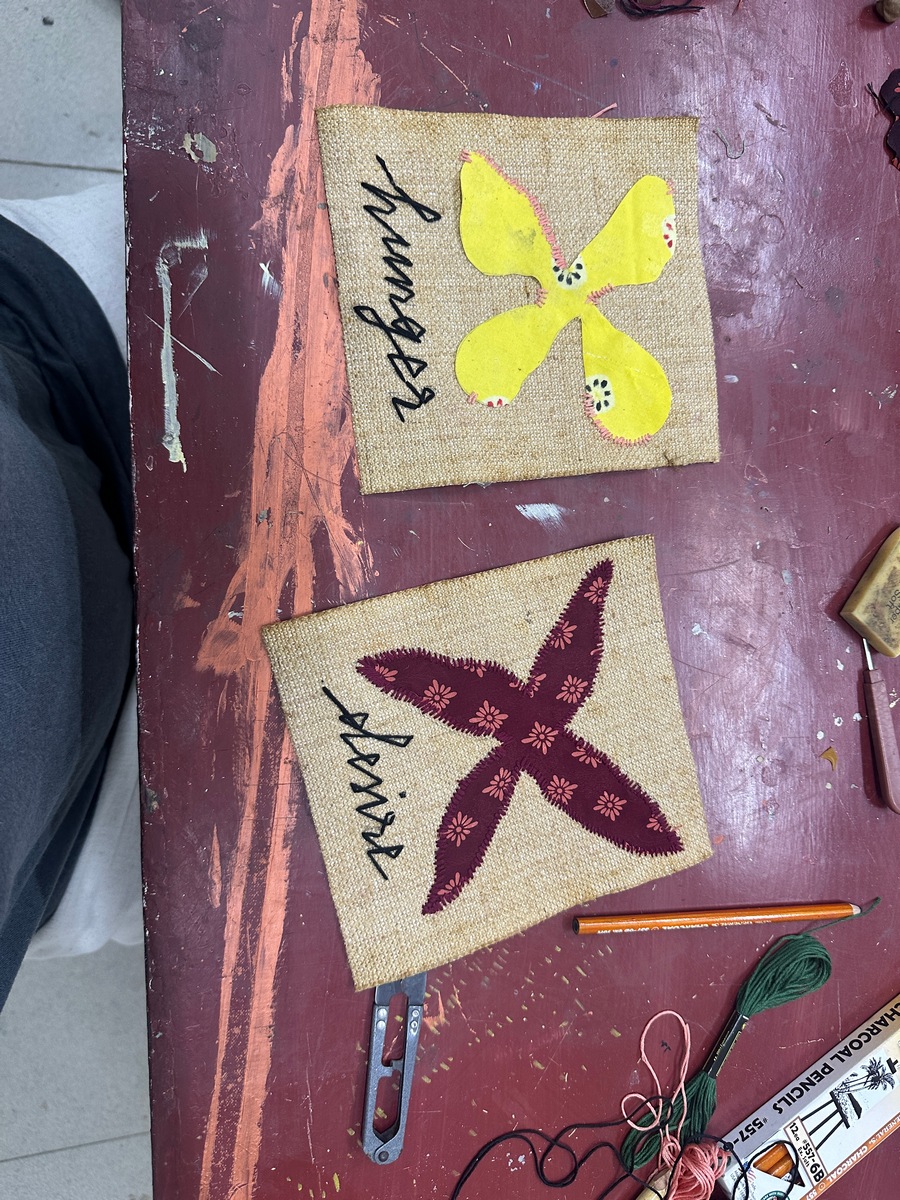
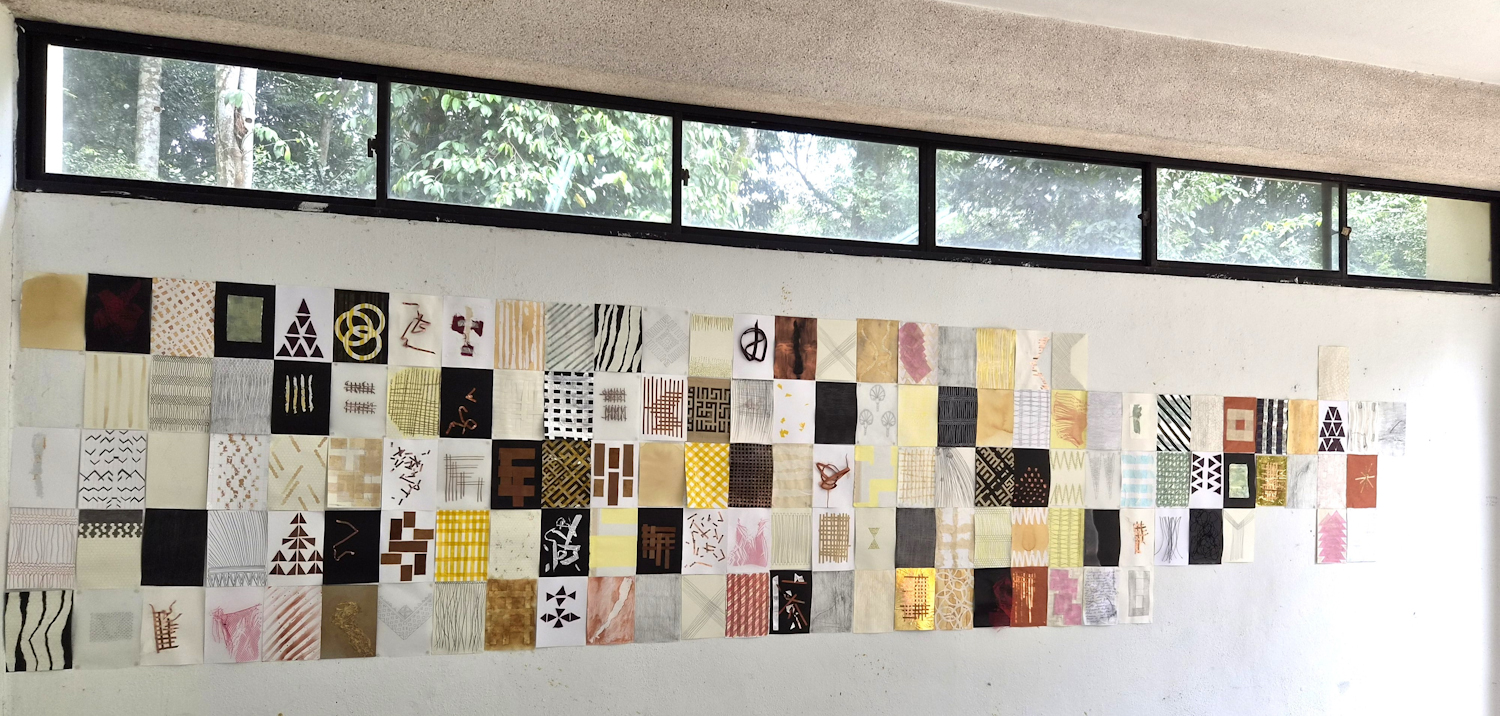
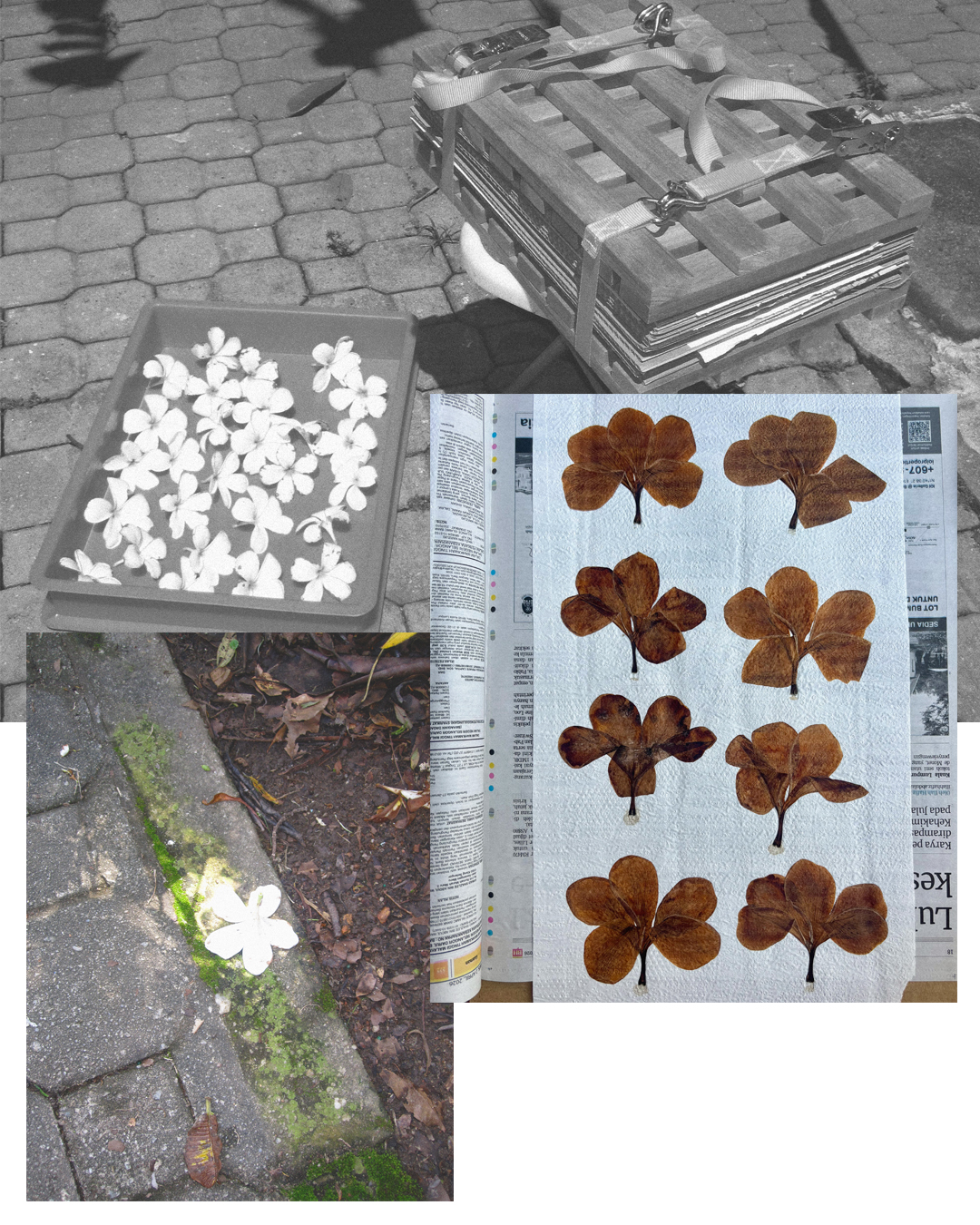
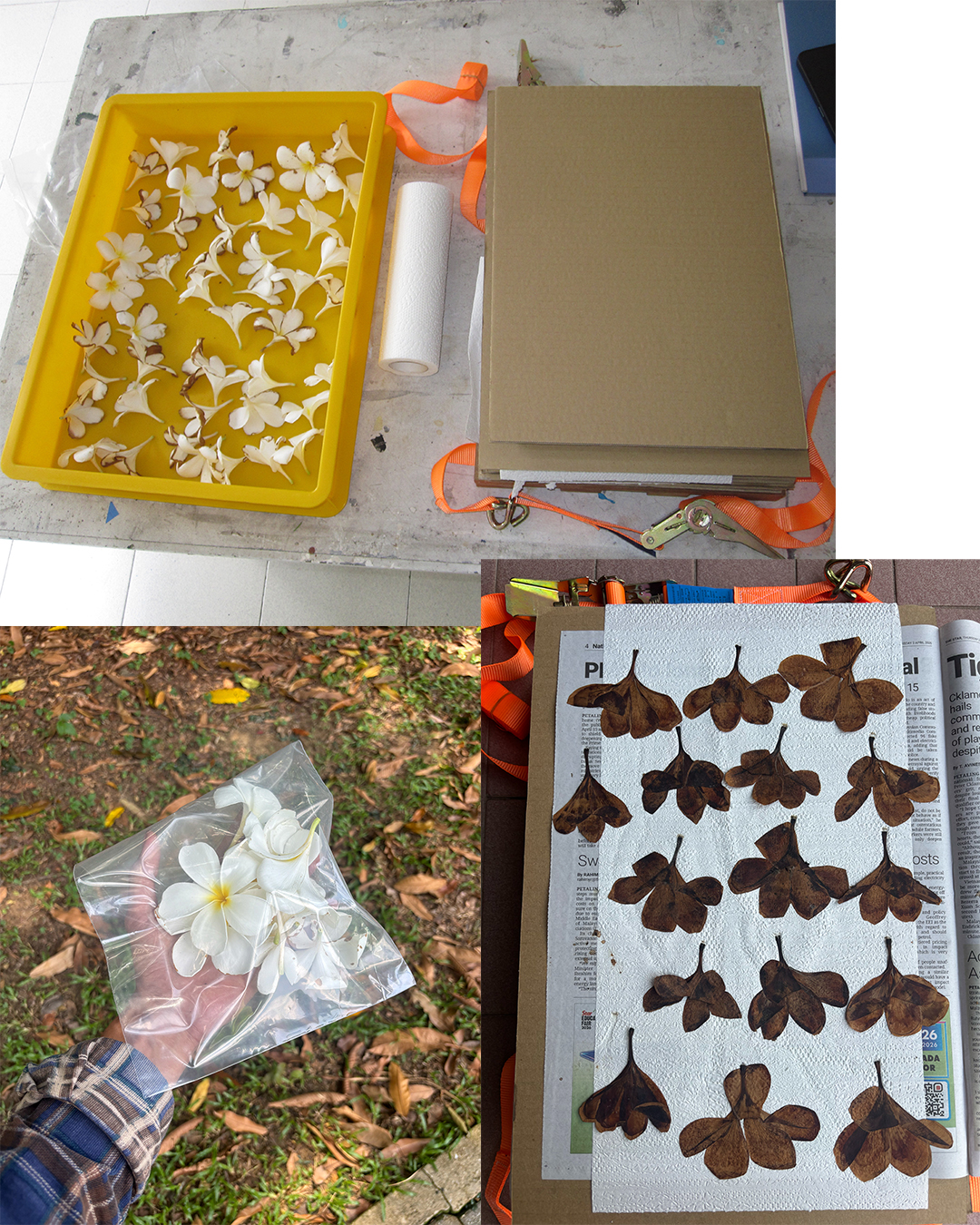
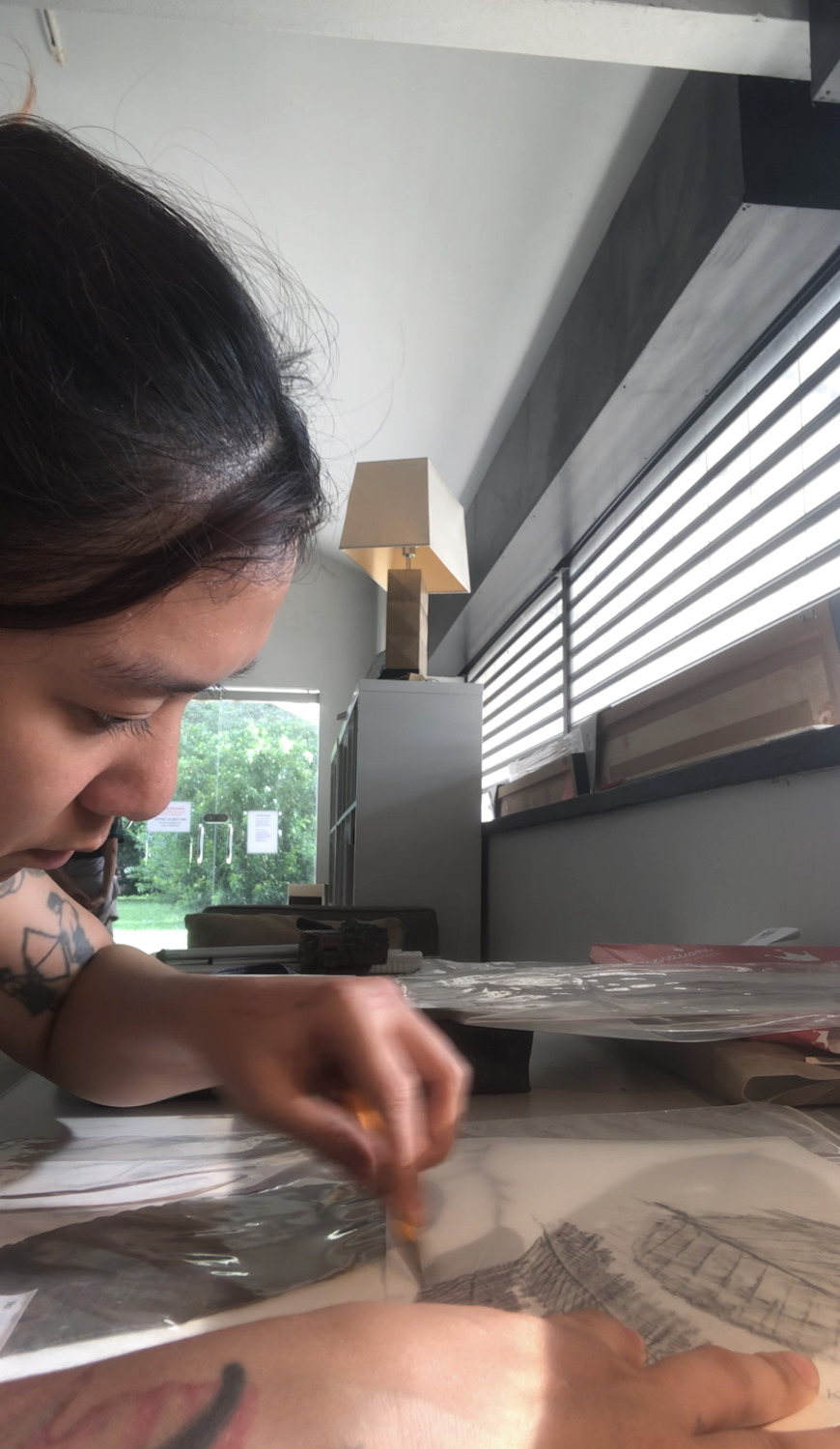
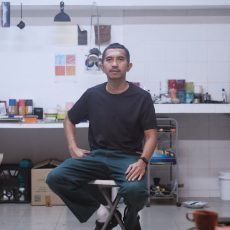
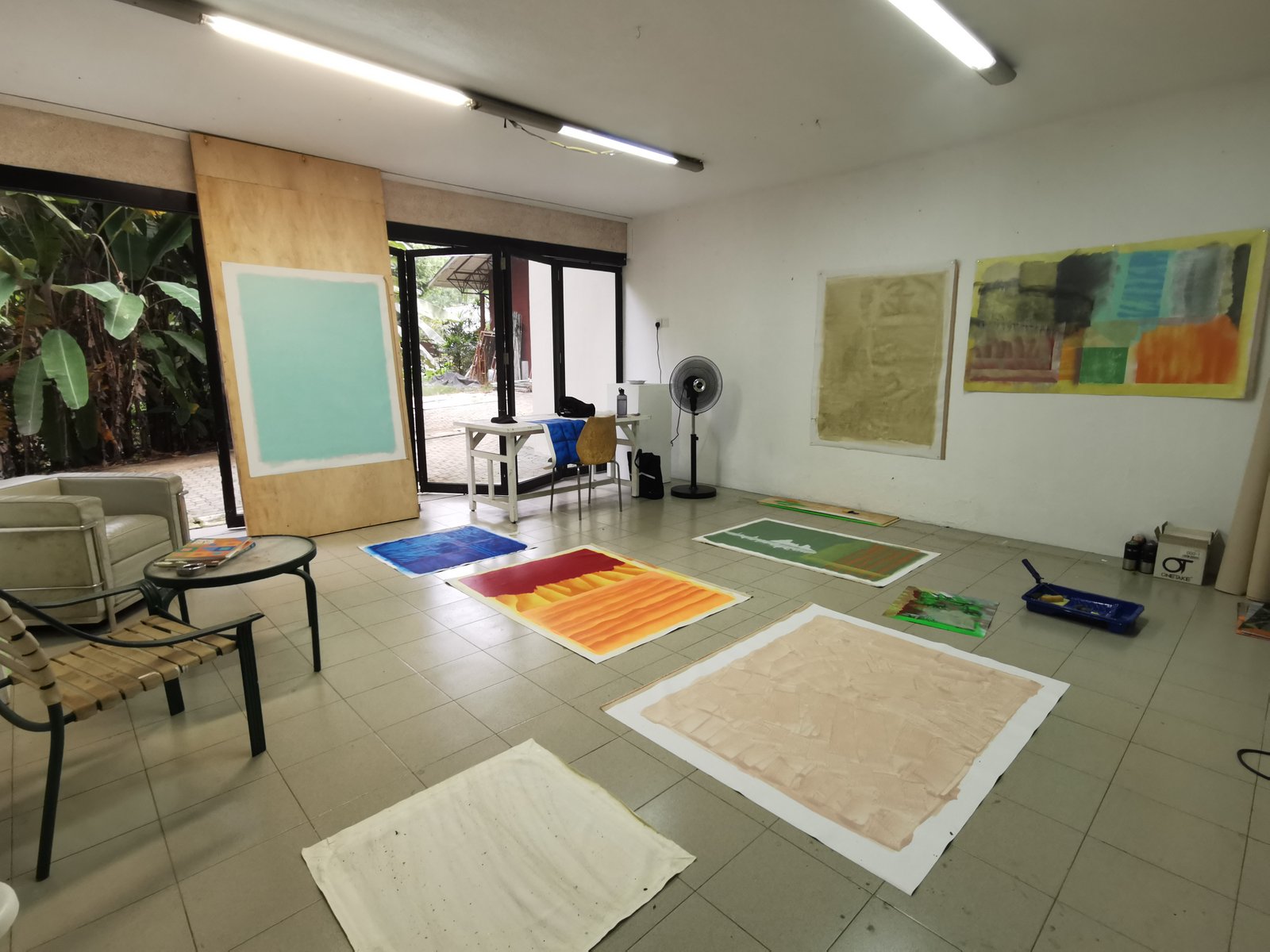
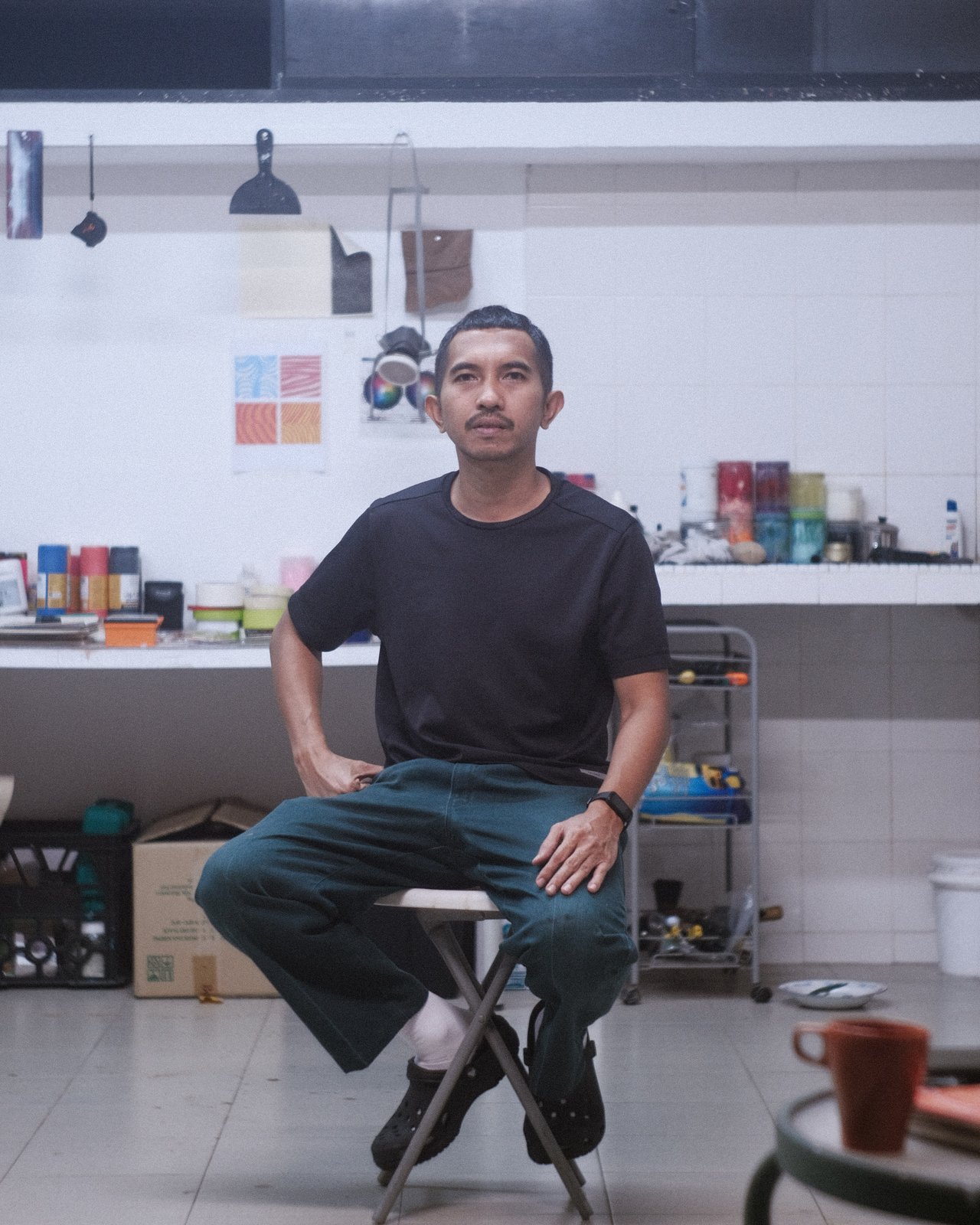
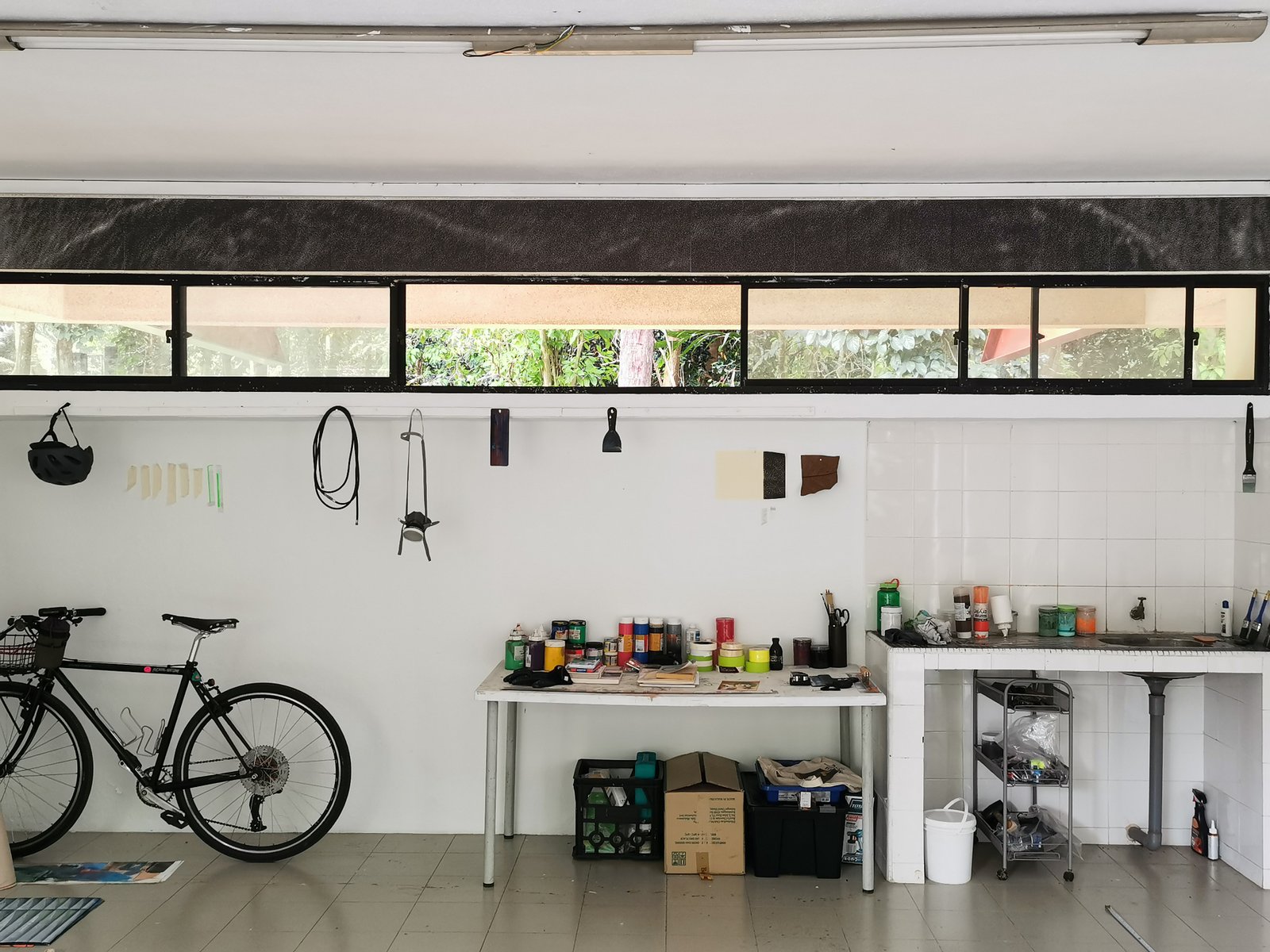
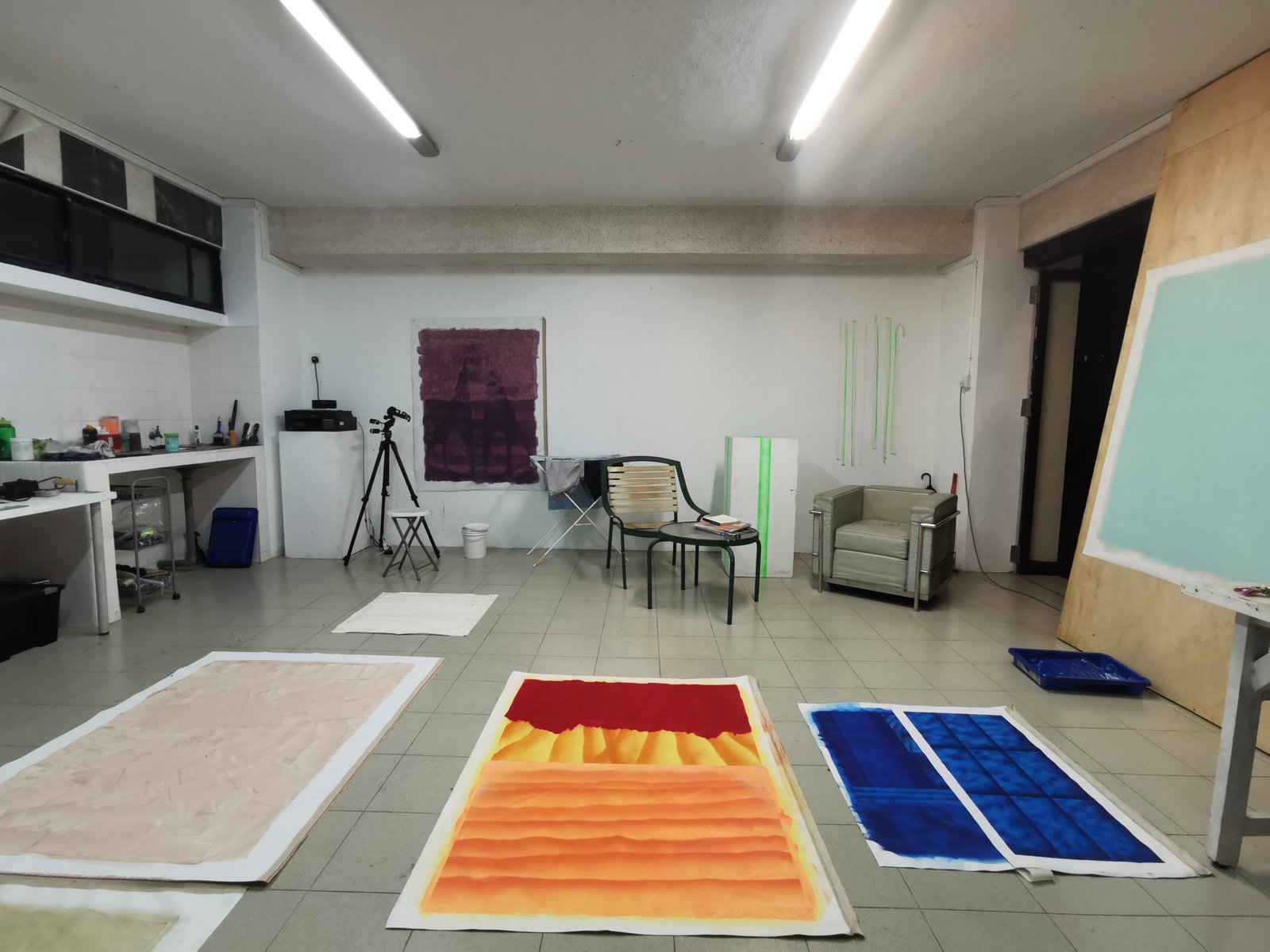
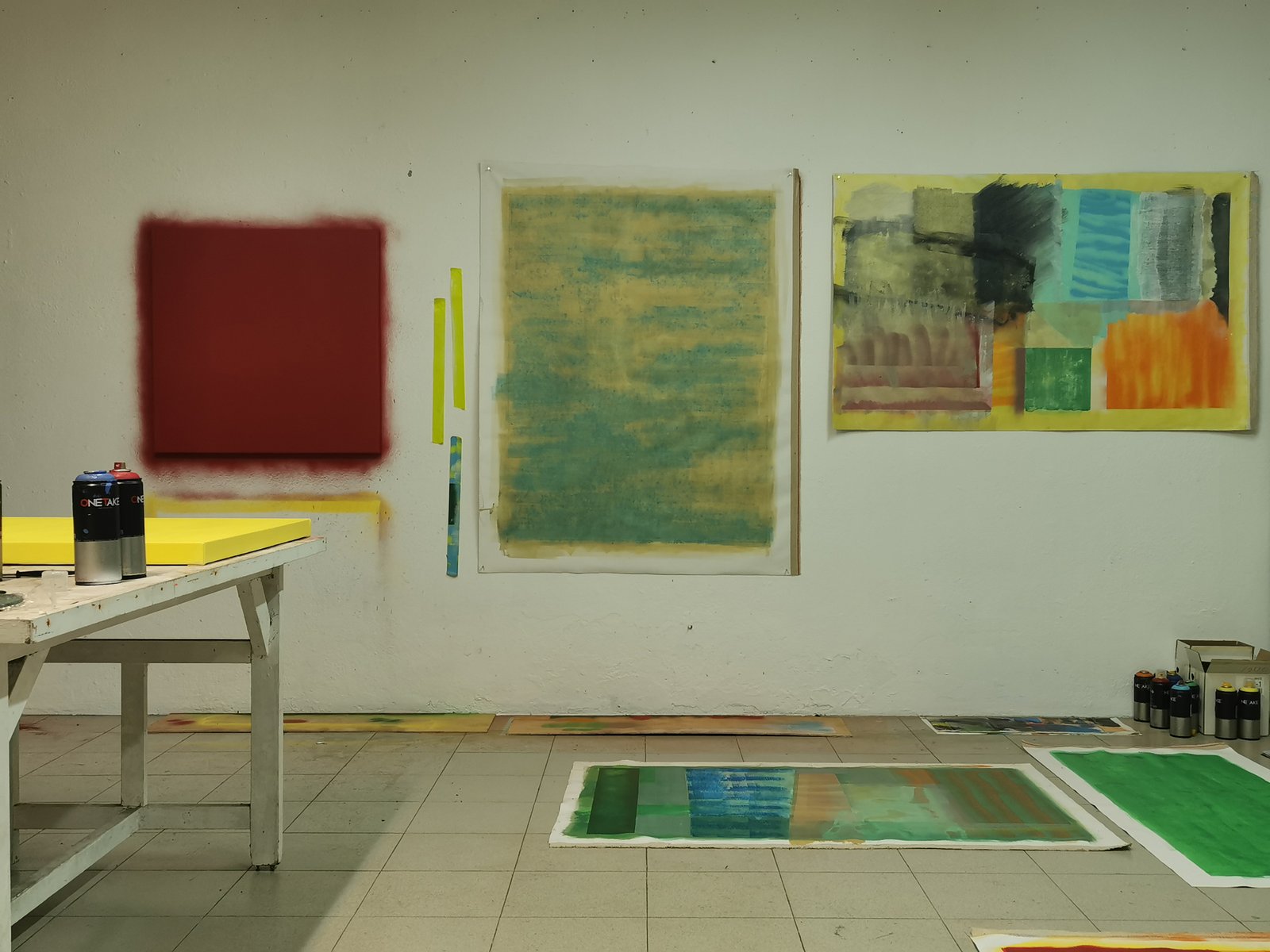
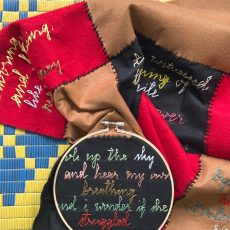
Malaysian visual artist Anas Afandi has used his 2-month residency at Rimbun Dahan in 2026 as a period of research and experimentation, cultivating a daily practice of collecting fallen kemboja flowers and experimenting with collecting and documentation methods from botanical and archaeological practices, while thinking about cultural memory and meaning.

About the Artist

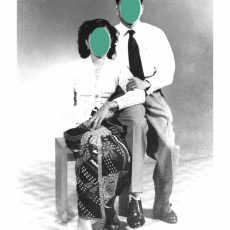
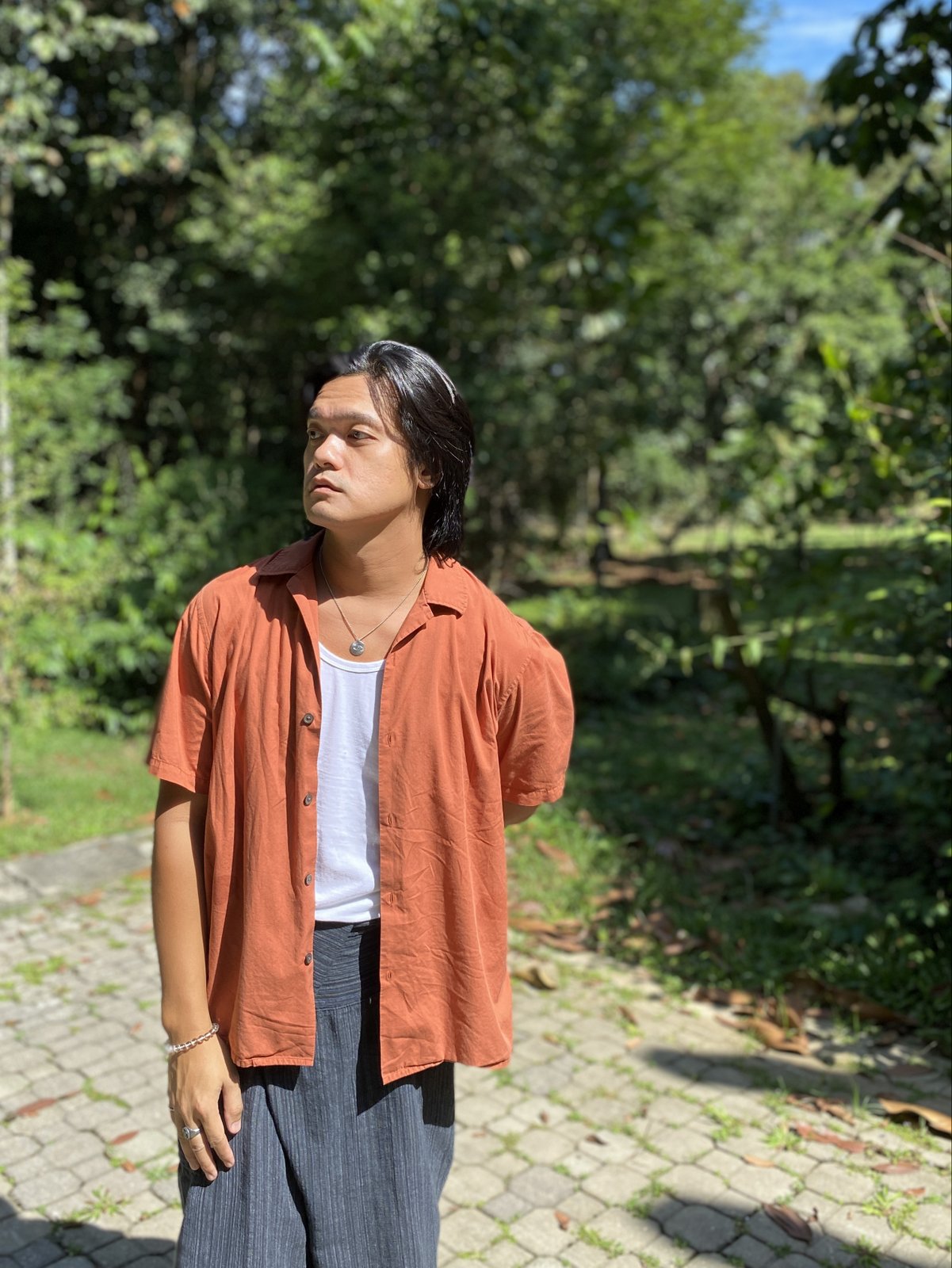
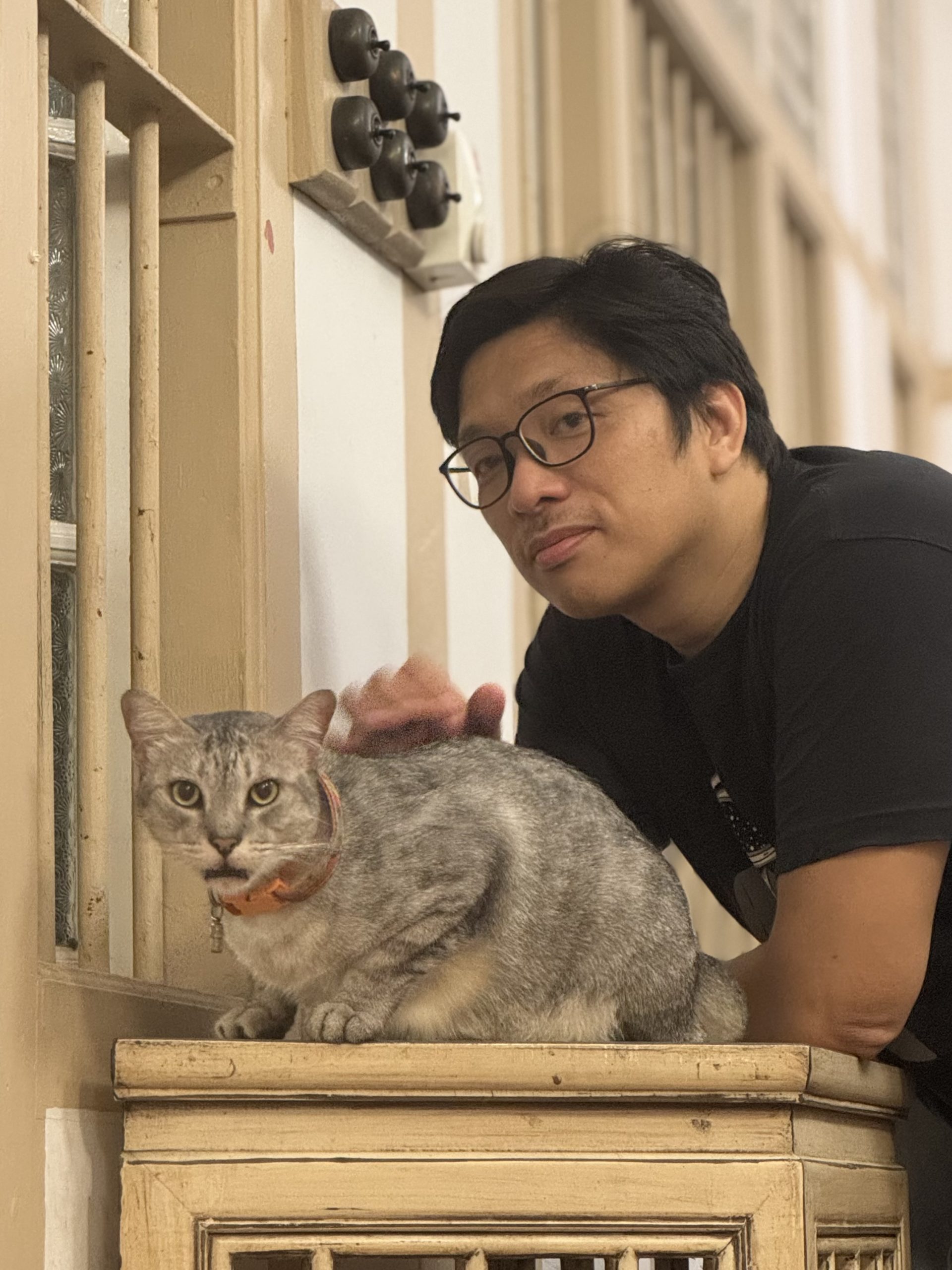
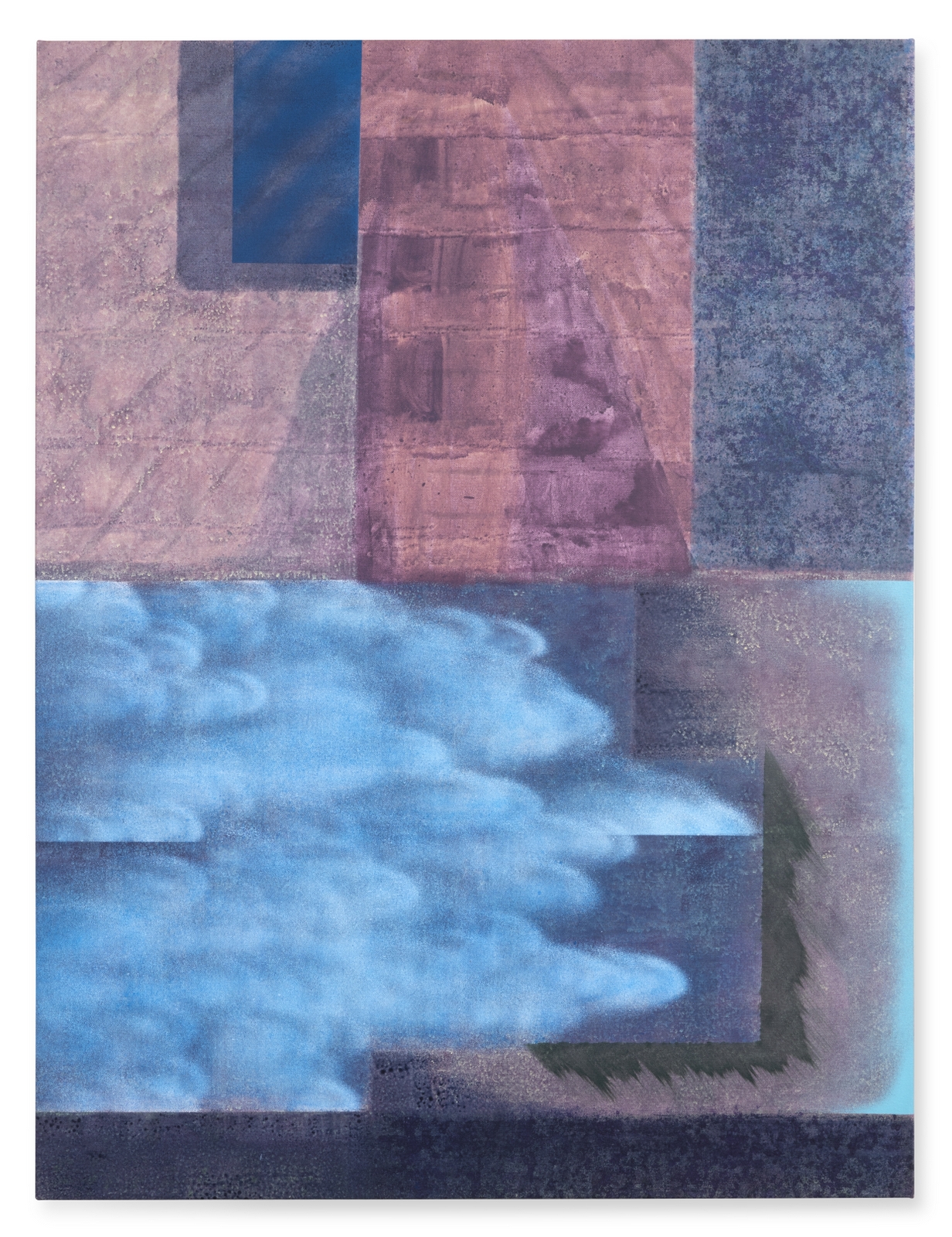
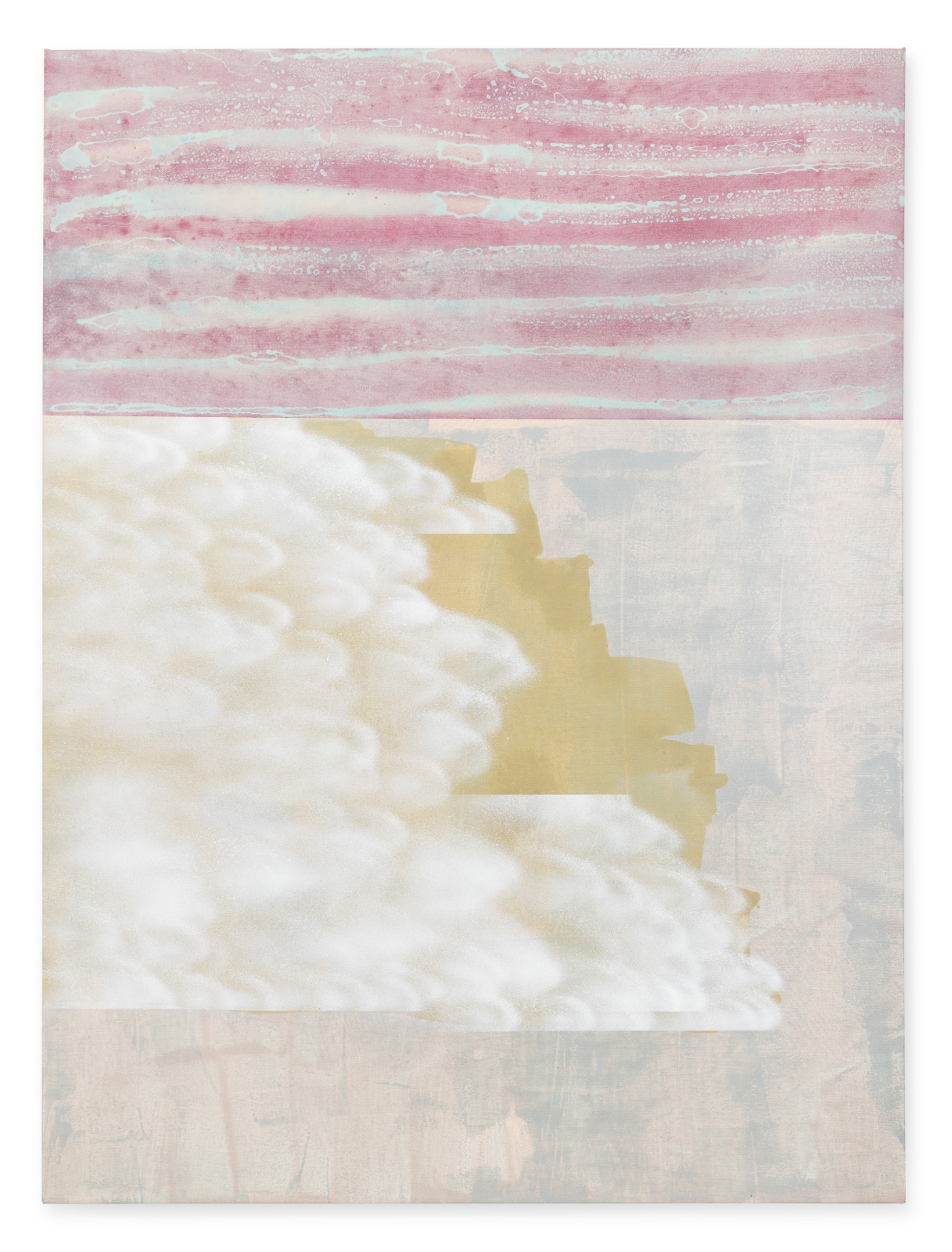
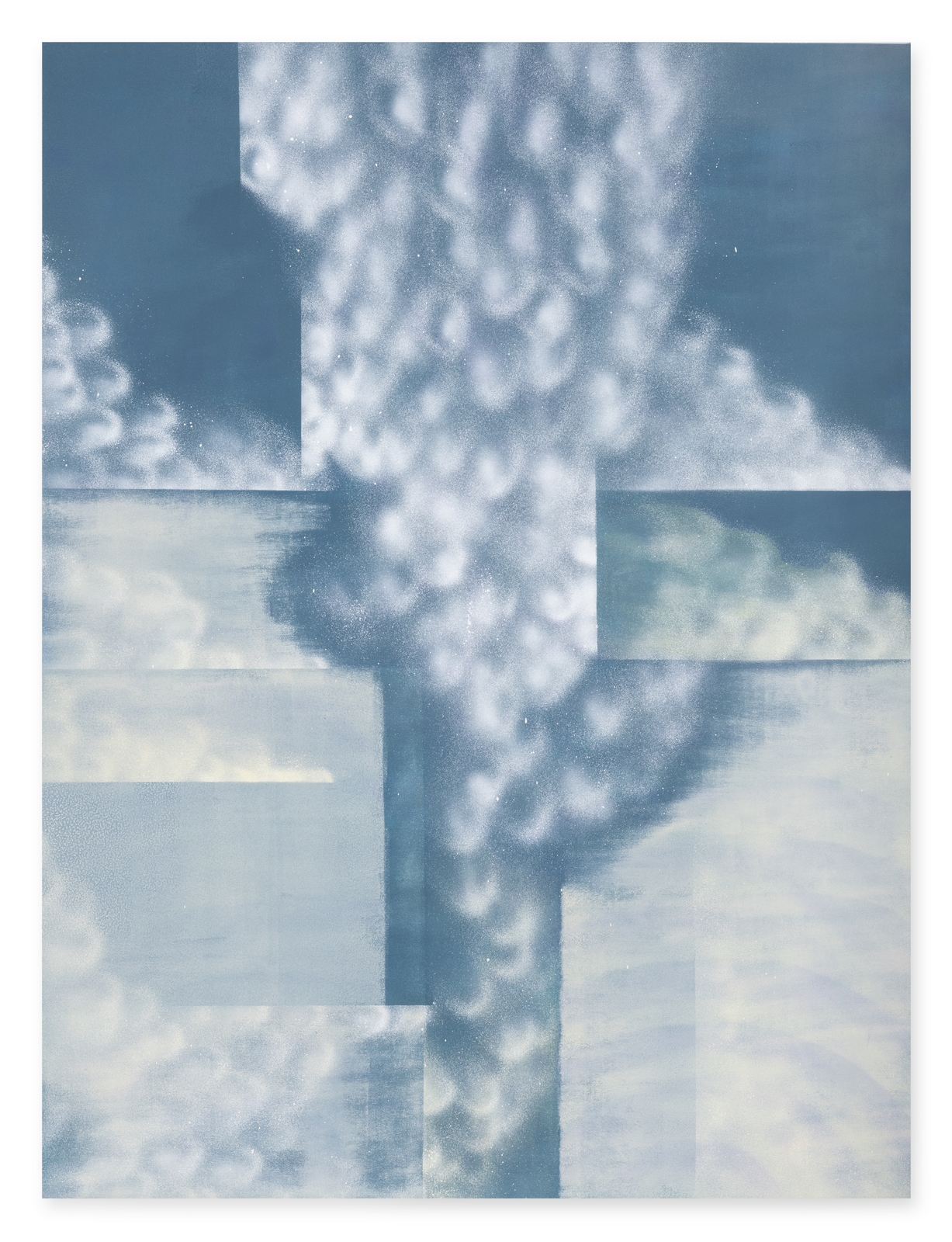
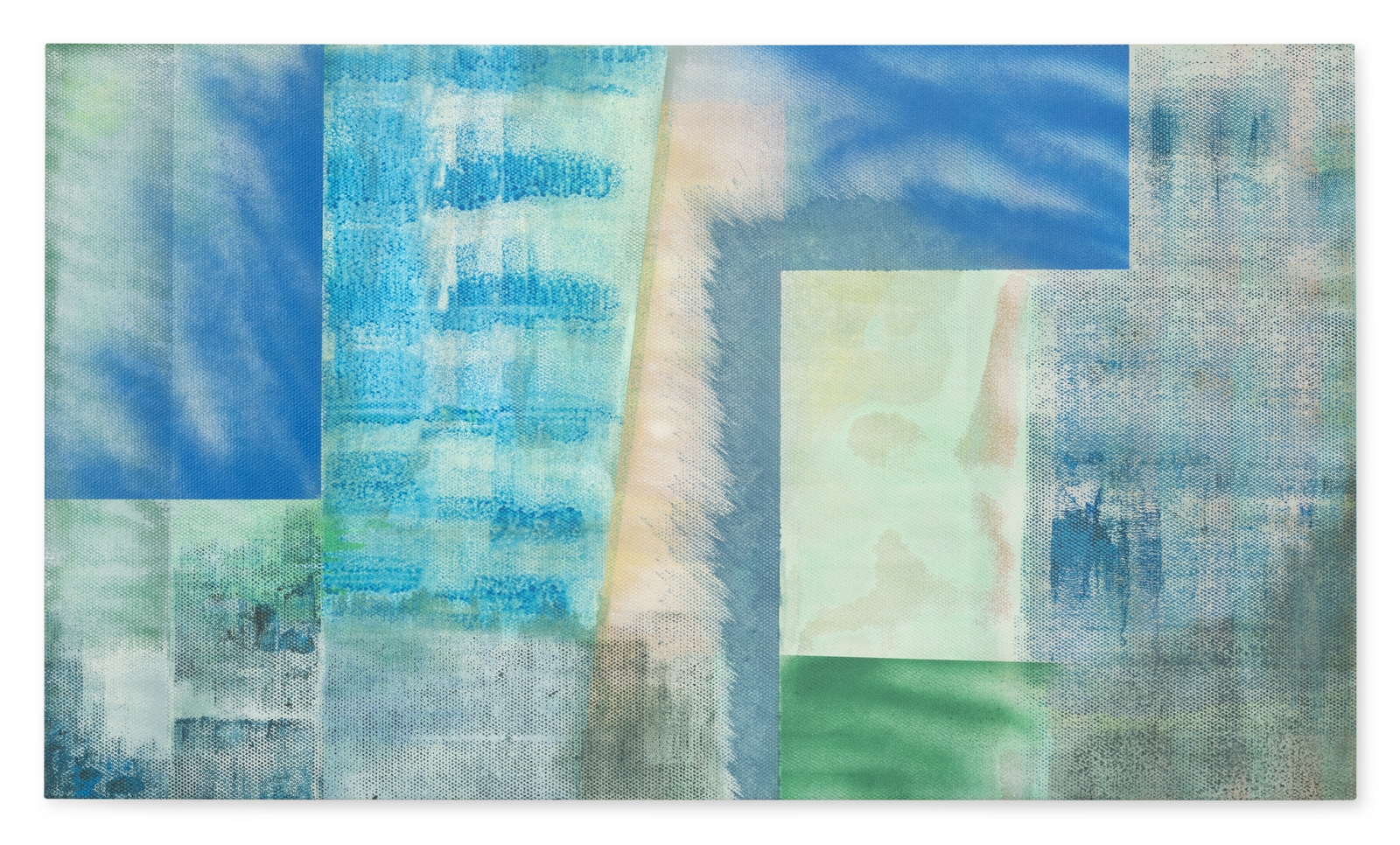
Anas Afandi (b. 1991) works across drawing, painting, sculpture, and installation. His practice examines the relationship between the natural world, history, and cultural identity. Through research-driven projects and speculative methodologies, he often constructs pseudo-worlds that question how institutions shape his surroundings. In recent years, Anas’ work has expanded toward environmental politics, colonial legacies, and the construction of cultural narratives, positioning the environment not only as a subject of representation but as a method of inquiry.

About the Residency

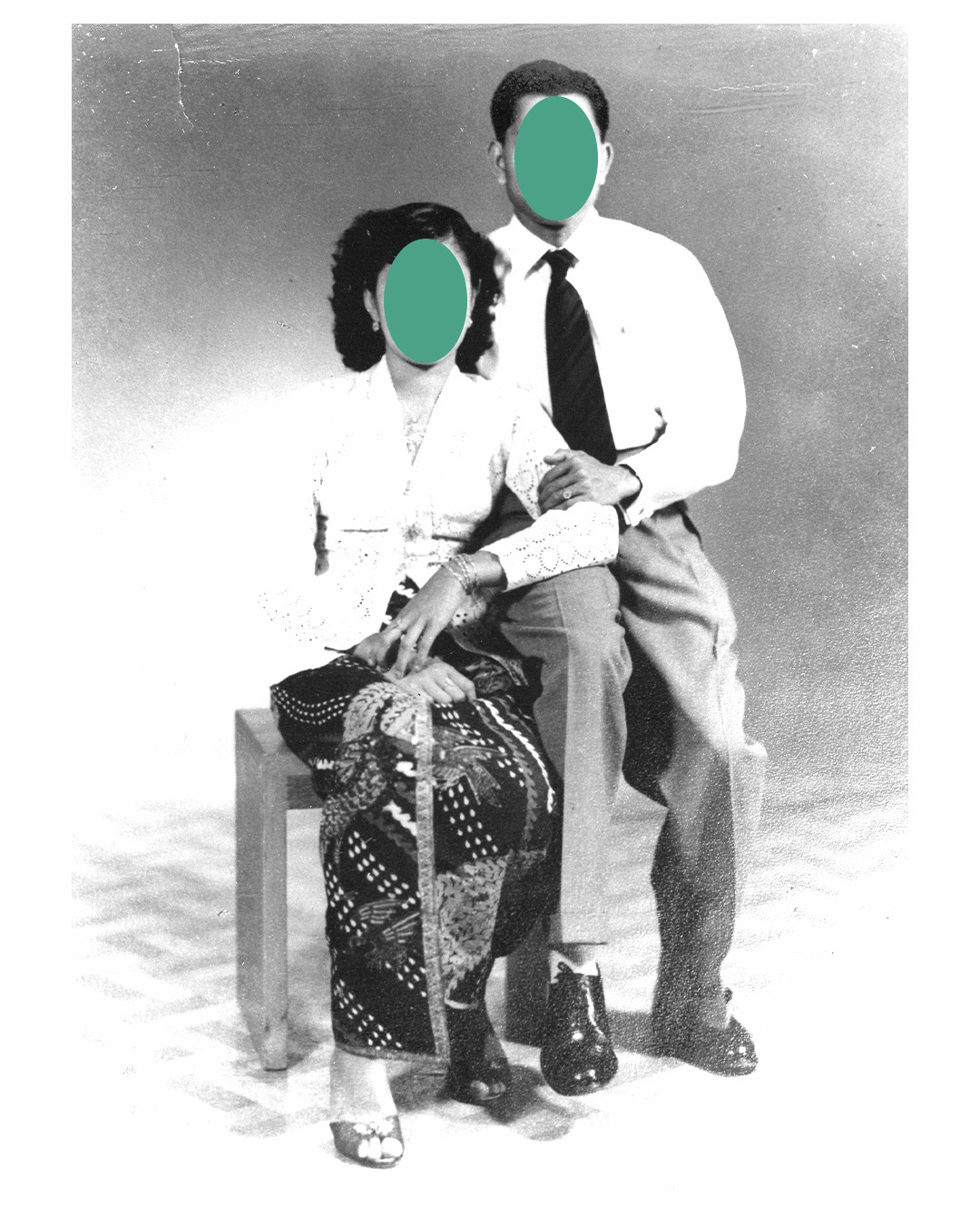
Pictures Of You

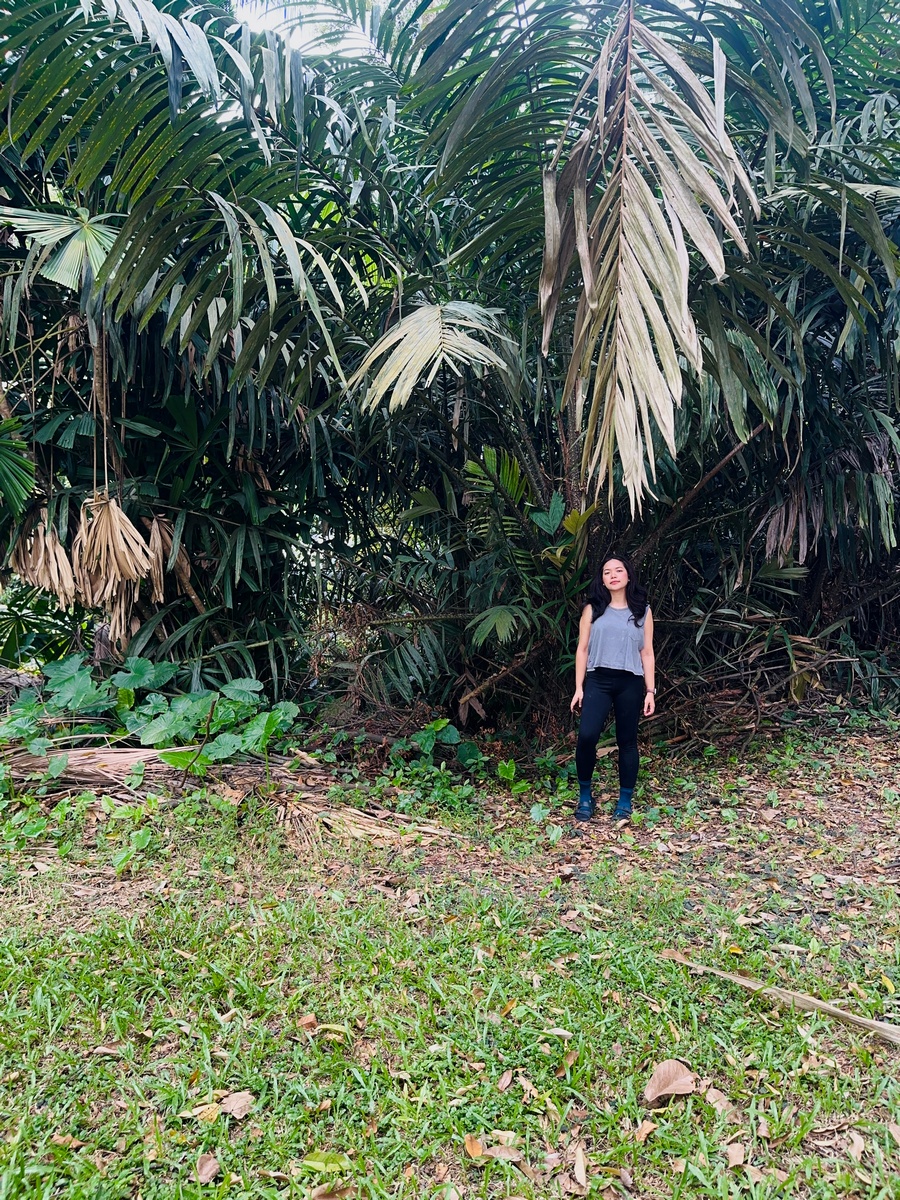
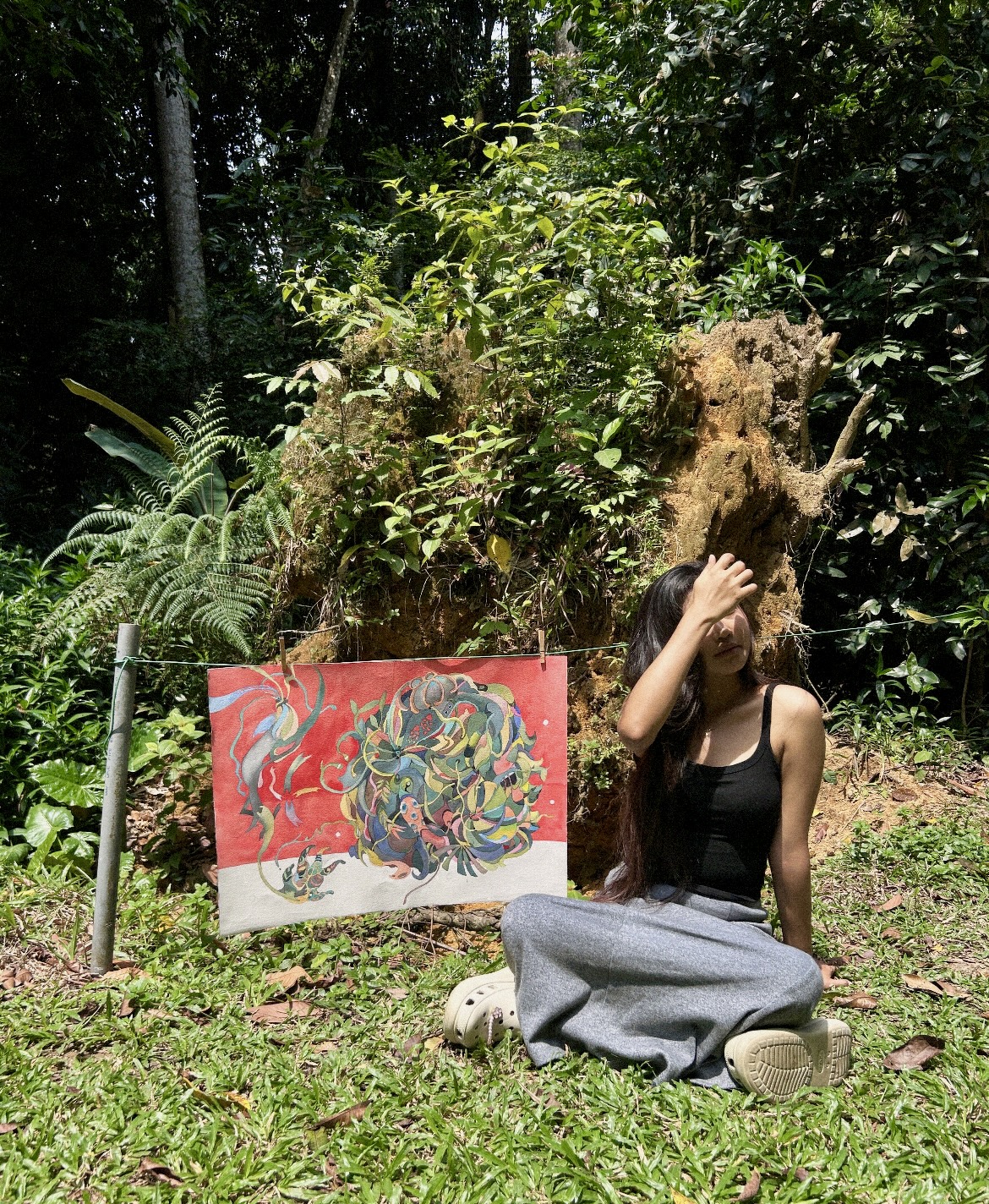
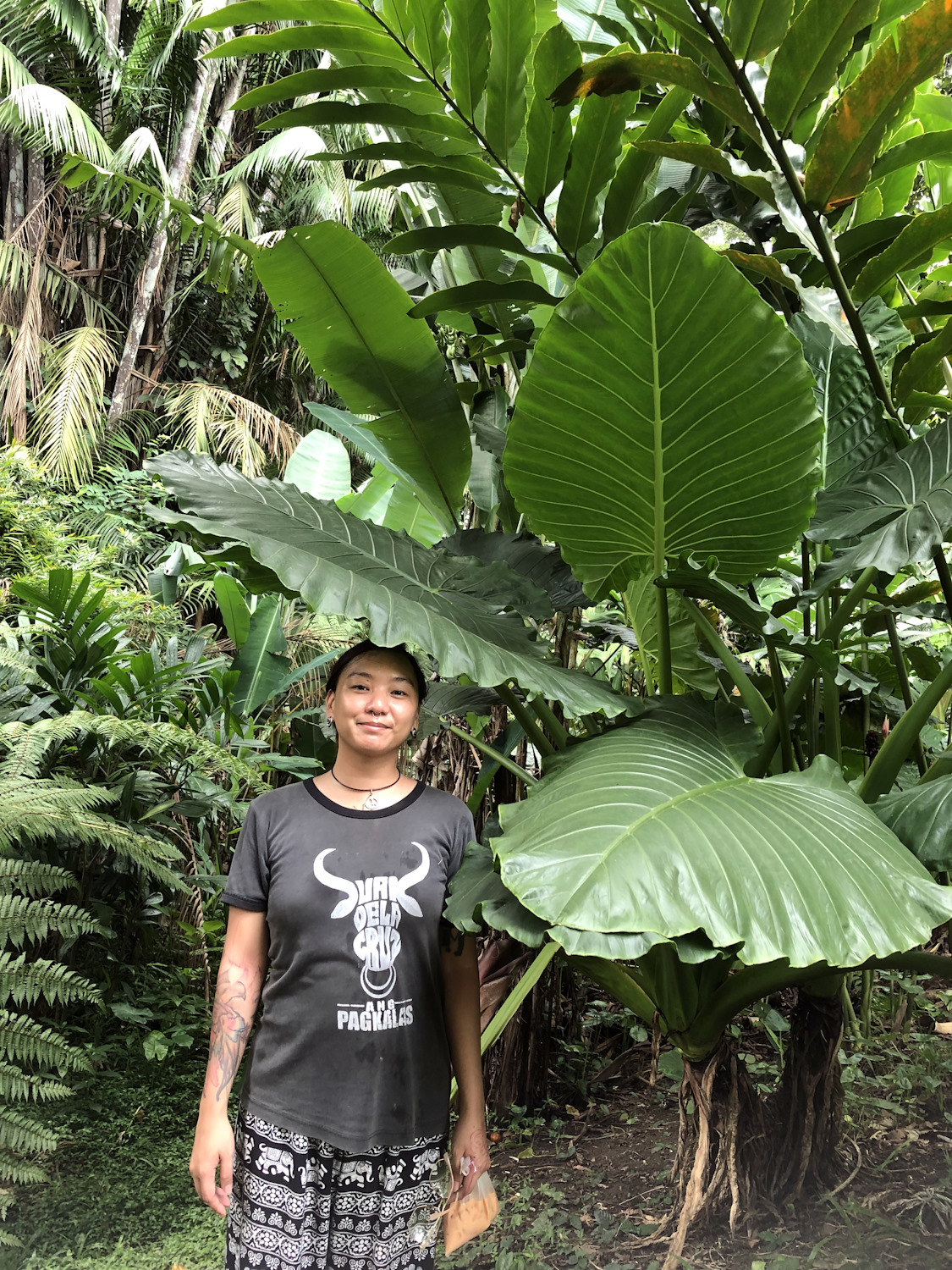
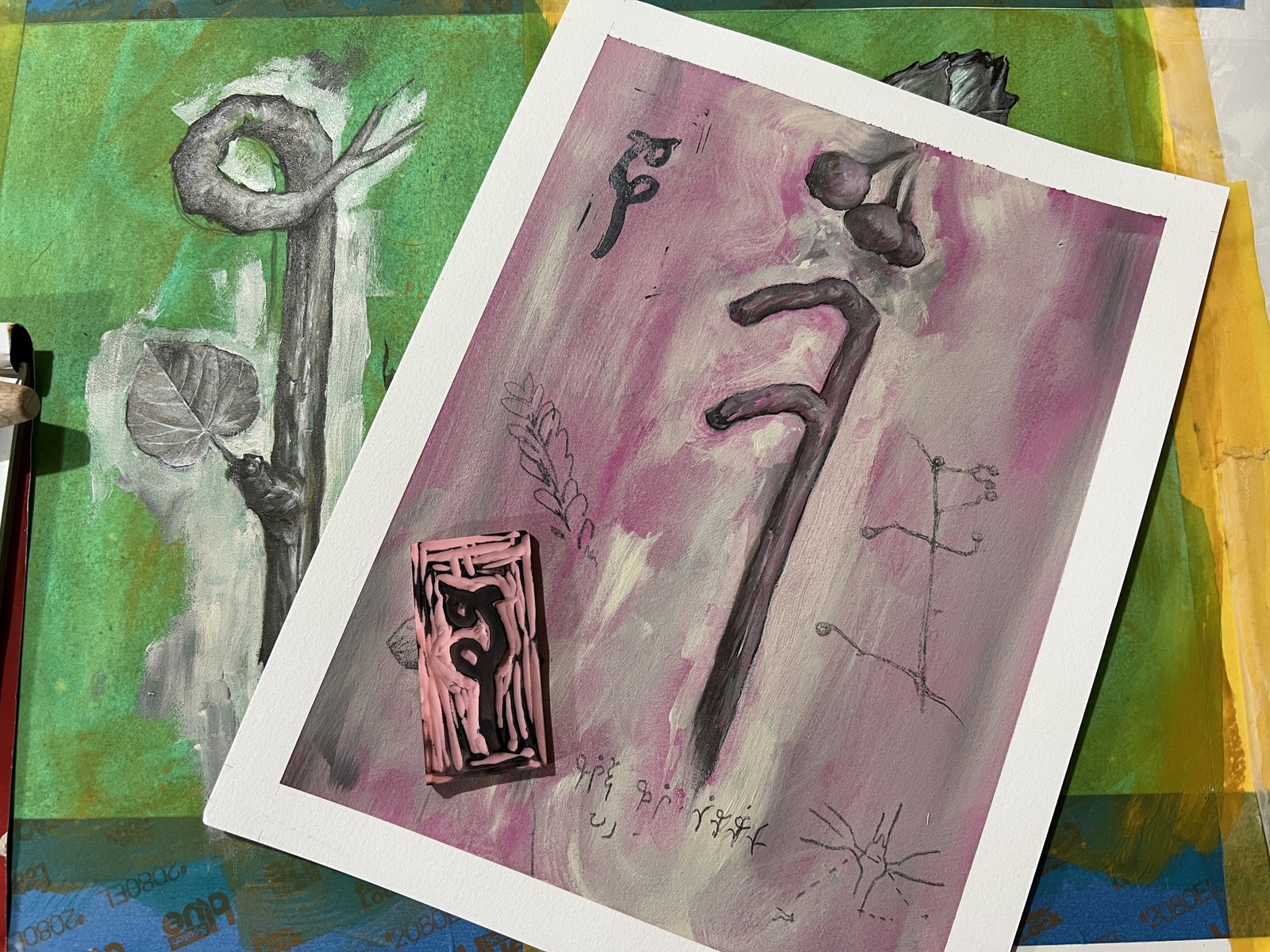
Over the course of this residency, I focused my research on Taman Sari, a garden in Rimbun Dahan dedicated to the collection and preservation of medicinal and fragrant plants from the Malay Archipelago and its surrounding region. I approach the garden as a model for thinking about culture, investigating how plants can become carriers of history and identity, and how systems of preservation construct cultural narratives.

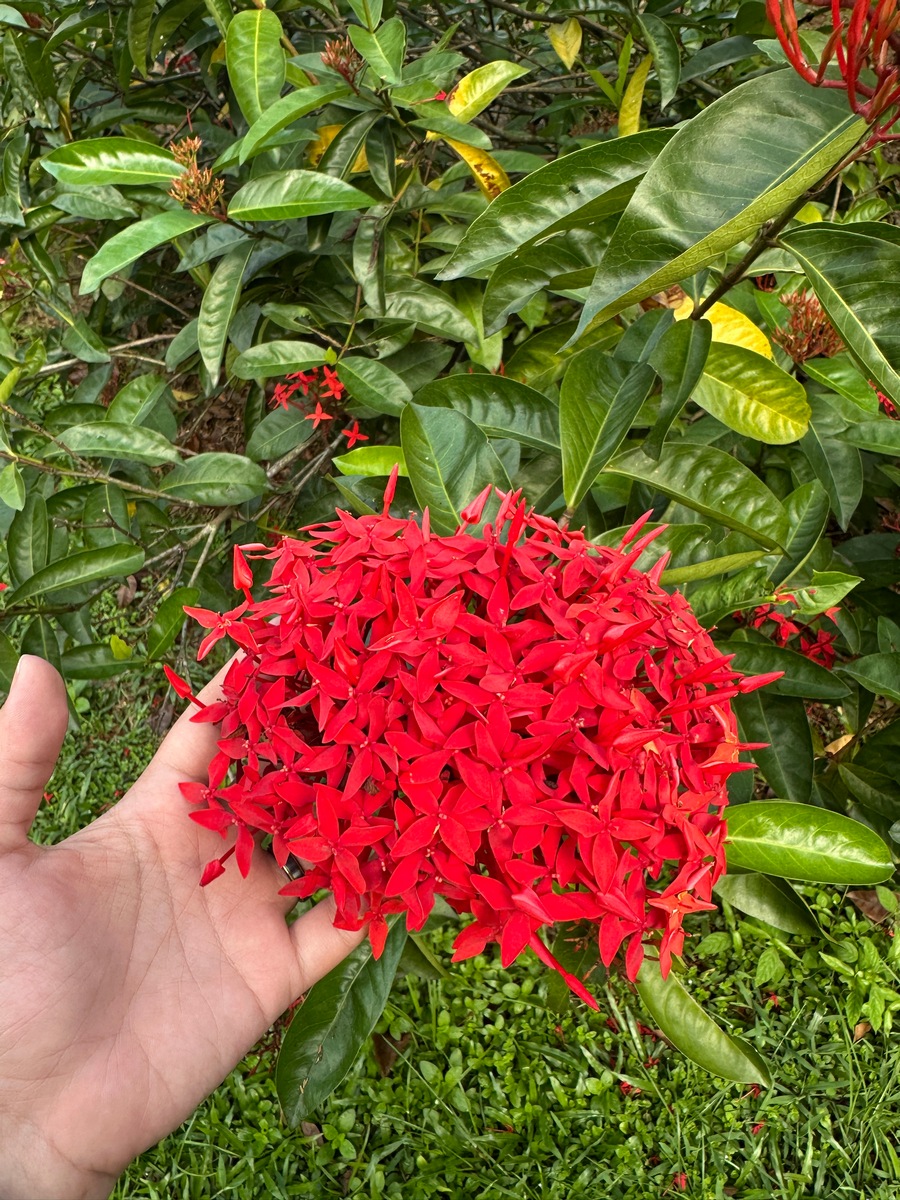
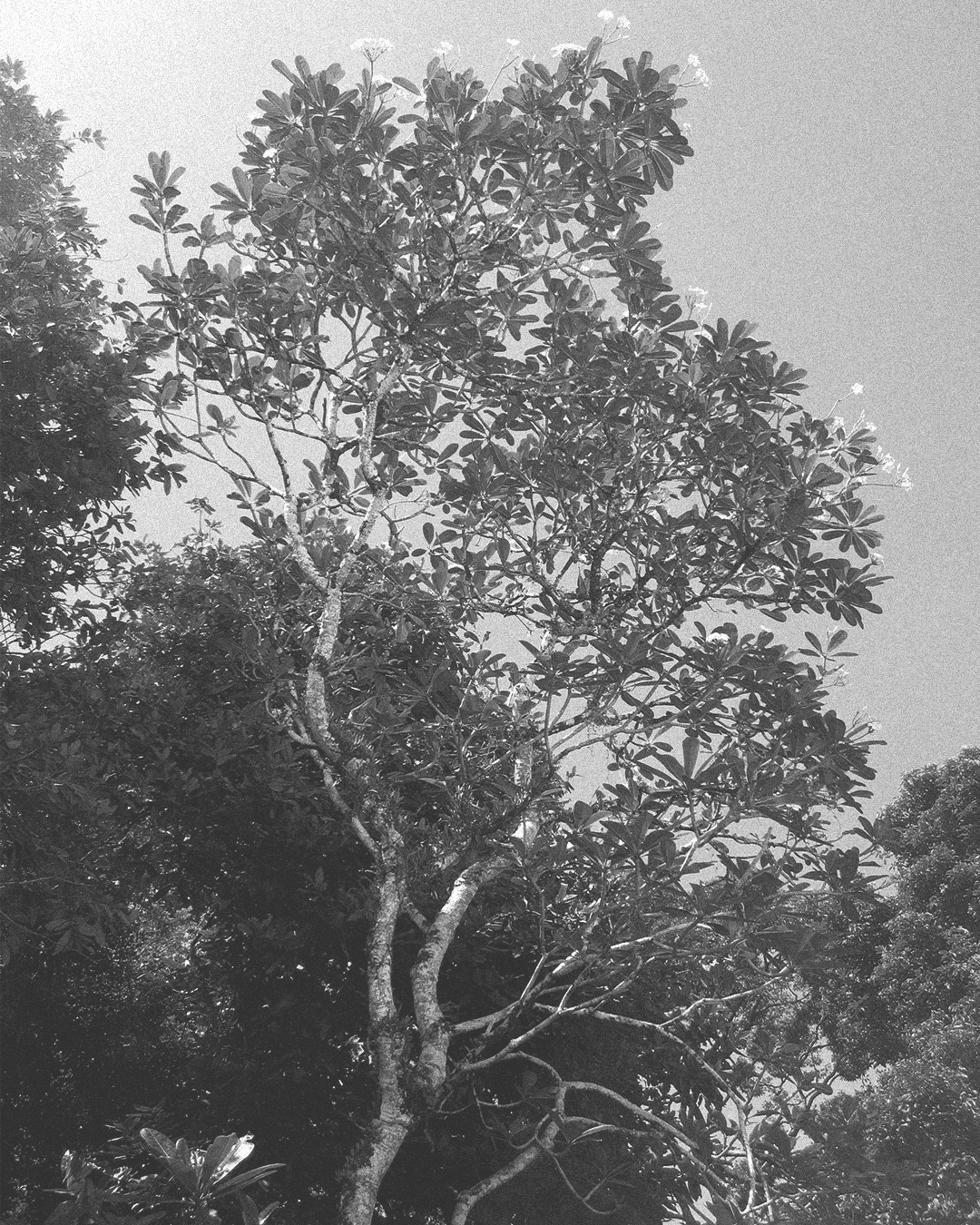
I am interested in the kemboja; a naturalised, non-native species that holds deep personal significance for me. It became the entry point for this research. Its continued presence in Taman Sari exposes a tension between botanical classification and its cultural significance. Even though it has been part of the garden for almost forty years, it will not be replanted once it dies, keeping with the garden’s commitment in preserving species native to Southeast Asia.

Hence, the anticipated disappearance of the tree one day raises questions beyond botany that shape this project; (1) what happens when something culturally meaningful no longer fits within systems of preservation and (2) how do we preserve forms of attachment and meaning that extend beyond physical material?
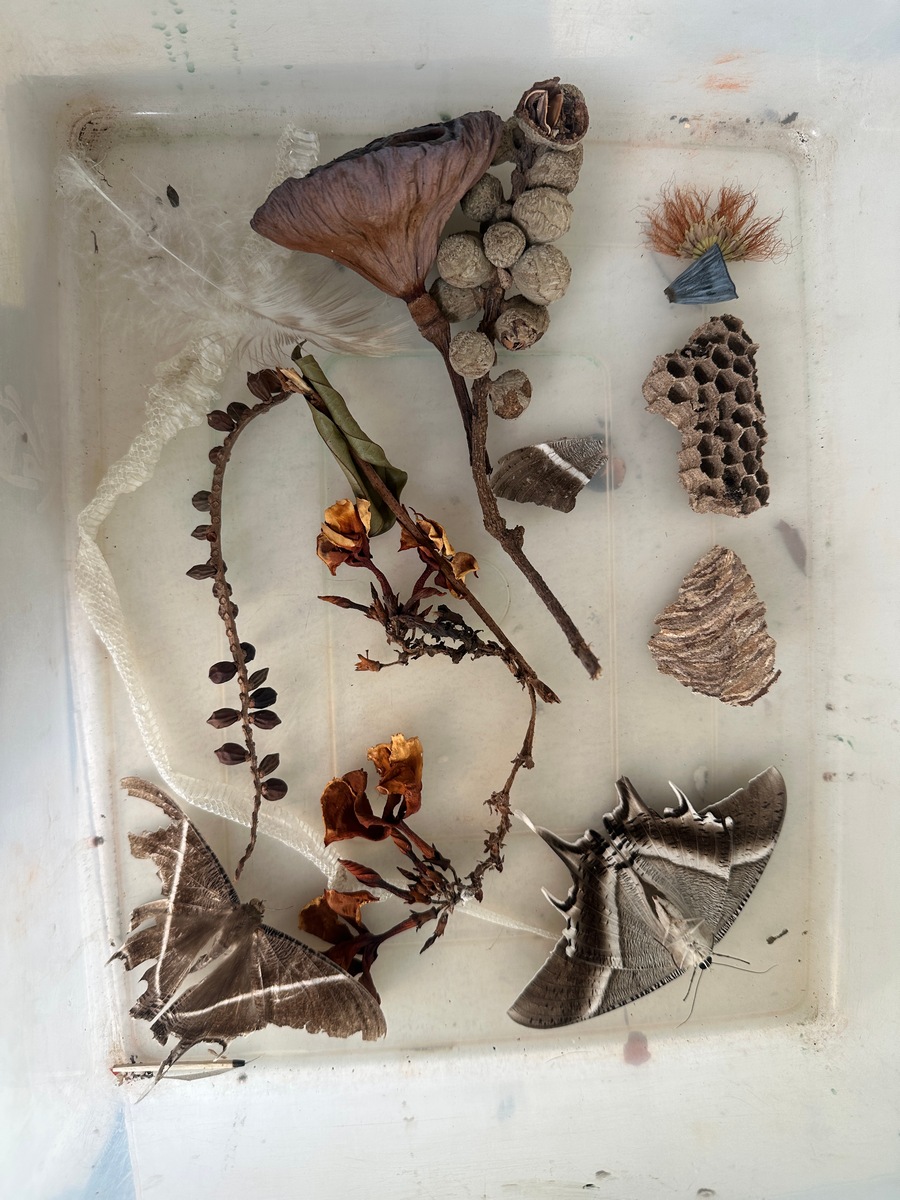
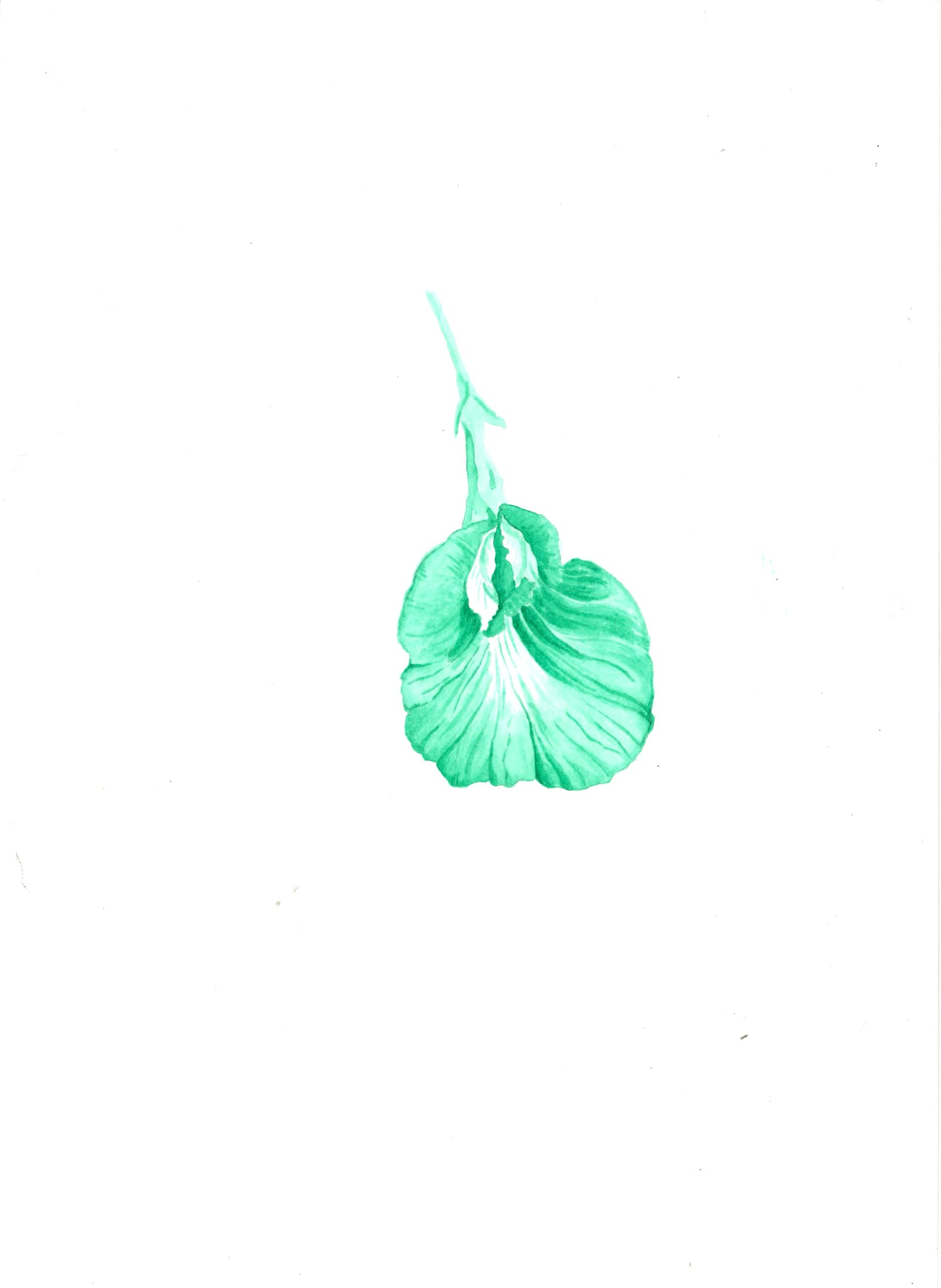
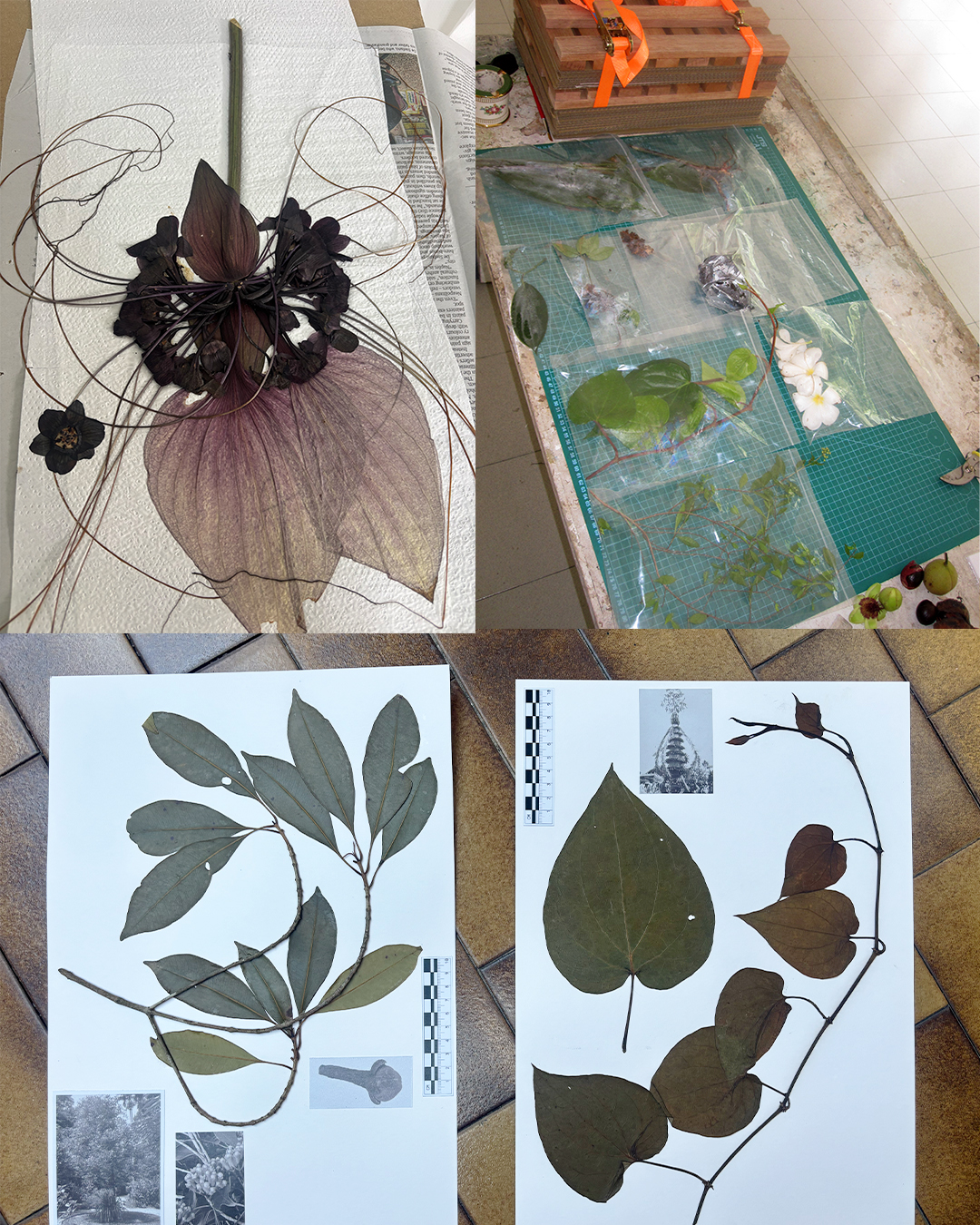
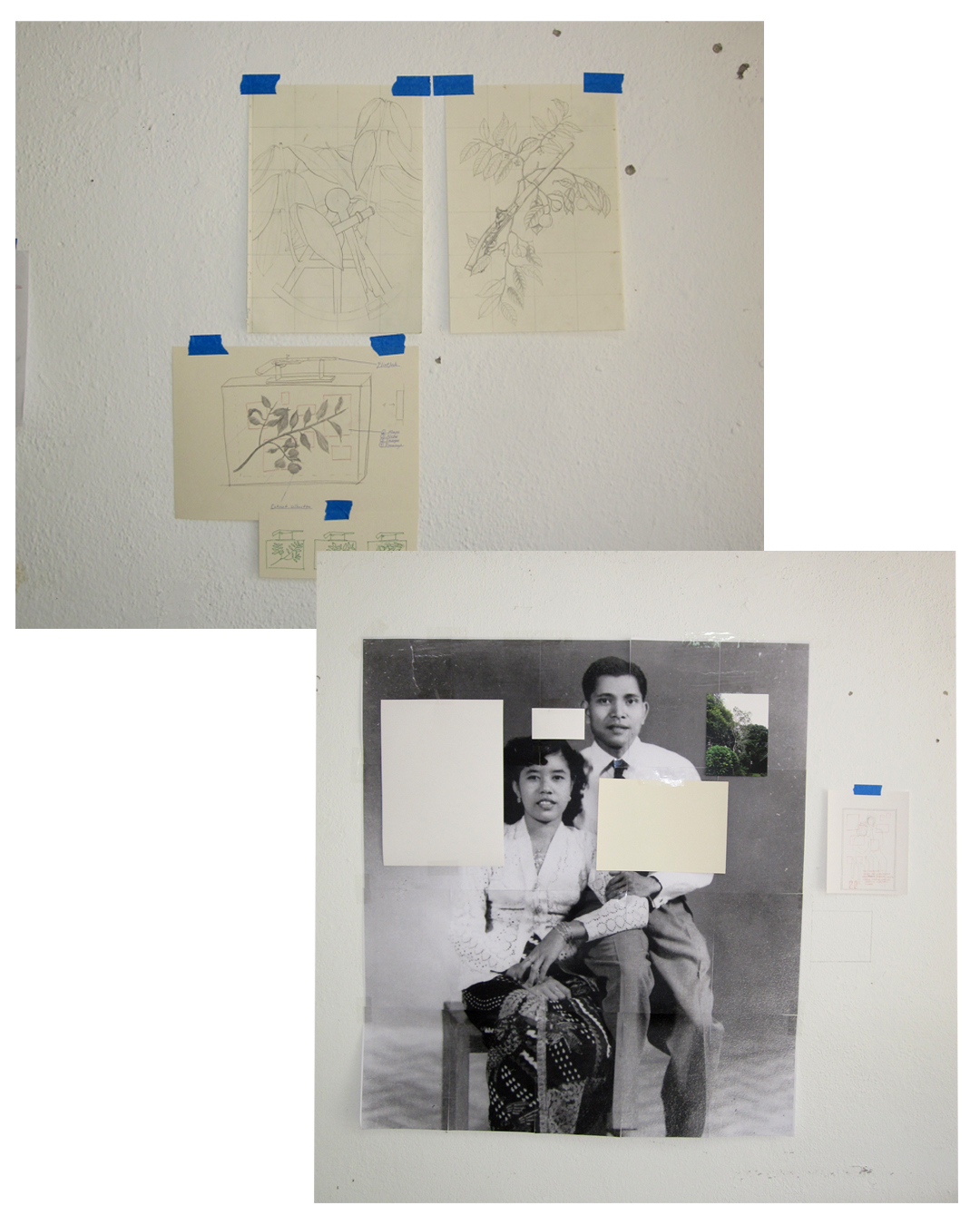
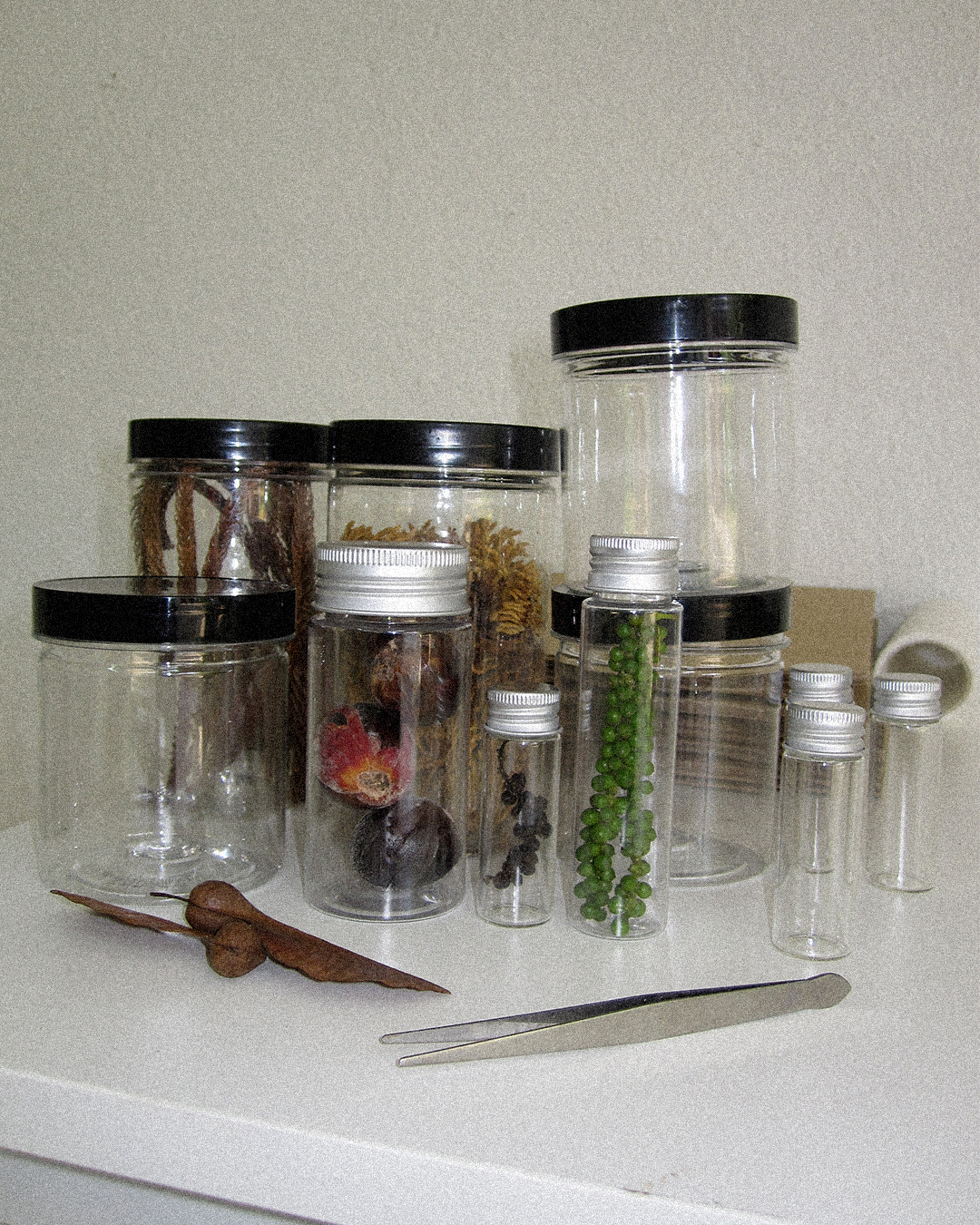
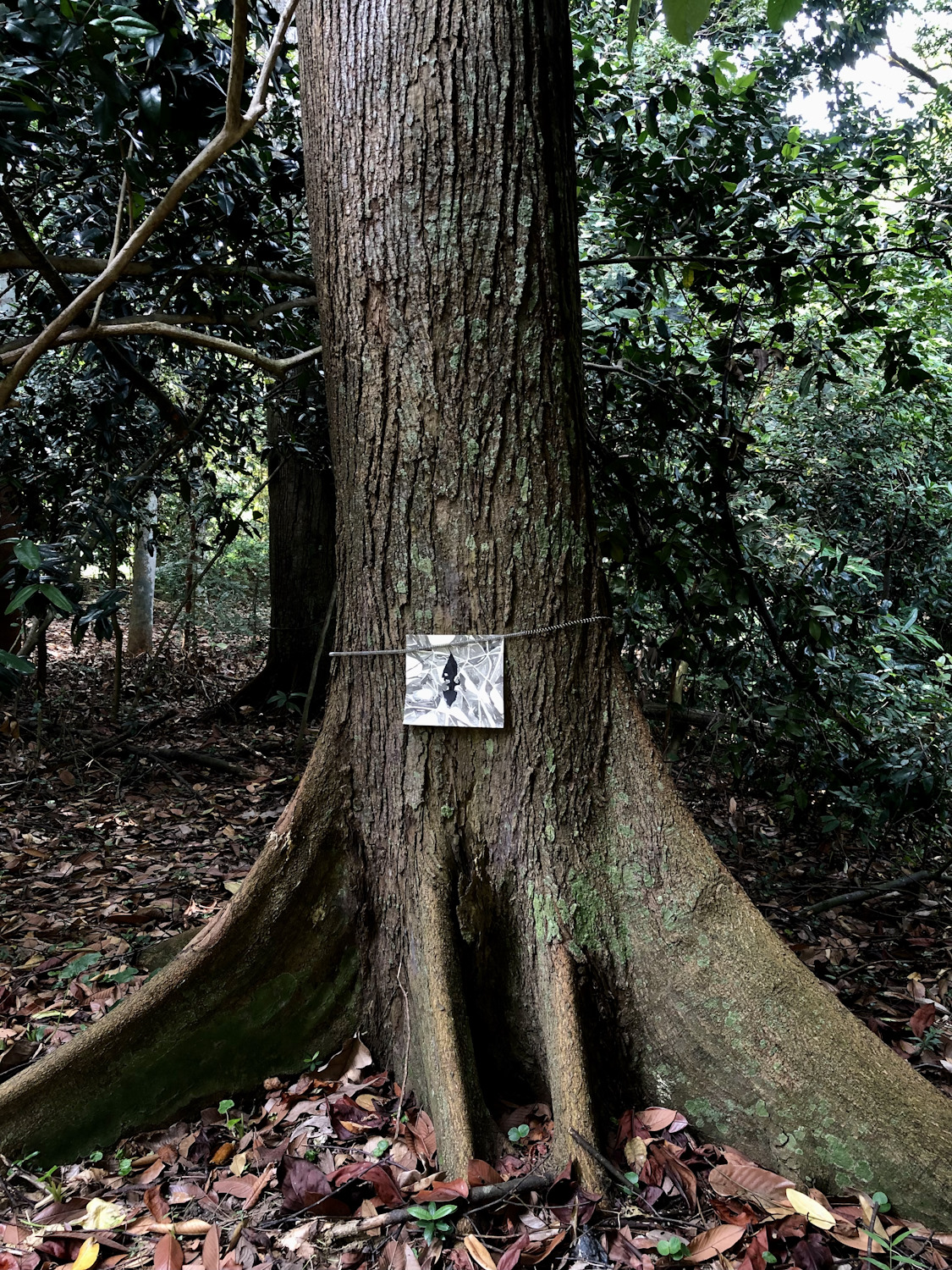
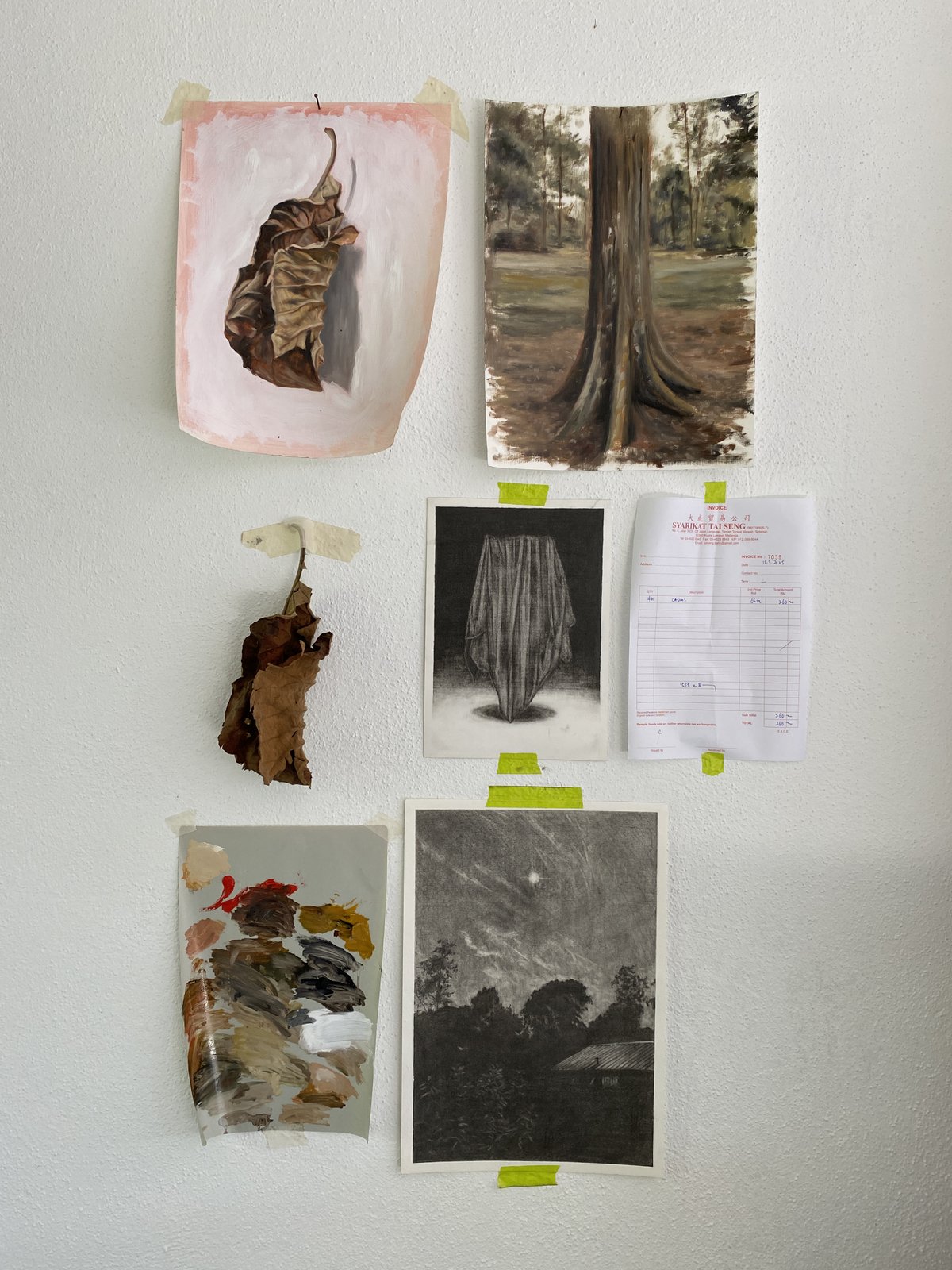
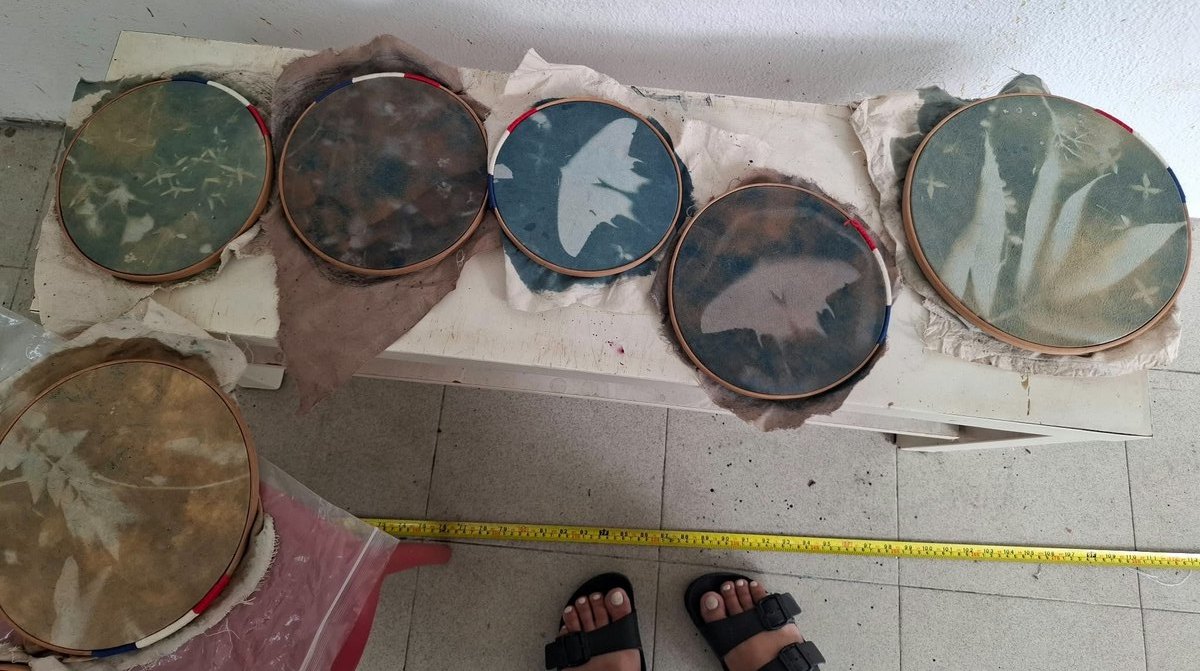
One of the projects that I worked on was creating a daily ritual of walking through the garden and gathering kemboja flowers that had fallen from the tree every morning. The flowers were then preserved. By conducting this, I am reflecting how cultural meanings are formed gradually over time and imitating as well as speculating how such meanings come to exist.

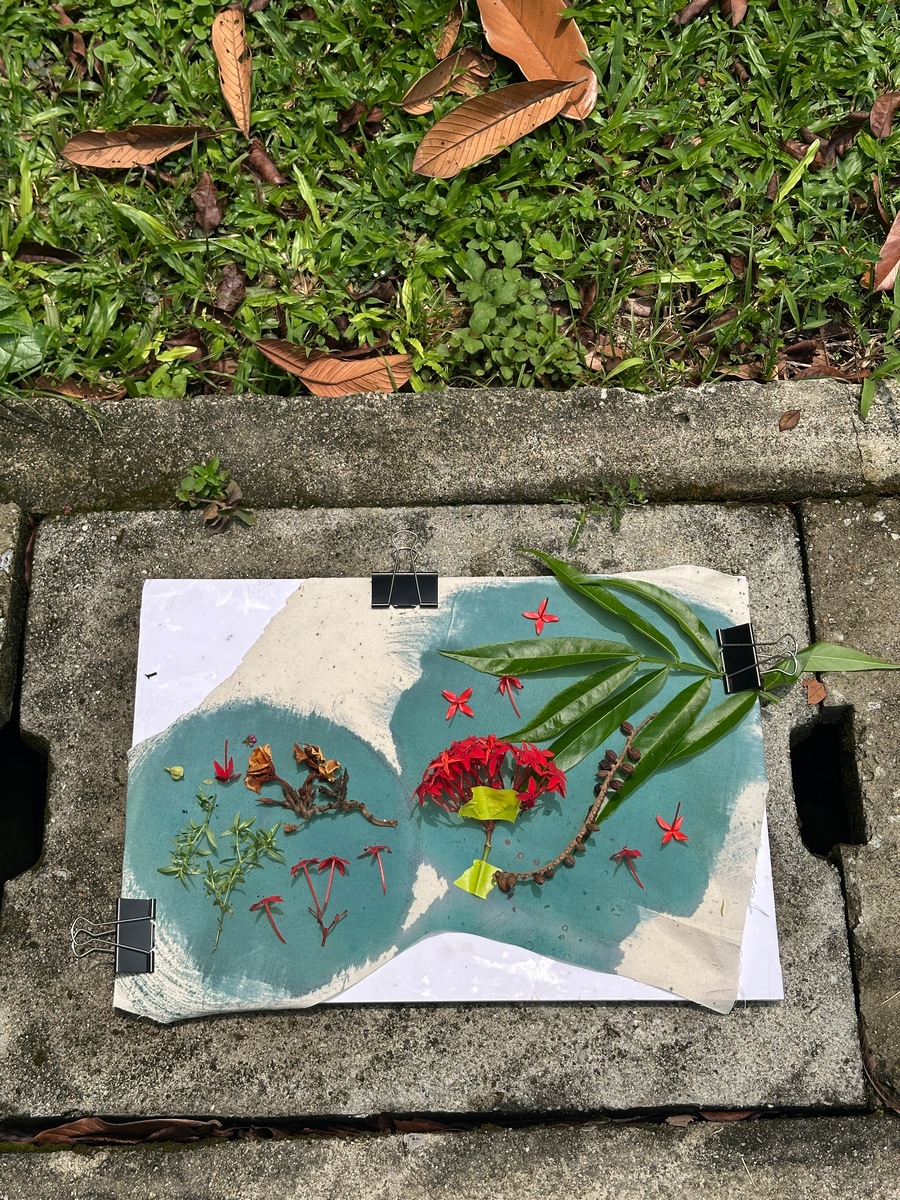
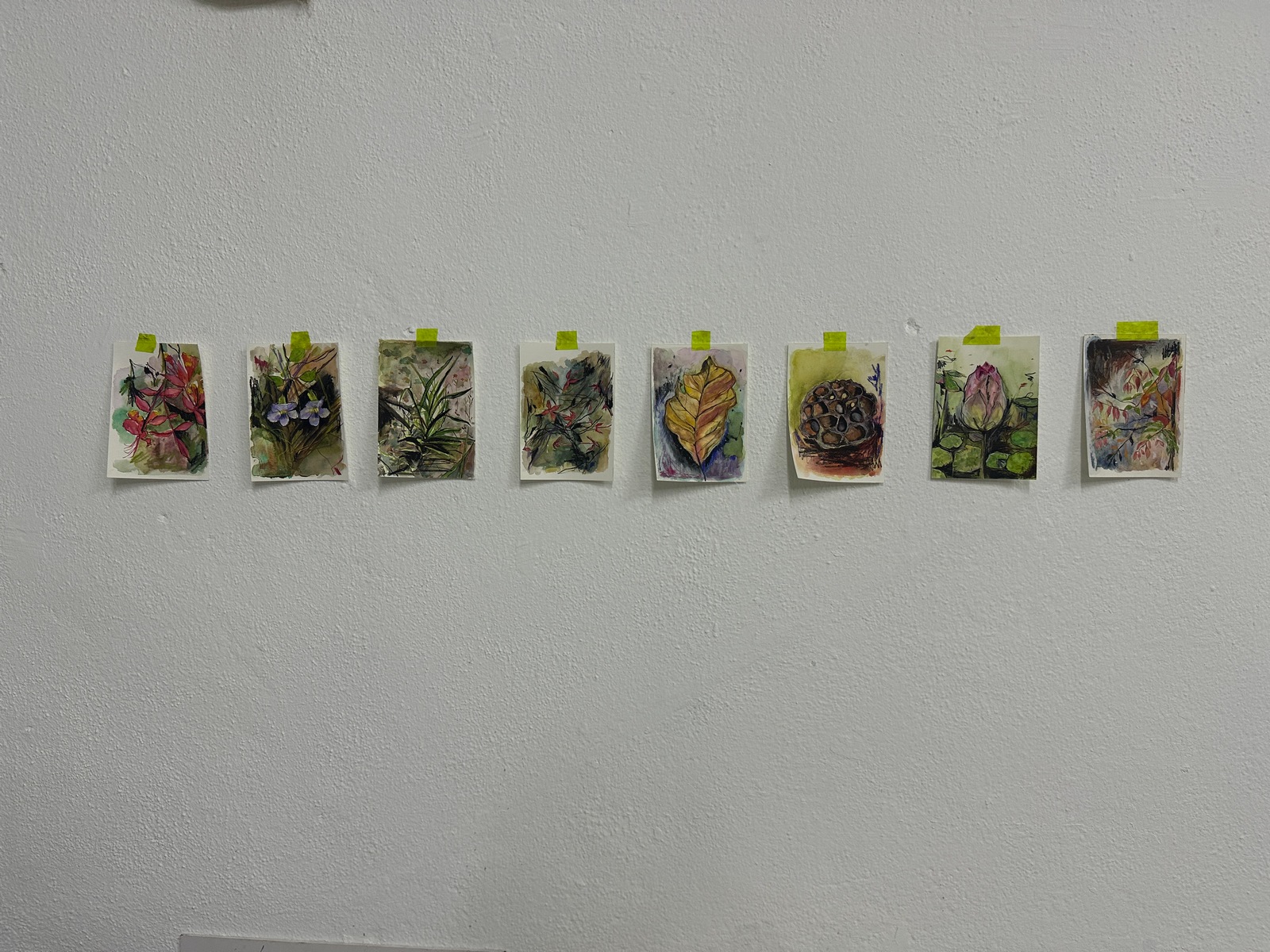
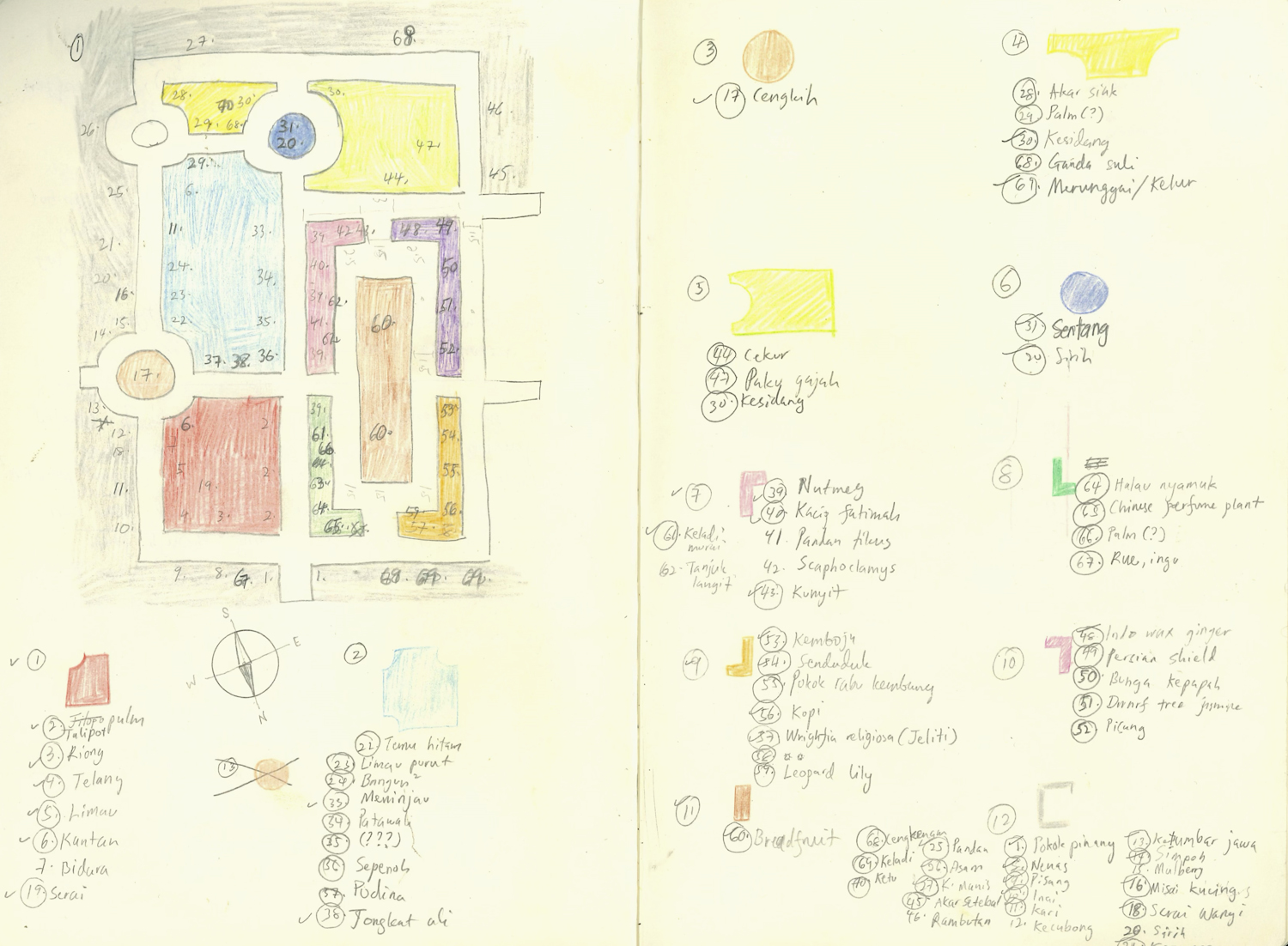
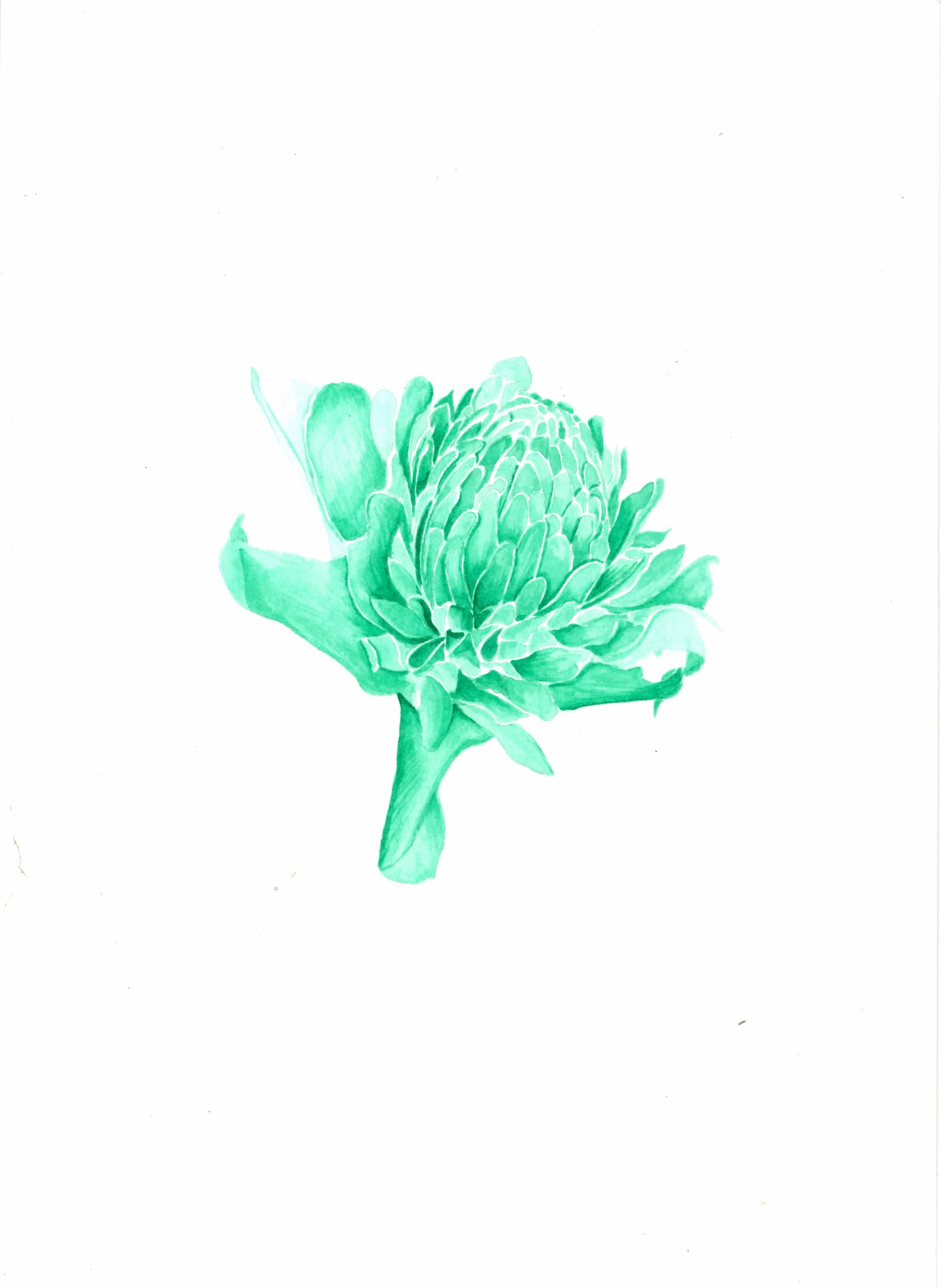
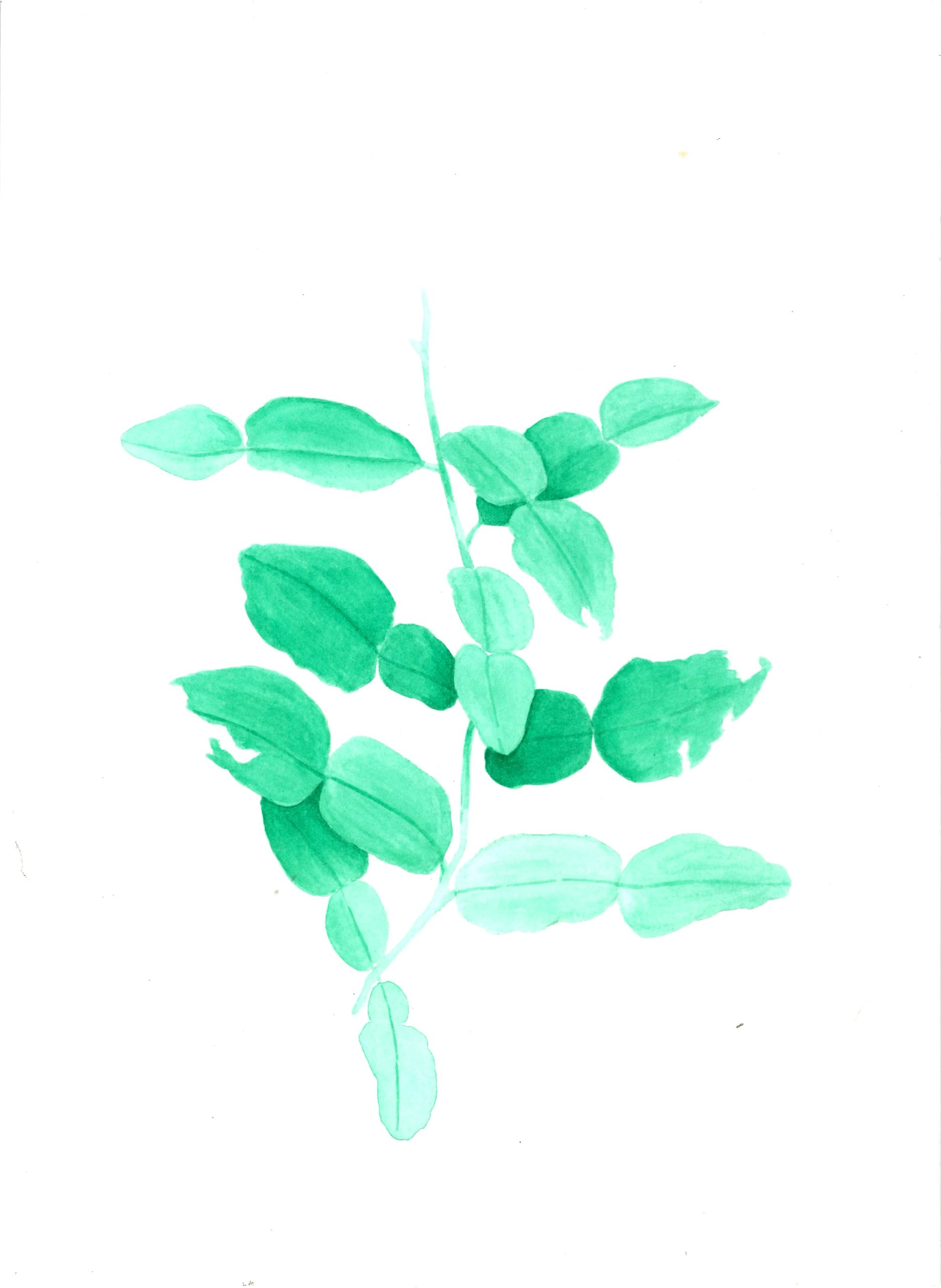
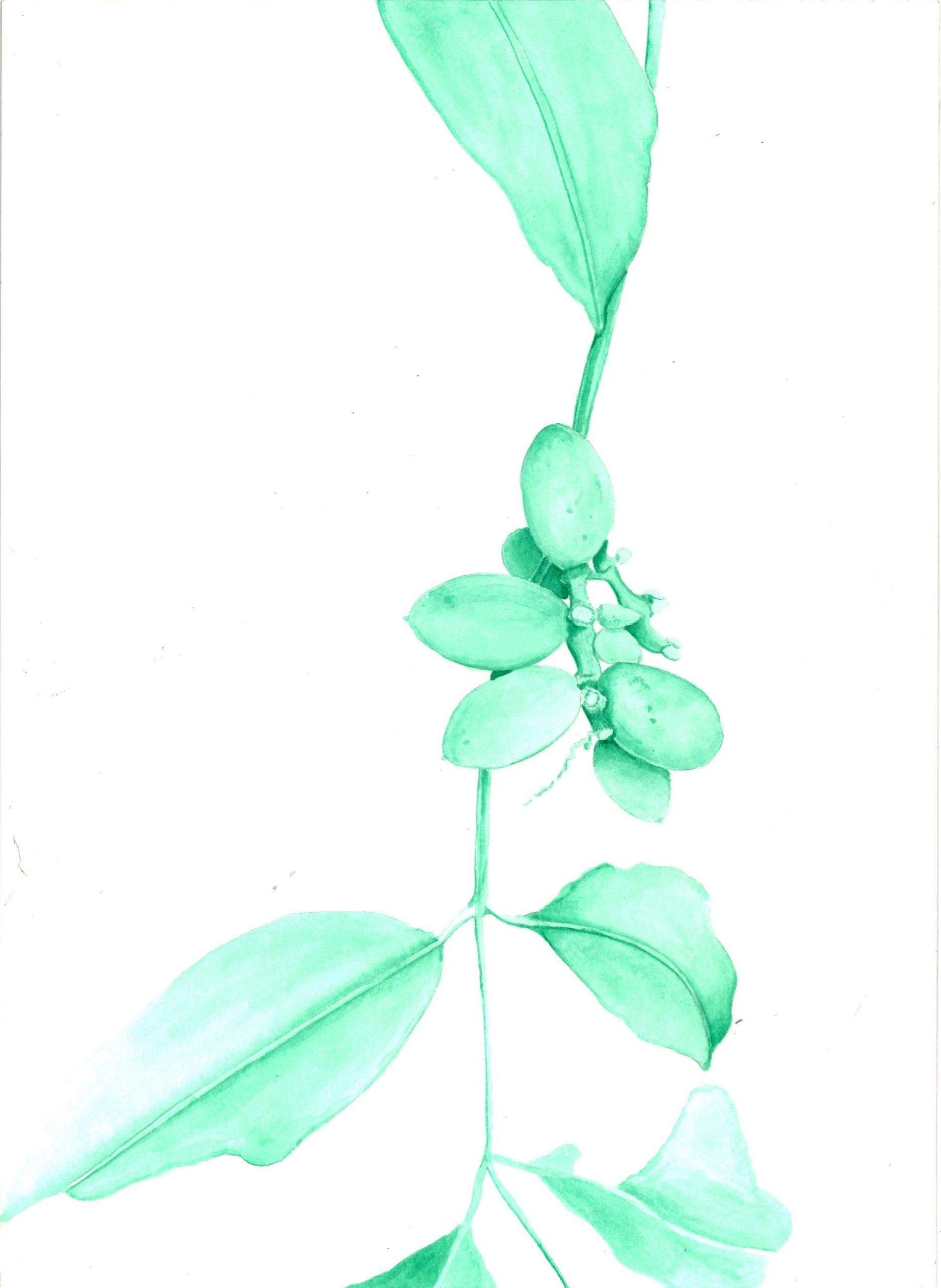
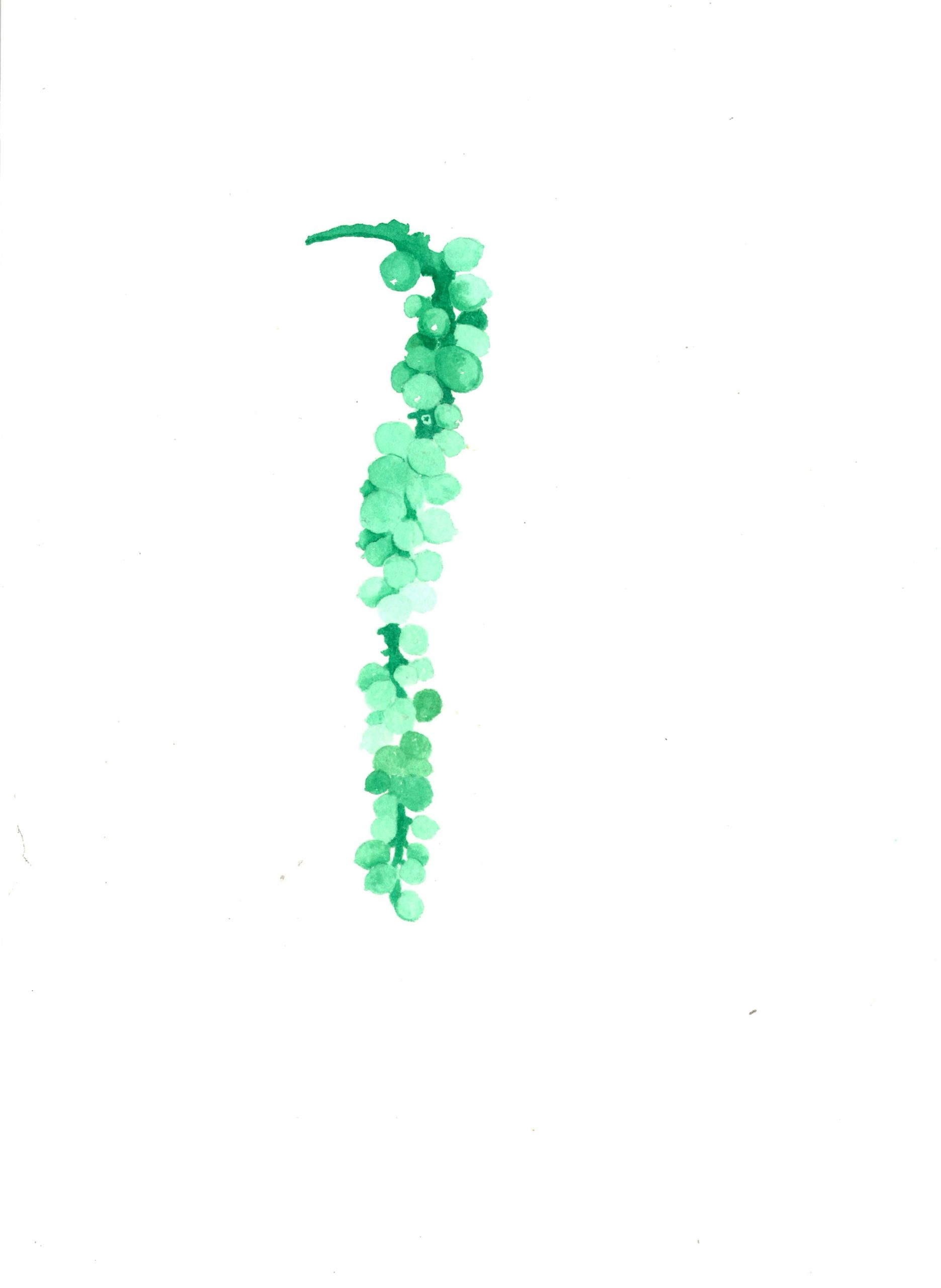
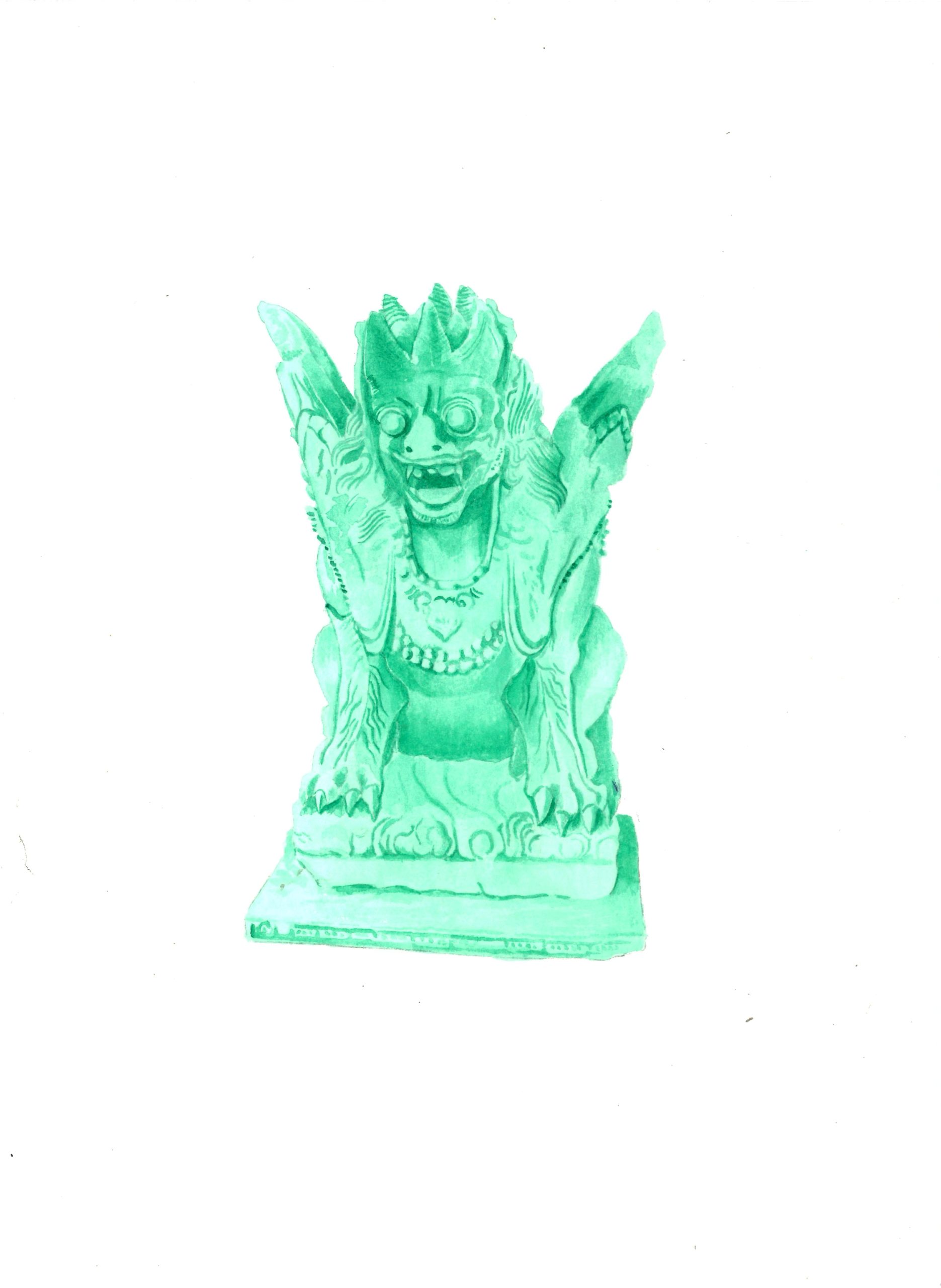
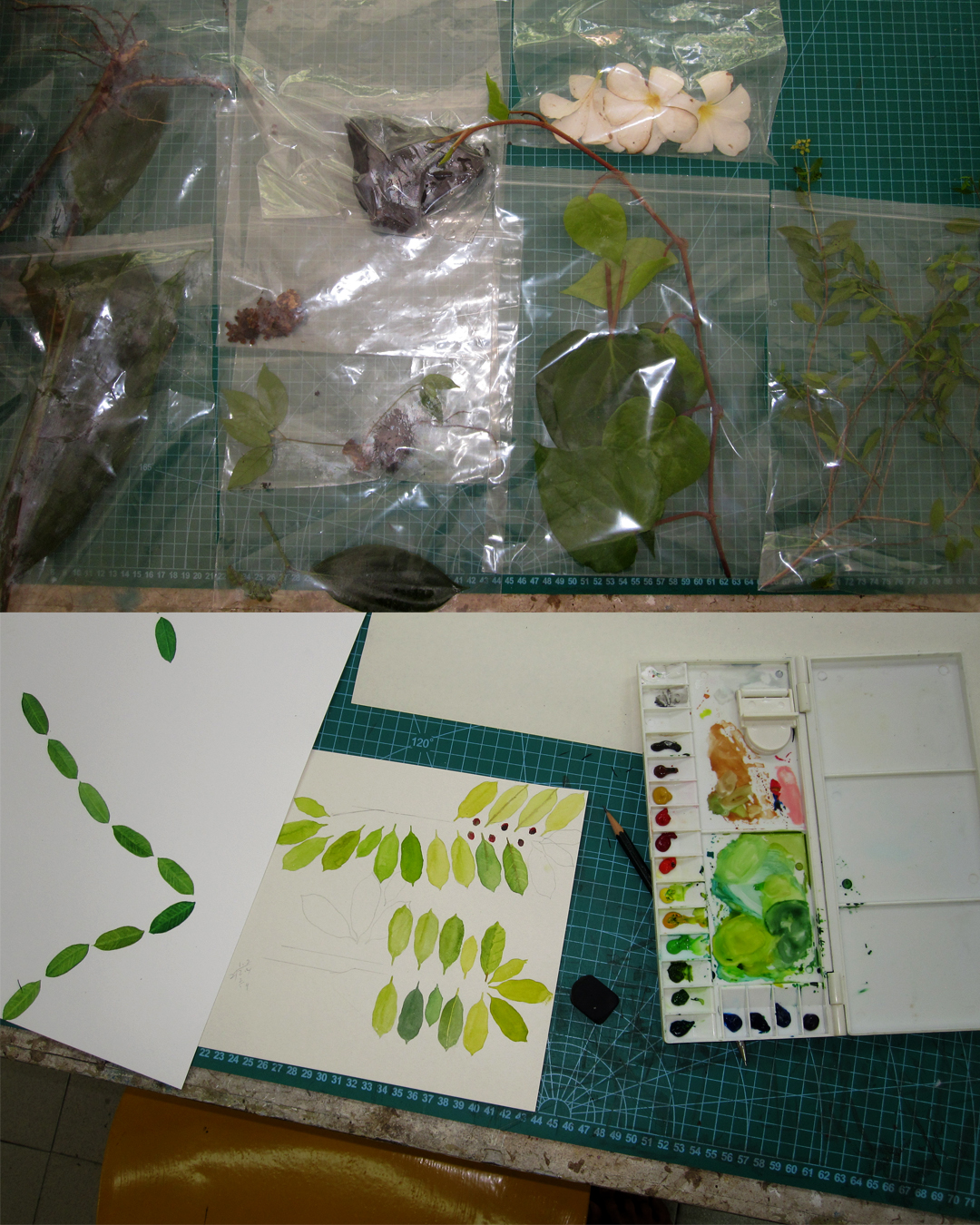
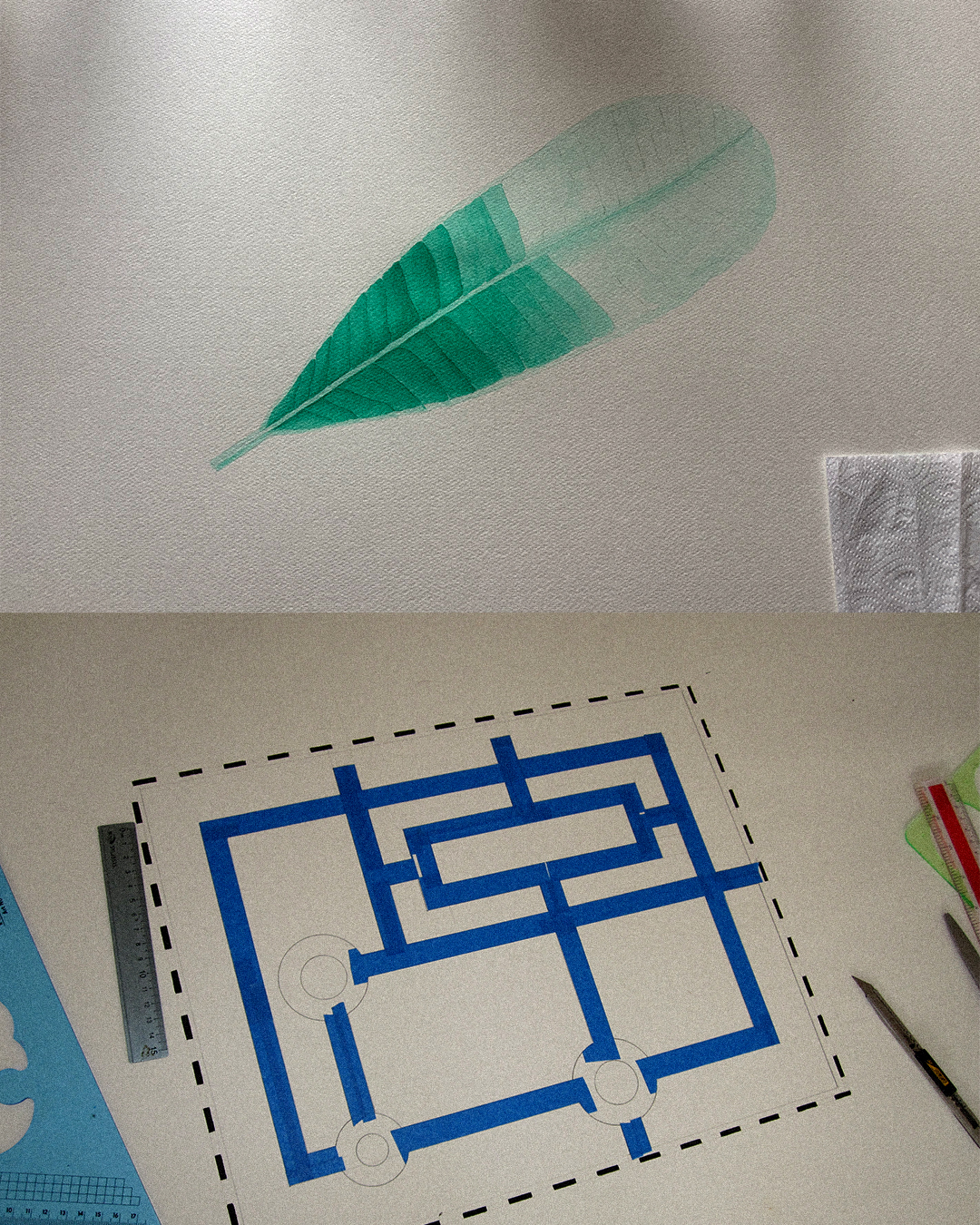
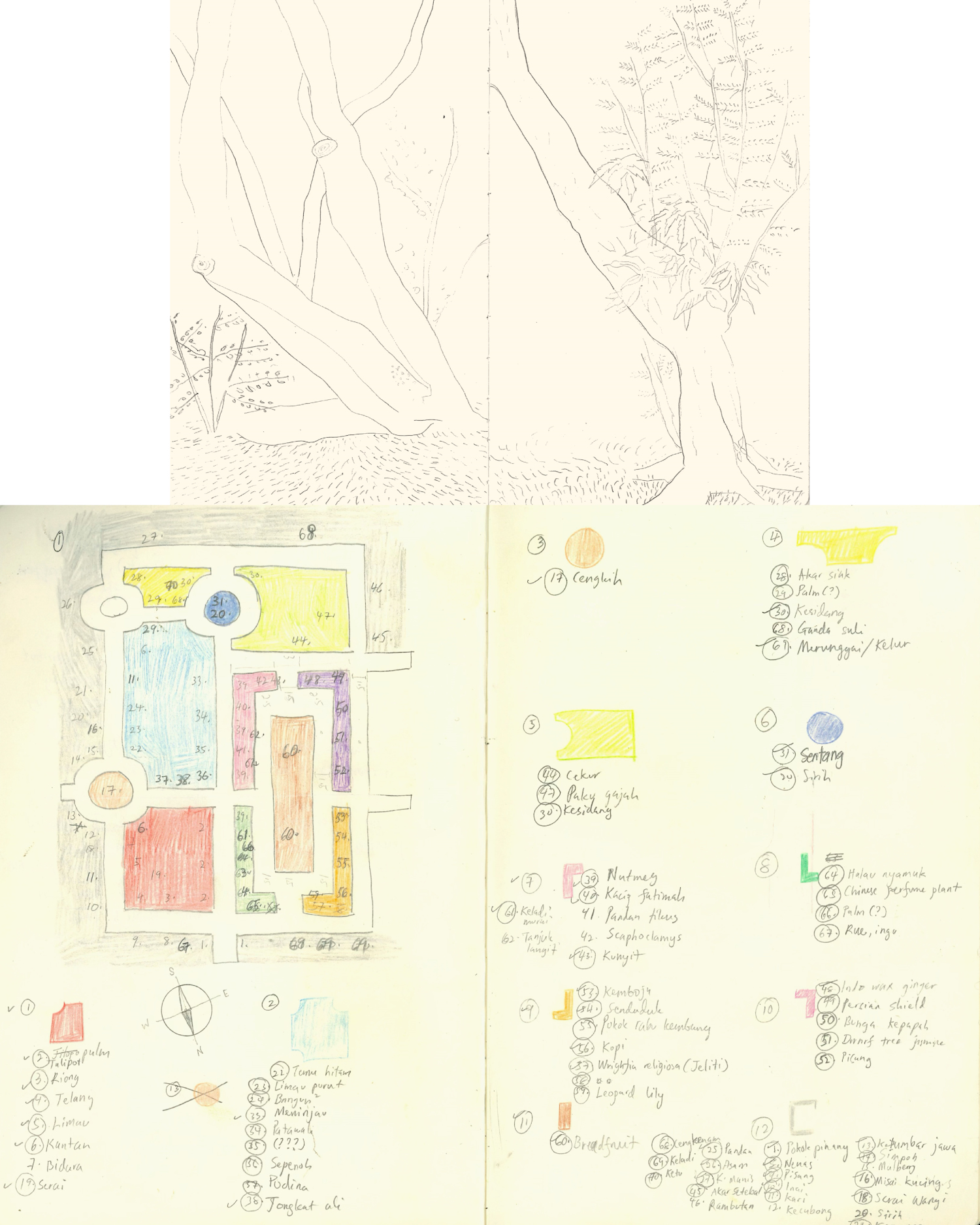
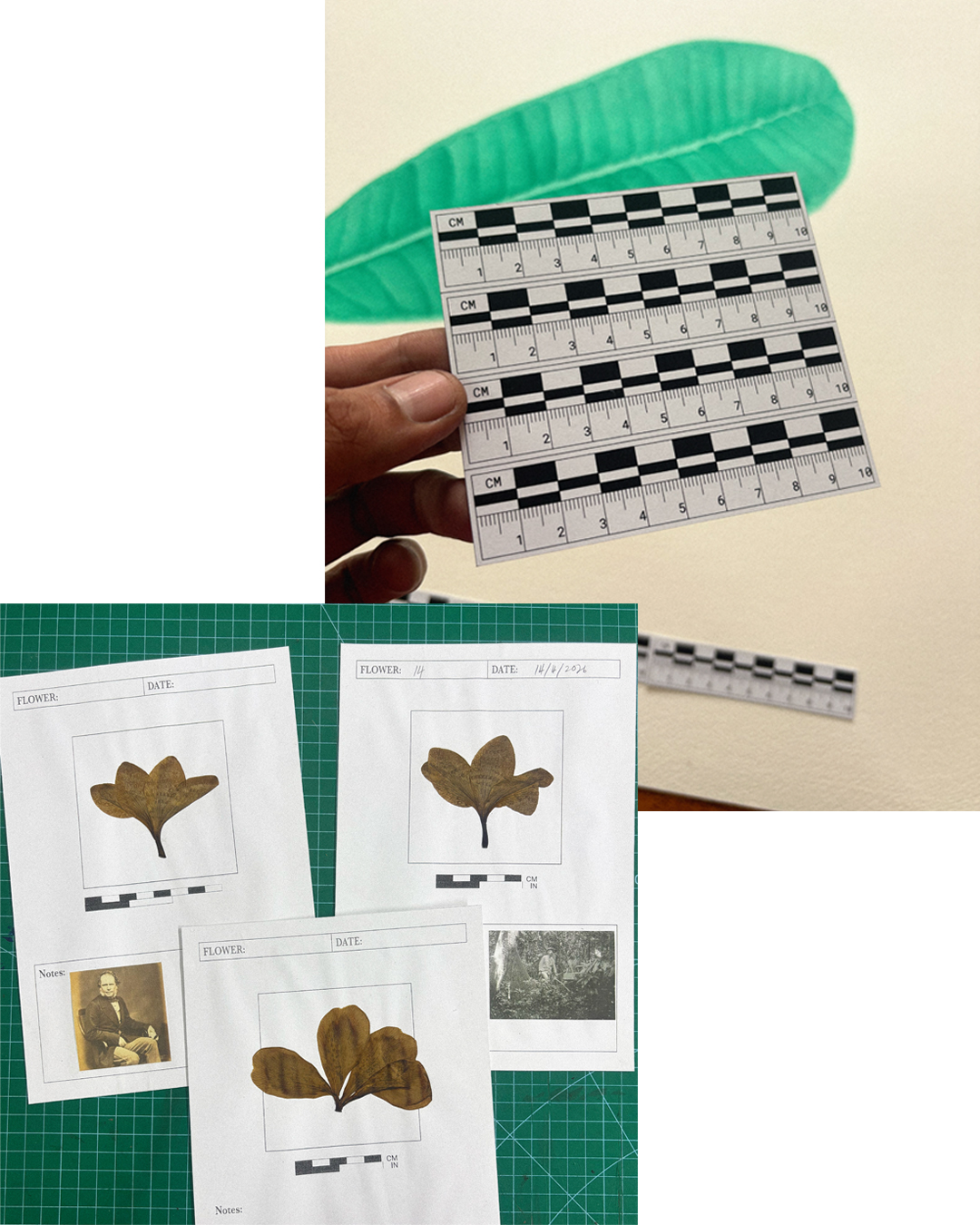
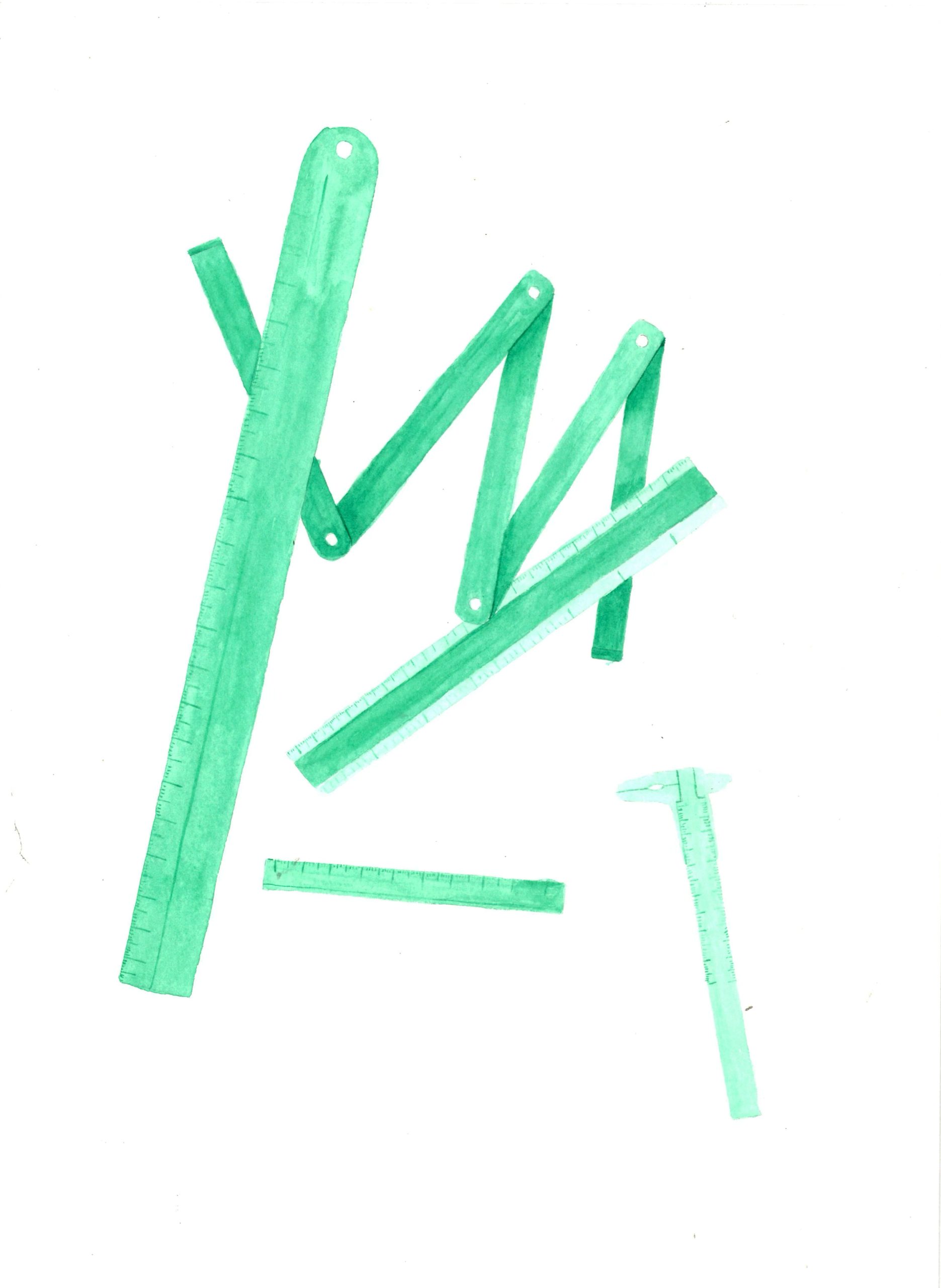
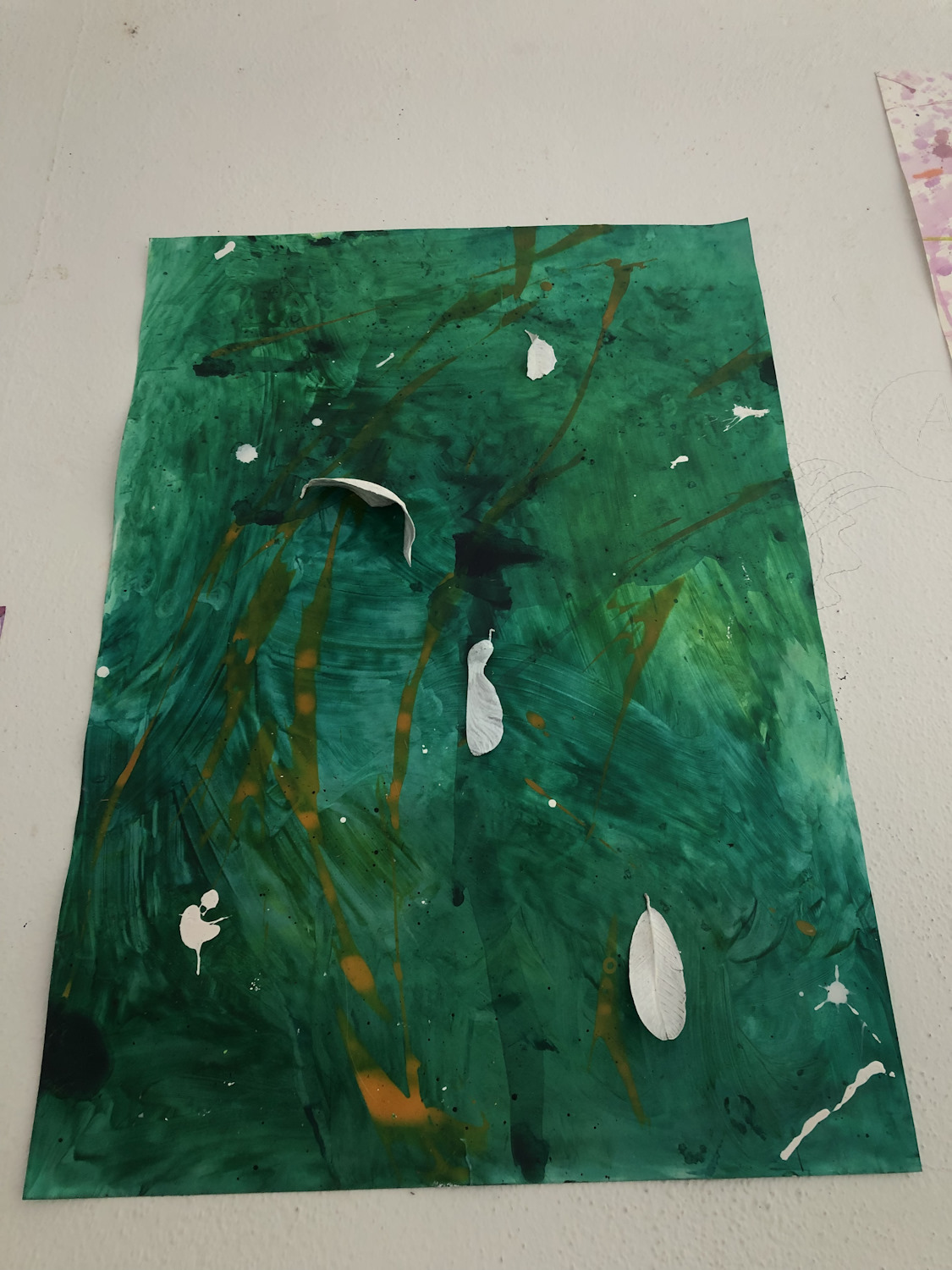
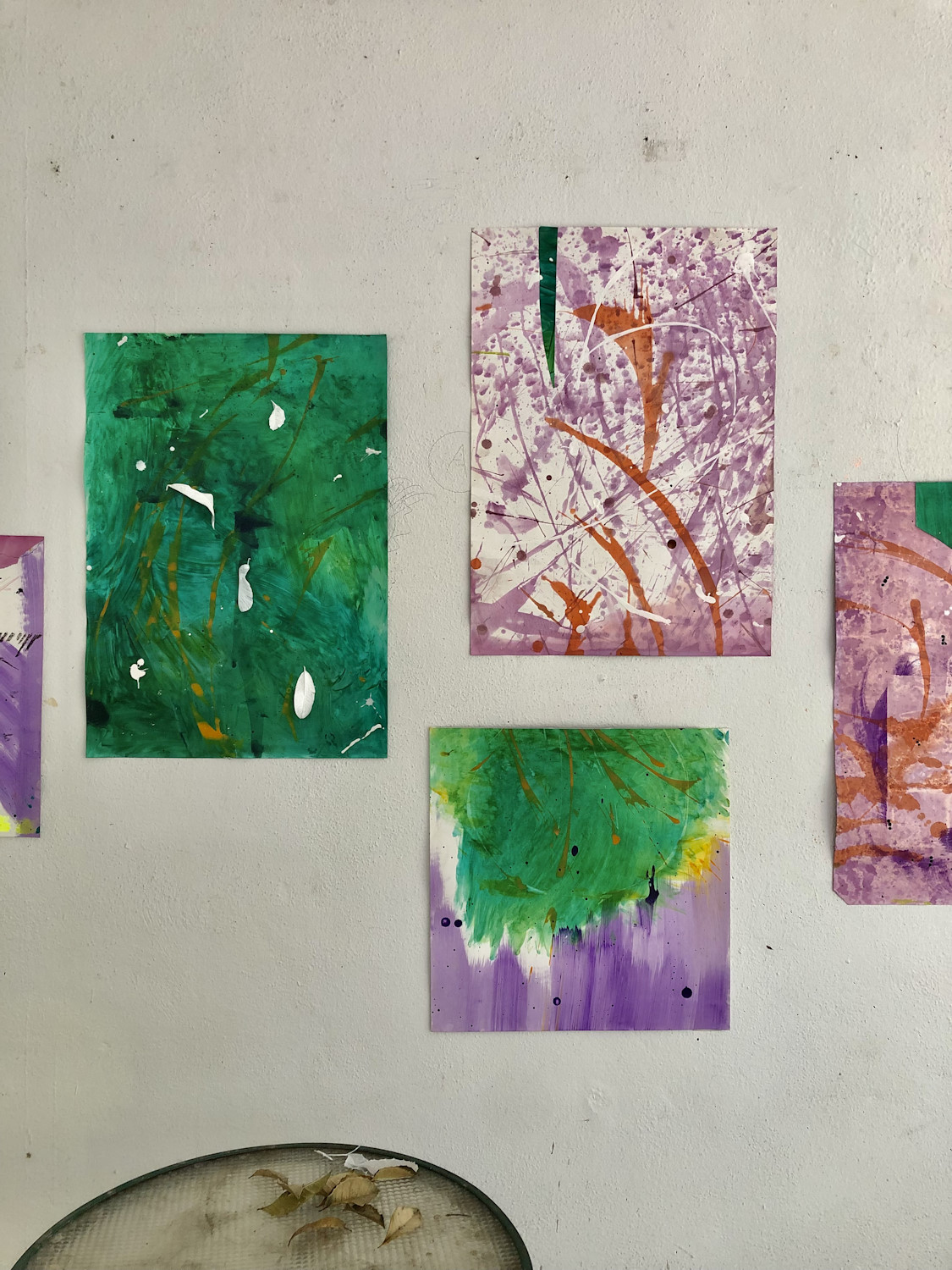
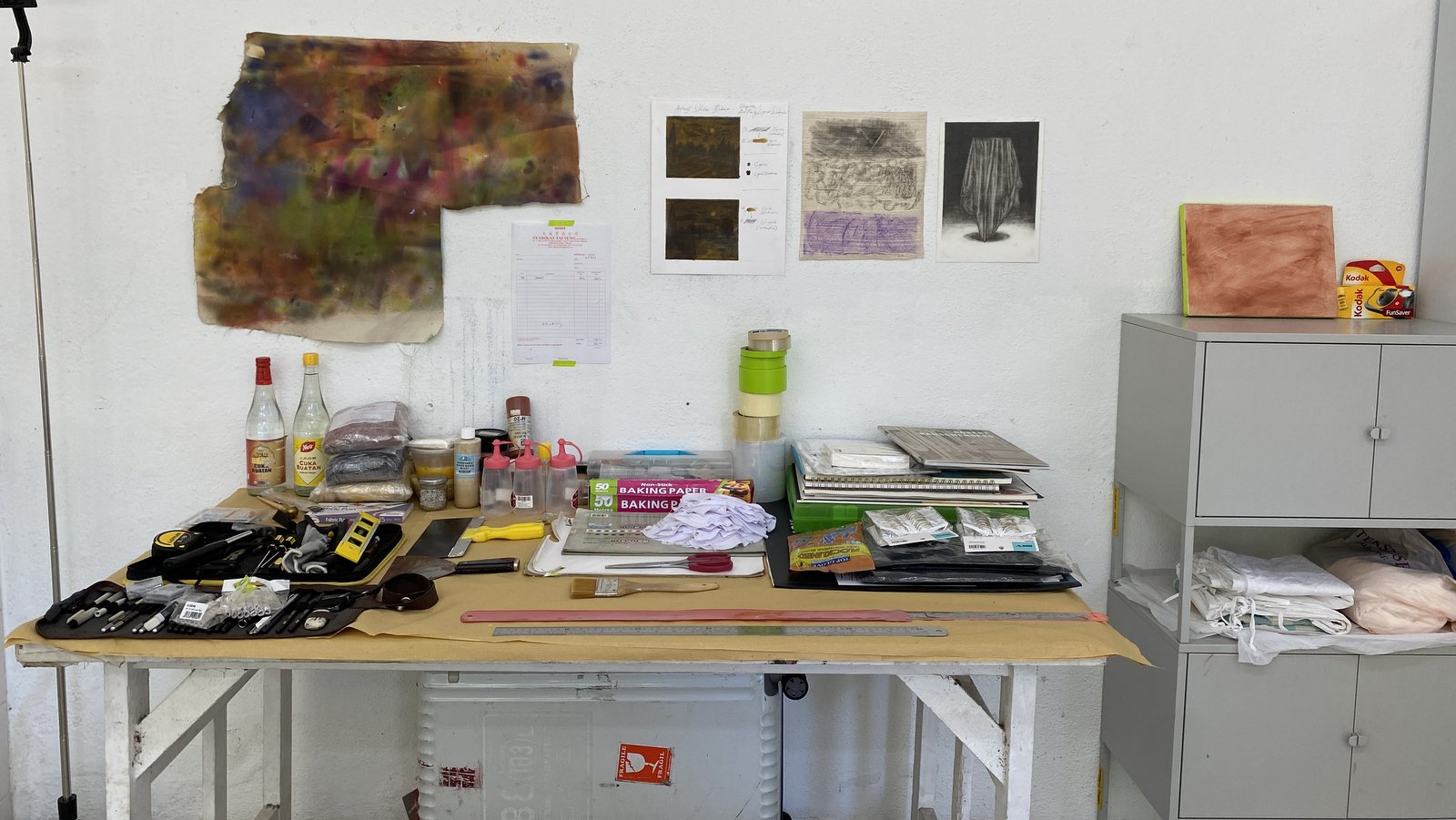
In another series, I have conducted fieldworks at Taman Sari. If the garden metaphorically represents the culture itself, the plants within it were imagined as elements that constitute cultural identity. I mapped the garden, marking the locations of each plant. Some of the plants were collected and pressed, along with botanical illustrations that do not adhere to any scientific rules. The color viridian green was chosen as I was looking for a color that gives an almost artificial representation of nature, or in other words, another version of nature rather than the nature itself.

Rather than focusing on producing finished works, this residency has been a period of research and experimentation. Methods from botanical and archaeological practices have been adopted, including collecting, documenting, and examining fragments. This process allowed me to investigate different materials and forms, from which several projects have gradually emerged and will be developed more in the near future.

Khin May Moe

Khin May Moe

About the Artist

I am Khin May Moe (born 1996), also known as May Moee, a full-time visual artist based in Yangon, Myanmar.

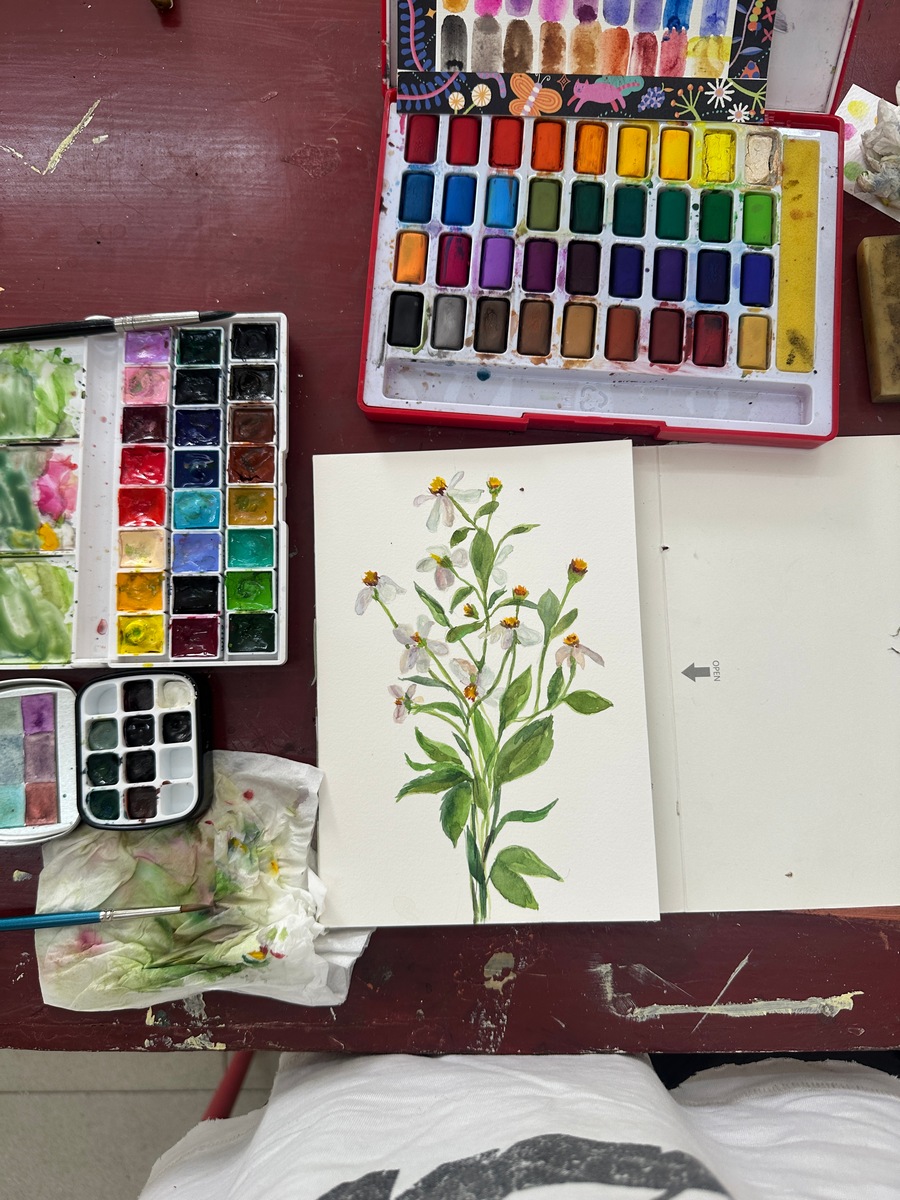
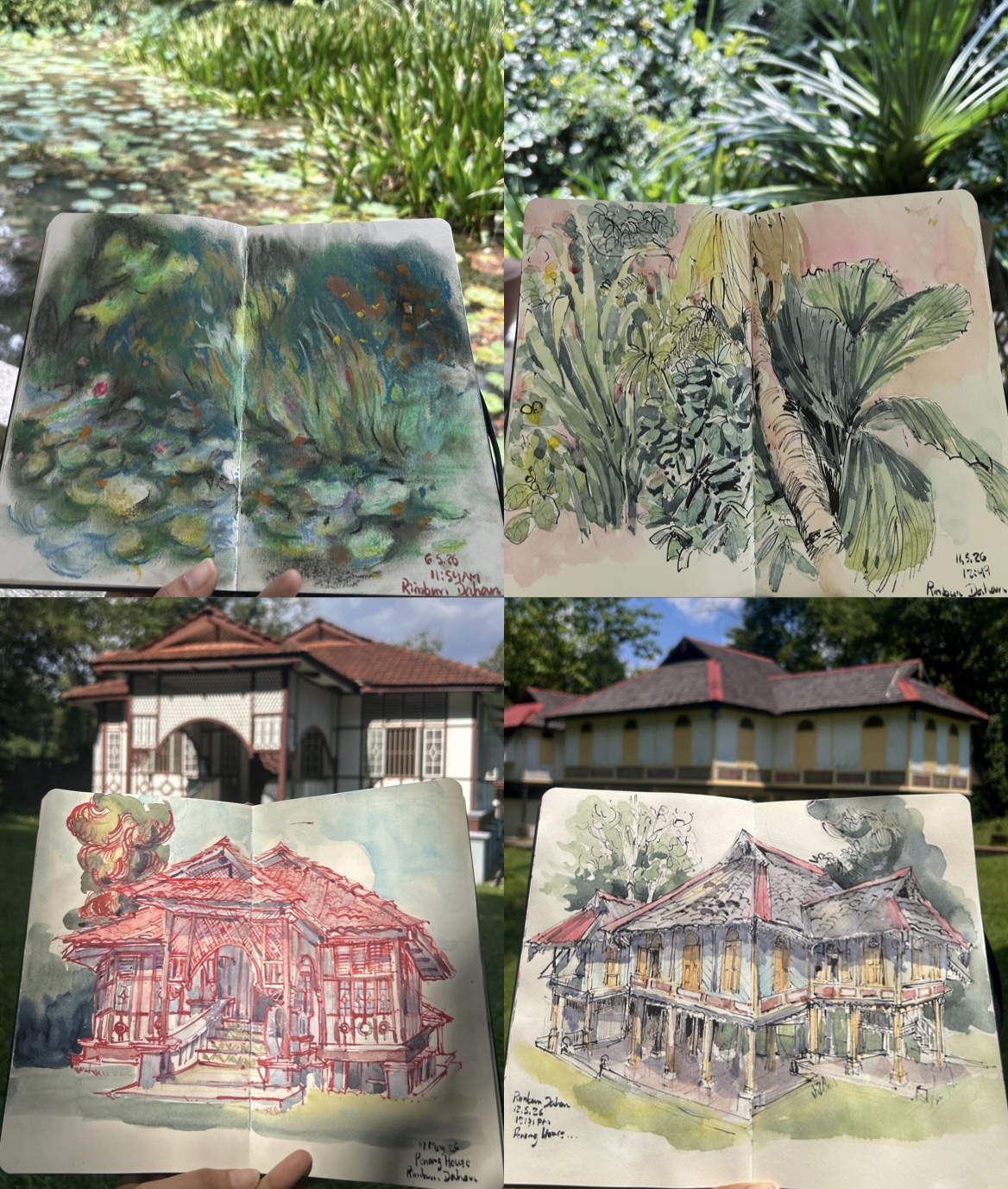
I mainly work with watercolor and ink, creating paintings and urban sketches. I enjoy painting historic buildings, cityscapes, and scenes from everyday life. I am a member of Urban Sketchers Yangon and often draw outdoors. For my urban sketches, I usually use brush pen ink and twig ink, and in my recent work I have been exploring detailed experimental watercolor techniques.

I graduated with a Bachelor’s degree in German from Mandalay University of Foreign Languages (MUFL) and worked as a German-speaking tour guide from 2018 to 2020. Although I have loved drawing since childhood, I began studying academic painting in 2019 and later graduated with a Diploma in Painting from the National University of Arts and Culture, Yangon (NUAC). Since then, I have been actively creating artworks and participating in group exhibitions in Myanmar.

In 2024, I received an artistic residency scholarship through the EMPM programme and spent six months as a resident artist at Beaux-Arts Nantes Saint-Nazaire in Saint-Nazaire, France, where I presented my work in a student exhibition. After returning to Myanmar, I also participated in the group exhibition J’ai vu le soleil dans l’ombre, organised by the European Union in Myanmar.

I am currently an artist-in-residence at Rimbun Dahan, Malaysia. The work I have developed during this residency will become the foundation of my first solo exhibition in Yangon.

https://www.instagram.com/maymoe.e

http://facebook.com/MayMoeeSketches

About the Residency

Pareidolia ( A World Within)

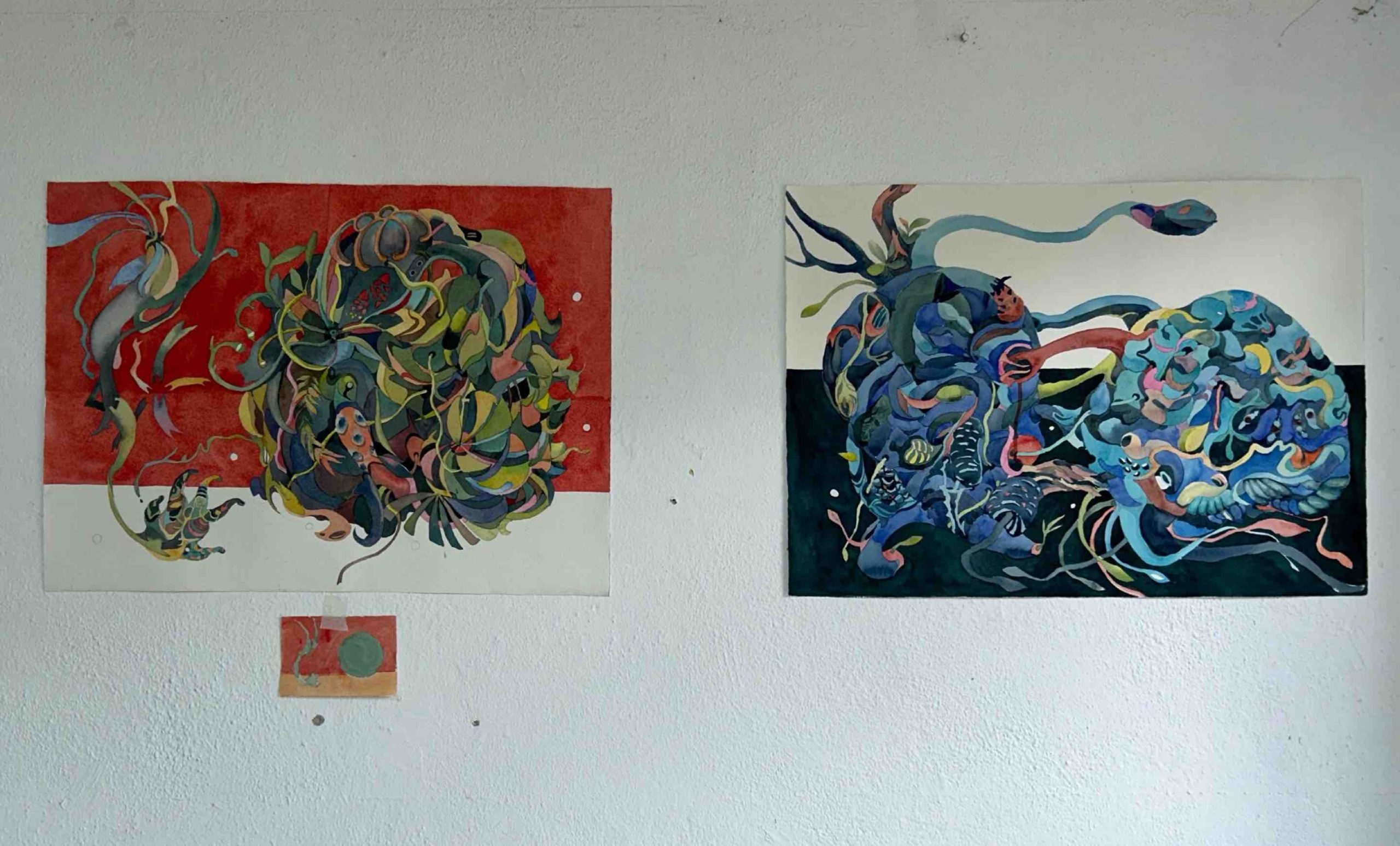
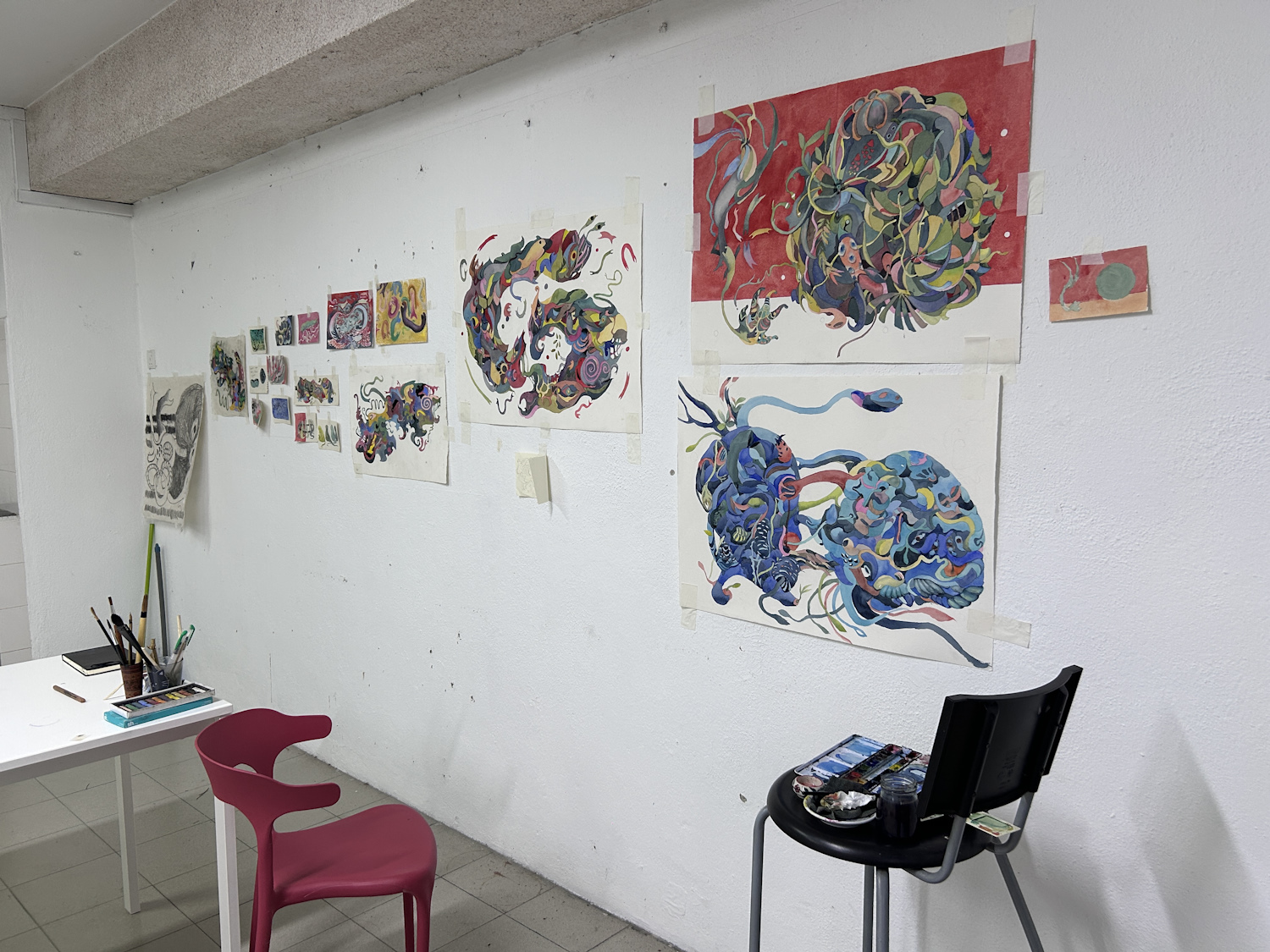
I spent two months as an artist-in-residence at Rimbun Dahan (May and July). During my residency, I had a lot of time to think, explore, and focus on my art practice every day. Being in a place where I could work freely gave me the opportunity to try a new art practice and experiment with ideas that were different from what I usually draw. As the residency progressed, I created a completely different body of work from the proposal I had written before coming to the residency.

It was also a time to dive into my own mind. I started to enjoy gazing at plants and trees every day, something that is difficult to do regularly in my daily life in Yangon. I enjoyed exploring the garden and drawing from my surroundings. During this process, I broke the boundaries of my own thinking and started making imaginative work that I never thought I could create. I discovered a new way of making art that came not only from what I saw in front of me, but also from what I imagined and felt inside my mind.

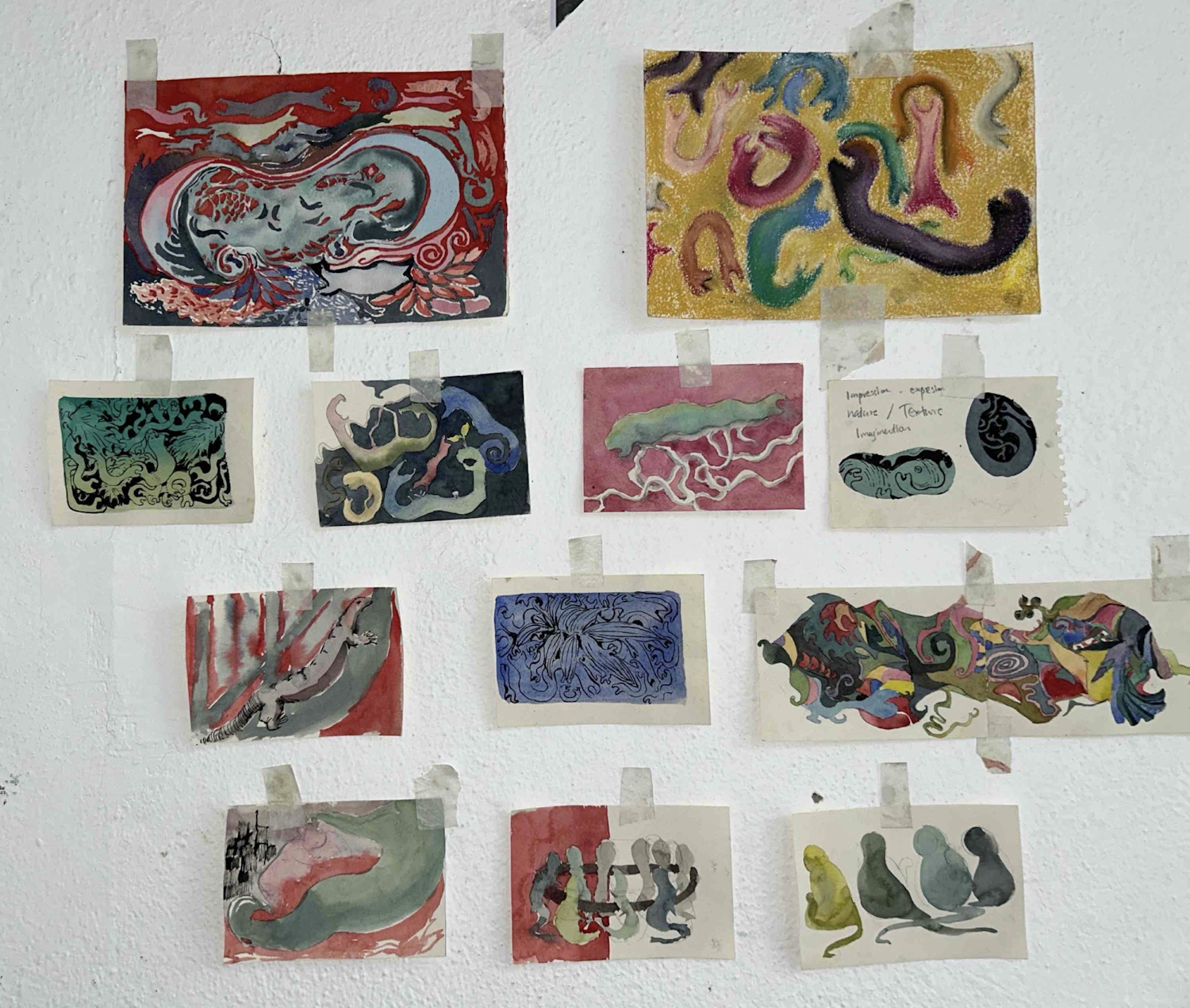
At the same time, I did not want to lose my favourite habit of observational sketching. I walked around the garden and made sketches during my first month here. As someone who enjoys drawing old buildings, I especially loved sketching the heritage houses at Rimbun Dahan. After sketching, I often stepped out of my comfort zone and experimented with new ideas. This became an important part of my art practice.

During the residency, I also faced my long-term problem of insomnia. Being awake at night gave me time to think about my emotions and inner thoughts. I wanted to connect this experience with my artwork. Through these paintings, I explore different aspects of mental health, emotions, sensitivity, and the expressions that come from my deep subconscious during sleepless nights.

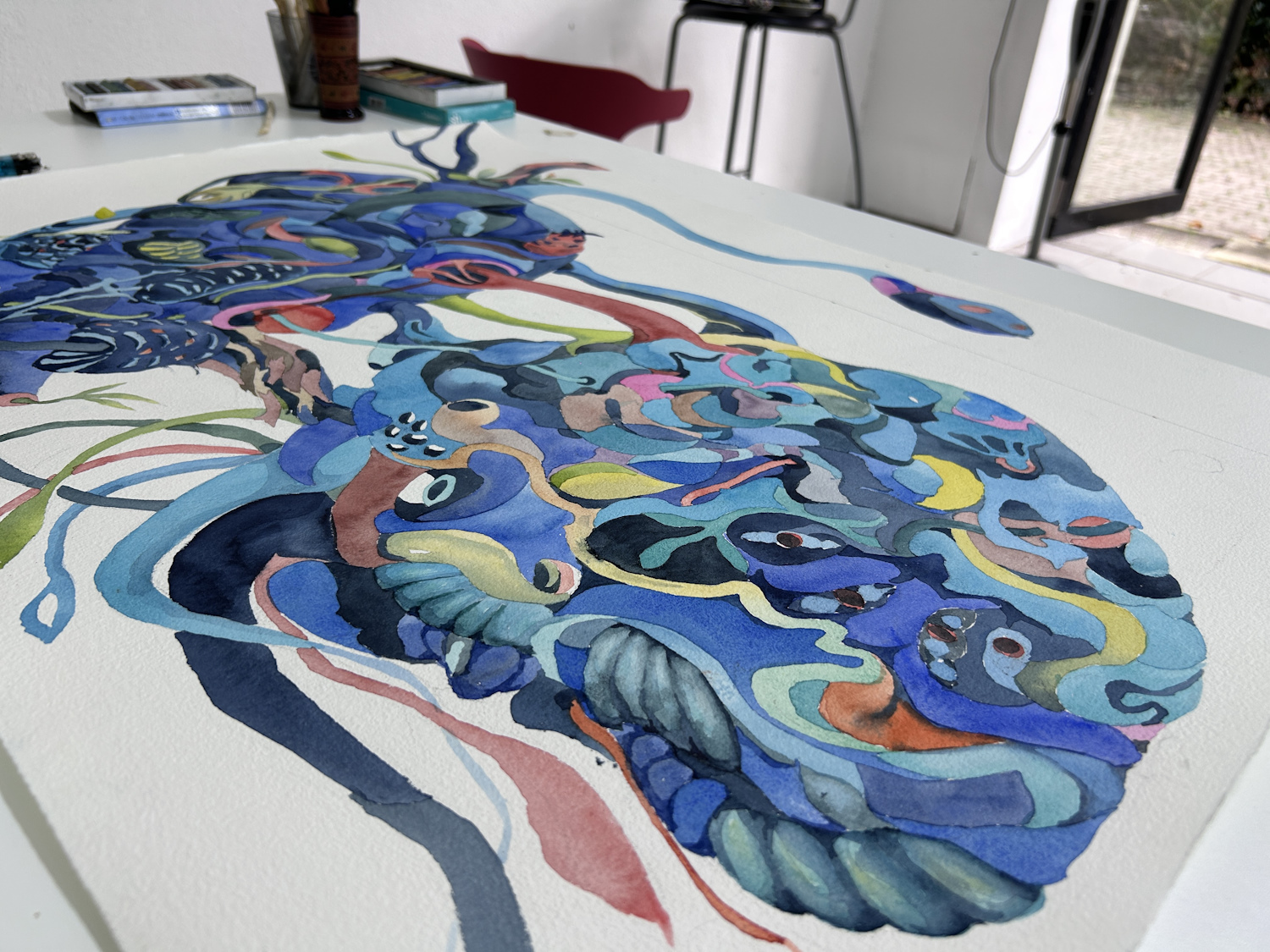
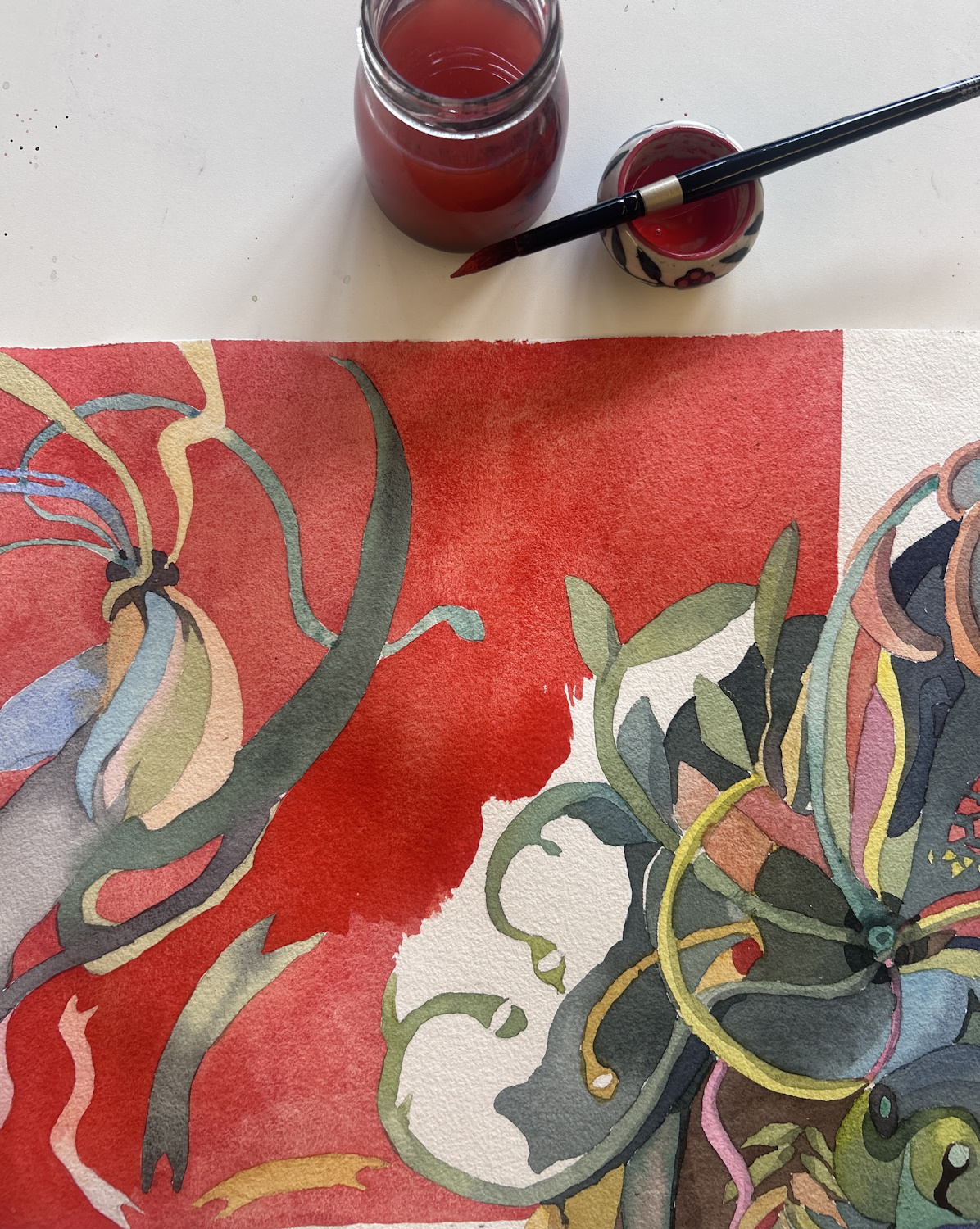
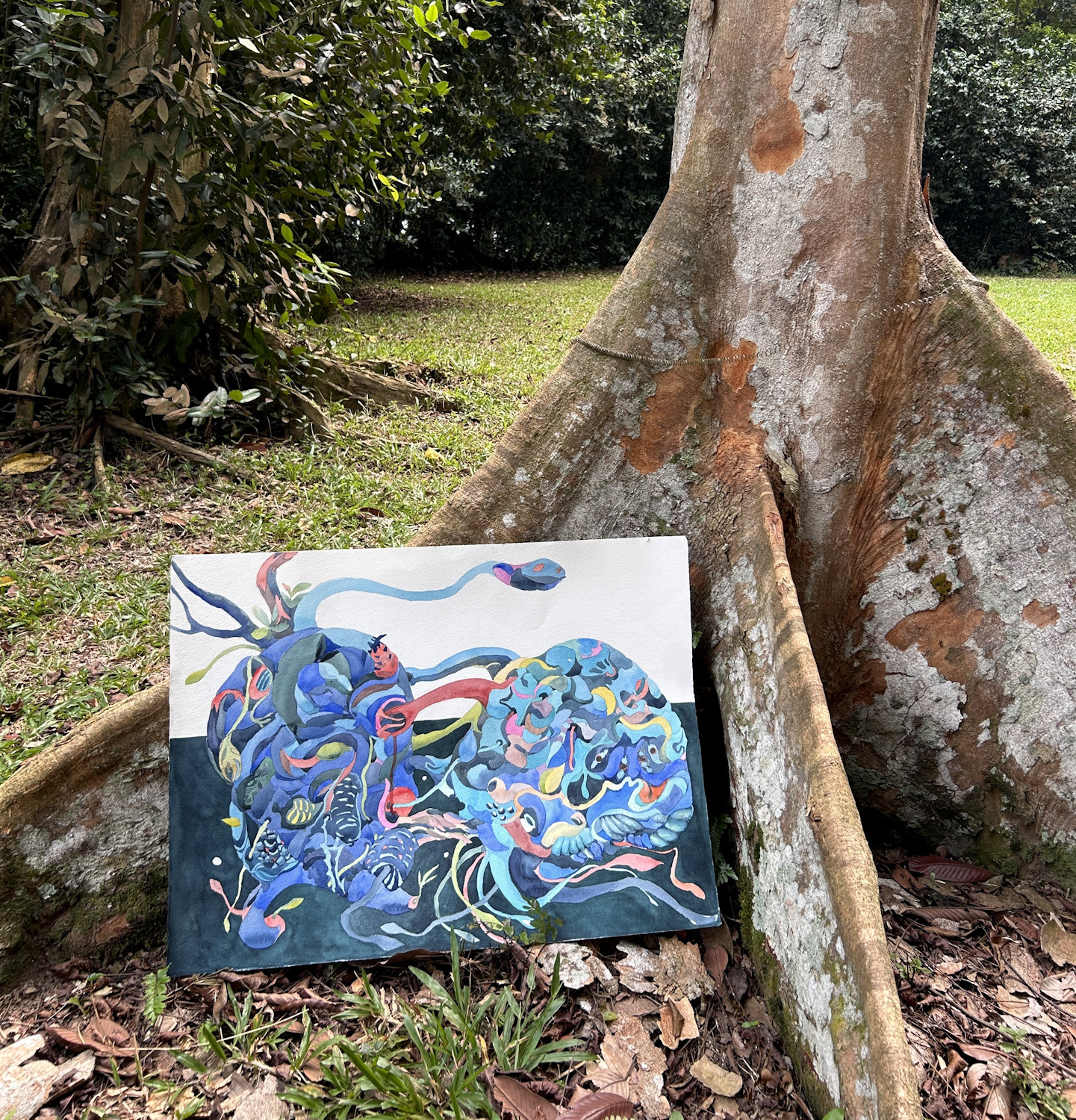
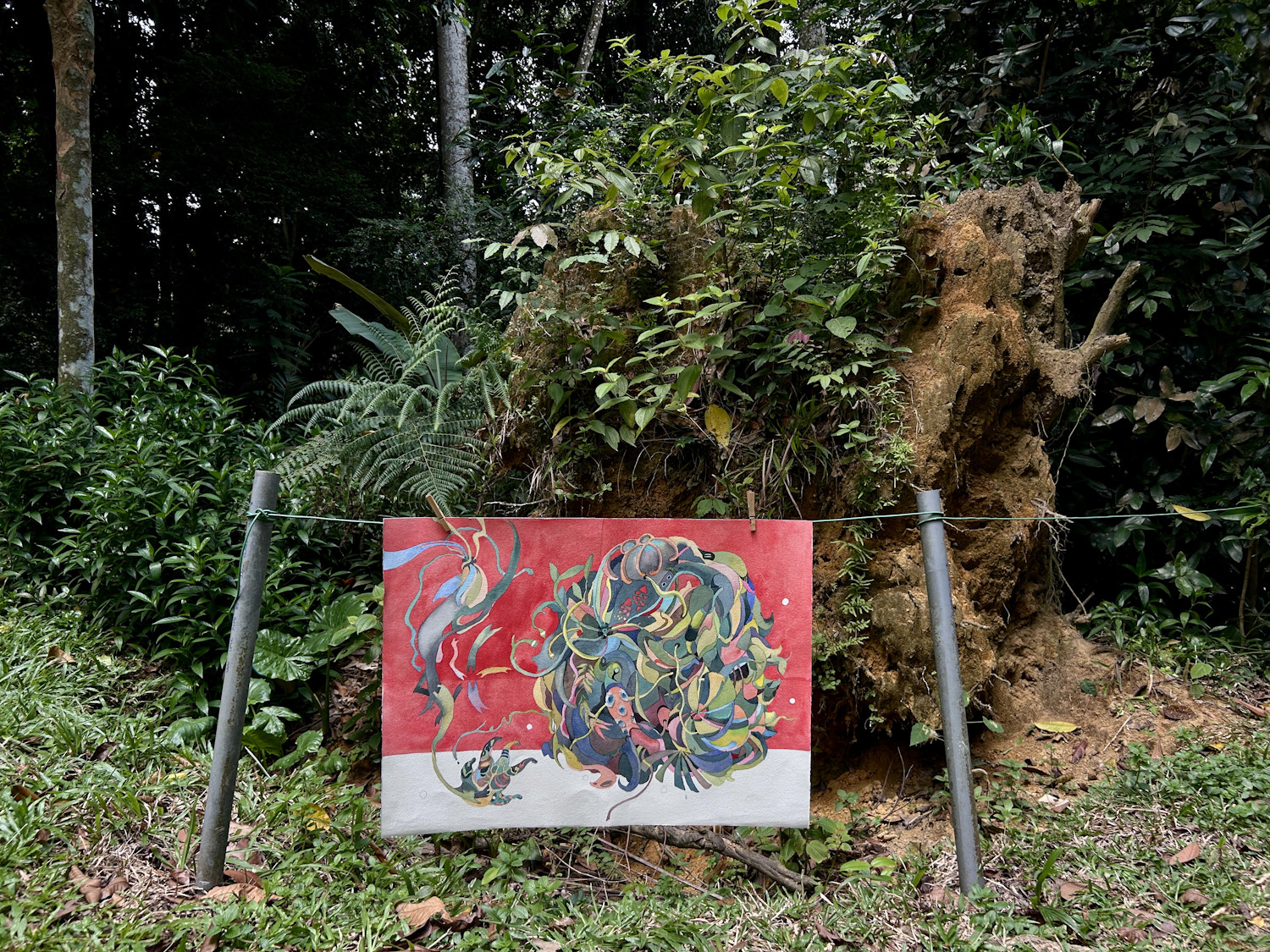
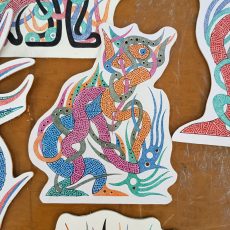
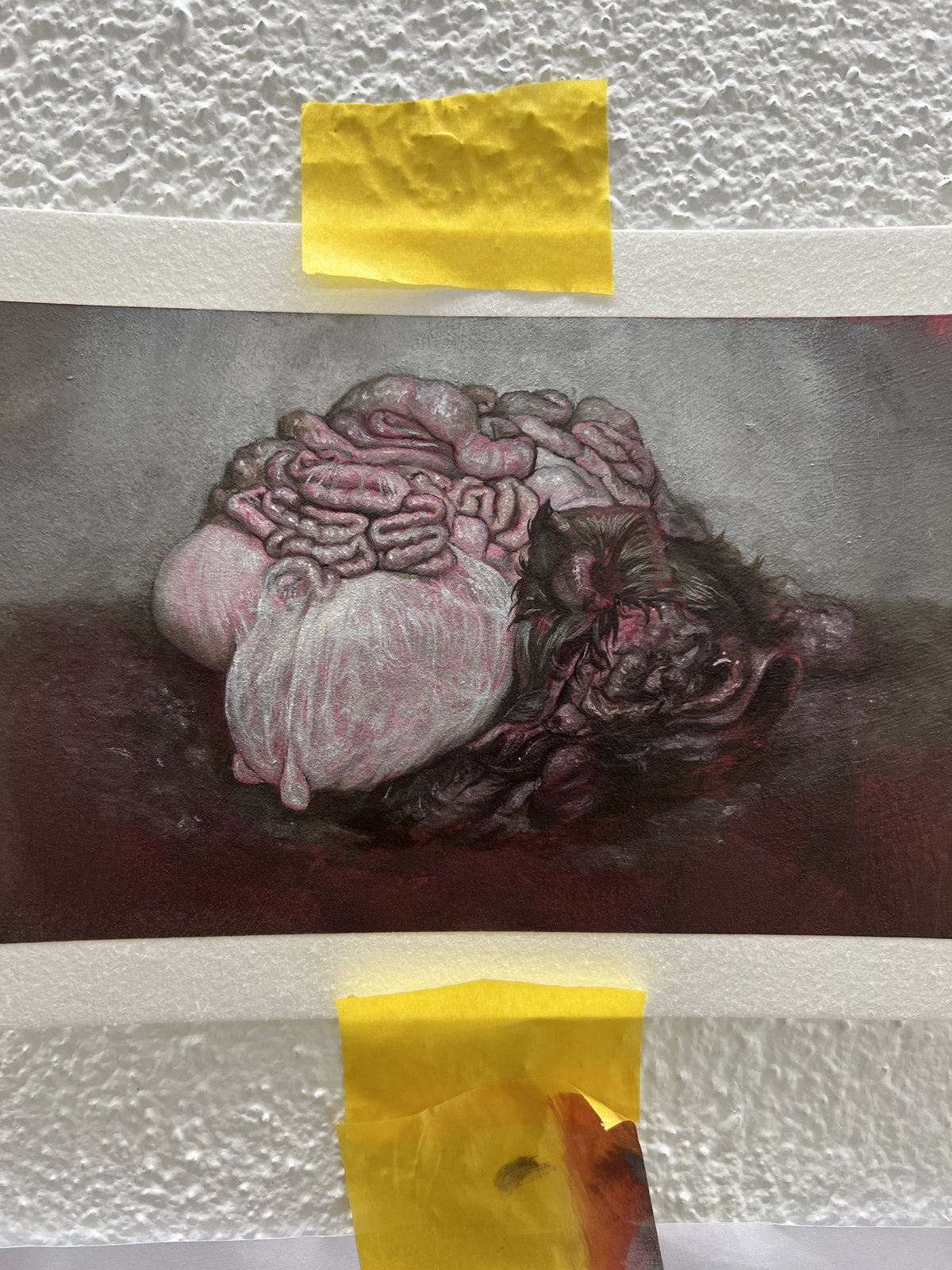
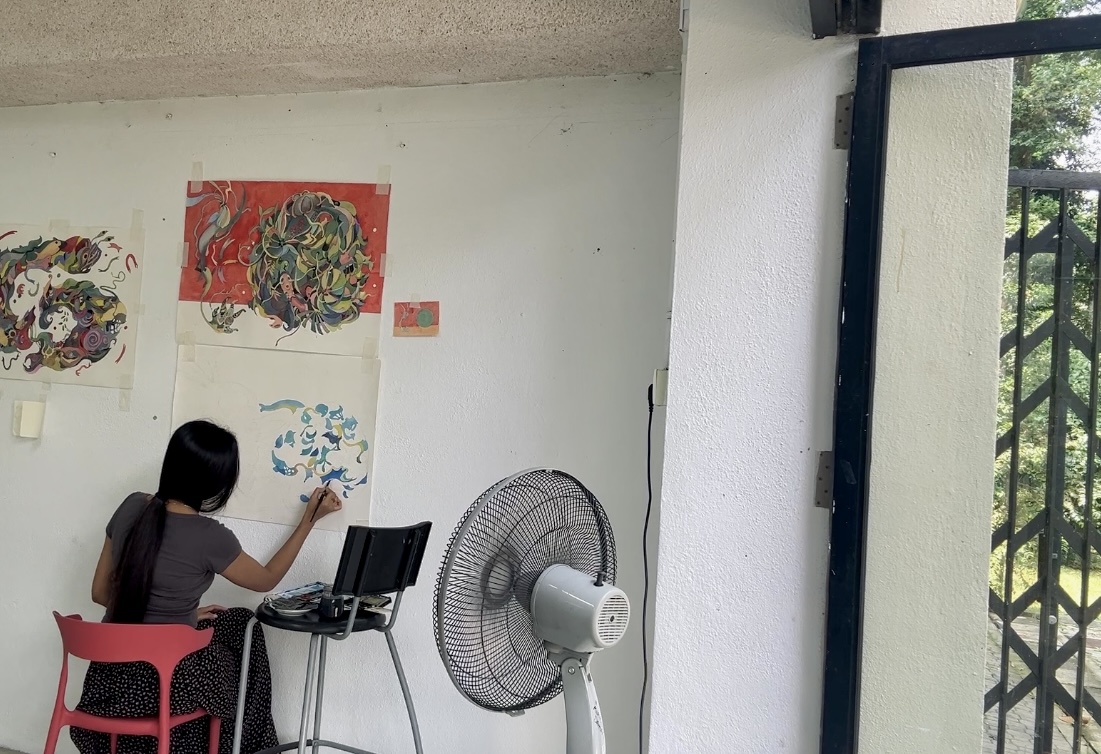
The objects embedded in the paintings are like illustrations that can be imagined by the viewer’s eyes, with faces, figures, and intestine-like forms appearing in random patterns. I try to draw intricate patterns by combining ambiguous shapes, different leaf shapes, creatures, and animal parts that I found in my surroundings.

Inspired by nature, leaf shapes, animals, and my daily observations in the garden, I began creating experimental watercolor paintings with intricate, floating forms. I want to build a living visual world that reflects my own inner experiences.

This personal project began with Bipolar creatures, an idea I had been developing since I was in Yangon. These creatures slowly changed and became connected with roots, plants, and natural forms. They grew into mysterious and unique beings. The title of this project is credited to my fellow resident artist, Brisa. While viewing my artworks, she mentioned that they evoked a sense of pareidolia, and I chose Pareidolia as the title of this project.

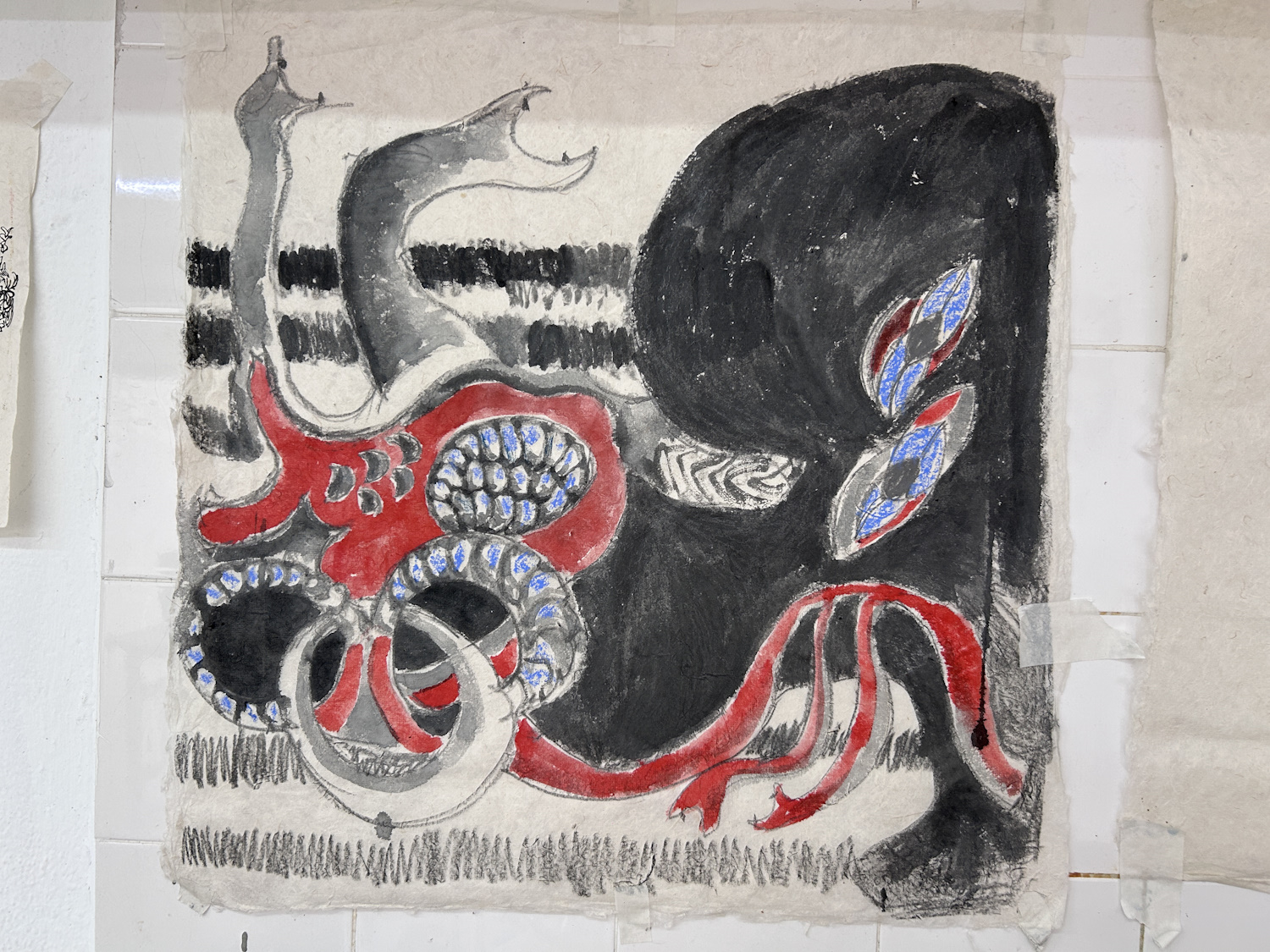
This residency encouraged me to face the negative thoughts and emotional struggles that I usually keep inside. For the Open Day, I will share my new experimental watercolor paintings, works in progress, ink sketches on Shan Sakku (Shan paper from Myanmar), and observational drawings created during the residency. This body of work will become the starting point for my first solo exhibition in Yangon, inspired by my time at Rimbun Dahan.

Brisa Amir

Brisa Amir

Visual artist Brisa Amir from the Philippines has been in residence at Rimbun Dahan for two months in 2026, working with the flora and handmade ink as her primary material to explore the displacement of nature in urban settings. She will be sharing the results of her residency on Open Day on Sunday 26 July.

About the Artist

Brisa Amir paints across layers and draws through texture, working from her studio and its peripheries. Her practice embraces unfinished spaces — cracks in walls, rainwater stains, and the imprints of everyday movement — creating tactile, collage-based paintings rooted in paper’s fragility and resistance. Her walks become acts of noticing and collecting, stitching urban traces into visual, botanical rhythms.

A BFA Painting graduate from the University of the Philippines, Diliman, she held her first solo exhibition at Artinformal in 2018, This was followed by a solo presentation at the inaugural S.E.A. Focus in Singapore in (2019), a feature in Artforum, and a cover feature in Vogue Philippines in (2023).

She received the Ateneo Art Awards Embassy of Italy Purchase Prize in 2021. Her work continues to be seen in local and regional exhibitions, including UP Vargas Museum and a cultural collaboration with the Embassy Of Spain through Instituto Cervantes. 

https://brisaamirstudio.carrd.co

Instagram: @fierydaisy_

About the Residency

I. A Leaf Reaching Out is a Leaf Reaching in 𓂃

A leaf represents my first connection with nature. The sprouting of a leaf holds deep meaning for me as a human being who grew up on ancestral land that has been paved over with concrete. I grew up seeing corners of gray walls and a mere square of blue sky, reached only by plants thriving amidst the concrete-layered, congested informal houses as they stretched toward the sunlight. The plants I have observed cresting among the urban grid and on gated, abandoned lands mirror my relationship with –and understanding of– the messages of ancestors living on disputed territories. These ancestors fought and continue to fight back, reclaiming and protecting Mother Nature.

II. Organically Unfolding ੈ

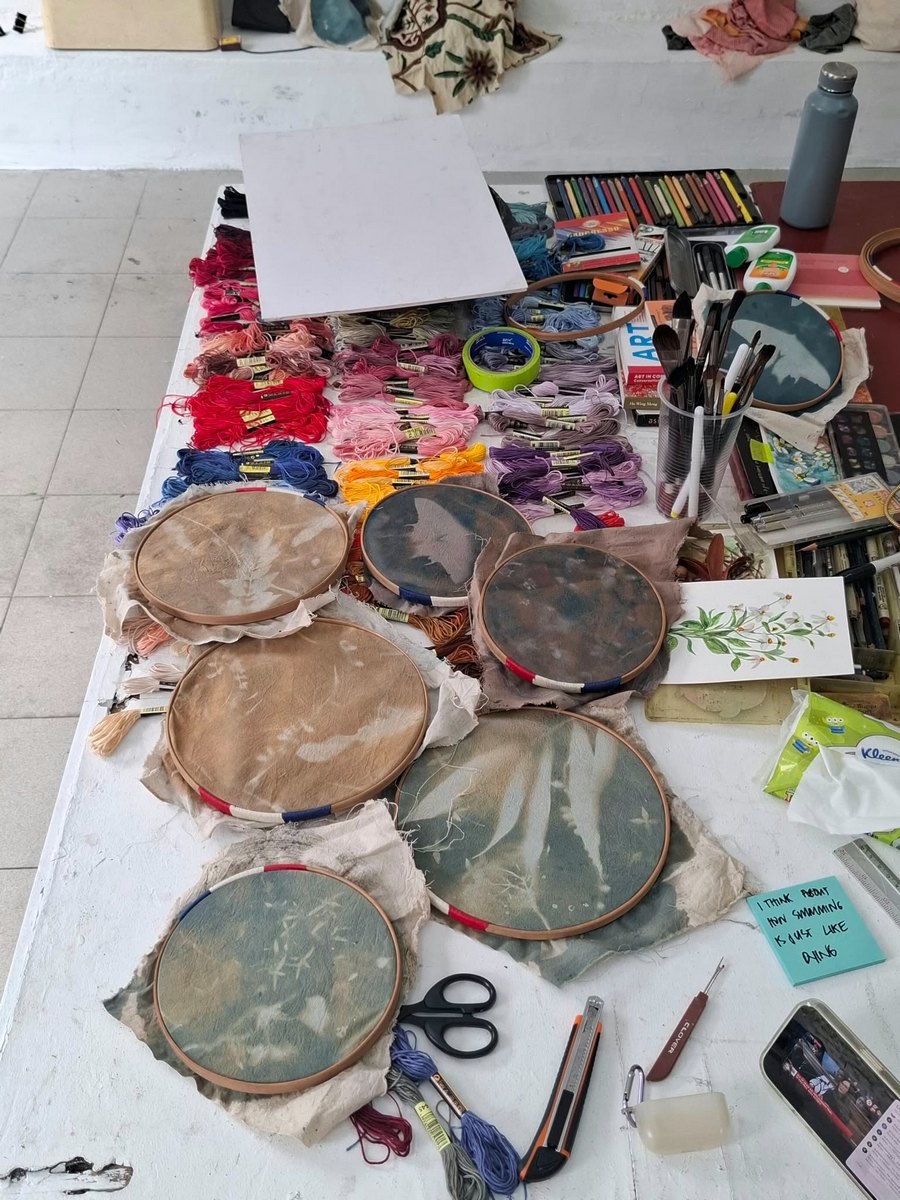
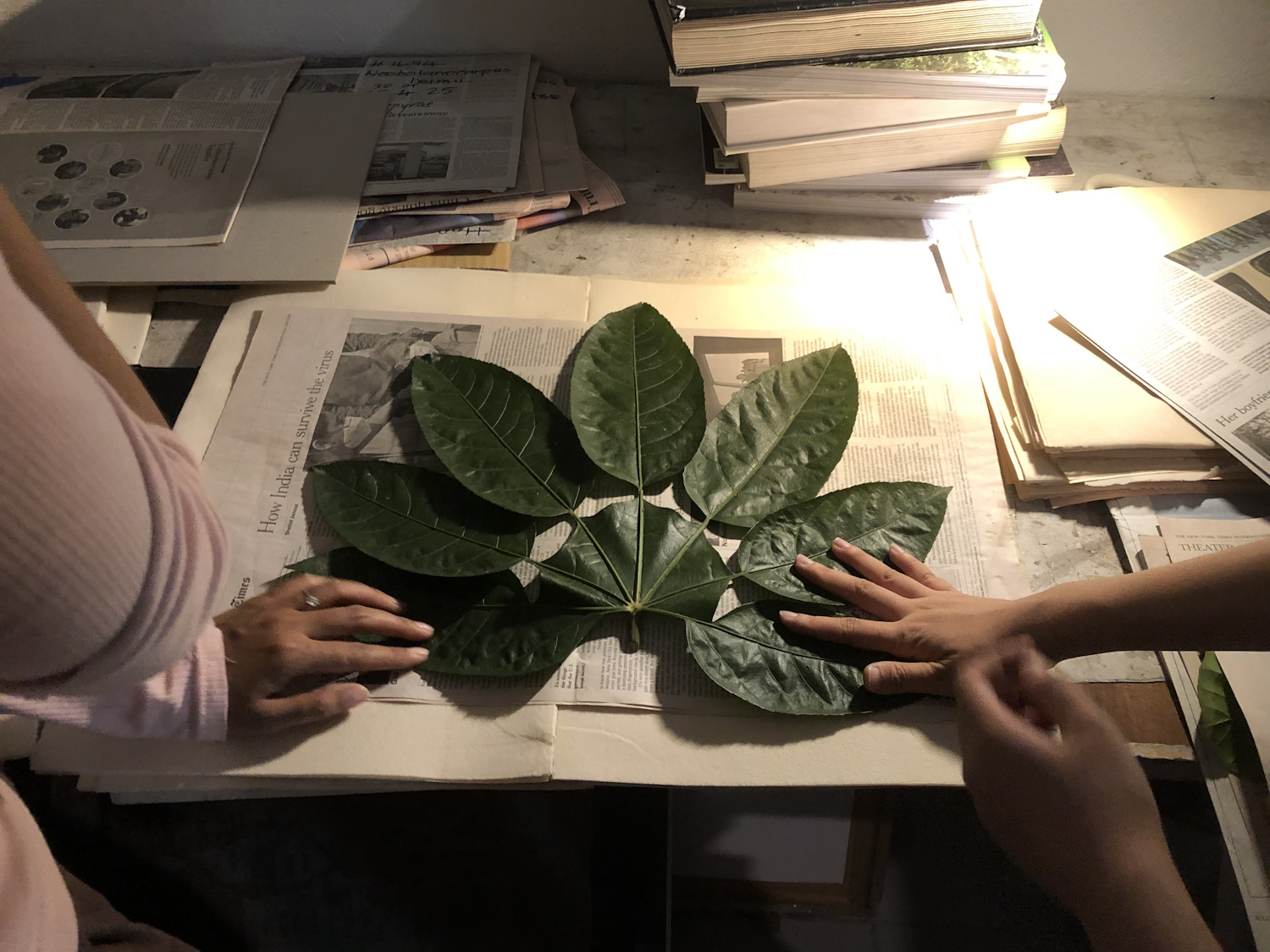
Like a seed constantly in motion, flying through the air, hitching a ride on birds, and waiting to burst open to scatter itself 𓇢𓆸 — I spent the first month of my artist residency gallivanting through the forest and swimming. I expanded my introspection by browsing the library and examining the inventory of pressed leaves, observing the diverse flora turning empty ground into life, identifying themselves as either native or invasive. I traced some leaves, preserved them through the guidance of Rimbun Dahan’s intern Kah Wei, and adopted them as my primary material.

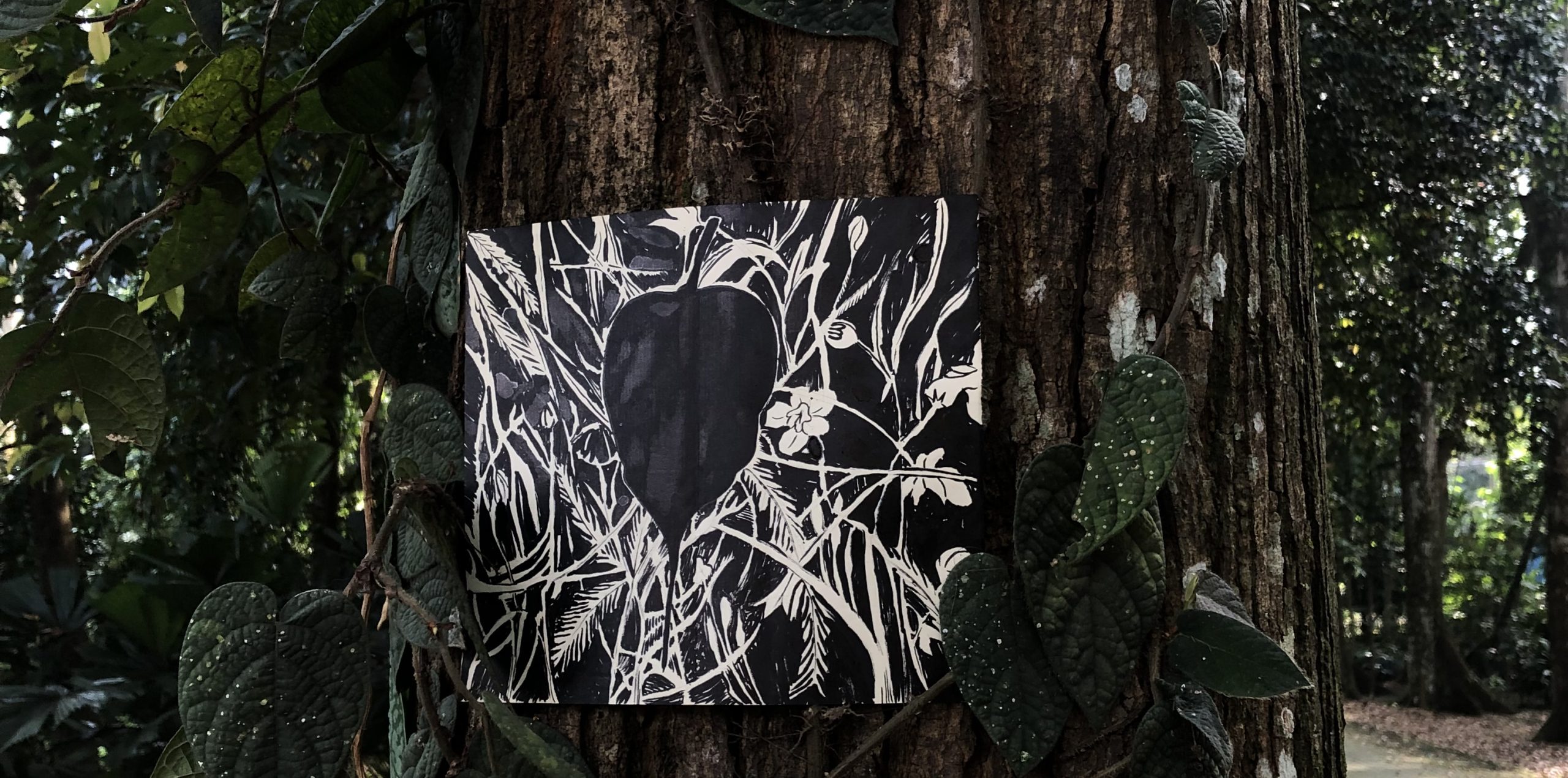
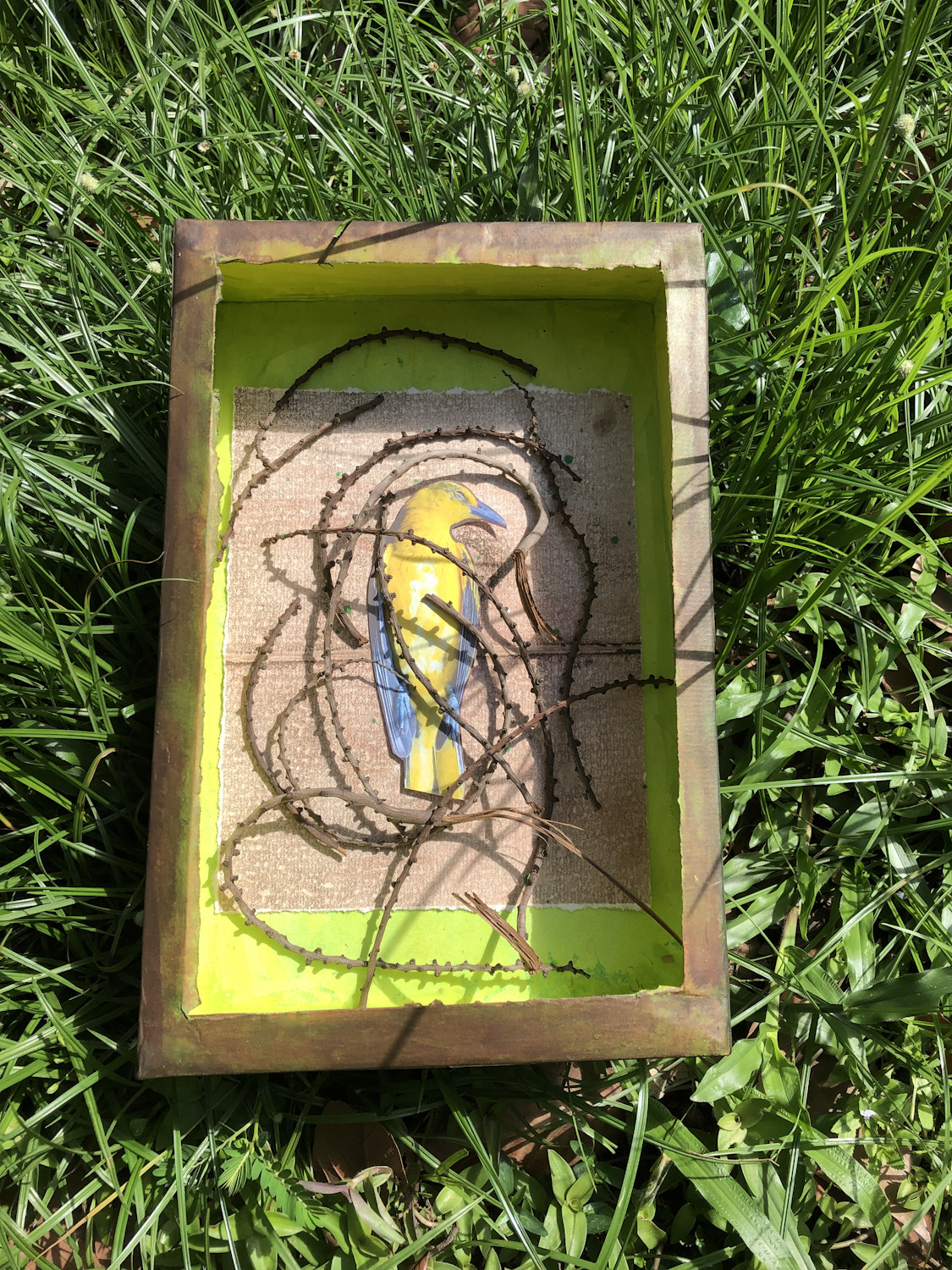
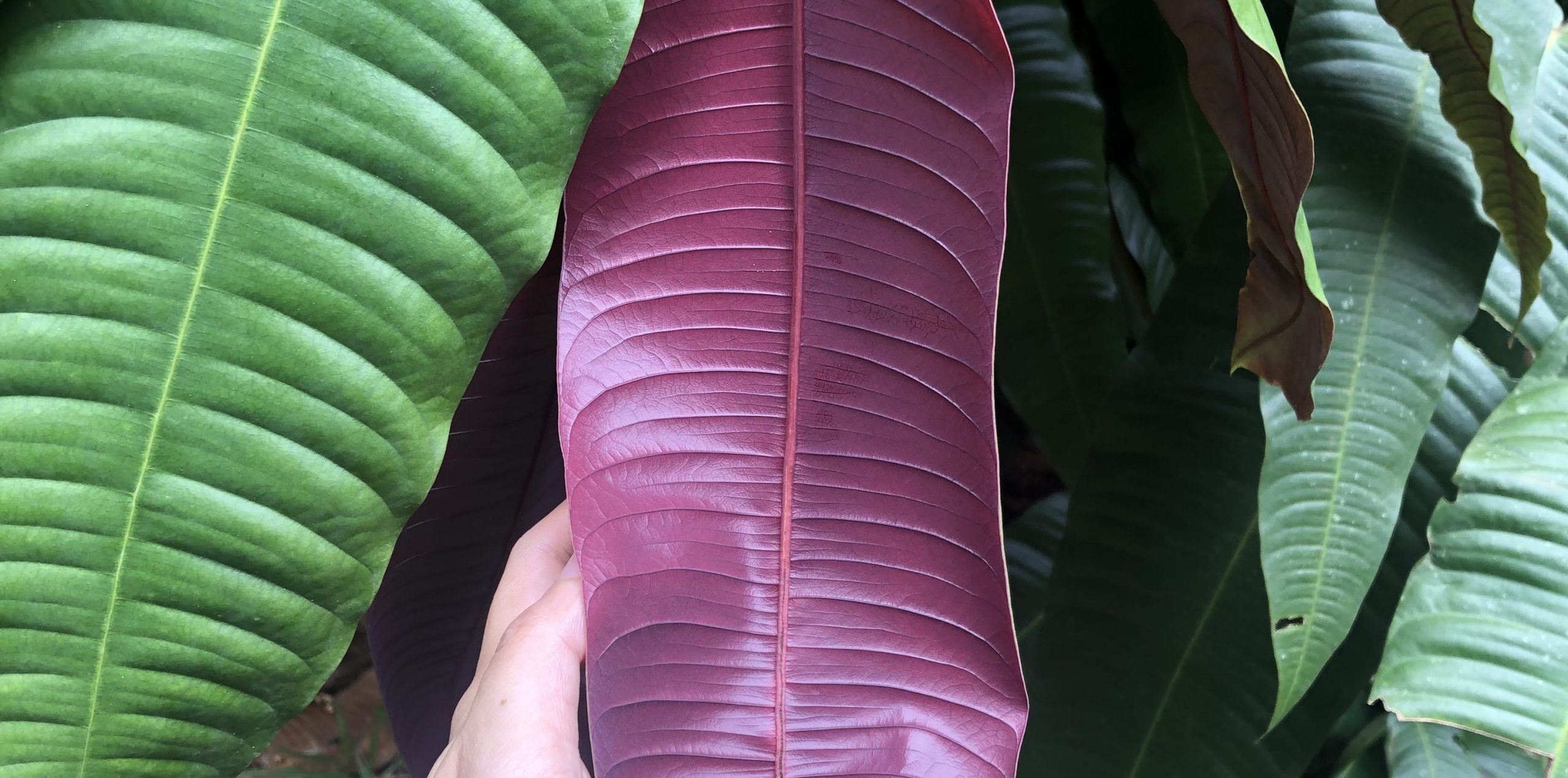
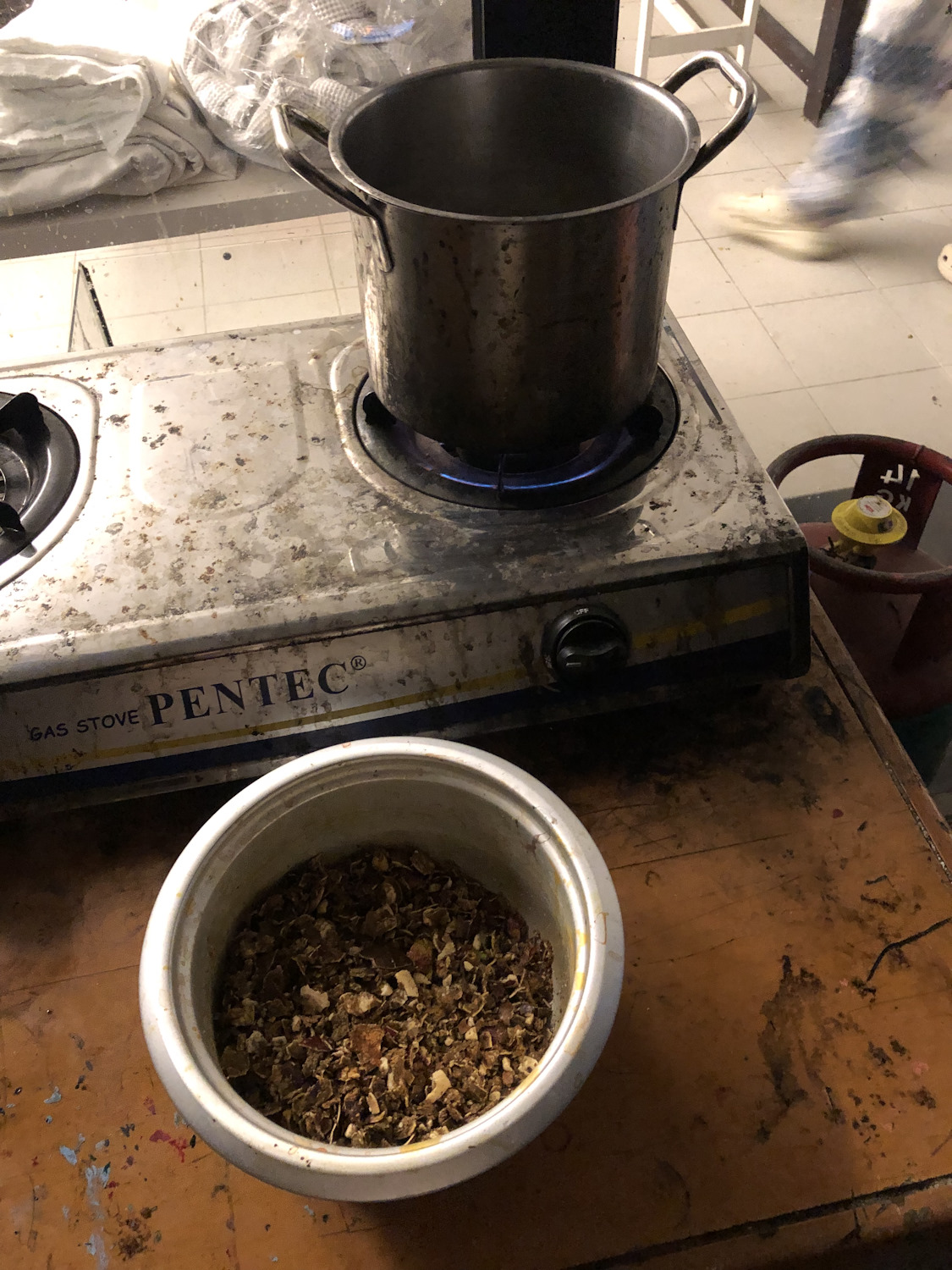
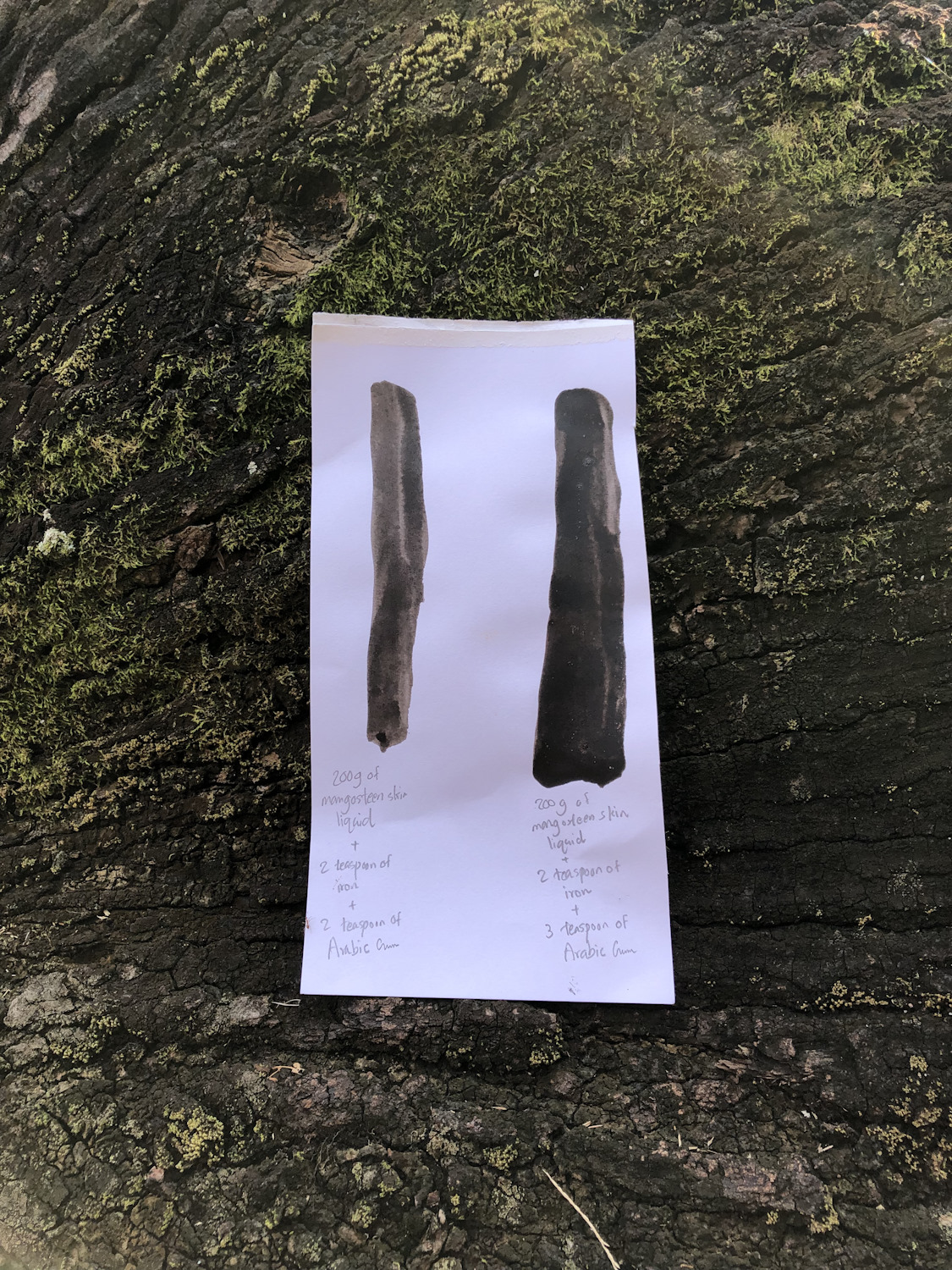
A leaf that fascinated me among the other leaves that I encountered possesses two distinct colors: shades of green on the front and a deep magenta on the back. I used the dual characteristics of this leaf as a visual guide to build my paintings into collages. Through this process, I explore the concepts close to my heart, such as the displacement of urban birds whenever decades-old trees are cut down to gentrify the land. In the second month of my residency, I collaborated with Haya Ibrahim of Waste to Weft to create my own ink using bamboo charcoal and mangosteen combined with store-bought ink, translating these environmental friction points into illustrations. 

At the open day, I plan to present all these bundles of thoughts into installation pieces, with the hope of creating an interactive experience using the handmade ink.

Renz Baluyot

Renz Baluyot

About the Artist

Renz Baluyot (b. 1989, Saudi Arabia) focuses his art practice on the relevance of the past to the present, specifically in socio-political narratives situated within present-day urban realities. His work centers on urban decay (rust, tarpaulins, and objects) and artifacts, alongside traditional still life and landscapes. From these elements, he questions the temporality of urban destruction and investigates how these marks of the past have influenced the present under oppressive political and economic systems.

While primarily a painter, Renz Baluyot has worked on sculpture, textiles, and installations aiming to redefine relations with communities and collective memory. Inspired by craft practices and traditions from local artisans, he explores his identity within postcolonial societal structures. He weaves archives with oral histories in order to amplify marginalized perspectives. Baluyot discovers ways in which alternative knowledge manifests through his practice.

Baluyot received his BFA from the University of the Philippines, Diliman and completed artist residencies at the Virginia Center for the Creative Arts (VA, US), Elizabeth Murray Artist Residency (NY, US), Orange Project (Bacolod City, PH), Bellas Artes Projects (Bataan, PH), YOD AIR Program (Osaka, JP), and was selected for a fellowship grant at the Vermont Studio Centre (VT, US). In 2019, he was one of the artists presented at the exhibition Living Earth: Contemporary Philippine Art, curated by Luca Beatrice and Patrick Flores in Milan, Italy.

Baluyot received the Juror’s Choice Award of Merit in the 25th Philippine Art Awards (2020) and was one of the finalists in the Ateneo Art Awards – Fernando Zóbel Prizes for Visual Art (2021) for his exhibition, Empire at West Gallery. He lives and works in Manila, Philippines.

www.renzbaluyot.com
www.instagram.com/renz.baluyot

About the Residency

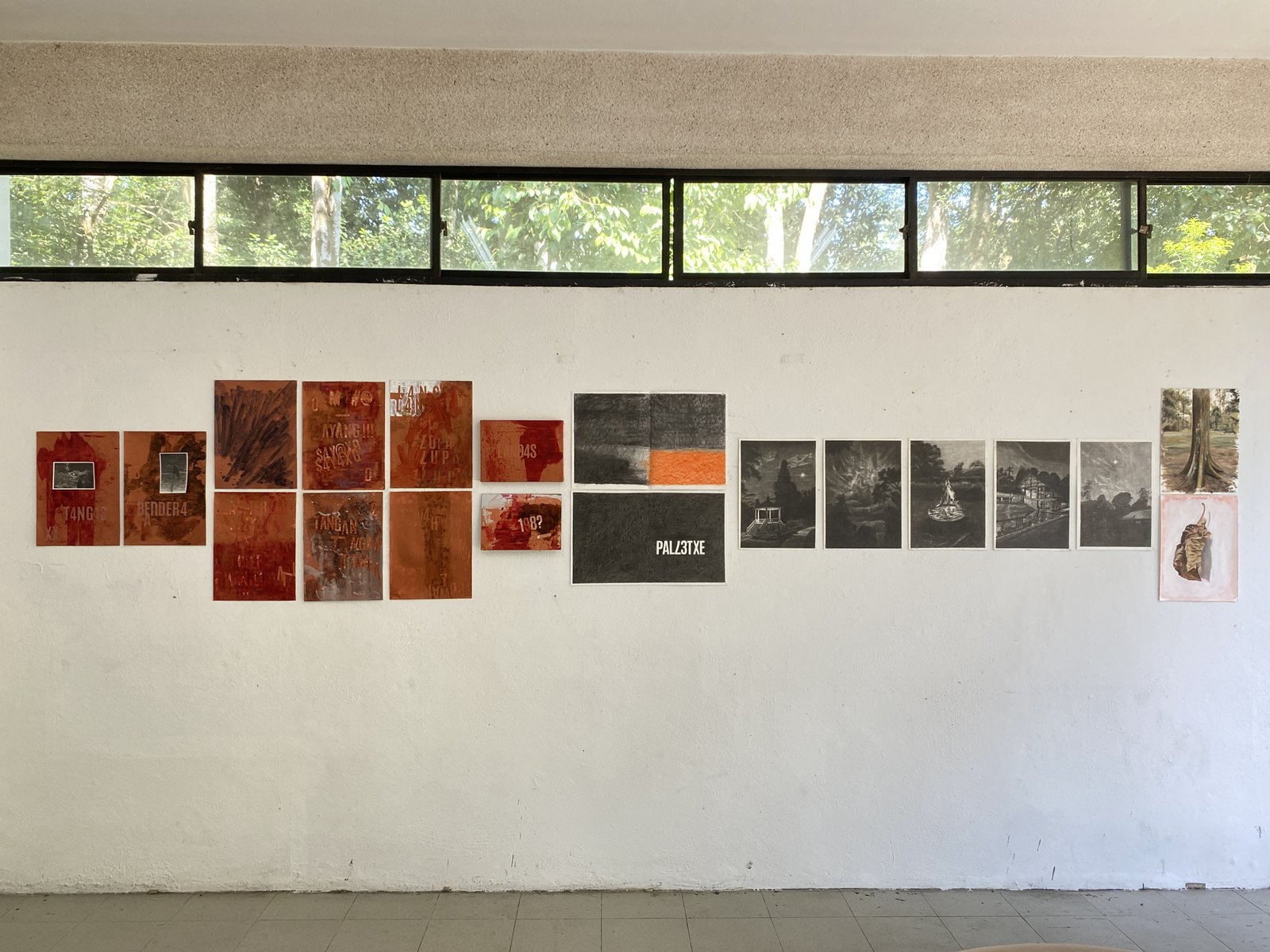
At Rimbun Dahan, I took the chance to play with new materials and techniques that I’ve been curious about and might bring into my practice later on. I started these experiments in May during my first month, carried them over to my residencies in New York (Elizabeth Murray Artist Residency) and Virginia (Virginia Center for the Creative Arts) in June and July, and concluded them back in Malaysia this August for my final month at Rimbun Dahan.

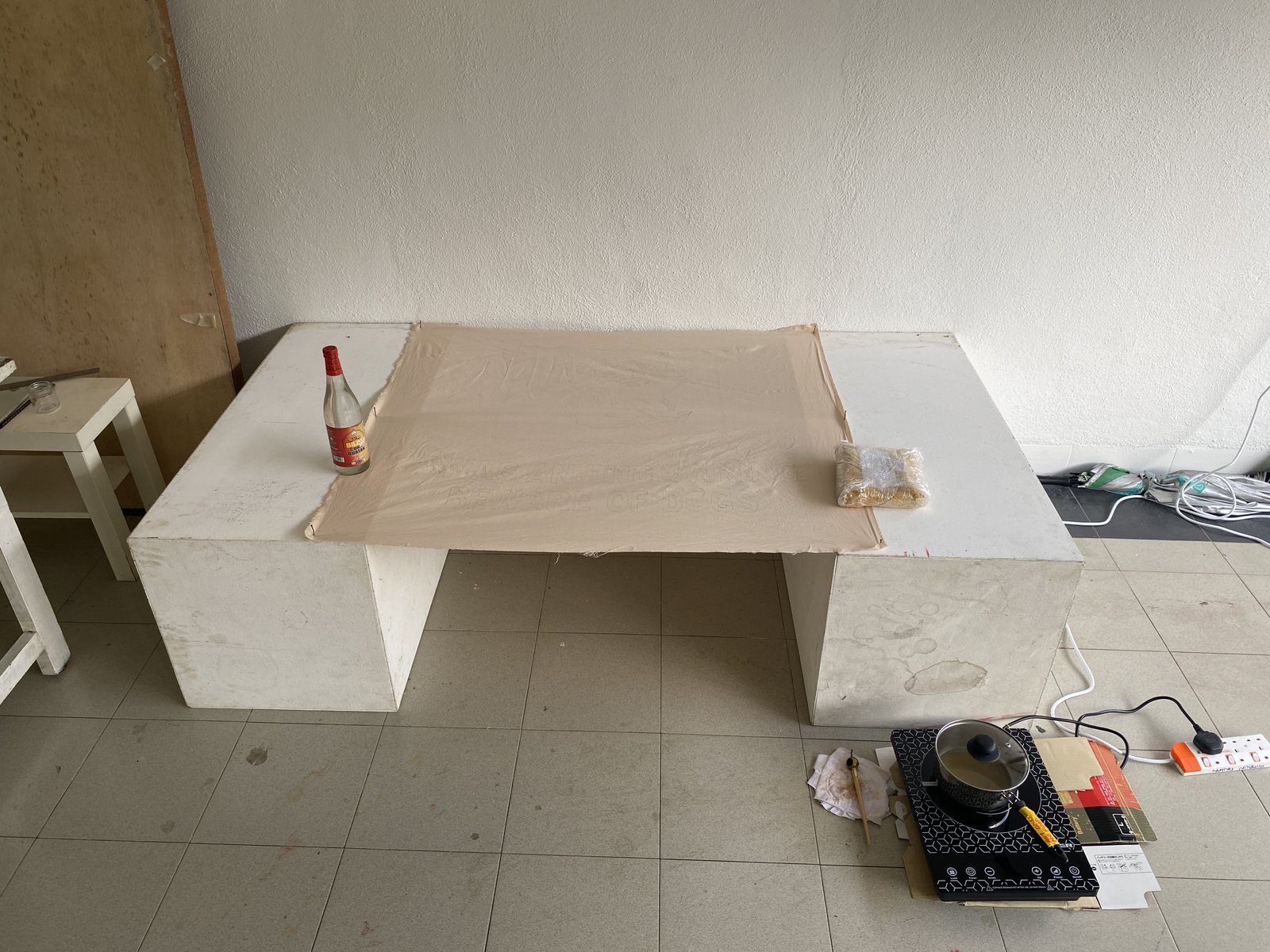
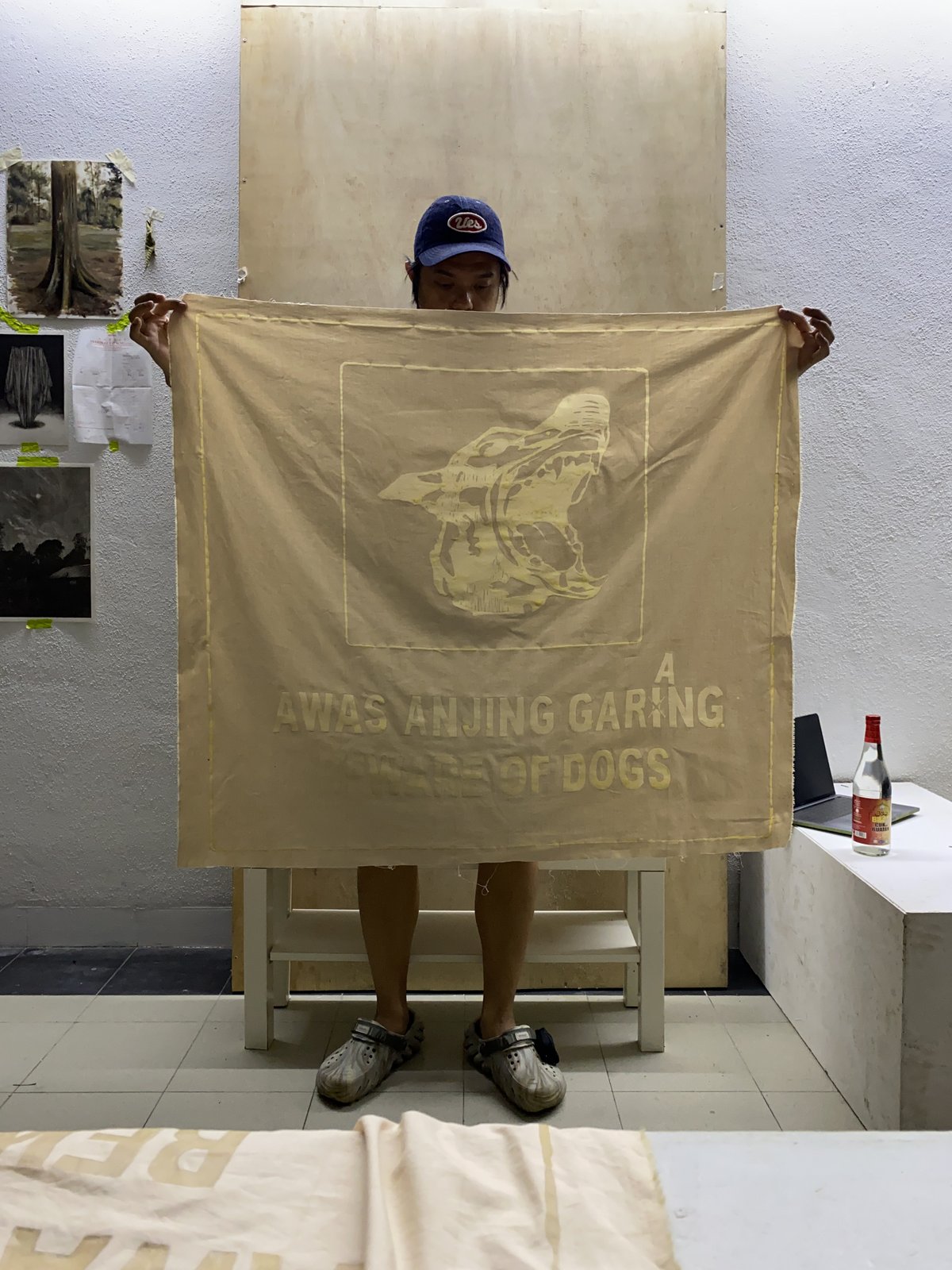
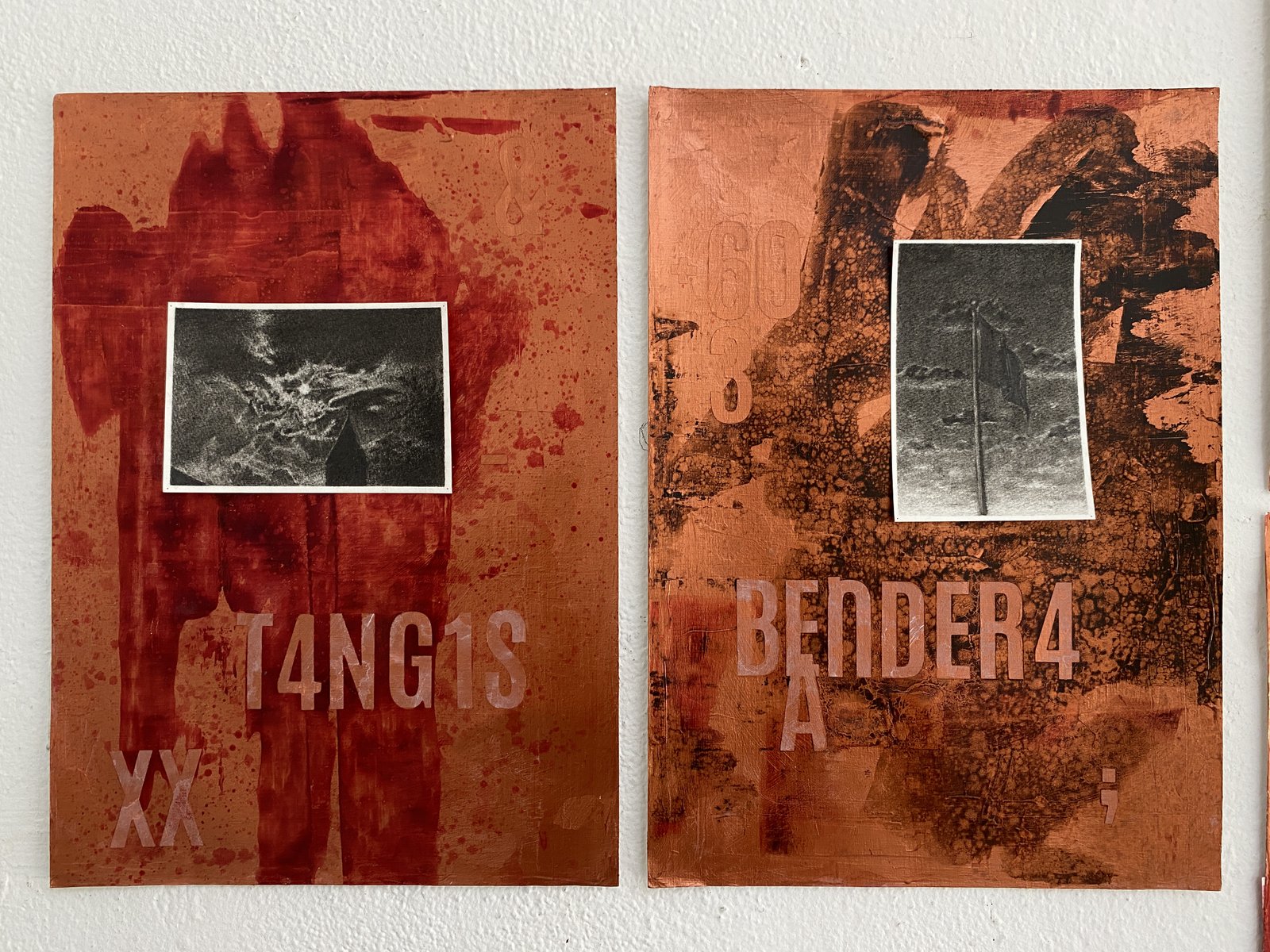
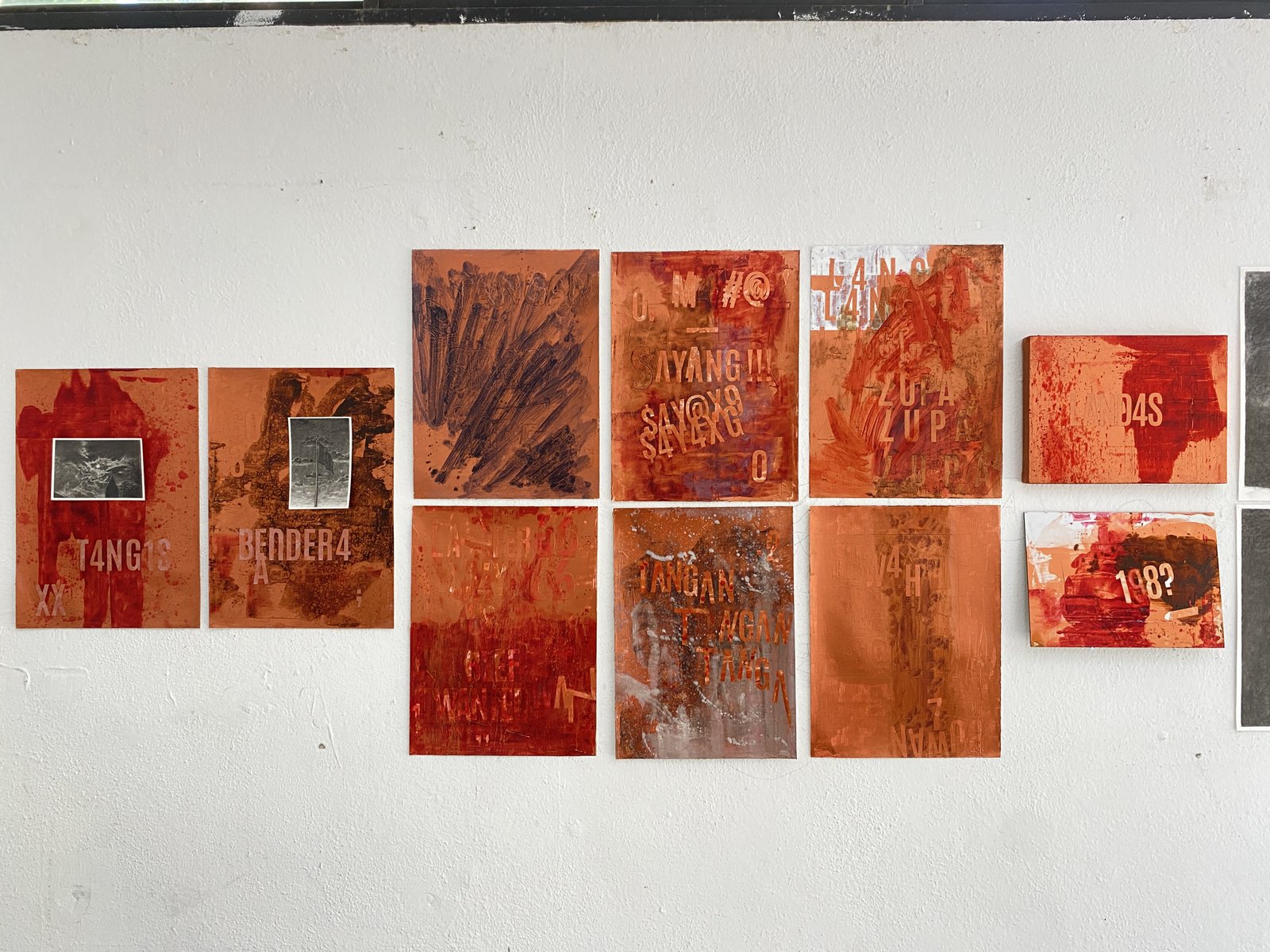
One of the first things I tried was batik, mixing it with my practice of dyeing fabrics with rust, to learn to utilize and control the medium better. I was especially interested in how wax works as a “resist” material, so I began using it to highlight words shared between Malay, Indonesian, and Filipino that, in their own way, have resisted Western colonial influence and still shape how our languages connect today.

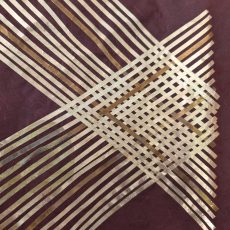
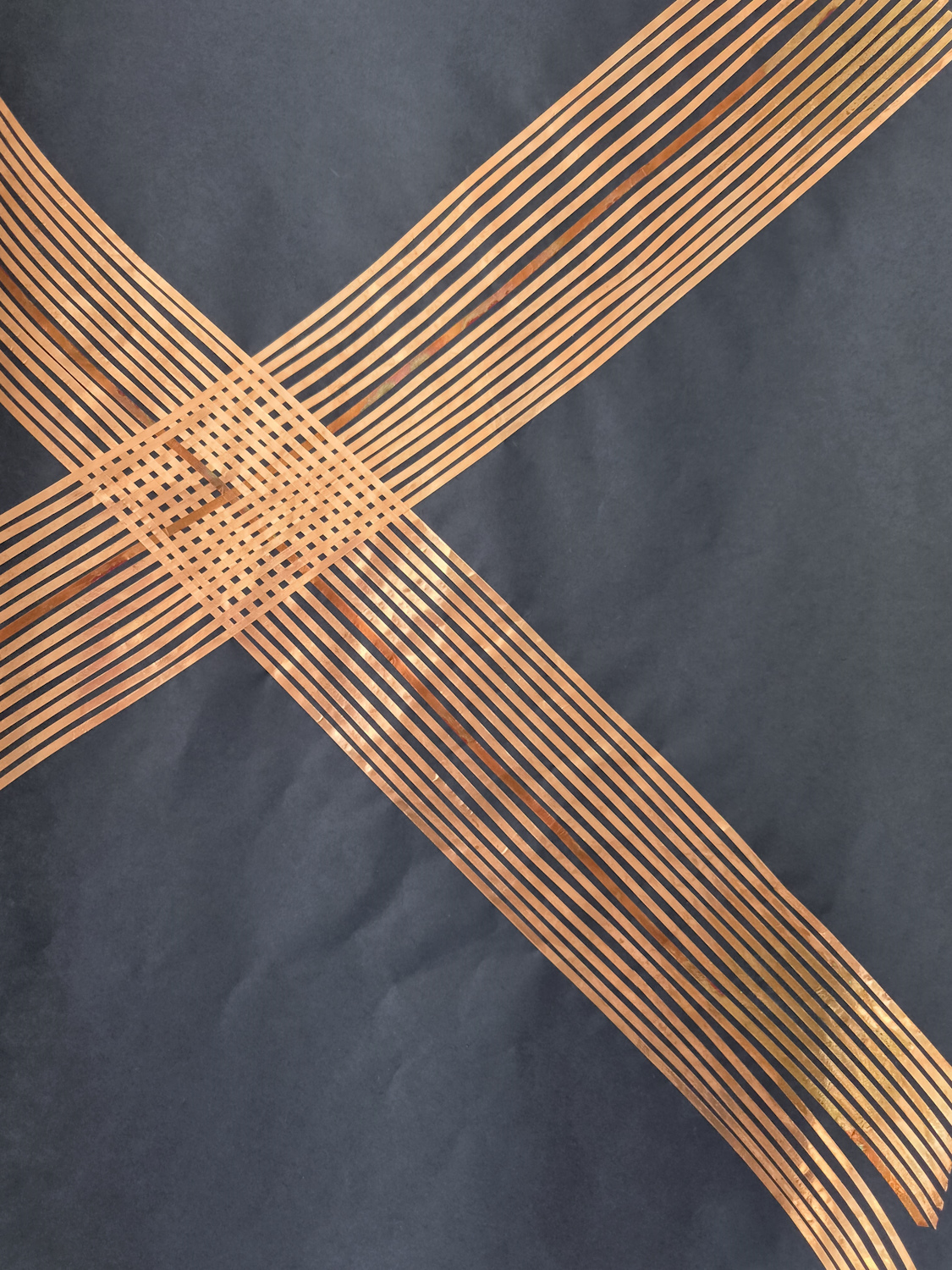
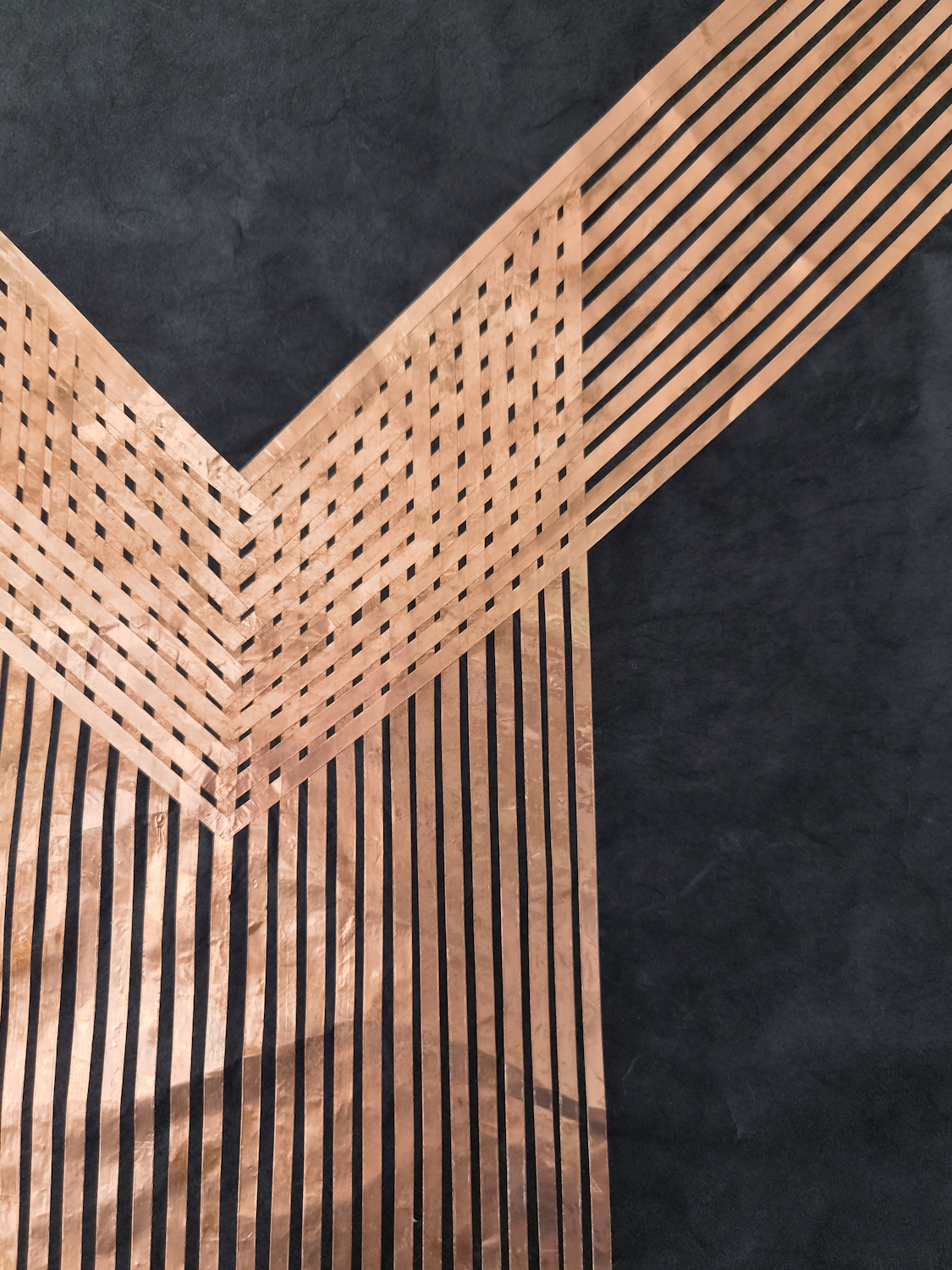
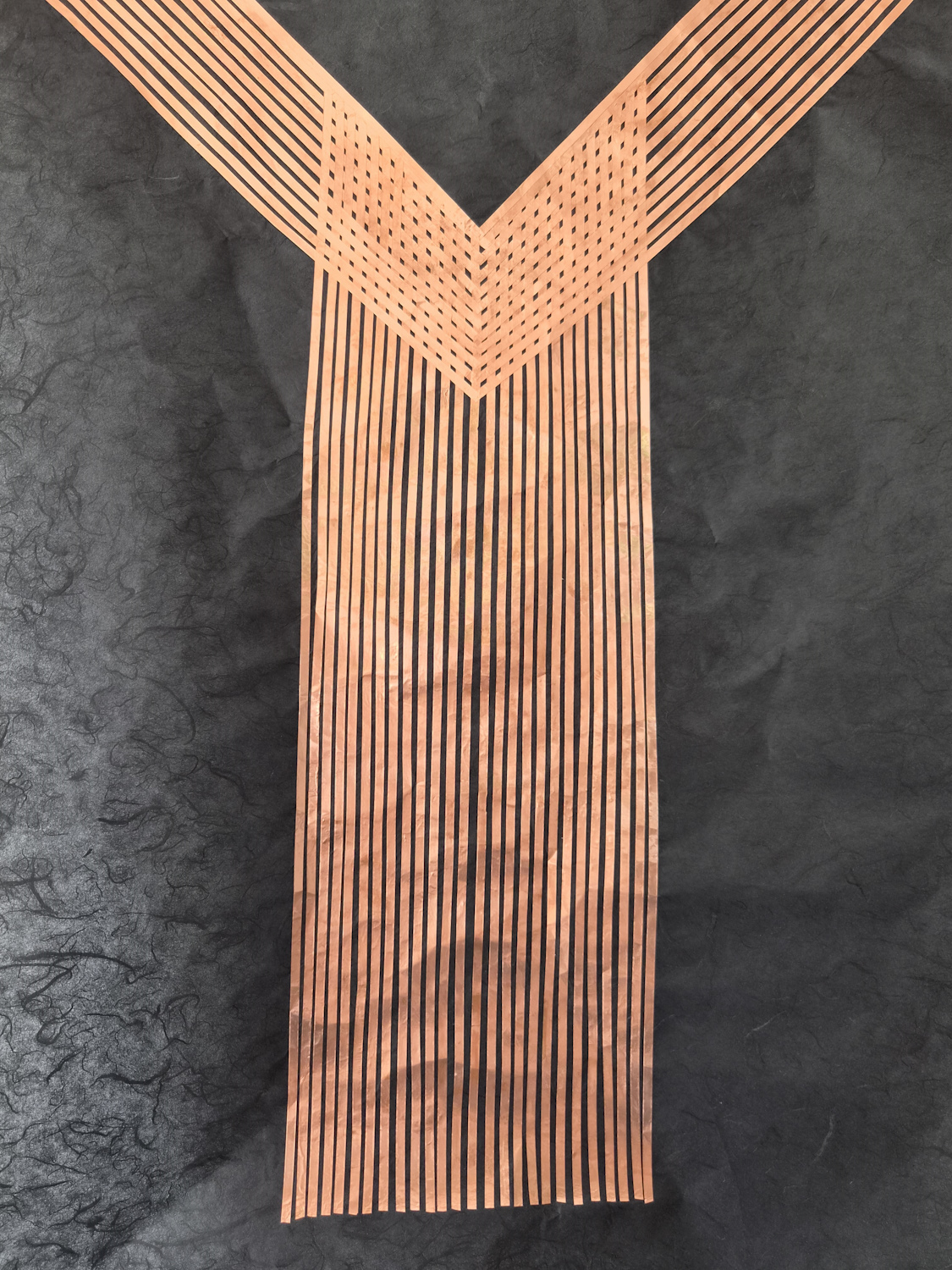
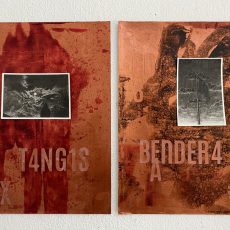
I also revisited an idea that I have wanted to pursue for a while: working with copper and aluminum as grounds for painting and mixed media, which connects back to my interest in urban decay and industrial materials. As an alternative to using actual metals, I painted copper tones on paper instead, using letter decals as a resist material between paint layers, still inspired by the batik process.

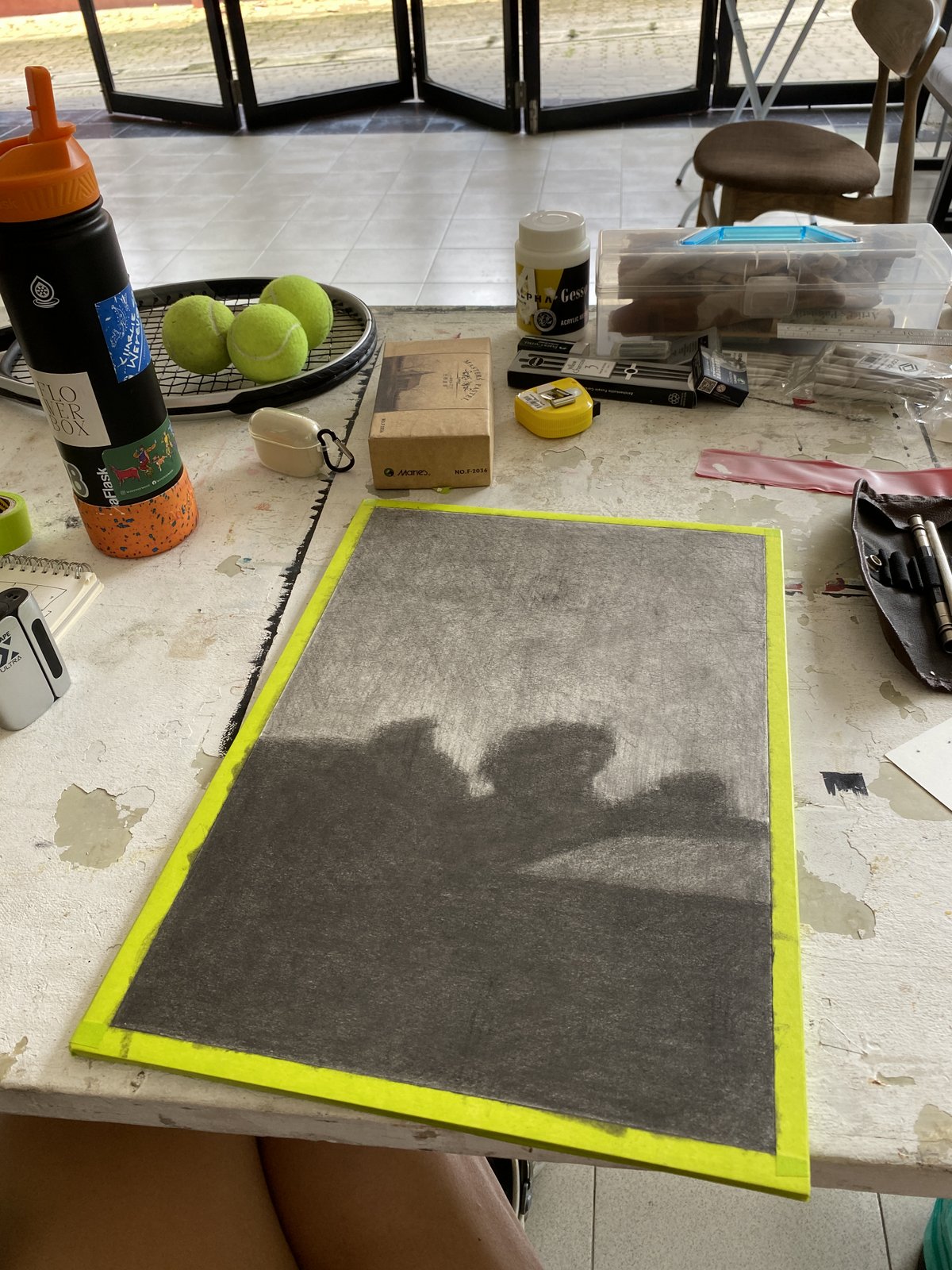
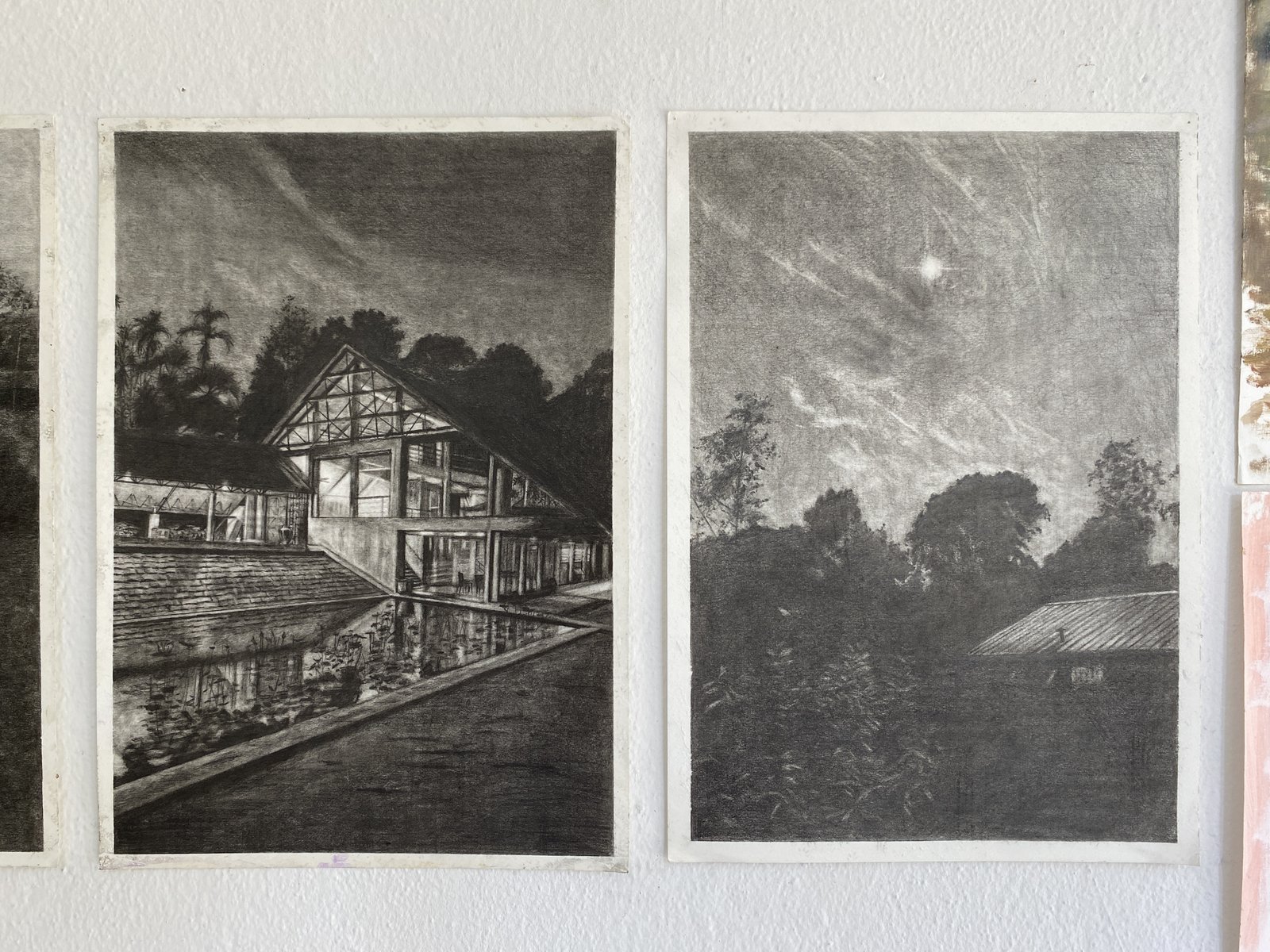
Throughout all this, I made graphite drawings of the places I stayed in Malaysia and the US as a way to document my residency journey.

Travel supported by MCAD Benilde Travel Bursary (2025).

MixerJ

MixerJ

MixerJ, a visual artist of Karen descent from Myanmar, has spent two months in residence at Rimbun Dahan, creating character drawings in his signature intricate abstract style, and transforming them into portable cutouts.

About the Artist

Saw Nyan Linn Htet (b.1999), known professionally as MixerJ, is a visual artist of Karen descent from Myanmar. Originally based in Yangon until 2024, MixerJ has since continued his art practice by spending most of his time in Bangkok, Thailand, and traveling between neighboring countries.

MixerJ studied graphic design for commercial purposes, and since 2017, he has been actively participating in the Myanmar art scene as a visual artist.

His practice centers on intricate ink drawings composed of vibrant colors and dense patterns, featuring repeating lines, dots, and geometric shapes, which are influenced by his interest in design aesthetics. At first, his works may appear purely abstract—but gradually, his abstract forms turn into character-based compositions, where he uses those characters to tell stories.

Through visual storytelling, his work engages with human nature and behavior, confronting moral dilemmas and acts of rebellion tied to social and political realities that shape both his identity and his environment. MixerJ’s practice transforms personal realities into myth-like figures that exist between chaos and clarity, memory and imagination, belief and breakdown.

He has previously exhibited his work in both Yangon, Myanmar, and Bangkok, Thailand. In 2024, MixerJ took part in the “Artistic Response to Burma to Myanmar” exhibition organized by the British Council Yangon in collaboration with the British Museum. His artwork, “The Weaving Dream: A Peaceful Home with Beautiful Bedrooms,” was acquired by the British Museum for its permanent collection.

https://www.instagram.com/mixerj_

About the Residency

I spent two months at Rimbun Dahan, divided into two periods: the first in February and the second in August. Before coming here, I had been living mostly in Bangkok, Thailand, since leaving Myanmar in early 2024. However, after my first residency period, circumstances prevented me from returning to Bangkok.

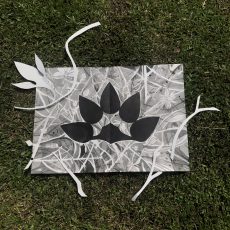
That was the main reason I began creating small character drawings in various postures during my first month stay, using my usual intricate and abstract drawing style. These pieces were designed to be portable, something I could easily carry with me wherever I travelled. In the months between my two stays, I produced quite a number of these drawings.

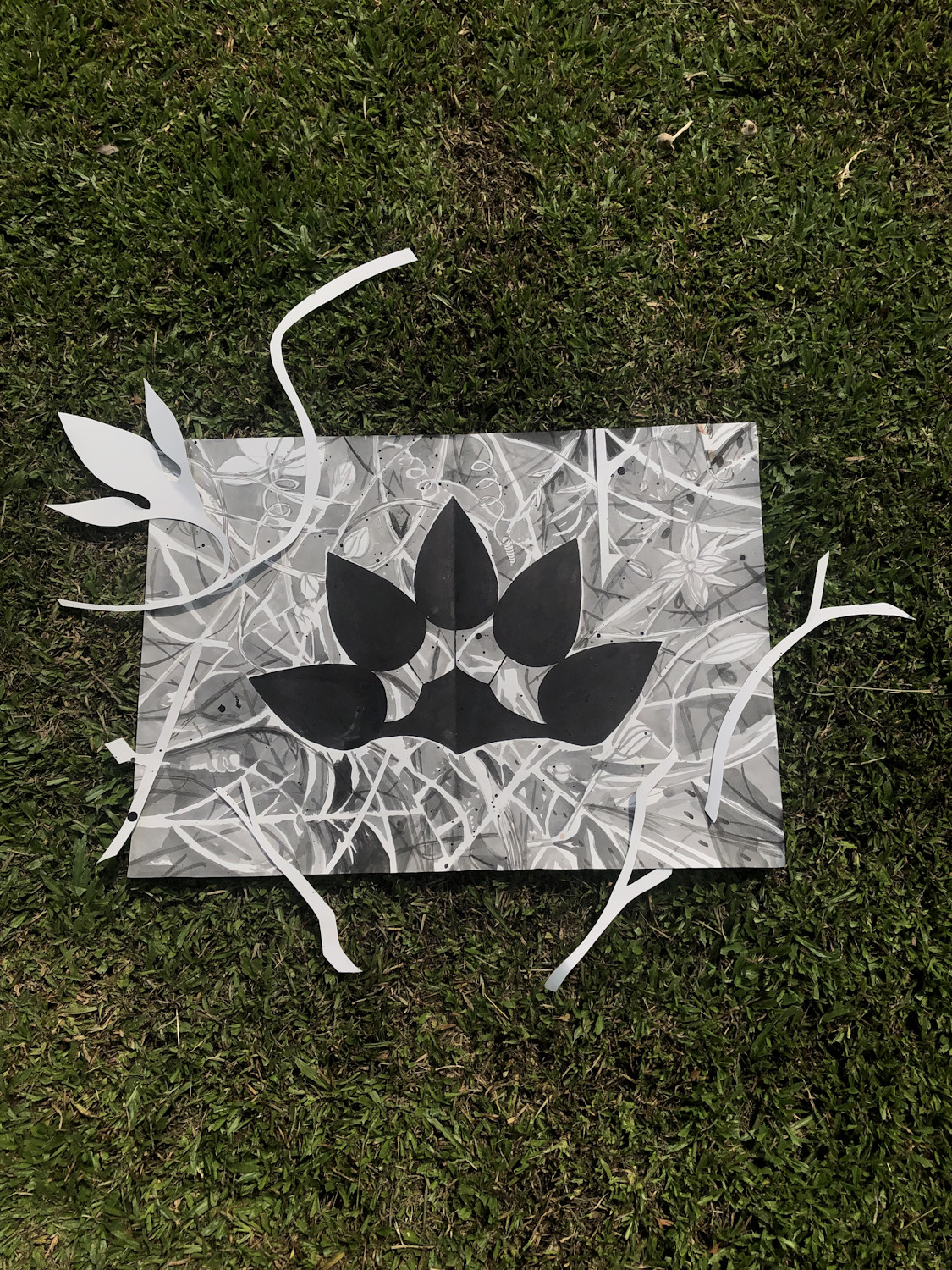
When I returned to Rimbun Dahan in August, I began transforming the drawings into paper cutouts, inspired by memories of my childhood, when I would cut characters from comic journals and invent my own storylines. This project grew into a way of telling the stories I have experienced, heard, and learned from different environments, moving between countries, meeting strangers, and sharing time with people from many walks of life. I am focusing during this time to create a visual work that can be assembled easily, removed, and carried around safely.

Through this work, I aim to reflect the fragility of human nature, the hopefulness of life, and the resilience of dreams. Stories have been with us since birth as lullabies, as bedtime stories. And as we grow older, they evolve into countless forms of narrative as novels, ideologies, and news, which shape and reshape the way we see the world. I believe we are both carriers of stories, and stories themselves, carried through the world by the lives we live.

Rommel Joson

Rommel Joson

Filipino visual artist Rommel Joson is in residence at Rimbun Dahan for two months, from June to August 2025.

About the Artist

Rommel Joson is a painter and book illustrator currently teaching drawing, illustration, and print production design at the University of the Philippines College of Fine Arts where he is also taking his post-graduate studies. His various roles deal with the intersection and interaction of text and image. His art practice draws inspiration and raw material from both historical and contemporary visual communication artifacts such as reading primers, children’s books, encyclopedias, illuminated manuscripts, information graphics, comics, and even print ads.

Part of his process involves creating unreadable glyphs and ciphers that mimic the texture and structure of recognizable books and texts. These invented scripts, combined with imagery from historical and contemporary books, result in hybrid forms—artist’s books and paintings that explore the tension between the familiar and the obscure. By taking the commercial processes of book design and illustration and subverting their function, the resulting objects and artifacts attempt to engage viewers in active decoding.

http://rommeljoson.com
https://www.instagram.com/rommeljoson/

About the Residency

“Dahan-Dahan” (Filipino adverb: slowly/carefully)

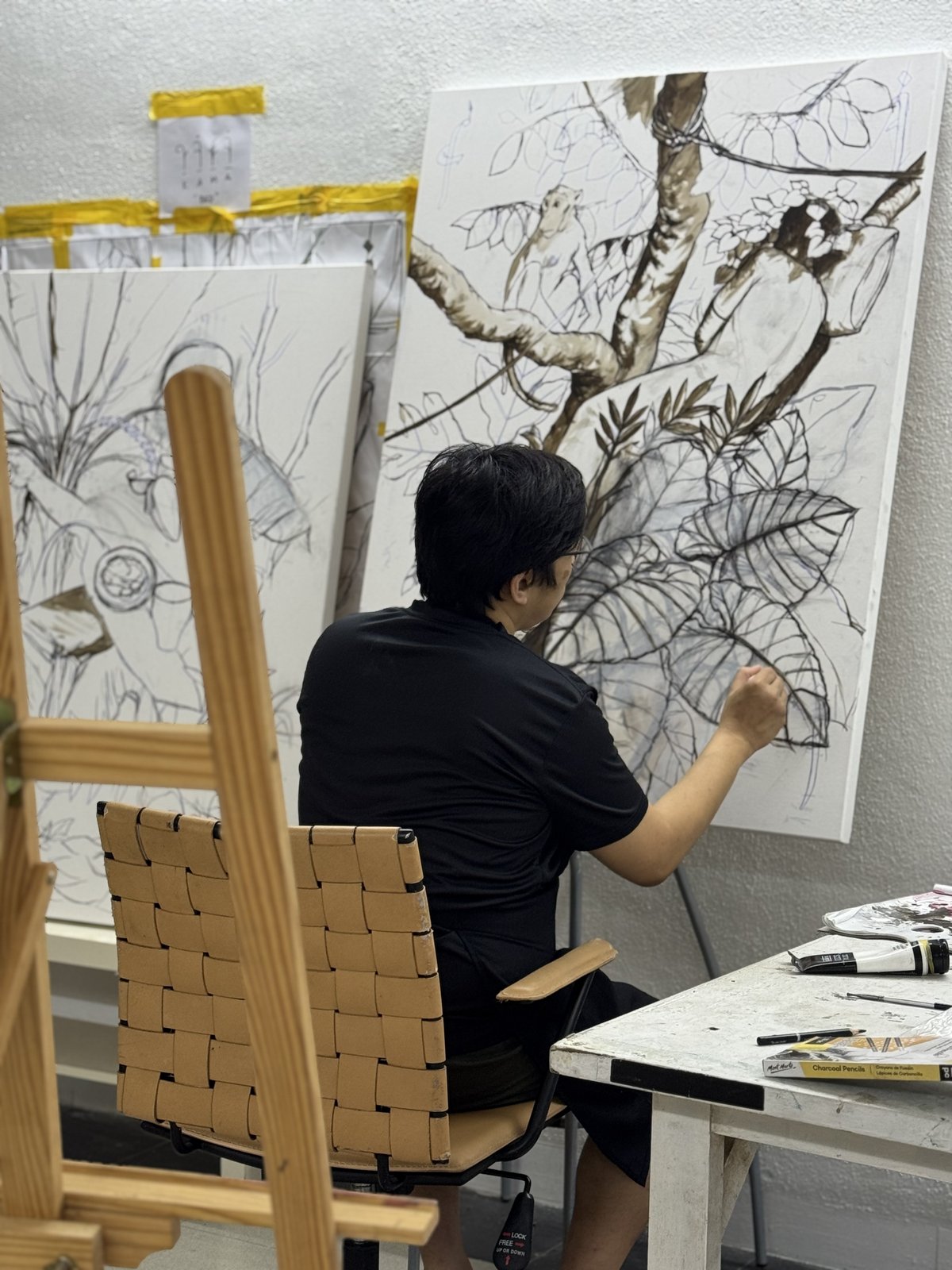
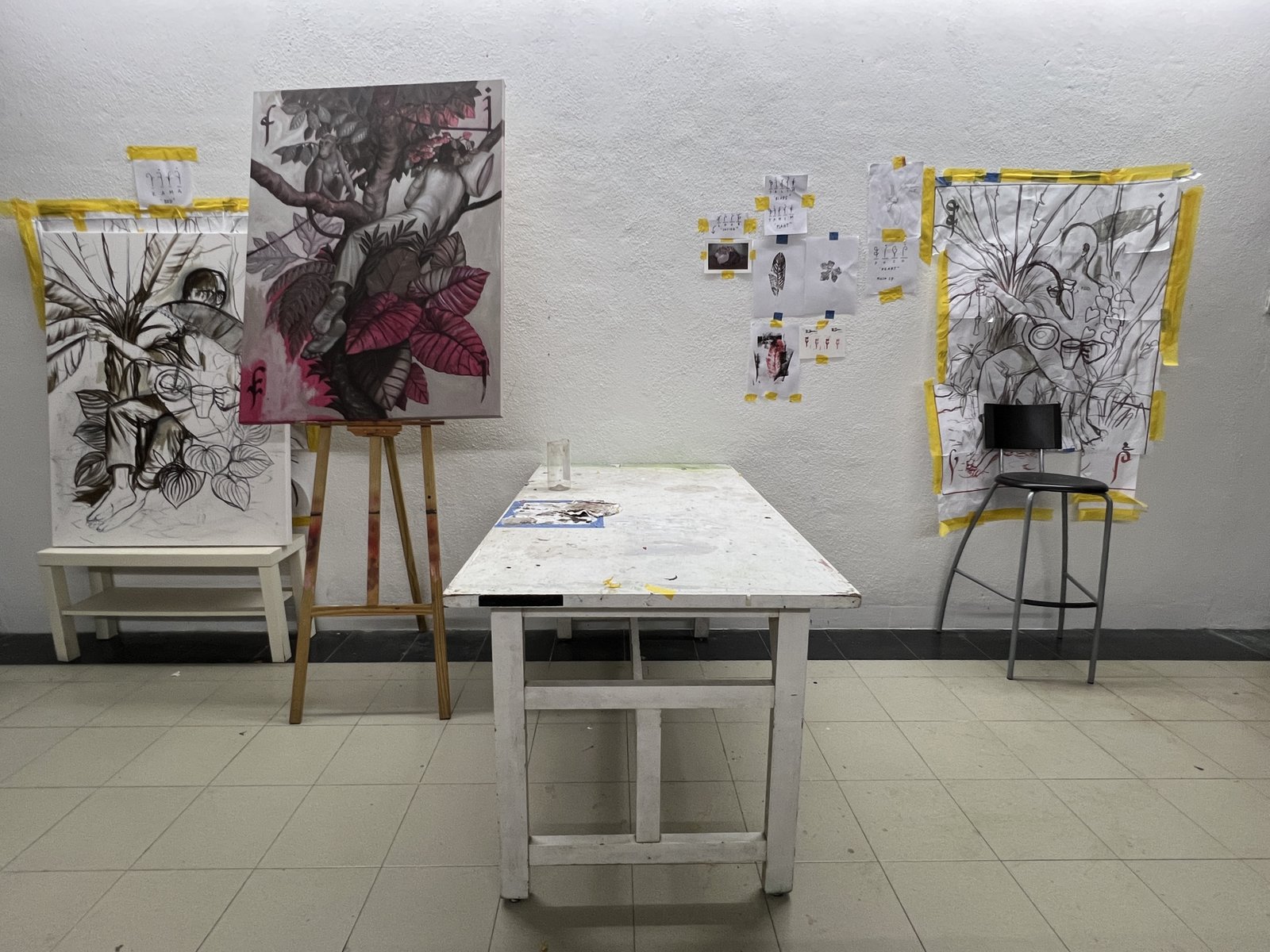
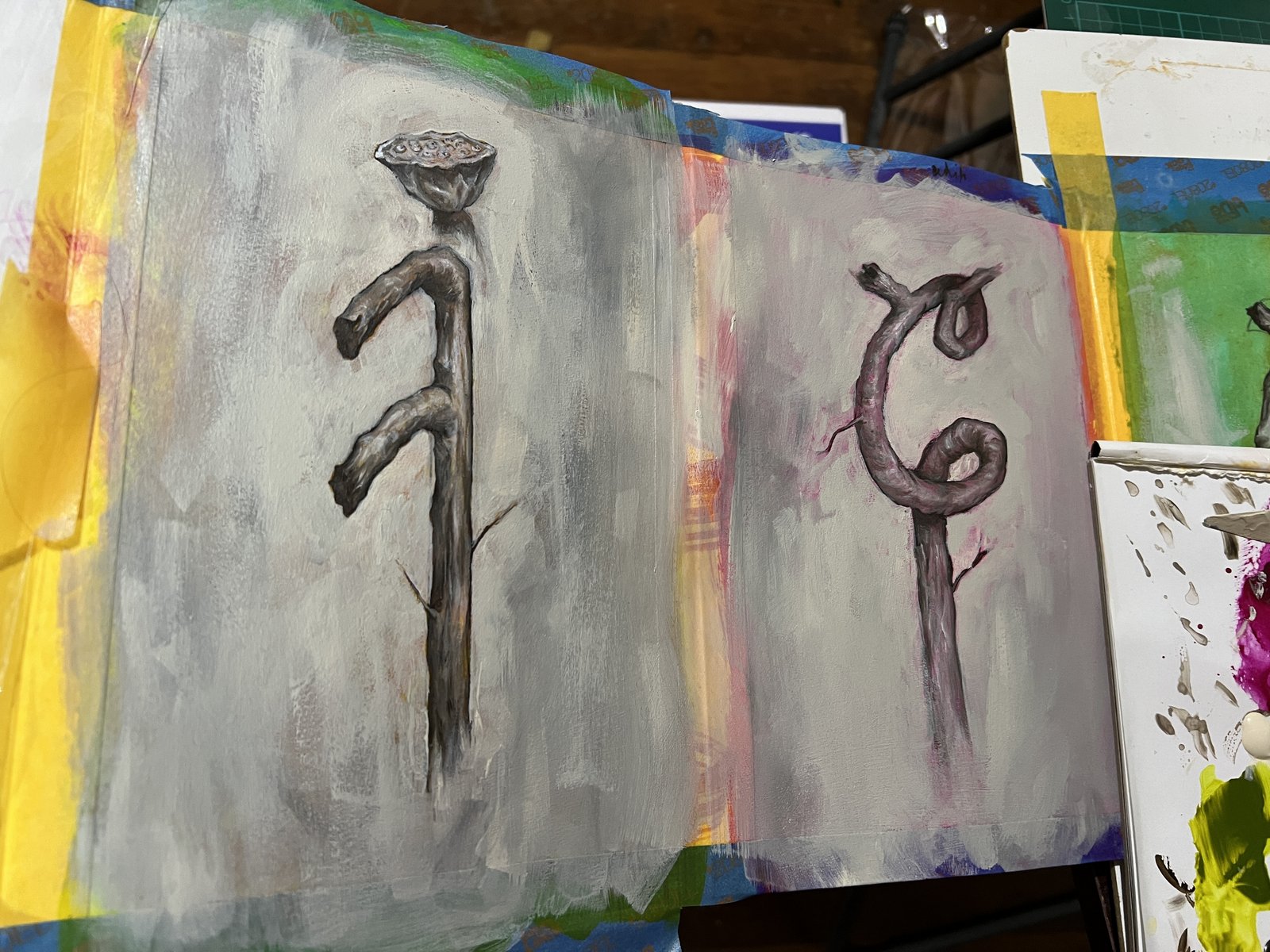
My work at Rimbun Dahan—composed of paintings, glyphs, and an accordion format artist book—is my exploration of slow, branching, and mythic time through the interplay of text and image. This is the longest I’ve stayed in another country, and the largest block of uninterrupted time to work on my art, away from the demands of other tasks and duties back home. I chose to approach the experience by viewing it through the lens of language and time. During my stay, I noticed many word similarities between Malay and Filipino, no doubt because of the common Austronesian roots. I also observed how my experience of time shifted, not only because of my physical distance from other work concerns, but also the time differences in the rising and setting sun. Suddenly, as I immersed myself in the surrounding flora of the arboretum and deliberately walked into my new surroundings, I experienced a slowing down of subjective time. In Filipino, moving slowly and carefully translates as “dahan-dahan” and serendipitously also translates to “branches” in Malay. Thus, I’ve come to think of my work at Rimbun Dahan under this conceptual umbrella—a meditation on language, place, and time. 

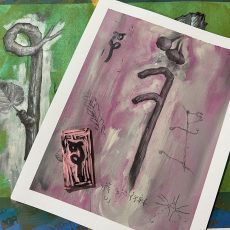
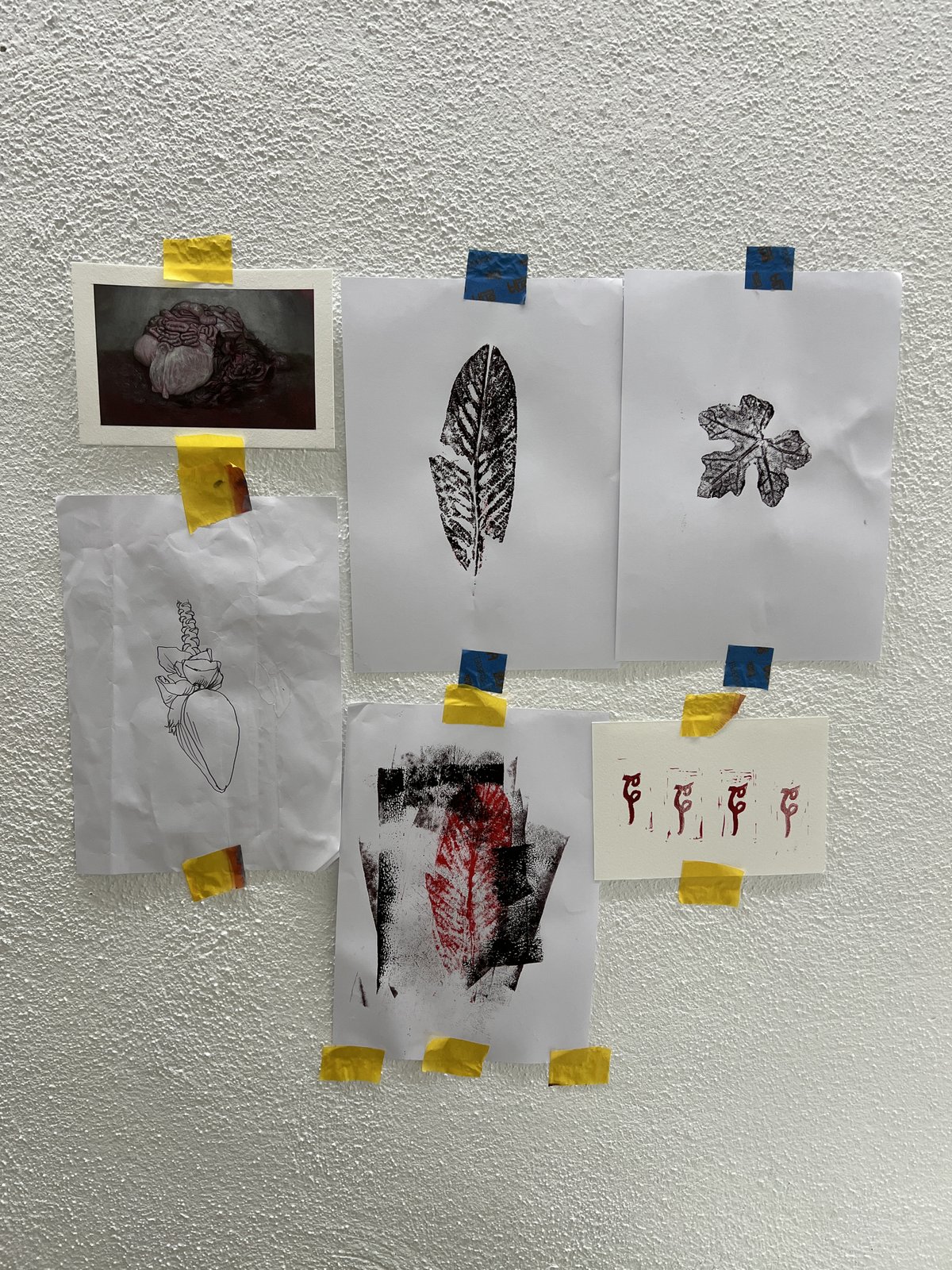
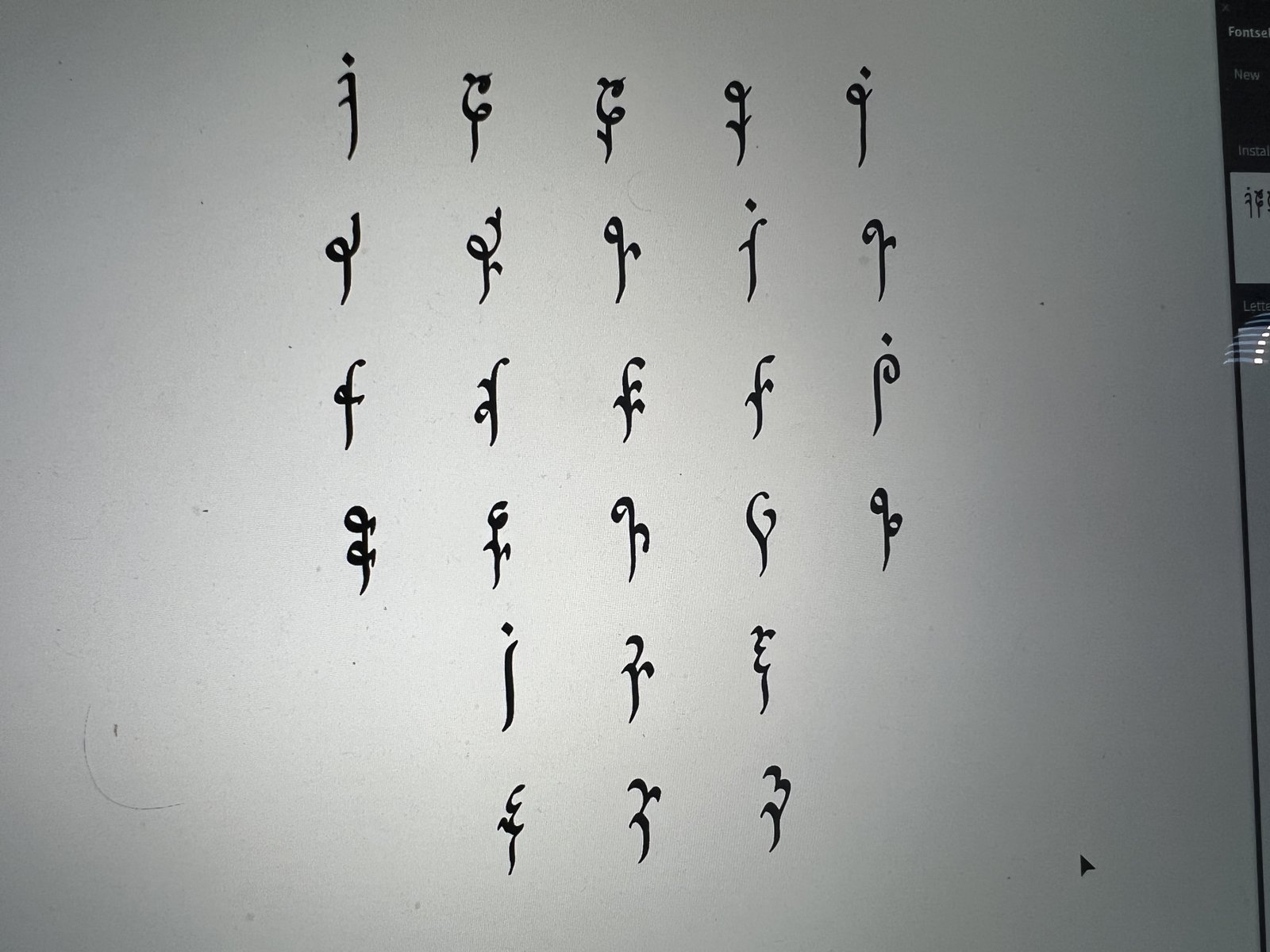
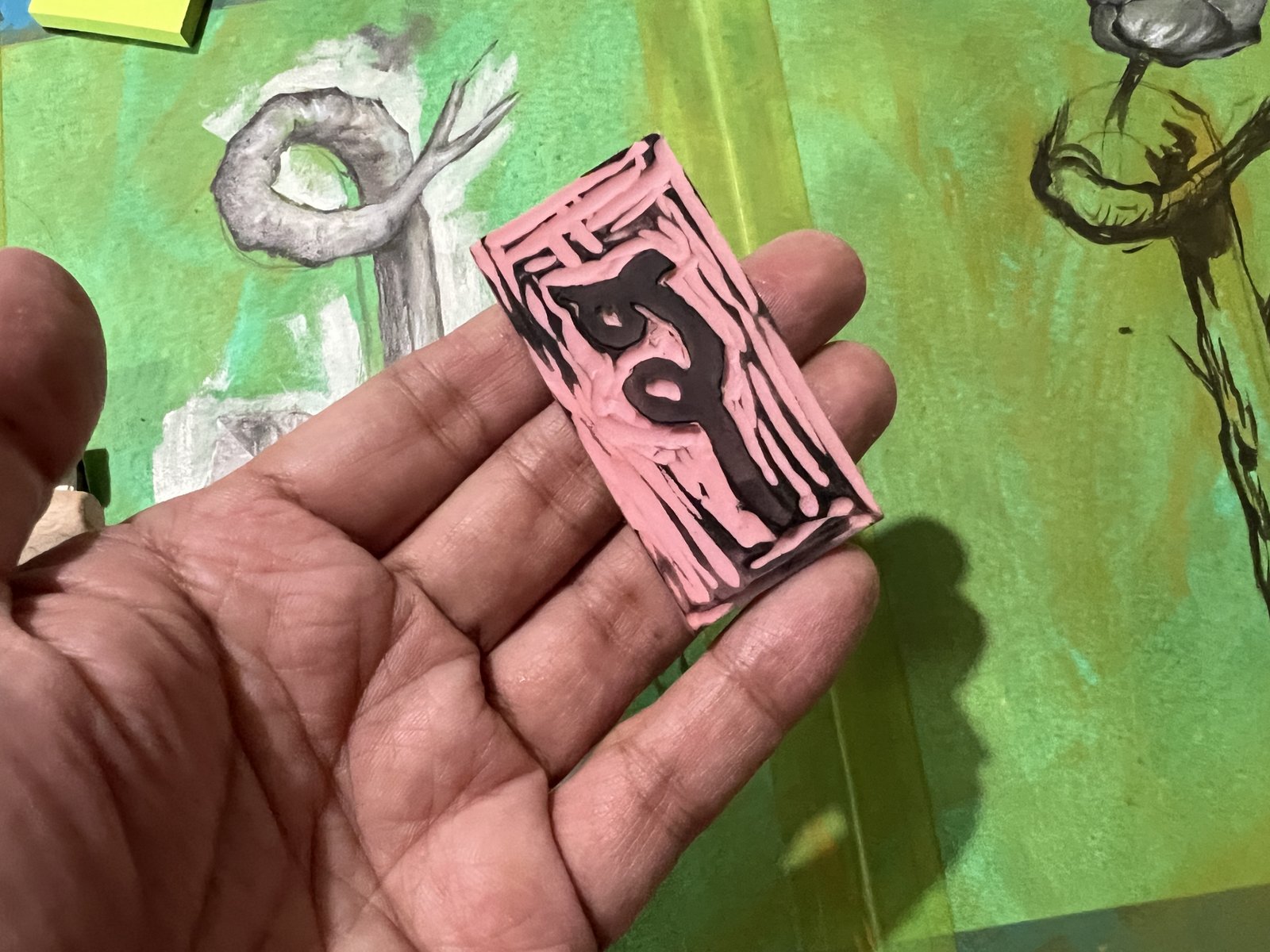
During the conceptualization stage, I was initially inspired by the Voynich Manuscript—a medieval codex written in an unreadable script and language and accompanied by plant illustrations. As part of my process, I created a kind of tree alphabet inspired by the arboretum. It has been said that typography is “thought made visible”. And these invented glyphs reveal as much as they conceal, obscuring words while at the same time placing them into forms and shapes that reflect my own subjective experience of the surroundings.

Then I searched for Filipino words and nouns that can evoke double meanings and cultural connotations when paired with images. Words like “kama” (bed), “puso” (heart), and “loob” (literally inside but can also refer to the inner self) have particular resonances during my stay at Rimbun Dahan. These words refer to my experience of bodily rest, Filipino mythical stories about the surrounding flora (such as the banana plant), and the witnessing of the Eid al-Adha sacrifice. I paired these words with surreal images and inscribed the words using the invented alphabet. Through all this, the space of the studio became a place where I attempted to explore my personal experiences of the residency, the mythic connotations of the surrounding flora, and the linguistic similarities between the culture I bring and the space I’ve been transplanted into.

Fauzan Fuad

Fauzan Fuad

Malaysian visual artist Fauzan Fuad undertook a 3-month residency at Rimbun Dahan under the Southeast Asian Arts Residency, from May to July 2025.

About the Artist

Fauzan Fuad (b. 1987, Kuala Lumpur) is a painter and photographer whose work bridges the raw aesthetics of urban culture with the experimental ethos of Abstract Expressionism. He began his artistic journey in 2012 as an assistant to renowned artist Yusof Ismail (Yusof Gajah) at Universiti Malaya, a formative experience that lasted one and a half years. Since then, he has committed himself fully to a path of self-discovery as a full-time artist.

Fauzan’s artistic vocabulary draws heavily from the worlds of punk, vandalism, skateboarding, and raw urban visuals, blending them with influences from the western Abstract Expressionist movement of the 1950s. This synthesis results in works that are bold, unfiltered, and deeply rooted in contemporary subcultures. He debuted his first solo exhibition at China House, Penang, in 2018. This was followed by his solo photography exhibition, “44”, at Zon Tiga, Kuala Lumpur, in 2020. Most recently, in 2024, he held his third solo show, titled “POV”, at Rissim Contemporary, Kuala Lumpur. Additionally, he has been invited to participate in his debut artist residency program, “SUNYI,” organized by Balai Seni Negara Langkawi, towards the end of the year. Fauzan’s work has also been featured in numerous group exhibitions both locally and internationally. Highlights include the Gwangju International Art Fair (by Hin Bus Depot Gallery), Gwangju, South Korea (2020); SH/FT: Contemporary Visual Art organized by CENDANA at White Box MAPKL@ Publika, Kuala Lumpur (2019); “Cannot Be Bo(a)rded” at Espace Commines, Paris, France (2017); Malaysian Art Expo 2015 (represented by A2 Gallery); “CONSTANT PRESENT” organized by FINDARS at FINDARS Art Space, Kuala Lumpur (2021); and the Malaysia Emerging Artist Award 2022 Exhibition by CIMB Foundation & HOM Art Trans Gallery, Kuala Lumpur.

As of 2025, Fauzan continues to live and work in Kuala Lumpur, pushing the boundaries of his creative practice while remaining deeply engaged with the cultural landscapes that inspire him.

Artist Statement

When I arrived on May 1st, 2025, I came with a clear intention: to experiment within my artistic practice—whether through photography, painting, or idea-based work drawn from the experiences of this residency. I wasn’t sure how the site would influence me or what emotions it might stir, but I arrived with an open mind.

One of the first idea-based works that emerged was a performance piece. Something about this place demanded that the work take that form—it had to be performance, and it had to be documented. This piece also became part of my ongoing experimentation with mark-making. It will be my first foray into performance as a medium, and I will be collaborating with an artist I met during my previous residency.

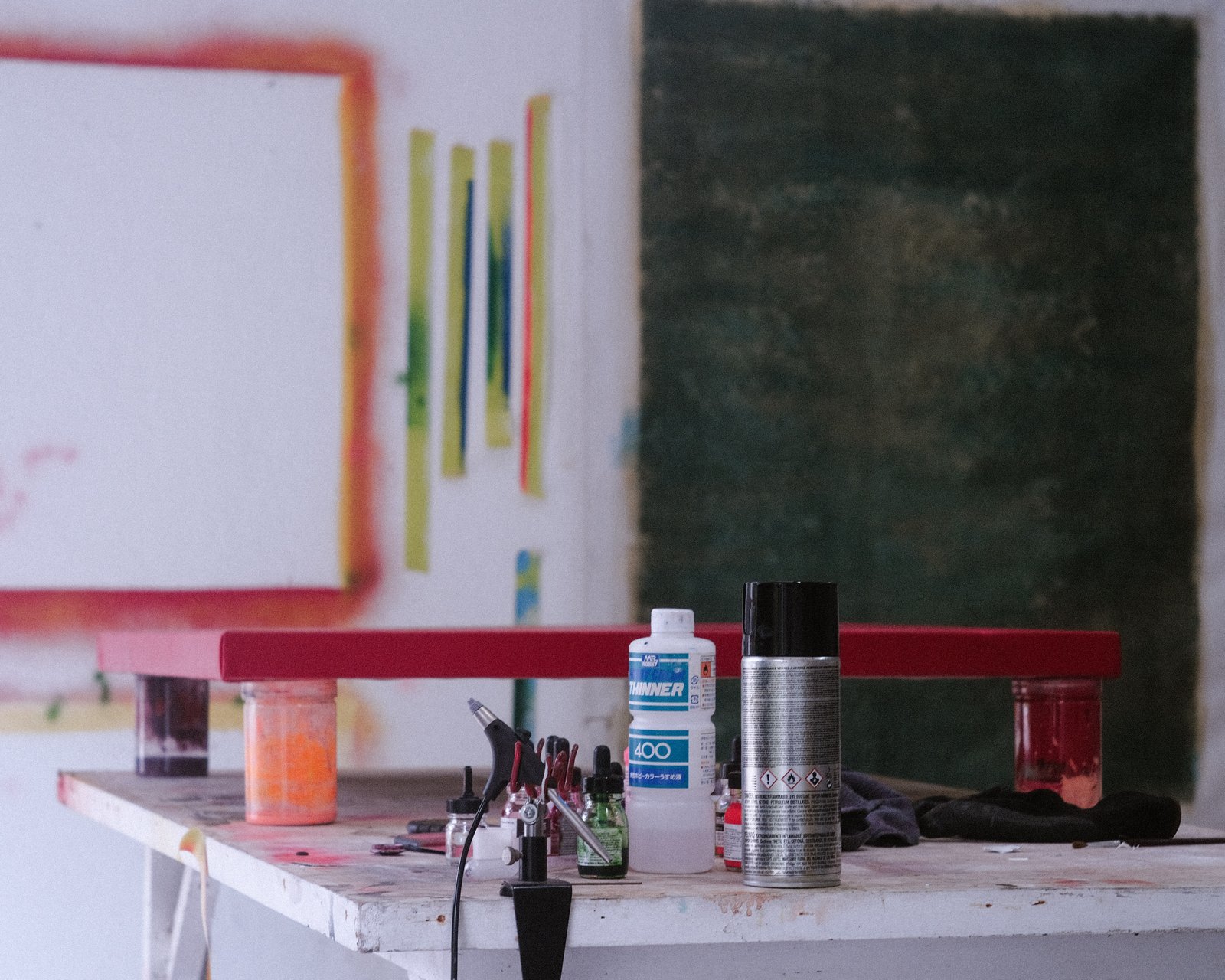
Another early development was a photographic installation, inspired by one of the first images I captured with my phone on the day I arrived, as well as the studio space provided for experimentation. That initial visual response became a point of reflection, helping me to reconsider and refine my own visual language and perspective.

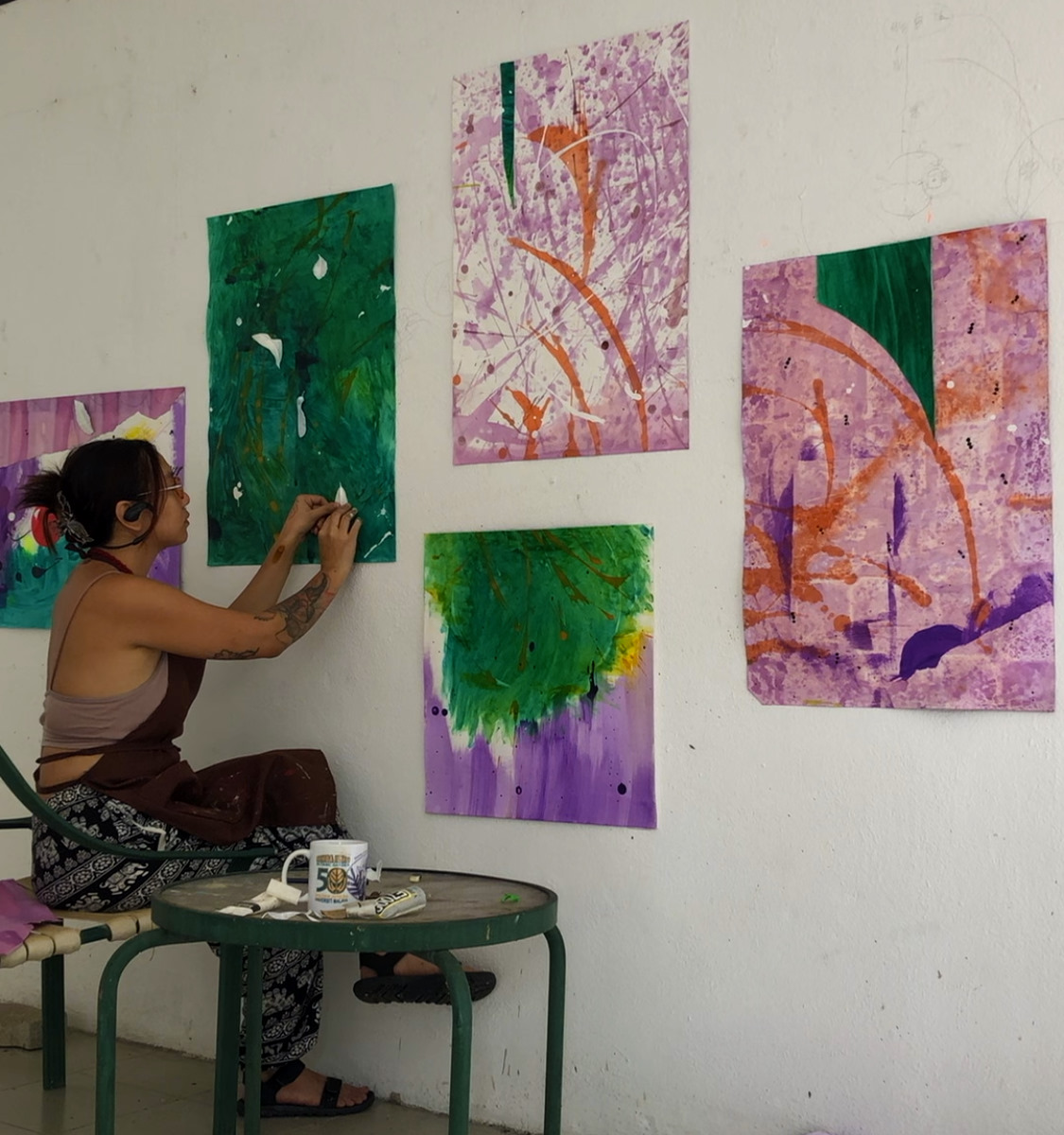
Midway through the residency, I received a new commission that needed to be completed on-site and within a tight deadline. After fulfilling this, I returned to painting—my primary and most familiar practice. This period gave me valuable time and solitude to reflect on both myself and my work. I found myself reconsidering how I approach painting: pushing and pulling within the process, exploring layering, surface, and the materiality of marks. I allowed intuition and instinct to guide me. Often, the environment inspired me in subtle, unconscious ways. The color palette and visual moods in my work shifted, reflecting the surroundings I was immersed in.

Four of the paintings developed during this time are now part of a group exhibition, OUTSIDE-IN, at Galeri Sasha, the gallery that represents me. This show had already been confirmed just before I began the residency.

Beyond the studio, I kept up with my regular physical routine—swimming, running, and, for the first time, trying tennis, which I was introduced to here. These physical activities also became a form of mental grounding, offering balance throughout the creative process.

As I reflect on my time here, I feel deeply grateful—for the space, the solitude, the challenges, and the discoveries. This residency offered me more than just time to work; it gave me a chance to reconnect with my practice, to take creative risks, and to listen closely to my instincts. I leave with new insights, new works, and a renewed sense of direction—both in art and in self.

Fauzan Fuad’s residency at Rimbun Dahan is additionally supported by a grant from Balai Seni Negara.

Studio 1914

Studio 1914

Singapore-based filmmakers and visual artists Studio 1914 are in residence at Rimbun Dahan in February 2024.

About the Artists

Studio 1914, a Singapore-based art practice led by filmmakers and visual artists Adzlynn & Hong Hu, explores the intersections of Southeast Asian folktales, ecology, Generative Artificial Intelligence (GAI) art and experiential exhibitions.

They produced a video ‘Gambut’ which reflected on the futility of resolving the decades-long haze issue in Sumatra. It has been screened at the NTU Centre for Contemporary Art Singapore, VT Artsalon Taipei and George Town Festival. More recently, they created an AI-based animation piece ‘Madu’ featuring a Southeast Asian folktale for the National Museum of Singapore.

They were invited to curate a trilogy of experiential exhibitions as part of Rainbow Families SG, a queer art collective. The exhibitions took the form of temporary spatial interventions of defunct spaces at The Projector, a local independent cinema.

With moving images as their primary medium, they hope their works contribute to and encourage progressive conversations around navigating identities as Southeast Asians.

Website: studio-1914.com
Instagram: @studio1914

About the Residency

Since completing ‘Madu’, our AI-based animation featuring folktale ‘Hitam Manis and the Tualang Tree’, it sparked even more introspective conversations about biodiversity mentioned in Southeast Asian stories and how we relate to nature. 

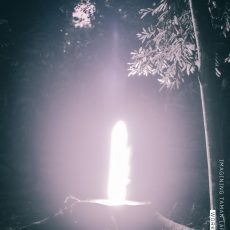
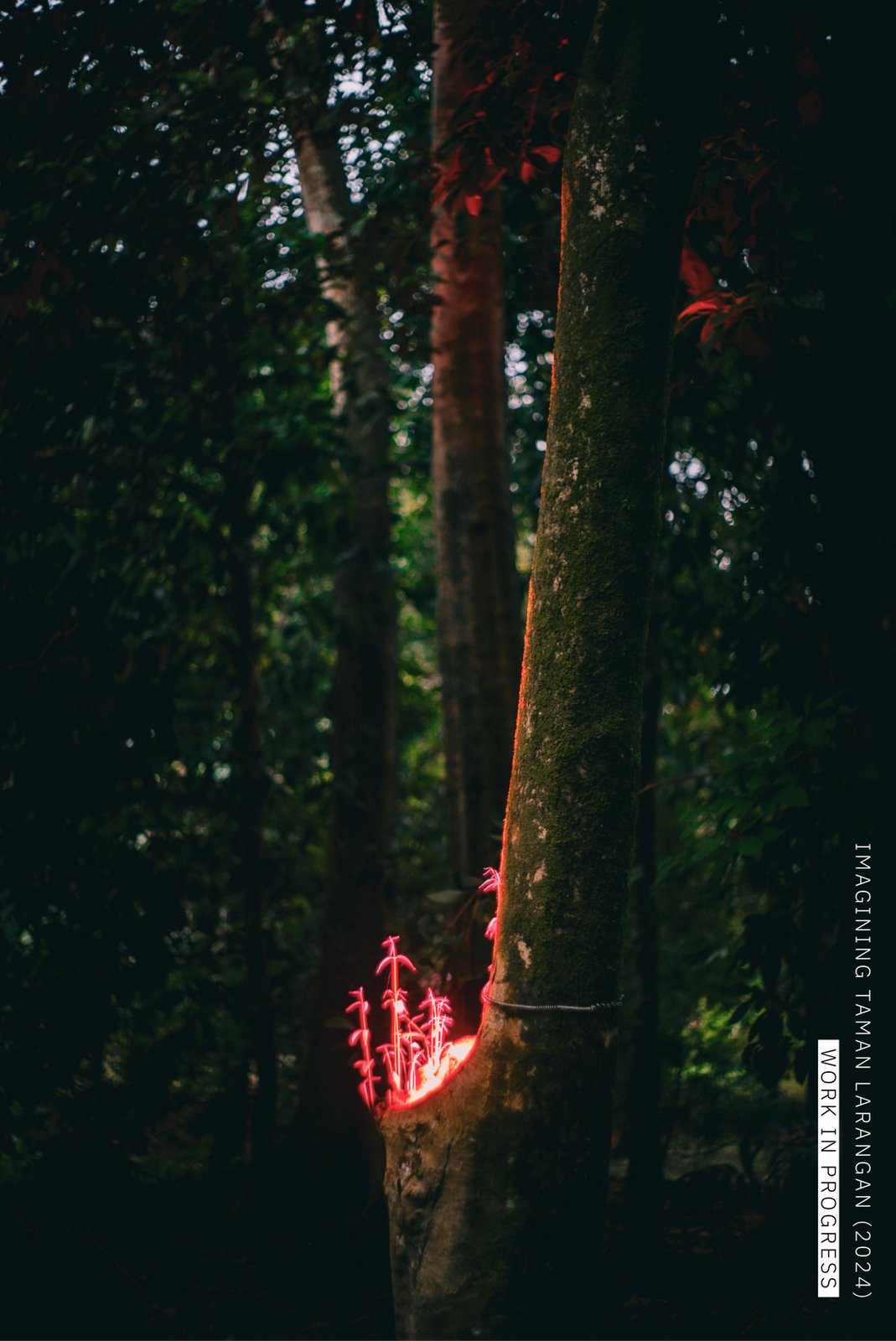
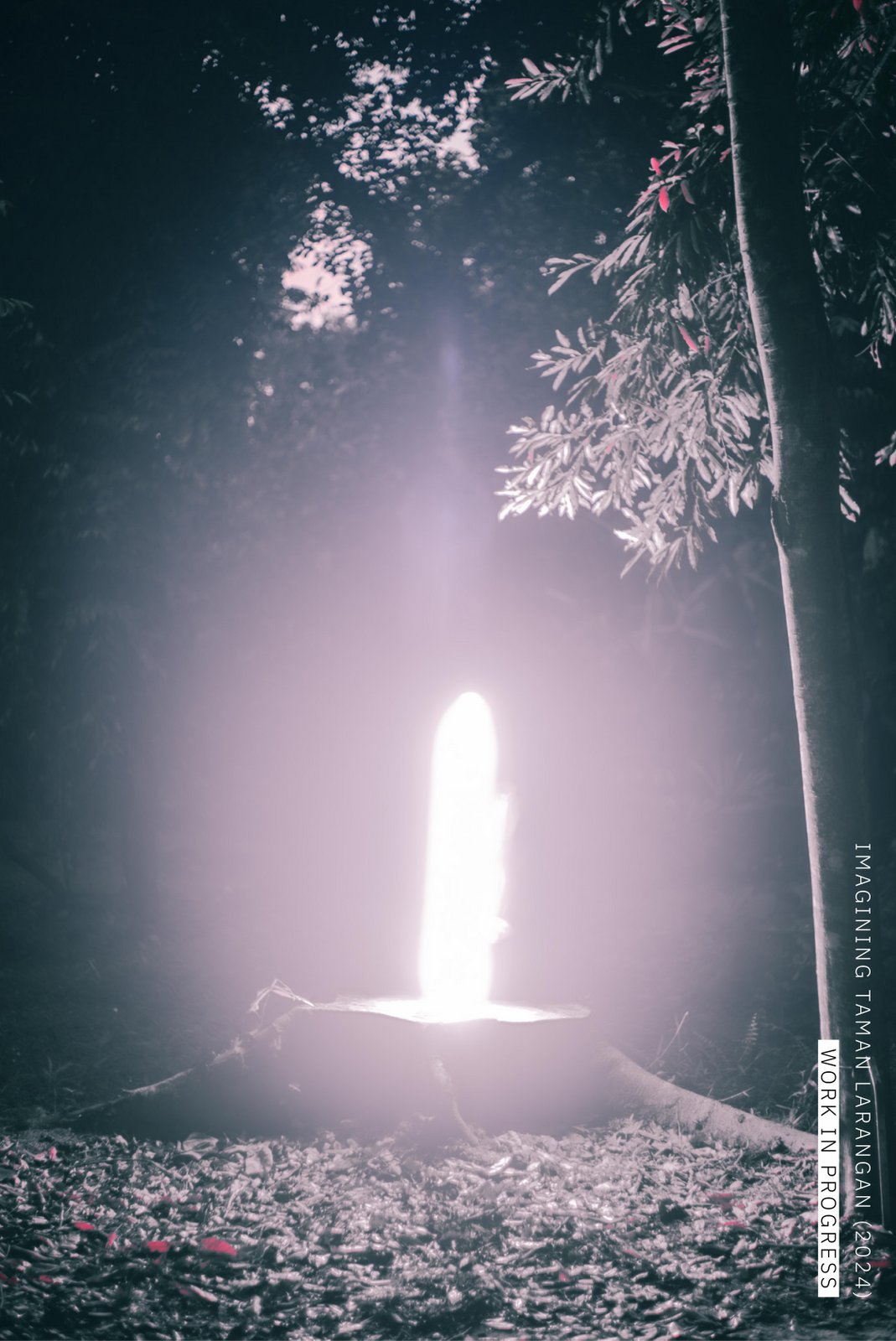
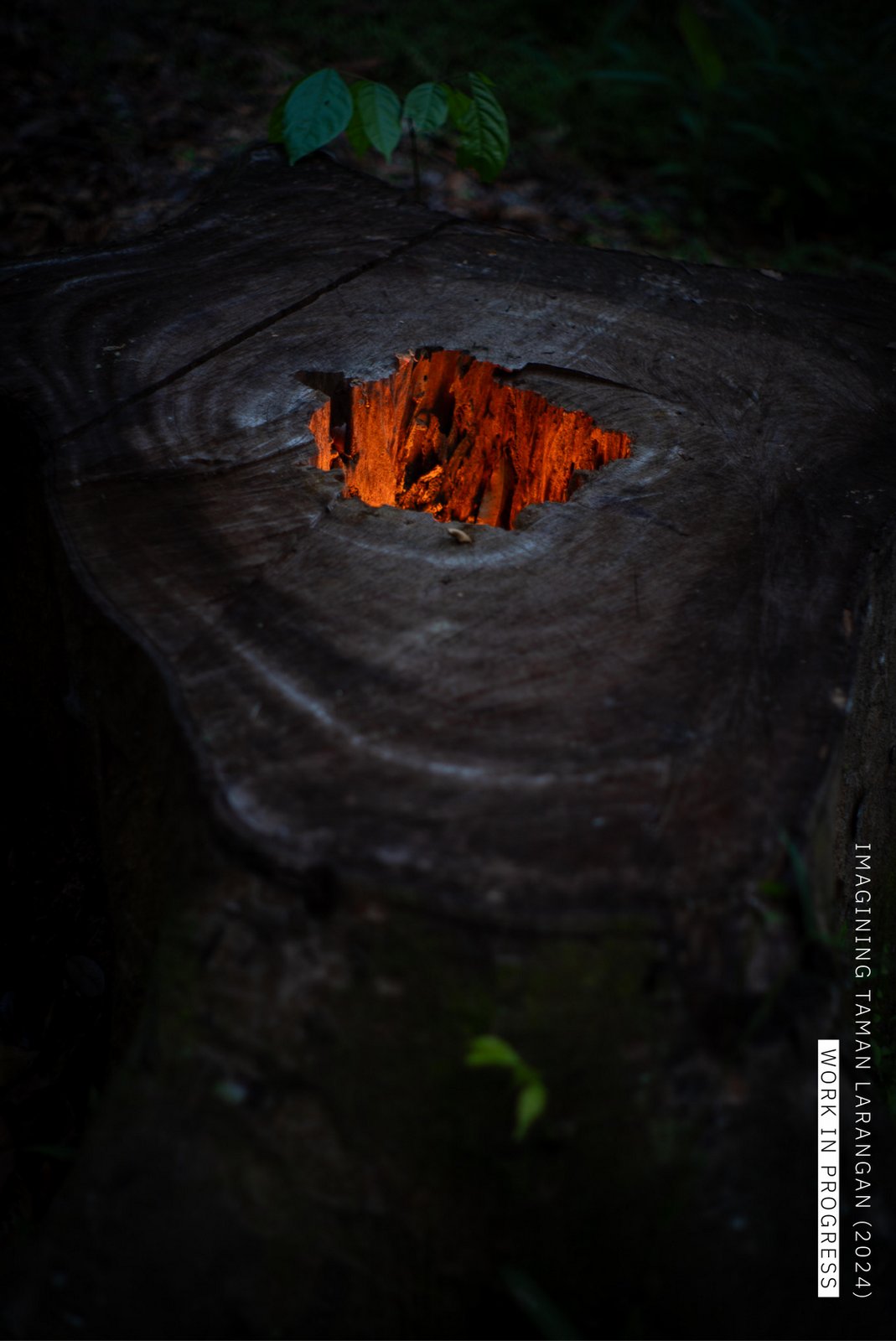
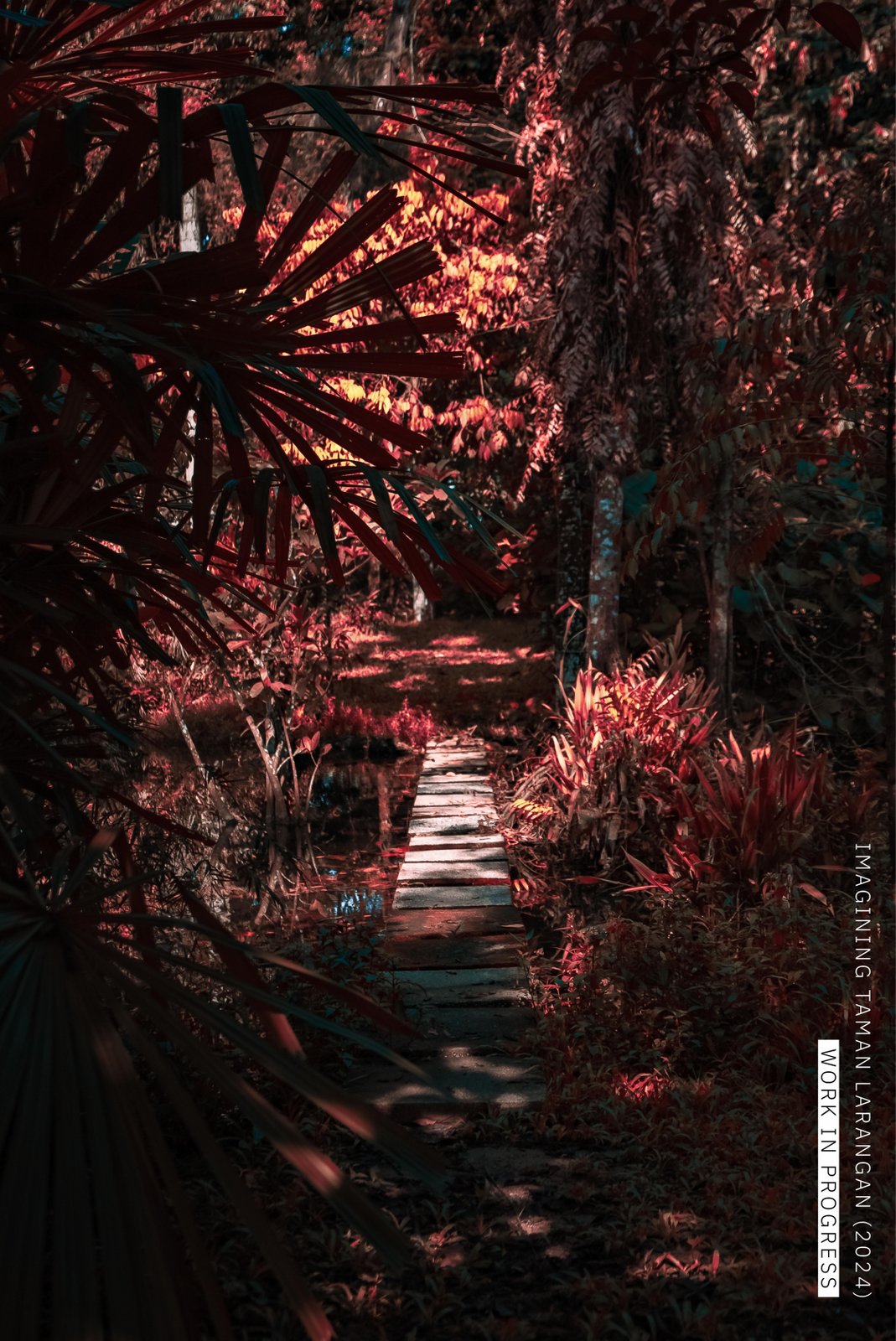
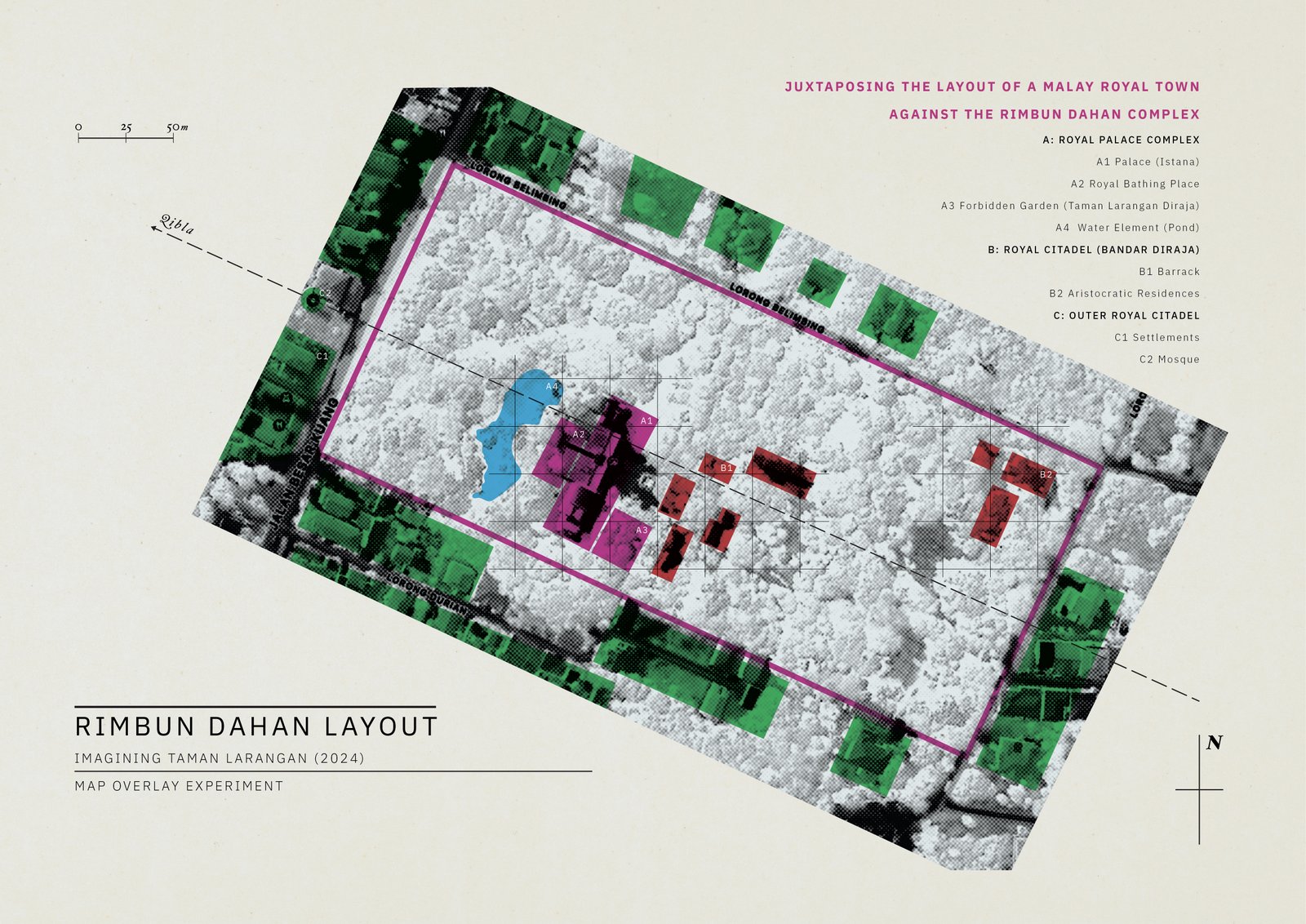
In our Hitam Manis animation, the term ‘Taman Larangan Diraja’ (Forbidden Garden) was a key visual space we had to design. These taman (gardens) are architectural spaces mentioned in the Sejarah Melayu and across other folktales from Southeast Asia. We wondered about the function and aesthetics of such gardens. In designing a fictional forbidden garden, do we make comparisons to actual historical royal gardens in Southeast Asia? What kind of biodiversity would the royal palaces have encouraged? Did any parts of their designs endure through to our modern times, if at all?
In our research, we noticed parallels between the layouts of forbidden gardens and Rimbun Dahan. We turn again to our palace gardener, Hitam Manis, for inspiration. What would it be like, if we were to imagine and design the scene of the ‘Forbidden Garden’ inspired by Rimbun Dahan?

Ella Wijt

Ella Wijt

Born in Jakarta in 1990, Ella Wijt’s interest in art began at a young age through drawing and painting. She graduated from the School of The Art Institute of Chicago majoring in Contemporary Studies and Painting. Ella enjoys cleaning her home, exploring the garden and working alone in her studio, walking with her thoughts in rather quiet surroundings, in which everything seems normal, nothing stands out, although the space is physically crowded. Ella enjoys a space that reveals itself over time as she is living with it, not seeking attention but longing for intimacy which requires all senses. Her work mainly explores topics on mythology and womanhood expressed through painting, sculpture, installation and photography.

Ella has been working on an installation project called BUMIDUNIA, a series of research and work that she began in 2012. BUMIDUNIA is the mothership of all her works, where she sees it as a collaborative work between her current environment and herself. It is play, it is a question that leads to another question, it is a challenge, and it is mythology. It articulates history and language through its artifacts, which include drawings, modified objects, found materials and images which become her studies about the world in which she lives. It meanders through re-imaginings of objects that may seem familiar to humans but delve into the uncanny. Familiarity shifts and distorts through material transformations, accessing broader psychological recollections in humans. BUMIDUNIA is also the foundation of her childhood dream – a library and home for collected objects where people could imagine, explore and discover the new. This dream would become Rumah Tangga, an artist-ran space and library in Depok, West Java, where she lives and works now.

At Rimbun Dahan, Ella is looking for new questions while exploring the gardens, learning about plants, biodiversity and their relationship with human beings. Ella hopes to create works that communicate with and honour the land, collaborating with what she finds and learns here. Ella is our resident artist in our Southeast Asian Arts Residency program.

You can find more of her works on her website and Instagram.

Nhi Le Phuong

Nhi Le Phuong

Nhi is a visual artist based in Saigon, Vietnam. Her work ranges from performance and installation, explores themes of human instinct, humans relation with space and time through mixed mediums and familiar objects with potentially metaphorical meanings. Discovering new methods of experiencing art for spectators and broadening the spectrum of Performance Arts are her long-term subjects. Nhi aims to create a spiritual and safe art place where the audience can confront their inner selves and egos.

Social structure is determinant of the individuals’ action, people act in a refined and mature human manner, but there is also the “naturally inclined” self, the “deeper” self – a state of being, instead of a state of mind. She believes our bodies are unique “containers” where our souls live and these “containers” will return to the earth eventually. The only thing that belongs to us is our soul and its connection with the world we live in. Her art practice focuses on evoking critical thinking towards one’s true self and redefining values that shape behaviours within the social system.

During her 1-month residency at Rimbun Dahan, Nhi will be working on artworks about human relationship. The time away from her home is an opportunity for her to gain a profound understanding of the role of human connection in modern times.

You can find out more about her works at her Facebook and Instagram.