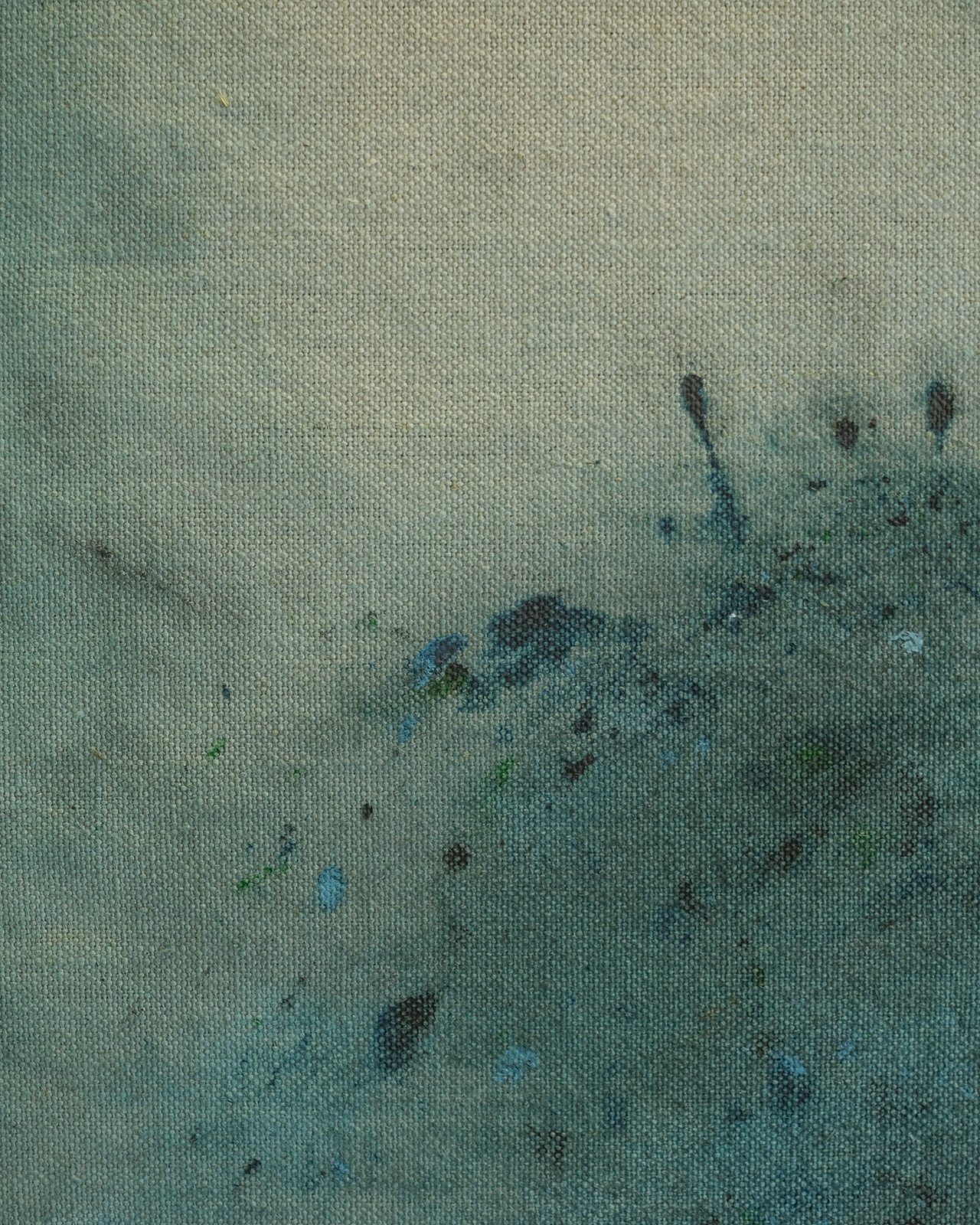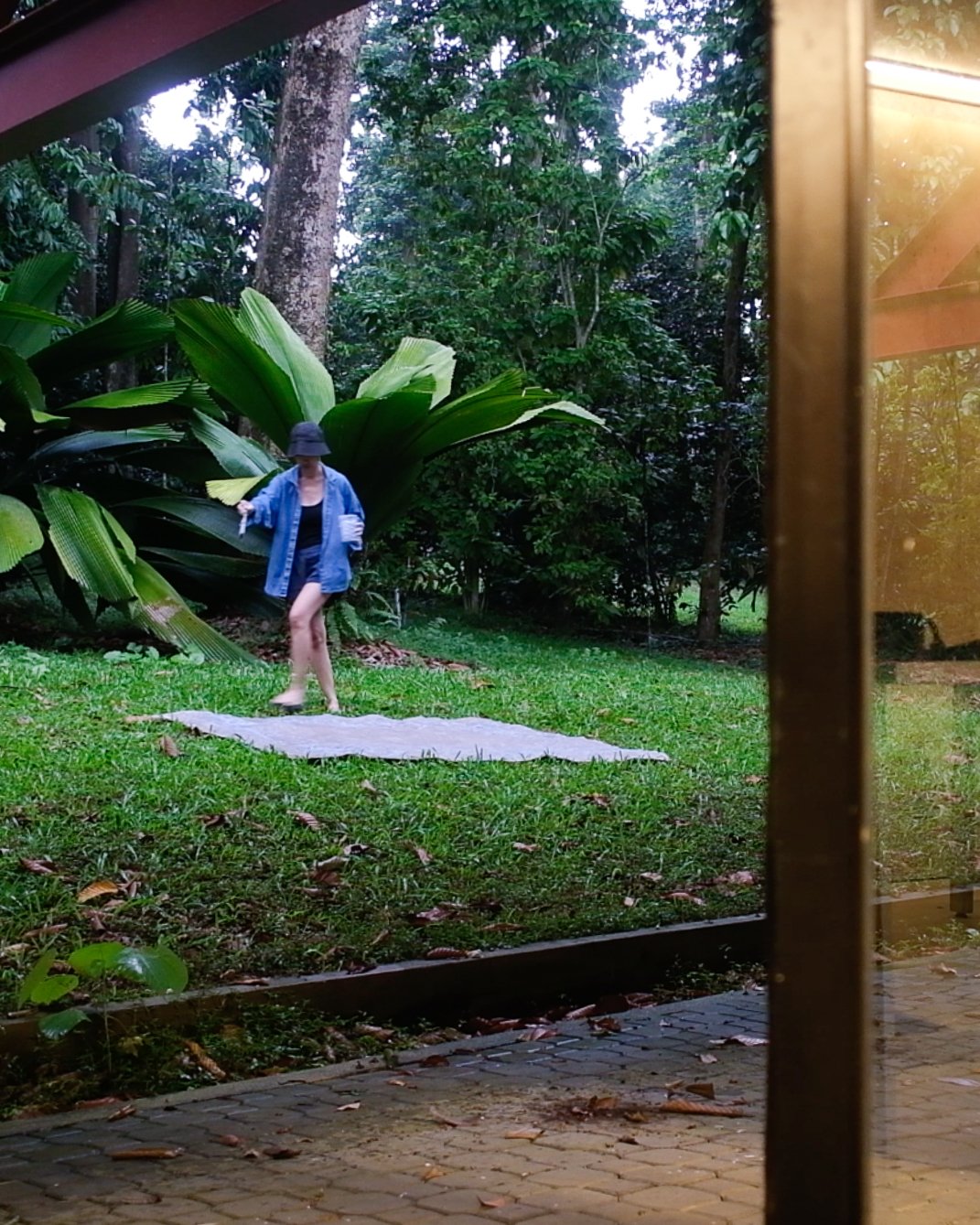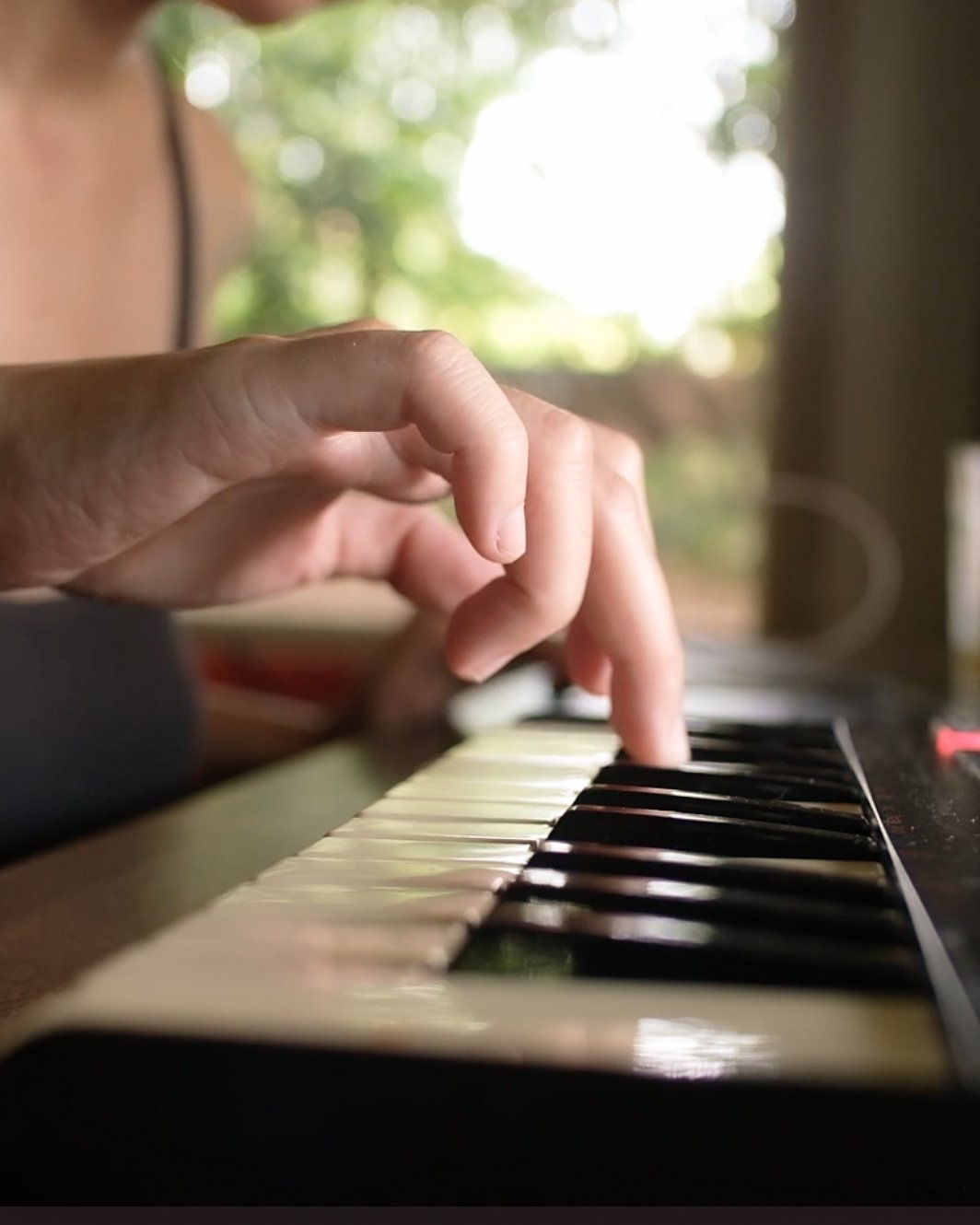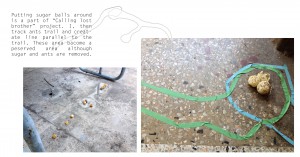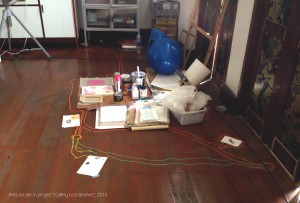

Thai textile artist Awika Samukrsaman was in residence at Rimbun Dahan from September to November 2025, creating site-specific weaving projects which make visible lines and trajectories that once existed, whether of humans on the pickleball court or of plants interacting with manmade structures.
About the Artist

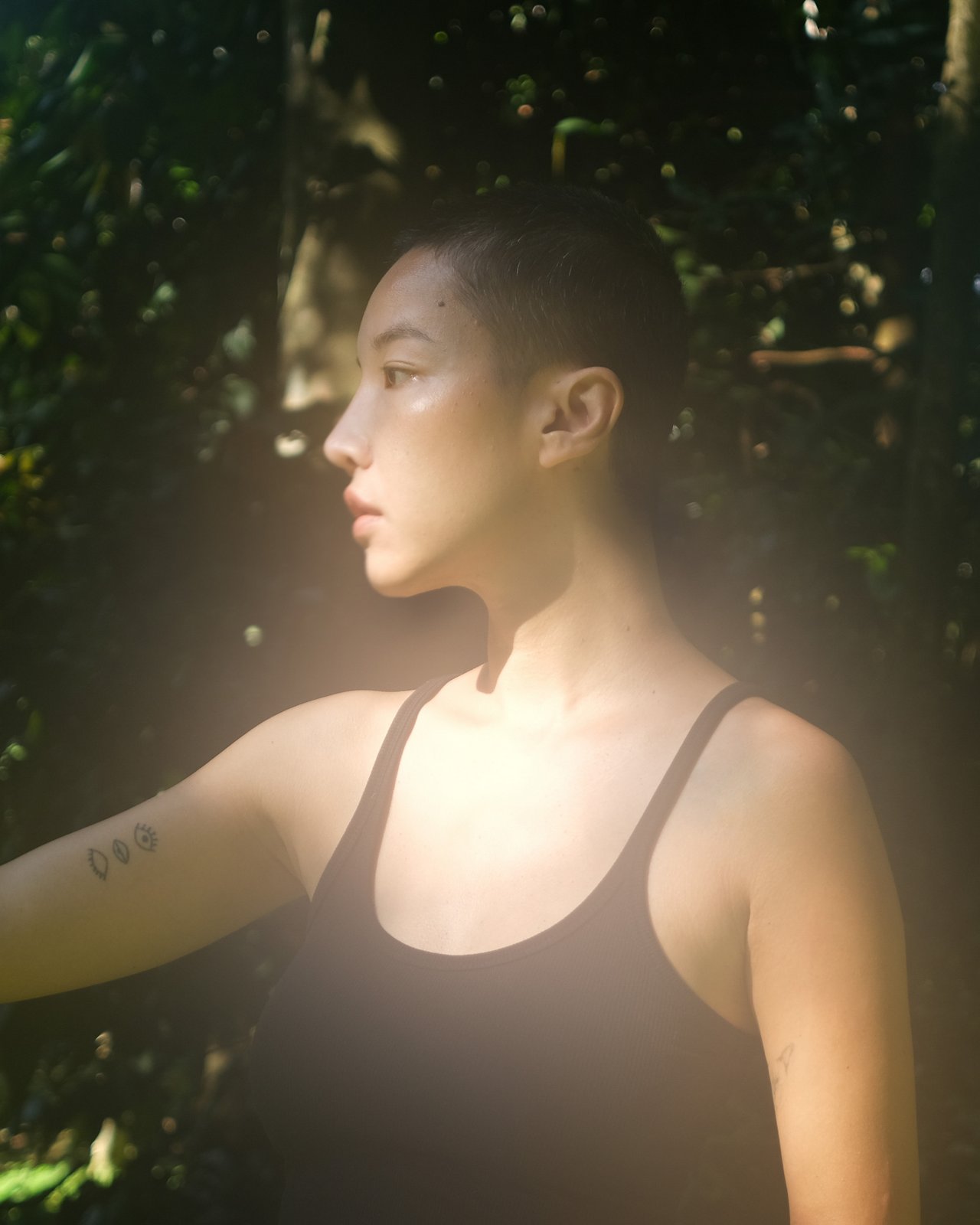
Awika Samukrsaman (b.1991, Surin, Thailand) received her Bachelor of Fine and Applied Arts (BFA), Thammasat University, residing and working in Ratchaburi, Thailand. She is interested in learning and developing basic weaving for everyday use and communication which is rooted from traditional culture and has been a part of everyday life. Awika’s interest in texture in textile works has brought her into folk wisdom among local ethnic groups. She has been a member of Baan Noorg Collaborative Arts and Culture since 2018 and was a manager in 2018-2019. Awika co-founded Wisdomative* in 2019, a platform for developing local weaving art and crafts and in 2021 she co-founded PhiFa collective that runs art-based research projects to retrace, reinterpret and restore Thai northeastern (Isaan) ancestors and heritage.Co-founded Yoonglai Collective,and t-rex veggie brand.
She was a representative artist of Baan Noorg Collaborative Arts and Culture in Churning Milk: the Rituals of Things project for documenta fifteen, Kassel, Germany (2022), Jakarta Biennale, Jakarta, Indonesia (2021), and artist in residency program at Bamboo Curtain Studio, Taipei, Taiwan (2019). In 2020 Awika participated in the Exhibition and a prize winner of the Early Year Project by Bangkok Art & Cultural Centre, Thailand (2020), joined Klongsan Fest, Suvarnabhumi Mosque and Charoen Rat, Bangkok, Thailand (2019), Bangkok Layers contemporary art exhibition curated by Baan Noorg Collaborative Arts and Culture, Bangkok Art and Culture Center, Bangkok, Thailand (2017) and Pop Up Museum project curated by Baan Noorg Collaborative Arts and Culture, Nong Pho, Ratchaburi, Thailand (2014).
https://www.instagram.com/awika_s
https://www.instagram.com/imnualnin
About the Residency


Traces of What Once Existed and the Conditions of Allowing Relationships to Form
This project explores the “conditions of coexistence” between human–human, human–structure, and human–nonhuman life forms. It draws on ecological modes of relating — ranging from mutual support (Mutualism) to restricted, competitive, or extractive forms of connection (Competition / Parasitism) — as a way to think about the varying degrees of benefit, loss, and negotiation embedded within every relationship. At the same time, it engages with the sensibility of Object-Oriented Ontology (OOO), which regards all things as possessing their own agency and ontology. Walls, fences, grids, branches, and threads each have histories, capacities, and ways of acting upon one another.
Here, “traces” are not treated as mere residues of the past, but as evidence of collision, contact, exchange, permission, and proximity. They function as markers of where something was once allowed to exist, and where it was denied.
Certain human relationships resemble plants that are “allowed to grow only in some directions”—not because the relationship lacks authenticity, but because invisible systems, circumstances, and timings quietly govern the shape it is permitted to take. This project investigates these “traces of permission”: moments of connection that once took place—clear or faint, intentional or incidental—and asks what form a relationship might assume if it were never cut back, redirected, or prematurely pruned.
Work 1: Tracing the Intrusions of Boundaries

This piece begins with the relationship between human-made structures and the plants that attempt to grow alongside them. Fences, grids, and walls become objects with agency structures whose functions, limits, and permissions are defined by human hands. In contrast, branches and vines navigate those limits, seeking small openings through which to enter, attach, spread, or slowly encroach upon spaces that were never built for them.
The threads in this work act as an “extension” of branches that have been cut away. They return possibility to what has been silenced. By weaving new paths beyond the point where growth was interrupted, the work temporarily restores visibility to life that once occupied the space but has since been removed.
It becomes a record of intrusion, resilience, and the desire to exist within a system that grants only partial permission.
Work 2: Do you see the line between us?


This piece shifts toward human-to-human relationality, articulated through the language of textile processes. The weaving process as metaphors for the fiber of relationships, tight, loose, fluid, obstructed, directionless, patterned, intermittent, responsive, or delayed. Each thread reflects a rhythm and the frequency of exchanges, the pace of response, the distance one person allows, and the extent to which another is permitted to enter their emotional space.

In the ongoing project Social Weaving, the warp functions as the net of a Pickleball court, while bundled threads (Weft yarn) act as the movement of the ball being hit back and forth. This recreates conversation as an energetic exchange. Each passage of a thread (Weft yarn) through the warp becomes a “sentence,” an action, or an emotional gesture. The gaps between threads, the tension and looseness of the textile, record the intervals, uncertainties, and shifting stability of communication.
Together, they form a tactile archive of a relationship that once existed.