Ineza Roussille is an independent documentary filmmaker from Malaysia. She’s produced videos for local NGOs on various social issues. These include videos for Yayasan Chow Kit on street children, for the Joint Action Group for Gender Equality (JAG), a coalition of local feminist civil society organisations, on the importance of women’s participation in the elections (Undi Anda, Suara Anda), a series for PT Foundation on People Living with HIV (PLHIV), and for UNICEF on children’s rights in Malaysia. Currently Ineza is working on an ongoing campaign called I Am You: Be A Trans Ally, which aims to raise awareness on the issues of the Transgender community in Malaysia, and complement the efforts regarding the recent judicial challenge against laws that infringed on the rights of the Trans* community.
Other than her documentary work, she has also worked on several creative side projects, including a short film entitled Blackbird, and a mockumentary on lesbians in KL entitled, Angmo & Amoi. Angmo & Amoi has been screened at various queer film festivals including in Manila, Philippines, Jakarta, Indonesia, and Austin, Texas in the USA. She recently won first prize for the PLHIV series at the Red Ribbon Short Film competition, organized by the Malaysian AIDS Council.
She’ll be in residency at Rimbun Dahan for January 2016 to work on a memoir project to explore the story of her father’s life, which may be turned into a graphic novel further down the line.
“As fulfilling as my journey into video activism has been, I feel like I need to step away from the camera and focus more on my writing. My father passed away in March this year, and while clearing out his apartment, I realized I was surrounded by his life story. From the primary school report cards that he kept, to the disgustingly smoke stained walls of his apartment, the visuals in that space painted a picture of him I knew so well, and yet did not understand at all. I realized I needed to write his story, from the perspective of the only person who had the experience of being his child. In writing his story, I hope to allow myself the space to personally grieve his loss, and at the same time produce a story that would make him proud.”
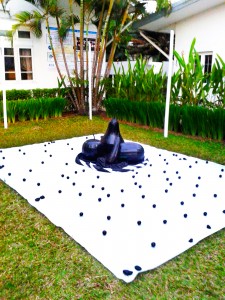
Rimbun Dahan presents Priceless, showcasing works made by ceramic artist Al-khuzairie Ali during his six-month residency from July to December 2015, where he explored the concept of human connection to the external world (an ongoing focus in his work) through the subject of animals. The external world overflows in Rimbun Dahan, a green lung home to a variety of wildlife, tucked away from the bustle of the city. Within the grounds humans, animals and plants alike live under a canopy of branches, leaves and steel beams, providing fruitful intersections of the organic and the constructed. This setting provided the perfect incubator for the artist and his explorations.
Khuzairie hails from Pahang, home of the largest portion of Taman Negara, one of the oldest rainforests in the world. This sense of place informs his connection and exploration of the natural world time and again – from his studio in Puncak Alam he began to think of what used to be lush, thick jungle disappearing under development and construction, habitat disappearing under greed. “I look at the hideous side of the human character which has an impact on other beings in the ecosystem,” says Khuzairie of his inspiration. “We know that some animals are threatened with extinction but the modern world focuses on the importance of money and this has many people losing their judgment and ignoring the nature of life.”
We invite you to visit the exhibition and experience Al-Khuzairie’s work as well as the surroundings that made the work possible.
OPENING HOURS:
Weekends 10am – 6pm, Monday to Friday by appointment
16 – 24 January 2016
Admission is FREE.
Rimbun Dahan is also hosting our annual dance event, Dancing in Place, a series of site-specific contemporary dance performances by dancers from all over Asia, on 16 and 17 January.
There will be a guided tour of Rimbun Dahan’s grounds and traditional village houses at 9am on Sunday 24 January, conducted by Angela Hijjas. For the event page on Facebook please click here.
An international choreographic laboratory for emerging Southeast Asian contemporary dance choreographers, facilitated by Japanese choreographer Akiko Kitamura, at Rimbun Dahan, from 28 May to 5 June 2016.
Participants
Noun Sovitou (Cambodia)
Citra Pratiwi (Indonesia)
Sabri Gusmail (Indonesia)
Muhammad bin Samsudin (Malaysia)
Al Jabar bin Laura (Malaysia)
Chantal Primero (Philippines)
Bernice Lee (Singapore)
Norhaizad bin Adam (Singapore)
“Haste” Sompong Leartvimolkasame (Thailand)
“Much” Pakhamon Hemachandra (Thailand)
“Ben” Mai Minh Anh Khoa (Vietnam)
Lucy-Margaux Marinkovich (New Zealand, special participant-observer)
Project Overview
The 14 participants were chosen through an open call process, with applications submitted to a panel including committee members of MyDance Alliance and World Dance Alliance Asia-Pacific.
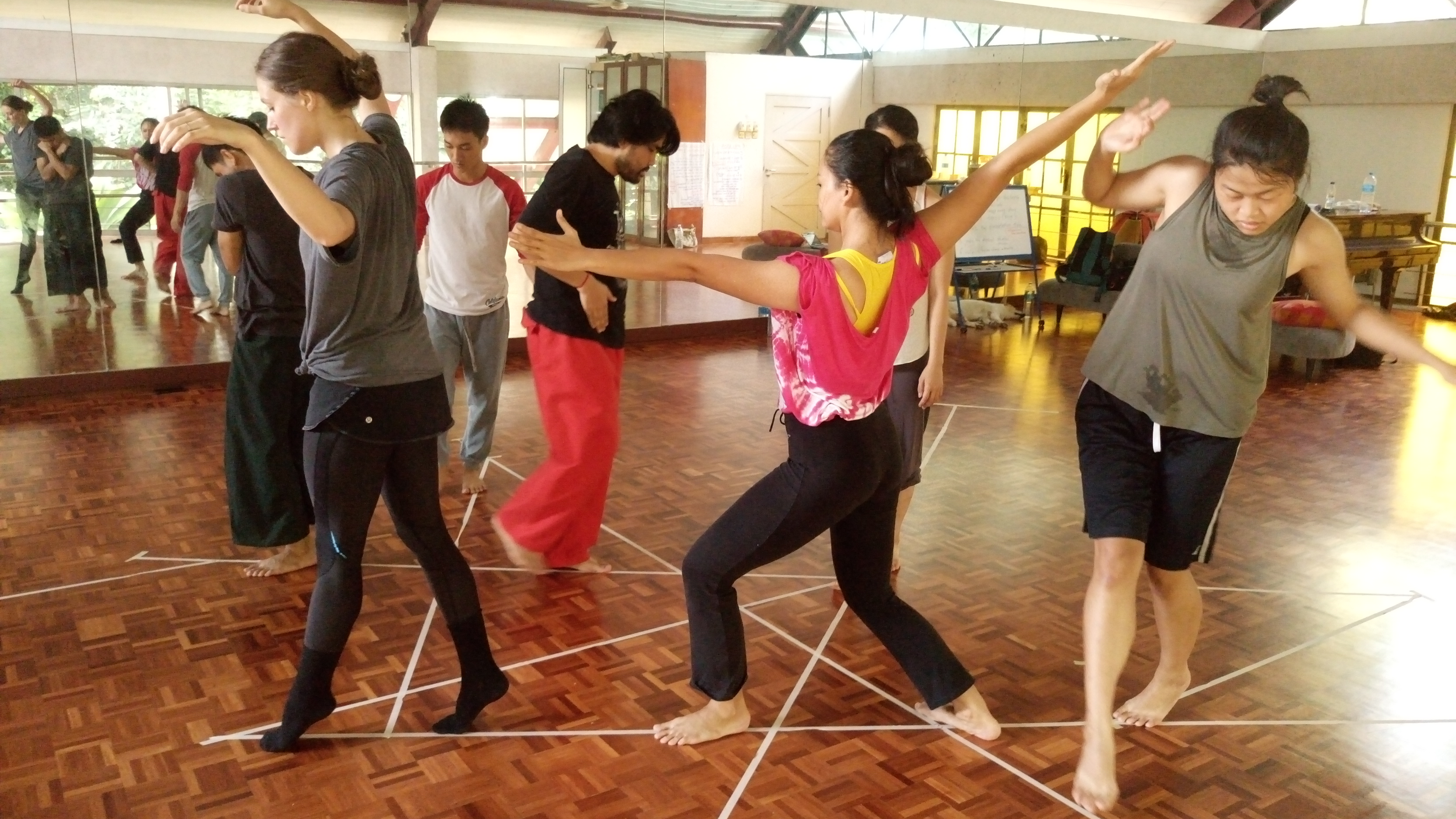
The participants lived, worked and explored together in the arts community of Rimbun Dahan for 9 days, with guidance from our international facilitator, Japanese choreographer Akiko Kitamura.
The program consisted of 7 work days in the studio, with choreographic tasks assigned by Akiko Kitamura involving working in duets. The morning sessions consisted of workshops led by the participants themselves, to introduce their own cultural backgrounds and creative practices to their peers.
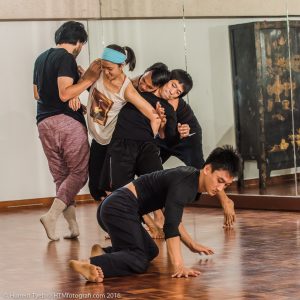
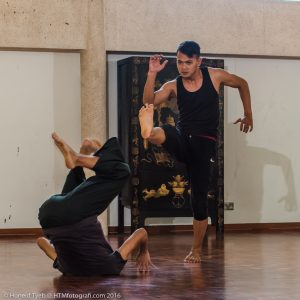
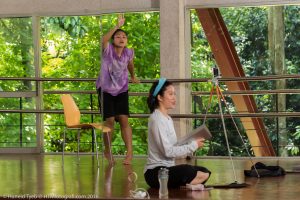
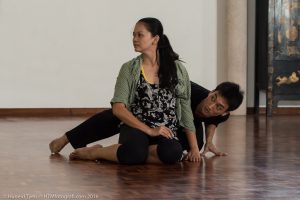
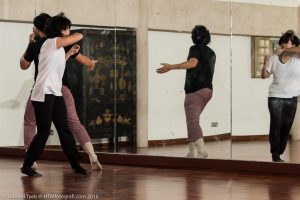
The Choreolab concluded with an informal showing of the duet works that the participants had made, to a small audience in the studio at Rimbun Dahan. [Photos from the showing below by Huneid Tyeb.]
Project Aims
Like the previous Southeast Asian Choreolabs in 2014 and 2015, the project aims to support and enable emerging Southeast Asian contemporary dance choreographers to
Adopt new choreographic tools and physical, thematic and conceptual approaches to enrich their artistic practice;
Develop regional networks among their peers and with regional dance institutions, for knowledge sharing, future artistic collaboration and touring;
Experience works of art, cultures, places and histories beyond their home, to increase international understanding and to help contextualize their artistic practice.
About Akiko Kitamura, facilitator
Akiko Kitamura was born in 1970 in Tokyo. She learned ballet dance and street dance in her youth, studied dance theory at Waseda University and began to build a professional career as a choreographer in show business while still in her teens. She choreographed many pieces for commercial films, fashion shows and plays. In 1994, she founded her own company Leni-Basso. In 1995-1996, she stayed in Germany for a year as a resident artist.
In 2001 she was invited to the Bates Dance Festival and created Finks, one of her best known works, performed more than 60 times worldwide. Ghostly Round (2005), choreographed for In Transit organised by Haus der Kulturen der Welt (Berlin), is another of her signature works which has toured internationally. Akiko Kitamura has made many works for international companies, commissions and collaborations such as for American Dance Festival, Group Motion Dance Company in Philadelphia, ACE Dance and Music of Birmingham, and avant-garde rock group Art Zoyd in France.
Akiko started to learn pencak silat in 2004 according to a strong interest in the body techniques of South East Asia, and in 2010 she came to Indonesia to research dance, music and martial arts more deeply. In 2011, she started to collaborate with Indonesian artists including choreographer/dancer Martinus Miroto, Yudi Ahmad Tajudin (Teater Garasi), dancer Rianto, musicians Kill the DJ (Jogja Hip Hop Foundation), Slamet Gundono, and Endah Laras, and a team of Japanese artists to create the To Belong Series, such as To Belong-cyclonicdream- (2013) and To Belong/Suwung (2014). The work explores how two cultures meet, and connects the old world to the contemporary using video, music and dance. It also aims to discover the new generation of the Asian Body: the repository of the traditional and the contemporary worlds.
In 2015, Akiko was an Asian Cultural Council Fellow and a Saison Foundation Fellow. Since 2001 Akiko Kitamura has taught at Shinshu University, Nagano, as associate professor of the Faculty of Arts.
Chan Aye (b. 1954) is a sculptor, installation artist, painter, and writer from Myanmar. He was self taught before going on to study traditional Myanmar painting between 1986 and 1989. He has developed a unique pictorial language that is inventive and at the same time inherits the iconography of Myanmar cave painting and mural paintings, as found in the temples at Bagan, Sitkaing, and Po Win Taung in North Myanmar, as well as his studied interest in Western art, which the artist has studied in magazine and book reproductions through the years. His art is rooted in physicalizing the various states of life’s existence and spirituality, and engages with the dualities of material and immaterial forms: color, time, and the dimensions of human emotions, of anger, love, hate, and greed, with diverse materials such as paint, wood, marble, glass, sandstone, and paper from Myanmar Shan State, silk, motor equipment, lighting, bronze, and steel. Searching for new ways to merge traditions with the contemporary condition, he continues to create art through periods of political turmoil and change, and in the aftermath of the devastating Cyclone Nargis in 2008. Chan Aye has exhibited in Singapore, Germany, Finland, France, Hong Kong, India, Thailand, China, New York, and London.
Phyu Mon (b. 1960), writer, photographer, performance artist, and painter, grew up in an environment distinguished by strong tradition and rich culture. Since her teens she has written poetry, short stories and also painted. Now, her recent work is writing articles about art in Myanmar Magazine and Journal, as well as other international publications. Her work expanded beyond writing when she was introduced to video and film production through a program at the University of Finland, and also when she accepted a Diploma of Photography from Myanmar Photography Association. She is one of the very few women artists in Myanmar who currently works with digital photography and visual art. She is also the first female performance artist in Myanmar and has participated in several local and international exhibitions and festivals. She currently runs the Blue Wind Art project in Myanmar.
In her art, she presents the contentment and peace even of a hard life, the need for progress but at the same time the need to care for the environment. She is at present witnessing the cultural changes taking place in the urban areas through globalisation but she feels confident that the rural people, the true representatives of Myanmar, will not be overly swayed by western culture. Having struggled to break out of a restrictive and traditionalistic society, she knows how strong the culture’s values are. Her hope, presumed in her art, is that the best of these values will be kept intact for the sake of future generations. Phyu Mon has exhibited her works in Japan, Thailand, Hong Kong, Malaysia, Cambodia, Singapore, Korea, Denmark, Spain, UK, France and the US.
Chan Aye and Phyu Mon will be undergoing a two month residency at Rimbun Dahan. For more information on their work, visit Chan Aye’s website, and Blue Wind Art’s website.
Kafayat Quadri is a poet (poetographer), singer-songwriter, music producer and a certified attorney. She was the first African to speak and perform at the TEDxKLwomen, Malaysia in 2013. Her music and poetry have been performed on the stages of George Town Literary Festival, KAKISENI International Arts Festival, Generation-Y Music Festival, Lake Garden Music Festival, Coffee & Fringe Art Festival, and so on.
Her first album ‘KQ the EP’ which she co-produced with Aman Junaid, a Grammy Award Recipient and her second album ‘April 16′, instrumentals in honour of her mother can both be found on iTunes, Spotify, Apple Music & VEVO. Her prose poem was recently shortlisted by the PWDC Writers Workshop by Bernice Chauly for the End Violence Against Women Campaign & GTLF 2015. She is a recipient of the Hotel Penaga Artist Residency 2016 and her first poetry collection is due to be published by Garden Bench in the same year.
In anticipation of her first collection of poems, Kafayat is working on interpreting some of the poems from the upcoming poetry collection, Aquarius, alongside her photography as printed on canvas, which would be exhibited at the Penaga Hotel at the end of her residency. The photography exhibition would be from the 30th January until the 29th of February 2016.
Also, during her residency, she would commence work on the composition of the music to be featured in her 3rd album in collaboration some Malaysian rappers and poets (especially the Penang-based ones) for her newly found music & poetry genre – RAPCOUSTICS, which comprises mainly of a single musical instrument accompanied to a rap or poetry rendition with musical choruses at intervals which would come from a direct and on-spot musical interpretation of the poem or rap as rendered by the featured artist.
She is the founder and the Managing Editor of the Poetry Digest Magazine in Nigeria and hopes to get the world reading, writing and sharing poetry everyday.
Neobalanocarpus heimii cengal Endemic Malay peninsula. V. large trees, bole with short buttresses, dark bark with irregular fissures becoming scaly in older trees. Produces the primary timber of Malaya. Seeds heavy & wingless fall just beneath parent tree.
Previous images:
Images from September 2022:
Neobalanocarpus heimii front leavesNeobalanocarpus heimii back leaves
Anisoptera laevis mersawa durian Malaya, Sumatra & Borneo. Most common of genera widely distributed between 300 & 900 m. Vulnerable, due to logging & habitat loss; small smooth leaf, sparse reddish scales on lower surface. Planted 6/07.
Images from September 2022:
Anisoptera laevis bark
Anisoptera marginata mersawa paya E Sumatra, Malaya, Borneo. In Malaya near coastal peat swamp forest of S Perak, Selangor, Pahang, and Johor. Critically endangered by land conversion. Smooth leaves, bright yellow under. 1 fr TH 11/09
Images from September 2022:
Anisoptera marginata bark
Anisoptera scaphula mersawa gajah South from Chittagong; most common in north of Malaya but found as far south as NS. Favours low altitudes and deep gorges, now endangered through range. Large thin glabrous leaf. Very large trees, up to 9m girth. Planted 6/07.
Images from September 2022:
Anisoptera scaphula bark
Anisoptera sp. mersawa Small genus of about 14 species, 7 in Malay peninsula. Most have distinctive leaf: prominent looped marginal vein. High silica content of wood makes sawing difficult. Large buttresses were frequently cut to make pans for tin washing.
Vatica cinerea resak laut A coastal species that grows to 700m elevation, of Kedah and Perlis, Thailand, Vietnam and Cambodia. Small trees that are easily confused with Vatica odorata, best known as a small tree on exposed ridges, rocky headlands and limestone hills, and in the Schima-bamboo forests of Kedah and Perlis.
Vatica cuspidata (Ridl.) Sym. resak daun runcing Endemic to Malaya, and most common Vatica, on coastal hills. Vulnerable, due to conversion and placing logging roads on ridges. Long petioled acuminate leaf that dries dark. TH 2012.
Images from 2022:
Vatica flavida Foxw. Resak padi Endemic to Parit FR, Keroh & Cikus. Feared extinct. Elliptic-obovate cuspidate leaf with veins hairy on under surface. Yellow flowers in great profusion. These from Univeristi Petronas campus, 2011.
Images from 2022
Vatica havilandii Brandis [??] resak degung N. Borneo, Malaya: Parit FR. Prefers low forest, critically endangered, close to extinction in Malaya. Obovate-oblong leaf sharp at apex, rounded at base but variable. Dries papery dark purple. Nut globose.
Vatica lobata resak paya Endemic sp from Sg Paka, Trengganu. Swampy land near streams, now critically endangered if not extinct due to the conversion of habitat to estate. Obovate leaf with only 5 prs nerves. 1 fr TH 11/09.
Vatica lowii King emend. Sym. resak pipit From SE Thailand to Johor. Small bluntly acuminate leaf. Typical Vatica, up to 1.5m girth. From Tunas Harapan 6.12
Images from 2022
Vatica maingayi resak lidi A species of Pelambang, Sumatra, the peninsula and NW Borneo, particularly abundant in Melaka. Lidi refers to the slender petioles.
Vatica nitens King resak daun panjang Malay peninsula and NW Borneo. From Penang and s. Kedah to Panti, s. Johor. Common in northern Selangor but not abundant anywhere. Vulnerable to logging and forest conversion. Large oblong leaves, bole up to 3m girth.
Images from 2022
Vatica odorata (Griff.) Sym. resak ranting kesat Throughout Malaya, more common in north. Sub species, on low hills. Rusty pink tomentose young twigs (kesat: rough twigs) and semi-inferior fruits. Fr Tunas Harapan 6.12.
Vatica pauciflora (Korth.) Bl. resak paya Fr S Vietnam to S Sumatra, in low lying swampy habitat. Vulnerable due to fragmentation. Typical Vatica, less than 3m girth, wingless fruits adapted for water dispersal. Tunas Harapan 6.12.
Images from 2022
Vatica stapfiana (King) Sloot resak mempening, resak laru Malaya and Sumatra. Not uncommon in Selangor, Perak, Pahang, often in valleys, near streams. Rarely exceeds 1m girth, exudations of yellow dammar. Fruits resemble acorns of Quercus, mempening.
Images from 2022
Vatica venulosa Bl. resak letup Malaya, Sumatra, W Java, Borneo. Near streams in damp soil, probably endangered, but not studied. Typical small Vatica, <1m girth. Small leaves, nut concealed by 5 sepal wings 3 cm long. Lata Belatan, Trengganu. TH 6.2012.
Images from 2022
Vatica yeechongii Endemic sp from Sg Lalang FR Selangor, first described in 2002, on slope not far from Saraca stream. V large leaves, 40cm long, billowed between at least 28 prs nerves, short stout petiole and stout twigs. 1 fr TH 11/09.
Shorea acuminata meranti rambai daun Southern half of Malay peninsula, most abundant in hilly country about 330m. Drooping branchlets, large semi-persistent stipules, unequal sided leaves and purple-red flowers. Grey to reddish bole, rough irregular fissured bark. Although greatly reduced by forest conversion, this species is not currently at risk. A specimen planted in 1997 at Rimbun Dahan fruited sparsely in Sept 2009. Location in row 3 W of entrance to main house, near Ahmad’s white sculpture.
Images from August 2022:
Shorea acuminatissima Symington seraya kuning runcing Latin, accuminatassimus = prominently acuminate; the leaf apex. Borneo endemic. Vulnerable. Norsham 5.13. Located with other Sabah spp front area W of stream source.
Shorea assamica Dyer subspecies globifera (Ridl.) Sym meranti pipit (meranti pa’ang) group From NW India through to Malaya, Sumatra, Philippines, Borneo, Sulawesi, Maluku. Several geographical races are distinct botanical forms, that of Malaya and Sumatra is the form globifera. Common in north, not found in Selangor. Leaves oval elliptic, 7 x 3cm, 17 nerved.
Images from August 2022:
S. assamica bark
Shorea balanocarpoides Sym. damar katup (meranti damar hitam) N Sumatra, w Borneo, Malaya; from Kedah to Kinta; Kelantan & Terengganu. On undulating low land, endangered by logging, habitat conversion. Large oval 7 nerved leaves, heavy crowns, fruits wingless. Estimated height in 08/2022: 7 m
2022
Shorea bentongensis meranti mengkai (meranti pa’ang group) Endemic sp. found in Ulu Gombak, Bentong, Rompin, NE & S Johor, on low land, deep valleys, endangered by habitat loss. Large trees with smooth bole like sepetir (Sindora spp.), leaves elliptic, c. 15 nerved, large fruit w/ short narrow wings, 3 outer 2 inner. Planted 6/07.2 new specimens June 2008, pictured below. One planted on path from Uda Manap to front, on left just beyond entrance to path, 2 more at N end of area with Ahmad’s white sculpture.
Images from August 2022:
Shorea blumutensis Foxw. meranti kelim Sumatra, Johor. Elliptic lanceolate, leathery leaves with revolute margins, and fulvous tomentose twigs and petioles. Up to 30m height, 2m girth. Critically endangered by logging. On right of laterite road to Uda Manap.Estimated height in 08/2022: 16 m
Previous images:
Images from August 2022:
Shorea curtisii seraya Malaya, from Pattani to Singapore. common and characteristic species of hill dipterocarp forests. Light coloured crowns, lanceolate, glaucescent leaves (pale waxy bloom on upper leaf surface, lower surface pale yellow glaucescent). Large trees to 3m girth, record 7m. Dark red meranti.
Images from August 2022:
Previous image
Shorea curtisii subsp grandis Seraya daun besar Endemic form found only in Keledang Saiong and Bukit Kinta FRs, Perak, bw 200 and 500m. Deeply fissured bark, leaves resemble seraya, but much larger. Fr Tunas Harapan ’12.
Shorea dasyphylla meranti batu (red meranti group) Malaya, eastern Sumatra, Sarawak. Favours low but well drained forest, now (critically?) endangered by land conversion & logging. Leaves ovate lanceolate to elliptic oblong, 11 x 6 cm, variable, 13 nerved, softly tomentose under. Planted 6/07 to NW of Rumah Balai.
Images from 2022:
S. dasyphylla bark
Shorea faguetiana damar siput(meranti damar hitam group) Borneo, Malaya. Widely distributed, large tree. Leaves curl up on ground, ovate-lanceolate, 8 x 3 cm, 10 nerved, glabrous, petiole 12 mm, young expanding leaves dark red.
Images from September 2022:
S.faguetiana barkS.faguetiana bark 2
Shorea foxworthyi balau bukit Endemic species, throughout the peninsula except south of Ulu Selangor on west coast, on undulating land up to 2,000 feet.
Shorea gibbosa damar hitam gajah Malaya, SE Sumatra, Borneo. Malaya only in central & s Johor, Singapore. Pale silvery brown striated dried twigs and larger fruits distinguish it from S. faguetiana, v similar. Larger than damar hitam (S. multiflora). 1 from TH 11/09.
Abundant in Sabah where it is known as seraya kuning gajah. Latin, gibbosus = pouched; the stamina filament. SE Sumatra, Malaya, Singapore, Borneo. Widespread in Sabah. Vast emergent to 70m, 2m diam bole. Variable sp. Norsham 5.13
Images from 2022
S. gibbosa barkS. gibbosa back leavesS. gibbosa front leaves
Shorea gratissima Dyer meranti laut Peninsula, w Sumatra, Borneo, Singapore. Bukit Jugra. Sm ovate-lanceloate smooth leaf. Girth >3m, short buttresses. 1cm flowers, short stalked fruit, small nut ovate-oblong with short sharp point, 3 outer, 2 inner wings.
Images from 2022:
S gratissima barkS.gratissima front leavesS gratissima back leaves
Shorea guiso membatu (balau group) From China to Malaya, Sumatra, Philippines, Borneo. Endangered. Small, thin 16 nerved leaves, 9 x 4 cm. Leaves larger on saplings than on mature trees. Planted 6/07.
selangan batu merah fr Filipino name. Cochin China, Thailand, Sumatra, Malaya, Borneo, Philippines. Common in weakly seasonal tropics. Large emergent to 60m, 1.6m diam. Norsham 5.13.
[Images below not available in larger size]
Images from 2022:
S. guiso bark
Shorea hemsleyana chengal pasir daun besar Malay peninsula and Sarawak, especially in swampy land on lower Perak. Common in Ijok and Parit. Timber worked in Parit sawmill, but not plentiful
Images from 2022:
Shorea hemsleyanaShorea hemsleyana barkS. hemsleyana back leaf
S. hemsleyana front leaf
Previous images
Shorea henryana meranti jerit (scream) From south lower Burma, S Laos and Vietnam, and SE peninsular Thailand to Perlis, north Kedah and Langkawi. Yellow crown, ovate lanceolate leaves glaucous or pink under, rusty pink twigs. Timber hardest, heaviest, most difficult to saw. 2 planted 8/08.
Images from 2022:
Shorea hopeifolia damar siput jantan Borneo, Sumatra, Malay peninsula, but not Selangor; near streams. Large winged fruit, 3 outer wings (5cm x 1 cm), 2 inner wings (3cm x .5cm), all red when mature.
Shorea hypochra meranti temak (meranti pa’ang group) Cambodia, S. China, Thailand, Riau, Lingga, Malaya. Usually in low swampy forest. Endangered. Large oval to elliptic-oblong leathery leaves. Planted 6/07.
Estimated height in 08/2022: 4 m
Images from 2022
Previous images
Shorea kuantanensis ??
Images from 2022
Shorea kudatensis Wood ex Meijer
seraya kuning
Of Kudat, Sabah. Endemic in NE Sabah. Large emergent to 45m, 1.9m diam, low rounded buttresses. Endangered. Norsham 5.13.
Images from 2022
Shorea kunstleri damar laut merah A species of the peninsula, northern Sumatra and Borneo. Best known in the Kinta district of Perak where it is gregarious on ridges. The main diagnostic features are the closely fissured bark and frequent exudations of yellow-crusted dammar.
Shorea laevis Ridl. kumus Burma, Thailand, N Sumatra, Borneo, Malaya. Common on inland ridges, often with S. curtisii Probably largest trees in balau group. Fresh leaves bright yellow midrib.HSBG Tawau, Sabah, fr Tunas Harapan ’12.
Images from 2022:
S. laevis barkS. laevis front leavesS. laevis back leaves
Shorea lamellata Foxw. meranti lapis Riau, Borneo, Malaya. S Perak, now critically endangered. Oblong hairly leaves with c 24 prs prominent main nerves. Often >3m girth, short stout buttresses. TH 6.2012
Images from 2022:
S. lamellataS. lamellata barkS. lamellata front leavesS. lamellata back leaves
Shorea lepidota meranti langgong Sumatra and Malaya, except Perlis, Kelantan, Selangor, usually on low land. Deeply fissured bark (mature), thin oblong glabrescent leaves, & saplings with persistent falcate stipules and downy twigs.
Images from 2022:
S.lepidota front leavesS.lepidota back leavesS.lepidota bark
Shorea leprosula Miq meranti tembaga red meranti group of Shorea Throughout the Peninsula, Sumatra, Borneo. Used to be common on well drained lowland soils and the most abundant form of meranti; now much reduced but still common in protected areas, regenerates vigorously. 11 planted inside front fence in 1989, now (Jan 08) the largest has a CBH of 158 cm, 62″. Yellowish brown crown. Leaves elliptical, short blunt acuminate; about 15 nerved, yellow tomentose on lower surface. Twigs hairy. 1 new specimen June 2008, pictured below.
Images from 2022:
S. leprosula trunk
Shorea longisperma meranti damar hitam (meranti damar hitam group) E. Sumatra, Borneo, Malaya (mainly S). In undulating & low forest, up to 300m. Rare scattered tree; once locally common in parts of Selangor, now critically endangered. V. large trees, fallen leaves curled up, reddish brown on upper, pale and hairy on lower. 13 nerved, petiole 12mm coarsely stellate hairy. Planted 6/07.
Images from 2022
Shorea lumutensis Sym. balau putih Endemic, only from coastal hills in Dindings, Perak. Critically endangered. fissured bark, glaucous, leathery, elliptic-oblong leaves.
Previous images
Images from 2022
Shorea macrantha Brandis kepong hantu, cengal/meranti pasir Sumatra, Sarawak, Malaya (lower Sg Perak, E Pahang & Johor). Swampy areas, critically endangered by land conversion. Drooping branchlets; unequal sided leaves, tomentose; large wingless fruits. New specimen June 2008 pictured below.
Images from 2022:
Shorea macroptera melantai (red meranti group) Malaya, Sumatra, west Borneo. In low lying well drained forest, to 900m. Frequently assoc with seraya (S. curtisii). Leaves obovate oblong, 13 x 5 cm, variable, frequently folded along midrib, 15 nerved, drying dull yellow brown. Planted 6/07.
Images from 2022:
Shorea materialis balau pasir Endemic species limited to east coasts of Pahang, Johor and possibly Trengganu. Name refers to sandy habitat on river banks. Broad ovate, glaucous, leathery leaves, prefers low flat land, but largely logged from accessible areas.
Shorea materialis planted in a group.
The canopy of Shorea materialis.
S. materialis seedlings
S. materialis growing on the ground.
Images from 2022:
S. materialis barkS. materialis front leavesS. materialis back leaves
Shorea maxima meranti sengkawang putih (meranti damar hitam group) Endemic Perak, S Pahang, & Kelantan. Once common in T. Malim on low hills. Endangered but conserved in parks. Dense crown w/twisted branches, large flowers, large wingless fruits. Small girth, rarely 2m. Leaves oblong lanceolate, 16 x 6cm, 9 nerved. Planted 6/07.
Images from 2022:
Previous image
Shorea maxwelliana damar laut daun kecil Essentially Malaya, sometimes in Borneo. Prefers well drained positions to 700m, more common on low ridges. Small elliptic/ovate-lanceolate leaves, faintly nerved and usually glaucous under.
Shorea mecistopteryx kawang burung (Sabah), engkabang burung (Sarawak)
Borneo endemic. Large emergent tree, vulnerable due to land conversion. Leaves chartaceous, brittle when dry, blade oblong up to 30 x 12 cm.
Images from 2022:
S. mecistopteryx barkS. mesicopteryx front leavesS. mecistopteryx back leaves
Shorea multiflora damar hitam Malaya, Sumatra, Borneo. Often on ridges in association with seraya (S. curtisii) & kumus (S. leavis). Small leaves dry light, golden brown under; small wingless fruits. Understorey tree.
Shorea ochrophloia seraya batu (balau group) Endemic, all states of Malaya, sporadically on low well drained land & hills up to 300m. Once common, now critically endangered. Yellow grey bole, large trees, girth up to 3m, short buttresses, crown large, heavy, dark coloured. Leaves ovate to elliptic-ovate, 7 x 5cm, 15 nerved. Planted 6/07.
Images from 2022:
S. ochrophloia barkS. ochrofoila front leavesS. ochrophloia back leaves
Shorea ovalis kepong Malaya, Sumatra, Borneo. A common meranti in lowland forest, favouring lowland and stream side. Boat shaped scabrid leaves, hairy twigs, semi-persistent triangular stipules. One of the largest and tallest trees, often >4m girth (2m in 45 yrs?), sharp buttresses. Light red meranti timber.
Shorea ovata meranti sarang punai bukit Malaya, w Sumatra, Borneo, Mindanao. Rarely found outside preferred habitat 600-1300m asl. Oblong hairy stipules to 13mm. Slow growth cf other dark red merantis. 1 from TH 11/09.
Images from 2022:
S. ovata barkS. ovata front leavesS. ovata back leaves
Shorea parvifolia meranti sarang punai Widely distributed, up to 800m, but generally most at 500m. Frequently the most abundant species of Shorea present in any forest. Semi persistent triangular stipules.
Images from 2022:
S. parvifolia bark
Shorea pauciflora nemesu Malaya, Sumatra, N. Borneo. Low but well drained habitat, up to 700m. Common in Ijok FR, Perak. Scaly bole, purplish brown dried leaves, inconspicuous tertiary nerves. [NB 2022: specimen cannot be located.]
Shorea peltata Sym. meranti telepok E Sumatra, W and central Borneo, NE Johor in Jemaluang FR. Low land, critically endangered in Malaya. Peltate leaves, telepok for similarity to lotus leaf. 1 fr Tunas Harapan ’12.
Shorea platycarpa meranti paya red meranti group Malaya, E. Sumatra. Edges of swamp forests from coastal Perak & Trengganu to Singapore. Locally abundant in Parit. Endangered. Coarsely fissured bark, dark coloured crown, & broad scabrid or tomentose leaves. Elliptic, 17 nerved.
Images from 2022
Previous image
Shorea platyclados meranti bukit, karai Mountainous areas of Malaya, Sumatra and Borneo in upper dipterocapr forest zone, higher than any other Shorea. Rich stands at the Gap, Fraser’s Hill. Flattened branchlets, smooth lanceolate leaves with sharply keeled midrib. Up to 5.5m girth, buttresses stout, bark falling in flat scales. Much logged, endangered.
Images from 2022:
S. platyclados barkS. platyclados front leavesS. platyclados back leaves
Shorea resinosa meranti belang (meranti pa’ang group) Sumatra, Malaya, W Sarawak. Wide range but rare, on undulating hills blw 500m. Critically endangered by habitat loss. Elliptic lanceolate smooth leaf 10 x 4 cm with 13 nerves prominently yellow against darker under surface of dried leaf. Large trees, over 3m girth, no buttresses. Planted 6/07. 2 new specimens June 2008, pictured to the right.
Images from 2022:
Previous images:
Shorea roxburghii temak meranti pa’ang group of Shorea From India (deciduous) to Malaya, very adaptable, north of the Malaya-Burma floristic division. Characteristic of Schima-bamboo forest in Perlis and Kedah. Thick bark, oblong thin, long petioled leaves. Tolerates drought and fire. Likely to expand its range with increasing dryness in remaining forests. It flowers and fruits when just a few years old. Formerly S. talura.
Images from 2022:
S. roxbughii barkS. roxburghii trunk
Shorea scrobiculata balau sengkawang A species of the northern peninsula and Borneo. Small leafed with open crown. Leaves similar to Shorea sumatrana, seng-kawang.
Shorea seminis (de Vriese) Slootenselangan batu terendak
Borneo and Philippines. Locally common along rivers. Large emergent to 45m.
Images from September 2022:
S.seminis barkS.seminis back leavesS.seminis front leaves
Shorea singkawang meranti sengkawang (red meranti group) Malaya, Lingga, E. Sumatra. In lowland forest from Kedah & Kelantan to Johor. Usually on well drained land up to 400m. Not common. Large purple brown dead leaves, elliptic 20 x 8cm, 13 nerved; large fruits almost wingless. Planted 6/07.
Photos from 2022:
Previous images:
Shorea singkawang var. scabrosa meranti sengkawang (red meranti) Malaya, Lingga, e Sumatra. This sub sp (13 nerved leaf) only in E Terengganu & Pahang, rare, critically endangered. Large purple dead leaves (elliptic oblong 20cm). [NB 2022: this specimen possibly lost.]
Shorea smithiana meranti rembau (Sarawak), preferred name seraya timbau (Sabah) Borneo endemic, widespread, occurs in Lambir and Mulu National Parks, but vulnerable due to land conversion.
Images from 2022:
S. smithiana barkS. smithiana front leavesS. smithiana back leaves
Shorea sumatrana sengkawang (balau group) Sumatra, Malay peninsula, generally on the east coast. Frequently in lowlying swampy habitats along the banks of rivers. Critically endangered by population fragmentation and habitat destruction. Twigs glabrous, leaves elliptic-oblong with about 10 pairs of nerves sharply prominent on undersurface. Fruits have reduced wings, adapted for water dispersal. This was one of the first Dipterocarps planted at Rimbun Dahan in 1990, and the single specimen has a girth of 90 cm (2008). The revised edition of Symington notes a much slower growth rate, to 60 cm in 19 years. This specimen was felled by a freak gust of wind, 12 Nov 2009. Seedlings propagated from it will be planted at Rimbun Dahan.
Images from 2022:
S. sumatrana barkS. sumatrana front leavesS. sumatrana back leaves
Shorea superba selangan batu daun halus Borneo endemic, vast emergent tree, scattered in mixed Dipterocarp forests, represented in National Parks, but endangered due to land conversions.
S. superba front leavesS. superba back leaves
Shorea symingtonii Wood.C.F. Symington (1905-1943) master of the dipterocarps.
melapi kuning
Endemic to Borneo, confined to eastern Sabah, scattered in dipterocarp forest on clay rich soils.. Large emergent tree to 50m.
Images from 2022:
S. symingtonii barkS. symingtonii front leavesS. symingtonii back leaves
Shorea sp. (balau) Seed from Johor. Undescribed species.
Shorea sp. (at old foundations)
Shorea waltonii seraya kelabu Borneo endemic; occurring in Sepilok Forest Reserve, but elsewhere endangered by forest clearance.
S. waltonii barkS. waltonii front leavesS. waltonii back leaves
Parashorea densiflora meranti pasir Endemic to southern half of peninsula. Scattered in undulating or hilly forests up to 450m. Now endangered, perhaps critically, by land conversion. Small hairly leaves, and globose fruits with reflexed calyx lobes. Med to lg trees, up to 4m girth; crown heavy dark coloured.
Previous images:
Images from September 2022:
Parashorea densiflora bark
Parashorea malaanonan urat mata daun licin Borneo white seraya, not found in Malaya.TH 6.2012. (Tagalog, mala=false, anonang=the custard apple) Borneo, Philippines. Widespread in Sabah. To 60m, 2m diam, dense dome shaped crown. Vulnerable, cut for timber. Norsham 5.13.
Previous images:
Images from September 2022:
Parashorea malaanonan barkParashorea malaanonan back leavesParashorea malaanonan front leaves
Parashorea stellata gerutu-gerutu Occurs in evergreen forests of northern peninsula, Thailand, Burma, Cambodia and Vietnam. It was common in peninsula virgin forests, but not in secondary forests, it is however conserved in Thai national parks.
Images from 2022:
Parashorea stellata bark
Parashorea tomentella Symington Meijerurat mata beludu Latin, tomentellus = with small stuffing (eg a pillow): the indumentum. Emergent to 65m, 2m diam. Borneo endemic. Vulnerable.Norsham 5.13, all 3 planted in Sabah area, to NNW.
Previous images:
Images from September 2022:
P. tomantella barkP. tomantella back leavesP. tomantella front leaves