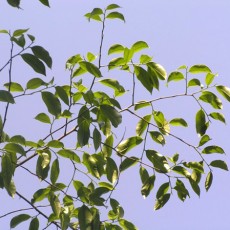
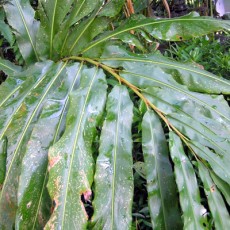
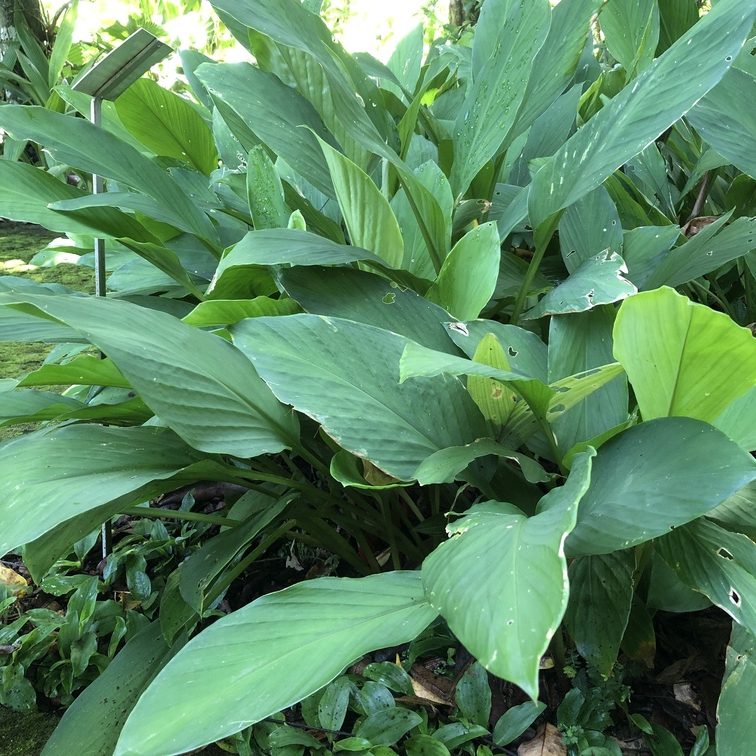
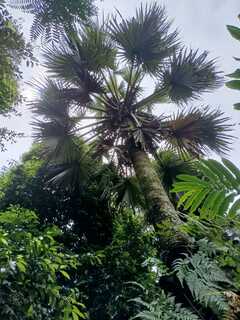
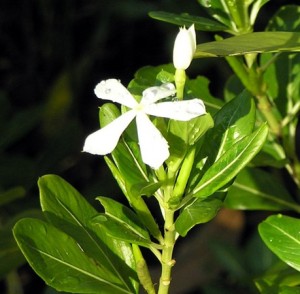
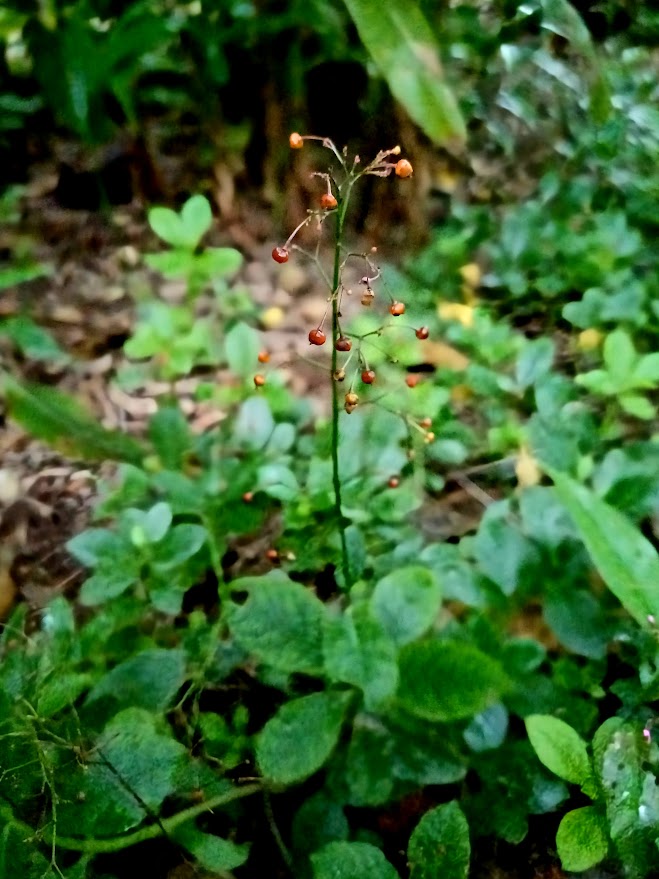
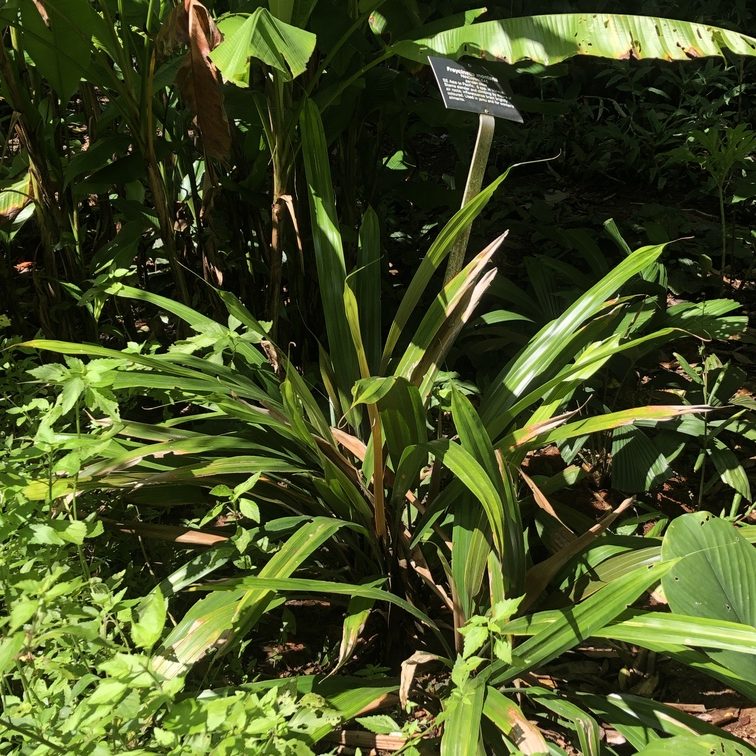
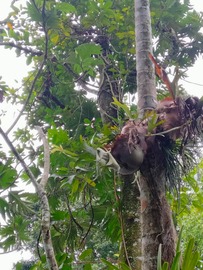
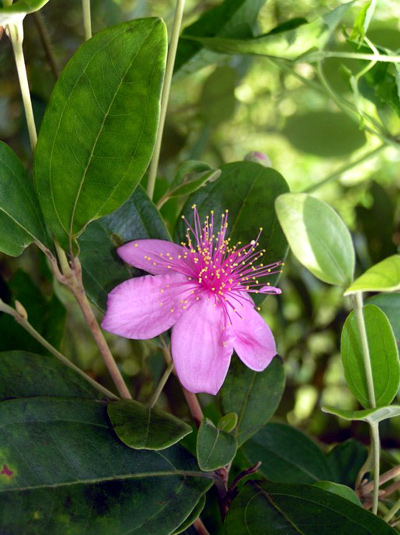
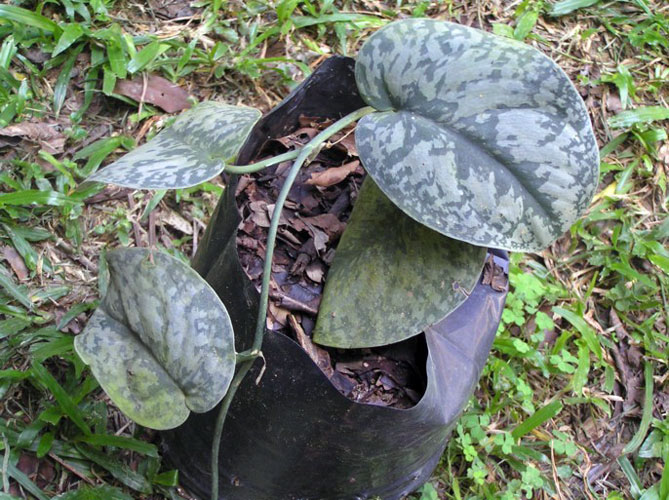
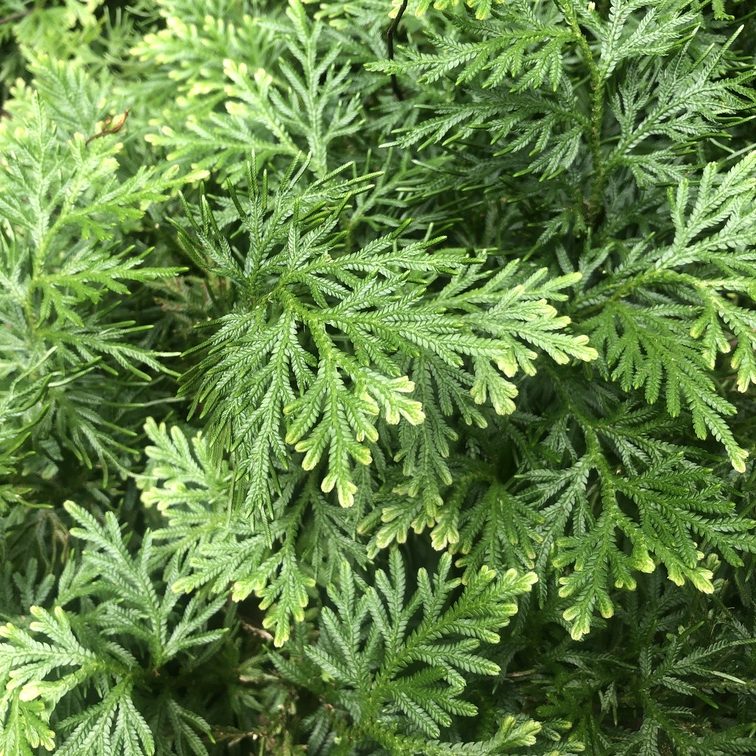
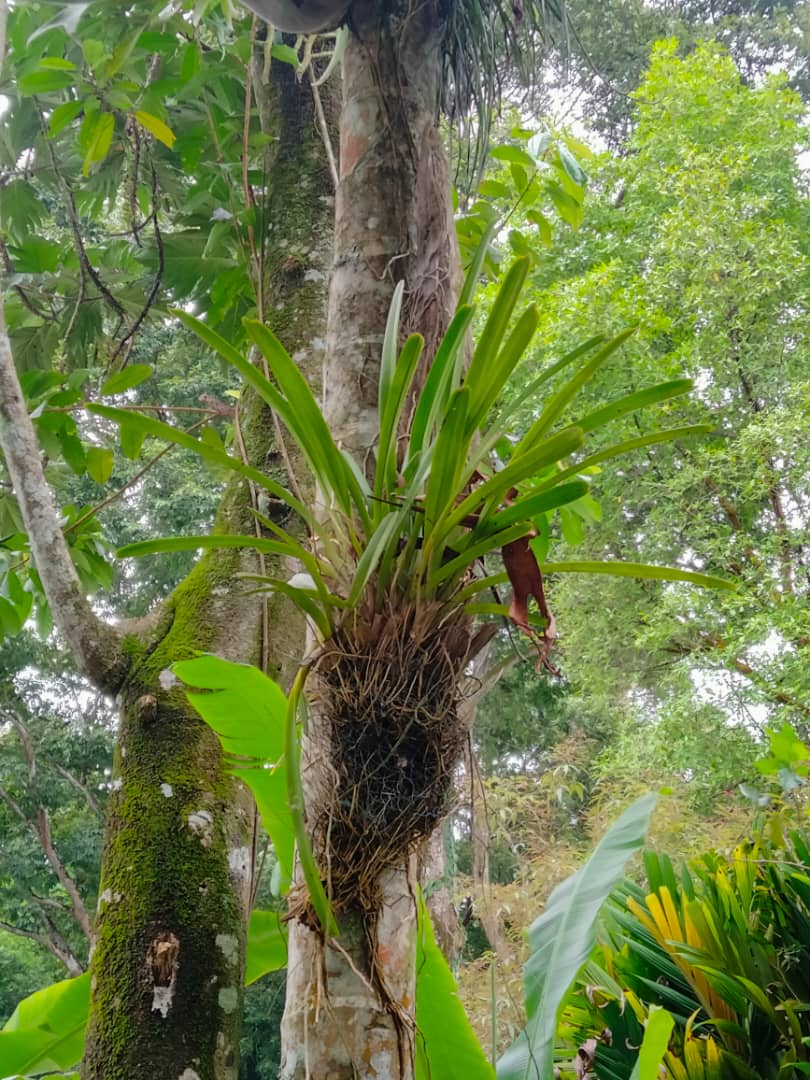
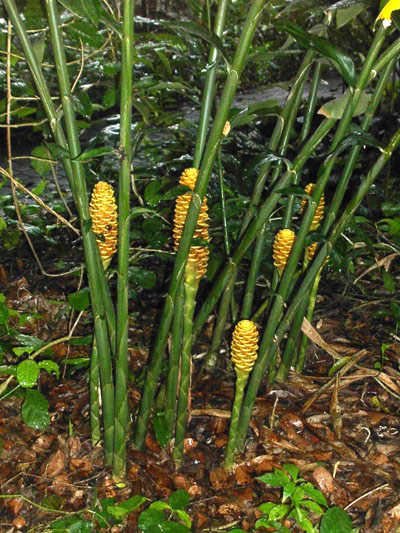
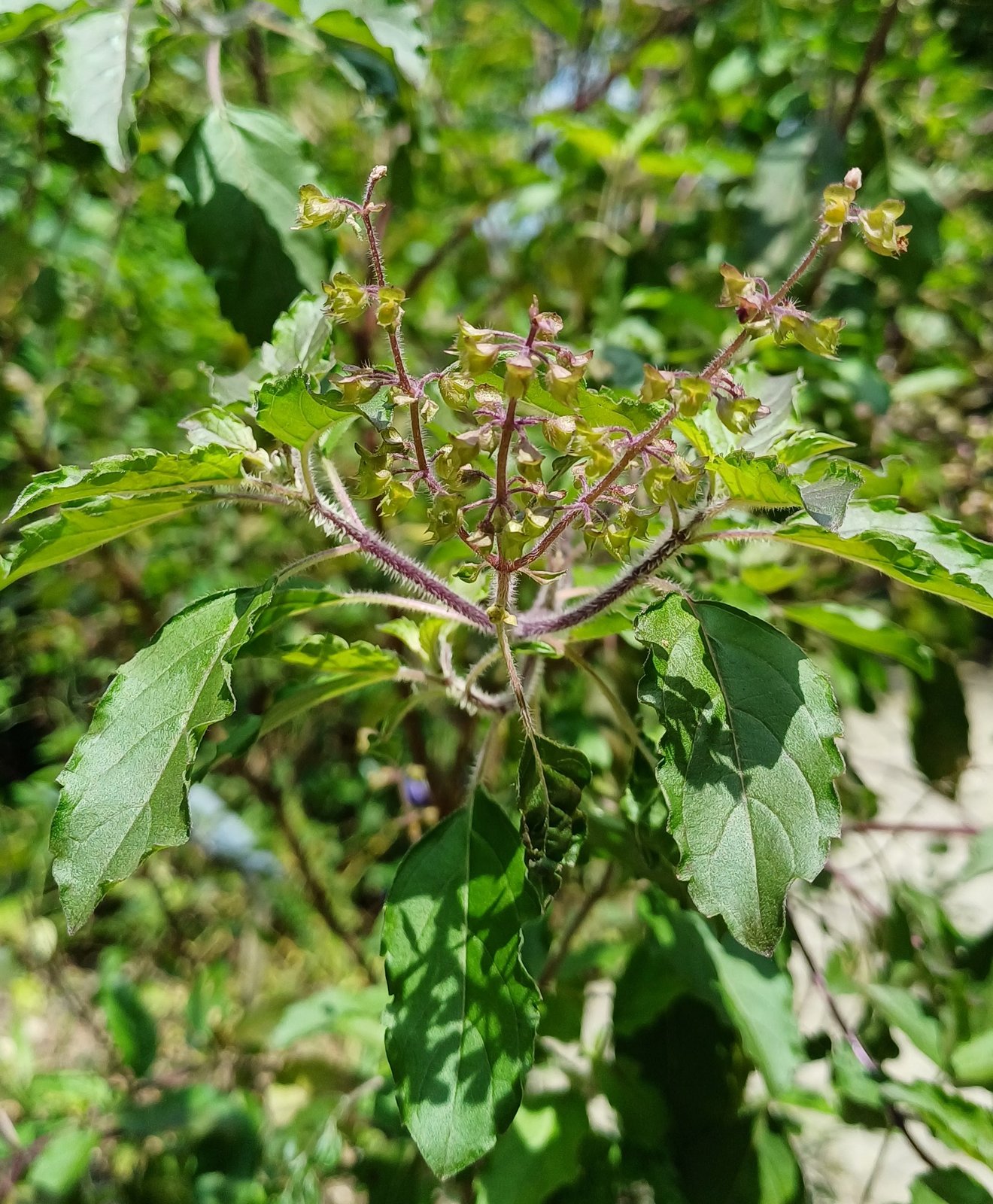
Acrotrema costatum
DILLENIACEAE
meroyan, punai tanah
Native ranges from Burma, Thailand, Malay Peninsula to northern Sumatra. Common in dense rainforest and secondary forest. Roots are boiled to treat back pain and regulate menstrual cycle |  |
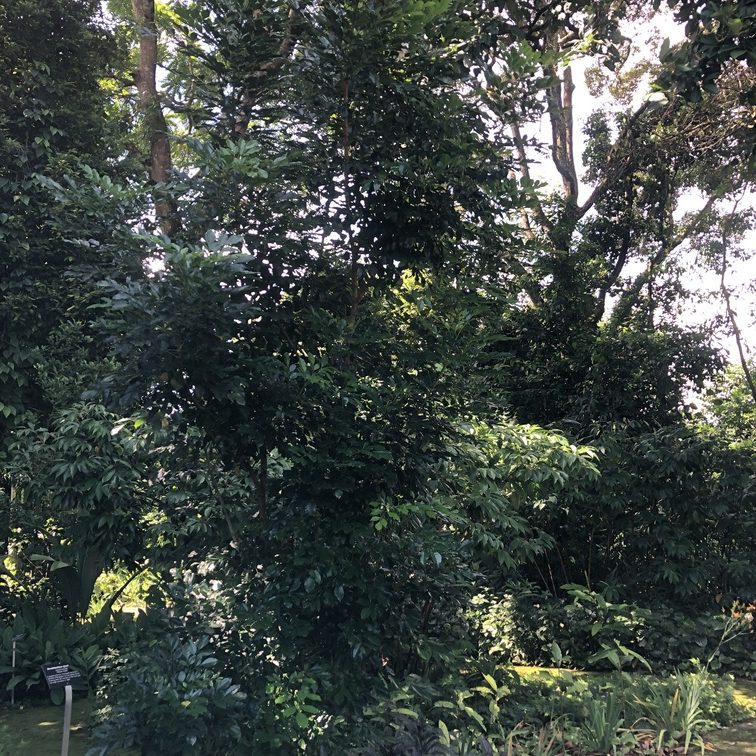
Aglaia odorata
MELIACEAE
Chinese perfume plant, pokok telur belangkas
Used in Java as a red dye for the fingertips. | 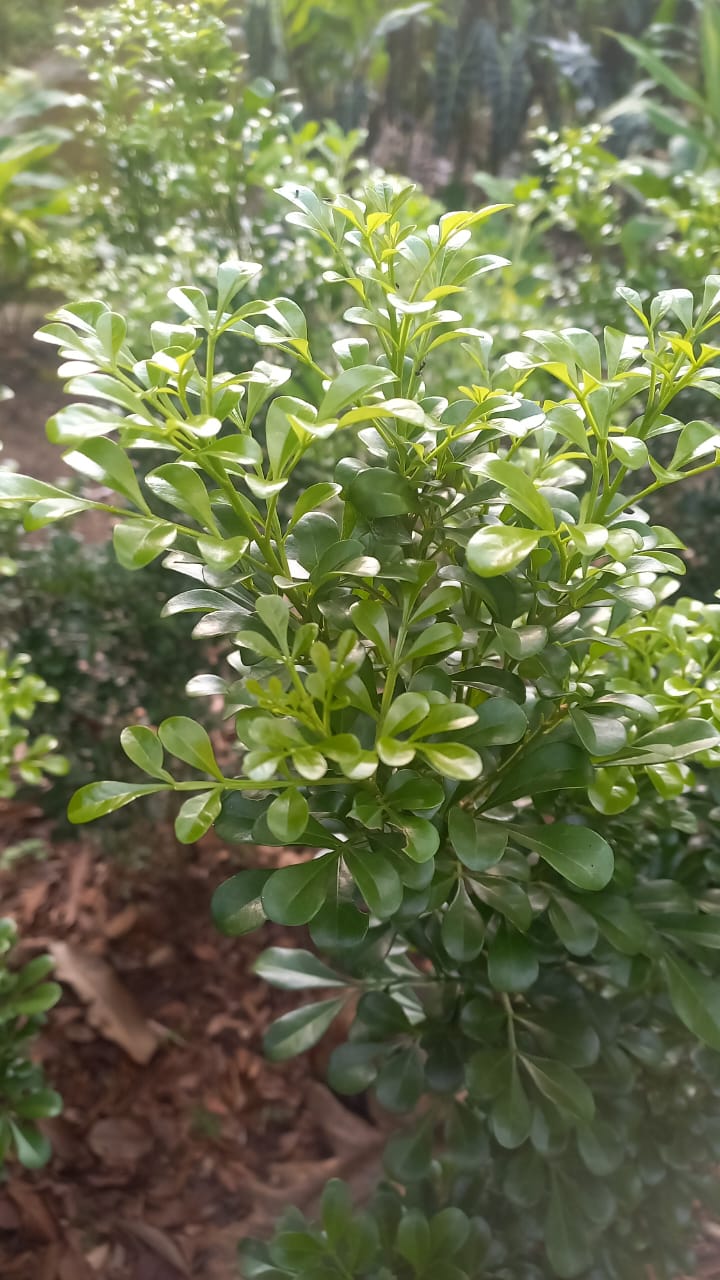 |
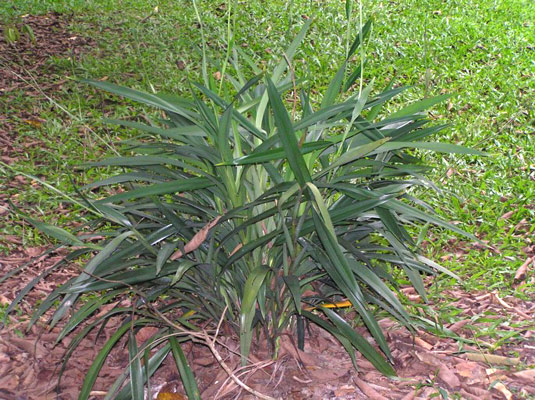
Actinorhytis calapparia
ARECACEAE
pinang penawar
Native to New Guinea and Solomon Islands. Tall solitary palm, cultivated in Thailand, Sumatra and Peninsular Malaysia for its purported magical and medicinal powers. Fruit may substitute for betel nut. | 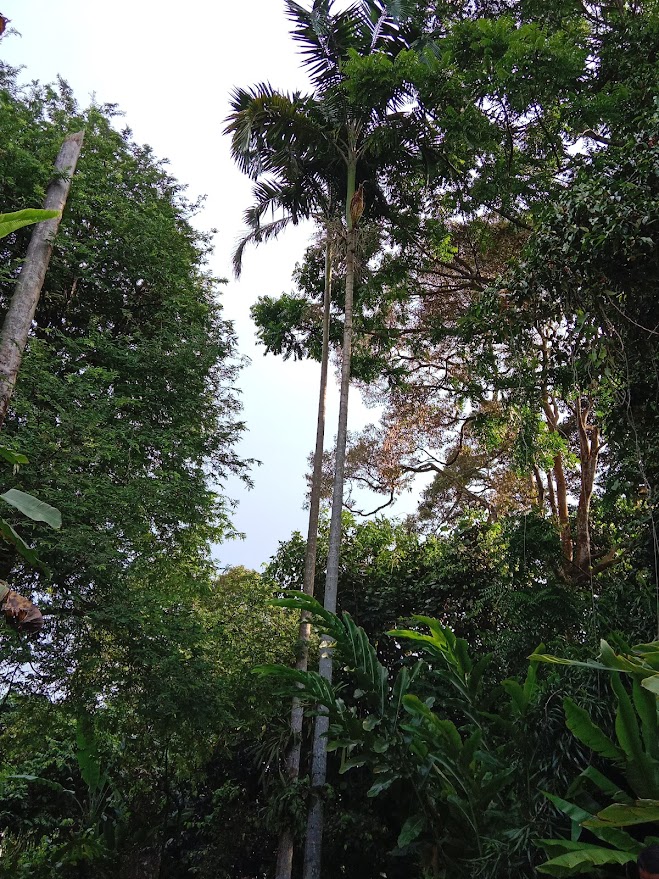 |
Allium tuberosum
AMARYLLIDACEAE
Chinese chives, kucai | 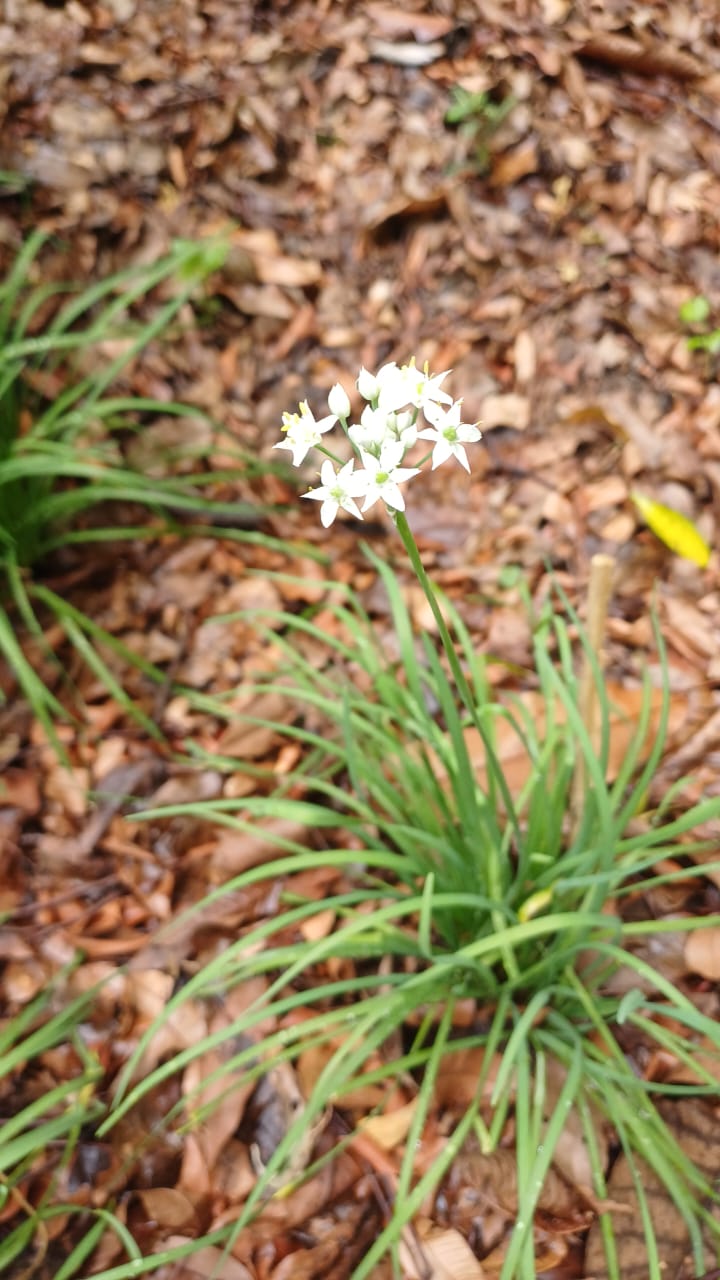 |
Alocasia ‘Amazonica’
ARACEAE
kris plant, bireh
Graceful sagittate leaf of shining metallic sheen, silver green with grey ribs, margins deeply lobed and white, reverse purple. An ornamental hybrid of which the only certain parent is A. sanderiana, native to the Philippines. |  |
Alocasia heterophylla
ARACEAE, Arum family | 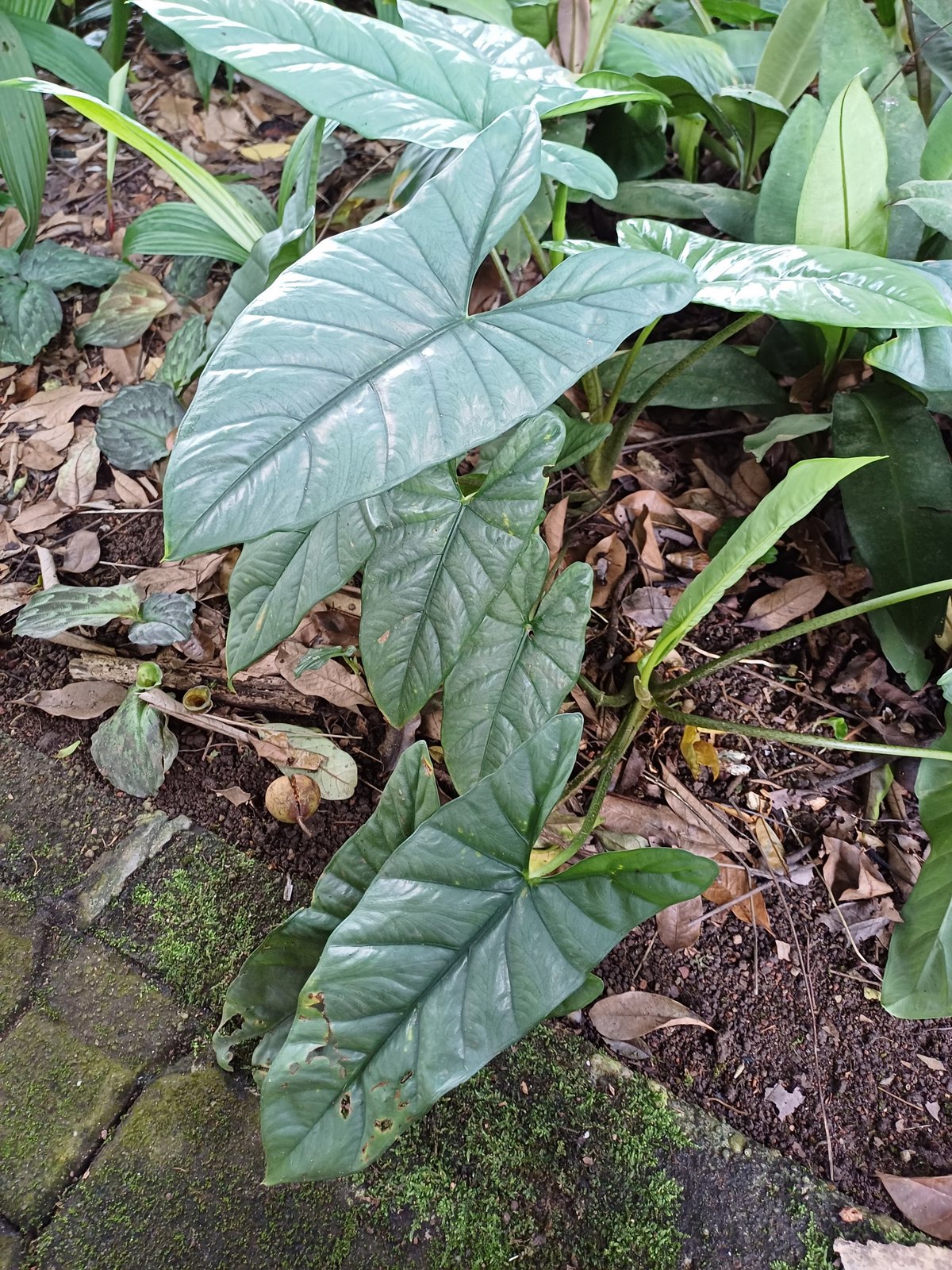 |
Aloe vera
ALOEACEAE
lidah buaya
Tropical America. Used for hair and cosmetics, but contains a purgative. Treats scalds and insect bites. Not for pregnant women or patients with weak gastrointestinal condition. |  |
Alpinia conchigera
ZINGIBERACEAE
lengkuas ranting
India to Malay peninsula. Leaves and rhizomes are soaked and boiled together for bath water to treat post natal rheumatism. Stimulates blood circulation under the skin. |  |
Alpinia galanga
ZINGIBERACEAE
lengkuas
Tropical Asia. Cult. Cooking herb. Leaves also boiled and used as a body lotion, or jamu. Essential oil has antiseptic properties. |  |
Alpinia mutica
ZINGIBERACEAE
chengkenam
Stems slender, up to 2 meters. Inflorescence of up to 12 flowers. Orange fruits break into 3 parts when squeezed. These from Rimba Ilmu, Universiti Malaya. Documented in 1880 by Hunter that Penang Malays used rhizome for stomach ache. |  |
|
Alpinia zerumbet
ZINGIBERACEAE
variegated shell ginger
Shellplant. An attractive clumping alpinia with a bi-coloured leaf. | 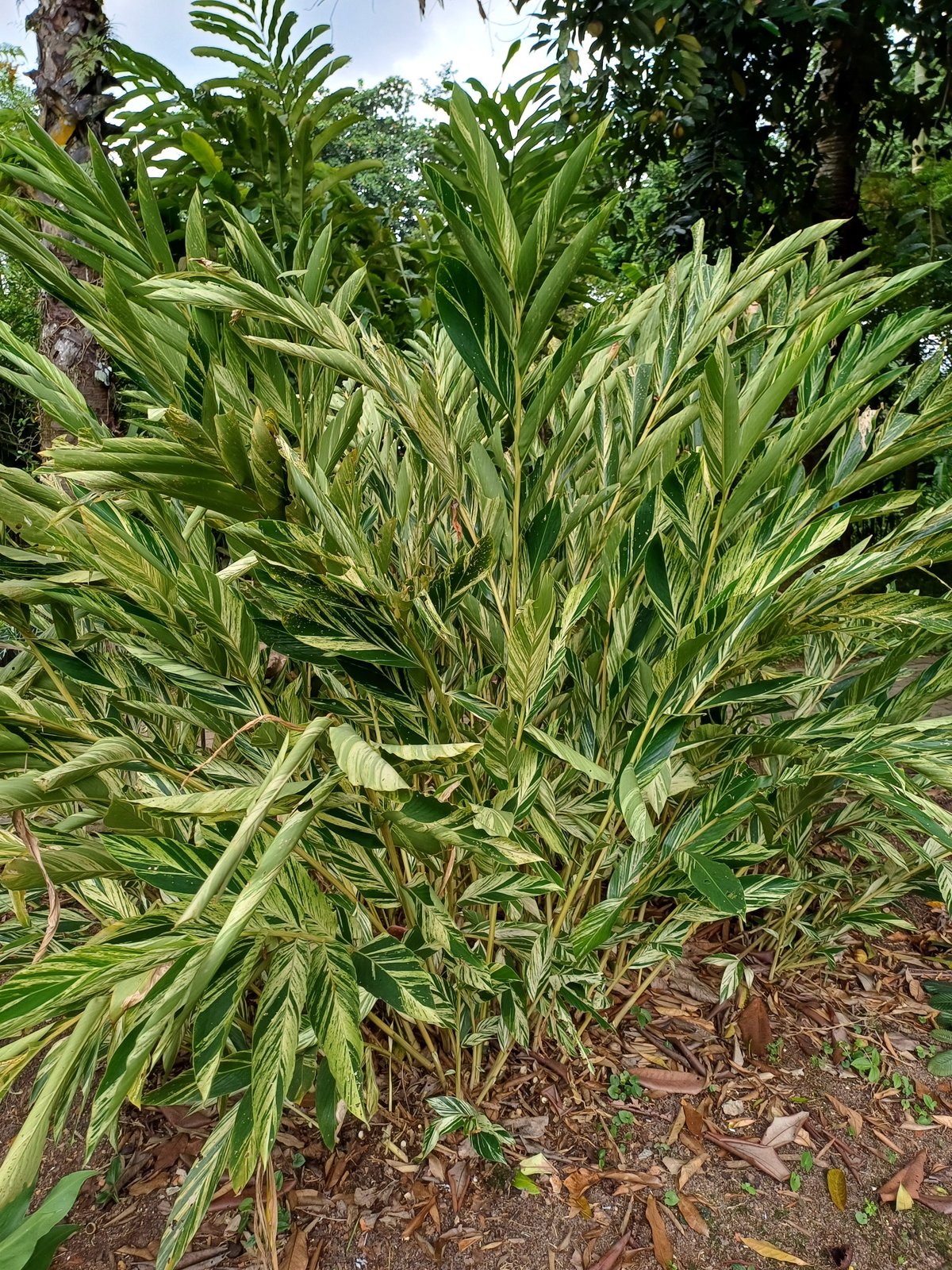 |
Amischotolype gracilis
COMMELINACE
Native to Sundaland; a common undergrowth plant. Attractive vibrant purple fruit, velvety variegated leaves. | 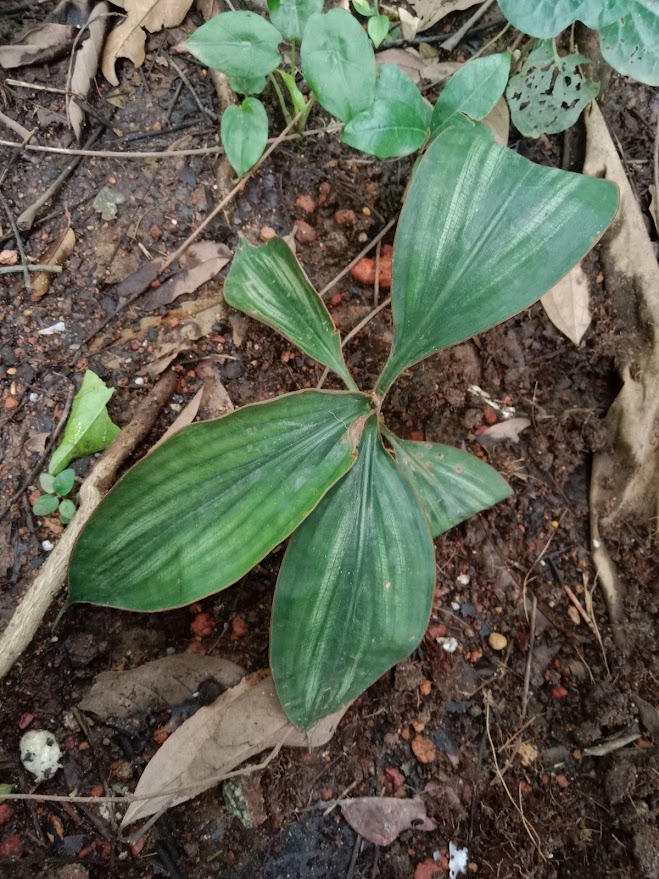 |
Amomum elan, formerly Elettariopsis elan C.K.Lim
ZINGIBERACEAE
Native to Malaya and Thailand. Decoction of roots and plant parts for treatment of food poisoning (muntah-berak), as carminative for flatulence and others. May be distinguished from other species formerly in Elettariopsis by the sweet geranium smell of its leaves when crushed. | 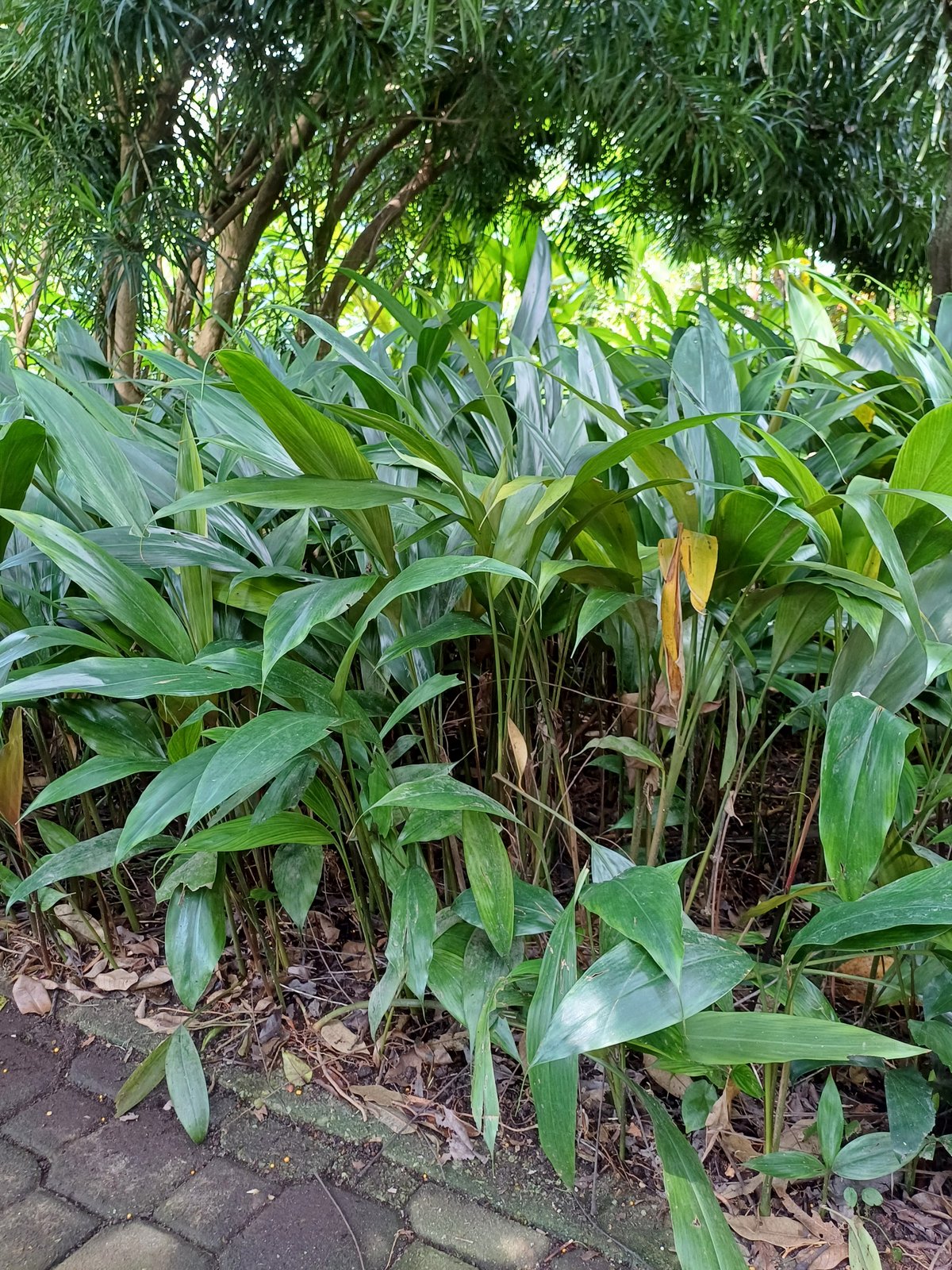 |
Anacardium occidentale
ANACARDIACEAE
gajus
Tropical America. Decoction of bark for diabetes, diarrhoea and mouth ulcers. Decoction of leaf and root for tooth ache and washing the eyes. Young leaves eaten as ulam, but older ones and fruit poisonous unless cooked. |  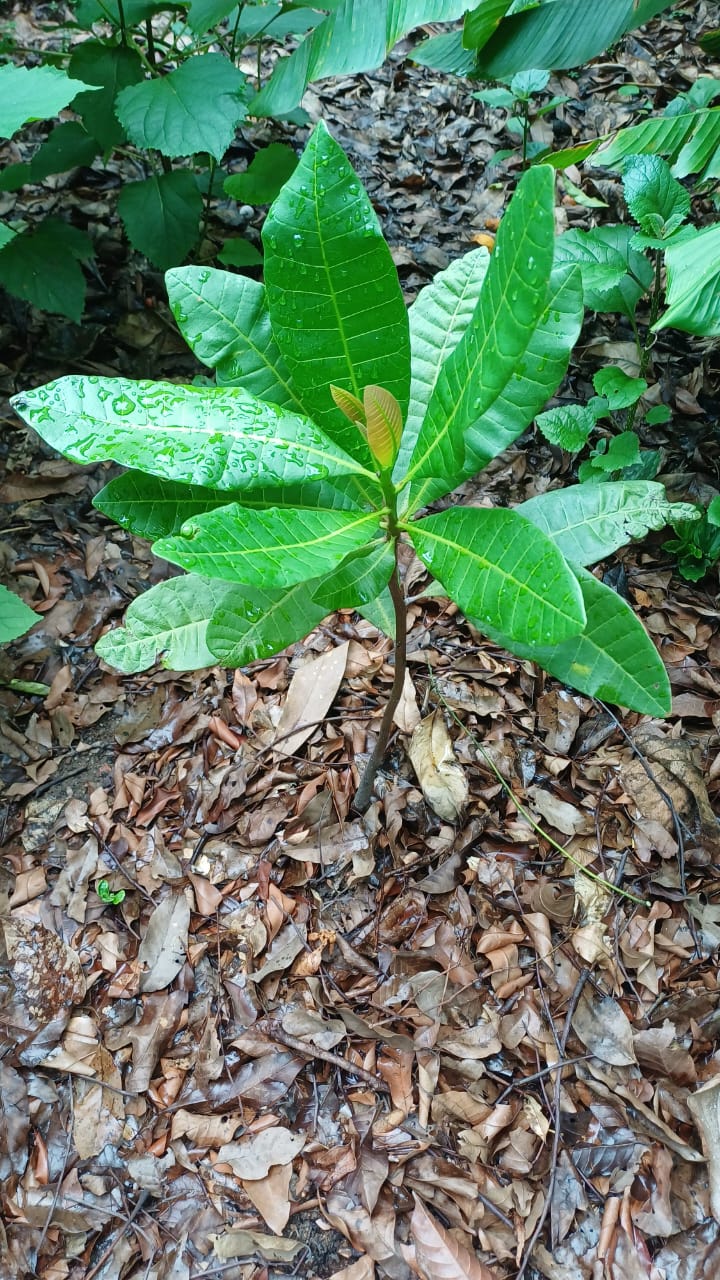 |
Ananas comosus
BROMELIACEAE
pineapple, nanas
Native to South America, where it has been cultivated for many centuries. | 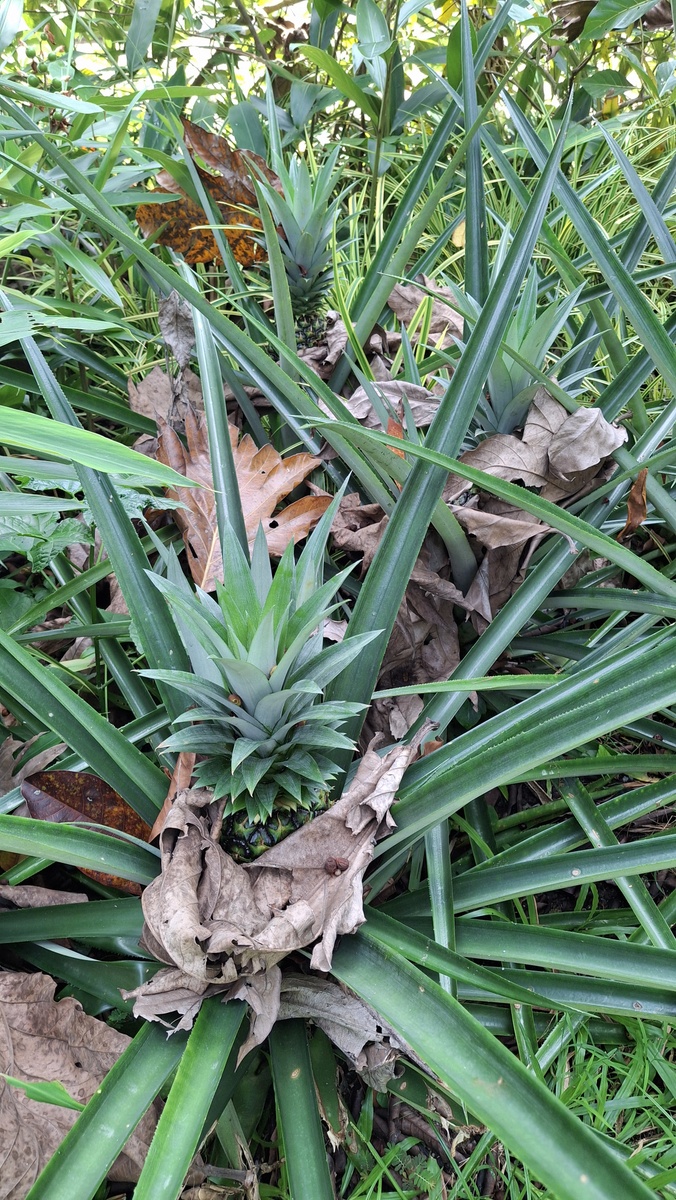 |
Andrographis paniculata
ACANTHACEAE
hempedu bumi, bidara
India. Used to treat dysentry, gastroenteritis. Tonsillitis, pneumonia, infected wounds, pulmonary TB. Pain killer for snake bites. |  |
Angiopterus evecta
MARATTIACEAE
paku gajah
Big stemless fern found in moist tropical Africa, Asia and eastwards through the Pacific. In Malaya a decoction of roots is used to arrest the discharge of blood after miscarriage, and the pounded plant is applied for coughs. |  |
Ardisia elliptica
PRIMULACEAE
mata pelanduk
A common tropical shrub throughout India, Southeast Asia and Papua. Often planted as an ornamental for its attractive fruits. It is used in traditional medicine to treat herpes, measles, diarrhea and fever. | 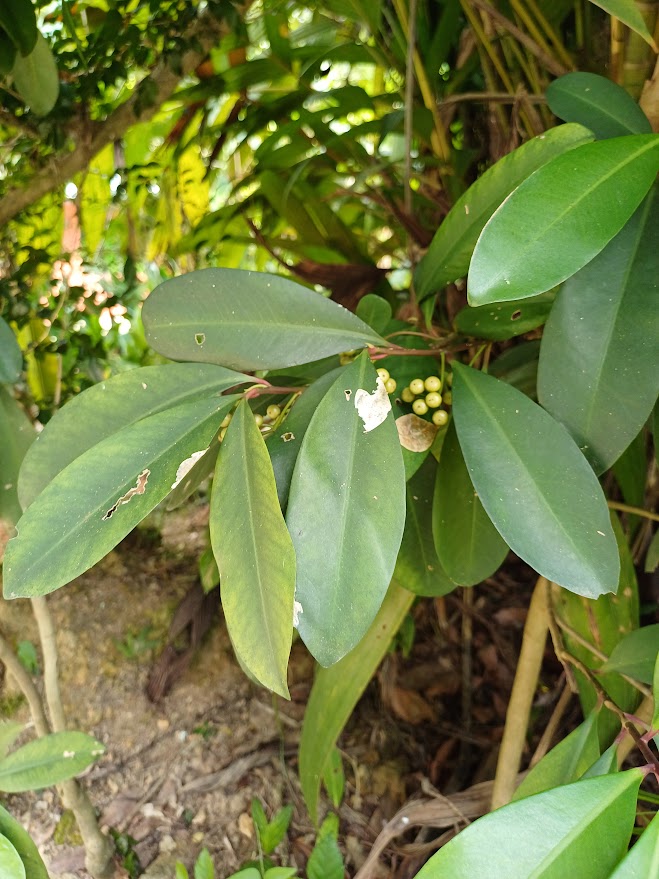 |
Areca catechu
ARECACEAE
pinang sireh, betel
SE Asia. Widely cultivated. Seed treats diarrhea, half-ripe seed pounded for skin ointment. Mild narcotic, sliced endosperm of the seed eaten with betel leaves, lime, gambier or cutch. |  |
Areca catechu var. alba
ARECACEAE
pinang putih
This specimen from Dato Lim Chong Keat, June 2005. |  |
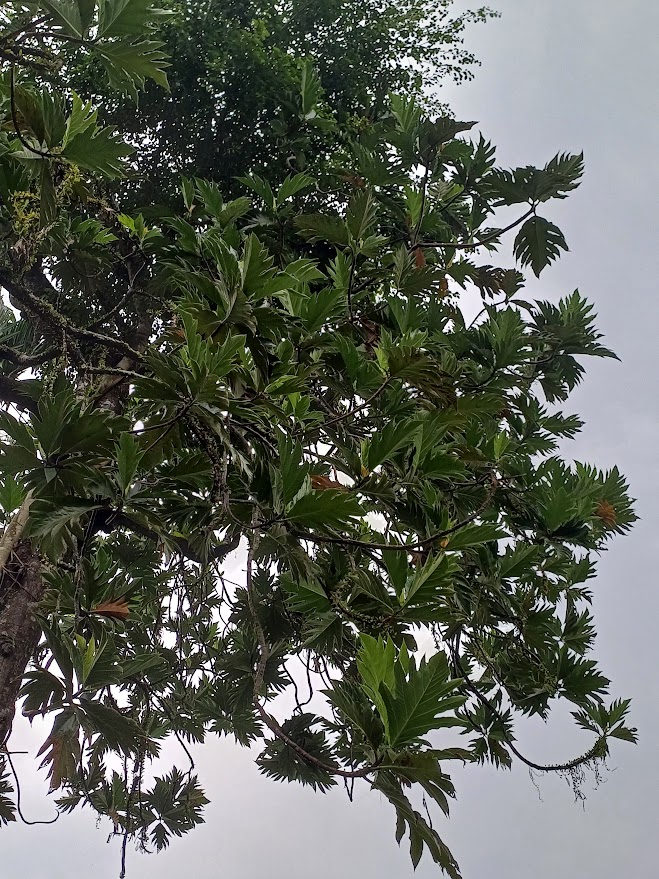
Artocarpus camansi
MORACEAE
keluih, breadnut
Native to New Guinea, Maluku and the Philippines. A relative of the nangka and cempedak, and possibly the wild ancestor of the seedless and more edible breadfruit (Artocarpus altilis). It has separate male and female flowers.
|  |
Arundina graminifolia
ORCHIDACEAE
bamboo orchid
Cultivated for its ornamental flowers. Widespread throughout Pacific islands, Eastern and Southeast Asia. Grows on the ground and commonly found in open spaces. The edible flowers can be stir fried and tastes like bitter gourd. | 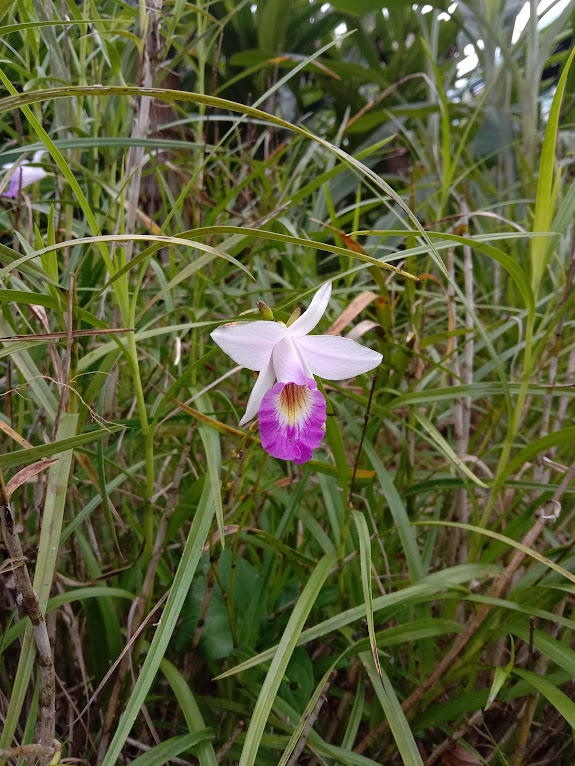 |
Axonopus compressus
POACEAE
cow grass, rumput lembu/rumput padang | 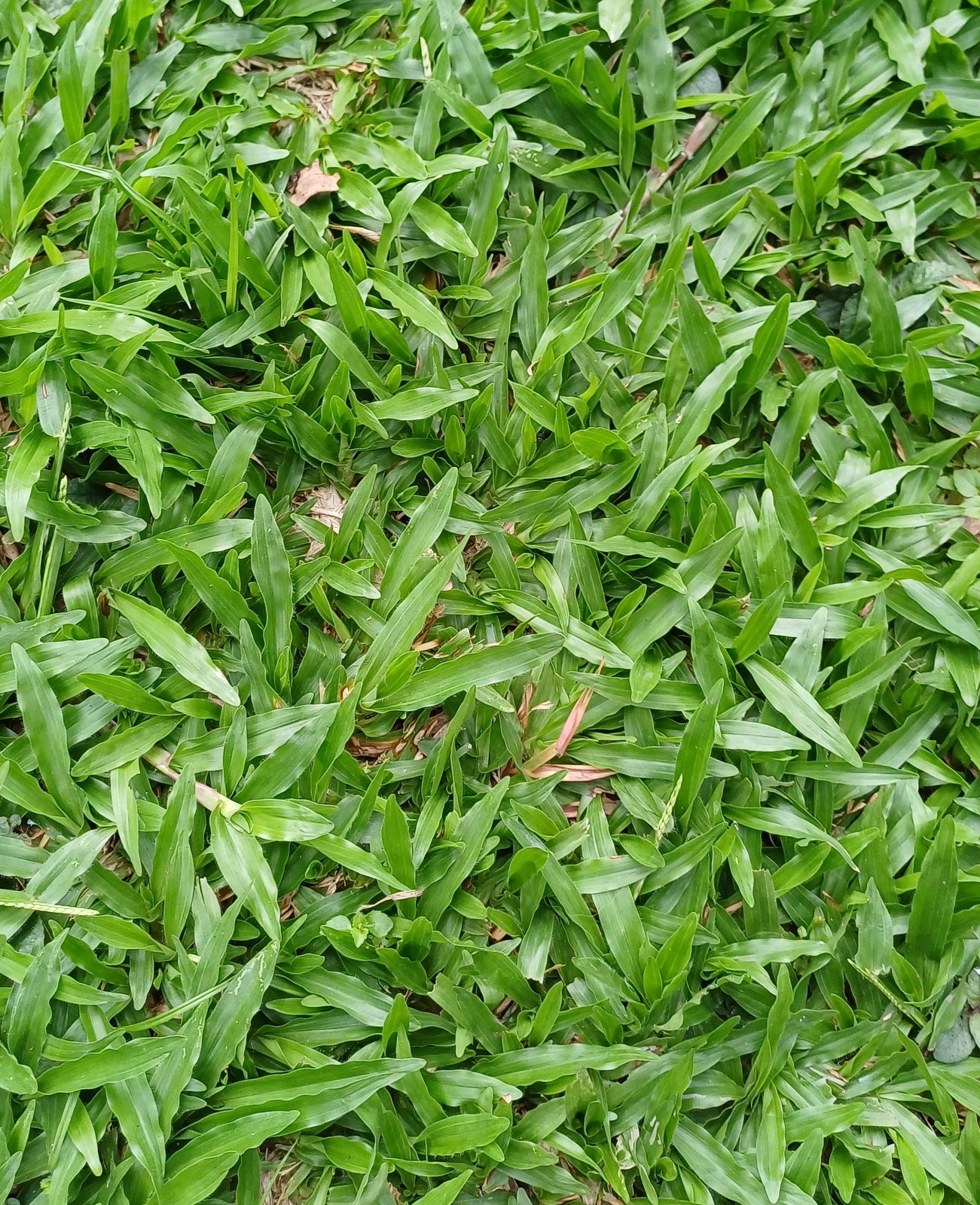 |
Azadirachta excelsa
MELIACEAE
sentang | 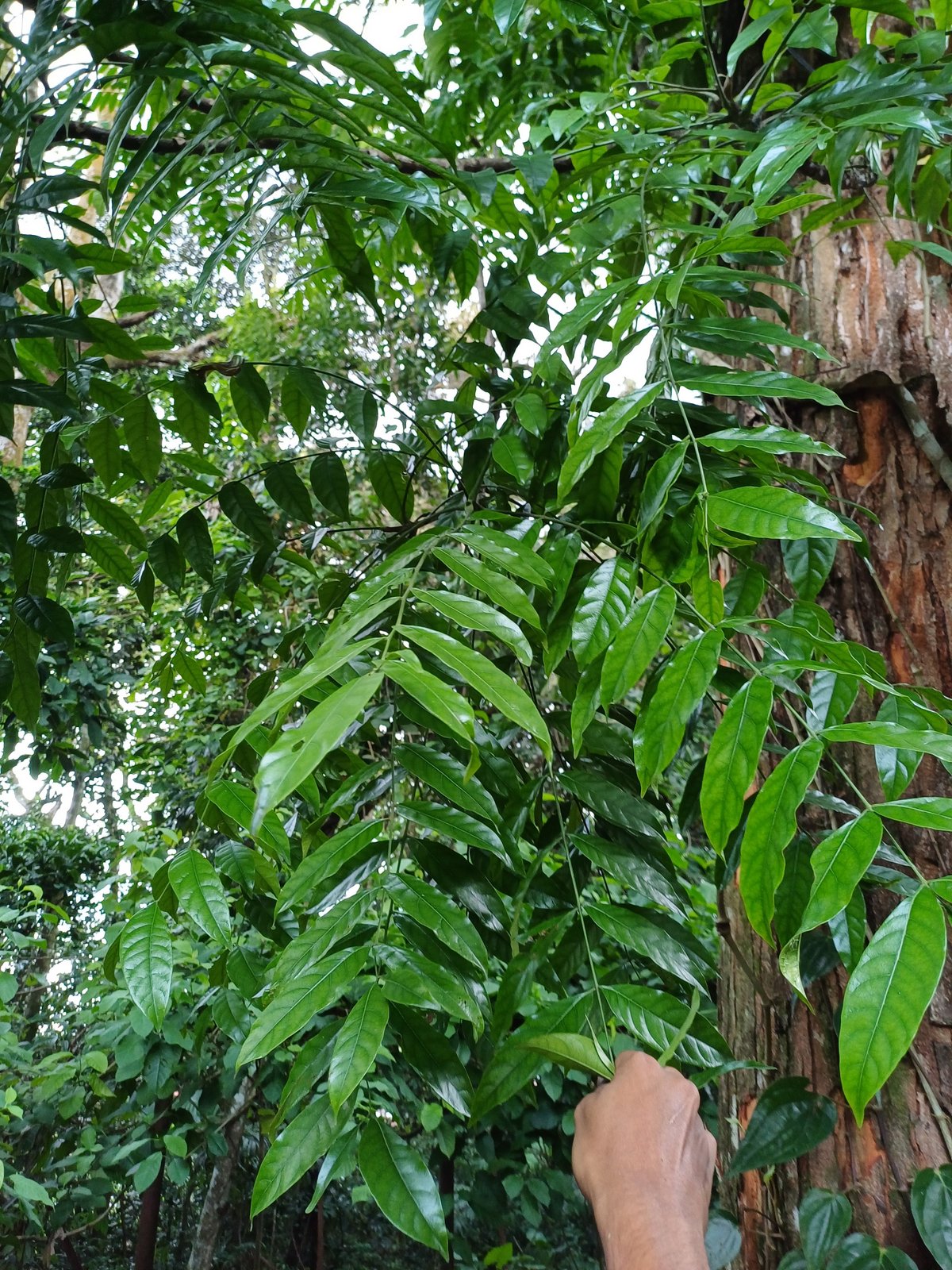 |
Bergera koenigii (previously Murraya koenigii)
RUTACEAE
daun kari
From Indian subcontinent to Southern China and Peninsula Malaya. Leaves used for flavour and fragrance. Mixed with ubat periuk to regulate the menstrual cycle. |  |
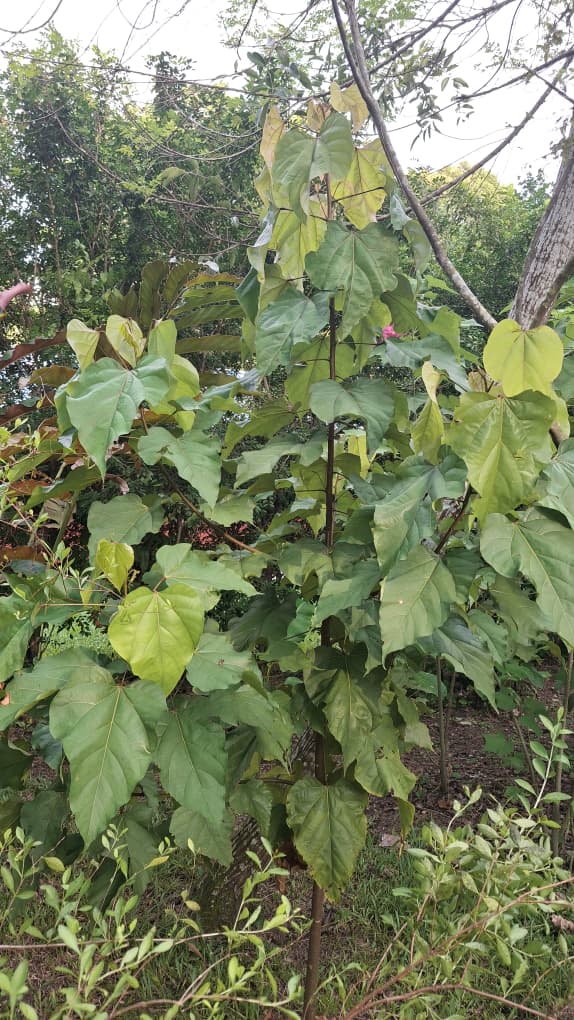
Bixa orellana
BIXACEAE
annatto, achiote
Native to Central America. The source of annatto, an edible orange-red colouring derived from the waxy arils covering the seeds. Considered invasive in some countries. This specimen grown from seeds donated by Wild Dot, Singapore.
|  |
Boesenbergia rotunda
ZINGIBERACEAE
temu kunci
India and S. China (Yunnan)? Widely cultivated species for its key-like rhizomes that are used in Thai & Malaysian cooking. Inflorescence covered by leaf sheaths. Flowers, uniformly pink, appear one by one. |  |
Bolbitis sp.
DRYOPTERIDACEAE | 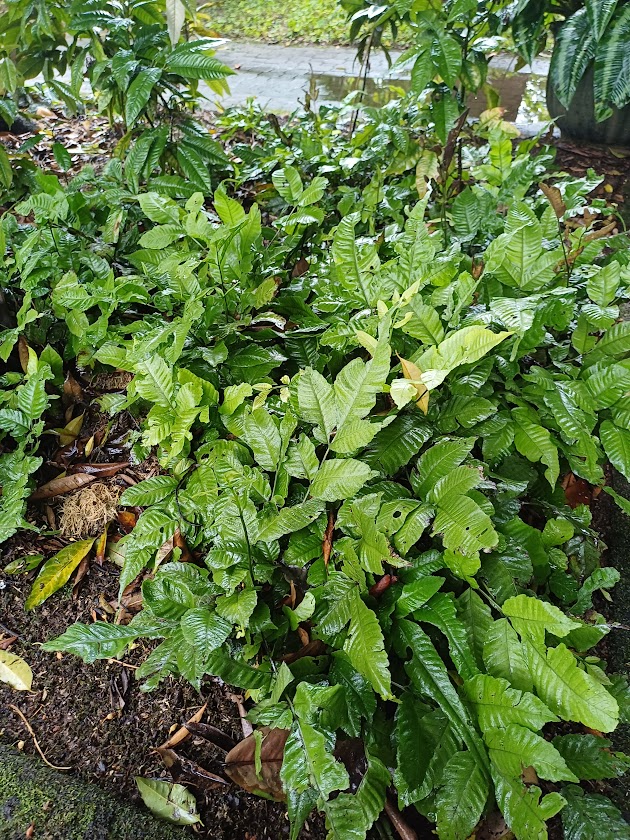 |
Borrasus flabellifer
ARECACEAE (PALMAE)
palmyra palm, lontar | 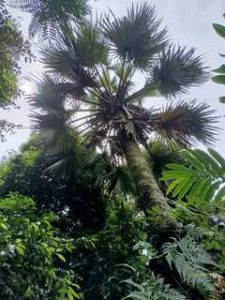 |
Cananga odorata
ANNONACEAE
kenanga
Tropical Asia to N. Australia. Cultivated ornamental. Flowers give ylang-ylang oil for hair and industrial perfume production; leaves produce a poultice for itch. |  |
Catharanthus roseus
APOCYNACEAE
kemunting cina, Madagascar periwinkle
Madagascar. Contains vincristine and other alkaloids with retarding effect on leukemia. Decoction of leaves drunk to relieve menstrual pain & applied for insect bites. |  |
Centella asiatica
UMBELLIFERAE
pegaga
Pan tropical. Salad or ulam. To stimulate appetite, aid digestion, used to treat bowel complaints in children, sores, ulcers and skin problems. |  |
Cinnamomum iners
LAURACEAE
madang teja
Native to Southeast Asia. Less commonly used as a spice because less fragrant than C. verum, but a popular host plant for butterflies. Planted as an ornamental due to pink new leaf. | 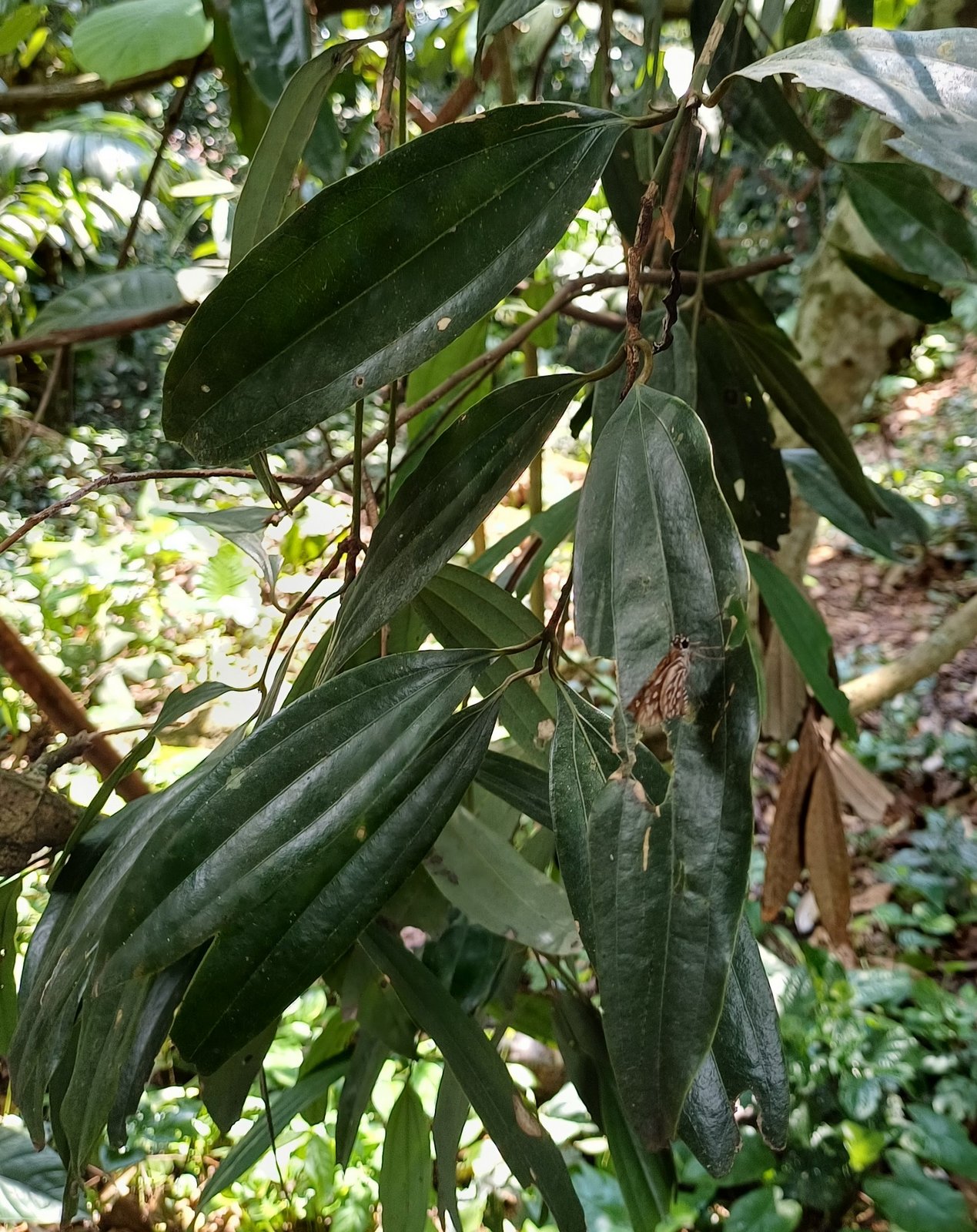 |
Cinnamomum verum
LAURACEAE
kayu manis, cinnamon
India. Cooking spice. Roots treat rheumatism and fever. Tree bark used in many medicinal powders and tinctures, tonics for diarrhoea and colic. |  |
Citrus hystrix
RUTACEAE
limau purut
Leaf blade 1-2″ long, almost as wide, slightly toothed: leaf stalk widely winged, as to appear like the other half of a blade divided in two. Fruit has wrinkled skin, used for ritual bathing. Rind used in ubat jamu to drive away evil spirits, worms in children and headache. Leaf an essential ingredient in cooking. |  |
Citrus sp.
RUTACEAE | 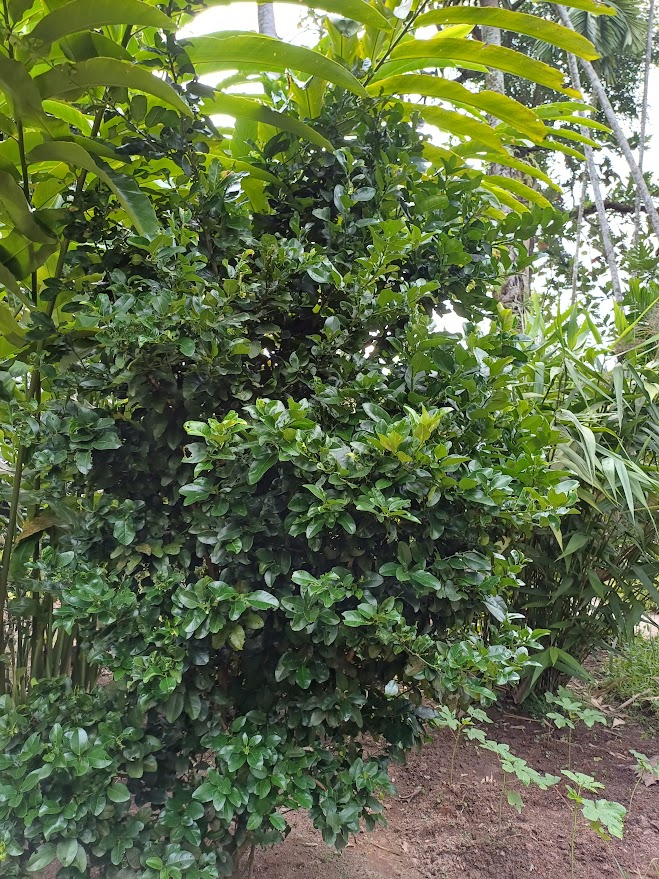 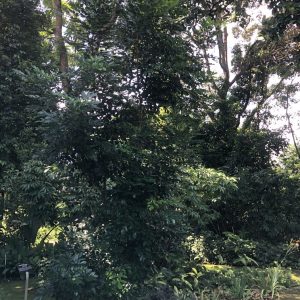 |
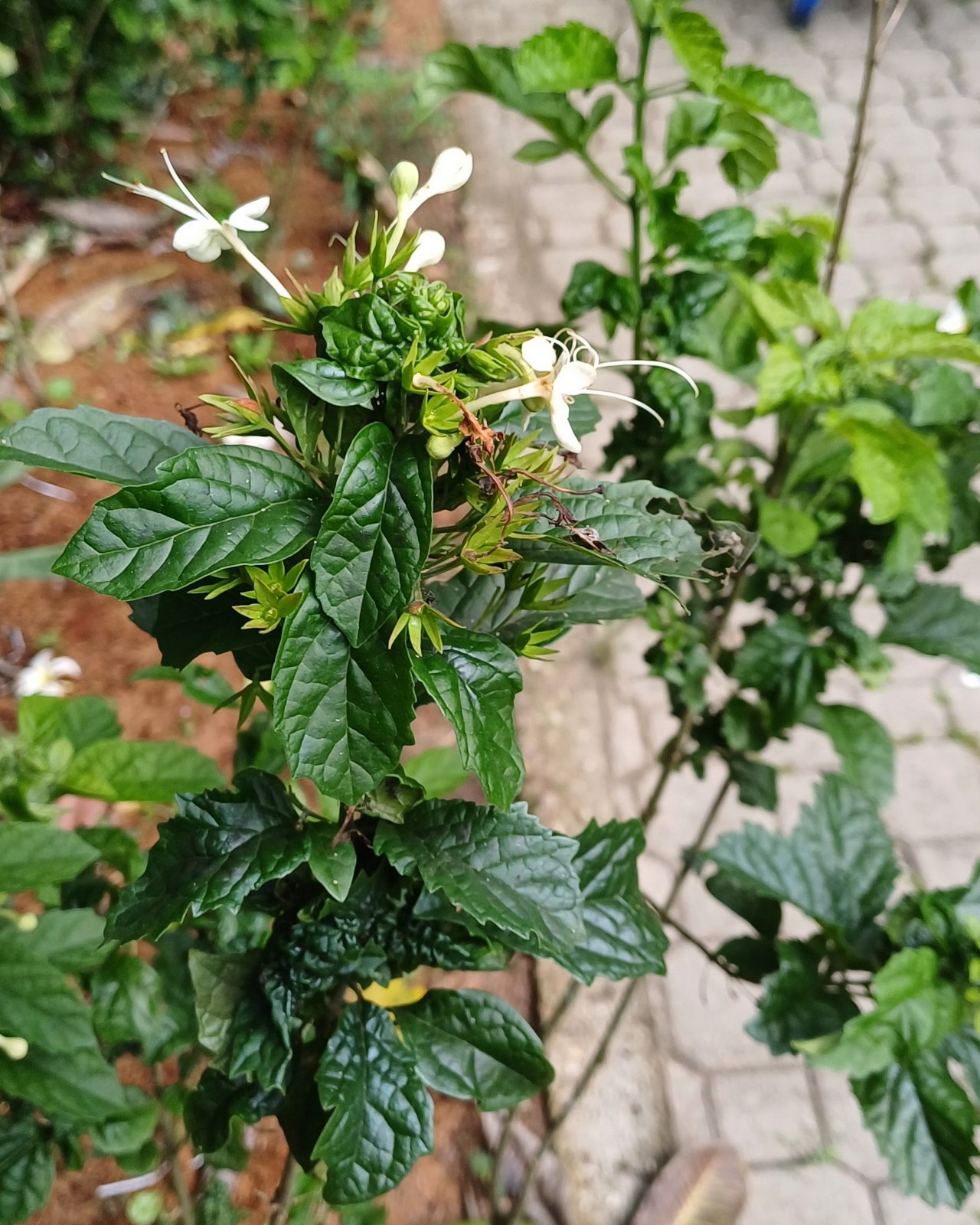
Clerodendrum calamitosum
VERBENACEAE
white butterfly bush
|  |
Clerodendrum bungei
VERBENACEAE
rose glory bower
China.
Cultivated. Many tropical species from this genera are attributed with spiritual & magical properties. | 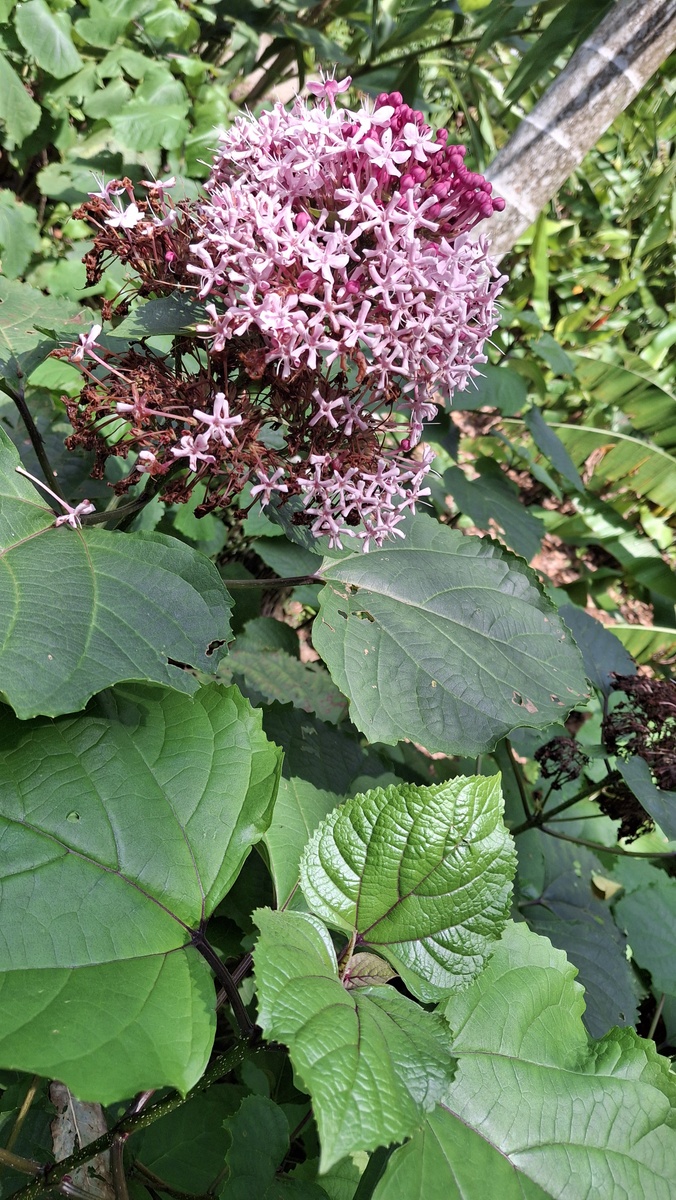 |
Clitoria ternatea
LEGUMINOSAE
butterfly pea, bunga telang
Pantropic but may have originated from tropical Africa. Slender climber with pinnate leaves and pea-like solitary showy blue edible flowers, used to colour food such as sweet glutinous rice. |  |
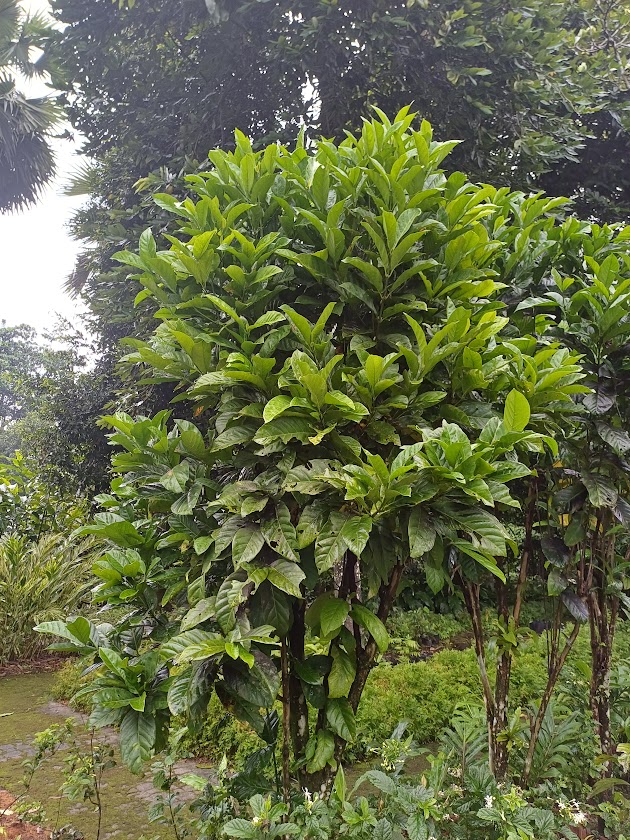
Coffea liberica
RUBIACEAE
liberica coffee
Native to Western and Central Africa, naturalised in Malaya and Java. Grows tall up to 20 metres. Cultivated for its beans which are used to make coffee and are among the largest of the coffee varieties.
|  |
Corymborkis veratrifolia
ORCHIDACEAE
bertam sulur
Ranges tropical Asia to Australia and Pacific islands. This terrestrial orchid has pleated leaves and small short-lived cinnamon-scented white flowers, believed to be pollinated by a nocturnal moth. The plant is used in Malay traditional medicine to treat fever and blood flow. | 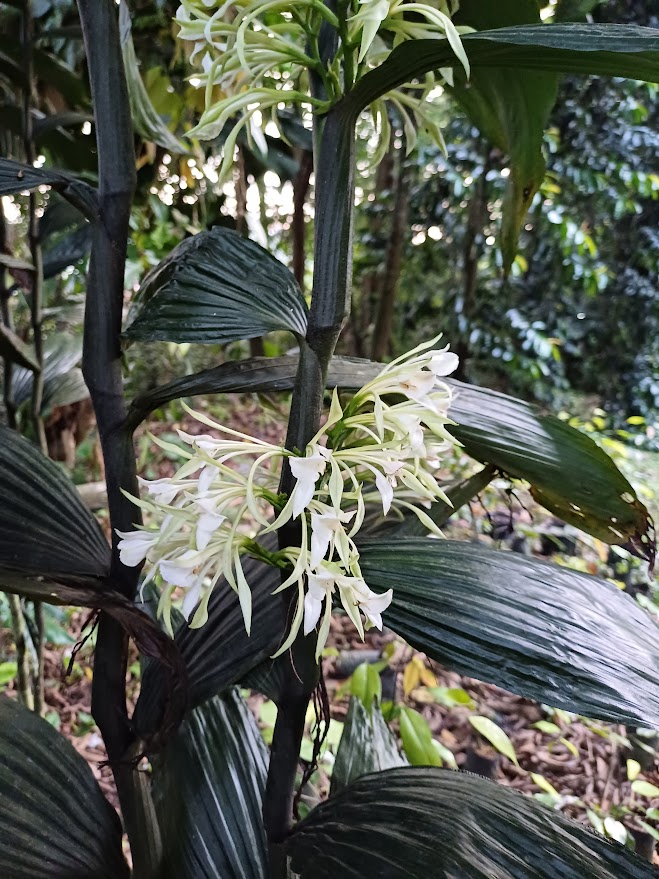 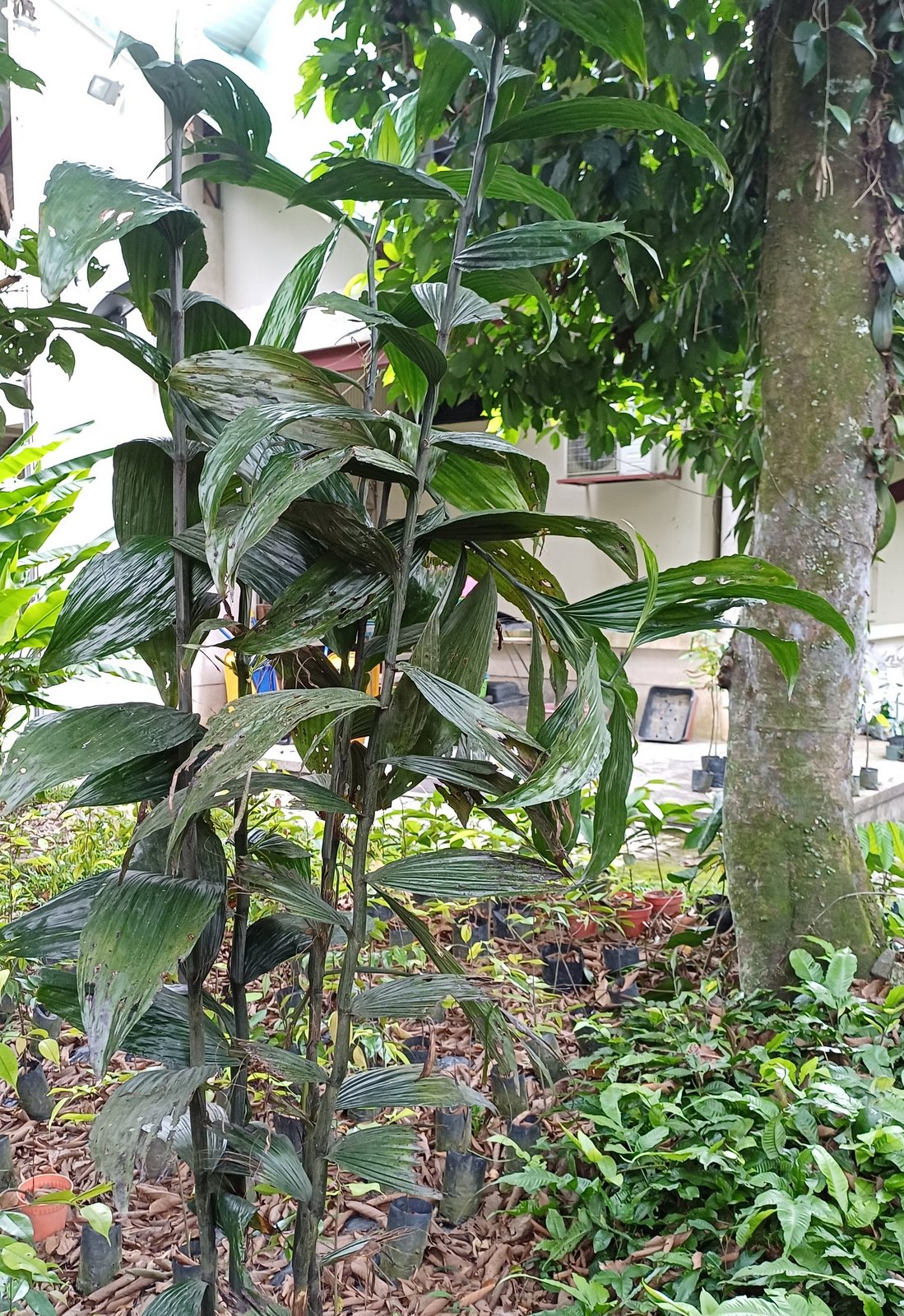 |
Costus speciosus
COSTACEAE
setawar halia
Malaysia. Whole plant boiled for a decoction to bathe patients with high fever & for smallpox. Stem scrapings for leprous skin. Juice of rhizome is purgative. Malays attribute magical properties: drives away spirits causing illness. |   |
Crinum asiaticum
AMARYLLIDACEAE
bakong, rumput tembaga suasa
SE Asia to Pacific, seashores.
Leaves used in poultices for joint pain, sometimes with pepper and gendarusa for fevers, lumbago, headaches, swellings. Chewed roots can induce vomiting. |  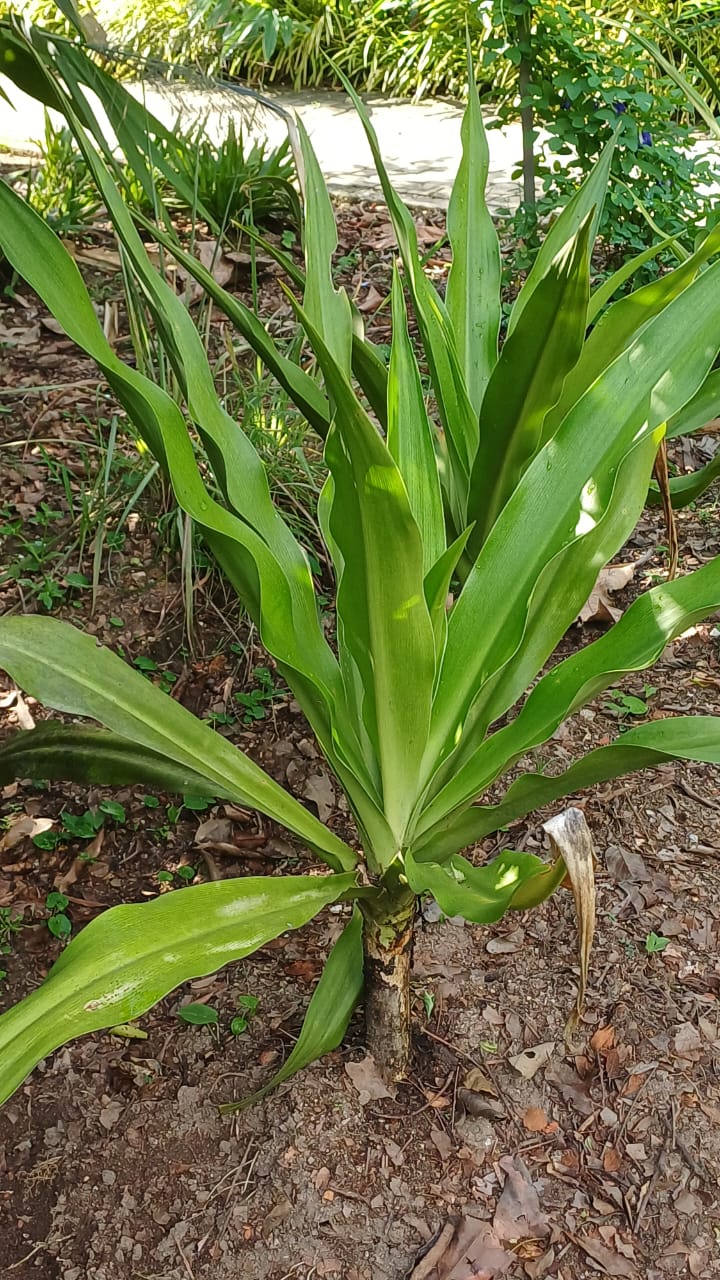 |
Curculigo latifolia
HYPOXIDACEAE
lumbah
Indo-Malaya. Fruits give sweet sensation and improve appetite. Decoction of leaves & hibiscus root used as eye drop for sore eyes. Roots eaten raw treat high fever. Decoction drunk for tumours smallpox and kidney stones. Fibre for fish nets. |  |
Curcuma aeruginosa
ZINGIBERACEAE
temu hitam
Burma, Indo China. Cultivated. Rhizomes used in postnatal tonics and jamu (traditional health tonic). |  |
Curcuma longa
ZINGIBERACEAE
kunyit, turmeric
SE Asia, precise origin unknown. One of the oldest spice plants known, dried rhizomes ground for curries, dyes, used to relieve flatulence and diarrhea. |  |
Cymbidium finlaysonianum
ORCHIDACEAE
boat orchid, bunga candarek
A common and attractive species, self-seeding in urban settings. | 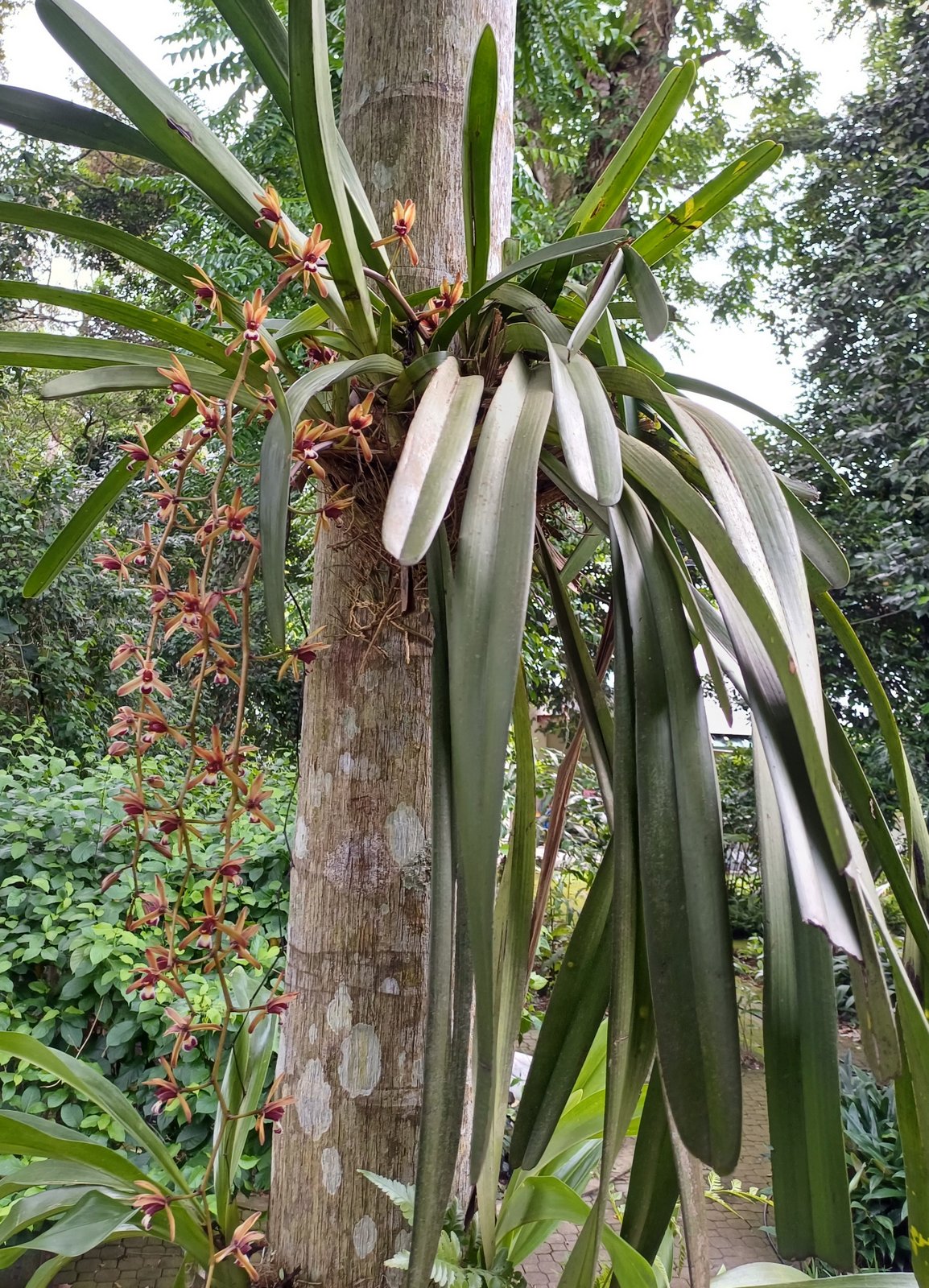 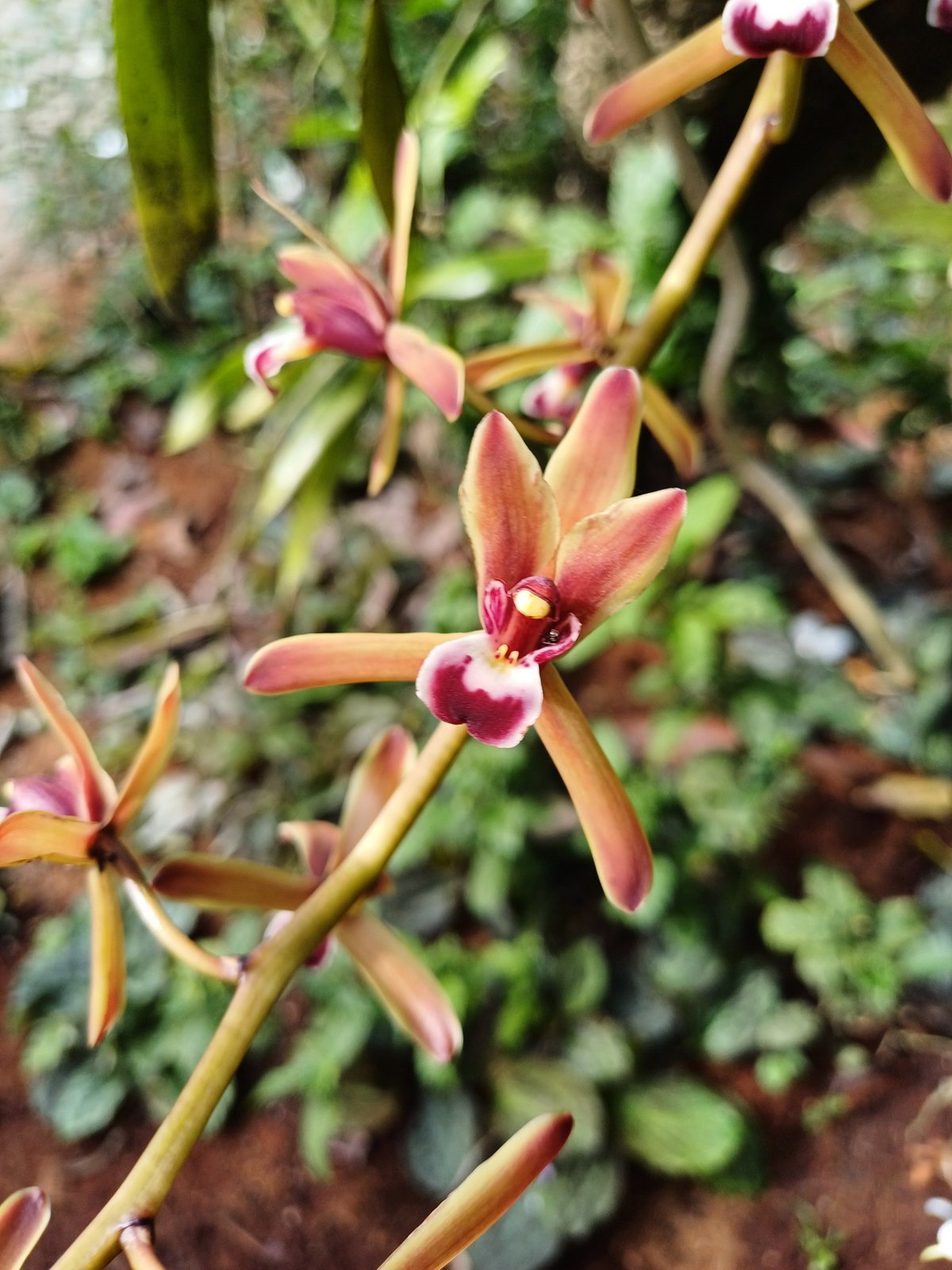 |
Cymbopogon citratus
GRAMINEAE
serai
Only known in cultivation. Used widely in cooking and fragrance. For headache, pound leaves and apply to forehead. Apply paste as insect repellent or to joints for rheumatism. Boil and drink water for urinary & stomach problems. |  |
Cymbopogon nardus
GRAMINEAE
serai wangi
Sri Lanka, S. India. Introduced to SE Asia. Acrid, warm, anti-inflammatory, analgesic. Digestive. Headache, stomach ache, diarrhea. Rheumatism. Irregular menses, post partum edema. Main source of citronella oil. |  |
Datura fastuosa
SOLANACEAE
kecubung
Widely distributed village plant. All parts poisonous, particularly seeds, but occasionally used as an internal medication for lack of virility. Most common criminally used poison, rendering subject insensible without killing him. Crushed seeds administered in coffee/tea.
POISONOUS — DO NOT EAT |  |
Dianella ensifolia
LILIACEAE
akar siak, chi chiak
Indo-Malaya. Leaf poultice used with Ardisia as poultice for wounds. Roots used in postnatal tonics. |  |
Dillenia philippinensis
DILLENIACEAE
simpoh
Philippines. Genus named for J.J. Dillenius, 1684-1747, German botanist, professor at Oxford. Flowers large, solitary, petals falling first day, fruit covered by thick fleshy edible sepals that make cough syrup & shampoo. Bark yields a red dye. |  |
Diospyros discolor
EBENACEAE
buah mentega
Native to Philippines. Twigs velvety, Occasionally cultivated in Malaya for edible fruits. Separate male and female flowers, fruit a berry with fibrous to fleshy pericarp. (Species name meaning ‘having many colours’). | 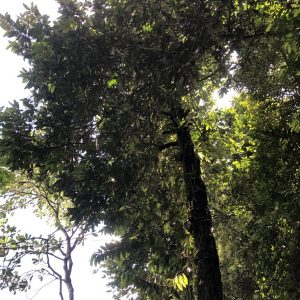 |
Eryngium foetidum
APIACEAE
ketumbar Jawa
America, introduced by Chinese. Young leaves a substitute for coriander. Many medicinal uses in Americas: diuretic, febrifuge, mild stimulant, laxative. Decoction of whole plant lowers blood pressure, & as an aphrodisiac. |  |
Etlingera elatior
ZINGIBERACEAE
kantan
Mauritius. Of all gingers in the peninsula, Etlingeras have the most colorful inflorescence and fruits, but this introduced species is widely used for its edible flower cooked in laksa and sliced in salads. |  |
Etlingera fulgens
ZINGIBERACEAE
Native to Southern Thailand and Peninsular Malaysia. Cultivated as an ornamental plant due to the leaf’s striking red underside. | 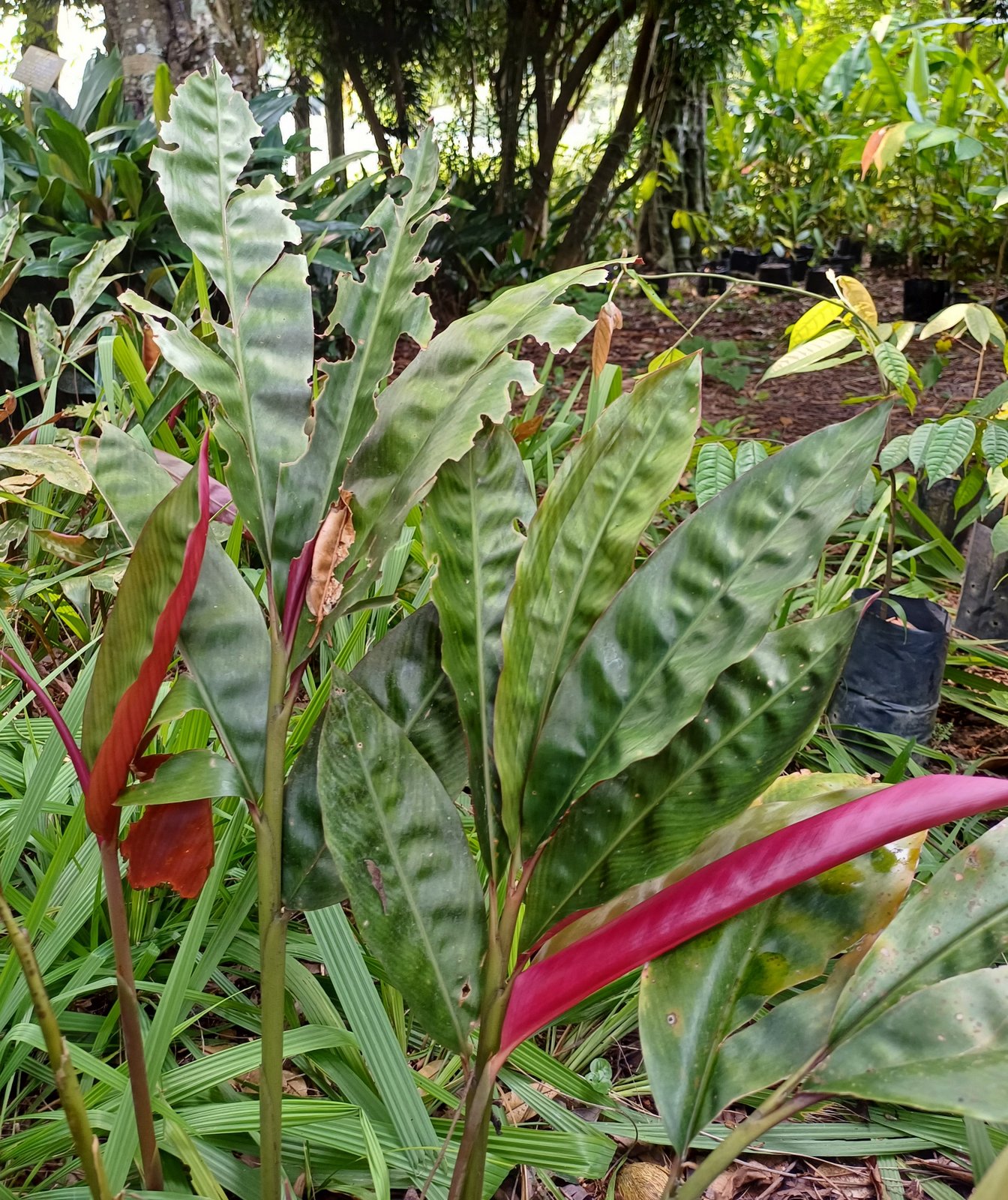 |
Etlingera littoralis
ZINGIBERACEAE
tepus
Gingers with tall leafy shoots and inflorescence on separate side shoots that may be some distance from the leafy shoot. |  |
Euricles amboinensis
AMARYLLIDACEAE
sepenoh
Seashore plant through archipelago. Cultivated as a magic plant; Malays use leaves in magic brush to sprinkle consecrated rice-gruel in harvesting, fishing and wedding ceremonies. Plant expels ghosts and evil spirits from house. Leaves applied to swellings, bulb to relieve oppression. |  |
Eurycoma longifolia
SIMAROUBACEAE
tongkat ali | 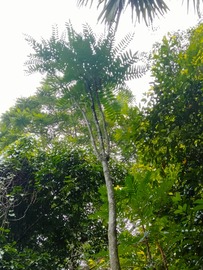 |
Ficus deltoidea
MORACEAE
golden mistletoe fig
Native to Southeast Asia. | 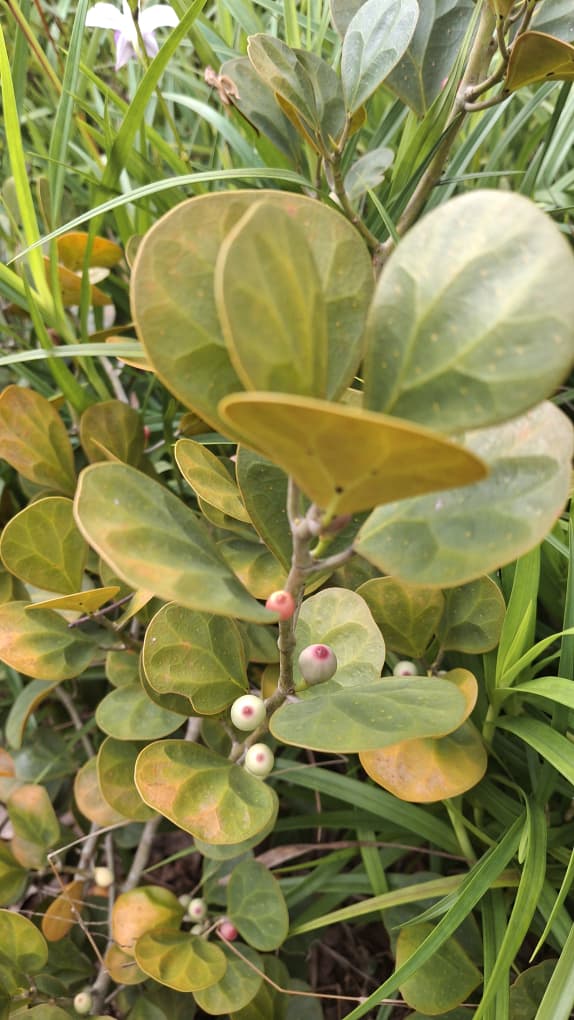 |
Gardenia jasminoides
RUBIACEAE
cape jasmine, bunga melur | 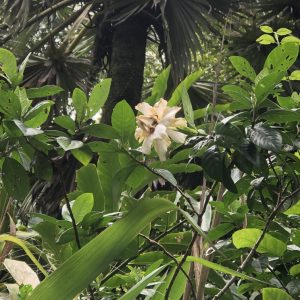 |
Globba cf patens
ZINGIBERACEAE
This from Gunung Bunga Buah, Genting. | 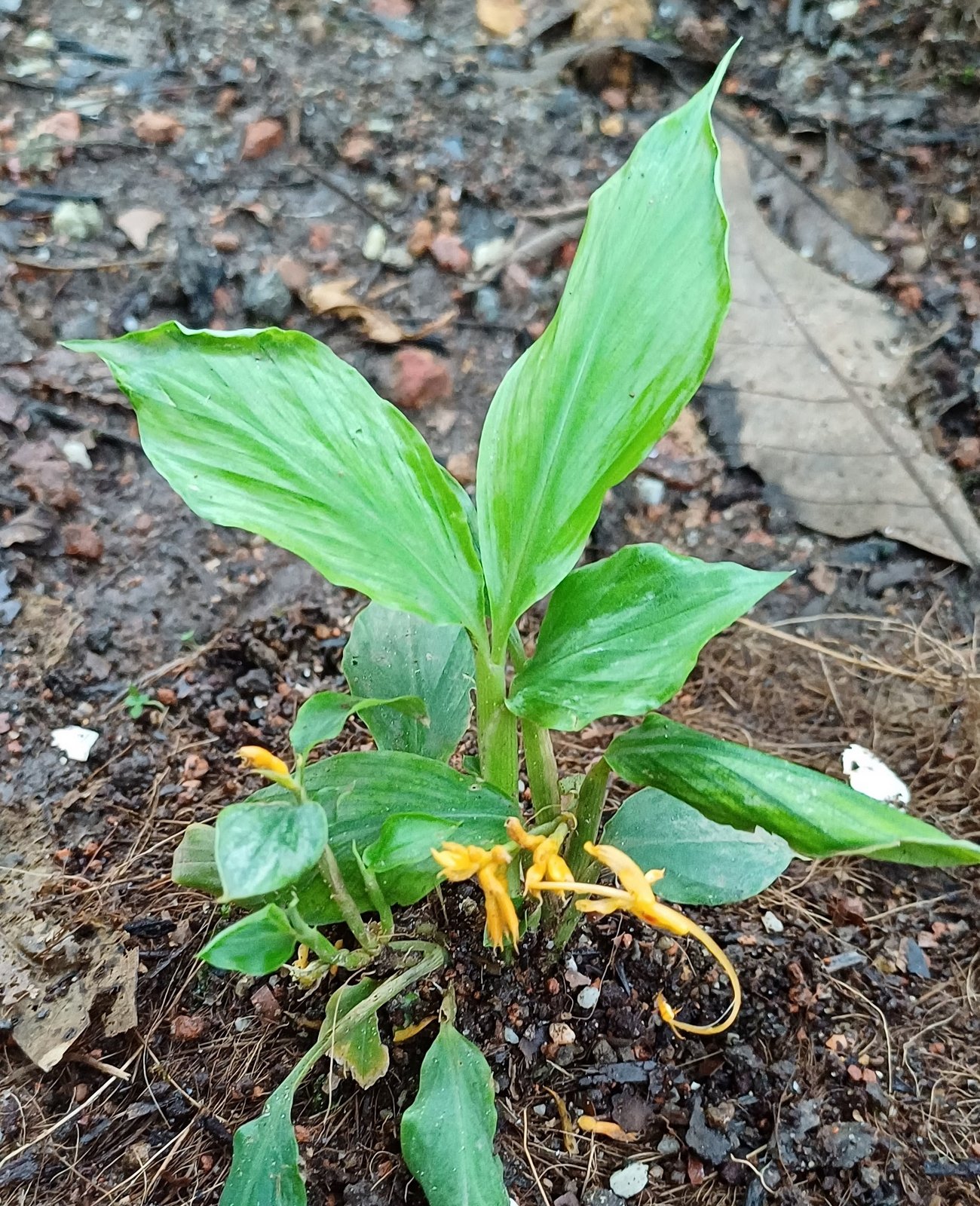 |
Globba sp.
ZINGIBERACEAE
From Bukit Apek, Cheras, Selangor. | 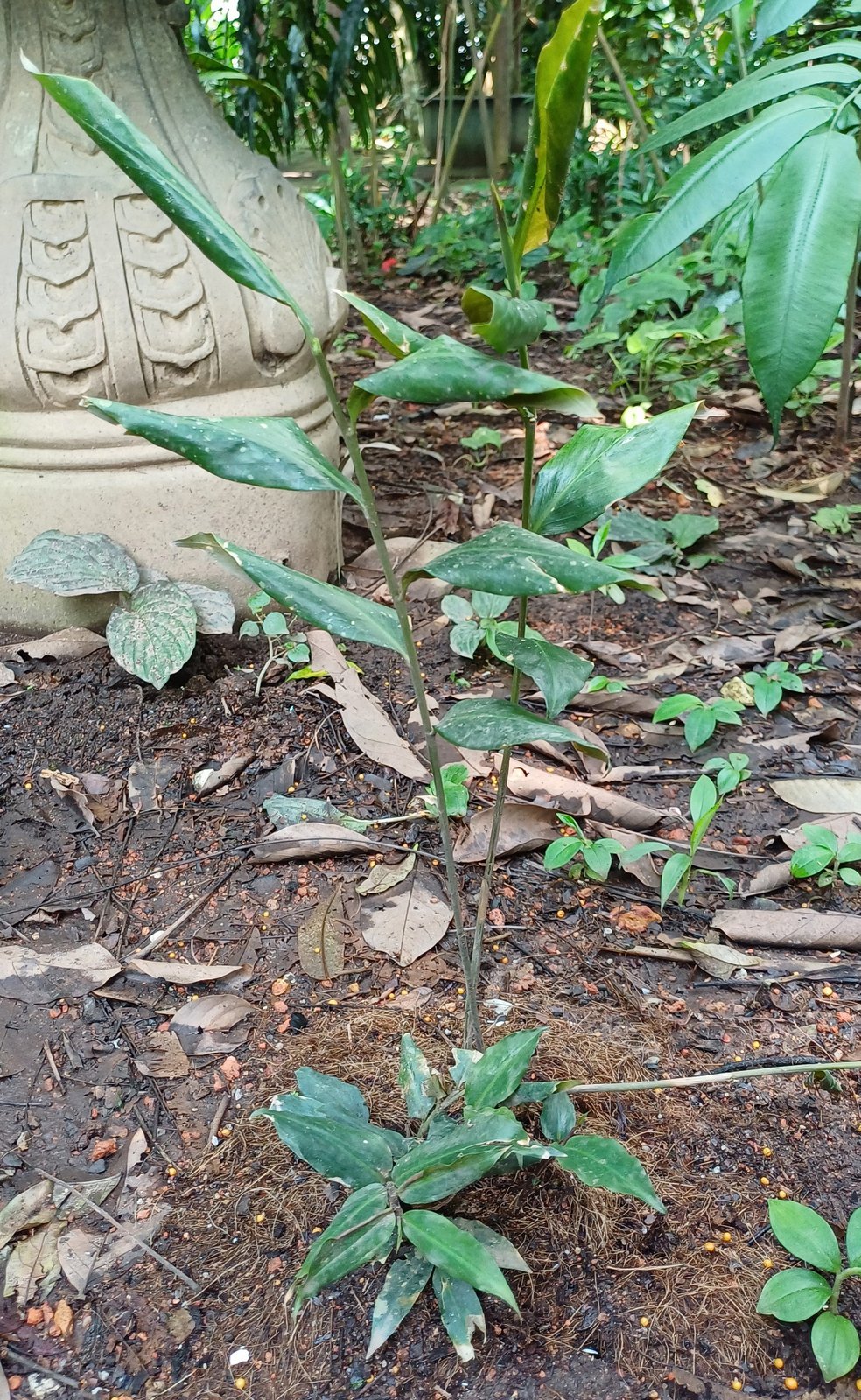 |
Globba sp.
ZINGIBERACEAE | 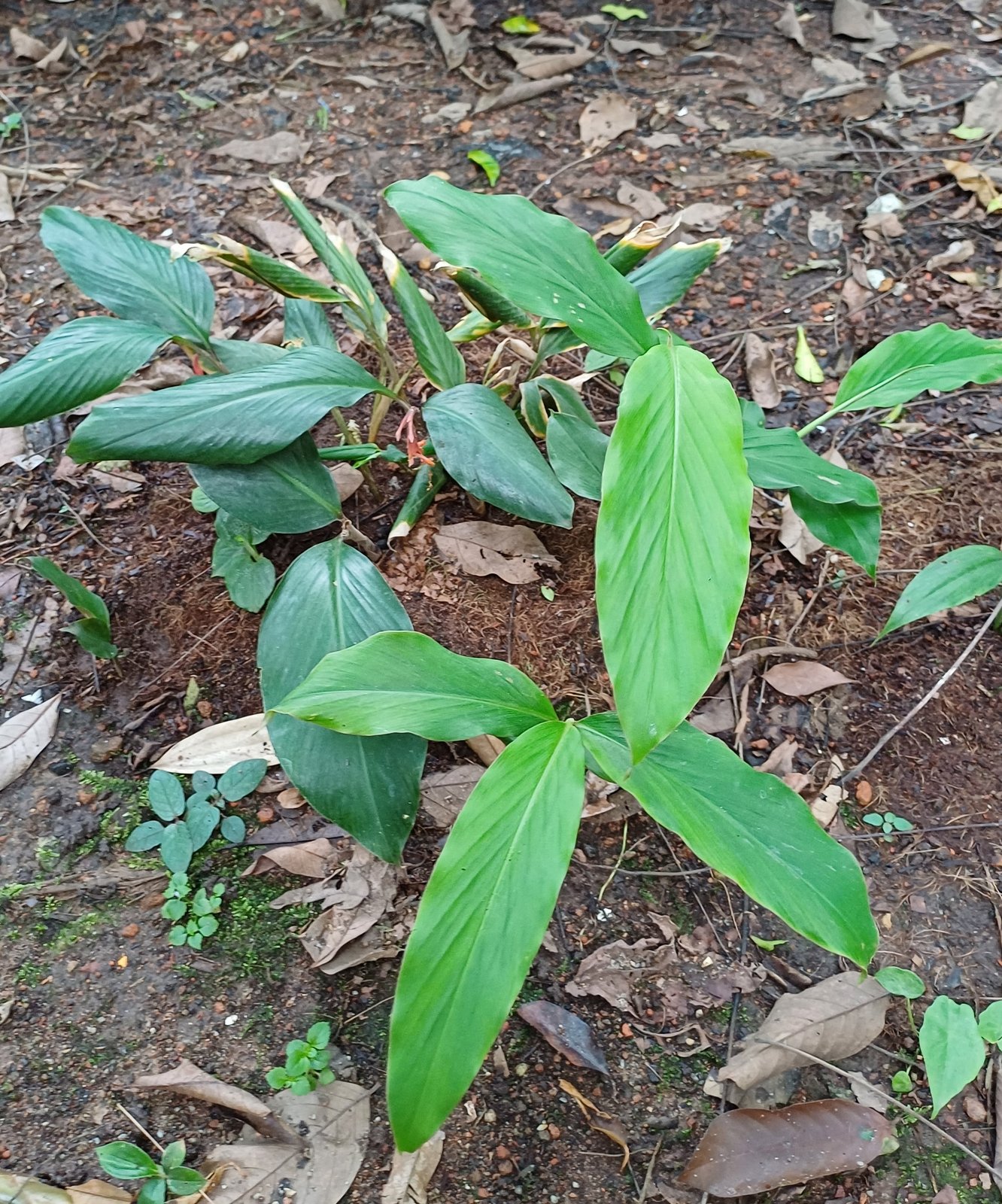 |
Grammatophylum scriptum
ORCHIDACEAE
Native to Southeast Asia, often found in coastal habitats. Large, produces a long inflorescence which dangles yellow green flowers with brown markings. | 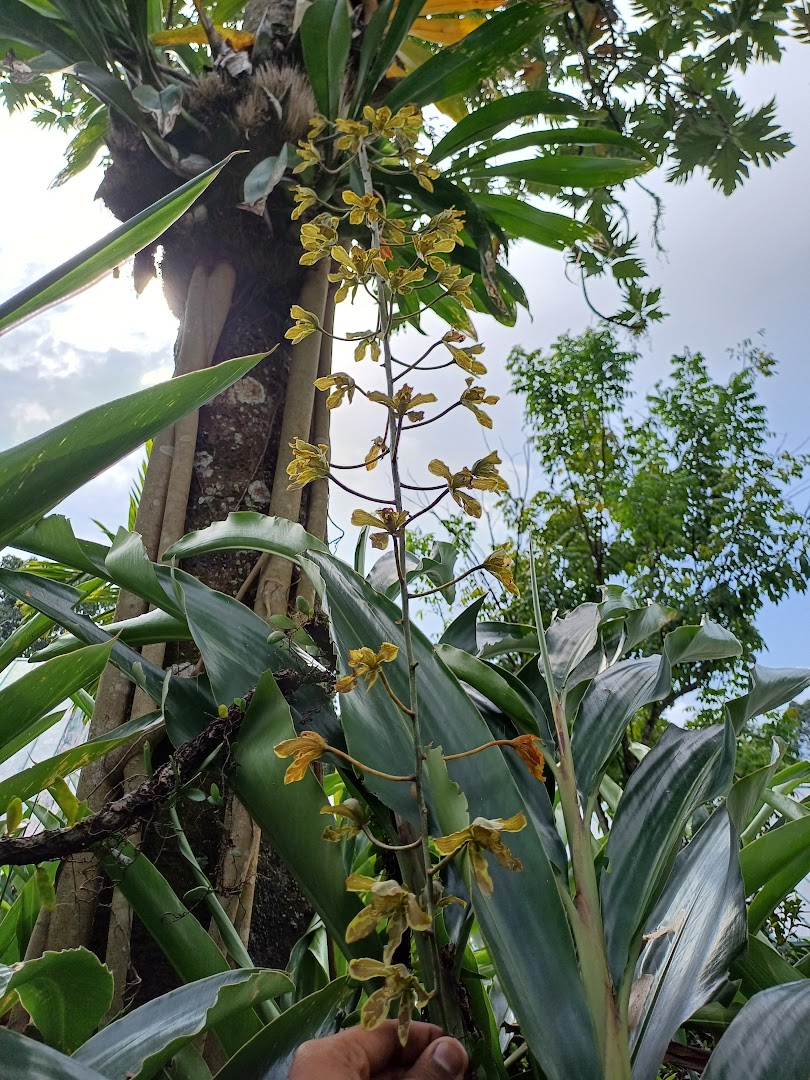 |
Hedychium coronarium
ZINGIBERACEAE
gandasuli, ginger lily
Native to Asia. White fragrant flowers, reminiscent of jasmine. Flourishes near streams and waterlogged areas. Decoction of leaves drunk for indigestion. Leaves eaten with betel to treat abdominal pains. Stem sap applied to soothe swellings. |  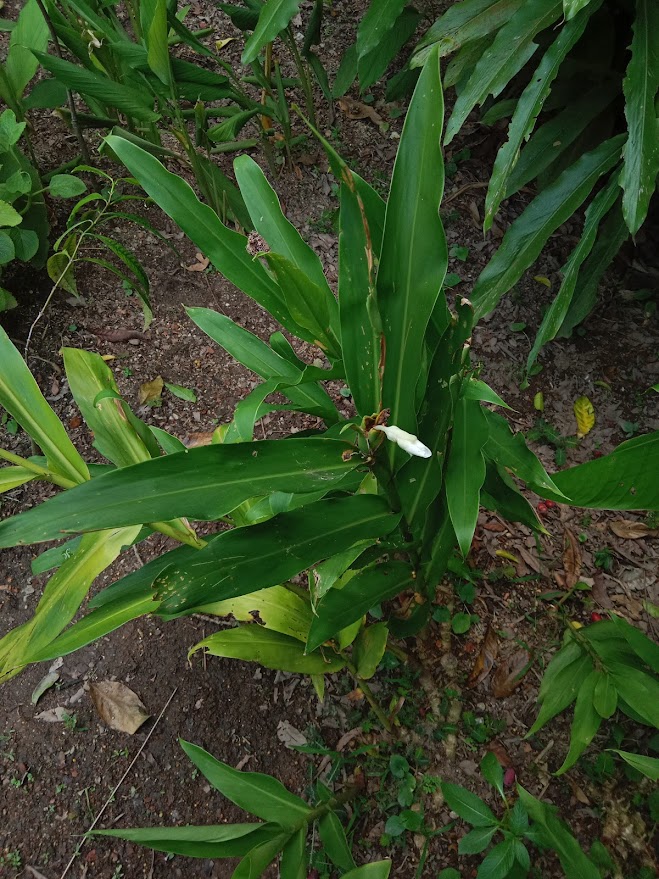 |
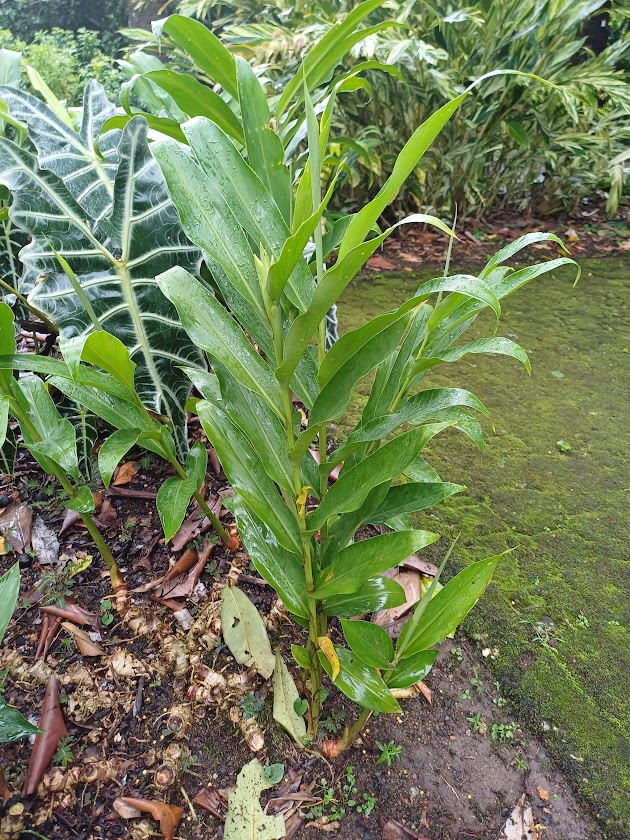
Hedychium flavescens
ZINGIBERACEAE
Distributed from Himalayas, Sichuan and Indochina. A hardy plant tolerant of shade and extreme conditions, it produces yellow-white flowers which makes it a good ornamental plant in the landscape setting.
|  |
Hibiscus mutabilis
MALVACEAE
Rose mallow, Chinese cotton rose
Native to South China and Taiwan. The flowers open pure white in the morning, shift to light pink around midday, and deepen to deep pink or dark red by the evening. | 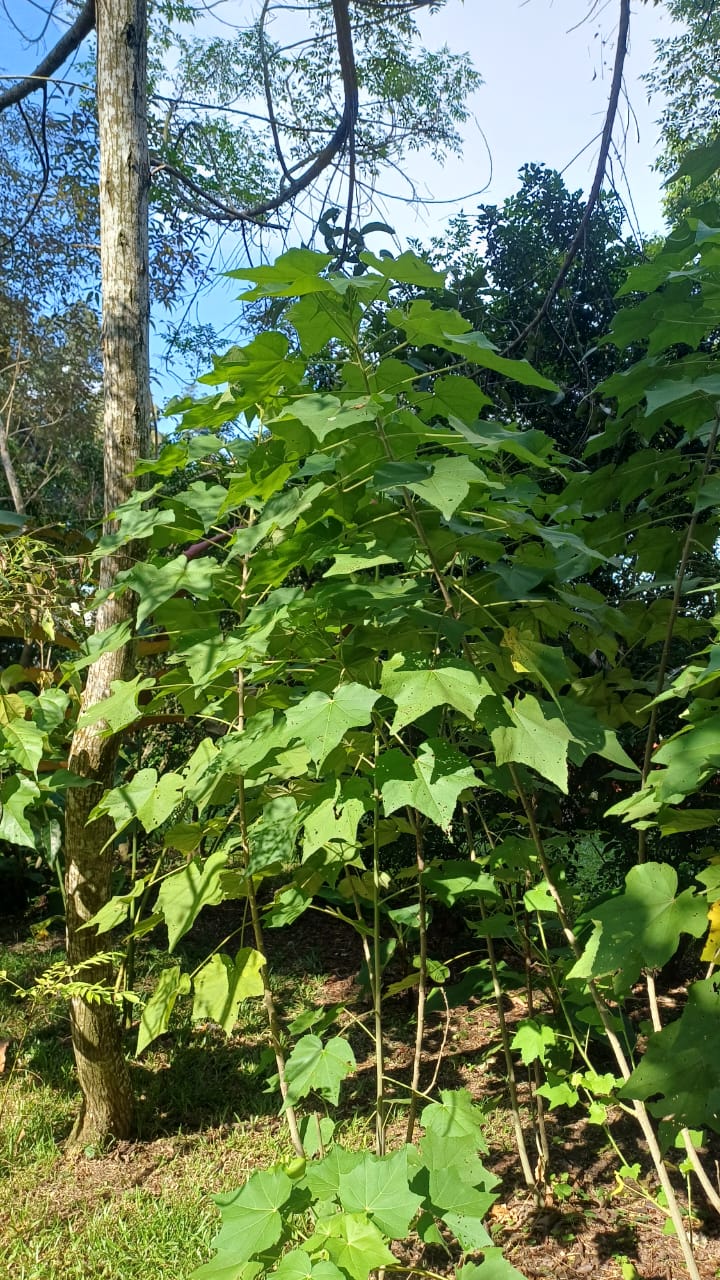 |
Hoya carnosa
ASCLEPIADACEAE
akar setebal/akar serapat
East Asia to Australia and Pacific. Epiphytic herb. Toxic and narcotic latex. Fresh leaf juice with honey used for pneumonia and bronchitis; anti-inflammatory. |  |
Hoya sp.
ASCLEPIADACEAE | 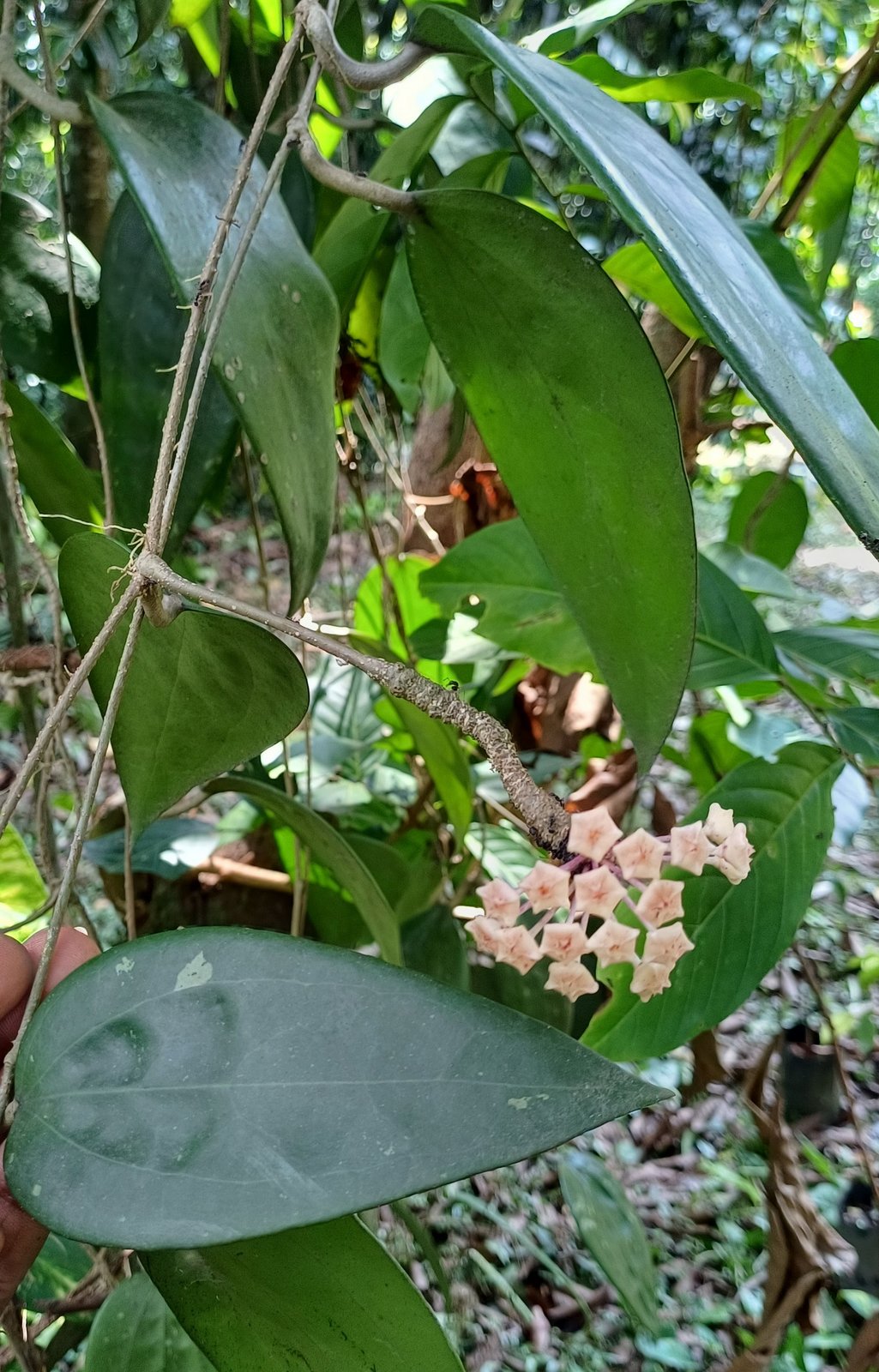 |
Ixora javanica
RUBIACEAE
bunga jejarum, pecah periuk
Eastern Himalayas to West Malesia. |  |
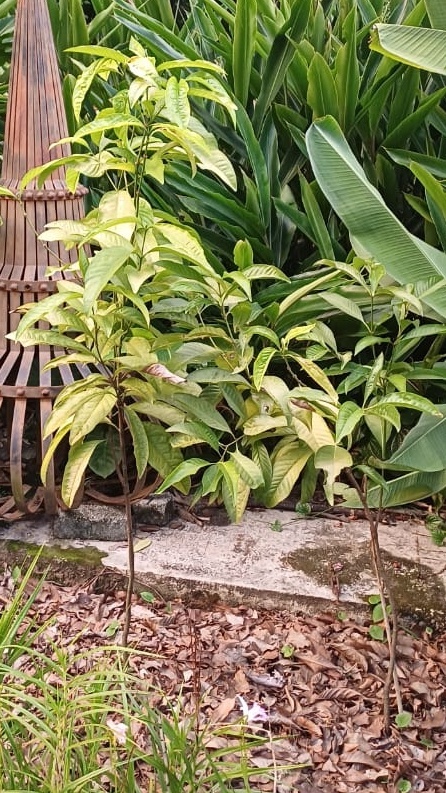
Ixora pendula
RUBIACEAE
pink needles, jejarum hutan, jambul siul
Thailand, Sumatra, Peninsula Malaysia and Singapore.
|  |
Indigofera sp.
FABACEAE
Supposedly a local species, undetermined. | |
Iris domestica
IRIDACEAE
leopard lily, pokok kipis | 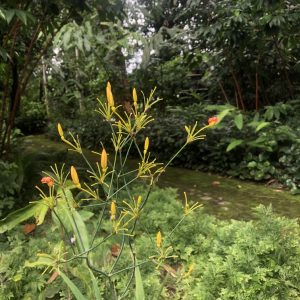 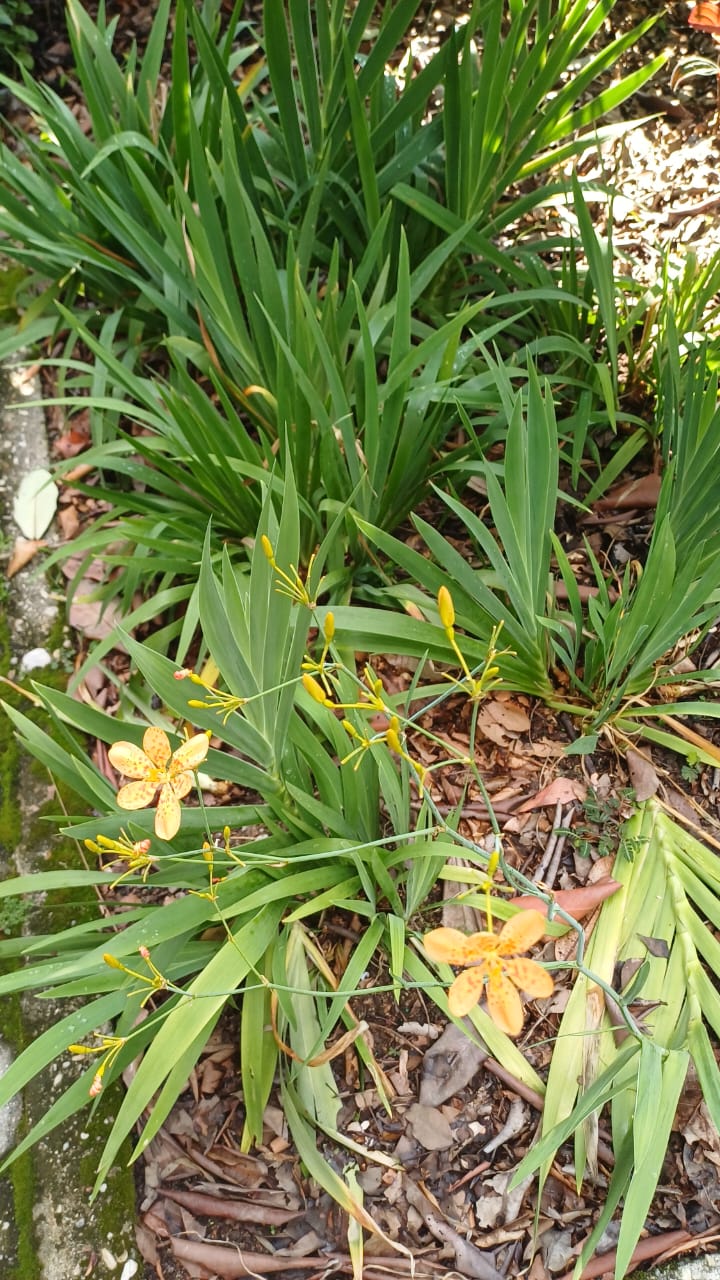 |
Justicia gendarussa
ACANTHACEAE
gendarusa, urat sugi
SE Asia. Decoction of leaves used to treat fever, jaundice, flatulence. |  |
Kaempferia galanga
ZINGIBERACEAE
cekur, kencur
India. Rhizome, spice and scent, boiled with other roots for post natal tonic. Crushed leaves used as hot compress on swellings. To treat itchy throat, chew a piece of rhizome with salt. |  |
Kaempferia pulchra
ZINGIBERACEAE
peacock ginger, cekur batik
Malaya. Small herbs with short rhizome and tuberous roots, flowers arise in midst of a few leaves. | 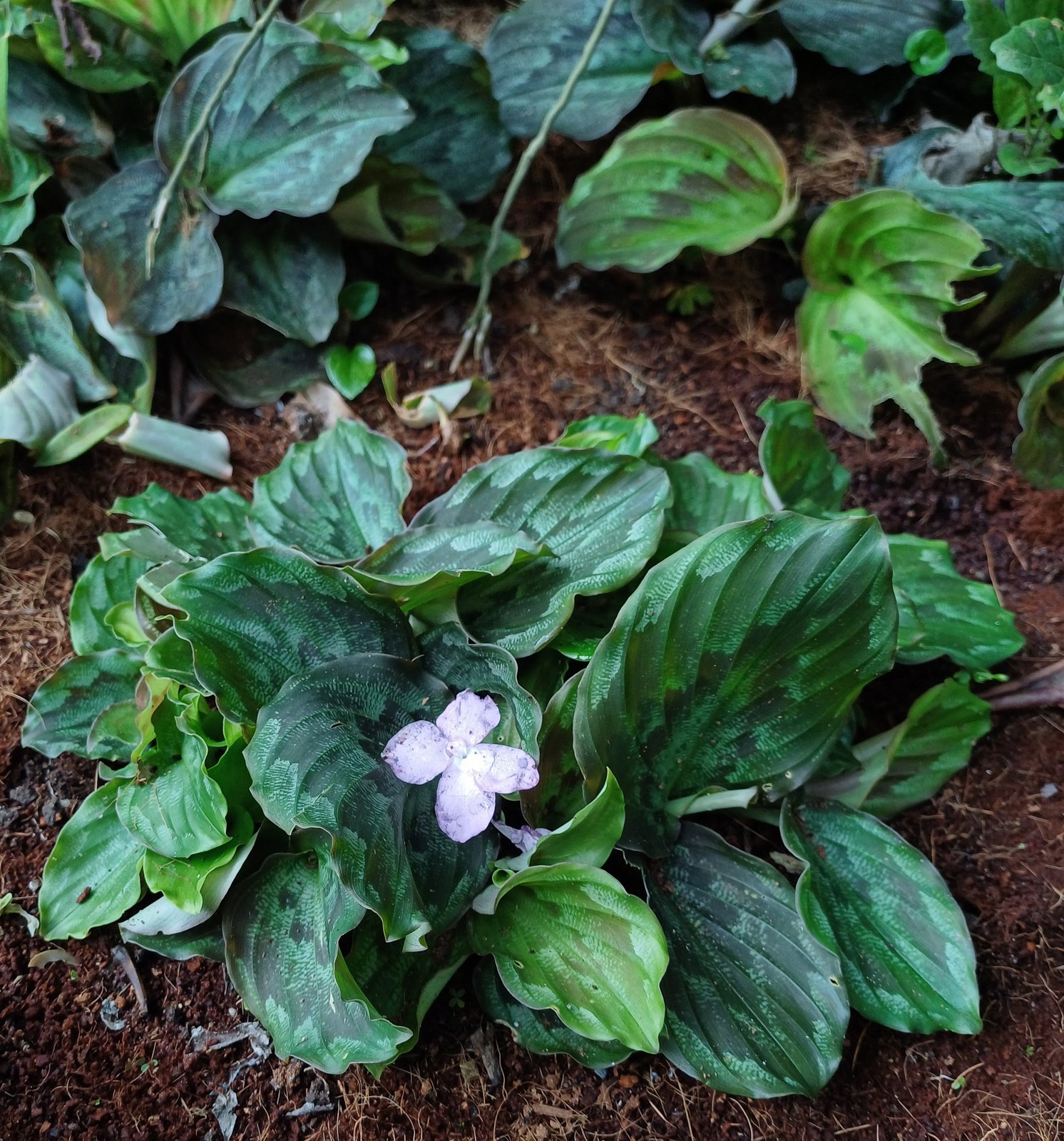 |
Labisia pumila
MYSINACEAE
kacip fatimah
Sumatra, Malaya, Java, Borneo. Decoction of plant use to fortify women before labour and after childbirth, treats flatulence and irregular menses. Leaf decoction drunk for dysentery. |  |
Lawsonia inermis
LYTHRACEAE
inai
India. Leaves are pounded and applied to fingers of brides for orange colour. Hair dye. Also treats superficial wounds. Boil leaves & gargle for sore throat. |  |
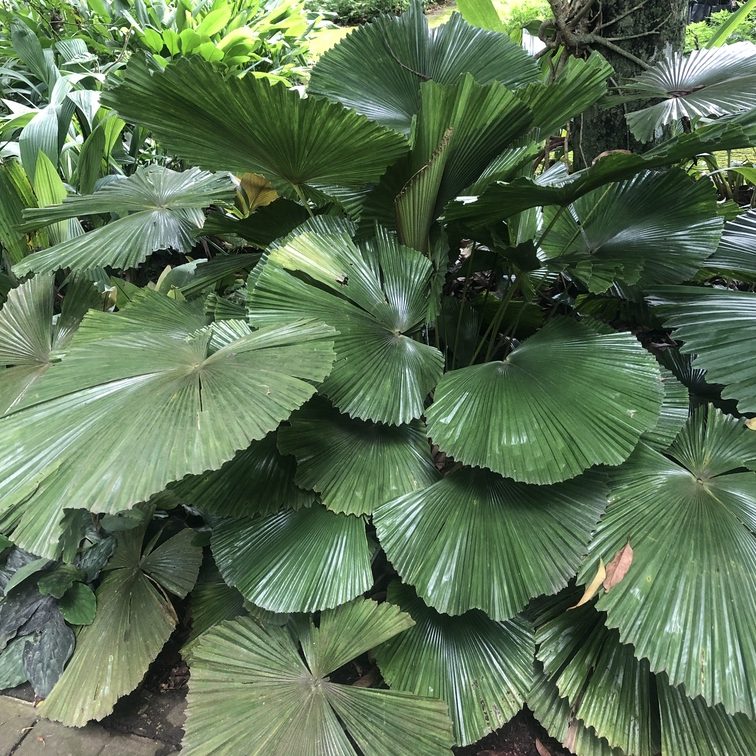
Licuala orbicularis
ARECACEAE (PALMAE)
parasol palm, daun nisang | 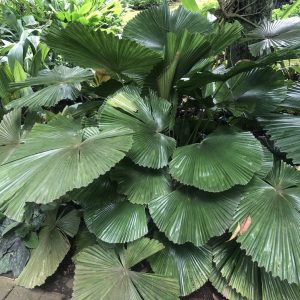 |
Licuala sp.
ARECACEAE (PALMAE) | 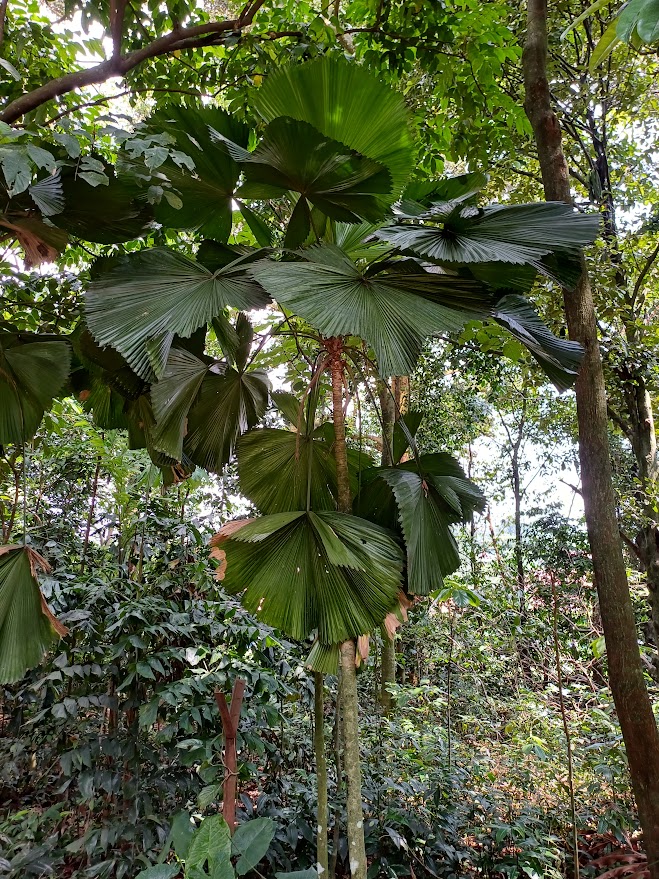 |
Lycoris radiata
AMARYLLIDACEAE
bawang jabu
Myanmar to S. China. Bulbs cleaned, crushed and boiled. Decoction drunk to relieve fevers and coughs. White flowers open late afternoon, smell of dusty rooms. |  |
Magnolia figo, formerly Michelia figo
MAGNOLIACEAE
cempaka pisang
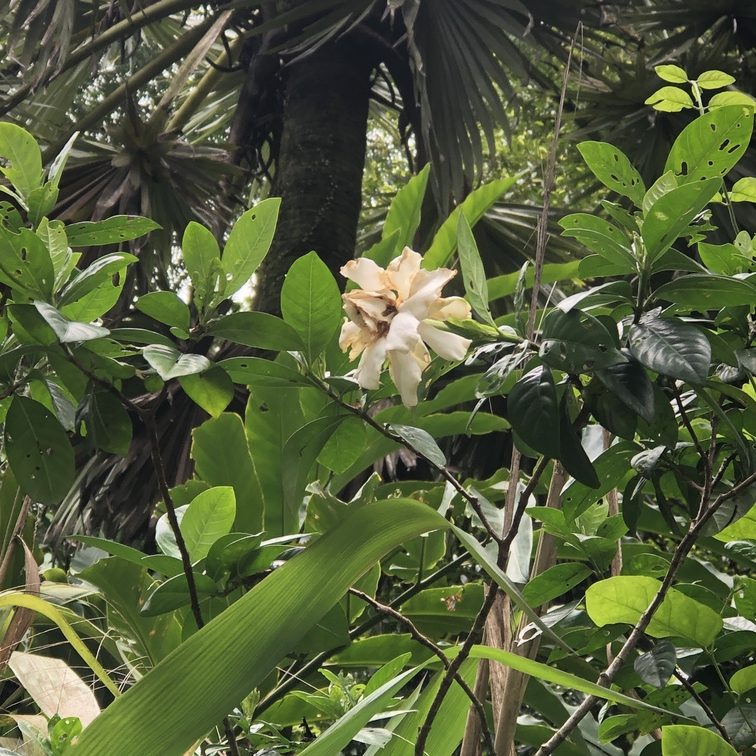
Native to Southeast China. An ornamental shrub and small tree, the flowers have a banana scent. Wide medicinal use, including the promotion of circulation of qi in traditional Chinese medicine, and for high blood pressure in traditional Indian medicine. | 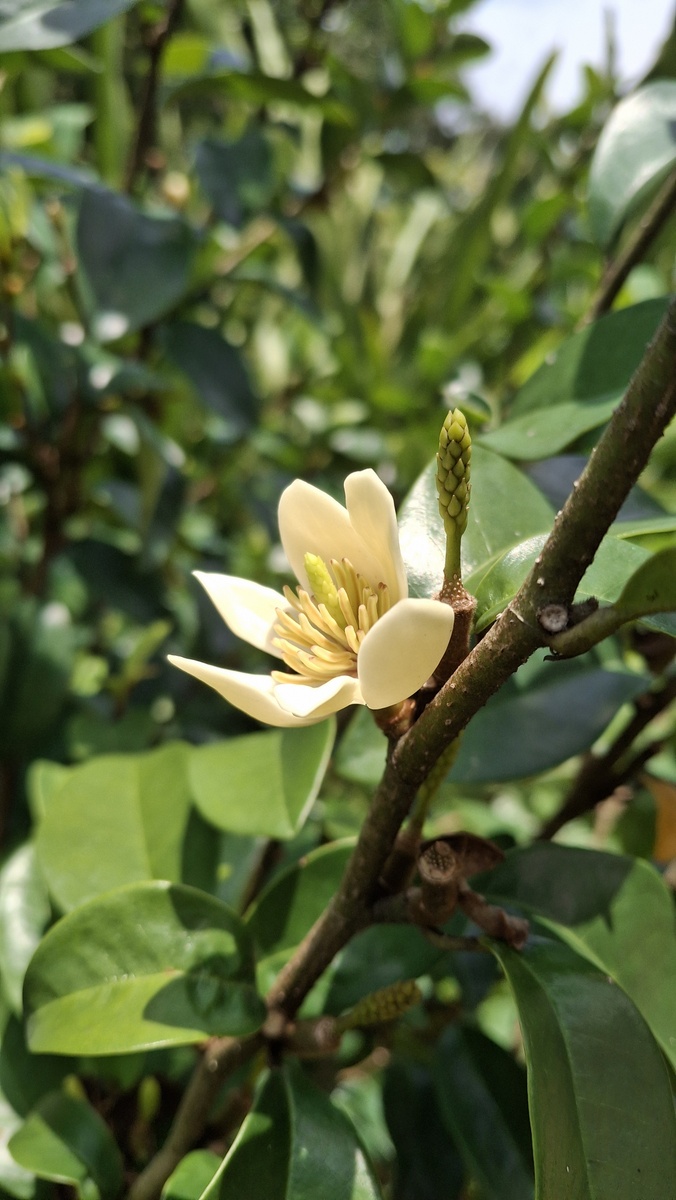 |
Malvaviscus arboreus
MALVACEAE
Turk’s cap, sleeping hibiscus, bunga raya kuncup
Native to Central America. The flowers can be used to make a fugitive pink dye. The common names derive from the fact that the flowers resemble tiny red standard hibiscus, except that they never fully open. | 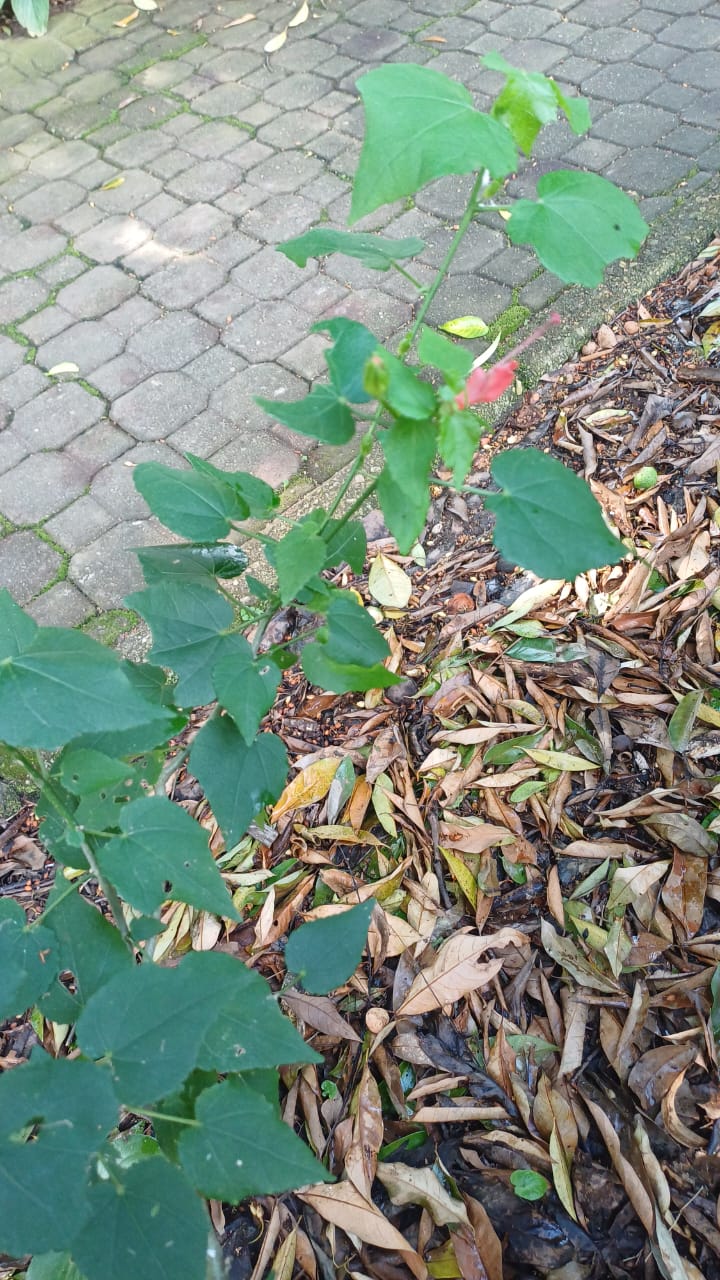 |
Mapania cuspidata
CYPERACEAE | 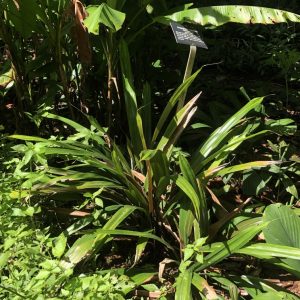 |
Maranta arundinaceae
MARANTACEAE
West Indian arrowroot, ubi garut
Tropical America. Widely cultivated for starchy tubers that are grated, washed, sifted and cooked before rendering edible. Also used in making computer print paper. |  |
Medinilla coccinea var. ‘Gregori Hambali’
MELASTOMATACEAE
Papua New Guinea. An ornamental shrub or epiphyte, with long deep maroon leaves and pink flower clusters. | 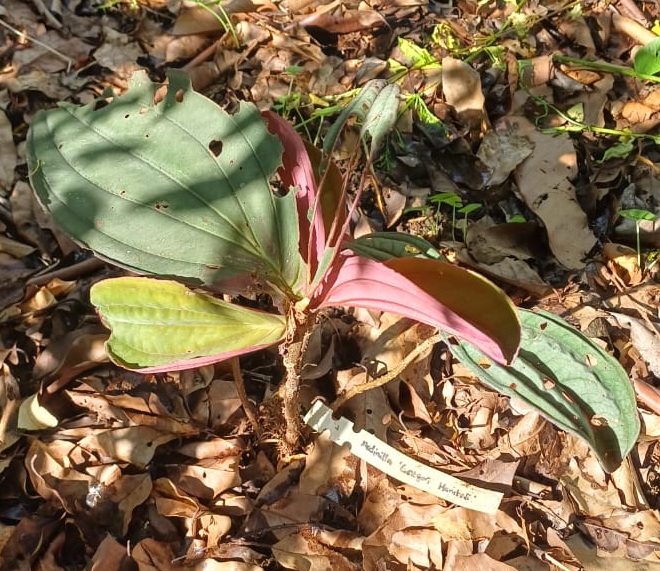 |
Melastoma malabathricum var. alba
MELASTOMATACEAE
senduduk
Madagascar, India to Australia. Common in open places, always flowering. Species very variable. Gr., melas (black) stoma (mouth), from the berries blackening the tongue. | 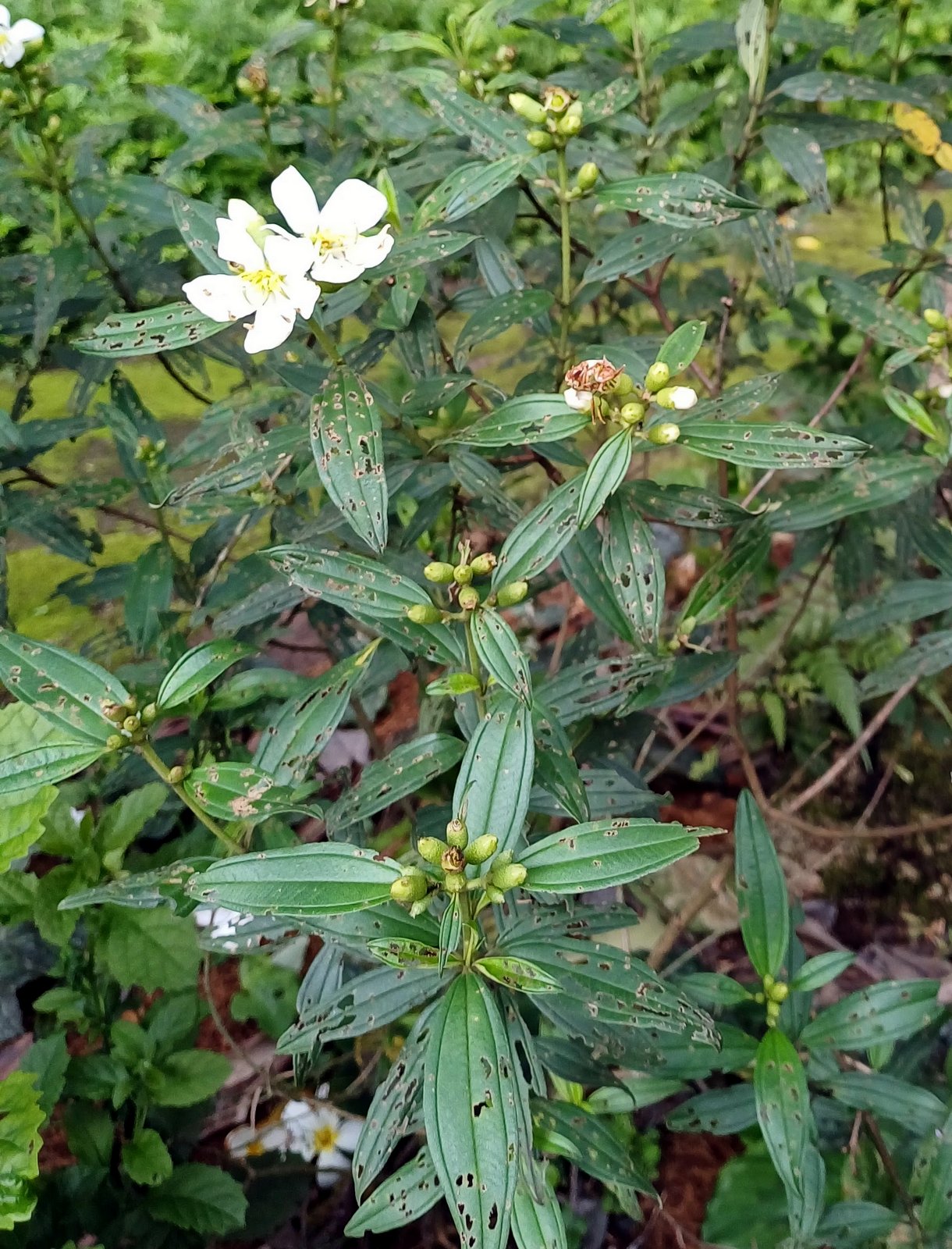 |
Melia azederach
MELIACEAE
mindi kecil, Persian lilac
Nowhere wild, foothills of the Himalayas? Cultivated for scent and shade. Arabs and Persians use leaf juice as vermifuge and diuretic. Used as fish poison, 6-8 seeds will kill a man. Poultice of leaves used for headaches, of flowers kills lice. |  |
Mentha arvensis
LABIATAE
pudina, mint
Europe, east through Russia, south to India. For headaches, pound leaves with lime juice, apply paste to forehead. Boil leaves to make a cough mixture. |  |
Morinda citrifolia
RUBIACEAE
noni
Widely spread across Southeast Asia and Pacific islands due to Polynesian domestication. Fruit, bark and roots can be used to produced different hues and shades of dye from brownish purple to yellow. The fruit has a strong smell and bitter taste, often consumed as famine food. | 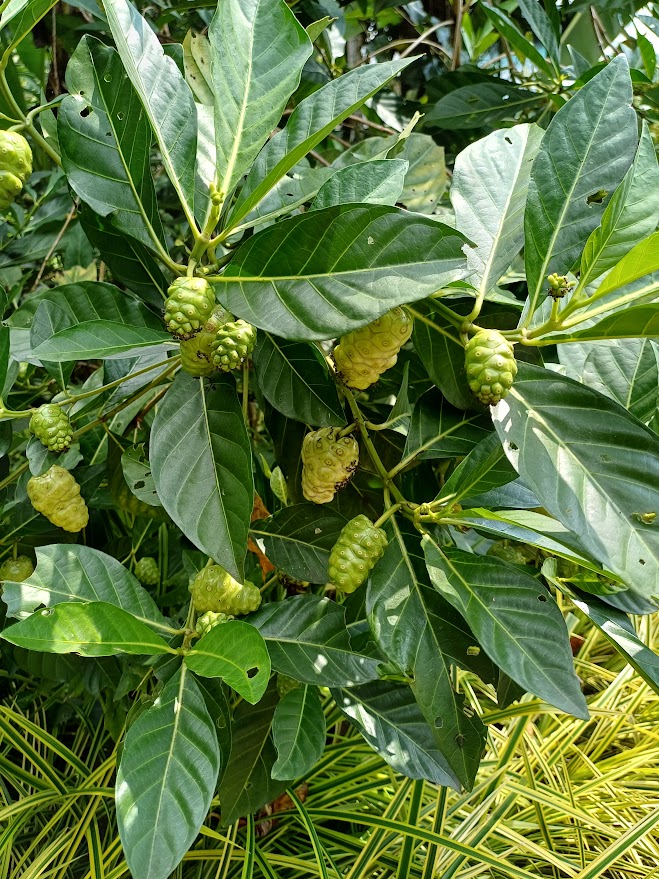 |
Moringa oleifera
MORINGACEAE
kelur
Leaves used in traditional Indian cooking. A fast-growing drought-resistant tree. | 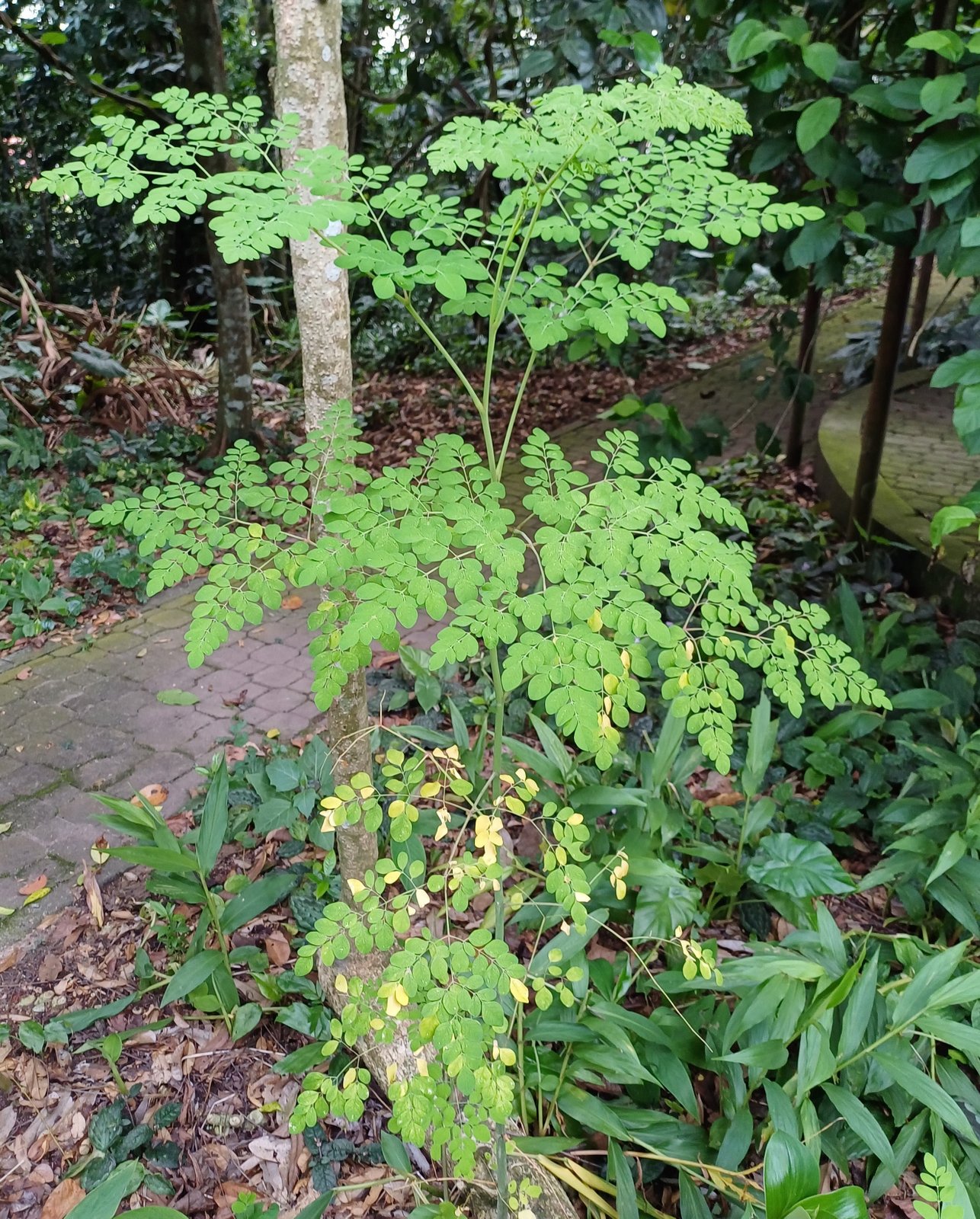 |
Morus alba
MORACEAE
Indian mulberry, besaram
North India. Leaves fed to silk worms or cattle. To Chinese, all parts medicinal: restorative, tonic & astringent for nervous disorders. Young leaves good for nursing mothers. Leaf decoction treats the blood, gonorrhoea, & poisoned wounds. |  |
Murraya paniculata
RUTACEAE
kemuning
India to Australia, S. China, Melanesia. Ornamental. Yellow (kuning) root wood used for kris handles. Infusion of leaves for tapeworm and stomach herpes. Flowers for cosmetics and to scent hair. |  |
Musa beccarii
MUSACEAE
Endemic to Sabah. May be cultivated in ornamental setting for its red flowers. | 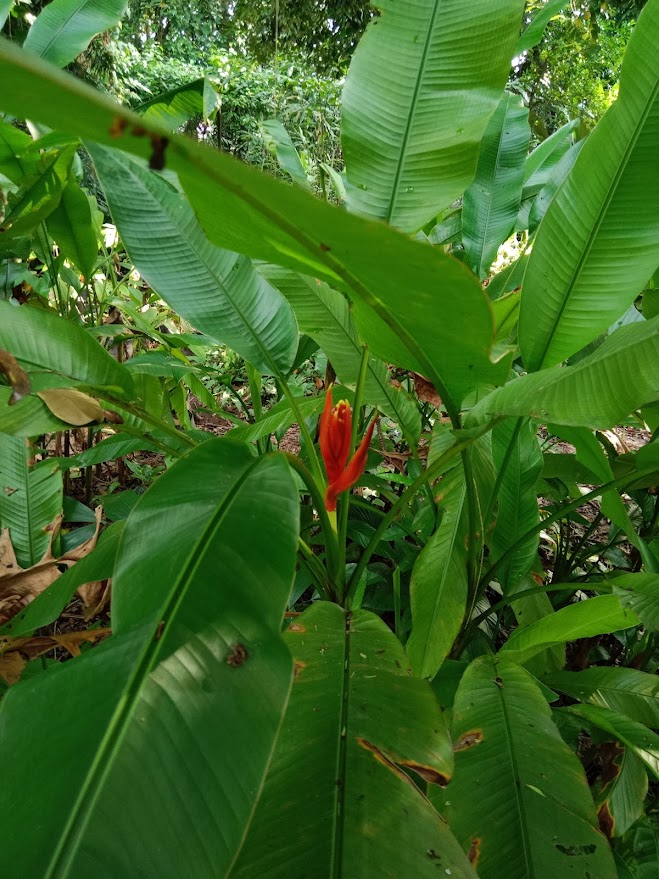 |
Musa gracilis
MUSACEAE
Native to Peninsular Malaysia. Grows up to shoulder height, found in clumps or solitary. Cultivated for its ornamental upright pinkish purple inflorescence. | 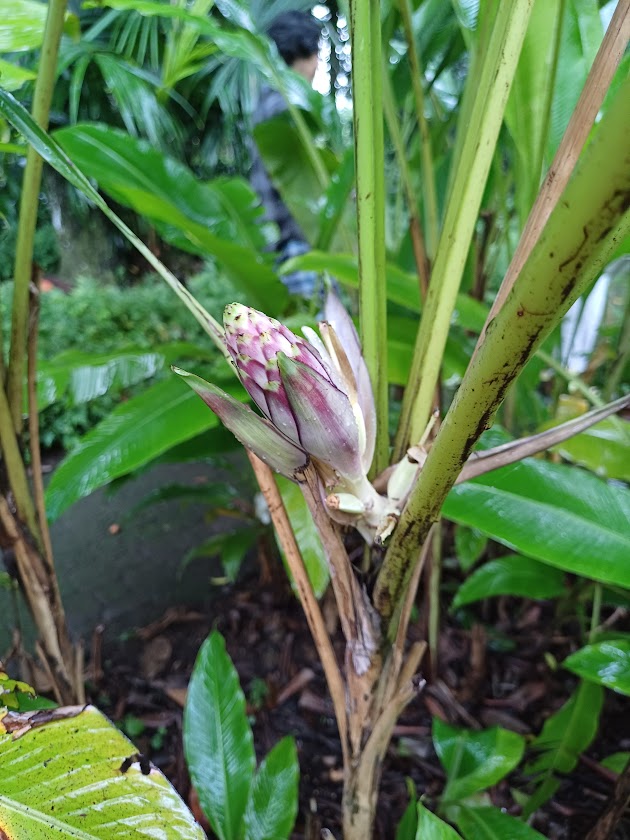 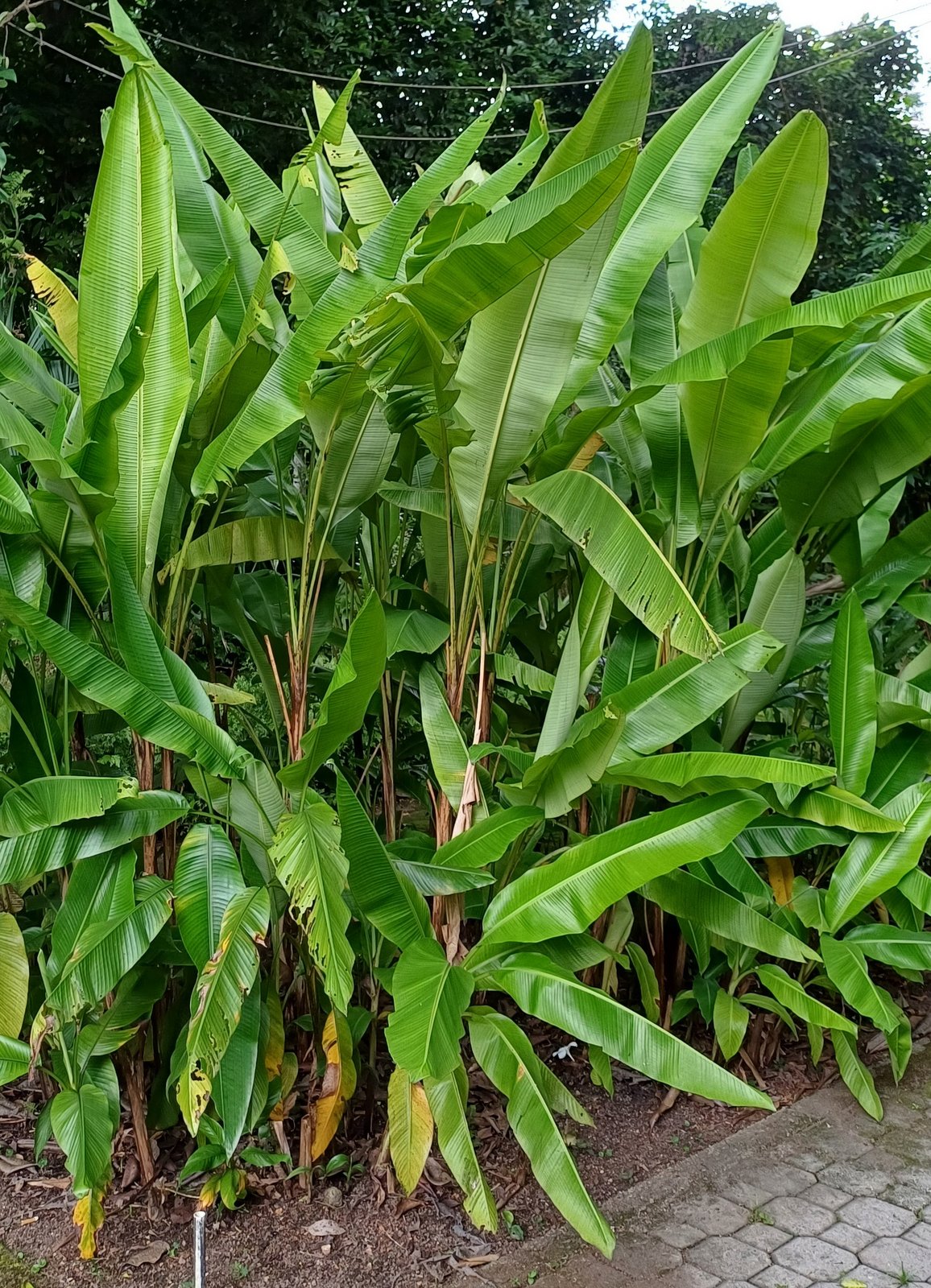 |
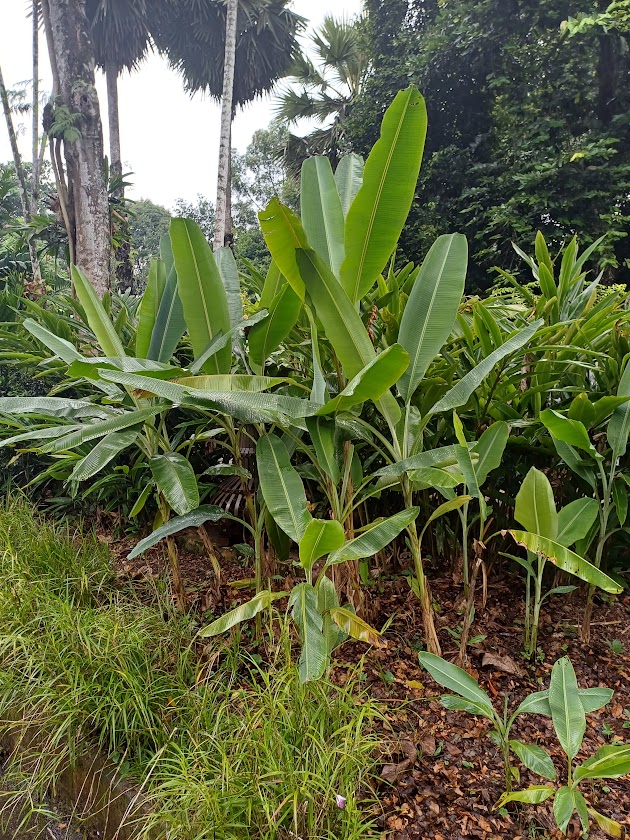
Musa sp.
MUSACEAE
banana
|  |
Myristica fragrans
MYRISTICACEAE
pala, nutmeg
Maluku. Fruit is pickled as food. Shoots eaten as vegetable with rice to treat hypertension. Red mace for flavouring fish and cakes. Seed kernel gives commercial nutmeg. Oil is medicinal and used to flavour tonics. |  |
Nephelium lappaceum
SAPINDACEAE
rambutan | 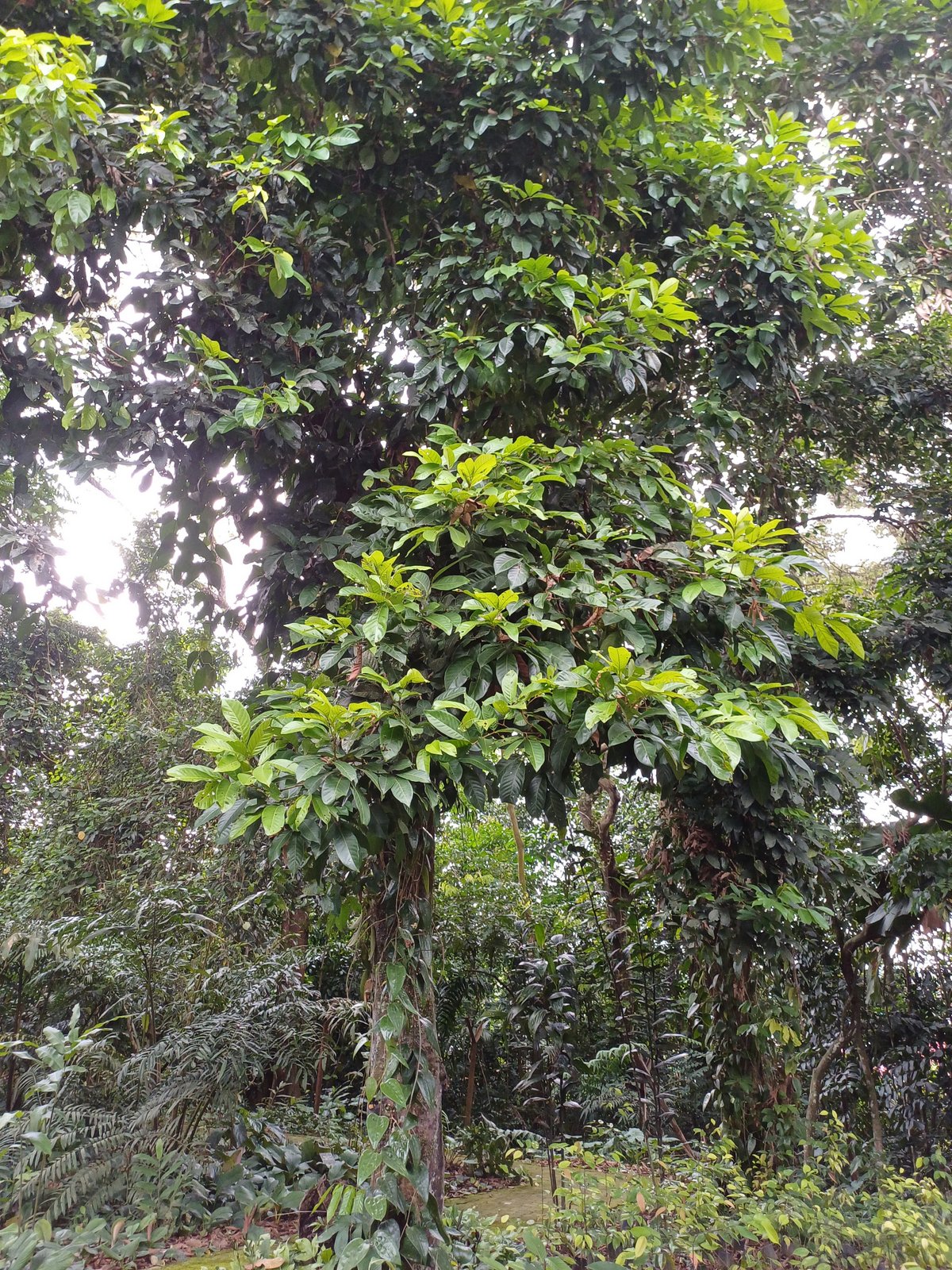 |
Orthosiphon aristatus
LAMIACEAE
misai kucing, cat’s whiskers
Indo Pacific. Brewed leaves are a diuretic, used to eliminate bladder stones. Dried leaves were exported to Europe as early as 1886. |  |
Osmoxylon lineare
ARALIACEAE
miagos bush, green aralia
Native to the Philippines, where its leaves are used to treat coughs. | 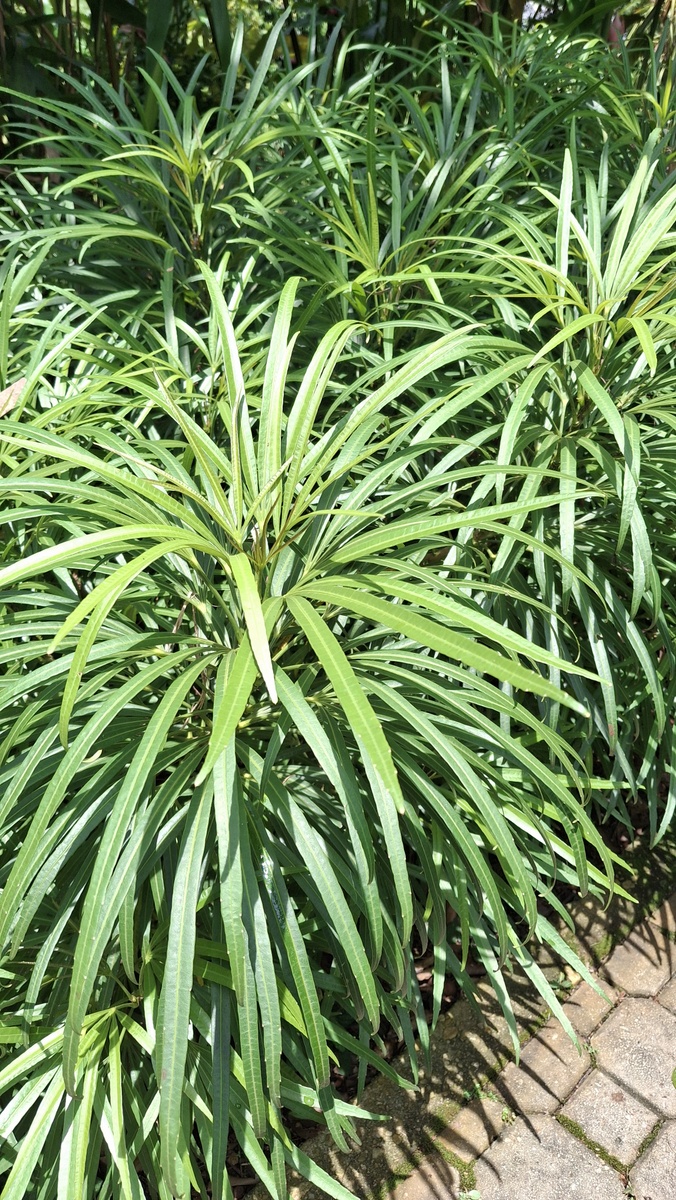 |
Pandanus amaryllifolius
PANDANACEAE
pandan wangi
Maluku in Eastern Indonesia, but widely cultivated. Leaves used to flavour food and in hair wash. Leaf ash mixed with vinegar used as a lotion for measles. |  |
Phalaenopsis sp.
ORCHIDACEAE
| |
Phyllanthus acidus
EUPHORBIACEAE
cermai, Malay gooseberry
One species, cultivated, origin unknown. Common village tree, especially in north. Fruits cooked as a sour flavouring or acar; root is medicinal but poisonous: boiled and steam inhaled for cough, weak infusion drunk for asthma. |  |
Pinanga malaiana
ARECACEAE
lagong | 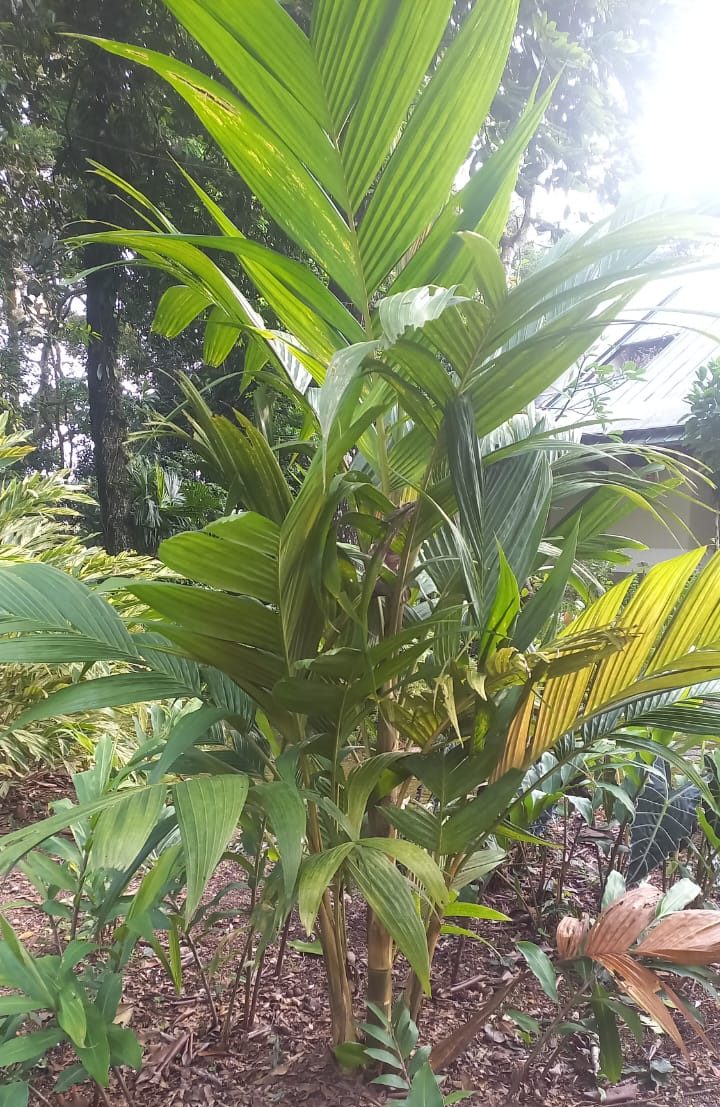 |
Piper betel
PIPERACEAE
sirih
Malay archipelago. Leaves are eaten with gambir for treating diarrhea. Mild stimulant, applied in poultices for stomach pains, coughs and asthma. Leaf sap applied to soothe oral sores and ulcers. |  |
Piper nigrum
PIPERACEAE
lada hitam
Introduced from India; Marco Polo reported in 1280 that it was in Malaya. Cultivation followed land clearance, need for highly organic soils favored shifting cultivation, creating wide grass wastes in Singapore mid 19th century. Essential ingredient of jamu. |  |
Piper sarmentosum
PIPERACEAE
kadok
SE Asia. Leaves edible, used in embrocation for skin discoloration and a throat poultice for coughs. Roots chewed with areca nut to treat persistent coughs and asthma. | 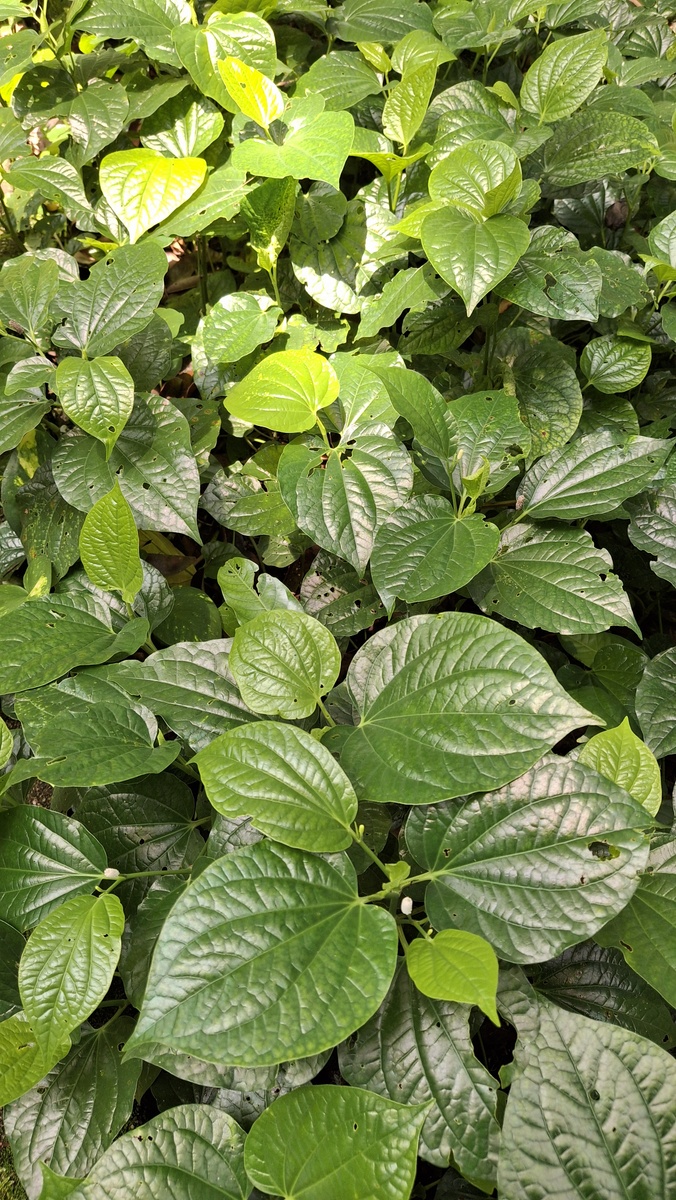 |
Platycerium bifurcatum
POLYPODIACEAE
common staghorn fern
Native to Java, Papua New Guinea and Australia, now widely naturalised in Malaysia. | 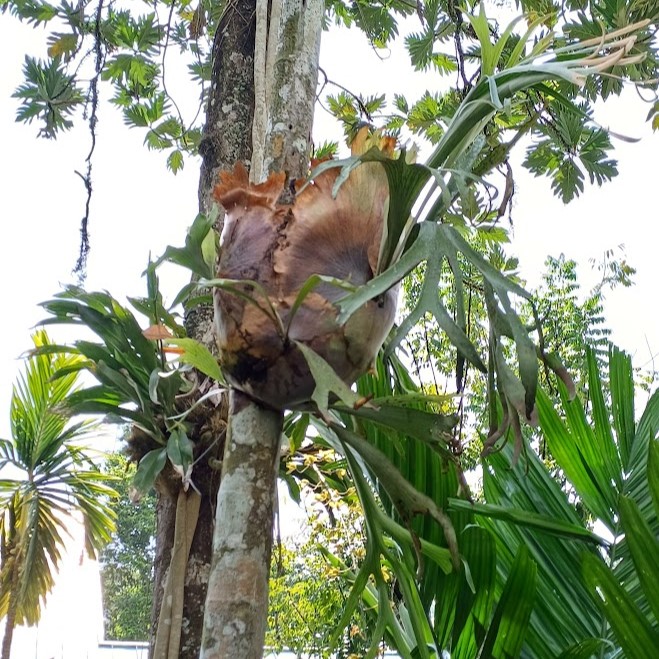 |
Plectranthus amboinicus
LAMACEAE
bangun bangun, po hor, Indian borage
NE Africa. Cult. from India to SE Asia. Decoction used to treat asthma, fever, nausea, rheumatism, colic, urinary tract infections cough, epilepsy and convulsion. Boil with rock sugar for sore throat. |  |
Plumeria rubra
APOCYNACEAE
bunga kemboja, frangipani
Central America. Flowers sweet, cool, fragrant. Used to prevent heat stroke and to treat enteritis and dysentry. Helps indigestion and poor absorption of infantile nutrition. |  |
Polygonum minus
POLYGONACEAE
kesum
Old World tropics. Cooking herb. All parts used in post-natal tonics. Leaves used to treat indigestion (boil and drink) and dandruff (pound leaves, extract oil, mix with water & apply to scalp for a few minutes). | 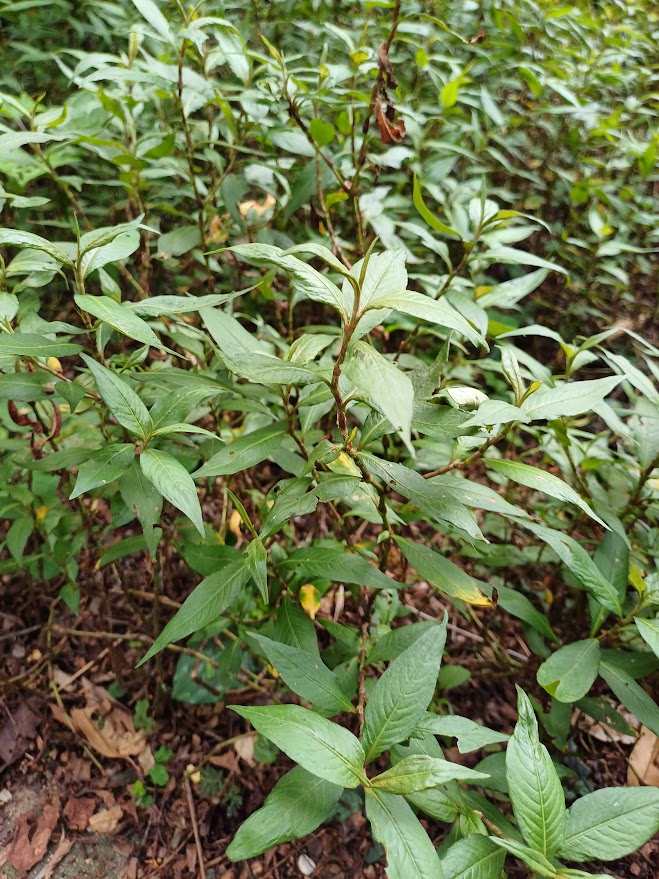 |
Pteris ensiformis
PTERIDACEAE
paku padang
A variegated white fern; a common mutation across the Asia-Pacific. | 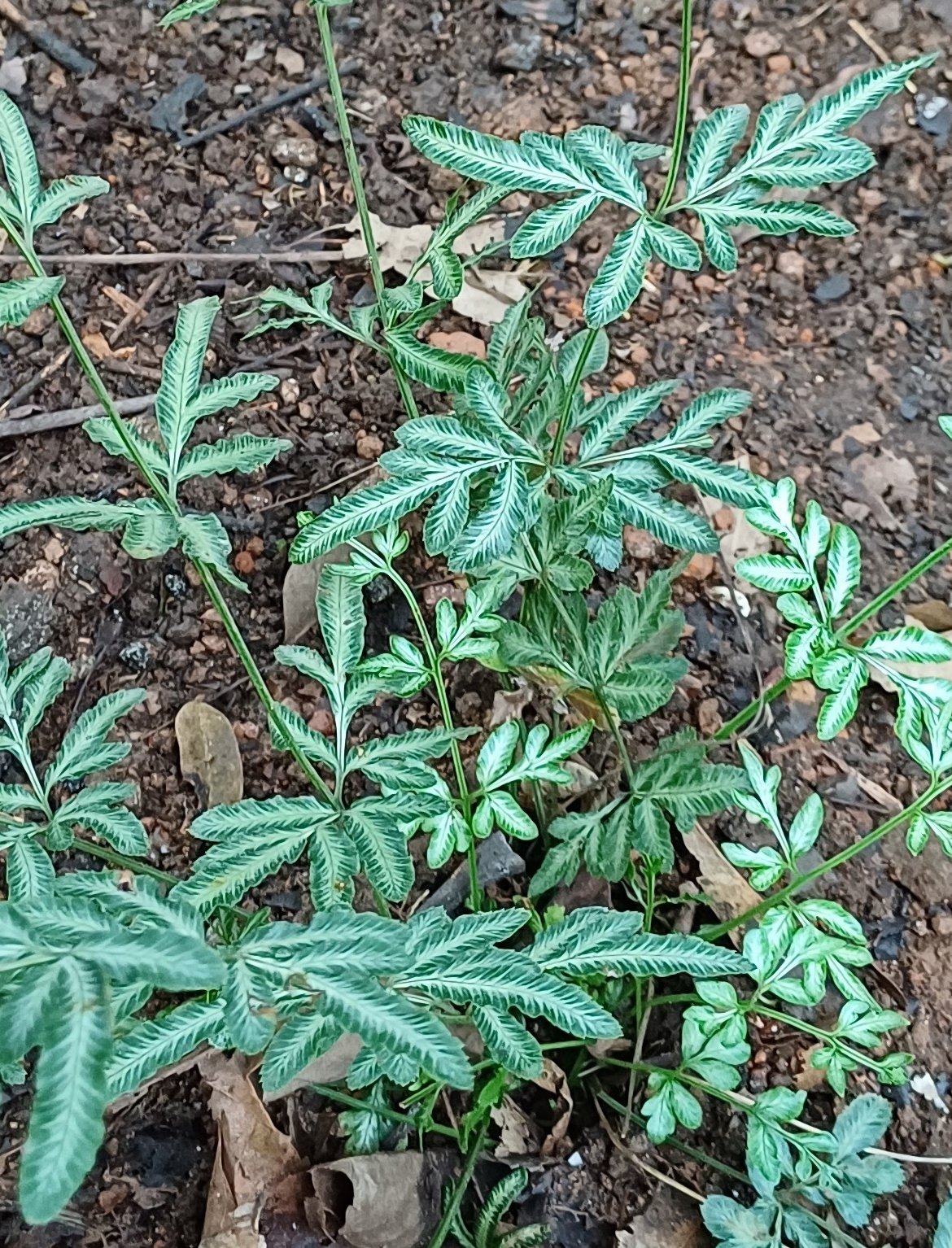 |
Radermachera sp. ‘kunming’
BIGNONIACEAE
dwarf tree jasmine
A small tree, native to Thailand. | |
Ruta graveolens
RUTACEAE
rue, inggu, geroda
S. Europe, N. Africa, no longer found in the wild. Bitter, acrid, cool. Anti-inflammatory, dispels stagnant blood, analgesic. For colds, fever, infantile convulsion, amenorrhea. Infantile eczema. Traumatic injury. Snake and insect bites. |  |
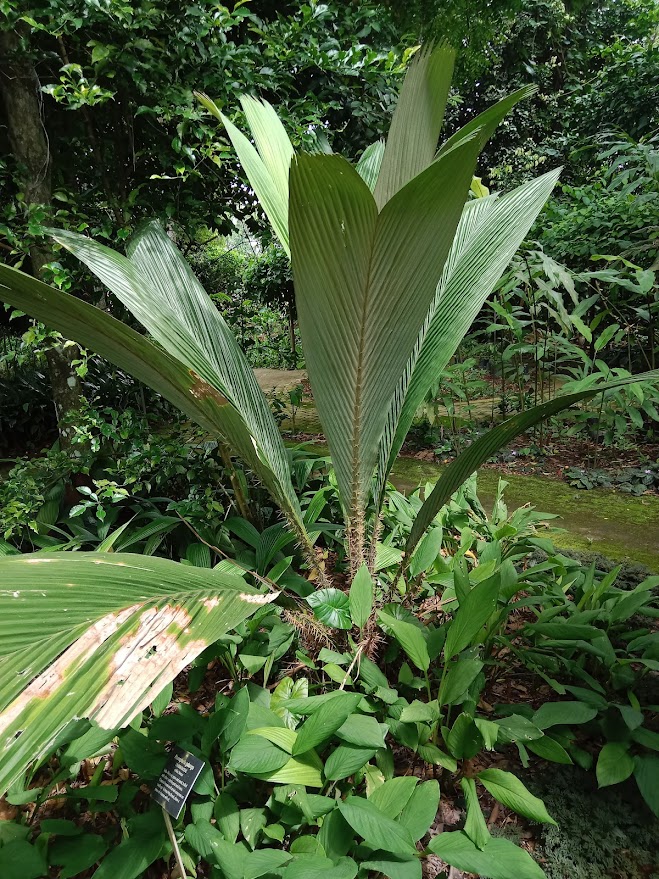
Salacca minuta
ARECACEAE
Endemic to Gunung Janing in Endau Rompin National Park. A good landscaping plant, suitable to grow in moist, partially shaded to sunny position.
|  |
Sambucus javanica
ADOXACEAE
elderberry, sengitan, bungan kepapah (Bali)
Native to Subtropical and Tropical Asia. Sweet and mildly bitter. Parts of the plant are used for medicines to aid in blood circulation, swelling, spasms as well as poison. | 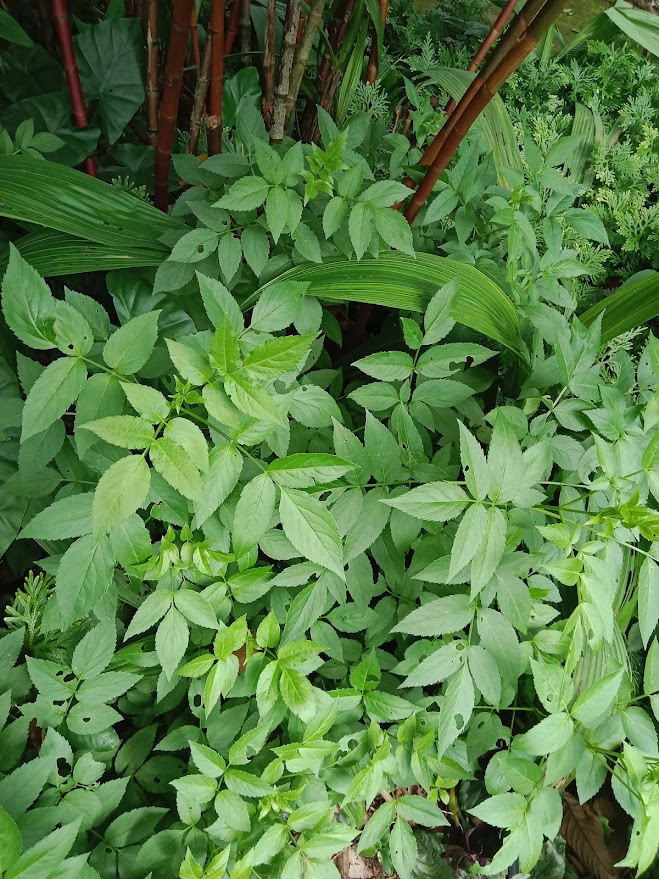  |
Scaphochlamys kunstleri
ZINGIBERACEAE
From stream bank at Bukit Kabut, Belum, Perak. Leaves dark green with purple lower surface. |  |
Schismatoglottis calyptrata
ARACEAE |  |
Selaginella erythropus
SELAGINELLACEAE
red spikemoss
Native to Costa Rica and tropical South America. Cultivated as an ornamental for its attractive red underside. | 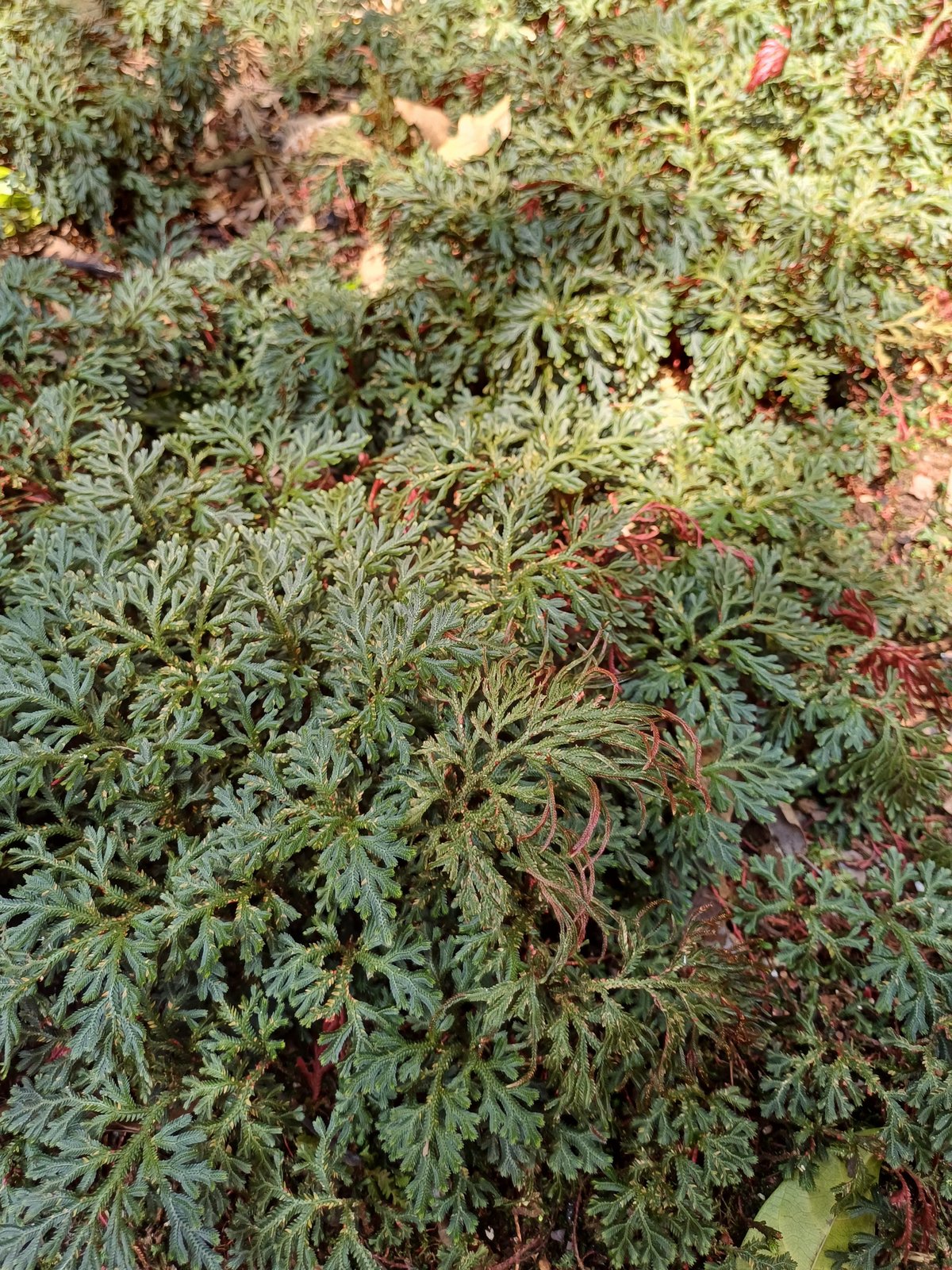 |
Selaginella plana
SELAGINELLACEAE
paka merak
Malay peninsula. Various spp. used for stomach ache, rheumatism, coughs, asthma, post-natal tonics. |  |
Selaginella willdenowii
SELAGINELLACEAE
paku marak
Southeast Asia. The blue colouration in the leafs is an adaptation to allow the plant to photosynthesize more efficiently in areas of shaded undergrowth. | 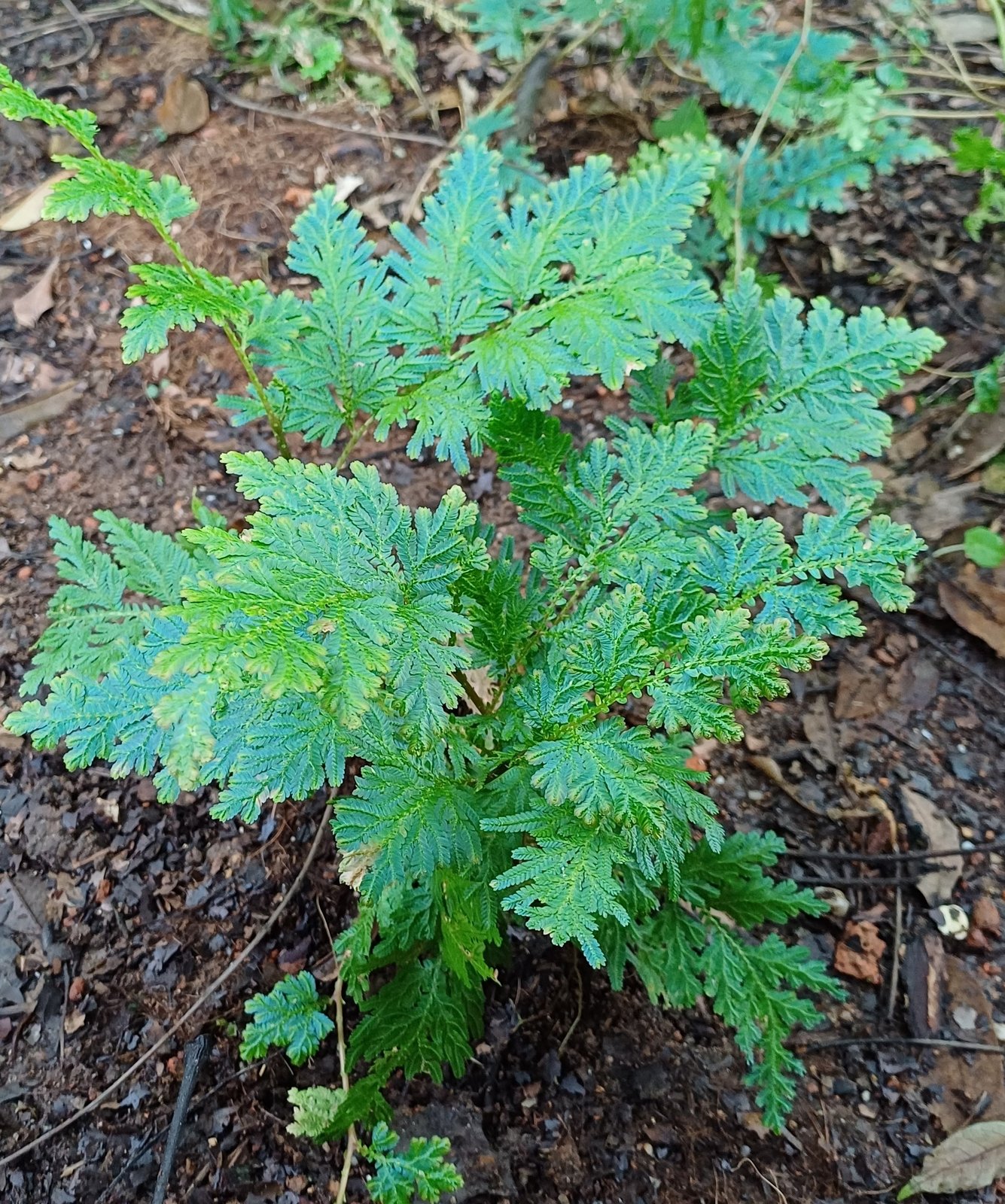 |
Strobilantes dyerianus
ACANTHACEAE
Persian shield
Burma. Introduced to the Botanical Gardens Singapore by collector Boxall and having done well was sent to Kew and brought into wider cultivation from 1893. |  |
Syzigium aromaticum
MYRTACEAE
cingkeh, clove
Commercial cloves sold as a spice are the sun-dried flower buds. Traditionally added to cigarettes (kretek) and food for fragrance. Shoots and leaves chewed for bad breath and to relieve toothache. |  |
Tacca chantrieri
DIOSCOREACEAE
devil flower
Distributed across Bengal, Indochina and Malay Peninsula. It has a black alien-like flower with whisker structures, theorised to be mimicking carrion to attract pollinators. The rhizomes are used in traditional medicine to treat gastric ulcers, hepatitis and high blood pressure. Stabilising agents derived from root extract of this plant have been found to possess anticancer properties. | 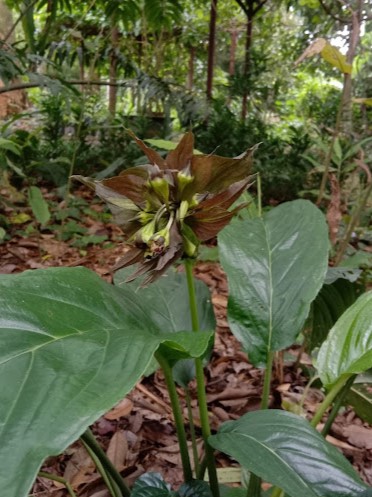 |
Tacca integrifolia
DIOSCOREACEAE
keladi murai, kelemoyang air (Sel.)
Common tuberous herb in deep shaded forest. Flowers arranged in clusters of 5+ surrounded by leaf like bracts, with pendant thread like bracts. Pulped tubers treat skin irritations caused by ulat bulu darat, stinging black caterpillars (Bentong). |  |
Tamarindus indica
LEGUMINOSAE
asam jawa
Africa; introduced by Arab traders to India & SEAsia (tamar-ul-Hind, ‘the date of India’). Young shoots eaten raw; decoction of leaves treats fever. Pulp of fruit added to curry for sourness; bark a poultice for sores and boils. Young leaves eaten as ulam. |  |
Tapeinochilos ananassae
COSTACEAE
Indonesian wax ginger
Native throughout Maluku to New Queensland. Often cultivated in ornamental settings for its huge pineapple-like flowers. Flowers can be cut for flower arrangements | 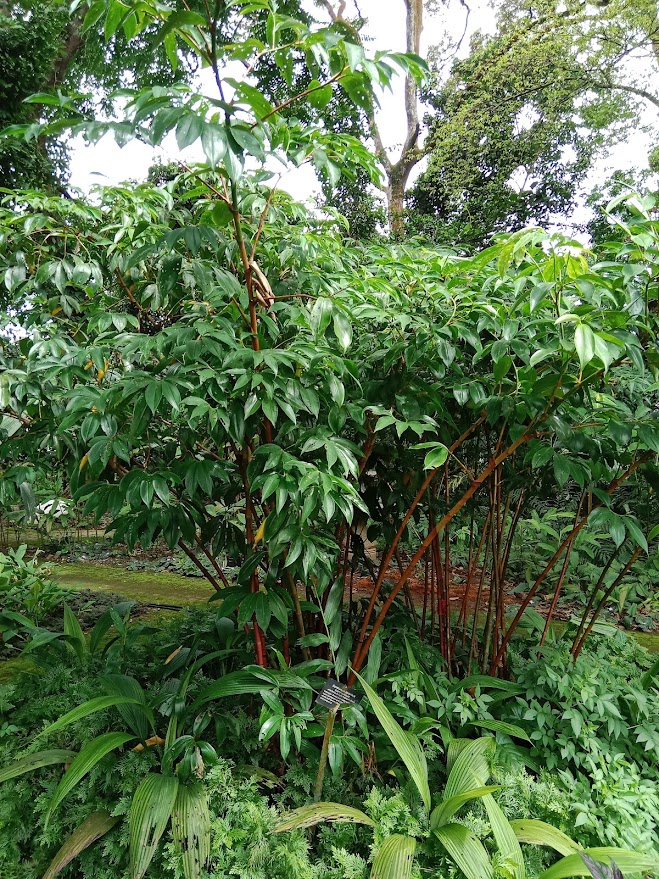 |
Thysanolaena latifolia
POACEAE
Asian broom grass, buloh terbau
The dried leaves are used as a wrapper for glutinous rice dumplings which are traditionally made during the fifth month of the lunar calendar to celebrate the Dragon Boat Festival. The dried flowers are the material of commercially-produced ‘paddy brooms’, mostly from Vietnam. | 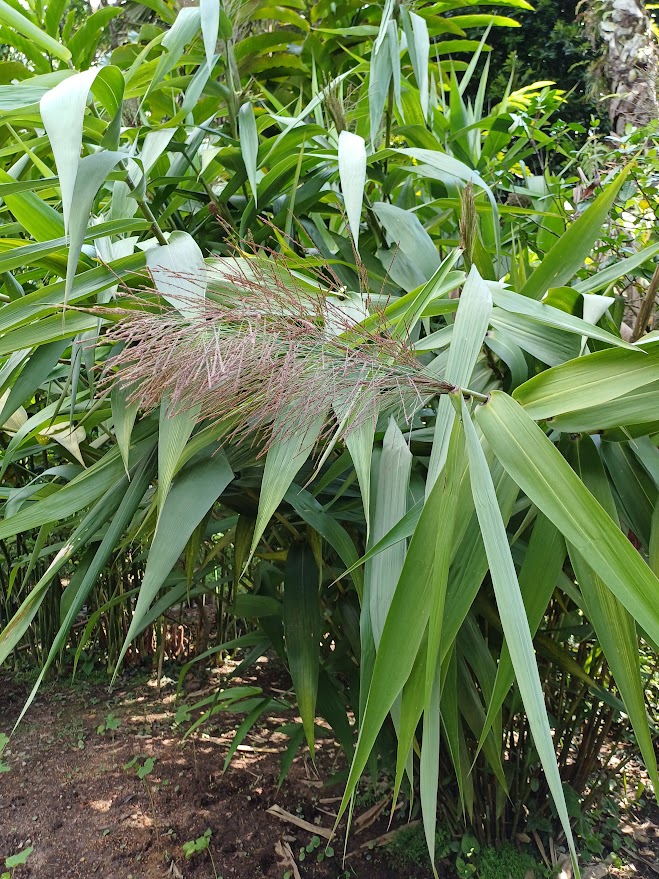 |
Typhonium trilobatum
ARACEAE
keladi puyuh | 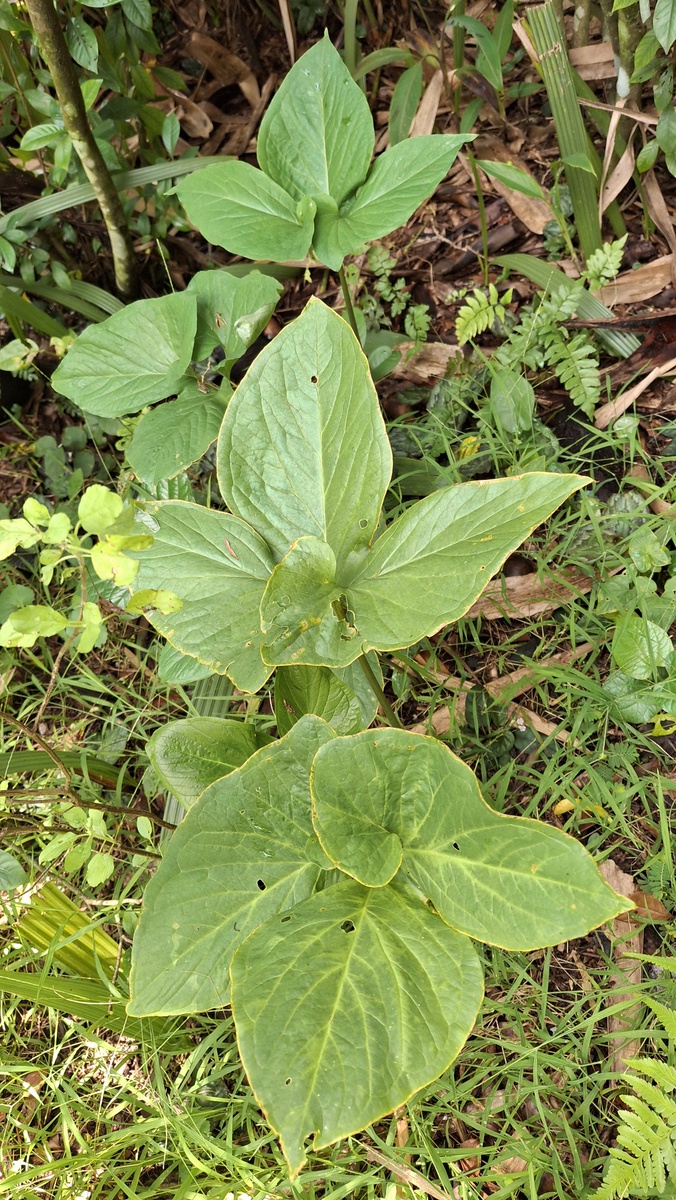 |
Utania racemosa
GENTIANACEAE
kopi hutan, sepuleh
Southeast Asia to the Andaman Islands. Used for timber and fuel. Used by Malays in a tea for fever and rheumatism. | 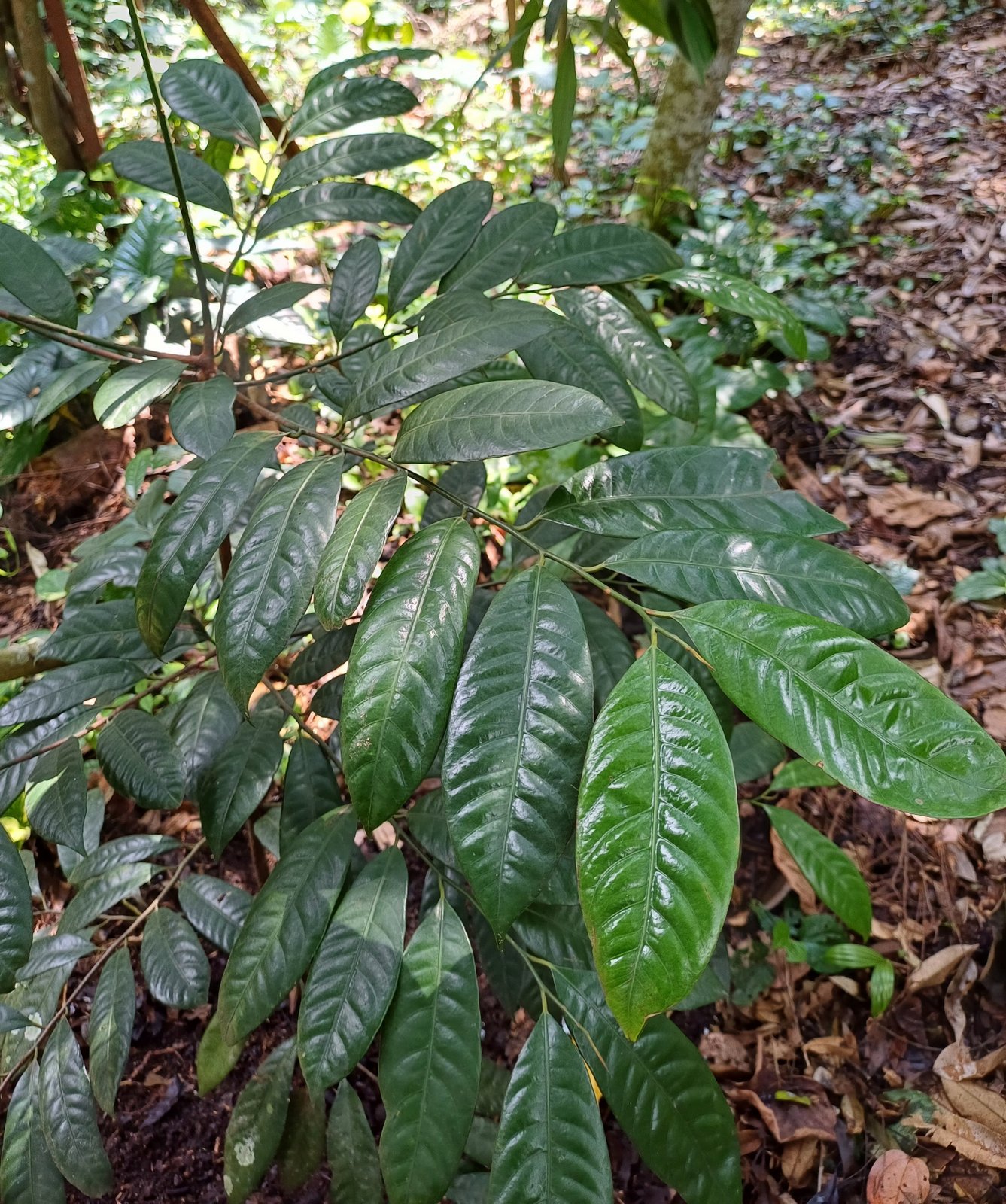 |
Vallaris glabra
APOCYNACEAE
kesidang, kerak nasi
Java. Widely cultivated in Malaysia for its strong pandan smelling flowers. “The scent is mousy but agreeable to the natives of the East, who like it, as they like rice and yams with a mousy smell” (Burkill). |  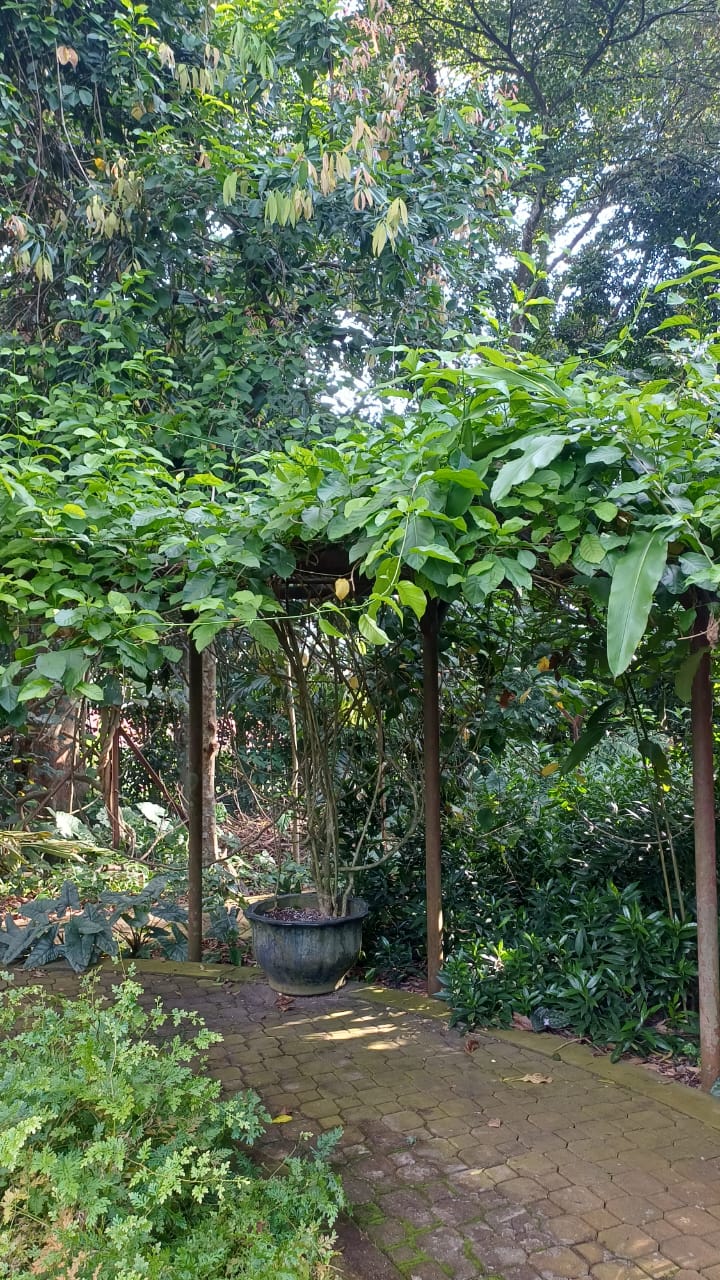 |
Vitex negundo
LAMIACEAE
lemuni hitam
Widely distributed in Asia, commonly found near bodies of water in kampungs. The purple leaves are crushed and mixed with coconut milk, added to rice to make Nasi Lemuni, a dark rice with herbal fragrance considered a delicacy in Aceh, Penang and Kedah. The leaves are also used to treat women’s health, such as regulating menstrual cycle and post-partum remedies. | 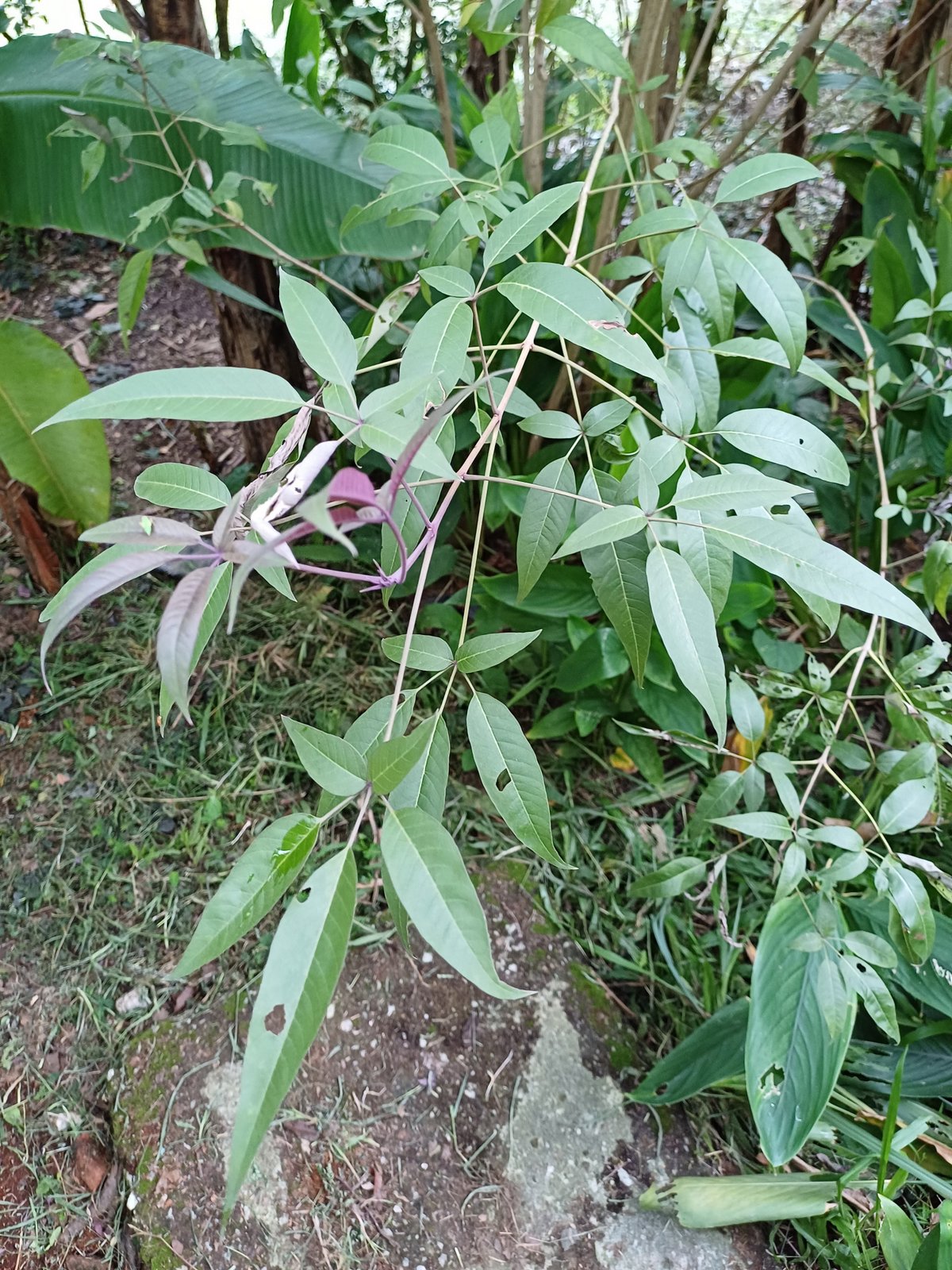 |
Wrightia religiosa
APOCYNACEAE
mok (Thai)
Old World tropics. Cultivated for fragrant flowers beloved of butterflies, and for bonsai. |  |
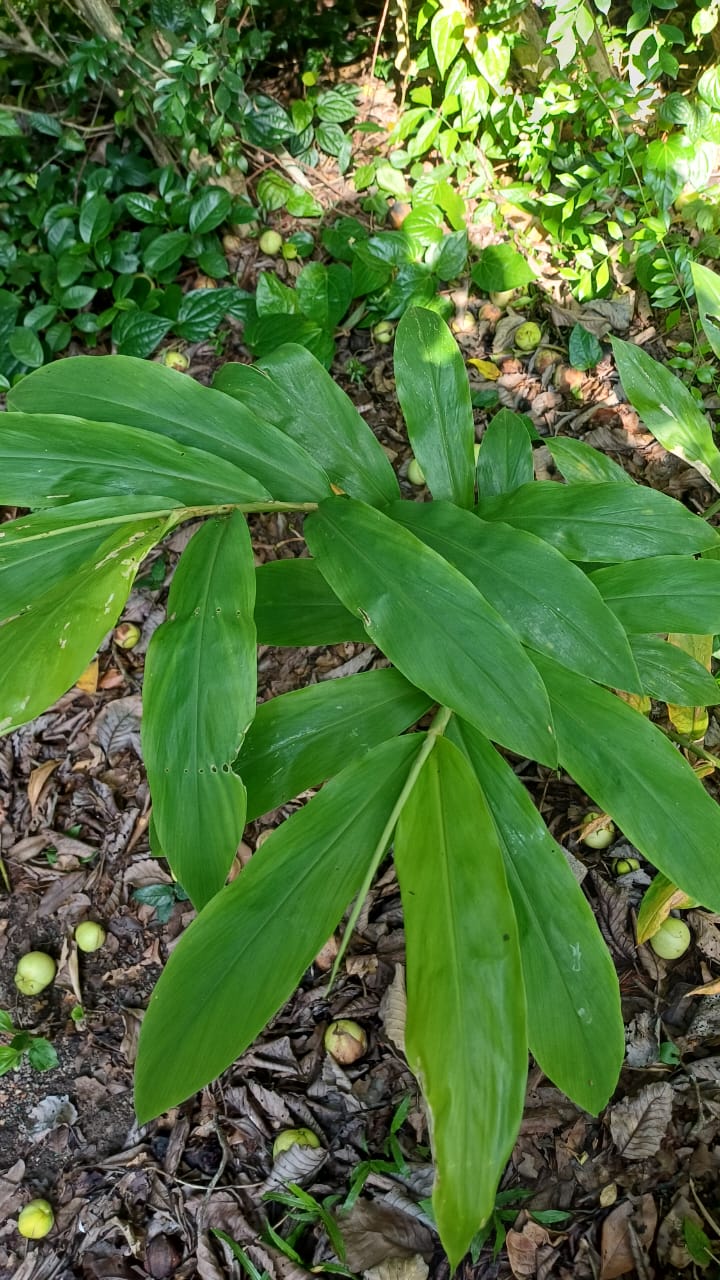
Zingiber aromaticum
ZINGIBERACEAE
puyang, lempuyang wangi
Possibly a synonym of Zingiber zerumbet.
|  |
Zingiber officinale var.
ZINGIBERACEAE
halia bara
Smaller variety of commercial ginger, does better in tropics. Rhizome decoction for indigestion (Perak) and after childbirth (Kel.), fever lotion (Batu Gajah); part of an elaborate cosmetic for entire body in cases of suspected lunacy. |  |
Zingiber zerumbet
ZINGEBERACEAE
lempoyang | 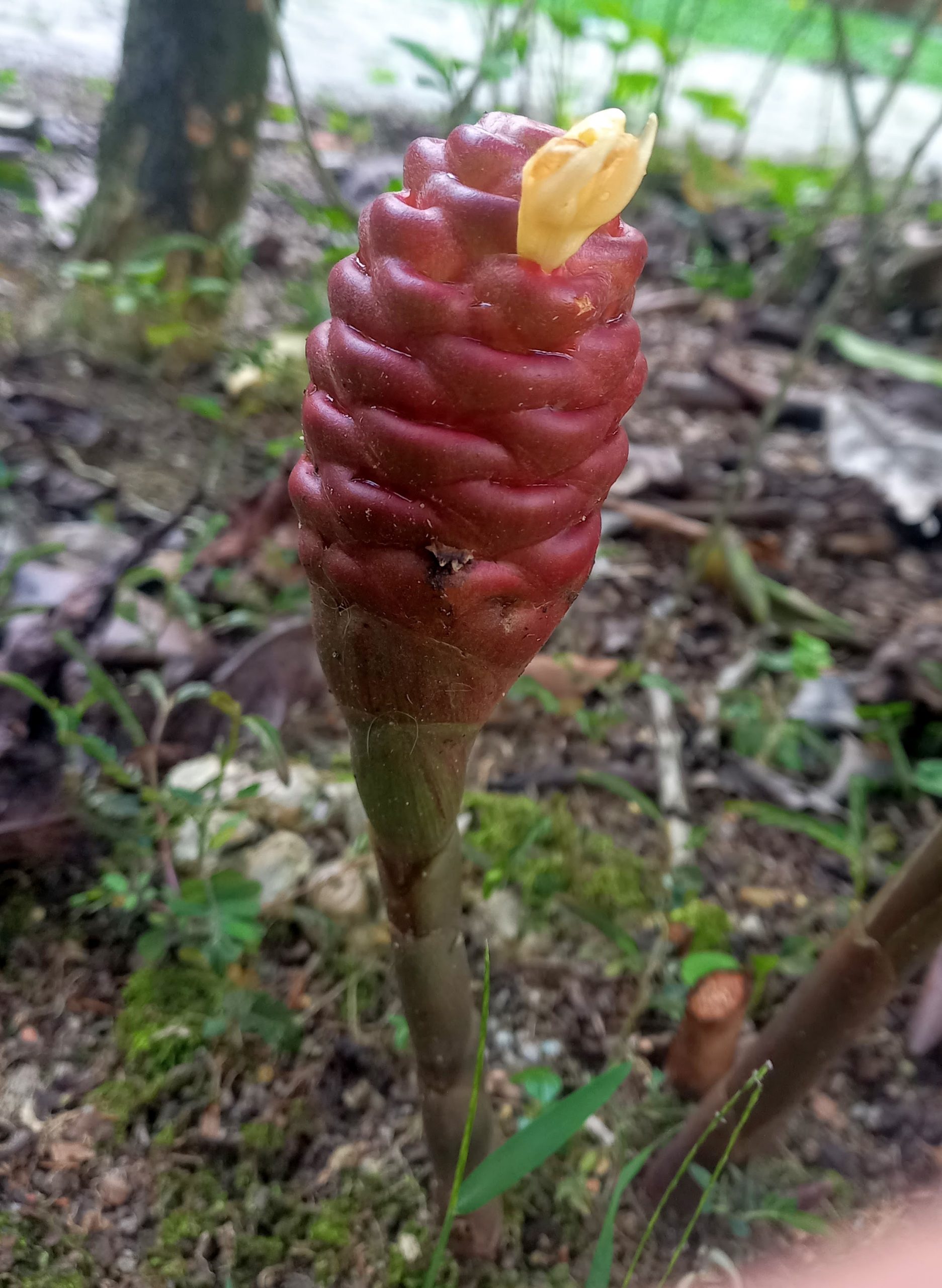 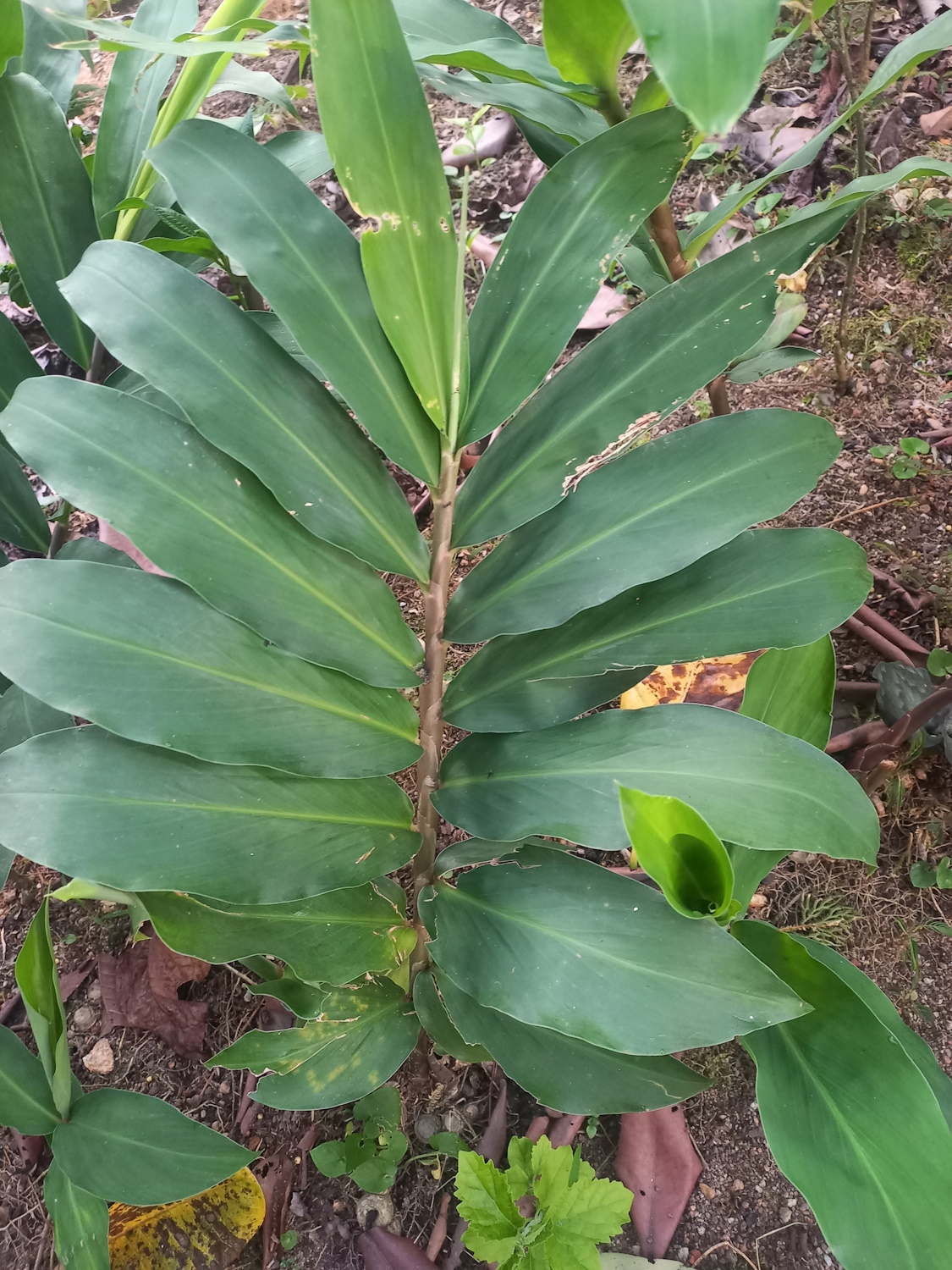 |
| 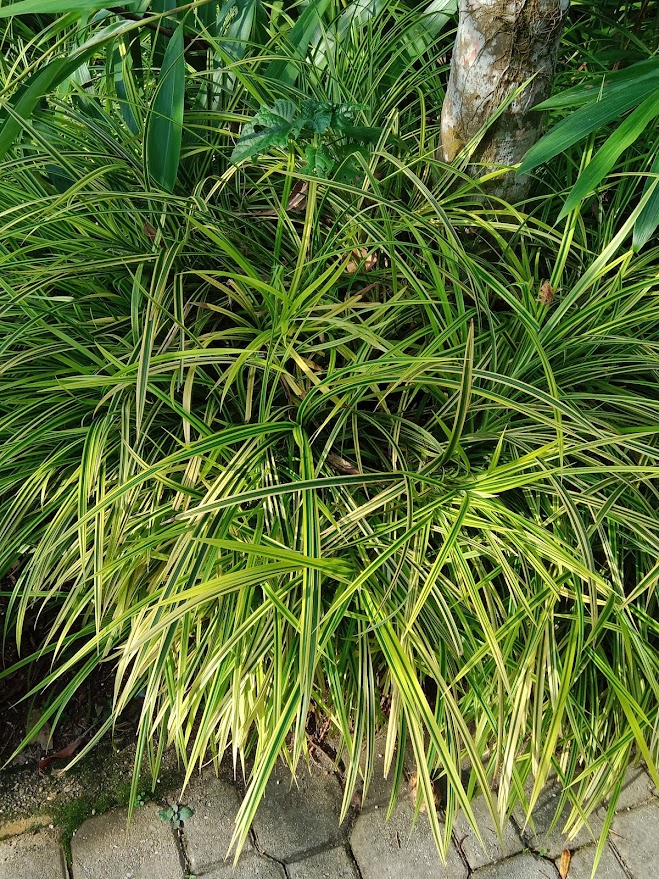 |










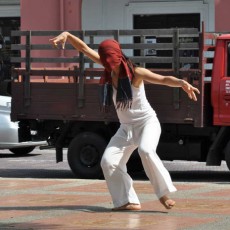


 Australian choreographer Daniel Jaber undertook an Asialink residency at Rimbun Dahan in 2010, with Australian dancers Jessie Mckinlay and Madeline Edwards. He created two works during the residency: WG-Spiel, with Jessie and Madeline, and Poetic Structure, with Malaysian dancers Lau Beh Chin, Hii Ing Fung, Stephanie Lim and Darius Lim Chee Wei. The works were presented at Fonteyn Studio Theatre in Petaling Jaya, from 19-20 November 2010.