Opening of “VAASTU Windows to Time…” at Sutra Gallery

Angela Hijjas was invited to give the opening speech at an exhibition of works by Jeganathan Ramachandram at Sutra Gallery, from 7 to 31 May 2004.

Opening Speech by Angela Hijjas

Ramli Ibrahim, Jeganathan Ramachandram and friends.

I was delighted to be asked by Ramli to officiate here this evening, as it provides me with an opportunity not just to appreciate the work of the artist, but to acknowledge Ramli’s massive contribution to our creative world. He is well known and loved for his dance, but he has also made enormous differences to the whole realm of artistic creativity in Malaysia. Music, dance, visual art and the capacity to think and discuss how we shape our lives, are the important things, and Ramli has opened the eyes of many of us to these riches. A Sutra event always has a multi faceted complexity that demonstrates how we should respond to life’s challenges in artistic and original ways. I thank Ramli for leading the way so courageously as he focuses his and our attention on the truly important things in life, not only by his teaching, but with the many exhibitions that he holds here every year. He makes his home and studio available for everyone to enjoy, and to participate in his many passions with incredible generosity.

I must also congratulate Jeganathan Ramachandram for this beautiful series of paintings. I had the opportunity yesterday to meet him, see the show and discuss the ways he develops his work and what it means to him. His art practice is strongly lead by his philosophy of life, his studies in India and his life experience in both India and Malaysia.

His development of traditional Hindu geomancy into an artistic expression is a major achievement, aesthetically and technically. The forms, compositions, colour and symbols are all drawn from his knowledge of a traditional understanding that defies scientific western explanation. By presenting it as an aesthetic experience informed by traditional science, his work becomes an accessible contemplative guide towards spiritualism. For his subject matter, he takes each of the times of day and explores its character in the natural, the human and the spiritual worlds, synthesizing a unique expression of how he sees everything: as a complex and dynamic interface between the physical and the spiritual.

As contemporary art, I find it refreshing to see work driven by an aesthetic that is traditional in many ways, and yet Jega selects ideas from contemporary abstraction and uses them as effective tools to express the things that really matter in his life. It seems that so much art today is driven by fashion, the random scribble is currently very popular, rather than by a search for a deeper understanding of how to express yourself as an artist without resorting to trendy solutions.

Originally Ramli invited me to open this show because of my involvement in both the arts and the environment, interests that I share with Jeganathan. Indeed the environment is a rich lodestone for creativity, and the environment too benefits from creative people. I am not creative, apart from planting a garden, and I have been searching for ways to balance the environmental destruction around me with something positive. I am now convinced that supporting and encouraging creativity in people is one constructive step that I can take.

However, I fear that the battle to save our forests and seas is entering its final stages. We may save some, but much will be lost in the next few decades, and as I become increasingly desperate, Jega, on the other hand, is more philosophical and sees it as part of the cycle of rise and fall, life and death. I know he is right, but we don’t all think on this cosmic level, as we rush around trying to reverse what will surely happen, sooner or later.

But if more of us were to contemplate on the issues and paint such evocative works of a perfect world, like these that we see here this evening, then we may have an answer to our environmental problems. The long term protection of our habitat will depend on us developing different values for the environment. A short term monetary value does not tell us the real value of a forest, for example. The trees felled are worth money to the logger and to industry, but what of its value to our water supply and our sense of place and who we are after the trees have gone? We will then need dams to store water, filtration and treatment plants to make it drinkable, and artificial places to restore our sense of who we are, all of which was previously done completely free of charge by forests.

If we develop different value systems for the environment, then we need different values in our lives as well. Money does not deliver the richness of life and experience that people like Jeganathan and Ramli have, and if we all were to share their values I know there would be fewer environmental problems in the world today.

I was delighted yesterday to hear that the artist is approaching the point where he can consider leaving his night job with the Malay Mail and committing himself full time to his life of philosophy, poetry and painting. He didn’t train only as an artist, that was just one part of his entire development as a man living in complex world. Now that he has a mature sense of himself as a poet, geomancer and one gifted with profound spiritual insight, I’m sure he will continue to produce important art works that will resonate with us all.

His expression owes as much to his philosophy as to his artistic skill, and it is this holistic approach that will give us the insight we need into the problems of the world so that we can solve them.

Thanks again to Ramli and Sutra for this wonderful evening, and again I congratulate Jeganathan for leading us into his world with such beautiful works. Thank you.

Saiful Razman

Saiful Razman

Saiful Razman was the Malaysian artist of the year-long Malaysia-Australia Visual Arts Residency in 2004-05.

Bio

Saiful Razman (b.1980, Malaysia) graduated from UiTM with a bachelor degree in Fine Art in 2003. He has exhibited widely in Malaysia, Lebanon, Australia and Singapore. In 2003, he was awarded both the Honourable Mention at the Philip Morris Malaysia-Asean Arts Awards and the Incentive Award at the Open Show, Galeri Shah Alam.

Malcolm Utley

Malcolm Utley

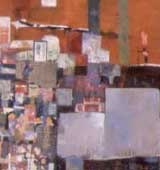
'Kuala Lumpur Journey with Rain', 2004, 120 x 120 cm, oil on sealed board.
‘Kuala Lumpur Journey with Rain’, 2004, 120 x 120 cm, oil on sealed board.

Malcolm Utley, from Bellawongarah, New South Wales, Australia, was the Australian artist of the year-long Malaysia-Australia Visual Arts Residency in 2004.

Malcolm Utley has a varied art practice encompassing architecture, film, installations, painting and sculpture. He graduated with 1st Class Honours in Architecture from the University of Sydney in 1990 and was awarded the Elizabeth Munro Prize for Design and the Ruskin Rowe Prize for History. In 1993 he studied film at FAMU, the national film school in Prague, Czech Republic. From 1998 he studied painting in the 3-year course at the Charlie Sheard Painting School in Sydney.

In 2002, Utley traveled to Paris, France to work as assistant to the Australian painter Tim Maguire. Upon returning to Australia, he enjoyed a brief contract as a visiting artist teaching sculpture at four Aboriginal community schools in the central lands of South Australia, before taking up his residency at Rimbun Dahan.


Sally Heinrich

In 2004, Australian illustrator Sally Heinrich spent an Asialink residency at Rimbun Dahan.

Sally Heinrich has worked as a freelance illustrator for twenty years. As well as writing and illustrating children’s books, her clients have included ad agencies, design studios and government departments. During her residency at Rimbun Dahan, Malaysia, and during side trips to Singapore, Heinrich produced an impressive volume of work, including the completion of the final draft of a YA novel Hungry Ghosts. She also collected much valuable reference material which will aid in polishing the illustrations for another forthcoming book The Most Beautiful Lantern.

She also made the work Princess Wonky in the Painted Castle, an illustration of the Rumah Uda Manap at Rimbun Dahan where Sally lived with her family, their adopted cat Wonky, and other birds and animals. The work currently hands in the Rumah Uda Manap.

Sally’s residency at Rimbun Dahan was also supported by Arts SA and the Australian High Commission, Kuala Lumpur.

Visit the artist’s website: www.sallyheinrich.com

Art for Nature 2003: Games People Play

Art for Nature 2003: Games People Play

Ahmad Zakii Anwar Breath 2003 oil on canvas 68 x 200 cm
Ahmad Zakii Anwar, Breath, 2003, oil on canvas, 68 x 200 cm.

afnlogoThis year’s exhibition involves the concept of playing games. In different contexts, play can have positive and negative meanings and outcomes. Playing builds friendships, tests physical and mental skills and develops the ability to concentrate. The danger arises when people play at policy or relationships without considering how it affects others. Policy makers play with the environment, threatening the ecosystem; and in relationships, people play with their lovers or people around them to gratify their ego. In any case the games people play affect all of us.

Playing games is an activity that occupies our lives from childhood and beyond. In youth, playing builds friendships, tests physical and mental skills and develops concentration.

Yet, as adults, games take on a more complex nature. In every language, play as a word has both positive and negative meanings. When a person tries to cover up a hurtful comment they might say main main sahaja or jyou shr kai wan siau, both meaning I’m just joking. Romance also uses the language of games with main mata or the angry accusation that someone is just playing with you and not taking the relationship seriously.

Games on their own are neutral. They require an agreed upon set of rules, clear objectives and a willingness to suspend disbelief. We have to step out of our lives for a game to be fully played. Sometimes the game becomes confused with life or becomes so attractive that we find ways to make it a crucial part of our lives.

The danger arises when others play at policy or relationships without considering how it affects the fabric of life. Policy makers may play with the environment, imposing grandiose structure that will destroy endangered species or threaten fragile ecosystems. Rather than considering the impact of their actions, the fleeting goals of pride and greed are fed in the game of power accumulation.

In relationships, people play at love to gratify their ego or provide distraction from pressing issues at home. Romance serves as an escape from reality, the reality of ageing, emotional complexity or financial concerns.

Play can also be a very positive activity. As a means to build up the skills to make changes in life, playing with something or as someone else may help to give one the confidence to make necessary changes. Additionally, play is a crucial ingredient for creativity. Artists, designers and architects use the freeing power of play to learn what happy accidents can reveal. Without play, creativity is impossible.

— Laura Fan, curator

Anne Morrison, From 'Hybrid series' 1. Hive 2. Pod 3. Spore 4. Scale Size: 71.5 x 71.5cm (each work) Medium: oil on canvas
Anne Morrison, From ‘Hybrid series’ 1. Hive 2. Pod 3. Spore 4. Scale, Size: 71.5 x 71.5cm (each work), Medium: oil on canvas

Contributing Artists

  • Laura Fan (Curator)
  • Abdul Multhalib Musa
  • Ahmad Shukri Mohamed
  • Ahmad Zakii Anwar
  • Anne Morrison
  • Bayu Utomo Radjikin
  • Bibi Chew
  • Chang Yoong Chia
  • Chong Siew Ying
  • Choy Chun Wei
  • Chuah Chong Yong
  • Eric Chan
  • Ilse Noor
  • Jalaini Abu Hassan
  • Jasmine Kok
  • Noor Mahnun Mohamed
  • Ramlan Abdullah
  • Sharmiza Abu Hassan
  • Shooshie Sulaiman
  • Sidney Tan
  • Terry Law
  • the clickproject
  • Troy Ruffels
  • Umibaizurah Mahir
  • Yau Bee Ling
  • Yee I-Lann
  • Yusof Majid
  • Wong Perng Fey
  • Nur Hanim bt Mohamed Khairuddin

Troy Ruffels

Troy Ruffels

D

Troy Ruffels was the Australian resident artist of the year-long Malaysia-Australia Visual Arts Residency at Rimbun Dahan in 2003.

Biography

Troy Ruffels was born in Devonport, Tasmania in 1972. Upon completion of the 12 month Rimbun Dahan Art’s Residency in Malaysia he will return to Tasmania where he works and resides – overlooking the Forth Valley and farmlands of the Tasmania’s North West Coastline. Ruffels graduated from the Tasmanian School of Art @ Hobart, University of Tasmania (UTAS) with a Bachelor of Fine Art in 1994, where he was also awarded the degree BFA (1st Class Honours) in 1996. He obtained a Postgraduate Diploma ( with Distinction) from the Glasgow School of Art, 2001, and was in 2002 admitted to the degree Doctor of Philosophy ( Fine Art), University of Tasmania.

Ruffels’ work has been featured in numerous Australian and international curated exhibitions, with work exhibited in New York, London, Madrid, Barcelona, Alicante, Lisbon, Lubjjana, the Canary islands, Glasgow, Berlin, Sydney, Melbourne, Canberra, Brisbane, Perth and Hobart. His work is held in numerous collections including the Tasmanian Museum and Art Gallery, The Devonport Regional Gallery, and Artbank.


Exhibition Catalogue Essay

Filtered Sky

Rimbun Dahan exhibition catalogue cover.

I have a memory of Troy Ruffels as the only outdoor coffee drinker in the hair-raising cold of a Tasmanian winter morning.  I would pass him most days on my way to university. All other patrons were on the inside of the cafe window, protected behind a curtain of condensed air, their heads in newspapers.  But the folded arms and casual sitting style of the outdoor patron belied the chill as Ruffels embraced the opportunity to observe and respond to the outdoor world, ‘gathering and collecting small details of the passing environment.’ [1]

This memory is five years old, and comes to me in irony as I consider the work that has evolved during 12 months in tropical Malaysia. In the heat saturated studio at Rimbun Dahan, Ruffels continues to be fuelled by the natural elements that exist in the urban environment.  The images conceived there reveal that the artist’s interest in an emotional sense of place travels with him, and is not limited to, nor lost without, his home in Tasmania. Alert to the smells, sounds and sights intrinsic to the places he visits, the artist is a filter for these experiences and memories to distil, and ultimately take root in paintings and photographs.

The works in Sampled Reality simultaneously ground and throw the viewer. They form a push me – pull me map from diaristic imagery that has been snatched by the artist from its otherwise temporary moment of beauty and being. We are grounded in the panoramic and all encompassing scale of the works, and settled by the poignant aesthetic of each reflection. Ruffels’ work draws you in, offering a journey through the artist’s experience of the world around him.

Rain. Trees. Clouds. These soft aspects of nature settle almost too comfortably in the seemingly impenetrable surfaces of new cars, puddles, glass, and hard, wet ground.  Reflections in such urbane, ever-present fabrics are not something we usually register consciously.  We look at the object itself, rather than the image nesting within it. Reflections do not break surfaces like scratches, dents, ripples and graffiti. Instead, they briefly accommodate the shape of the object and are almost camouflaged to eyes unaccustomed to looking beyond the expected. Ruffels has trained himself to see, snaring these apparitions as they pass across the object’s skin, and revealing the world’s infinite network of reflected, subterranean passages.

The viewer experiences subtle confusion in the artist’s use of reflection, for we normally register reflection through the live, mirrored image of ourselves or our immediate environment. The artist has further evaded other mirrored references by ensuring no part of himself is captured in the photograph.  Trees, sky and stone are gently altered by the blurred movement, muted colour, shifting focus, and colliding imagery characteristic of these urban reflections. These subtle transformations trigger a sense of unease as one recognises that the painted or photographed image is not taken directly from its subject.  Ruffels crops the imagery so that the edge of the reflective surface is gone. The image is floating.  ‘Sky, tree and stone hang suspended’ as the frameless, softly mirrored world turns the tactile world on its head. [2]

In Malaysia, after years of working with photo media, Ruffels has again taken up painting.  He writes that putting paint on canvas allows for ‘prolonged sensorial engagement’ with the subject, sensing that real value of the work is in the ‘process of engagement with the world, and the processes through which [the subject] is interpreted, and brought to life in the studio’. [3]The moving brush across canvas is not unlike the reflection moving across its surface, however the brush passes back and forwards, often repeatedly over the one area, as the image materialises. As each work-in-progress develops as an archive of the reflection, the painter exists in a world divined by instinct, a ‘continuous cycle of experience, response, and expression.’ [4]

It is hard to fight romantic writing when considering Ruffels’ imagery. Descriptions of the work are easily loaded with words like ‘poignant, whimsical, ephemeral, ethereal’. This is because the work is all of these things.  Ruffels makes no bones about the fact that his art is rooted in poetry and imagination, emotions, memories and histories.  Each piece is a layering process of experiences and responses to the natural environment.  The artist ‘takes’ natural forms to construct the images, and creates only beautiful works that trigger the human desire to experience something breathtaking.  In doing so, Ruffels drives the viewer into a flip-book of emotional responses, inciting us to reflect upon the extraordinary possibilities of the world sub-surface.

Ruffels has always responded directly to his immediate environment.  In Tasmania, photographic works about reflections were printed in steel grey, cold blue, and later, a metallic pink.  The rain, in its refected form, felt as if it would sting one’s skin, the waves were blackly Antarctic, and the path of the birds was ominous, as if a southern storm was brewing. Five years later, he wrote to me from Malaysia:

I have continued to work with reflections of nature in the environment.  It is a meaningful motif, which I embrace. It signifies the possibility that another world exists other than the one we are able to subject to rational analysis.  It gives rise to the possibility that there are other pathways we may travel in life – another level of appreciation, of understanding, of communicating with the world we inhabit – other than the one that is sold to us as being real … and subsequently finite. [5]

In the uncanny beauty that emanates from the images reflecting from duco or murky pools of water, there is a moment where one is uprooted by a feeling of wonder in the world, an awe-inspiring second of realising how small we really are, a flash where one is lifted through the clouds, or dipped beneath the molten surface of the water.  The gentle manipulation of natural elements, captured reflections, the transformation of passé surfaces, and the devout attention paid to an urbane instant catch the viewer in a sensory eclipse. Brief moments of recognition are surpassed by super-real interpretations of the physicalworld. These sensations linger as the viewer moves from the work, only to come across fragments of Ruffels’ imagery all around, and ordinary experiences intensify as reality is sampled by both artist and the viewer.


Jane Stewart, 2004
Director, Devonport Regional Gallery, Tasmania


[1] RUFFELS, Troy, Artist Notes to the Author, December 2003

[2] RUFFELS, Troy, as above

[3] RUFFELS, as above

[4] RUFFELS, as above

[5] RUFFELS, as above


Above: Troy and Anne Morrison standing in the underground gallery at Rimbun Dahan.


Jasmine Kok

Jasmine Kok

Jasmine in her studio at Rimbun Dahan.

Immersed in the richness and complexity of nature at Rimbun Dahan, Jasmine was searching for a dialectic experience with the plants and objects around her.  Obsessed with the regular pattern of the lines and textures on plants, different sizes of leaves were collected as models and cast with plaster of Paris.  Slabs of soft clay were pressed against the plaster moulds to question the ephemeral nature of the objects and things around us, and render the impermanent permanent.

‘Ceramic by its nature cannot escape medium-hood’. For an artist like Jasmine ‘working in a medium so identified with craft-based procedures, her clay sculpture is immediately subject to sustained discussion on its material language’, challenging the perception of the custody of material use and the art forms in contemporary art practice today in Malaysia.

Installation, as the British writer Michael Archer described it, is ‘a kind of art making which rejects concentration on one object in favor of a consideration of the relationships between a number of elements or of the interaction between things and their contexts’.  In Jasmine’s case, her works were a suggestion of scene and environment, which derived from her memories as well as from reality.  The imprinted clay leaves were glazed with color and scattered on fabric, referring to the changing seasons.  For instance, the imprinted lotus leaves of various sizes mimic the green summer water pond.  All these pieces of work bring the connection of the scene from outside to inside, from exterior to interior.  The relationship of human to nature was revealed through Jasmine’s intellectual interest, her participating in nature and sharing that experience with others.

Stone carving, like clay forming, is a slow and time consuming process.  The physicality of force and the gradual changes of surface and shape were important to Jasmine and can be seen in her stone sculptures.  Inspired by the curved and pointed elegance of the Jade Vine flower, Jasmine used marble to reinterpret her chosen subject through the physical process of carving.  The smoothness and reflective nature of the marble was tarnished, the solid surface was opened and revealed by force.  The original shape of the Jade Vine was copied, altered and magnified.  The meaning of the work lies not in the work itself but in our attitude towards the art work.

Jasmine Kok’s work ‘does not reproduce what we see, it makes us see’.  Her intention is not simply about recording the natural world but in transforming an object, a space and environment into something profound and intellectual.  The work offers a fresh vision to her and to the viewer.  The perceptual knowledge about the place around her, about things and objects she encounters and feels, are shown through her sculpture and installation works in a stage of ‘metaphysics concerned with the nature of existence’.

During her studies in London, Jasmine participated in an organization called ‘Art Express’, where she  taught wood and stone carving within the community for several years.  She was also involved in art therapy projects with problem children and the homeless, and the feedback was positive.  She had some special experiences working with other artists from different countries while in London, and shared different culture experiences when working in the quarries and sculpture parks.

In the past, Jasmine Kok’s sculpture was primarily figurative, but since her residency in Rimbun Dahan, her art practice has embarked on a whole new journey by exploring nature and different materials.  The artist in residence programme allowed her to explore new perceptions within her art, while assisting her to develop and understand the arts of her homeland.

Biography

Jasmine Kok Lee Fong

Date of birth: 28th October 1970

Nationality: Malaysian

Address: C109, Kampung Kundang, 48020 Rawang, Selangor, Malaysia.

Telephone:  0060-3-60341398 / 013- 639 9831

Email: rollingjas@hotmail.com

Education

1993: Diploma in Fine Art (Painting), Kuala Lumpur College of Art (KLCA).

1995 – 1996: Second year BA in Fine Art, University of Wolverhampton.

1996 – 1998: Diploma in Fine Art Sculpture, City and Guilds London Art School.

1998 – 1999: Stone Carving Course, City and Guilds London Art School.

1999 – 2002: MA in Fine Art, City and Guilds London Art School.

Solo Exhibition

August 2002 : Pain and Injury, Broken Spine Series, Life performance at Kennington Sovi Art Centre, London.

Mixed Exhibition

October 1984: The Second Asean Exhibition of Children’s Art at Malaysian National Art Gallery.

April 1993: Life Drawing & Oil Painting Exhibition at KLCA.

May 1993: “Earth Day” Performance Art at Central Market, Kuala Lumpur.

July 1993: Fine Art (Painting) Diploma Exhibition at KLCA.

May 1996: Sculpture Exhibition at Victoria Street Art Gallery, Wolverhampton.

May 1997: Sculpture Exhibition at Lumsden Art Gallery, Scotland.

June 1998: Find Art (Sculpture) Diploma Exhibition at City & Guilds London Art School.

September 2000: Fine Art (Sculpture) Exhibition (First Year MA) at City & Guilds London Art School.

September 2002: Fine Art (Sculpture) Exhibition (MA) at City & Guilds London Art School.

February 2004: Artist Residency Exhibition at Rimbun Dahan, Malaysia.

Awards

1984: The Second Asean Exhibition of Children’s Art, Manila, Philippines.

2003-2004: Resident Artist, Rimbun Dahan, Malaysia.

Anne Morrison

Anne Morrison

Anne standing in the underground gallery at Rimbun Dahan, surrounded by her work.

Rimbun Dahan Exhibition Catalogue Essay

HAVEN

Anne Morrison beckons you to hover over crevices, lie beneath canopies, bury beneath undergrowth. Slip behind membranes. Peel back foliage. Slide against cell walls.

The painted environments in Haven are both macro and microscopic, bodily and earthly, scientific and sensory. The artist asks that you peer deeper into the shadowy spaces that haunt the leaves, spores, and parasites inhabiting the canvas. The surface of each work is similar to a forest floor, where decaying leaves, peat, feathers, skeletons, and twigs collide so that elements of each are only partially exposed. It is this fragmented imagery that reflects her unique approach to representing the land: ‘the layering experiences of place, relating to memories and to the movement through the landscape.’1

During the 12 months at Rimbun Dahan, Morrison has dug into and reinterpreted the organic fabric making up the vast garden that surrounds the studio. At the beginning of the residency, Malaysia’s tropical forms were unknown, and responses were acute and overwhelming. But time has allowed the artist to study the foreign land through its flora, her perceptions and understanding building with accelerating intensity. She has been able to track the seasonal transformation of the plants so that smells and textures have become vividly and evocatively familiar. The initial razor-sharp responses to the strangeness of a new environment have matured into a complex series of observations that compound with each painting, nourishing and anchoring both the artist and her work in this place.

Morrison’s practice is a continuous process of inspecting and translating the interface of tree, plant and grass forms. Cataloguing the extraordinary colour, texture, and shape of tropical growth, she is a world away from the Tasmanian seeds and grasses that triggered the preceding body of work. These were fine, weightless structures, ‘simple forms, light and ephemeral, carrying a multitude of possibilities upon a breath of air… seeds flying, dancing in the wind, settling, perhaps seeding.’2 In contrast, the moisture-congested air in Malaysia leans on equivalent biology, preventing flight and suppressing movement.

In Haven, colours are saturated, almost garish: turquoise, orange, yellow and white, unlike the muted reds, blues and greys intrinsic to Tasmania. Tropical patterns are webbed, not podded. Forms are plastic, as if slackened by the heat, not taut like those plucked from a colder climate. Paint is thinner and more viscous. Imagery is created through spilling, dripping and pouring paint on canvas, and at other times by employing methodical, repetitive brush marks. The artist’s visual language is constructed from these diverse methods of paint application, and from the ever-changing forms that surround her. Within this painted lexicon, evolving and existing dialects are employed to reflect both newly-discovered and reinterpreted forms.

Morrison’s more recent investigation of plants and landscape stems directly from an earlier emphasis on the body. During the 1990s, she fused imagery related to medical scans, diagrams, and x-rays, with maps of the land. These works were also about the unfamiliar, but probed the darker regions of the human body rather than the surface patterns of plants. They referred to the vulnerability of the body, and our inability to understand the path of foreign bodies and invasive cells. Red, pink, orange, and white paint was spilled onto the canvas, staining and penetrating its surface rather than resting with the modulated control of brush strokes. Veins, sinew, plasma, and cells were manipulated to create trails that alluded to mapping and the exploration of the unknown. Gradually, these paintings have lead to the artist’s subtle inversion of imagery: from inner body shapes that are suggestive of land, to land forms that allude to body. Though perspectives shift from looking in, to looking out, each work continues to be a highly personal landscape capturing the osmotic relationship between body and land.

Weave, Scatter, Envelop, Lattice, Storm. These are titles of earlier paintings that evoke strong imagery as words alone. They encourage bodily engagement with the work: pulling, hugging, whispering. Like these previous works, the images in Haven call the viewer towards Morrison’s unfolding interpretations of dense tropical landscape. Plants resemble the hairs, bones, veins of the body, and the heated colours mimic the effect of humidity. ‘The air is palpable … moisture is thick … beads of sweat gather on the skin … one is continuously aware of one’s body….’3 As a personal catalogue of responses to a foreign environment, each work is familiar yet strange. Lines are both sharp and blurred. Foreground and background are combined. Fleeting forms are nearly recognisable, but impossible to pinpoint. We are netted in pattern and movement, grasping and sliding, aware only of our emotions and response to the landscape before us. A haven.

Jane Stewart 2004.
Director, Devonport Regional Art Gallery, Tasmania.


1 MORRISON, Anne, Notes to the author, December 2003.

2 MORRISON, Anne, as above.

3 MORRISON, Anne, as above.

From 'Hybrid series'1. Hive 2. Pod 3. Spore 4. Scale Size: 71.5 x 71.5cm (each work) Medium: oil on canvas.
From ‘Hybrid series’1. Hive 2. Pod 3. Spore 4. Scale Size: 71.5 x 71.5cm (each work) Medium: oil on canvas.

Biography

Born Glasgow, Scotland in 1966.

Morrison graduated with a Bachelor of Fine Arts Degree with Honours at Glasgow School of Art in 1988 before relocating to London to undertake a Master of Fine Arts at The Royal College of Art, graduating in 1990. In 1995 she was awarded a Commonwealth Scholarship to undertake research in Australia and in 1999 she was among the first to successfully complete a practice-based Doctorate in Fine Art at The University of Tasmania.

Morrison has had 11 solo exhibitions in the UK and Australia since 1989. Recent exhibitions include Cluster at Despard Gallery Hobart Tasmania and Body and Land at Devonport Regional Art Gallery Tasmania 2003, Weave of Nature at Essoign Club Melbourne 2002, The Sentient Body at Plimsoll Gallery Hobart 1999 and Intermediate Groundat The Bond Store, Tasmanian Museum and Art Gallery Hobart 1997.

Curated group exhibitions in 2003 include Love letter to China: Drawings by 35 Australian Artists at Ivan Doherty Gallery Sydney (Touring China 2004), Painting Tasmanian Landscape at Plimsoll Gallery Hobart, Future Perfect at Bett Gallery Hobart. Synergy at (Artist/Scientist collaboration), CSIRO Hobart and My Father is the Wise Man of the Village at Fruitmarket Gallery Edinburgh, Scotland 2002, Zero Horizon at CAST Gallery, Hobart 1999.

Arts awards and arts residencies include The Fusion Arts Commission Edinburgh, 2001, The Scottish Arts Council Small Assistance Award 1999, The Scottish Arts Councils One Year Australian Arts Residency 1994-95, The Ensign Prize, Painting, Royal College of Art, London 1990, The British Institution Fund (1st prize Painting), Royal Academy, London and The John Minton Travel Award RCA 1989, The Elizabeth Greenshields Award, Canada and The Jock Macfie Award, Glasgow School of Art, 1988.

Work in art collections include The Derwent Art Collection, Tasmania, The Scottish Arts Council, The Royal College of Art London, The University of Tasmania, Ensign Trust London, Devonport Regional Art Gallery, Aberdeen Hospital and Northfield Academy, Aberdeen, Scotland and Hijjas Kasturi Associates/ Rimbun Dahan, Kuala Lumpur.

Morrison is a Permanent Australian Resident who works and resides in Forth, Tasmania.

For full Curriculum Vitae contact Anne Morrison, anniemorrison@hotmail.com

Anne Morrison is represented in Tasmania by Despard Gallery, Hobart
www.despard-gallery.com.au

Permaculture in the Tropics

by Angela Hijjas

from The Malaysian Naturalist, vol. 55 no. 1

Permaculture is a name coined and patented by the Australian visionary Bill Mollison. Mollison alerted Australians to the importance of protecting biodiversity and agricultural land. As well as promoting an organic, interlinked and labour saving agricultural approach, he also encourages gardeners to plant indigenous rather than exotic in order to provide sustenance for birds and wild life. He has been outstandingly successful as an arbiter of what is appropriate in Australia, and has, I think, contributed greatly to the sense Australians have of occupying their particular place.

Thanks to him, people recognize not just a genera of Banksias or Grevilleas, but specific species, and gardeners vie with each other to collect and nurture many varieties. To sustain the interest, he started indigenous nurseries to produce the plants that people wanted in their gardens and thus initiated a whole new trend in gardening. Gardens, by the way, sustain a multi-billion dollar industry around the world.

I was surprised to learn that a permaculture garden has been started in a suburb of KL and was delighted to be reacquainted with the methodology. The objective of the garden in KL is to show terrace house residents that they can grow enough to sustain, or at least significantly supplement, a family with home grown vegetables, fruits and herbs. It is organic in the sense that no pesticides are used and the application of natural fertilizers is minimized, but there are no complicated sequences of crops or treatments to protect the tender plants. The whole system works on common sense and labour saving planning, so I will try to paraphrase the principles without sacrificing too much of the content.

Most important is the soil, which should never be left exposed, but covered instead with a constantly maintained layer of mulch (and this can be anything from grass cuttings to leaves) that will protect it from weed growth, excessive heat and drying out. It will also sustain healthy earthworm and micro-organism populations. The concern that everything should be composted first before applying to the ground should be a bit flexible: better to place what you have on bare soil unprocessed than to tip it out. Obviously some mulches are better than others, sawdust is not as good as fallen leaves, for example, but if sawdust is all you have, then put it on but try mixing different sources of nutrients.

One warning about fungal attacks bears repeating: keep the mulch about 2″ from the stems of plants to protect them from fungal attack, especially in the wet season.

Place your vegetables where they will get the morning sun but not the hot afternoon sun. Apparently plants grow most in the mornings and ‘shut down’ when the heat threatens to overwhelm and dry out of the plant. Protection from the afternoon sun is important, either by a wall or other plants that provide shade.

Plant slow maturing vegetables at the back, faster ones at the front. Enhance this by making path loops into the garden bed so that access can be had to all plants but tramping over beds is minimized, because this can damage the soil structure.

Mix your planting, place individual leafy vegetables in amongst the herbs or tomatoes, don’t group them together where a pest can readily destroy the lot. If you lack planting material to create this mix, scatter pre-soaked kacang hijau about. They will readily sprout and will provide the nitrogen fixing that will be advantageous to the neighbouring plants. Mix the legumes with fruit, leaf and root crops all together.

Compost and liquid manure are supplements that are needed in the tropics because of the heavy rainfall that leaches away nutrients so quickly. Where there is space, and you don’t need much, chickens can also be introduced into the equation. Especially in an orchard, they will control weeds and limit pests, as well as provide fertilzer for the garden. In exchange, you can enjoy an occasional rendang ayam and fresh eggs!

The garden in KL has tried to develop a water retention system involving a pond and a water route for run off to be reused before discharging into the drain. A pond increases the biodiversity of the garden and encourages frogs and toads that are beneficial for a pest free environment. In the pond, this particular garden had tillapia, which did not sit too well with the ethics of Permaculture, as Mollison always stresses the importance of using indigenous animals and plants. As table fish they may be easy to grow but once escaped into our rivers they out compete indigenous fish and ultimately reduce the aquatic biodiversity. I would suggest sepat (gouramys) as they are very hardy, can feed of anything available, including mosquito larvae, they don’t eat the aquatic plants and they can be harvested from time to time.

The garden we visited actually had a ‘grey water’ area, where kitchen water is discharged into a depression in the ground. Kangkong, bananas and ubi could thrive here and make use of the waste water and the nutrients in it. Obviously used cooking oil cannot be disposed of this way, nor can it be added to a compost heap, but a sand filled hole in the garden permits micro-organisms to break it down further.

Creating a sustainable system to produce safe food that utilizes nutrients that would otherwise be lost or wasted has always been my preoccupation, and it is intriguing that you can do it on even the smallest plot. It may require a bit of ingenuity to salvage runoff or to save rain water, but I think this is the ultimate challenge for a gardener: creating something that is worth more from your effort and ingenuity than it was before, and to see the benefits to other creatures, plant and animal. Keeping in touch with these natural processes and learning how to manipulate them for our advantage without harming other things is a great achievement, and it is so rewarding to eat your own kangkong or cucumber that you have nurtured through the hazards of pests and floods.

The word permaculture is a combination of ‘permanent’ and ‘agriculture’. The objective is to create a mixed garden of fast and slow maturing plants that will gradually develop into a forest garden. Taller trees will bear fruit and provide nesting sites for birds that will help maintain the balance, and protect the more tender plants below. The immaculately laid out KL garden is designed to minimize labour input, and once established it will be a joy, but gardens will always need a degree of personal care and observation. By checking on plants regularly, you get to understand what they are likely to need, and the challenge is to transform these needs and our own into a compatible garden that supports us and wildlife on a sustainable basis.

Wong Perng Fey

Wong Perng Fey

PerngFey2

Malaysian painter Wong Perng Fey was one of the Malaysian artists of the year-long Malaysia-Australia Visual Arts Residency at Rimbun Dahan in 2002.

Bio

Born in Kuala Lumpur in 1974, Wong Perng Fey is an artist who has built his reputation as an experimental and versatile painter since his graduation from the Malaysian Institute of Art under the school’s scholarship in 1998. His works are in many prominent public collections such as the National Visual Arts Gallery, Kuala Lumpur, Bank Negara Malaysia Museum Art Gallery, Kuala Lumpur and Galeri Petronas, Kuala Lumpur. He lives and works in Beijing.

Exhibition Opening Speech

by Angela Hijjas

Solo Exhibition
2 – 19 October 2002
Valentine Willie Fine Art, Bangsar, Kuala Lumpur

Thank you all for coming this evening to see these new landscapes by Wong Perng Fey.

I would like to thank Beverly and Valentine Willie Fine Art not just for inviting me to open this show today but for having being such strong supporters of our artists’ residency programme. This gallery has suggested to us a stream of fine young artists to support, one of whom is Perng Fey, and it has provided Hijjas and I with our greatest pleasure in seeing their works develop up to this exciting exhibition stage.

Like most of us, I am neither art critic nor scholar, but I come to the new work of any artist with formed ideas about what the world is like, and inevitable expectations about how it might be portrayed. I also have a particular affinity with landscape as it illustrates to me the way we relate to the environment around us, but as in most areas where we have a little knowledge and think we know what is going on, in fact we may not.

Perng Fey’s depiction of landscapes definitely overturns any preconceived ideas of what we are likely to see. These are not pretty kampongs or rivers winding through romantic hills and forests: these landscapes portray what happens to nature and land when they are modified by man. Landscapes are not static, they change, which in itself confronts our expectations of variations caused by mere weather and light. Today, unfortunately, landscapes have been destroyed and desecrated, but it is something we rarely confront, not wanting to question the very real benefits that development has brought us.

Landscapes have shaped every culture, including Malaysia’s for generations, and yet we ignore their plight in our flurry of progress. At the same time, many of us are influenced by the cultural values of more temperate climates where open spaces are commended as ‘vistas’ and exotic gardens are the epitome of beauty. We occupy this place, but we do not know it as well as we should.

From my personal perspective Perng Fey is painting the landscapes that people would rather ignore: the ravaged and the marginal. These are the landscapes that are the closest to us but are the most neglected. Perng Fey’s are the landscapes from our peripheral vision that we really do not recognize as our own, but which are in fact our prevailing visual experience.

Despite this dark side of the work, his skills of composition and handling of his medium seduce one into looking and seeing beauty, but they are simultaneously disturbing.

PerngFey1Another area of Perng Fey’s interest lies in the remains of settlements, most of them tacked together as temporary shelters that have served out their usefulness and have since been abandoned. Like his landscapes, they are devoid of people, as if he is charting our passage across the land, tracing the trail of our transience. They are however, quite beautiful, forcing us to review something that has always been seen as a blight on the
landscape, once again transforming our usual perspective.

These paintings bring the conflicts of occupying a place to the surface: they are compelling canvases portraying something that I did not initially recognise for what they are, they are puzzling and yet beautiful, and I can assure you that a longer acquaintance with these works will not disappoint.

I have been watching Perng Fey’s works develop over the last 9 months and am intrigued by these landscapes that he is understandably reluctant to verbalise. At first viewing each piece seems simple enough, but as the series has developed so has his subject. Just the other day, we were discussing how, by seeing all his work hung together like this, we can experience the development of his ideas as body of work. Even those of us who are fortunate enough to acquire one of them might want to return to this brief opportunity to see the whole collection, because it works so well as a changing viewpoint of landscape and our human habitation.

I congratulate Perng Fey for this remarkable show, and thank you all for coming this evening. Enjoy the exhibition.